





LED Pixel Light Aluminum PCB is widely used in pixel-based lighting products that need stable brightness, efficient heat dissipation, and long service life. In this guide, we will explain what LED Pixel Light Aluminum PCB is, how it works, what design points matter most, and how to choose a reliable manufacturing partner for custom projects.
EBest Circuit (Best Technology) is a professional LED Pixel Light Aluminum PCB manufacturer with deep experience in designing and producing boards for modular pixel light applications that require both reliable thermal control and stable splicing performance. For projects where poor PCB compatibility can cause connection failure after splicing, we provide well-matched board structures, controlled dimensional accuracy, and stable heat dissipation to help improve assembly consistency and product yield. For flexible decorative lighting designs, we focus on balancing thermal conductivity with splicing adaptability, so the PCB can better support both structural fit and lighting performance.
For volume purchasing needs, we offer dependable quality, scalable production capacity, and practical manufacturing support, helping customers achieve better consistency across batches. We also pay close attention to heat distribution after module splicing, using suitable aluminum-based structures and thermal materials to support more uniform brightness and stronger long-run reliability. For custom LED Pixel Light Aluminum PCB projects, pls feel free to call us anytime at +86-755-2909-1601.
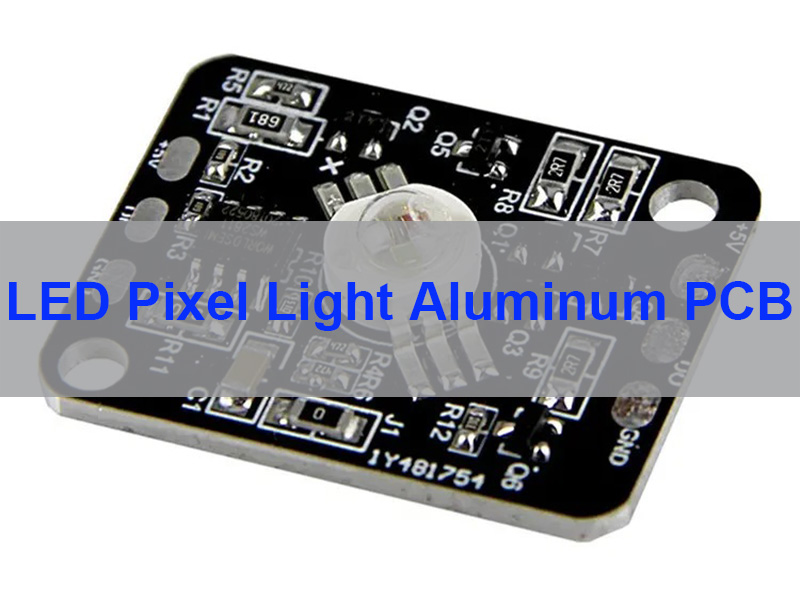
Why More Buyers Choose LED Pixel Light Aluminum PCB for Demanding Lighting Projects
If a pixel lighting product needs to stay bright, uniform, and stable over long operating hours, the board material matters from the beginning. A well-designed LED Pixel Light Aluminum PCB helps move heat away from the LED packages faster, which supports better brightness consistency and reduces thermal stress on the assembly. It also gives the product better mechanical support, which is useful for linear modules, façade lighting, signage, and custom pixel arrays.
What customers usually care about
- Better heat dissipation
- Stable light output over time
- Good flatness and structural strength
- Clean electrical routing for addressable pixels
- Reliable production for custom designs
What we can support
At EBest Circuit (Best Technology), we provide LED Pixel Light Aluminum PCB manufacturing for custom lighting projects, from prototype support to production builds. We help customers optimize board structure, layout manufacturability, and thermal performance so the final product is easier to assemble and more dependable in the field.
Typical parameters customers ask for
| Item | Common Option |
|---|---|
| Board type | Single-layer aluminum PCB |
| Copper thickness | 1oz, 2oz, or custom |
| Board thickness | 1.0mm to 2.0mm |
| LED type | 2835, 3535, 5050, custom packages |
| Surface finish | HASL, ENIG, OSP |
| Application | Pixel bars, pixel dots, signage, façade lighting |
| Build type | Bare PCB or assembled PCB |
Therefore, choosing the right board is not only about getting LEDs mounted on metal. It is about building a lighting product that stays visually stable and easier to manufacture at the same time.
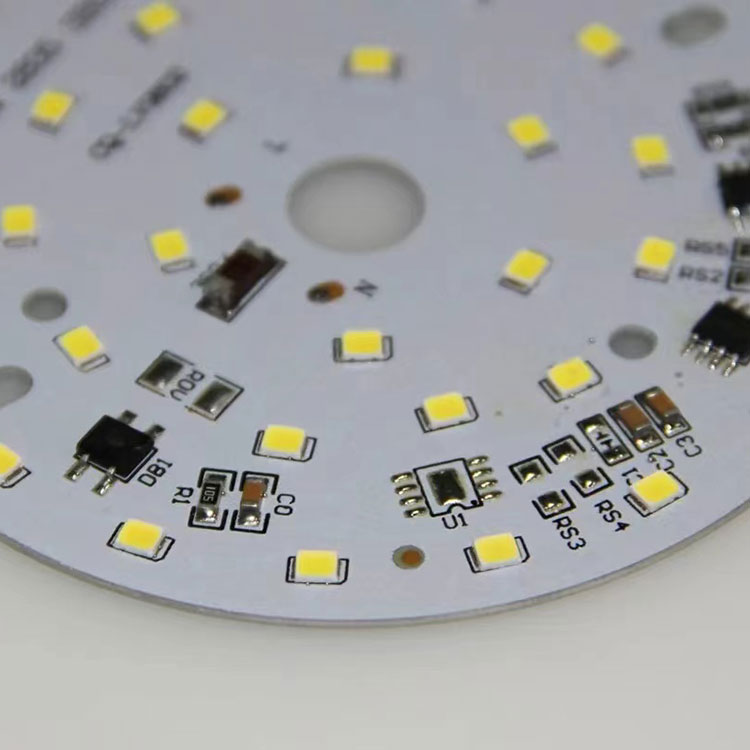
What Is LED Pixel Light Aluminum PCB?
A LED Pixel Light Aluminum PCB is a metal-core circuit board designed for pixel lighting applications where each LED or LED group acts as a controllable light point. Its basic structure includes a copper circuit layer, a thermally conductive insulating layer, and an aluminum base. This structure allows heat from the LEDs to move down into the aluminum substrate instead of building up near the LED pads.
Why this structure matters
In pixel lighting, LEDs are often packed closely together and may run animated effects for long periods. That combination creates more thermal load than many ordinary LED products. If the board cannot spread heat efficiently, the result may be reduced brightness stability, color inconsistency, and more stress on solder joints.
Where it is commonly used
- Building exterior pixel lights
- LED pixel modules for signage
- Decorative linear pixel bars
- Outdoor dot light systems
- Specialty lighting arrays
In practice, this type of board is selected because it solves a real operating problem. It helps pixel lighting products manage heat more effectively while supporting compact layouts and long runtime.
Why Is Aluminum Better Than Standard FR4 for Pixel Lighting?
For many pixel lighting products, aluminum offers a more suitable base than standard FR4 because heat is one of the main design limits. FR4 remains useful in general electronics, but it does not remove LED heat as efficiently as an aluminum-backed structure. When LEDs are dense, bright, and continuously active, that difference becomes more obvious.
Aluminum PCB and FR4 comparison
| Comparison Item | Aluminum PCB for LED Pixel Light | Standard FR4 PCB |
|---|---|---|
| Heat spreading | Stronger | Weaker |
| Brightness stability | Better under long runtime | More affected by heat buildup |
| Structural rigidity | Better for long modules and bars | Moderate |
| Suitability for dense LED layout | Strong | Limited in higher thermal loads |
| Support for long-term lighting use | Better | Depends more on additional thermal design |
What this means in actual projects
If a product uses addressable pixels, long light chains, or compact modules, thermal stress increases quickly. In those cases, aluminum often helps maintain more even optical performance and reduces the risk of visible brightness variation across the board.
In short, aluminum is not chosen only because it sounds more advanced. It is chosen because it offers a more stable platform for real pixel lighting products.
How Does LED Pixel Light Aluminum PCB Improve Thermal Performance?
The main advantage of LED Pixel Light Aluminum PCB is that it creates a more direct thermal path away from the LEDs. Heat generated by the LED package moves through the copper and dielectric layer into the aluminum base, where it can spread more efficiently across the board.
How the heat path works
Copper layer
This carries current and also helps spread local heat around the LED pads.
Thermal dielectric layer
This layer provides electrical isolation while still allowing heat to pass through.
Aluminum base
This acts as the main heat spreader and gives the board mechanical support.
Why this matters to pixel lighting
When heat is removed more efficiently, the LEDs can run under more stable temperature conditions. That supports more uniform brightness, better color consistency, and reduced long-term stress on the assembly. In dense pixel arrays, this is especially helpful because thermal accumulation tends to happen fast.
As a result, a better thermal path improves more than temperature numbers. It also improves the visible performance and service stability of the final lighting product.
What Core Design Parameters Matter Most for LED Pixel Light Aluminum PCB?
Many buyers start with board size, LED count, and shape. Those are important, but the most valuable design parameters usually relate to current handling, thermal behavior, and assembly practicality. A good board should work well electrically, thermally, and mechanically at the same time.
The main parameters to confirm early
| Parameter | Why It Matters |
|---|---|
| LED density | Affects heat buildup and optical uniformity |
| Copper thickness | Influences current capacity and voltage behavior |
| Input voltage | Impacts layout and power distribution |
| Control method | Affects signal routing and module compatibility |
| Board thickness | Supports rigidity and thermal spread |
| Surface finish | Influences solderability and storage condition |
| Connector position | Affects installation and wiring reliability |
| Mounting features | Important for final assembly and support |
| Application environment | Impacts structure and protection needs |
What is often overlooked
Current path length is frequently underestimated in pixel lighting boards. If the board carries too much current through narrow traces or long paths, the product may show dimming or color change from one end to the other. That is why layout planning matters as much as material choice.
From an engineering perspective, the best results usually come from getting the parameters right before layout is finalized. That saves redesign time and improves manufacturing stability.
How Do You Design High-Density LED Pixel Light Aluminum PCB Correctly?
A high-density pixel board should be designed around three priorities from the start. Heat distribution, power distribution, and signal stability must all be considered together. If only one of them is addressed, the design may still struggle during production or field use.
Useful design priorities
Distribute LEDs with thermal logic
Avoid creating small hotspots with too many LEDs concentrated in one area unless the board size and thermal path are designed for it.
Keep high-current paths practical
Use wider copper in heavy-load sections and think about how power enters and moves across the board.
Protect signal routing
Addressable pixel boards need clean data routing and stable grounding, especially when pixel count increases.
Design for assembly
Leave enough process margin for soldering, polarity control, testing, and mechanical handling.
Support real installation needs
Add mounting holes, connector spacing, and routing direction that make the board easier to use in the actual product.
Overall, good design is not about fitting the most LEDs into the smallest area. It is about balancing density with manufacturability, stability, and practical product performance.
How Do You Reduce Voltage Drop and Color Shift in Pixel Light Boards?
Voltage drop is one of the most common problems in pixel lighting. A board may look fine near the power input, while the far end shows weaker brightness or visible color difference under higher load. This often becomes more obvious when many LEDs are running bright at the same time.
Common causes
- Long current paths
- Copper traces that are too narrow
- Power entering from only one point
- High pixel count on a single board
- No allowance for real operating load
Better ways to handle it
| Problem | Better Design Response |
|---|---|
| Long board length | Add multiple power entry points |
| Narrow power traces | Increase copper width or copper thickness |
| Uneven brightness | Divide board into better-powered sections |
| Signal instability | Improve data routing and grounding |
| Heavy full-load operation | Design with electrical margin |
Why this deserves early attention
Color shift is not always caused by the LED itself. In many cases, the issue comes from the board layout and power strategy. That is why a pixel light board should be treated as an electrical distribution platform, not just a mounting surface for LEDs.
In real-world applications, better power planning makes the final lighting effect look more uniform and more professional, especially in long modules and high-density arrays.
How Is LED Pixel Light Aluminum PCB Manufactured for Stable Quality?
Manufacturing quality has a direct impact on thermal stability, soldering consistency, and final lighting performance. Even a well-designed board can become unreliable if the process is not well controlled. For this reason, LED Pixel Light Aluminum PCB production should focus on both board fabrication precision and stable assembly execution.
Typical manufacturing flow
- Aluminum material preparation
- Circuit imaging and etching
- Surface treatment
- Solder mask application
- Solder paste printing
- LED and component placement
- Reflow soldering
- Optical and electrical inspection
- Functional test if needed
- Packing and shipment preparation
What supports better production yield
Consistent pad design
Balanced pad design helps reduce soldering variation across the board.
Controlled reflow process
LED packages and control components require stable thermal processing during assembly.
Clear polarity control
Pixel products often include many LEDs and driver parts, so polarity accuracy is critical.
Board flatness management
Long or narrow aluminum boards need good process control to stay stable during placement and soldering.
Defined test criteria
Electrical continuity, lighting behavior, and basic performance checks improve shipment confidence.
Notably, stable quality does not come from one inspection step alone. It comes from a controlled process from material selection through final verification.
Why Choose Us for LED Pixel Light Aluminum PCB?
When choosing a supplier for LED Pixel Light Aluminum PCB, customers usually care about four things. They want consistent quality, predictable lead time, responsive service, and a manufacturer that understands real project risks before production starts.
Why customers look for a stronger manufacturing partner
Quality
A stable process reduces brightness inconsistency, solder defects, and avoidable reliability problems.
Lead time
A manufacturer with integrated support can help move projects faster from file review to delivery.
Service
Good engineering communication helps catch design risks earlier.
Supply coordination
When the project includes LEDs, connectors, drivers, and assembly, coordination matters.
Why work with EBest Circuit (Best Technology)
At EBest Circuit (Best Technology), we provide LED Pixel Light Aluminum PCB manufacturing support for custom projects that require dependable thermal design, practical production feedback, and production-ready execution. We help customers move from concept to actual build with better manufacturability and clearer communication.
This means, choosing the right supplier is not only about placing an order. It is about reducing mistakes before they become delays, rework, or field issues.
What Services and Certifications Support More Reliable Orders?
A strong pixel lighting supplier should offer more than bare board fabrication. In many projects, customers also need assembly support, design review, and production coordination. Reliable service becomes even more important when the product is customized for special shapes, pixel counts, or installation conditions.
Our service support
| Service | Value to the Project |
|---|---|
| Aluminum PCB fabrication | Supports thermal and structural performance |
| PCB assembly | Integrates LEDs, ICs, and connectors |
| DFM review | Helps improve manufacturability before release |
| Prototype support | Speeds up validation and sample confirmation |
| Component coordination | Helps keep project parts aligned |
| Functional verification | Supports confidence before shipment |
Representative certifications
| Certificate | Relevance |
|---|---|
| ISO 9001 | Quality management |
| ISO 13485 | Controlled manufacturing for high-requirement projects |
| IATF 16949 | Process discipline for demanding applications |
| AS9100D | High-reliability quality framework |
| RoHS | Material compliance |
| REACH | Compliance support |
| UL | Relevant for selected product requirements |
Why certifications matter
Certificates do not replace engineering ability, but they do show that the company works within recognized quality frameworks. For many customers, that adds confidence when a project needs stable documentation, controlled processes, and repeatable output.
To sum up, good service and quality systems make custom LED pixel lighting projects easier to manage from both the engineering side and the order side.
What Common Pain Points Do Pixel Lighting Buyers Face and How Do We Solve Them?
Most pixel lighting projects run into similar problems. The board runs hotter than expected. Brightness looks uneven. The far end of the module does not match the front end. Assembly becomes difficult because the layout is too tight. Or the product works in testing but becomes unstable after installation. These are common industry issues, not isolated mistakes.
Typical pain points and practical solutions
| Pain Point | Typical Cause | How We Help |
|---|---|---|
| Uneven brightness | Voltage drop and thermal concentration | Better power layout and board structure |
| Shorter LED life | Excess heat around LED packages | Improved thermal path and layout review |
| Data instability | Poor routing or interface planning | Cleaner signal structure and design feedback |
| Low assembly yield | Tight spacing and weak process margin | DFM support before production |
| Custom project delays | Incomplete file planning | Early engineering communication |
| Inconsistent repeat orders | Process variation | Controlled production workflow |
How we approach projects
We do not treat LED Pixel Light Aluminum PCB as a generic LED board. We review it as a functional lighting product that needs thermal logic, current control, assembly practicality, and long-term stability.
Notably, if you need LED Pixel Light Aluminum PCB for a custom module or production project, we can support the build with more practical engineering feedback and manufacturing coordination from the start.
What Industries Commonly Use LED Pixel Light Aluminum PCB?
This type of board is widely used in projects where brightness control, compact structure, and thermal performance need to work together. Some industries use it more often because their products depend on long runtime and consistent visual output.
1. Architectural lighting
Building façade lighting, bridge decoration, and outdoor media lighting often use pixel-based systems. These applications benefit from aluminum boards because they support thermal management in long-running outdoor installations.
2. Commercial signage
Retail signs, brand displays, and decorative commercial lighting frequently use pixel modules for animated effects. A stable board helps maintain more even light output across the display.
3. Entertainment and themed spaces
Bars, clubs, event spaces, and immersive environments use pixel lighting to create dynamic visual scenes. In these projects, layout density and long operating cycles make board quality more important.
4. Display-related lighting modules
Some specialty display modules and close-view lighting products rely on compact LED arrays. In these cases, thermal consistency helps improve visual uniformity and long-term stability.
In short, LED Pixel Light Aluminum PCB creates the most value in applications where thermal load, lighting consistency, and installation reliability all matter at once.
How Should You Order Custom LED Pixel Light Aluminum PCB for Better Results?
A good custom order starts with complete technical inputs. Many project delays happen because the board outline is defined, but the electrical and thermal requirements are still vague. The clearer the requirements, the easier it is to create a board that works well in both production and final use.
What to confirm before placing an order
- Input voltage
- LED model and quantity
- Pixel control method
- Board dimensions and shape
- Copper thickness
- Board thickness
- Connector type and position
- Mounting method
- Indoor or outdoor use
- Bare PCB or assembled product
What a strong supplier should help with
File review
A proper review should identify layout risks before manufacturing starts.
Structure recommendation
The board stack and copper design should match the real operating conditions.
Manufacturing advice
Good advice improves soldering stability, testing, and repeatability.
Assembly feedback
This helps avoid avoidable issues in placement, polarity, and connector fit.
Overall, better orders come from better preparation. When the technical details are clear early, the project moves more smoothly and the result is more dependable. If you are looking for a dependable supplier for LED Pixel Light Aluminum PCB, EBest Circuit (Best Technology) can support your custom project with manufacturing and production-oriented engineering support. We provide LED Pixel Light Aluminum PCB products for custom applications. For inquiries or orders, please contact us via sales@bestpcbs.com.
FAQs About LED Pixel Light Aluminum PCB
What is Aluminum PCB for LED Pixel Light?
It is a metal-core PCB designed for pixel lighting applications, using an aluminum base to improve heat dissipation and support more stable LED performance over time.
Why use Aluminum-Based LED Pixel Light PCB instead of ordinary PCB?
Because pixel lighting products often generate more heat and require better brightness stability. Aluminum provides a stronger thermal path and better structural support than ordinary PCB materials in these conditions.
How does Pixel Light LED Aluminum PCB improve brightness consistency?
It helps reduce temperature buildup around the LEDs, which supports more even light output and lowers the chance of visible brightness drift across the board.
How do you design Aluminum-Based PCB for LED Pixel Lighting with high pixel density?
The design should balance LED spacing, copper width, power entry planning, and signal routing. High density works best when thermal and electrical limits are planned together.
What makes High-Density LED Pixel Light Aluminum PCB harder to manufacture?
Tight spacing, thermal process control, polarity management, and handling of longer or narrower boards all make manufacturing more demanding. Good layout and stable process control help solve this.
Why choose Aluminum Core PCB for LED Pixel Arrays in outdoor projects?
Outdoor pixel products often run for long periods and face stronger thermal cycling. Aluminum helps improve heat spread and mechanical support, which is useful for long-term outdoor stability.
How does Thermal-Conductive Aluminum PCB for LED Pixel Light Application help reduce color shift?
By improving heat dissipation and supporting better power distribution, it helps the LEDs operate more evenly, which reduces visible color and brightness differences across the lighting module.