PCB manufacturing PCB manufacturing
Home > Blog

Why Printed Circuit Boards are Important for Electronics?

December 7th, 2022

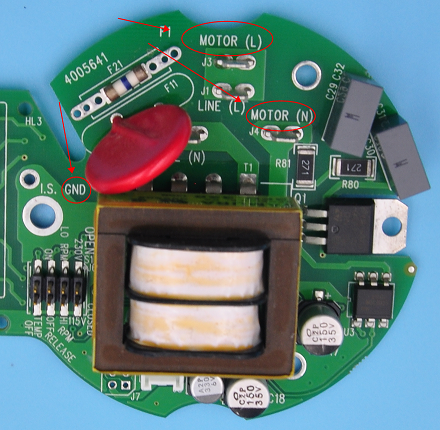
Printed Circuit Boards are the core of the electronics devices, and they exist in everywhere and be everything from your electronic equipment such as mobile phone, computers, so what are they? Let’s explore the secrets together and know why they become more common as technology advances.

What are Printed Circuit Boards?

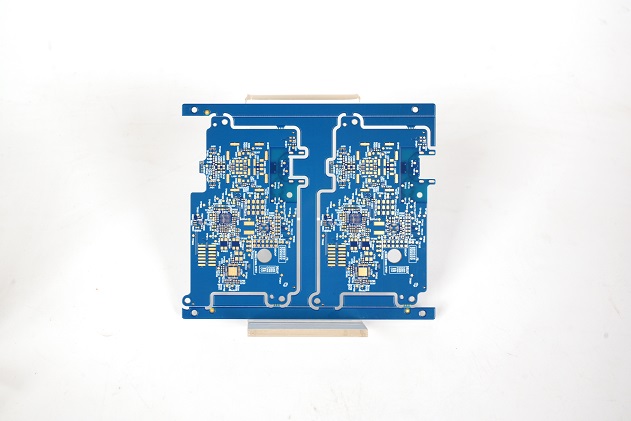
A printed circuit board also known as PCB for short, is an electronic board for connecting metal circuits by mounting different electronic components in a device and have it do its functions.

PCB is made of fiberglass and laminate materials or a composite epoxy with conductive, it can be made to varies shapes and sizes depends on what applications it will be used for—some have many holes on it while some only have several pads or traces.

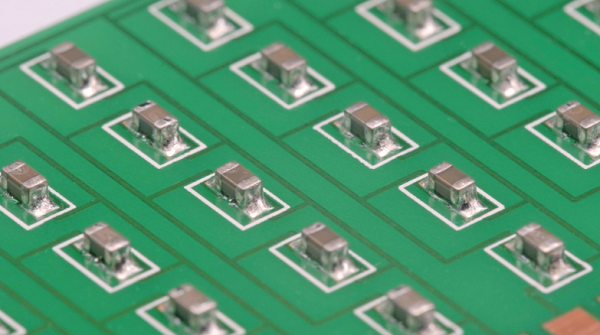
In most of devices, we can see there are many components or wires mounted or connected on the surface of PCB, which comes into two different pathways –surface mount and through-hole. Surface mount is a technology that can be abbreviated as SMT, it is a famous technical that mount electronic components (typically SMDs) attached on top of a pad by melted solder paste. Through-hole generally refers to components that have wires through the plated-through-holes that drilled into the circuit board. Both ways are commonly use, but currently with the fast development of the technology advance, surface mount is more popular than through-hole as it is more convenient for production.

What the Functions of Printed Circuit Boards?

The main functions of a PCB is to connect different components and achieve a communication between components and devices, that can be used for everywhere you can think of – Computer, phones, televisions, tablets, cameras, projectors, and so on
.

For a simple example, a phone has a PCB that can connect screen, the buttons, cameras, and the circuits on the both sides. Without this board, those components wouldn’t be able to transmit signals and talk to each other and the phone would cease to function.

In addition, electronic equipment using printed board enable to avoid the error of manual wiring, and can realize the automatic insertion or installation of electronic components, automatic soldering, automatic detection by communicate with each other, to ensure the quality of electronic products, improve labor productivity, protect components from damaged, reduce costs, and easy to maintenance.

The advantages of Printed Circuit Boards

PCB performs a number of advantages in electronic industries, a most significant feature is they make products be smaller and more portable as its density circuits and components communication. The density circuits on PCB allows it take up much space for components so you can get a smaller product.

  • High density

Over the past decades, the high density of printed boards has been developed with the improvement of integrated circuits and the advancement of installation technology.

  • High reliability

Through a series of checks, tests and aging tests, the PCB can be guaranteed to work reliably for a long time (generally 20 years).

  • Designability

For various performance (electrical, physical, chemical, mechanical, etc.) requirements, can PCB be achieved to such requirements in short time and high efficiency according to design standard rules.

  • Maintainability

By means of standard PCB design rules, once the program or device failure, users fix the devices quickly.

  • Cooling abilities

Overheating is one of the biggest reasons of electronics failure, so by keeping them cool with a PCB, you can increase the lifetime of your product.

Types of Printed Circuit Boards

EBest Circuit (Best Technology) provides different kinds of PCBs and PCBAs for our customers, for a quickly reviewing, we listing as below:

  • Rigid Printed Circuit Board (FR4-PCB)
  • Flex Printed Circuit Board (FPCB)
  • Rigid-Flex PCB
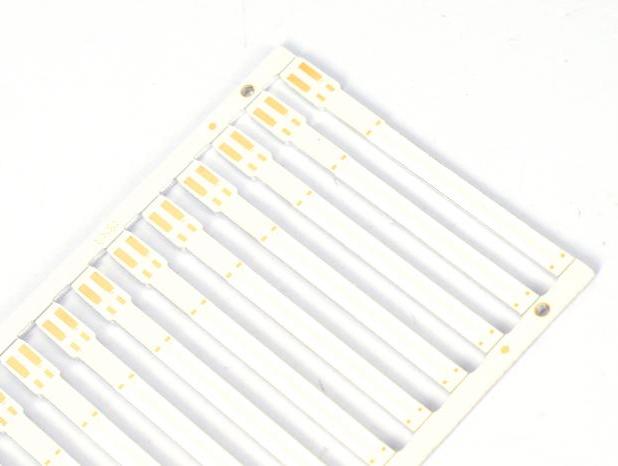
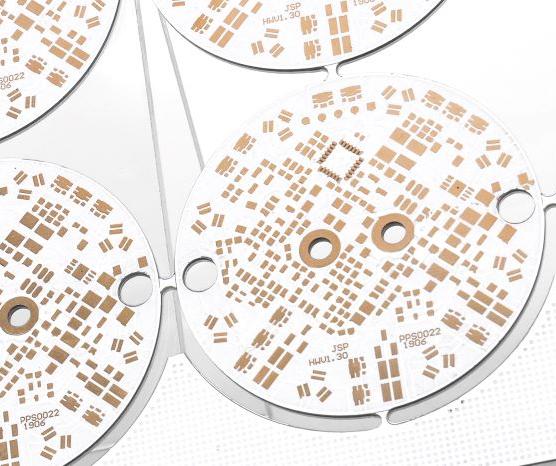
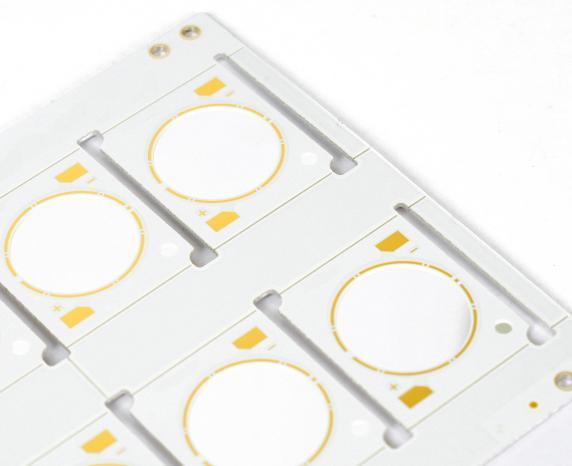
  • Metal Core Printed Circuit Board (MCPCB)
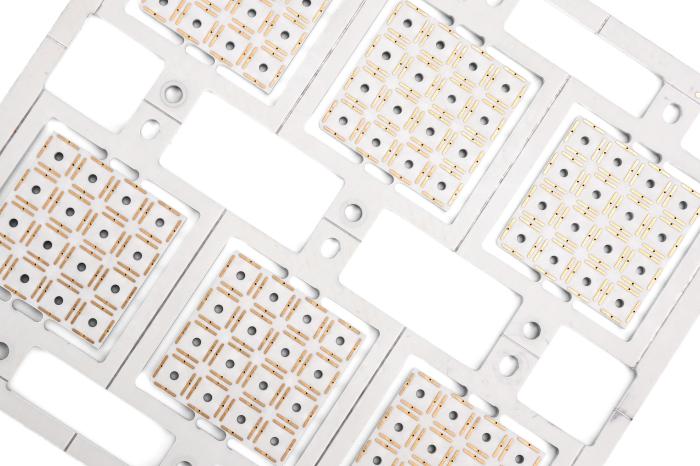
  • Ceramic Board
  • SinkPAD Board
  • Other special PCB such as heavy copper PCB, HDI PCB, RF PCB, and so forth
  • PCB assembly

In a word, with the development of electronics, it’s necessary to have a functional part like the PCB that can keep up with the demand. Next step, contact us if you have PCB demands.

Differences Between Solder Mask and Solder Paste in PCB

December 7th, 2022

When it comes to solder mask and solder paste, there are some engineers confused about their functionalities and even most of laymen thought they are the same, this is not hypothetical, it is real that happened to me. So today let’s explain differences between Solder Mask and Solder Paste for you.

Part 1: What is Solder Mask?

If you had ever seen a printed circuit board, you may see there is a layer of green ink cover on the PCB surface while some orange-yellow areas didn’t cover by ink. In PCB industry, the green ink we called Solder Mask, or abbreviated as S/M, and exposed area is copper, they were leave as GND plane or soldering pads to mount electronic components.

Solder mask is a liquid acrylic oligomer, which has variety of colors such as red, blue, green, white, black. Green is commonly used in the process of PCB manufacturing, so some professional engineers call it as green oil.

Solder_mask

Solder mask applied on the PCB designed as a protection layer to avoid oxidation, corrosion and other environmental impacts when they leave production line. In addition, solder mask between solder pads also can help to prevent forming to solder bridge when assembly.

Below are some other functions of coating a layer solder mask:

  • Prevent physical line breaking of copper trace
  • Only weld in the area that must be soldered to avoid waste of soldering
  • Reduce copper pollution to soldering groove 
  • Prevent insulation deterioration and corrosion caused by dust, moisture and other external environmental factors 
  • With high insulation, so that the high-density circuit is possible

Part 2: What is Solder Paste?

Solder Paste also known as “Solder cream”, is a most important soldering material used in surface mount technology (SMT) process. Mainly function for soldering resistors, capacitors, ICs and other electronic components onto the PCB surface to form a permanent connection.

The solder particles are a mixture of solder formed by mixing solder powder, flux and other surfactants and thixotropic. Traditionally this used to be tin and lead, but with the legislation has been introduced around the world, to only use lead free solders. These may be made from a variety of mixtures, EBest Circuit (Best Technology) commonly used is SAC305 which includes 96.5% tin, 0.5% copper and 3.0% silver, some manufacturers also use 99.7% tin and 0.3% copper, whereas there are other mixtures that include other metals including tin.

Due to the role of solder paste in assembly, solder paste storage is extremely important. However, solder paste got into drying during storing became a common problem faced by most PCBA manufacturers, so How to solve solder paste dry problem is premier.

Solder_paste

Part 3: The Difference Between Solder Mask and Solder Paste

  1. Solder mask is a formal part of PCB, but solder paste ONLY for PCB assembly.
  2. Solder mask is not allowed on the solder pads while solder paste can be printed on the solder pads openings.
  3. Solder mask is used for applying solder mask ink, but solder paste is used for applying paste.
  4. Solder mask has many available colors, but paste mask visually gray.
  5. Solder mask is coating during PCB fabrication, but solder paste is printing when PCB assembly.

With over 16 years in PCB industry, EBest Circuit (Best Technology) is one of the most reliable PCB and PCBA supplier in Asia, we commit to provide high quality products with excellent service before and after sales, to take care our customers wholeheartedly, and to treat customers’ business as ours. At the same time, we keep learning and continually to improve ourselves so that we can catch up the latest technology trend and provide better and better service for our customers.

“Eight” Safety Spacings You Must Know In PCB Design

December 7th, 2022

There are many places in the Printed Circuit Board Design that need to consider the safety spacing, here we summarized Eight Safety Spacings in total to show you what spacing we should pay attention to when designing, they can be separated into two categories, one is Electrical-Related Safety Spacing, and another is Non-Electrical-Related Safety Spacing.

Electrical-Related Safety Spacings

  • Wire Spacing

As far as the processing capability of the mainstream PCB manufacturer is concerned, the spacing between the wires shall not be less than 0.075mm. The minimum line distance refers to line to line, line to pad space.  From a production perspective, the larger the better, and the more common wire spacing is 0.25mm by far.

  • Diameter and Width of Pad

From the processing capability of mainstream PCB manufacturers, the minimum diameter shall not less than 0.15mm if the holes on pad requires mechanically drilled. If used laser drilling, then hole diameter must greater or equal than 0.10mm. At the same time, the tolerance of hole diameters varies slightly according to different substrates. Generally, it can be controlled within 0.05mm, and the minimum width of the pad should not be less than 0.2mm.

  • Spacing between Pad to Pad

The spacing between pads must be at least 0.2mm as far as the processing capacity of mainstream PCB manufacturers concerned.

  • Copper and Edge of the Board Spacing

The spacing between electronic copper and edge of the board should be no less than 0.30mm, and it can be set spacing rule on the “Design – Rules – Board outline” page.

If it requires a larger area of copper, it is generally needs to set 0.5mm as a retraction spacing from the edge of board. In the PCB design and manufacturing industries, engineers often shrink the large area of copper coating to the edge of the board by 20mil for mechanical considerations of the finished circuit board, or to avoid the occurrence of curling or electrical short circuit caused by the exposure of copper on the edge of the board, rather than coating whole copper to the edge of the board.

There are many methods to handle such shrink problems, such as drawing a keepout layer and then set a distance between copper and the keepout. As a professional PCB manufacturer that have rich experience over 16years, there is a much easy way to set different safety spacings for copper objects. For example, the safety spacing of the whole board set as 0.25mm, then we can set copper to 0.5mm, which can achieve a shrink distance of 0.5mm, and the dead copper that may cause in some devices also can be removed as well.

Non-Electrical-Related Safety Spacing

  • Width, Height and Spacing of Legends

We can’t make any changes during the processing of text legend film, except that the line width of legend with D-CODE less than 0.22mm (8.66mil) is enlarged to 0.22mm, that is, the line width of legends L=0.22mm (8.66mil). 

The width of the whole charact legends W=1.0mm, the height of the whole legends H=1.2mm, the spacing between the legends D=0.2mm. When the text is less than the above standard, the text legends after printing will be blurred.

  • Spacing between Via to Via

The spacing between vias to vias is preferably not less than 8mil.

  • Spacing between Legend to Pad

Legends/Silkscreens are not allowed on the pads, otherwise, the covered area can’t be tinned and which will affect the assembly process finally. Generally, manufacturer requires a 8mil space to convenient for silkscreen printing, but if your PCB is small and limited in area, it is barely acceptable to leave a 4 mil safety space.

If some legends accidentally over the pads in your design, EBest Circuit (Best Technology) will remove or move to another area when get your approval to ensure good tinned.

Of course, design on a case-by-case situation.  Sometimes the screen printing is deliberately close to the pad, because when the two pads are very close, the screen printing in middle can effectively prevent the short circuit of the solder connection during soldering, and this is another case.

  • Mechanical 3D height and Horizontal Spacing

When mounting the components on the PCB surface, it is necessary to consider whether there will be conflicts with other mechanical structures in horizontal direction and spatial height.  Therefore, in the PCB design, the compatibility between components, finished products and product outer house and spatial structure should be fully considered, and the safety spacing should be reserved for each target object to ensure there is no conflicts occur in space.

In summary, there are many data and key points should be pay highly attention to while in PCB designing, EBest Circuit (Best Technology) manufactures varies of good quality PCBs for our customers, so please do not hesitate to contact us when you have PCB design, we can help to evaluate it freely for you.

Suitable Choice of Ceramic Substrate for Your Application

December 7th, 2022

With the rapid development of ceramic industry, Ceramic Circuit Board is widely used in semi-conductors and electronic packages fields because it provides an excellent electric conductivity, low thermal expansion and good insulation properties over standard FR4 based PCBs. As you can see from our website: https://www.bestpcbs.com/products/ceramic-substrate.htm, there are various kinds of ceramic substrate materials in the market, different materials have different functions and properties. Here we illustrated the different kinds of materials in the market as below for you to choose which one is ideal for your designs when needs come out.

Common ceramic substrate materials

Nowadays, the most commonly material in the market is oxidation material, it always used in automobile products as its wear resistance and good strength.

Besides, there are some nitrides and silicious can be used in high power products.

For a quick look, here I listed as following:

  • Alumina Oxide (Al2O3)
  • Alumina Nitride (ALN)
  • Beryllium Oxide (BeO)
  • Silicon Nitride (Si3N4)
  • Zirconium Oxide (ZrO2)
  • Silicon Carbide (SiC)

Characteristics of different substrate materials

Alumina Oxide (Al2O3)

Alumina substrate characterize as a pure white substrate and the most commonly used ceramic substrate material in the electronics industry because of its high strength and chemical stability compared to most other oxide ceramics in terms of mechanical, thermal and electrical properties, and the richful source of raw materials is suitable for a variety of technical manufacturing and different shapes. The most commonly used Alumina Oxide are 96% alumina and 99.6% alumina.

  • 96% alumina can be used to fabricate Thick Film Ceramic Circuits as it has excellent electrical insulation, mechanical strength, good thermal conductivity, chemical durability and dimensional stability. The surface roughness is generally 0.2~0.6ÎŒm, and the maximum using temperature of the substrate can reach 1600℃
  • 99.6% alumina is the mainstay of most Thin-film electronic substrate applications, commonly used in circuit generation for sputtering, evaporation and chemical vapor deposition of metals. 99.6% alumina has higher purity, smaller grain size, and excellent surface smoothness than 96% alumina (the surface roughness is generally 0.08~0.1ÎŒm), and it can withstand maximum 1700°C temperature when applied in applications.

Alumina Nitride (ALN)

Currently, Alumina Nitride won the high attention of the public by means of two key excellent properties: one is high thermal conductivity. Alumina nitride offers a big increasing in thermal conductivity (170Wm.k), which is approximately 100-200 times than FR4 substrates did, while alumina oxide only offers 24W/m.K.

Another characteristic is silicon-matched expansion coefficient of 4.7ppm/°C 20~300°C, this makes it suitable for used in extremely harsh environments likely in high temperatures. The disadvantage is that even an extra thin oxidation will affect the thermal conductivity. Only by strictly controlling the material and process, can aluminum nitride substrate be produced with good consistency. That’s why the alumina nitride is expansive than alumina oxide.

By visually, alumina nitride has an off-white color, that give us a chance to distinguish it with alumina oxide easily.

Beryllium Oxide (BeO)

Beryllium Oxide has a high thermal conductivity than alumina, therefore, it almost used where high thermal conductivity required.  But when the temperature exceeds 300°C, it drops quickly. It is not as widely used as alumina oxide or aluminum nitride, the most important thing is that its toxicity limits its development.

Silicon Nitride (Si3N4)

Silicon Nitride is a material with high fracture toughness and strong heat resistance are often used as alternative materials for modules in recent years. With strong mechanical, high temperature resistance, corrosion resistance and wear resistance, it is widely used in automotive shock absorber, engine, especially automotive IGBT products, as well as traffic track, aerospace and other fields.

Zirconium Oxide (ZrO2)

Zirconium Oxide is popular as its exceptional strength, toughness, biocompatibility, high fatigue and wear resistance (15times of alumina oxide) render it optimal for dental applications.

Silicon Carbide (SiC)

The essence of silicon carbide ceramic substrate is a silicon material, which determines its high current density characteristics due to its superior thermal conductivity.

In the meantime, the higher band gap width determines the higher breakdown field and higher operating temperature of silicon carbide (SiC) ceramic circuit board. 

The core advantages of silicon carbide are high temperature resistance, high pressure resistance, wear resistance, low loss and high frequency work.  Therefore, it is used for products with high heat dissipation, high thermal conductivity, large current, large voltage and high frequency operation.

Send us inquiry for fabrication

At present, you should have a brief acknowledge about different ceramic substrate materials and their characteristics, and you should be able to decide which materials is most suitable for you. If you still have some concerns or different opinions about substrate for Ceramic pcb, welcome to contact us, Best Tech will offer you free advice and technical support for ceramic substrate choice.

Differences Between Immersion Gold and Gold Plating In PCB?

December 7th, 2022

With more and more extensive usage of Printed Circuit Boards, the IC become more and more integrated and IC pins on PCB are also more denser (such as 0603, 0402 spec ICs), which brings a big difficulty to SMT process. In addition, the shelf life of HASL board is very short, and Gold-plated board can solve such problems perfectly, that’s why it is common and popular to use gold board in high precision and ultra-small assembly process. Nowadays, there are two kinds of gold coating method in PCB industry – Immersion gold & Gold plating. To make you a sense of them, today we will simply introduce their definition and the differences between two of them.

Part 1: What is Immersion Gold (ENIG)

Immersion Gold also named as ENIG (Electroless Nickel/Immersion Gold) is generating a layer of coating by chemical REDOX reaction, is a kind of chemical nickel gold deposit surface finish during PCB manufacturing process. We can get a thicker layer of gold, but as its weak adhesion through immersion, it is also known as Soft Gold.

Part 2: What is Gold Plating

Gold plating is an another surface treatment of depositing a thin layer of gold on PCB surface by plating, the working principle is to dissolve nickel and gold (commonly known as “gold salt”) in the chemical potion, then immerse the circuit board in the electroplating cylinder and through the current on the copper foil surface of the PCB to generate a layer of gold plating. The gold particles attached to the PCB, as strong adhesion also known as “hard gold”. Gold plating is widely use in electronic products as its characteristics of hardness, excellent abrasion resistance and not easy to be oxidized. For example, the gold finger of flash driver in our computer is hard gold.

Part 3: The differences between Immersion Gold and Gold Plating

  • In generally, the gold thickness of immersion is thicker than plating, and immersion gold is golden yellow while gold plating is yellowish white, so just from appearance, most customers prefer like immersion gold.
  • Due to the crystal structures between them are different, immersion gold is easier to operate in SMT process, and won’t cause the poor soldering issue.
  • Immersion gold is softer than plating way, so if boards required gold fingers, it is always use plate-gold as its good wear resistance properties.
  • There is only nickel gold on the solder pad, so under the conductor skin effect, the signal transmission won’t be affected in copper layer.
  • Compared with gold plating, immersion gold has more denser crystal structure and is not easy to oxidation.
  • With the denser line width and space requirements, plating method is easily to cause short circuits, but since immersion gold board only has gold on solder pads, which won’t exist such issue.
  • The adhesive between solder mask and copper layer on circuit is stronger as there is only nickel gold on immersion board, so it is easier for engineers to make compensation when adjust line space.
  • Black-Pad won’t be happened to immersion board after assembly because it has good flatness than plating method.
  • Immersion gold is more economy than plating.

EBest Circuit (Best Technology) is a professional PCB manufacturer with over 16 years experiences, and we have rich and mature technical to fabricate immersion gold and gold-plated boards. Warm welcome to contact us at sales@bestpcbs.com if you have any questions or RFQs about printed circuits, we are always online.

A Guideline about Legend on Printed Circuit Board

November 29th, 2022

Printed circuit board is used to power up the electronic devices, and the legend on its surface been known as legend text or silkscreen text to be aim at providing vital information to electronic manufacturers or end users. This post is a guideline to help you understand what information we can gain from those legends and what we need to pay attention to when design them.

A brief introduction about PCB legend

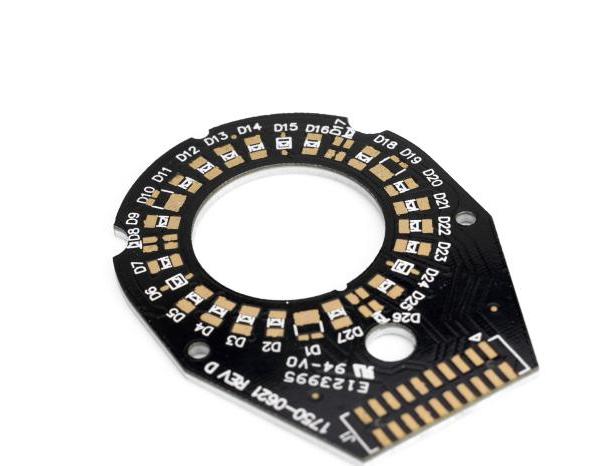
Though a printed circuit board doesn’t require any legend/text to function technically, the text provides key information to end users to test, assemble and troubleshoot, and generally we can obtain following information from the legends:

  • Branding information

This includes manufacturer’s information, serial numbers, date code and other information, which prevents the copying of design.

  • Part number provided

Part numbers are added on the circuit boards to enable replacement or design evolution whenever needed.

  • Version of product

Sometimes versions were updated, and the legend is added on the circuits to identify the specific version and backtrack the date.

  • Reference of components indicators

This may feature components information such as indicators, orientations and other information.

  • Safety Precautions

These are warning signals that are added to protect users from electric shocks. A few examples of these may include grounding, high voltage, and so on.

  • Circuit Identification

Users and designers can identify circuit names from legends to understand testing points, ground points, component interconnect, so forth.

  • Polarity indicator for certain components

Some components such as diodes, LED chips, electrolytic capacitors require to a distinguish of polarity when assembly, text legends help to indicate the right polarity to ensure assembled correctly and perform functionality when reach to consumers.

  • Authentication indication

Silkscreen text shows the boards are authenticated or conforms to certain security certification, such as RoHS, 94V-0, UL


  • Test points and troubleshooting assistants

Help to correctly perform testing including resistance measurement, voltage measurement, function testing and so forth.  In addition, text legend enables to troubleshoot while issues or debugs happened and repair is required.

  • Component outlines indicating where components should go

Legends provides a great help during assembly process, it helps the operator quickly find where each component should be, so it is recommended to add text legends when PCB need to be assembled.

General Parameters for PCB Legend in EBest Circuit (Best Technology)

To understand the capabilities of legend printing of EBest Circuit (Best Technology), here we listing some general parameters for your reference:

  • Legend colors can be white, black, green, yellow or other colors depend on customer’s preferences.
  • Legend line width is range from 5mil to 7mil
  • Text height can set at 30mil
  • Maximum text width can be 17mil
  • Printing methods are screen printing, direct legend printing and Liquid photo imaging. (Direct legend printing is commonly used by far.)

Important factors need to be considered during designing

Although legends are easy to be printed, there are still some key points need to pay highly attention when you are designing.

  • Legend orientation: To maintain a good reading appearance for user, please make sure all legends throughout the board have a same orientation.
  • Choose a standard color and shapes for marking, this is a most economy way to save cost.
  • Avoid overlapping: Overlapping is one of the most common problems that manufacturer faced. Legend always be related to PCB layout, and components reference will be also designated when circuit board layout finished. So if the legend was overlapped, it must be moved to another place and that may cause component reference was located in a wrong position, so it is always recommend to double check all the legends, to make sure they are clear and in the correct position when the whole board layout was completed.
  • Do not place the silkscreen text on all four directions, this will lead to confusions when the circuit board is undergoing repair.
  • Leave a few mils space for some common potential printing errors, this will help manufacturer to reduce the possibility of errors.

Every PCB manufacturer has its unique style and pattern when it comes to legend printing, so working files confirmation plays an important role before circuit fabrication, EBest Circuit (Best Technology) gives a great respect to the original files to our customers, we won’t start production until get approval of working files from customers, so please do not worry about it if you have such concerns. In addition, as a professional printed circuit board manufacturer in Asia, we are confident that we can provide you with high quality PCB, welcome to contact us if you have PCB needs.

How To Do Failure Analysis In Printed Circuit Board

October 29th, 2022

Nowadays, printed circuit board plays a more and more important role in electronic products, whether for personal use or commercial use, failure PCB can effect the usage of electronic products and cause a serious consequence. So, how to quickly detect the PCB fault problem?

Here, Best Tech summarized seven methods to locate fault PCB quickly.

  • Use testing equipment

The typical equipment including Automated Optical Inspection (AOI) equipment, X-Ray Fluoroscopy, Optical Microscopy, 1000x magnifying glass. When some failures happen and we don’t know what is the specific position, properly use of these detection devices can help us quickly locate the faulty PCB.

Scratch-on-PCB
  • Visual inspection

Visual inspection is the most common and easy method to position those defectives in printed circuit board. It can identify defects such as overlapped marks, solder joint short, signs of overheating circuit boards, and burned components.  When some problems are difficult to identify with our naked eye, magnifying glasses can help to identify some short circuits, welding bridges, open circuits, solder joints and circuit board wiring cracks, component offset, etc. 

  • Components inspection

If the printed circuit board was assembled with some electronic components, we can perform a components inspection to locate the failure. Especially when low resistance is detected between the component pins, it is best to remove the component from the PCB circuit for specialized testing. If the resistance is still low, then this component is the culprit, otherwise further investigation will be required.

  • Power on printed circuit board

Visual inspection is only suitable for checking the appearance of outer layers of the circuit board, instead of for checking the inner layer of the circuit board.  If there are no visible defects in the appearance, you can power up/on the board and perform a more detailed test to determine whether the board is working properly or not.

  • Low voltage measurement

The first thing to confirm is whether the voltage of each chip power pin is normal, and then check whether the various reference voltages are normal, and whether the working voltage of each point is normal. Since the copper trace on the circuit board has resistance, the voltage generated through different parts of the copper trace is also different.  Then you can use a voltmeter or multimeter to measure the voltage between different parts along a short. If you find that the voltage value is getting smaller and smaller, you are getting closer to find out a short circuit.

For a simple example, when a typical silicon triode is on, the BE junction voltage is around 0.7V, while the CE junction voltage is around 0.3V or less.  If the BE junction voltage of a triode is greater than 0.7V (except for special triode, such as the Darlington tube), the BE junction may be open.

  • Touch circuit board with your finger

In general, when some failure happened, some areas on the circuit board will be getting more and more heat. In this time, we can try to touch the circuit board with fingers to find out areas with heat, and it will help us to pinpoint the problem. However, be careful to use short-circuit copper trace power supply and avoid burns or electric shock.

  • Repair short/open

After identifying a short or open circuit on the PCB, the next step is to isolate the problem.  While this is easy to do on the outer surface of the board, it is a challenge for the inner layers.  Possible solutions include drilling through holes or cutting appropriate external copper traces.

This is the end of this article, if you have more better methods to locate the failure printed circuit board, warm welcome to contact us, we can analyze together.

Why ENEPIG More Suitable for Ceramic PCB Wire Bonding?

October 20th, 2022

There are many surface treatment choices that can be used on Ceramic PCB, but why ENEPIG is one of options we always recommend to our customers whom have wire bonding demands?

In the application of Ceramic PCB, COB or wire bonding was widely used for the packaging technology in thin, short, high speed of electronic products. The Chip On Board (COB) technology refers to a technology in which bare chips are directly attached to the PCB board and then connected electronically through metal wires, namely “Wire Bonding”. Due to gold wire has an excellent electrical conductivity, thermal conductivity, corrosion and oxidation resistance, gold wire is often used as a main bonding material in microelectronics packaging.

What is ENEPIG?

ENEPIG, is a type of surface treatment on Printed Circuit Boards and ceramic PCB, the full name of it is Electroless Nickel – Electroless Palladium – Immersion Gold, now it is widely used in wire bonding field.

How does it work and what’s the standard thickness of each layer?

  • Electroless Nickel: Nickel acts as a barrier layer, preventing copper from interacting with the other metals involved in this plating technology, particularly gold. The layer is deposited on the catalytic copper surface using an oxidation-reduction reaction. The result is a layer that is between 2.0 to 5.0 microns thick.
  • Electroless Palladium: Palladium is a relatively stable metal at room temperature, and it is difficult to be oxidized within 400℃. The chemically deposited palladium layer has a neat lattice arrangement, uniform grain size and compact structure. Adding palladium layer between nickel layer and gold layer can effectively prevent the diffusion of nickel layer to gold layer. The Palladium is a layer with a thickness between 0.03 to 0.10 microns, it also depends on the final applications.
  • Immersion Gold: The main function of the gold layer is to bond with the gold wire. If there is no palladium layer as a diffusion barrier between the nickel layer and the gold layer, the gold layer can also bond with the gold wire after reflow, as long as the gold layer reaches a certain thickness. For example, when the thickness of the electroplated nickel gold reaches 0.3um, it can bond with the gold wire. In addition, gold itself has a good bonding ability with gold wire, and in ENEPIG process, due to the palladium layer protects the gold layer from the pollution of nickel, only a thin gold layer (0.03um~0.05umm) is needed to have a good bonding property. This’s why there’s cost advantage of ENEPIG than that of thicker ENIG.
(ENEPIG product)

Why choose ENEPIG?

ENIPIG has a good wiring bonding ability, solder joint reliability, multiple reflow soldering and excellent storage time, can correspond to and meet the requirements of a variety of different assemblies.  Below is a comparison about performance of different surface treatments:

(Comparison-about-performance-of-different-surface-treatments)

Advantages  of ENEPIG

  • “Black Nickel” free — The palladium layer separates the Nickel layer from the gold layer, it can prevents the mutual migration of gold and nickel, so no black nickel will appear
  • Excellent gold wire bondability — the gold plating/coating is very thin, can be used for gold wire bonding as well aluminum wire bonding
  • Palladium acts as an additional barrier layer to further reduce copper diffusion to surface, thus ensuring good solderability
  • Cost-effective than ENIG
  • Lead-free nickel
  • Good compatibility between coating and solder paste
  • Very suitable for packaging components such as SSOP, TSOP, QFP, TQFP, PBGA

EBest Circuit (Best Technology) is a 16+ years PCB manufacturer and we made many ENEPIG PCBs and ceramic PCBs for our customers, welcome to contact us if you have demands on ENEPIG PCB.

Why it is difficult to make different copper thicknesses on different layers for MCPCB

October 14th, 2022

With the development of technology, we need the MCPCB to be multi-layer. 1 layer MCPCB is not enough for making some high-quality precision equipment and products.

So now, 2 layers MCPCB becoming more and more popular.

Normally, we make 1OZ, 2OZ and 3OZ copper thickness for each layer for aluminum or copper core/base PCB. The thickness of copper for top and bottom layer are the same.

But recently, more and more customers want the MCPCB to be made with different copper thicknesses on top and bottom layer.

For example, they want 1OZ copper on top layer and 3OZ on bottom layer.

But we don’t suggest to do that, why? Let me do some explanations.

  1. Different copper thicknesses on top and bottom layer will increase the difficulty for production. Because we put the MCPCB into etching liquid to do the etching, we need to use film to protect one side from etching liquid, but if it can’t be protected well completely, it will be etching too, then it is rejected.
  2. Different copper thicknesses on different sided will cause the PCB twist finally if the stack up is double sided (See below double sided stack up)

But if the stack up is 2L (See below 2L stack up), the FR4 PCB is twisted then will affect the lamination for FR4 PCB and aluminum/copper base.

  1. Due to increase the difficulty of production, so the price will be increased too.
  2. Lead time will be longer than normal since the production process is much more completed.
  3. The reliability is not good.

Finally, it is better to do the same copper thickness for each layer for multi-layer MCPCB.

For knowing more knowledge about MCPCB, please email to sales8@www.bestpcbs.com

National Day Holiday

September 30th, 2022

Time goes by so quickly, after a short holiday of Autumn Festival, our National Day Holiday (October 1st, 2022) also on its way.

National Day is a very important and special festival for Chinese people, it has a great significance for us, it is not only the birthday for our motherland, also is the great day of the founding of the People’s Republic of China, and 2022 is the 73rd anniversary.

On October 1st, 1949, Chairman Mao, officially declared the formation of the People’s Republic of China before a crowd of 300,000 in Tiananmen Square while waving the newly created Chinese flag. The declaration followed a civil war in which communist forces emerged victorious over the Nationalist government. On December 2, 1949, at a meeting of the Central People’s Government Council, October 1st as National Day was ratified by the First National Committee of the Chinese People’s Political Consultative Conference.

Chairman-Mao-declared-the-formation-of-People’s-Republic-of-China

Traditionally, there are four mainly customs to celebrate this special day.

  • Decorating with colorful neon light and five-star red flag

Every National Day in China, enterprises and institutions will hang colorful neon lights or five-star red flags with the slogan of “celebrate the National Day” to celebrate it, and the square is placed on festive bonsai and balloons, with a happy atmosphere to meet the National Day.

Decorating-with-colorful-neon-light-and-five-star-red-flag
  • Golden Week

Since from 1999, the Chinese government expanded the celebrations by several day to a seven-day holiday, that is called “Golden Week” similar to Japan’s. Because it is a second-long vacation in the whole year (Spring festival is the longest holiday in year), most of people will travel to other cities or countries, or tourist attractions to enjoy a relaxing holiday with their families and friends, that’s why in National Day holiday, every place is crowded, especially those famous scenic spots or cities.

Many-people-visit-to-Tiananmen-square
  • Military parade

To display China’s armed forces and build national confidence & pride, since the founding of People’s Republic of China, we held total 11 times military parade between 1949 to 1959, but after the reform and opening up, in September 1960, the Central Committee of the Communist Party of China and The State Council decided to reform the system of National Day ceremonies in line with the principle of “practicing strict economy and building the nation with diligence”, implementing “one-small celebration every five years, one-big celebration every ten years, and a military parade every big celebration”. And until to 1984, central committee decided to recover military parade, so we had a great celebration for our motherland’s 35th anniversary that year. (The last military parade in China is in 2019 year.)

China’s-Military-parade-in-2019
  • Flag-raising ceremony in Tiananmen

Although there is a flag-raising at Tiananmen every day in Beijing, the flag-raising ceremony on National Day will be particularly grand, and the flag-raising time is 06:10am Beijing time.

Flag-raising-ceremony-in-Tiananmen

Normally Chinese people use this time to stay with relatives and to travel together. Visiting amusement parks and watching special television programs on the holiday are also popular activities, and nowadays, holding a wedding in National Day holiday also is popular and common by far. In my impression, when watch the military parade on TV with my family and friends in National Day, I feel so proud to be a part of a prosperous nation.

So to celebrate such a great day for our motherland, EBest Circuit (Best Technology) also have a short-long holiday to greet its arrival, and below is our holiday schedule:

Close time: October 1st -5th

Resume to work: October 6th

Due to the holiday, lead time of any circuit boards (FR4 PCB, MCPCB, Ceramic PCB, Rigid-flex Circuit) will be postponed 2-5 days, if any order urgently, please tell our sales reps and we will communicate to get a better solution, thanks for your kindly understanding.