





Rigid EMS PCBA is a structured, manufacturer-led approach that combines rigid PCB fabrication, component sourcing, assembly, testing, and traceability into one controlled production program. This article explains what a turnkey rigid EMS PCBA program includes, how it differs from conventional assembly, how rigid-flex requirements are supported, and how to evaluate cost, risk, and supplier fit.
If you are outsourcing a build, what usually goes wrong before the first good board ships?
- Quotes look comparable, but hidden assumptions later trigger rework, delays, or cost adders.
- BOMs contain end-of-life or fragile supply items, and shortages stall the line at the worst time.
- DFM issues surface after ordering, forcing spins, scrap, or painful ECO cycles.
- Rigid-flex integration creates unexpected yield loss when process windows are not aligned.
- Quality evidence is unclear, so you cannot prove what happened when a failure shows up in the field.
A capable manufacturer solves these risks upfront by turning uncertainty into controlled, reviewable inputs and measurable outputs.
- Provide an expert DFM review before PO to eliminate manufacturability traps early.
- Optimize the BOM with approved alternates and sourcing rules to prevent line stops.
- Standardize build instructions and process windows to stabilize yield across batches.
- Apply rigid-flex-specific handling, fixturing, and inspection to protect interconnect reliability.
- Deliver traceability and test evidence so every lot has accountable manufacturing data.
EBest Circuit (Best Technology) is a PCB and PCBA manufacturer focused on engineer-facing execution: expert DFM review, BOM optimization, and production control that keeps builds predictable from prototype to volume. With in-house PCB and PCBA facilities, a mature supply chain network, and a digital workshop that supports fast traceability, we help OEM teams reduce rework and accelerate product validation without sacrificing reliability. For quotations or engineering review requests, pls feel free to contact us via sales@bestpcbs.com.
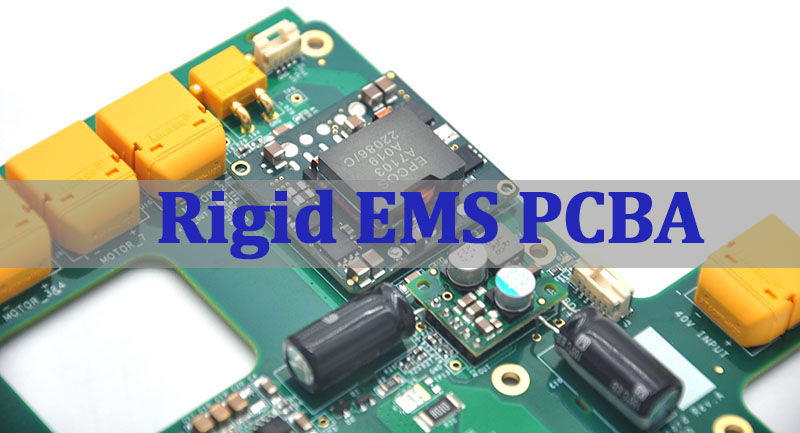
What Rigid EMS PCBA Covers In A Turnkey Program?
A turnkey rigid EMS PCBA program is not “assembly plus purchasing.” It is a controlled scope that starts with engineering review and ends with test evidence and shipment-ready documentation.
What It Typically Includes
- Engineering Intake: DFM, DFA, and DFT checks based on Gerber, BOM, Pick-and-Place, and fabrication notes.
- PCB Fabrication: Rigid PCB build with controlled stack-up, impedance needs (if applicable), and finish selection.
- Component Sourcing: Approved vendors, alternates, lifecycle screening, and counterfeit risk controls.
- PCBA Assembly: SMT/THT build, reflow profiling, AOI, and process control checkpoints.
- Testing And Evidence: Flying probe or functional test, plus test logs and yield reporting.
- Traceability: Lot tracking for materials and production history tied to the shipment.
Quick View Table For Buyer Alignment
| Turnkey Module | What You Should Receive | What It Prevents |
|---|---|---|
| DFM Review | Findings, constraints, and fixes | Late-stage rework |
| BOM Optimization | Alternate list, risk flags | Line-stop shortages |
| Assembly Control | Work instructions, profiles | Unstable yield |
| Test Evidence | Pass/fail data, logs | “No proof” disputes |
A turnkey rigid EMS PCBA program is strongest when the manufacturer treats engineering review and documentation as part of production—not as optional extras.
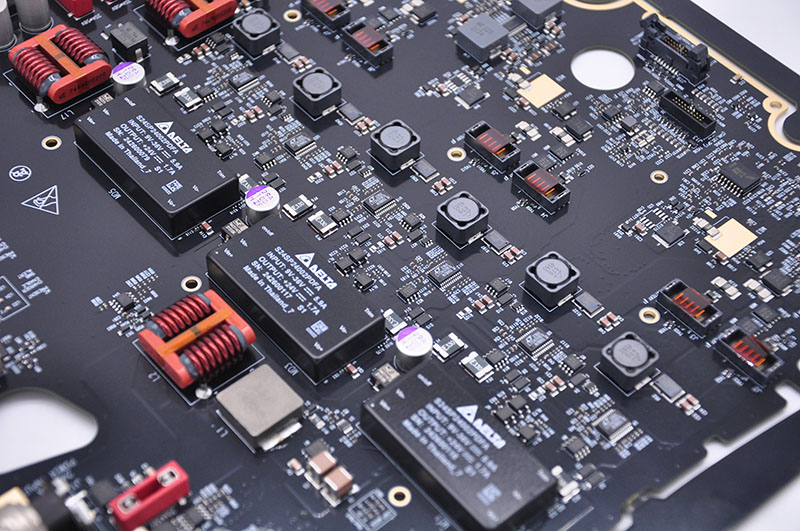
How Do Rigid EMS PCBA Programs Differ From Conventional PCB Assembly Models?
The difference is governance. Conventional assembly often begins after purchasing is “good enough.” A rigid EMS PCBA program begins with DFM clarity and stays measurable through build and test.
Practical Differences That Matter
- DFM Happens Before Commitment: Risks are surfaced before the PO, not after parts arrive.
- Quote Assumptions Are Explicit: Alternates, test scope, and yield expectations are defined up front.
- BOM Is Managed, Not Just Bought: Lifecycle, second sources, and risk items are handled deliberately.
- Process Is Repeatable: Profiles, instructions, and inspection gates reduce lot-to-lot drift.
- Evidence Is Deliverable: Traceability and test outputs are part of the customer deliverable.
Example Of Why DFM Review Changes Cost Outcomes
A common driver of surprise cost is rework. A simplified way to think about it:
Total Cost Impact ≈ (Rework Hours × Labor Rate) + (Scrap Units × Unit Cost) + Schedule Delay Cost
An expert DFM review reduces the probability of rework and scrap, which is usually the most expensive “unquoted” line item.
To sum up, rigid EMS PCBA programs are designed to reduce ambiguity. Conventional assembly often assumes ambiguity is acceptable until it is not.
What Capabilities Should Buyers Expect From Rigid-Flex PCB Manufacturers?
In this article, rigid-flex PCB manufacturers matter because rigid EMS PCBA programs often include subassemblies or interconnect designs that introduce rigid-flex constraints. Buyers should look for capability proof, not generic claims.
Capabilities Worth Verifying
- Stack-Up Control: Documented materials, thickness control, and bend-area rules.
- Process Compatibility: Assembly profiles and handling aligned to rigid-flex construction limits.
- Fixturing And Support: Proper carriers and tooling to prevent stress during reflow and test.
- Inspection Coverage: AOI strategy and X-Ray where needed for hidden joints.
- Yield Feedback Loop: Clear reporting on defect modes and corrective actions.
Buyer Check Table
| What To Ask | What A Good Answer Looks Like |
|---|---|
| How do you protect bend areas? | Defined handling rules and tooling |
| How do you control assembly stress? | Carriers, profiles, and work standards |
| How do you prove reliability? | Inspection + test evidence + traceability |
In closing, the best rigid-flex PCB manufacturers operate like process owners. For rigid EMS PCBA, that discipline must carry through sourcing, assembly, and test.
How Does Rigid EMS PCBA Support Rigid-Flex PCB Integration In Complex System Designs?
Complex systems often mix rigid boards with rigid-flex interconnects, or require rigid-flex subassemblies to reduce connectors and improve packaging. Rigid EMS PCBA support is about integration discipline: DFM alignment, process windows, and testability.
Where Integration Usually Breaks
- Unclear Assembly Constraints: Bend limits, keep-outs, or stiffener rules are missing.
- Thermal Profile Mismatch: Reflow settings stress the flex region or adhesives.
- Fixturing Gaps: No carrier strategy causes distortion or handling damage.
- Test Access Issues: DFT is not planned, so coverage drops after integration.
What A Manufacturer Should Do Instead
- Run Joint DFM Review: Rigid board + rigid-flex constraints evaluated together.
- Define Handling And Tooling: Carriers, panelization, and support points documented.
- Lock Process Windows: Profiles validated to protect sensitive regions.
- Plan DFT Early: Ensure probe points, connectors, and functional interfaces are workable.
Rigid EMS PCBA enables rigid-flex integration when engineering review is integrated into the build plan rather than treated as a last-minute checklist.
How Do Rigid EMS PCBA Providers Control Reliability Risks In Rigid-Flex PCB Projects?
Reliability risk control is not one step. It is a chain: material control, process stability, inspection, and traceable evidence.
Core Reliability Controls
- Incoming Material Verification: Critical materials and components checked against spec.
- Controlled Assembly Parameters: Stable paste, placement, and thermal profiles.
- Targeted Inspection: AOI for solder quality, X-Ray for hidden connections where applicable.
- Failure Mode Feedback: Clear defect categorization and corrective action closure.
- Traceability: Lot-level linkage between materials, process history, and test results.
A Compact “Reliability Evidence” Checklist
- AOI records (where applicable)
- X-Ray records (where applicable)
- Test logs with serial/lot mapping
- Reflow profile validation references
- Corrective action summary for recurring defects
Overall, a rigid EMS PCBA provider controls rigid-flex reliability by turning “best effort” into documented, repeatable production evidence.
How Can Rigid EMS PCBA Enable Long-Term Supply Chain Stability?
Supply chain stability comes from two things: BOM resilience and manufacturing predictability. Rigid EMS PCBA brings both together under one accountable owner.
Stability Enablers
- BOM Risk Classification: Identify single-source, long lead-time, and EOL items early.
- Approved Alternates Strategy: Pre-approve second sources to avoid emergency substitutions.
- Vendor Network Leverage: Broader sourcing access reduces disruption risk.
- Production Traceability: Faster root cause analysis reduces repeated disruptions.
- Change Control Discipline: ECO execution without losing configuration integrity.
Short Table For OEM Planning
| Stability Lever | OEM Benefit |
|---|---|
| Alternates Plan | Fewer line stops |
| Change Control | Fewer misbuilds |
| Traceability | Faster containment |
To wrap up, long-term stability is a program outcome, not a promise. Rigid EMS PCBA supports it by formalizing sourcing rules and enforcing production governance.
When Should OEMs Choose Wholesale Rigid EMS PCBA For Cost Control?
Wholesale rigid EMS pcba becomes the right decision when cost control depends on repeatability, not one-time bargaining. If volume increases, the cost drivers shift toward yield, line efficiency, sourcing leverage, and test strategy.
When Wholesale Makes Sense
- You Have A Stable Revision: Design churn is low, and ECOs are controlled.
- Your BOM Is Resilient: Alternates exist and lifecycle risk is manageable.
- You Need Predictable Lead Time: Shipping windows and delivery commitments matter.
- You Need Consistent Quality Evidence: Traceability and test reporting reduce disputes.
- Your Cost Target Depends On Yield: Process control reduces hidden cost.
Cost Control Levers To Ask For
- Panelization and throughput optimization
- Yield targets and defect Pareto reporting
- Component sourcing policy and alternates
- Test coverage strategy aligned to risk level
To summarize, wholesale rigid EMS PCBA is most valuable when the manufacturer can reduce hidden cost: rework, scrap, shortages, and schedule instability.
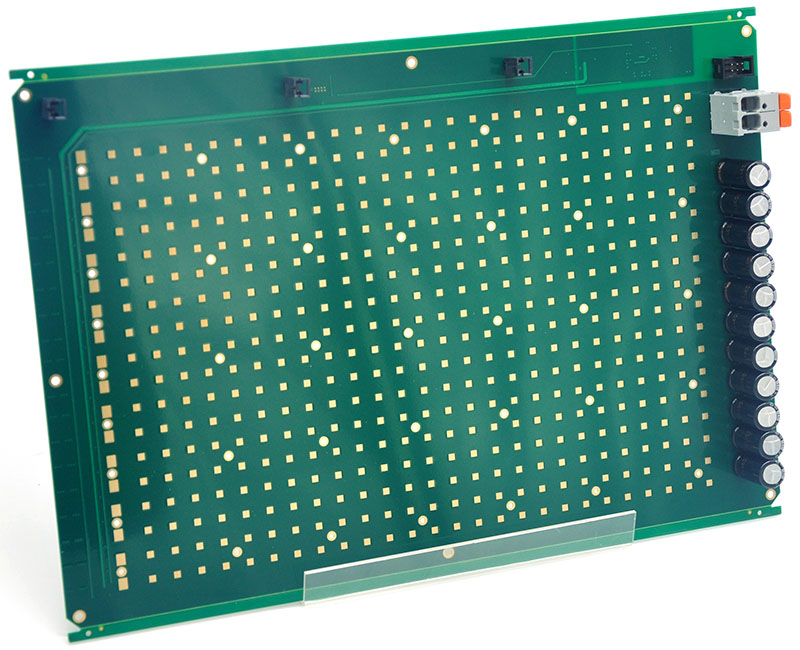
All in all, rigid EMS PCBA is a manufacturer-led production program that reduces build risk by combining expert DFM review, controlled sourcing, disciplined assembly, and verifiable test evidence. This article covered what turnkey rigid EMS PCBA includes, how it differs from conventional assembly, how it supports rigid-flex integration, and how OEMs can use wholesale rigid EMS PCBA to control cost and stabilize supply. EBest Circuit (Best Technology) reinforces these outcomes through in-house PCB and PCBA capability, mature certifications, and digital traceability that keeps quality and delivery predictable. For engineering review or quotations, pls feel free to contact us via sales@bestpcbs.com.
FAQs
What is the difference between rigid PCB and flexible PCB?
A rigid PCB uses a stiff laminate designed to hold shape, while a flexible PCB uses bendable materials designed for folding or dynamic movement. Rigid boards favor structural stability and straightforward assembly, while flexible circuits prioritize packaging efficiency and motion tolerance.
What is OEM vs EMS vs ODM?
- OEM (Original Equipment Manufacturer): Owns the product requirements and brand, and typically defines the design intent.
- EMS (Electronics Manufacturing Services): Builds the product, manages manufacturing, and often supports sourcing, test, and logistics.
- ODM (Original Design Manufacturer): Provides both design and manufacturing, often offering reference designs or full product development.
Is The Quote For Rigid EMS PCBA A Fixed Price Or An Estimate?
It depends on what is locked. A quote is closer to fixed when the BOM is stable, alternates are defined, test scope is specified, and yield/process assumptions are documented. If sourcing volatility, ECO frequency, or test requirements are undefined, the quote behaves more like an estimate.