Looking forPCB Malta manufacturer? This blog covers main pain points of Malta PCB manufacturer and our solutions to these points.
Malta’s electronics industry relies heavily on reliablePCB Malta manufacturerand high-quality PCB manufacturing Malta services. As demand for precision electronics grows locally, sourcing a trustworthy PCB manufacturer in Malta becomes crucial for seamless production workflows. This guide covers the top local players, core industry pain points, and how leading local manufacturers deliver tailored solutions aligned with Malta’s unique production needs and EU compliance standards.
Top PCB Malta Manufacturer in 2026
Company Name
Main Business
Core Advantages
Process Capability
Lead Time
EBest Circuit Co., Limited
PCB prototyping/mass production/HDI boards
19-year experience, 24h urgent prototyping
40-layer HDI, 0.1mm line width
24hrs-15 days
Electronics Malta Group
Consumer electronics PCBs
Cost-effective, RoHS compliance
16-layer, flexible substrate
4-18 days
Malta Electronics Solutions OÜ
Medical PCB
ISO13485, cleanroom
24-layer, biocompatible
12-22 days
TechPrint Malta Ltd
Single/double-layer PCBs
Fast small-batch
Standard finishes
2-10 days
HDI Malta Electronics OÜ
HDI/telecom PCBs
REACH compliance
30-layer HDI, PTFE
14-25 days
GreenCircuit Malta Ltd
Eco-friendly PCBs
Waste recycling
Halogen-free
9-18 days
Pain Points of PCB Malta Manufacturer
Urgent PCB prototyping demands cannot be met, with standard lead times exceeding 7 days, delaying project progress.
Design flaws are detected late in production, leading to rework, increased costs, and extended timelines.
Inconsistent product quality across batches, with issues like board warpage and poor solderability affecting usability.
High material costs for special substrates (e.g., high-frequency, medical-grade) without cost-saving alternatives.
Limited process capability for complex designs, such as HDI boards with blind/buried holes and fine line widths.
Lack of professional support for PCB printing Malta, resulting in unclear silk-screen and poor mark visibility.
Unreliable delivery schedules, with frequent delays due to inefficient production planning.
Insufficient testing processes, leading to hidden electrical faults in finished PCBs.
Our PCB Solutions to These Pain Points
Pre-Production Design Support: Provide free DFM analysis to identify potential design flaws early, avoiding rework. Our team optimizes designs for manufacturability while maintaining performance, addressing late-stage design issue pain points.
Flexible Prototyping Service: Offer 24-hour urgent PCB prototyping and 3-7 day standard prototyping, fully meeting tight project schedules. Advanced automated lines ensure fast sampling without compromising quality.
Cost-Optimization Solutions: Cooperate with top substrate suppliers to provide cost-effective alternatives for special materials. Customize cost-sensitive plans based on production volume, reducing material cost burdens.
Advanced Process Capability: Master HDI, blind/buried hole, and fine line processing technologies to handle complex designs. Professional PCB printing Malta equipment ensures clear silk-screen and durable marks.
Strict Quality Control: Implement full inspection for mass production, including automated optical inspection (AOI), electrical testing, and board warpage detection. Achieve consistent quality across batches with a 99.8% pass rate.
MES System Full-Process Traceability: MES enables real-time production monitoring and full-process traceability, covering raw material intake, processing, testing, and delivery. Clients access real-time progress to avoid delivery doubts. MES-driven smart planning ensures 99.2% on-time delivery.
Post-Delivery Support: Offer technical consultation and fault analysis for finished products. Provide rework solutions for any quality issues, ensuring worry-free use of PCB Malta products.
Why Choose EBest(Best Technology) asPCB Malta manufacturer?
24-Hour Urgent Prototyping: Unique rapid production lines complete PCB prototyping within 24 hours, the fastest in the Malta market for urgent orders.
Competitive Pricing: 19 years of industry experience enables optimized supply chains, offering 10-15% lower costs than peers for the same quality PCB manufacturing Malta.
Cost-Sensitive Solutions: Customize material selection and process plans based on project needs, reducing unnecessary expenses without sacrificing performance.
High On-Time Delivery Rate: 99.2% of orders are delivered on schedule, supported by smart production scheduling and sufficient inventory.
Strict Quality Control: Mass production adopts 100% full inspection, with 8-stage quality checks from material incoming to finished product delivery, ensuring stable quality.
Rich Industry Experience: 19 years of serving global clients helps optimize designs and processes, reducing overall project costs by 8-12%.
Free DFM Analysis: Professional team provides detailed design optimization suggestions before production, eliminating rework risks.
Comprehensive Certifications: Hold ISO9001:2015, ISO13485:2016, REACH, RoHS, and IATF16949 certifications, meeting diverse industry requirements.
One-Stop Service: Integrate PCB printing Malta, prototyping, mass production, and testing, simplifying procurement processes for clients.
Localized Support: Set up a local service team in Malta to provide fast technical consultation and after-sales support, responding within 2 hours.
Our PCB Rapid Prototyping Service
EBest’s PCB rapid prototyping service prioritizes speed to meet our clients’ urgent project needs. With four dedicated express production lines, we achieve a 99.5% on-time delivery rate for 24-hour expedited prototyping, 50% faster than the average in the Maltese market. Even for complex PCB designs, from single-layer boards to 40-layer HDI prototypes, we maintain the same rapid turnaround time, thanks to the strong support of high-precision exposure machines and automated processing equipment. Each prototype undergoes 18 rigorous quality checks (including AOI optical inspection and impedance testing), ensuring a 99.8% yield rate, consistent with mass production standards. Whether you face last-minute design adjustments or urgent project deadlines, our expedited service delivers reliable Maltese PCB prototypes on time, helping you shorten development cycles and gain a competitive edge in the market.
Background: A Malta industrial automation equipment firm required high-reliability PCB Malta for its new control system, targeting harsh industrial environments with strict temperature stability and anti-interference for 2GHz high-frequency signals.
Requirements: 16-layer HDI PCB, operating temperature -40℃ to 85℃ (1,000-hour thermal cycle resistance), impedance control ±5% for 2GHz signals, prototype lead time ≤10 days, mass production (5,000 units) ≤20 days.
Difficulties: Impedance stability control for 2GHz high-frequency signals (industry standard Df ≤0.01), 16-layer lamination risk of board warpage exceeding IPS standard (≤0.75%), and compressed lead time 30% shorter than market average.
Solutions: Adopted high-temperature FR-4 substrate (Tg 180℃) and optimized lamination parameters (180℃/350PSI) to control warpage ≤0.5%; Used precision etching (±0.02mm tolerance) with 3 rounds of impedance calibration tests; Allocated dedicated expedited lines via MES scheduling for time guarantee.
Results: Prototypes delivered in 7 days, 5,000 mass-produced units in 18 days (10% faster than required). All passed 1,000-hour thermal cycle and 2GHz anti-interference tests, with 100% pass rate and warpage ≤0.4%. The client launched on schedule, and 60% of their subsequent industrial control projects designate us as the exclusive PCB manufacturer in Malta.
FAQs of PCB Manufacturing Malta
Q1: How to avoid board warpage in multi-layer PCB production? A1: We optimize lamination parameters (temperature, pressure, holding time) and adopt symmetric layer design to balance stress. Post-production mechanical correction and thermal aging treatment further reduce warpage. Contact us for customized warpage control solutions for your PCB Malta project.
Q2: Can design flaws be detected before PCB prototyping? A2: Yes. We provide free DFM analysis to check for design issues like unreasonable line width/space, improper hole size, and silk-screen conflicts. This reduces rework rates by over 90%. Reach out for pre-production design validation.
Q3: What surface treatment is best for PCB printing Malta in humid environments? A3: Immersion gold or OSP surface treatment is recommended for humid conditions, as they offer excellent corrosion resistance. We can tailor surface treatment plans based on your application environment. Inquiry now for personalized suggestions.
Q4: How to reduce costs for small-batch PCB manufacture Malta? A4: We offer shared mold services and optimize material cutting to reduce waste. Our cost-sensitive solutions can lower small-batch production costs by 10-15%. Contact us to get a cost-saving quote.
Q5: What tests are conducted for medical PCB products? A5: Medical PCBs undergo electrical testing, insulation resistance testing, biocompatibility testing, and temperature cycle testing, complying with ISO13485 standards. We provide full test reports for each batch. Inquiry for medical-grade PCB prototyping and production services.
Why partner with a PCB manufacturing companyfor your next project? This guide reveals strategies from rapid prototyping to fast assembly, balancing cost and quality.
EBest Circuit (Best Technology) stands as your trusted PCB manufacturing partner with proven capabilities to accelerate your product development. Our 24-hour rapid prototyping service maintains a 99.2% on-time delivery rate, while our optimized assembly processes reduce standard lead times by 30-50% compared to industry benchmarks. With over 8,000 successful projects completed for clients in automotive, medical, and industrial applications, we deliver consistent quality through ISO 9001-certified production facilities achieving 99.97% first-pass yield. Our engineering team (averaging 10+ years’ experience) provides complimentary DFM analysis that typically identifies and resolves 28% of potential manufacturing issues before production begins. We maintain transparent pricing with no hidden costs, offering 15-20% cost advantages through optimized material sourcing and lean manufacturing. Contact us today for a competitive quote backed by our on-time delivery guarantee and dedicated project management from prototype to volume production: sales@bestpcbs.com.
Explore Online Industry Directories and Platforms: Begin by researching global directories and platforms dedicated to electronics manufacturing. These resources often list companies with expertise in PCB design, fabrication, and assembly, along with customer reviews and certifications. For instance, regions like Shenzhen, China, are renowned as hubs for PCB manufacturing, hosting numerous vendors with advanced capabilities. Additionally, industry reports or local environmental agency data may highlight clusters of certified and experienced firms in specific areas.
Attend Trade Shows and Virtual Exhibitions: Participate in trade shows or virtual exhibitions focused on electronics manufacturing. These events gather suppliers showcasing their capabilities, from quick-turn prototyping technologies to high-volume production lines. For example, international exhibitions in South Korea or other technology-forward regions often feature sections dedicated to SMT/PCB manufacturing, offering opportunities to compare vendors directly.
Leverage Professional Networks and Forums: Engage with professional communities or forums focused on hardware development or engineering. These platforms frequently host discussions, reviews, or recommendations from peers who have firsthand experience with PCB manufacturers. Networking within these groups can provide insights into vendors’ reliability, responsiveness, and technical expertise.
Seek Out Environmental and Sustainability Certifications: Verify the company’s compliance with environmental regulations, such as RoHS or local waste management guidelines. Manufacturers committed to sustainability often use eco-friendly materials, recycle waste, and implement energy-efficient processes, which can be important for long-term ethical and operational stability.
Research SMT PCB Manufacturing Exhibitions: Exhibitions focused on surface-mount technology (SMT) and PCB manufacturing provide a platform to discover companies specializing in advanced assembly processes. These events often include live demonstrations, technical seminars, and networking opportunities with industry experts.
What Should You Look for in a Reliable PCB Manufacturing Company?
Below are methods about how to choose a reliable PCB manufacturing company:
Quick-Turn Prototyping Capabilities: Prioritize for manufacturers that provide rapid prototyping services. This allows you to test designs, validate functionality, and iterate quickly without significant delays, accelerating your product development cycle.
Certifications and Quality Standards: Look for manufacturers with certifications such as ISO 9001, AS9100, or UL approval. These certifications indicate adherence to rigorous quality control processes, including automated optical inspection (AOI) and electrical testing, which minimize defects and ensure product reliability.
Service Range and Expertise: Choose a company that offers end-to-end services, from PCB design and prototyping to assembly and volume production. Firms experienced in handling diverse projects, such as multi-layer boards, HDI (High-Density Interconnect), or rigid-flex PCBs, demonstrate adaptability to complex requirements.
Material and Customization Options: Ensure the company can accommodate specific material needs, such as Rogers, FR-4, or high-frequency laminates, and offers finishes like ENIG or immersion silver. Flexibility in assembly processes, including SMT (Surface Mount Technology) and through-hole, ensures compatibility with your project’s technical specifications.
Environmental and Sustainability Practices: Verify compliance with environmental regulations like RoHS and REACH. Manufacturers committed to sustainability often use lead-free soldering, recycle materials, and minimize waste, aligning with ethical and operational standards.
Transparent Communication and Support: Partner with companies that provide dedicated project managers and clear documentation, such as detailed quotes, production timelines, and inspection reports. Responsive communication helps resolve issues promptly and ensures smooth collaboration.
Cost-Efficiency and Scalability: Evaluate pricing models that balance cost with quality, including tiered options for urgent orders. Ensure the manufacturer can scale production from prototypes to large batches without compromising deadlines or budgets.
Industry Experience and Client Feedback: Research the company’s track record in serving industries like aerospace, medical devices, or consumer electronics. Client testimonials and case studies offer insights into their problem-solving abilities and reliability under tight deadlines.
How to Reduce PCB Manufacturing Costs Without Comprising Quality?
Here are how to reduce PCB manufacturing costs without comprising quality:
Optimize PCB Design Complexity: Simplify designs by minimizing unnecessary layers, via counts, and intricate features. For example, reducing a 6-layer board to 4 layers can lower material and fabrication costs while maintaining functionality if the design permits. Standardize hole sizes and trace widths to streamline production and reduce errors.
Leverage Cost-Effective Materials: Select materials that balance performance and budget. FR-4, a widely used substrate, often provides a cost-efficient alternative to high-frequency laminates unless specific electrical properties are required. Collaborate with your manufacturer to identify affordable yet reliable substitutes for specialized materials.
Consolidate Orders for Bulk Production: Combine multiple projects or versions into a single larger order to negotiate volume discounts. Manufacturers frequently offer tiered pricing, reducing per-unit costs as quantities increase. If immediate bulk production isn’t feasible, phase orders strategically to align with production schedules.
Adopt Automated Manufacturing Processes: Partner with factories using advanced equipment like SMT (Surface Mount Technology) lines and AOI (Automated Optical Inspection). Automation reduces labor costs, minimizes human error, and accelerates production, ultimately lowering your expenses while maintaining precision.
Streamline Supply Chain Collaboration: Build long-term relationships with a trusted manufacturer to secure preferential pricing and priority support. Regularly compare quotes from multiple vendors to ensure competitiveness, but prioritize reliability over marginal savings. Engage suppliers early to refine designs and avoid costly post-production revisions.
Utilize Efficient Prototyping Methods: Prioritize for quick-turn prototyping services to validate designs before full-scale production. This reduces the risk of errors in mass batches, saving rework costs. Some manufacturers offer discounted or free prototypes for repeat clients, further cutting expenses.
Prioritize Quality Control Over Excessive Testing: While rigorous testing is essential, avoid over-specifying inspections. Work with your manufacturer to define necessary quality thresholds, such as visual checks for basic boards versus X-ray testing for complex HDI designs. Balancing testing with budget constraints prevents unnecessary costs.
Explore Sustainable Practices for Long-Term Savings: Choose eco-friendly materials or processes that may qualify for tax incentives or subsidies. Recycling programs for leftover materials or energy-efficient production methods can also reduce long-term operational costs.
Identify and Resolve Design Flaws Early: Prototyping allows you to test your PCB design under real-world conditions before mass production. This early-stage validation helps uncover issues like signal integrity problems, thermal management gaps, or component placement errors. Addressing these flaws during prototyping prevents costly rework or product failures later.
Reduce Long-Term Costs: While prototyping incurs upfront expenses, it saves money by avoiding large-scale production of faulty boards. For example, a minor error in a 4-layer PCB design could render an entire batch unusable, but a prototype lets you fix it at a fraction of the cost.
Accelerate Time-to-Market: Rapid prototyping services enable quick design iterations. By refining your PCB in weeks rather than months, you can launch products faster, gaining a competitive edge in fast-paced industries like consumer electronics or IoT.
Verify Functional Performance: Prototypes let you test electrical performance, mechanical fit, and thermal stability. For instance, you can confirm if a high-power PCB meets heat dissipation requirements or if a flexible PCB withstands bending stresses in its intended application.
Enhance Collaboration with Manufacturers: Sharing prototypes with your manufacturing partner fosters better communication. They can provide feedback on design-for-manufacturability (DFM) issues, such as trace widths or solder mask alignment, ensuring smoother transition to mass production.
Customize for Specific Applications: Prototyping supports experimentation with specialized features, such as HDI (High-Density Interconnect) for compact devices or rigid-flex PCBs for wearable tech. This flexibility ensures your product meets unique market demands.
Mitigate Supply Chain Risks: By validating component selections and layouts early, you reduce the risk of part shortages or obsolescence during mass production. Prototyping also helps identify alternative suppliers if certain components become unavailable.
Secure Funding or Investments: A functional prototype demonstrates your product’s viability to stakeholders, investors, or clients. It provides tangible proof of concept, increasing confidence in your project’s success.
How to Choose Materials for Budget PCB Prototypes?
Below are how to choose materials for budget PCB prototypes:
Start with Standard Substrates: Prioritize FR-4, the most economical and versatile substrate. It meets the needs of most general-purpose prototypes, offering a balance of durability, electrical insulation, and affordability. Unless your design requires high-frequency performance or extreme thermal stability, avoid premium laminates like Rogers or PTFE during prototyping.
Align Copper Thickness with Requirements: Choose standard copper weights, such as 1 oz/ft² or 0.5 oz/ft², to reduce costs. Thicker copper increases material and fabrication expenses. Ensure the selected thickness matches your prototype’s current-carrying needs to avoid performance issues.
Reduce Layer Count Strategically: Minimize expenses by using the fewest layers possible. A 2-layer board often suffices for simple circuits, while 4-layer designs handle moderate complexity. Avoid unnecessary ground or power planes unless critical for signal integrity in your prototype.
Simplify Surface Finishes: Select HASL (Hot Air Solder Leveling) with lead-free solder for cost efficiency. While ENIG (Electroless Nickel Immersion Gold) offers superior solderability, it comes at a higher price. HASL is adequate for most prototypes unless fine-pitch components or flat surfaces are required.
Repurpose Excess Materials: Collaborate with manufacturers to utilize leftover materials from other projects. Some factories offer discounted rates for boards fabricated using scrap or pre-cut panels, reducing waste and your expenses.
Consolidate Orders for Volume Discounts: Combine multiple prototype projects or versions into a single larger order to negotiate lower per-unit costs. Even if delivered in phases, bulk orders often qualify for tiered pricing.
Use Standard Drill Sizes: Avoid microvias or laser-drilled holes during prototyping. Larger, standard drill sizes (e.g., 0.3 mm–0.8 mm) are cheaper to fabricate and reduce the risk of drilling errors.
Engage Manufacturers Early in Design: Consult your PCB partner during the design phase. They can suggest material substitutions or design adjustments that cut costs without sacrificing functionality. For example, they might recommend a thinner board thickness or an alternative laminate brand.
Avoid Over-Engineering: Resist adding unnecessary features. Every additional specification—from impedance control to specialized coatings—adds cost. Focus on validating core functionality first, then refine details in later iterations.
Balance Performance and Budget: Prioritize material choices based on your prototype’s intended use. If testing basic functionality, standard materials suffice. Reserve high-performance options for final production if needed.
How to Achieve 24 Hours PCB Board Prototyping for Faster Time-To-Market?
To achieve 24-hour PCB prototyping and accelerate your time-to-market, focus on streamlining processes:
Simplify PCB Design Complexity
Reduce layer counts (e.g., use 2-layer instead of 4-layer boards) and minimize non-essential features like blind/buried vias or fine-pitch components.
Standardize hole sizes, trace widths, and spacing to align with automated production equipment.
Use pre-approved library components and modular design blocks to speed up layout.
Partner with Fast-Turn Manufacturers
Select a PCB manufacturer offering 24-hour turnaround services, often available for simple designs (e.g., ≤4 layers, ≤100mm x 100mm).
Confirm their capabilities include automated optical inspection (AOI), direct imaging, and in-house drilling to eliminate delays from third-party vendors.
Optimize File Preparation
Submit production-ready Gerber files, BOMs, and centroid data with clear annotations to avoid back-and-forth revisions.
Use design software with built-in DRC (Design Rule Check) tools to catch errors before submission.
Prioritize Rapid Communication
Assign a dedicated contact at the manufacturer for urgent queries.
Use real-time collaboration tools (e.g., shared cloud folders, instant messaging) to resolve issues instantly.
Leverage Local or Regional Suppliers
Choose a manufacturer in your time zone or region to reduce shipping delays and enable same-day courier pickup for last-minute adjustments.
Pre-Negotiate Expedited Terms
Establish a contract for priority access to 24-hour slots, even during peak seasons.
Understand any surcharges for rush orders and factor them into your budget.
Adopt Automated Ordering Platforms
Use online portals that allow instant quote generation, file uploads, and order tracking.
Some platforms offer AI-driven DFM (Design for Manufacturability) checks to flag issues in seconds.
Limit Customization for Initial Prototypes
Avoid specialized finishes (e.g., immersion gold) or materials (e.g., high-Tg laminates) unless critical for testing.
Postpone non-functional cosmetic features (e.g., silkscreen colors, edge plating) to subsequent iterations.
Plan for Parallel Workflows
While the PCB is in production, begin assembling components or programming firmware to save time.
Use 3D-printed mechanical fixtures to test form factors alongside PCB validation.
Implement Post-Production Quality Checks
Request a brief functional test (e.g., continuity check, basic power-on) before shipping.
If issues arise, rely on the manufacturer’s quick-rework team to fix minor problems within hours.
How to Minimize PCB Assembly Defects Without Slowing Down Production?
To minimize PCB assembly defects while maintaining production speed, implement the following structured, actionable strategies:
Automate Inspection Processes
Integrate Automated Optical Inspection (AOI) and X-ray machines to detect solder joint issues, misplaced components, or tombstoning in real time. These systems operate at high speeds without slowing down lines.
Use In-Circuit Testing (ICT) to validate electrical performance post-assembly, catching defects like opens, shorts, or component value discrepancies before final packaging.
Optimize SMT Programming
Streamline Surface Mount Technology (SMT) placement programs to reduce machine head movements. Shorter paths minimize vibration and component shifting during pickup-and-place cycles.
Prioritize component grouping by size or type to limit nozzle changes and feeder adjustments, which are common time-wasters.
Implement Real-Time Data Monitoring
Deploy IoT sensors on assembly lines to track parameters like oven temperature profiles, stencil print pressure, and conveyor speed. Alerts flag deviations instantly, preventing batch defects.
Use AI-driven analytics to predict defects based on historical data, enabling proactive adjustments before issues arise.
Standardize Workflows and Tooling
Adopt fiducial markers and panelization to improve alignment accuracy during reflow soldering. Consistent panel designs reduce setup times between jobs.
Use universal stencils with interchangeable apertures for frequent board revisions, eliminating stencil changeover delays.
Train Operators on Defect Prevention
Conduct daily 5-minute safety and quality briefings to reinforce best practices, such as proper ESD handling or solder paste stencil cleaning.
Cross-train staff to operate multiple machines, reducing downtime during shift changes or equipment breakdowns.
Pre-Qualify Component Suppliers
Partner with distributors offering tape-and-reel services with tight tolerance specifications to minimize feeding errors during SMT.
Require Component Outline Drawings (CODs) and 3D STEP models from suppliers to verify part compatibility with pick-and-place machines.
Adopt Lean Inventory Practices
Implement kanban systems for reels of common components (e.g., 0402 resistors, SOIC-8 chips) to ensure feeders are always stocked without overstocking.
Use humidity-controlled cabinets for moisture-sensitive devices (MSLs) to prevent popcorning during reflow without slowing production for pre-baking.
Design for Assembly (DFA) Guidelines
Enforce rules like minimum 0.2mm solder mask slivers and 0.15mm component spacing to reduce solder bridging risks.
Avoid fine-pitch QFNs or 0201 passives in time-sensitive projects unless automated optical inspection (AOI) can validate them at full line speed.
Which Automated Testing Tools Can Cut PCB Assembly Inspection Time by 50%?
Automated testing tools that can cut PCB assembly inspection time by 50% include:
Automated Optical Inspection (AOI) Systems
Use multi-angle cameras and AI algorithms to detect solder joints, component placement, and polarity errors at speeds exceeding 10,000 components per hour.
Reduce manual check time by 60–70% compared to visual inspections.
In-Circuit Testing (ICT) with Fixtureless Probes
Bed-of-nails testers with spring-loaded probes validate electrical continuity, component values, and shorts in seconds per board.
Modern systems cut test times by 40–50% via parallel testing and adaptive algorithms.
X-Ray Inspection for Complex Assemblies
3D computed tomography (CT) scanners identify voids, misaligned BGAs, or hidden solder joints in dense boards without disassembly.
Faster than traditional 2D X-ray systems, reducing inspection time by 30–50% for high-mix production.
Flying Probe Testers
Needle-less probes move dynamically to test unpopulated PCBs or low-volume runs, eliminating fixture setup delays.
Shorten test times by 50% for prototypes or small batches compared to ICT.
Boundary-Scan (JTAG) Testers
Programmatically verify connectivity for BGA or fine-pitch devices through chip-level self-tests, reducing physical probing needs.
Cut test time by 70–80% for complex digital circuits.
Conclusion
This guide has explored the full spectrum of PCB manufacturing services, from rapid prototyping solutions to cost-effective assembly with automated testing tools that enhance efficiency. Whether you need aerospace-grade boards or budget-friendly prototypes, selecting the right partner is critical for quality and speed-to-market. For reliable PCB solutions that combine advanced technology with competitive pricing, contact EBest Circuit (Best Technology) today. Our expertise in 24-hour prototyping, defect-minimized assembly, and material optimization ensures your project meets both deadlines and performance standards. Request a customized quote now to experience precision manufacturing tailored to your needs.
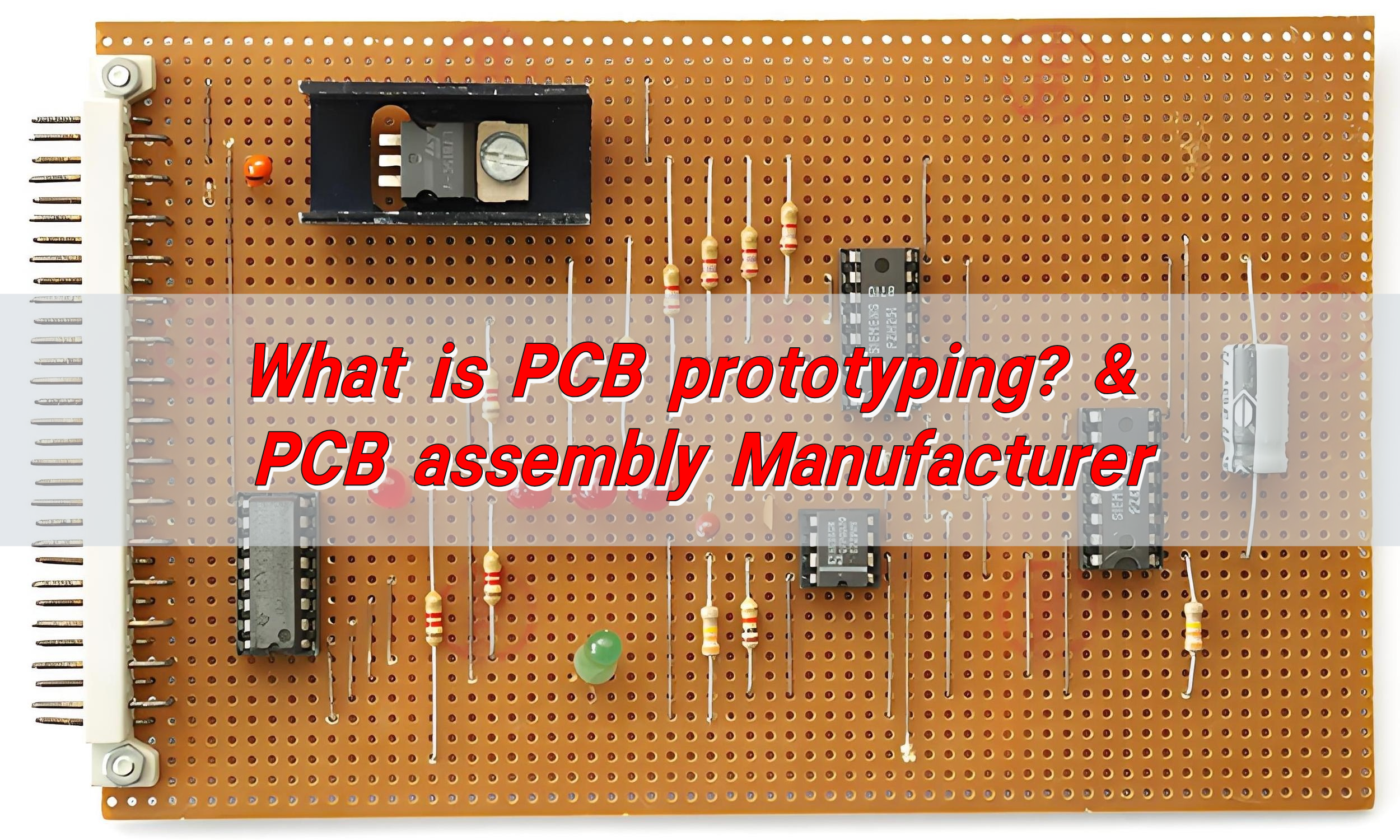
What is PCB prototyping? PCB prototype is a preliminary printed circuit board sample made according to the circuit design. It is used to realize the basic functions of the circuit and perform functional testing and verification. It usually adopts a rapid production method and has a relatively simple appearance and structure.
What is PCB Prototyping?
PCB prototyping is the process of creating a preliminary model of a PCB to test its functionality and design before mass production. This step is essential in electronics development, helping engineers and manufacturers identify and address design flaws early on.
Prototyping allows for the evaluation of components, circuits, and connections in a controlled setting. It ensures that the final PCB design performs as intended, saving time and reducing costs associated with errors.
What is the Point of Prototyping?
Prototyping serves as a safety net in the PCB manufacturing process. By creating a prototype:
Flaws are identified early: It prevents costly errors in large-scale production.
Design validation: Ensures that the circuit works as expected.
Component testing: Verifies compatibility and performance of components.
Cost efficiency: Saves resources by addressing issues before production.
This process bridges the gap between theoretical design and practical application, reducing risks.
Why Prototype Circuits Before Making a PCB?
Testing circuits before creating a PCB is vital. It allows:
Performance Evaluation: Determines how circuits function under real-world conditions.
Optimization: Refines layouts to improve performance and reliability.
Debugging: Identifies and fixes potential electrical issues.
Risk Mitigation: Ensures the design meets safety and compliance standards.
By prototyping, you ensure a smooth transition from design to final product.
How to Make PCB Prototyping?
The process of PCB prototyping includes several steps:
Design Creation: Use a PCB design tool like Altium Designer or KiCAD.
Material Selection: Choose materials suitable for your application.
Schematic Development: Draw circuit diagrams and plan connections.
Layout Design: Arrange components on the PCB for optimal performance.
Fabrication: Manufacture the prototype using a reliable service.
Testing: Test the prototype to identify and resolve any issues.
Each step is crucial to ensure the prototype meets your requirements.
How to Use a PCB Prototype Board?
A PCB prototype board is a platform for testing and validating designs. To use it effectively:
Prepare the schematic: Transfer the design to the board.
Assemble components: Place components in the designated positions.
Connect traces: Solder the components and complete the circuit.
Test functionality: Verify the board’s performance.
Prototype boards simplify the testing process, allowing for quick adjustments.
How Do Prototype PCBs Work?
Prototype PCBs work as functional testbeds for new designs. They replicate the final product but are made with less expensive materials and simpler processes. Engineers use them to:
Test circuit connectivity.
Assess signal integrity.
Verify design specifications.
Successful prototypes pave the way for full-scale production.
What is the Best PCB Design Tool?
Choosing the right PCB design tool is key to successful prototyping. Popular options include:
Altium Designer: Comprehensive and professional.
KiCAD: Open-source and user-friendly.
Eagle: Widely used with extensive libraries.
OrCAD: Robust for complex designs.
Select a tool that matches your project’s complexity and budget.
How Much Does a PCB Prototype Cost?
The cost of a PCB prototype depends on several factors:
Size and complexity: Larger and more complex designs cost more.
Material choice: High-quality materials increase costs.
Turnaround time: Faster delivery options come at a premium.
Quantity: Small batches are often more expensive per unit.
On average, costs range from $50 to several hundred dollars per board.
What is the difference between PCB prototype and breadboard?
Feature
PCB Prototype
Breadboard
Durability
Long-lasting
Temporary
Performance
High performance, precise connections
Limited to basic circuits
Customization
Fully customizable
Restricted by design
Applications
Suitable for production testing
Ideal for initial testing
While breadboards are ideal for early experiments, PCB prototypes are essential for final design validation.
High-quality fabrication: Advanced techniques for superior results.
Customization options: Tailored designs to meet your needs.
Quick turnaround: Rapid prototyping to keep your project on track.
Global presence: Facilities in China, Vietnam, and the US.
Our team is dedicated to turning your ideas into reality. For expert PCB prototype services, contact us at sales@bestpcbs.com
Conclusion:
PCB prototyping is a crucial step in electronics design. It ensures accuracy, performance, and reliability, saving time and costs. For top-tier PCB prototype fabrication services, reach out to sales@bestpcbs.com today. Let us help you bring your ideas to life.