PCB manufacturing PCB manufacturing
Home > Blog

Mobile Phone PCB Prototype, Mobile Circuit Boards Manufacturer

April 28th, 2025

Have you ever wondered what powers your mobile phone behind the screen? Every tap, swipe, or call you make is possible because of one hidden hero: the mobile phone PCB. In simple terms, the mobile circuit board connects and controls all parts of your phone. It links the battery, screen, camera, processor, and even your wireless network. Without it, nothing would work.

At Best Technology, we design and manufacture custom mobile PCBs that support today’s advanced smartphones. As a leading mobile PCB manufacturer both in China and Vietnam, we have decades years of experience in producing high-quality boards for mobile devices, wearables, and smart electronics. Certificated by ISO9001, IATF16949, ISO13485, AS9100D, it shows we have enough capability to produce highest quality mobile PCB board. Whether you need flexible, rigid, HDI, RF or multilayer PCBs, we deliver one-stop solutions with fast turnaround and competitive pricing.

Mobile Phone PCB Prototype, Mobile Circuit Boards Manufacturer

What Is a Mobile Phone PCB?

A mobile phone PCB is the core of your smartphone, which drives your phone be intelligent. It looks like a green or black plate populated with many small electronic parts. These components are connected through thin copper lines etched onto the board. Together, they power your phone and make sure each part works smoothly.

In smartphones, the PCB board mobile phone is usually a multi-layer board, meaning it has several layers stacked together. This design helps save space and supports high-speed data processing. The PCB also holds all essential parts like the processor, memory, charging port, and wireless chips.

What Does a Mobile Phone PCB Actually Do?

A mobile phone PCB acts like the brain and nervous system, it mainly used to connect and manage every part of the phone, its working principle is:

  • Power distribution: It sends power from the battery to other parts.
  • Signal transmission: It lets the processor talk to the screen, camera, and sensors.
  • Component support: It holds everything in place and keeps them working together.

Without the mobile phone PCB, the battery wouldn’t know how to charge, the screen wouldn’t respond, and the speaker wouldn’t play music. It handles all the behind-the-scenes activity while you use your apps and make calls.

Mobile Phone PCB Prototype, Mobile Circuit Boards Manufacturer

Core Components on a Mobile Phone PCB

A mobile phone PCB always is a populated PCB. At the top of the PCB, you’ll find the antenna point, where the antenna connects. Your phone connects to Wi-Fi, Bluetooth, and cellular networks through these antennas. Each component on the PCB plays its unique role:

  • Antenna Switch: A 16-leg switch that controls signal direction. Sometimes built together with the PFO.
  • PFO (Power Frequency Oscillator): Manages signal frequency. Found next to the antenna switch.
  • Network IC: Controls mobile network functions. In some phones, it’s built into the CPU.
  • Power IC: Found near brown capacitors. Regulates power across the PCB.
  • CPU (Processor): The largest IC. Handles all system commands and performance tasks. Some phones have two CPUs.
  • Flash IC: Stores system data and software. Located beside the CPU.
  • Logic IC: A 20-pin chip. Manages basic logic operations.
  • Charging IC: Found beside R22. Controls battery charging.
  • Audio IC: Controls sound functions. Placed close to the Power IC.
  • Capacitors: Store and release electrical energy. Help stabilize power supply.
  • Resistors: Control the flow of current. Protect other parts from too much power.
  • Diodes: Allow current to flow in one direction only. Prevent power damage and signal errors.

Below is a multi-layer PCB used in iphone. These parts make it possible for you to browse, take photos, and connect with the world.

Mobile Phone PCB Prototype, Mobile Circuit Boards Manufacturer

Why Multi-layer PCBs Are Standard in Smartphones?

Today’s smartphones are like mini computers. They handle everything from streaming video to running powerful apps. To keep up, mobile phone PCB design has evolved. One of the biggest upgrades? The switch to multi-layer PCBs. Here we listing main advantages of using multi-layer PCBs in mobile phone.

Firstly, multi-layer PCBs offer higher circuit density, allowing more components like processors and memory to fit in the limited space. For example, the iPhone 14 Pro uses a 10-layer PCB to deliver powerful functionality in a compact design.

Secondly, they improve high-speed signal transmission by reducing interference through ground and shielding layers, ensuring stable and fast data transfer—a must for modern smartphones.

Additionally, multi-layer PCBs reduce the size and weight of smartphones. By accommodating more circuits in the same area, they help achieve smaller, lighter designs, like in the Apple Watch Series 8.

Finally, multi-layer PCBs enhance reliability and mechanical strength. Their complex construction improves durability and vibration resistance, ensuring a longer-lasting product.

How Inner and Outer Layers Interact in a Mobile PCB Stack?

In a mobile PCB board, the inner and outer layers work together like a team. The outer layers handle the connection of chips, antennas, and components you can see. Meanwhile, the inner layers manage signal traces, power distribution, and ground planes.

Signals often travel between these layers through vias—small holes filled with metal that link one layer to another. This allows for faster, cleaner communication between the mobile PCB components, such as the CPU, RAM, and radio circuits.

Mobile Phone PCB Prototype, Mobile Circuit Boards Manufacturer

Materials Used in Mobile PCB Board

Choosing the right materials is crucial in mobile phone PCB manufacturing. Each layer and part of the board serves a different purpose, so engineers carefully select materials to match performance needs, durability, and size constraints. Here’s a comparison of commonly used mobile PCB materials:

MaterialDescriptionProsCommon Use in Mobile PCB
FR4Fiberglass-reinforced epoxy laminateCost-effective, stable electrical propertiesBase material in most mobile PCB cores
PolyimideFlexible and heat-resistant materialGreat for flexible PCBs and foldable applicationsUsed in camera modules, folding phones
RogersHigh-frequency laminateLow dielectric loss, excellent RF performanceAntenna sections, 5G, Wi-Fi, Bluetooth
Teflon (PTFE)Non-stick, high-performance polymerUltra-low signal loss, ideal for high-speed signalsUsed in high-speed communication layers
CeramicAdvanced inorganic compositeExcellent heat dissipation, high frequency stabilityPower modules, 5G RF front-end, shielding

PCB Layout Basics for Mobile Phones

A solid layout is the backbone of any mobile phone PCB. Designers start with the schematic, which maps every component and connection. Mobile PCB layout focuses on a few key goals:

  • Short signal paths to avoid delay.
  • Clear power and ground planes for stability.
  • Thermal zones to manage heat.
  • Shielded areas for RF sections like Wi-Fi and GSM modules.
  • Placing the processor, RAM, power management ICs, and antennas carefully prevents problems later.

Warm tips:

Keep power and ground layers as solid planes. Avoid breaks or thin sections, which create voltage drops. Also, decoupling capacitors should sit close to power pins of chips.

Tips for GSM, Wi-Fi, Bluetooth, and 5G Mobile PCB Antennas

  1. Keep antennas away from metal—metal blocks signals.
  2. Use ground clearance around antenna traces to reduce noise.
  3. Match impedance of the RF trace to avoid reflection.
  4. Add shielding near high-speed digital lines to prevent signal loss.

For 5G, which uses millimeter-wave bands, the routing must be super precise. Even a few millimeters can affect signal strength. Tools like electromagnetic simulation software help refine these paths.

How AI and Automation Are Changing PCB Layout?

AI and automation have brought big changes to mobile PCB design in this two year. Instead of placing parts manually, designers can now rely on smart layout tools that optimize paths automatically. Machine learning predicts optimal routing paths. Automation assists in component placement, thermal analysis, and EMI reduction. They suggest better placements in seconds—saving hours of work.

AI also speeds up mobile PCB testing. It spots defects on boards using image recognition. That means more accurate inspections, less rework, and faster production.

As AI tools improve, they’ll continue to reduce errors, cut costs, and deliver better mobile board designs. It’s a leap forward for the industry.

What Does Best Technology Serve You?

At Best Technology, we provide complete solutions for mobile PCB design and manufacturing. Whether you’re developing a new smartphone, tablet, or wearable device, we help you build it from the ground up. Our services including but not limited to:

  • Custom mobile phone PCB layout and design based on your needs
  • Single-layer to 32+ layer boards, including HDI, rigid-flex, and high-frequency options
  • Advanced material selection such as FR4, polyimide, Rogers, and BT epoxy
  • Rapid prototyping and small-volume production with quick delivery
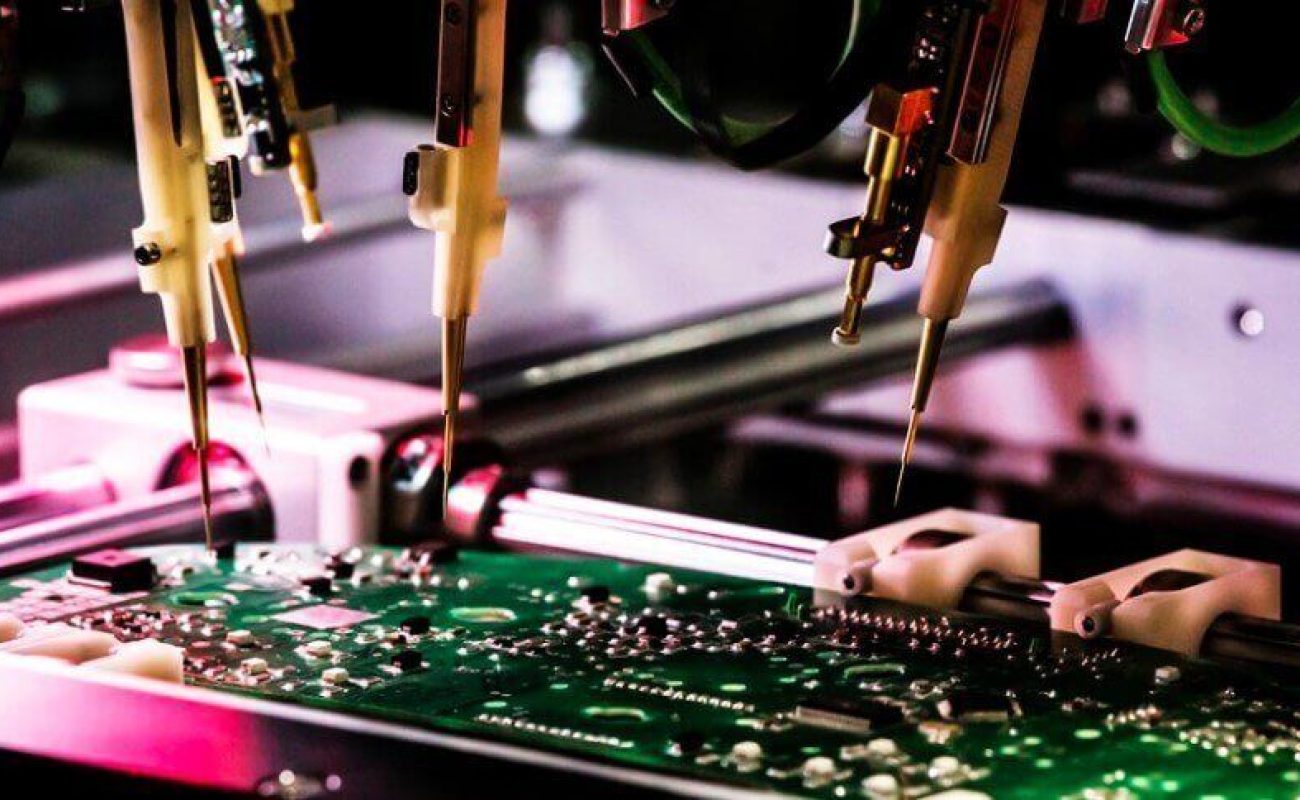
  • Full testing services like AOI, flying probe, impedance, and X-ray inspection

With over 18 years in the PCB industry, we’ve supported top-tier brands in building reliable, high-performance mobile electronics. Our team works closely with customers and give the best suggestions to optimize your mobile circuit board design. If you are interested in the mobile PCB develop, you are welcome to contact our team at sales@bestpcbs.com.
FAQs

1. What does a mobile phone PCB diagram show?

It shows where each component is placed on the board and how they are connected through copper traces.

2. How can I avoid power issues in PCB layout?

Use ground planes, short power paths, and place capacitors close to chips for voltage stability.

3. How do I identify damaged parts on a mobile PCB?

Use thermal cameras, multimeters, and reference schematics to locate shorted, burned, or faulty components.

4. What makes Best Technology a strong mobile PCB manufacturer?

They provide full-stack design-to-production all in one service, expert engineering support, DFM check, SI, PI analysis and a proven track record in mobile electronics.

Fiberglass Circuit Board: Types, Features & Applications

April 22nd, 2025

Fiberglass circuit board is the backbone of today’s electronics. These boards support and connect components in almost every electronic device, from consumer gadgets to industrial control systems. Unlike ordinary materials, fiberglass brings strength and stability. It holds up well under heat, resists moisture, and stays firm under mechanical stress.

What Are Fiberglass Circuit Boards?

A fiberglass circuit board is a type of printed circuit board (PCB) made using a base material reinforced with glass fibers and resin—typically epoxy. This combination results in a strong, heat-resistant, and electrically stable platform used to mount and interconnect electronic components.

Also called printed circuit board fiberglass, these boards dominate the electronics industry thanks to their durability and consistent performance. From mass-produced gadgets to high-end machinery, fiberglass boards provide the structural and electrical backbone that keeps everything working smoothly.

Fiberglass Circuit Board: Types, Features & Applications

What Are Fiberglass Boards Made Of?

Fiberglass boards are made from fine strands of glass spun into a fabric. This fabric, typically known as glass cloth, is then saturated with epoxy resin. Once hardened, the composite becomes the core insulating layer in a fiberglass circuit board.

The most common material is FR4. It includes:

  • Woven E-glass (Electrical-grade glass): Provides electrical insulation and dimensional stability.
  • Epoxy resin: Bonds the glass fibers and maintains structure under thermal stress.
  • Copper foil: Laminated onto one or both sides to create electrical pathways.

Together, these elements create an electrical fiberglass board that is tough, heat-resistant, and non-conductive at its core.

Types of Fiberglass Circuit Boards

Fiberglass circuit boards aren’t one-size-fits-all. They come in multiple variations to meet different design and performance needs. Whether you’re designing a basic remote control or a complex radar module, there’s a fiberglass board fit for the job.

  • Single Layer Fiberglass Circuit Board

This is the most basic type. It has copper traces on only one side of the board. It’s often used in low-cost consumer electronics, LED lights, and household appliances. Despite its simplicity, the fiberglass circuit board structure keeps it durable and stable.

Single Layer Fiberglass Circuit Board
  • Double Layer Fiberglass Circuit Board

With copper layers on both sides and vias connecting them, this board offers more routing space and better performance. It’s a popular choice for audio equipment, industrial sensors, and power supplies. These boards balance cost with performance and are widely produced by fiberglass circuit board manufacturers worldwide.

Double Layer Fiberglass Circuit Board
  • Multilayer Fiberglass Circuit Board

These contain three or more layers of fiberglass and copper laminated together. They are essential for smartphones, routers, and advanced computing devices. With increased layer count comes better signal control and component density.

Multilayer Fiberglass Circuit Board
  • HDI Fiberglass Circuit Board

High-Density Interconnect (HDI) boards pack more functionality into smaller areas. They use microvias, blind vias, and fine lines to boost performance without increasing board size. HDI designs often use printed circuit board fiberglass materials for strength and tight tolerances.

HDI Fiberglass Circuit Board
  • High Frequency Fiberglass Circuit Board

For RF or microwave applications, standard fiberglass isn’t always enough. Specialized fiberglass composites with low dielectric loss are used. These boards are perfect for radar systems, antennas, and satellite communication.

High Frequency Fiberglass Circuit Board
  • Rigid-Flexible Fiberglass Circuit Board

Combining rigid fiberglass sections with flexible polyimide layers, these hybrid boards offer both structural support and flexibility. They’re widely used in wearables, military electronics, and compact medical devices.

Rigid-Flexible Fiberglass Circuit Board

Features of Using Fiberglass Circuit Board

Fiberglass circuit boards offer several unmatched advantages. These features help explain why they’re so common in nearly every electronic product.

  • Thermal Stability: Fiberglass holds up well under heat. It won’t warp or delaminate under typical operating conditions.
  • Dimensional Stability: Even in humid or fluctuating environments, the board keeps its shape.
  • Electrical Insulation: The glass fibers prevent current leakage and minimize signal loss.
  • Mechanical Strength: These boards don’t crack easily. They can take a beating during assembly or usage.
  • Low Fiberglass Board Price: Compared to ceramics or PTFE substrates, fiberglass board price is much lower—without major performance tradeoffs.

Why Is Fiberglass Used in Motherboards?

Motherboards are the nerve center of any computing device. They require a substrate that’s flat, stable, and electrically inert. Fiberglass checks all those boxes. Its woven glass core resists bending and warping over time, ensuring that pins, sockets, and solder joints stay aligned. It also helps dissipate heat generated by processors and other high-power components.

Motherboards also demand multi-layered structures. Only multilayer fiberglass circuit boards can deliver the routing density needed for complex connections between CPU, RAM, GPU, and other modules. That’s why fiberglass remains the default material for virtually all desktop and laptop motherboards.

What Is Fiberglass Board Used For?

Beyond motherboards, electrical fiberglass boards are everywhere:

  • Consumer Electronics: Smartphones, TVs, game consoles.
  • Automotive Systems: Engine controls, infotainment, safety modules.
  • Industrial automation: Robotics, factory controls, and power distribution.
  • Healthcare equipment: Monitors, diagnostic tools, and imaging devices.
  • Telecom Infrastructure: Routers, switches, and antennas.
  • Telecommunication devices: Routers, modems, and base stations.
  • LED Lighting: Strip lights, bulb circuits, streetlamps.
  • Aerospace Systems: Flight controls, navigation, radar electronics.

Thanks to their adaptability and performance, fiberglass boards can be customized for nearly any electrical task. This is why fiberglass circuit board manufacturers remain in high demand globally.

Why Is Fiberglass Hazardous?

Though highly useful, fiberglass isn’t without precautions. During manufacturing, cutting or sanding fiberglass can release microscopic glass particles. These can irritate the skin, eyes, and respiratory system. That’s why workers must wear protective gear in production settings.

However, once the board is sealed and installed, it poses minimal risk. Finished electrical fiberglass boards are stable, safe, and inert under normal use conditions. They do not emit toxins or degrade during product life.

Is Glass Fiber the Same as Fiberglass?

Technically, yes—glass fiber and fiberglass refer to the same material. “Glass fiber” usually describes the raw filament or strands. “Fiberglass” refers to the composite made from glass fibers and resin.

In PCB manufacturing, the terms are often used interchangeably. Whether you say printed circuit board fiberglass or glass fiber PCB, the meaning remains consistent: a reliable, heat-resistant circuit platform. While the terms are related, in practice, fiberglass is the final product used in PCBs, not just the raw glass fiber.

FAQs

Q1: Is fiberglass better than FR2 in circuit boards?

Yes. Fiberglass (FR4) offers higher strength, better insulation, and improved heat tolerance compared to FR2 paper-based boards.

Q2: How much does a fiberglass board cost?

The fiberglass board price varies by layer count, size, and copper thickness. Single-layer boards may cost less than $1 per piece, while multilayer HDI boards are higher.

Q3: Can fiberglass circuit boards handle high power?

Yes. With proper copper thickness and thermal management, fiberglass PCBs handle moderate to high power loads reliably.

Q4: Are fiberglass boards environmentally friendly?

Most are ROHS-compliant. However, disposal must be handled properly due to the epoxy content.

Q5: Who are top fiberglass circuit board manufacturers?

Top producers include Best Technology, TTM Technologies, and PCBWay. Look for ISO-certified factories with full in-house fabrication.

Whether you’re building a simple LED board or a complex communication device, printed circuit board fiberglass options are there to support your design.

Looking for a trustworthy partner to supply high-quality fiberglass PCBs? Best Technology has more than 18 years of experience manufacturing standard and custom circuit boards, including single to multilayer designs, HDI, and high-frequency variants. Our in-house production facilities are ISO9001, IATF16949, AS9100D and UL certified, ensuring that every board meets global quality standards. We pride ourselves on delivering fast lead times, customized solutions, and exceptional technical support that help our clients stay ahead in an ever-evolving market.

Prototype PCB Board Manufacturer​, Prototyping PCB Circuit Board​

April 21st, 2025

When you’re developing a new product, time and precision are crucial. At Best Technology, we understand that the early stages of development rely on high-quality PCB prototypes delivered quickly. With 19 years of experience as a prototype PCB manufacturer, we’ve helped thousands of engineers bring their ideas to life—faster and with less risk.

From PCB design and layout to fabrication, assembly, and functional testing, we provide a complete one-stop solution. Whether you’re looking for quick turn PCB prototype service or long-term support for prototyping PCB circuit boards, we have you covered.

What Is a PCB Prototype Service?

A PCB prototype service helps engineers and developers build a small batch of circuit boards before going into full production. It’s the fastest and safest way to test a design, verify circuit functionality, and reduce costly errors in mass production. At Best Technology, we offer full turnkey support—from schematic design, layout drawing, material selection, all the way to fabrication PCB prototype and assembly.

Prototype PCB Board Manufacturer​, Prototyping PCB Circuit Board​

Why Is Quick Turn PCB Prototype So Important?

Speed matters in product development. A quick turn PCB prototype lets you validate your design within days—not weeks. Whether you’re a startup building your first IoT device or an enterprise R&D team testing a next-gen automotive sensor, fast iterations are key.

At Best Technology, we offer fast PCB prototyping starting from 24-hour turnaround for simple boards. Our in-house engineering and fabrication team eliminate delays, allowing you to launch faster and stay ahead of competitors.

What Makes Our PCB Prototype Service Different?

We’re not just a PCB prototype factory—we’re your dedicated technical partner. Our goal is to reduce your development time without compromising quality or flexibility. Here’s what you can expect:

  • Rapid lead times: as fast as 24 hours for double-sided boards
  • One-on-one engineering support: layout checks, stack-up suggestions, DFM review
  • Full range of services under one roof: from design to SMT assembly
  • Capability to handle everything from 1 piece to small batch orders
  • Reliable quality: IPC Class 2/3 standards, 100% inspection, testing on request

Quick Turn PCB Prototype: Speed Without Compromise

When you need to test and validate your designs quickly, our quick turn PCB prototype service ensures you meet tight deadlines. We’ve streamlined our production processes to meet urgent schedules:

  • Double-sided FR4 PCBs: ready in 24 hours
  • 4–6 layer PCBs: within 48–72 hours
  • Advanced types (HDI, ceramic, flex): 3–5 working days

We offer real-time production tracking and a responsive support team to help you stay in control throughout the process.

What’s Included in Our PCB Prototype Service?

Our PCB prototype service covers everything you need under one roof:

  • PCB Design and Layout Support
  • Gerber File Checking and DFM Review
  • Multilayer PCB Prototyping (1–20 layers)
  • Rigid, Flex, and Rigid-Flex Board Prototypes
  • Component Sourcing and SMT Assembly
  • Functional Testing and Debugging Assistance

From basic double-layer PCBs to complex HDI or RF boards, we’re the pcb prototype supplier that turns your idea into a real, testable product—fast.

How Do We Ensure Quality in PCB Manufacture Prototype?

Quality is never compromised, even for prototypes. Each pcb manufacture prototype goes through strict quality control processes:

  • 3D Solder Paste Inspector (SPI)
  • Automated Optical Inspection (AOI)
  • X-ray inspection for BGA and hidden solder joints
  • Flying probe or E-test for 100% electrical connectivity
  • Solderability and surface finish checks

We also provide detailed inspection reports upon request. Whether it’s ENIG, HASL, or immersion silver, all finishes are RoHS-compliant and production-ready.

What Makes Us a Trusted PCB Prototype Factory?

As a leading pcb prototype factory, we stand out for three key reasons:

  • Speed & Stability: 24–72 hours for most prototype runs.
  • Customization: Flexible material, layer count, thickness, copper weight, surface finish.
  • Communication: Direct engineer support in English, fast response via email or WhatsApp.

We’ve worked with over 1,200 global clients across consumer electronics, medical, industrial control, and automotive industries. Our factory is ISO9001, IATF16949, AS9100D and UL certified.

Prototype PCB Board Manufacturer​, Prototyping PCB Circuit Board​

Real Cases from Our Customers

Case 1: German EV Startup

A customer needed a fast PCB prototyping solution for an automotive inverter test. We delivered 10-layer boards with 2oz copper in 3 days, including impedance control and full E-test.

Case 2: US Medical Device Firm

A new biosensor prototype required a flex-rigid board with ENIG finish. We provided DFM guidance, produced the prototype, and did SMT assembly—all within one week.

Case 3: Japan LED Company

For their new high-power LED array, they selected aluminum-core boards. We helped optimize their design, completed fabrication PCB prototype, and shipped within 4 working days.

What Materials Are Available for Fabrication PCB Prototype Orders?

Choosing the right material is essential when building a reliable fabrication PCB prototype. At Best Technology, we offer a wide range of materials to match your electrical, thermal, and mechanical needs:

  • FR4 (Standard Glass Epoxy) – general-purpose
  • High-TG FR4 – for high-temp and multilayer use
  • Rogers/PTFE – for RF, microwave, and high-speed
  • Ceramic (AlN, BeO) – for high-power modules
  • Metal Core (Aluminum/Copper) – for thermal control
  • Flexible/Rigid-Flex – used in compact and mobile electronics

We’re more than a prototype PCB manufacturer—we’re your material partner for performance and cost balance.

Where Are PCB Prototype Services Commonly Used?

The demand for prototyping PCB circuit board services spans across industries. Here are the top use cases:

  • Consumer Electronics – Smart wearables, gaming devices
  • Automotive Electronics – Power modules, battery management systems
  • Medical Equipment – Monitoring sensors, diagnostic tools
  • Industrial Automation – PLCs, control units
  • IoT Devices – Smart homes, tracking, security
  • LED Lighting – MCPCBs for thermal efficiency
  • Aerospace/Defense – High-reliability RF circuits

Every application has unique design and test challenges. Our team supports early-stage development and transitions smoothly into mass production.

What File Formats Are Accepted for PCB Prototype Service?

We support a wide variety of formats to make your pcb prototype service experience seamless. Even if your files aren’t fully finalized, we can help complete them and move to production quickly.

  • Gerber (RS-274X)
  • ODB++ / IPC-2581
  • Altium, KiCAD, Eagle, PADS project files
  • PDF or DXF drawings for early-stage quotes

Frequently Asked Questions

Q1: What is the MOQ for PCB prototypes?

We offer low minimum order quantities—1 piece is fine for testing or presentations.

Q2: Can you do assembly along with prototyping?

Yes, our one-stop service includes SMT, DIP, and functional testing for small-batch assembly.

Q3: How fast can you deliver?

Standard quick turn PCB prototype takes 2–3 working days. Same-day build is available depending on board specs.

Q4: Can you help with design issues?

Absolutely. Our DFM engineers provide feedback before fabrication to avoid production risks.

Why Choose Best Technology as Your Prototype PCB Manufacturer?

We’re not just another PCB prototype supplier—we’re your partner in innovation. With nearly two decades of industry experience, Best Technology provides:

  • Fast lead times (24–72h)
  • Flexible customization
  • Reliable quality control
  • Responsive technical support
  • Competitive pricing with global shipping

From concept to creation, we help engineers and product teams succeed—one prototype at a time. Contact us right now to get your PCB prototype!

FR4 LED PCB , Wholesale FR4 LED 94v0 PCB Board Manufacturer

April 18th, 2025

Curious about FR4 LED PCB solution? This guide explores their composition, benefits, thermal management, assembly optimization, and 94v0 compliance testing for LED applications as well as how to choose a wholesale FR4 LED 94v0 PCB board manufacturer.

Best Technology delivers superior FR4 LED PCB solutions especially for high-performance lighting systems, combining rapid prototyping with industrial-grade reliability. Our 48-hour sample service ensures fully tested prototypes with detailed thermal simulations and cross-sectional analysis reports, accelerating product development cycles. Clients benefit from 24/7 engineering support through dedicated technical advisors who optimize designs for thermal resistance ≀2.5°C/W and compliance with UL94V-0 flammability standards. Advanced Tg170+ FR4 substrates and automated optical inspection systems guarantee 99.98% production consistency, while ionic contamination controls maintain <0.75ÎŒg/cmÂČ purity for outdoor applications. We specialize in complex multilayer layouts (up to 24 layers) with precision solder masks resistant to harsh environments, backed by RoHS/WEEE certifications for global distribution. From dynamic LED displays to industrial control panels, our end-to-end DFM guidance and failure analysis ensure seamless scaling from prototypes to bulk orders exceeding 50,000 units monthly. Request instant quotes with guaranteed 72-hour response – let our expertise transform your lighting concepts into market-ready solutions. Contact us today: sales@bestpcbs.com if you have any request for FR4 LED PCB.

What Is FR4 LED PCB?

An FR4 LED PCB is a printed circuit board designed for mounting and operating light-emitting diodes (LEDs) using FR4 material as the base substrate. The board consists of a layered structure with a fiberglass-reinforced epoxy resin core, copper traces for electrical connectivity, and a solder mask to protect circuitry. Essential components include conductive pathways connecting LEDs, resistors, and drivers, along with mounting pads for secure component placement. This type of PCB supports electrical signal transmission, distributes power to LEDs, and maintains mechanical stability for the electronic assembly. The design integrates insulation layers to prevent short circuits and ensures reliable performance under standard operating conditions.

What Is FR4 LED PCB?

What Are the Advantages of FR4 LED PCB?

  • Flame-retardant properties enhance safety by meeting fire-resistance standards.
  • Cost-effective production due to standardized materials and manufacturing processes.
  • Structural rigidity supports stable LED component mounting without warping.
  • Electrical insulation prevents short circuits between conductive layers.
  • Compatibility with standard assembly methods simplifies integration into electronic systems.
  • Durability withstands moderate thermal stress and environmental exposure.
  • Design adaptability allows customization for various circuit layouts and layer counts.
  • RoHS compliance ensures environmentally safe material composition.
What Are the Advantages of FR4 LED PCB?

What Are the Disadvantage of FR4 LED PCB?

  • Limited thermal conductivity compared to metal core PCB, leading to potential heat buildup in high-power LED setups.
  • Reduced mechanical durability under repeated thermal cycling, risking layer separation or warping over time.
  • Thicker profile than flexible PCBs, restricting use in compact or bendable lighting designs.
  • Lower resistance to moisture absorption in humid environments compared to specialized substrates.
  • Performance degradation at sustained temperatures above 130°C, limiting high-temperature applications.
  • Higher material expansion rate under heat than ceramics, causing potential solder joint stress.
  • Limited suitability for high-frequency LED circuits due to dielectric properties.
  • Recycling challenges from mixed material composition complicating eco-friendly disposal.
What Are the Disadvantage of FR4 LED PCB?

What Are the Application of FR4 Base LED Lamp PCB?

  • High-resolution indoor/outdoor displays for advertising boards and stage backdrops, featuring pixel densities ≀1.86mm and refresh rates ≄3840Hz.
  • Commercial lighting systems integrating dynamic energy-saving modes that reduce power consumption by ≄60% during idle periods.
  • Industrial environments requiring IK10-rated impact resistance and mechanical stability under ≄4800N tensile loads.
  • Precision color-critical equipment like medical imaging monitors, achieving color accuracy ΔE≀0.9 and supporting BT.2020/DCI-P3 color spaces.
  • Telecommunication infrastructure components including status indicators and control panels, leveraging electrical insulation properties.
  • Modular video walls with sub-0.1mm seam tolerances and 99% brightness uniformity for control rooms or broadcast studios.
  • 3D/VR compatible displays handling 240Hz refresh rates and 16-bit grayscale adjustments for immersive visual experiences.
  • Public transportation information panels maintaining visibility across 175° viewing angles under varying ambient light.
What Are the Application of FR4 Base LED Lamp PCB?

How to Improve the Thermal Design of FR4 LED 94v0 PCB?

Here are some ways to improve the thermal design of FR4 LED 94v0 PCB board:

  • Integrate thermal vias under high-power LED chips to transfer heat from component layers to cooling surfaces.
  • Increase copper thickness in power planes for better lateral heat spreading across the board.
  • Distribute LED clusters with spacing patterns that prevent localized heat concentration.
  • Apply thermally conductive epoxy or pads between PCB and aluminum heatsink interfaces.
  • Implement forced-air cooling through strategic board positioning in housing vents or fans.
  • Optimize trace widths and current paths to minimize resistive heat generation.
  • Select LED chips with lower forward voltage characteristics to reduce inherent thermal load.
  • Utilize multi-layer stack-ups with dedicated internal heat dissipation channels.
  • Pair with moisture-resistant conformal coatings to maintain thermal performance in humid conditions.
  • Monitor real-time thermal profiles using embedded sensors for dynamic power adjustment.

How to Choose A Wholesale FR4 LED 94v0 PCB Board Manufacturer?

Here are some methods about how to choose a wholesale FR4 LED 94v0 PCB board manufacturer:

  • Verify UL94V-0 flammability certification documentation to ensure compliance with safety regulations for LED applications.
  • Confirm bulk production capabilities matching your project scale, checking machinery like automated optical inspection systems.
  • Request thermal management case studies demonstrating successful high-density LED layouts with ≀2.5°C/W thermal resistance.
  • Compare material sourcing practices, prioritizing manufacturers using Tg170+ FR4 laminates for improved heat tolerance.
  • Evaluate lead time consistency through client references, particularly for 24+ layer multilayer PCB orders.
  • Assess prototyping flexibility – reliable wholesalers often provide 48-hour sample turnaround with full testing reports.
  • Review chemical resistance guarantees for solder masks, critical for LED boards exposed to outdoor environments.
  • Examine quality control processes, including cross-section analysis reports and ionic contamination testing below 0.75ÎŒg/cmÂČ.
  • Confirm RoHS/WEEE compliance certificates for international market distribution requirements.
  • Analyze post-sale support scope, including DFM feedback and failure mode troubleshooting assistance.

How to Optimize FR4 LED 94v0 PCB Board Assembly Process?

To optimize the FR4 LED 94V0 PCB board assembly process, focus on these actionable steps:

  • Pre-bake Panels: Dry FR4 panels at 120°C for 2 hours before assembly to remove moisture and prevent soldering defects.
  • Nozzle Configuration: Use specialized nozzles on pick-and-place machines to handle small LED components (0402/0603 sizes) with precision.
  • Reflow Oven Tuning: Calibrate reflow oven zones to maintain a ramp rate of 2-3°C/sec and peak temperature of 245°C±5°C, avoiding LED lens damage.
  • Dual-Track SMT Lines: Implement two parallel SMT lines with inline AOI after solder paste printing to enhance efficiency and quality control.
  • Vacuum Pallets: Design vacuum-assisted pallets to stabilize PCBs during high-speed component placement, reducing misalignment risks.
  • Stencil Standardization: Adopt laser-cut stencils with thickness between 100-150ÎŒm to ensure consistent solder paste application.
  • Moisture Control: Store LED drivers in low-humidity environments (<10% RH) to prevent moisture absorption before assembly.
  • Thermal Cycling: Validate solder joint reliability by subjecting first-article samples to thermal cycling between -40°C and +125°C.
  • Selective Coating: Apply UV-curable conformal coatings selectively to protect LED circuits from environmental stress.
  • Flying Probe Testing: Integrate flying probe tests post-assembly to identify open/short circuits in LED arrays promptly.

How to Test If FR4 LED PCB Board Meets 94v0 Standard?

To verify if an FR4 LED PCB board meets the 94V0 flammability standard, follow these structured steps:

  • Vertical Burning Test (UL 94): Conduct the UL 94 vertical burning test to assess flame propagation and self-extinguishing properties.
  • Flame Spread Measurement: Measure the rate of flame spread across the PCB surface after ignition, ensuring it does not exceed the 94V0 limit.
  • Drip Testing: Observe if molten debris from the PCB ignites underlying cotton, critical for the 94V0 rating.
  • Afterflame/Afterglow Duration: Record the time flames or glowing persist after the ignition source is removed (<30 seconds for 94V0).
  • Sample Preparation: Use standard-sized specimens (e.g., 125mm x 13mm) and condition them per test requirements.
  • Equipment Calibration: Ensure testing equipment (e.g., Bunsen burner, timer) is calibrated for accuracy.
  • Environmental Control: Perform tests in a controlled environment to avoid external factors affecting results.
  • Result Documentation: Document flame spread rates, drip ignition, and afterflame times for compliance verification.
  • Repeatability Checks: Conduct multiple tests to confirm consistent results, ensuring reliability.
  • Compliance Report: Generate a report comparing test data to 94V0 criteria to confirm adherence.

PCB Aluminium Substrate, Aluminum PCB Board for LED

April 17th, 2025

When it comes to reliable and advanced PCB solutions, Best Technology leads the way. With more than 18 years in the industry, we provide custom circuit board manufacturing for global clients. From prototype to volume production, we help you build better products with very good heat dissipation and military-grade quality. Our strength lies in metal-based PCBs, especially pcb aluminium substrates. These are widely used in LED, automotive, telecom, and power industries. With precision equipment and a strict quality system, we ensure high-performance boards that meet your needs.

What Is a PCB Aluminium Substrate?

A PCB aluminium substrate is a type of metal-based printed circuit board. (MCPCB) It uses aluminum as its base material instead of traditional FR4. This base supports layers of dielectric, and copper circuits. Aluminum PCBs offer strong heat dissipation and structural support compared with normal rigid PCB. The aluminum base acts as a heat sink. This makes the substrate ideal for high-power or thermally sensitive applications. In simple terms, it’s a PCB built on aluminum rather than fiberglass.

Performance of Aluminium Substrate PCB in LED

Aluminum substrate PCBs are the backbone of today’s LED lighting systems. Their ability to manage heat is the most critical factor. When LEDs operate, they generate a lot of heat at the junction point. If that heat isn’t removed quickly, the LED’s brightness fades, and its lifespan shortens. Using an aluminum board for LED, we can get these benefits:

  • Efficient heat dissipation: The aluminum metal base acts as a built-in heat sink, pulling heat away from the LED source and spreading it across the board.
  • Improved reliability: By reducing thermal stress, the board helps extend the lifespan of each LED component. That means longer-lasting light and less need for replacement.
  • Stable light output: Overheating causes LEDs to dim. Aluminum PCBs maintain the thermal balance so that brightness stays consistent. Whether it’s a street lamp or a small indoor fixture, aluminum PCBs deliver stable operation.
  • Compact design: Since aluminum boards manage heat on their own, there’s no need for bulky external cooling systems.
  • Cost-effective: Although slightly more expensive than FR4, their longer lifespan and lower maintenance needs make them a better investment for lighting manufacturers.

6061 vs. 5052 vs. 1060 Aluminum Substrate

In the aluminum PCB manufacturing, the common aluminium substrates that manufacturers always use are 6061 aluminum substrate, 5052 aluminum substrate and 1060 substrate. All of them are aluminum allay, but the compositions and purity are different, so that the performance different too.

5052 aluminum sheet belongs to Al-Mg alloy, the main alloying element is magnesium, which has a content of 2.2% ~ 2.8%. In addition, it also contains a small amount of chromium (0.15%-0.35%) and other elements. The addition of which is intended to improve the strength and corrosion resistance of the alloy. 6061 aluminum sheet is Al-Mg-Si alloy, in addition to magnesium (0.8%-1.2%) and silicon (0.4%-0.8%) as the main alloying elements, copper (0.15%-0.4%) and zinc (less than 0.25%) are also added. 1060 aluminum material belongs to pure aluminum sheet, with an aluminum content of more than 99.6%, and almost no other alloying elements. Different alloy components form the basis of the different performances of these aluminum substrates. Below is a table comparison show the differences between each of them:

Property6061 Aluminum5052 Aluminum1060 Aluminum
CompositionMagnesium & silicon alloyMagnesium alloyPure aluminum (≄99.6%)
Thermal ConductivityModerate (150 W/m·K)High (160 W/m·K)Very high (≈237 W/m·K)
Strength of Extension290MPa215MPaLow
Hardness95HB65HB30HB
Elongation10-18%12-25%5%
FormabilityLowHighHigh
Corrosion ResistanceGoodExcellentGood
Common UsesStructural parts, high-load PCBsLED lights, flexible designsHigh heat-dissipation PCBs
CostHigherMediumLower
(6061 vs. 5052 vs. 1060 Aluminum Substrate)

So how to choose the suitable substrate for your aluminum PCB board? Follow this rule:

  • Choose 1060 if your project needs maximum thermal conductivity.
  • Choose 5052 if flexibility and corrosion resistance are more important.
  • Choose 6061 if you need strength and rigidity for heavy-duty PCBs.

What Is the Dielectric Layer of Aluminum PCB?

Aluminum substrate is generally composed of three layers: circuit layer (copper foil), dielectric layer and metal base. The dielectric layer is located between the circuit layer and the metal base layer, which acts as insulation and heat conduction. It is a polymer filled with high thermal conductivity and high insulation ceramic powder, make it is an ideal material with non-conductive but heat-conductive.

single sided PCB aluminium substrate structure

This dielectric layer has good heat conduction properties (thermal conductivity up to 3.0W/m-K), it is the key to thermal performance. It allows heat to pass from the copper to the aluminum while keeping them electrically isolated. The dielectric must have low thermal resistance and high breakdown voltage. Materials used often include ceramic-filled epoxy or polyimide. These support thermal conductivity while maintaining safety.

What Is the Difference Between FR4 and Aluminum PCB?

FR4 PCBs use fiberglass as a base. They are cheaper and more common. But they are poor at dissipating heat. They also deform more under thermal stress. Aluminum PCBs, on the other hand, handle heat much better. The aluminum pcb thermal conductivity is usually between 1.0 to 3.0 W/m·K. In contrast, FR4 is less than 0.3 W/m·K. That means aluminum PCBs can move heat away much faster. Here we listing the main differences between two of them:

FeatureFR4 PCBAluminum PCB
Base MaterialFiberglass-reinforced epoxyAluminum metal
Thermal Conductivity≈0.3 W/m·K1–3 W/m·K
Heat DissipationPoorExcellent
Mechanical StrengthModerateHigh
EMI ShieldingWeakStrong
Cost (under the same design complexity situation)LowerSlightly higher
Use CasesConsumer electronics, PCsMainly used in led lights, automotive, power modules
Thickness Options0.10mm, 0.12mm, 0.15mm, 0.20mm, 0.25mm, 0.30mm, 0.40mm, 0.50mm, 0.60mm, 0.80mm, 1.0 mm, 1.2 mm,  1.6mm, >=2.0 mm0.30mm, 0.40mm, 0.50mm, 0.60mm, 0.80mm, 1.0 mm, 1.2 mm, 1.6mm, 2.0 mm, 2.4mm, 3.0mm (exclude copper)
WeightMuch lighterHeavier but lighter than copper pcb
Environment ToleranceLower heat resistanceWithstands high temperatures

How Do You Make Aluminium PCB?

The manufacturing process of aluminum PCB is almost the same as normal FR4 PCB, except the lamination process of dielectric layer, aluminum and copper. This also is the biggest manufacturing difficult that faced by manufacturers, especially for multi-layer aluminum PCB. For the single & double sided aluminum PCB, the aluminum substrate we purchased from the manufacturers are laminated with dielectric, so we do not need to laminate again. In addition to this, the manufacturing process of aluminum PCB with insulated hole and without insulated hole are different.

  • Single-sided Aluminum PCB without insulated hole:

Cutting raw material (substrate laminated with dielectric layer) — Circuit layer generation (D-E-S) — Solder Mask – Silkscreen — Surface Treatment — Stripping — Drill Holes — Outline (V-cut – Routing – Die Punching) — QC — Package & Delivery

Single-sided Aluminum PCB without insulated hole
  • Single-sided Aluminum PCB with insulated hole:

Cutting raw material (substrate without laminated with dielectric layer) — Drill larger holes — Filled resin with holes — Lamination (dielectric layer + copper + aluminum base) — Circuit layer generation (D-E-S) — Solder Mask – Silkscreen — Surface Treatment — Stripping — Drill Holes — Outline (V-cut – Routing – Die Punching) — QC — Package & Delivery

Single-sided Aluminum PCB with insulated hole

Manufacturing Difficulties of Aluminum PCBs

Working with aluminum is not the same as working with FR4. It brings challenges, especially for a professional aluminum PCB manufacturer.

1. Mechanical Processing

Drilling holes on aluminum PCBs is possible, but the inner walls and board edges must be completely free of burrs. Even a slight burr can cause the board to fail the high-voltage test. Milling the outline is also quite difficult. The milling cutter used for FR4 PCB board has a relatively low hardness, while the milling cutter used for aluminum substrate has a high hardness. During the processing, the milling cutter for fiberglass board production has a high speed, while the milling cutter for aluminum substrate production has a speed at least 2/3 slower. As an alternative, punching with high-precision dies is often used—but die making requires exceptional skill, making this one of the main challenges in aluminum PCB manufacturing.

After punching, the edges must be clean and smooth, without any burrs or damage to the solder mask along the edges. Most factories use compound dies. Holes are punched from the circuit side, and the outline is punched from the aluminum side. This requires specific techniques, such as upward shearing and downward pulling during punching. Even after punching, the board’s warpage must be strictly controlled and should remain under 0.5%.

2. Protecting the Aluminum Surface During Processing

The aluminum base must remain completely free of scratches throughout the entire production process. Any direct contact with hands or chemicals can cause surface discoloration or oxidation, which are absolutely unacceptable. In many cases, re-polishing the aluminum surface is not allowed by customers. So, avoiding even the slightest damage to the aluminum layer is another major difficulty in the production process.

Some manufacturers use surface passivation treatments, while others apply protective films before and after hot air solder leveling (HASL). There are countless tricks and methods used to keep the surface clean—every factory has its own unique way of doing it.

3. High-Voltage Testing Requirements

For telecom power supply boards, 100% high-voltage testing is often mandatory. Some clients require DC testing, while others specify AC, typically at 1500V or 1600V for durations of 5 to 10 seconds. Every single board must pass this test.

Even the smallest contamination on the surface, burrs on holes or edges, jagged traces, or damage to the insulation layer can lead to arcing, leakage, or dielectric breakdown during testing. Boards that show signs of delamination or bubbling during the test are automatically rejected.

Despite these, trusted manufacturers like Best Technology handle it well. Our experience helps solve such problems early in the process.

How Much Does Aluminum PCB Cost?

Many factors influence the pcb aluminium substrate price. These include:

  • Aluminum grade (6061, 5052, or 1060)
  • Thickness of copper and base layer
  • Board size and layer count
  • Surface finish type
  • Quantity ordered
  • Special design features (e.g., thermal vias, contours)

In general, aluminum PCBs cost more than FR4 boards. But for heat-sensitive designs, the added cost pays off in reliability.

For instance, a basic one-layer aluminum PCB may start from $1.0–$5.0 per unit in bulk. Complex designs with multi-layers or special finishes can go higher. Best Technology offer competitive pricing without cutting corners. We also provide quick prototypes aluminium PCB substrate and full-scale production to meet your timeline and budget.

If you are interested in PCB aluminium substrate or aluminum PCB manufacturing, contact us today to learn more about our aluminum PCB board solutions. Let’s build something great together—strong, reliable, and ready for tomorrow’s tech.

PCB Design Interview Questions & Answers, PCB Design Basics

April 16th, 2025

Q: What is a PCB?

A: A PCB is used to mechanically support and electrically connect electronic components using conductive tracks, pads, and other features. It replaces bulky wiring by embedding copper traces directly onto a non-conductive board, which makes the circuit more compact, organized, and reliable. Unlike breadboards, which are used for prototyping, PCBs are permanent and more durable, reducing the chances of loose connections or accidental shorts.

Q: What are the basic layers of a PCB?

  • Silkscreen
  • Solder Mask
  • Copper Layer(s)
  • Substrate (FR4 or other material)

Q: What is a solder mask?

A: A protective layer preventing solder bridges and oxidation, leaving pads exposed.

Q: What is DFM (Design for Manufacturing)?

A: Designing PCBs to meet manufacturer capabilities (e.g., trace spacing, hole sizes, panelization).

Q: What is the standard thickness of a PCB?

Typically 1.6 mm (0.062 inches), but it can vary depending on the application.

Q: How do you design a PCB stackup?

A: Layer arrangement balancing signal integrity, power delivery, and cost (e.g., 4-layer: signal-ground-power-signal).

Q: What are basic checks when laying out an MCU-based design?

A: Ensure power traces are wide enough to carry current without voltage drops. Place the oscillator crystal or clock source close to the MCU pins to reduce noise and maintain clock integrity. Separate analog and digital ground areas and signals if the MCU uses both types of signals. Include bypass capacitors near power pins to filter noise.

Q: How do you handle mixed-signal layouts?

A: Separate analog/digital grounds, minimize cross-talk, and use shielding.

Q: What is the flow of a complete PCB design?

A: The full PCB design process involves multiple steps:

  1. Library Creation: Create symbols (schematic) and footprints (layout) for each component.
  2. Board Outline: Define the mechanical dimensions of the board.
  3. Netlist Import: Transfer the circuit connections from the schematic to layout software.
  4. Design Rules Setup: Define constraints like trace width, clearance, via sizes.
  5. Component Placement: Place components logically, optimizing for signal flow and accessibility.
  6. Routing: Draw the copper traces to connect all components based on the netlist.
  7. Power/Ground Planes: Add split planes or solid fills for power and ground connections.
  8. Silkscreen & Assembly Layers: Add component labels and other printing layers.
  9. Gerber Generation: Output files needed by manufacturers to fabricate the board.

Q: What inputs are needed to design a PCB?

A: To design a PCB, you need:

  • Schematic Diagram: The circuit blueprint.
  • Bill of Materials (BOM): List of all components.
  • Netlist: List of electrical connections.
  • Board Outline: Mechanical boundary of the PCB.
  • Mounting Hole Details: For mechanical assembly.
  • Stackup Information: Defines how the board layers are arranged, especially important for complex designs.

Q: How do you verify schematic symbols or footprints?

A: Verifying schematic symbols and footprints is crucial to avoid errors in the final board. This involves cross-referencing the component’s datasheet to ensure pin configurations and dimensions match the footprint. You can print the footprint layout on paper and physically place the actual component over it to confirm accuracy. This step helps prevent costly rework or redesign later in the process.

Q: What is the 3W rule?

A: Spacing traces 3x the trace width apart to reduce crosstalk by ~70%.

Q: How do you place components?

A: Start by placing key components like connectors, microcontrollers, or BGAs (Ball Grid Arrays) that affect the overall layout. Follow the logical flow of the circuit and try to keep related components close together. Orientation and alignment should promote easy routing and good signal integrity.

Q: How do you place connectors?

A: Connectors should be placed at the edge of the PCB for easy access. Use right-angle connectors when the board needs to connect to other devices or enclosures. Always follow client or mechanical design guidelines regarding orientation and mechanical clearance.

Q: Why use decoupling capacitors?

A: Decoupling capacitors (also called bypass capacitors) are used to filter noise from the power supply lines. They help maintain a steady voltage by absorbing voltage spikes or dips. These capacitors should be placed as close as possible to the power pins of ICs to be most effective.

Q: If trace width increases, does its characteristic impedance increase or decrease?

A: When the trace width increases, the characteristic impedance decreases. This happens because a wider trace has higher capacitance and lower inductance, both of which reduce impedance.

Q: How to avoid high-frequency interference?

A: To reduce high-frequency interference:

  • Keep analog and high-speed digital traces separate.
  • Increase spacing between signal lines.
  • Use ground guards (ground traces around sensitive lines).
  • Avoid running high-speed traces over split planes.

Q: What are controlled impedance traces and where are they used?

A: Controlled impedance traces are designed with precise dimensions to maintain a specific impedance (e.g., 50Ω or 100Ω). They are used in high-speed digital circuits like USB, HDMI, and DDR.

Q: What is the skin effect in high-speed PCB design?

A: At high frequencies, AC current tends to flow on the surface of conductors. This reduces the effective conducting area and increases resistance, impacting signal integrity.

Q: What causes EMI in PCBs?

A: High-frequency signals, loop areas, improper grounding, and lack of shielding.

Q: How do you terminate transmission lines?

A: Use series, parallel, or AC termination to absorb signal reflections.

Q: How to route differential pairs?

A: Differential pairs should be routed with equal length and closely spaced to maintain constant differential impedance. The traces should run parallel, with no ground or power traces in between. Unequal lengths or inconsistent spacing can cause timing mismatches and degrade signal quality.

Q: How do you calculate the trace width for a given current?

A: Use IPC-2221 or IPC-2152 standards. Trace width calculator may save much time, like Best Technology’s free trace width & spacing calculator. Key variables affect the trace width include:

  • Current
  • Copper thickness
  • Temperature rise

Q: Can matched resistors be added to differential pairs?

A: Yes, termination resistors (usually equal to the differential impedance) are added at the receiving end to absorb reflections and improve signal quality. This is especially important in high-speed data lines.

Q: What causes signal reflection?

A: Signal reflections happen due to impedance mismatches between traces and components. Reflections distort signals and can cause data errors. They are minimized using termination resistors, controlled trace geometry, and proper layer stackup.

Q: What is return current?

A: Return current is the path the current takes to return to the source. In PCBs, it usually flows through ground or power planes. High-speed signals tend to follow the path of least inductance, often right under the signal trace.

Q: How to optimize power distribution (PDN)?

A: Optimize PDN by:

  • Using solid power and ground planes.
  • Placing decoupling capacitors close to ICs.
  • Minimizing plane splits and ensuring wide power traces.
  • Using ferrite beads or power filters when needed.

Q: Why split a thermal pad into sections?

A: Splitting thermal pads allows gases to escape during solder reflow. This improves solderability and helps avoid solder voids, leading to better mechanical and thermal performance.

Q: What is a split plane?

A: Dividing a plane into isolated regions (e.g., analog/digital grounds), connected at a single point to avoid ground loops.

Q: How do you manage heat in PCBs?

A: Use thermal vias, heatsinks, copper pours, and proper component placement.

Q: What are Gerber files?

A: Gerber files are standard file formats used by PCB manufacturers to produce the board. They include information for each layer—copper, silkscreen, solder mask, etc.—as well as drill and outline data.

Q: What is thermal relief in pads?

A: Spokes connecting pads to copper pours, reducing heat dissipation during soldering.

Q: What is copper pour?

A: Copper pour is filling empty areas with copper to reduce EMI, improve grounding, and enhance thermal performance.

Q: What is a decoupling capacitor?

A: A capacitor placed near ICs to suppress high-frequency noise and stabilize power supply.

Q: What is a fiducial marker?

A: Fiducial markers are small copper pads used as reference points by automated pick-and-place machines to align the board and components accurately.

Q: What causes solder bridging?

A: Solder bridging happens when excess solder connects adjacent pads, creating a short. It can be prevented by:

  • Using properly designed solder stencils.
  • Maintaining adequate spacing between pads.
  • Optimizing solder paste volume.

Q: What is ICT (In-Circuit Testing)?

A: ICT uses test probes to contact test points on a PCB. It checks for correct values, presence of components, and verifies connections. It’s a fast and reliable method for catching assembly errors.

Q: What is DRC (Design Rule Check)?

A: DRC is an automated check performed by design software to ensure the layout follows all defined rules, such as trace spacing, pad sizes, and via clearance. Fixing DRC errors is critical before sending the board for fabrication.

Q: How to calculate trace impedance?

A: Trace impedance is calculated using formulas or tools (e.g., online calculators or field solvers). It depends on trace width, dielectric height, dielectric constant, and copper thickness.

Q: What is the difference between microstrip and stripline?

A: Microstrip traces are on the outer layer of a PCB, running above a reference plane. Stripline traces are buried between two reference planes inside the PCB. Stripline offers better signal integrity for high-speed signals.

Q: What is a blind via vs. a buried via?

A: A blind via connects an outer layer to one or more inner layers but not through the entire board. A buried via connects only between inner layers and is not visible from the outer surfaces.

Q: What is a via-in-pad?

A: Placing a via directly in a component pad to save space, often filled and plated for flatness.

Q: How to reduce crosstalk?

A: Crosstalk can be reduced by:

  • Increasing spacing between traces.
  • Routing signals on adjacent layers orthogonally.
  • Adding ground traces (guard traces) between signals.

Q: What is via stitching?

A: Via stitching involves placing multiple vias around a ground area or edge of the PCB to enhance electromagnetic shielding and reduce noise.

Q: How do you avoid acid traps?

A: Ensure acute angles in traces are >90° to prevent etchant pooling during fabrication.

Q: How to choose PCB material?

A: Choose PCB material based on requirements such as:

  • Dielectric constant and loss tangent for signal integrity.
  • Thermal performance.
  • Cost and availability. Common materials include FR-4, Rogers, and polyimide.

Q: What is FR-4?

A: FR-4 is the most commonly used PCB material. It’s a flame-retardant glass-reinforced epoxy laminate with good electrical insulation, mechanical strength, and cost-effectiveness.

Q: What is ENIG (Electroless Nickel Immersion Gold)?

A: ENIG is a surface finish used in PCB manufacturing. It provides a flat, corrosion-resistant, and solderable surface, especially suitable for fine-pitch components like BGAs.

Q: What is RoHS compliance?

A: RoHS (Restriction of Hazardous Substances) compliance ensures that a PCB is free from harmful materials like lead, mercury, and cadmium. It promotes environmentally friendly electronics and mandates the use of lead-free solder.

Q: What is UL certification?

A: Underwriters Laboratories certification for product safety and fire resistance.

Q: What is CE marking?

A: Indicates compliance with EU health, safety, and environmental standards.

Q: What is the IPC-2221 standard?

A: Generic guidelines for PCB design, covering spacing, materials, and thermal management.

Q: What is REACH compliance?

A: EU regulation controlling chemicals in electronics (Registration, Evaluation, Authorization of Chemicals).

What is creepage and clearance?

Creepage: Shortest distance along a surface between conductors. Clearance: Shortest air gap. Critical for high-voltage designs.

Q: What is HDI (High-Density Interconnect) Technology?

A: HDI PCBs use microvias, fine traces, and sequential lamination to create compact boards with more components in smaller spaces. It is essential for mobile devices, wearables, and advanced electronics.

Q: How to design flexible PCBs?

A: Flexible PCBs use polyimide instead of FR-4. Design tips include:

  • Avoid placing components on bending areas.
  • Use curved trace routing instead of sharp angles.
  • Keep copper thickness minimal in flex areas to improve flexibility.

Q: What is back drilling?

A: Back drilling removes unused portions of through-holes, reducing signal reflection and impedance discontinuities. It is used in high-speed PCBs to improve signal integrity.

Q: How to ensure EMI compliance?

A: Use common-mode chokes near connectors, minimize return paths, and avoid split planes for high-speed signals.

Q: What causes ground bounce?

A: High-speed switching creates transient voltage fluctuations; mitigate with low-inductance paths.

Q: Why shield clock signals?

A: To reduce radiated EMI; guard traces or ground planes can suppress noise.

Q: What are common DRC errors?

A: Trace-to-pad violations, insufficient annular rings, and component keepout violations.

Q: How to debug a PCB?

A: Check power integrity, clock stability, reset signals, and follow system protocols.

Q: What causes tombstoning?

A: Uneven thermal profiles on SMD pads. Fix with symmetric pad sizes and reflow profiles.

Q: What is a netlist?

A: File defining electrical connections between components for layout and verification.

Q: What are ODB++ files?

A: Comprehensive CAD-to-CAM format for fabrication, replacing Gerber+drill files.

Q: What software is used for PCB design?

A: Altium Designer, KiCad, Cadence Allegro, and Eagle.

Q: How to route a single-ended clock signal?

A: Avoid differential routing; use impedance-matched traces and minimize stubs.

Q: What is an annular ring?

A: Copper pad surrounding a drilled hole; insufficient rings cause fabrication issues.

Q: What is a guard trace?

A: A grounded trace isolating sensitive signals from noise sources.

Q: How to handle ESD in a DSP/PLD system?

A: Add protection circuits (e.g., TVS diodes) to human-accessible interfaces and follow shielding guidelines.

Single Sided Rigid PCB Manufacturer, Single-sided PCB Design

April 15th, 2025

Single sided rigid PCB manufacturer is a phrase more and more engineers and buyers are searching for. And for good reason. In today’s fast-moving electronics industry, having a reliable supplier that knows how to design, build, and deliver high-quality single-sided rigid PCBs means fewer delays and better performance. Whether you’re building LED lights, power supplies, or everyday electronics, you need a manufacturer who can deliver consistent quality with a fair price.

In this blog, we’ll write information from design to production, from cost to choosing a trustworthy partner. Best Technology is a leading single sided rigid PCB manufacturer. At Best Technology, quality isn’t a metric, it’s our survival imperative. We use the MES system to ensure the incoming material data is traceable. There are QR codes pasted on the package to trace the component data in the MES system. All the materials Best Technology uses are compliant with REACH, RoHS, and UL. Our factory is ISO9001, ISO13485, IATF16949 and AS9100D certified. Do you face technical hurdles in single sided rigid PCB design, prototyping, or assembly? Best Technology is on standby to resolve them. Just feel free to let us know via sales@bestpcbs.com.
Single Sided Rigid PCB Manufacturer, Single-sided PCB Design

How to design a single-sided PCB?

Single-sided PCB design starts with simplicity. Since there’s only one layer of copper, all components and routing stay on one side. That means space and layout matter more than ever.

To begin, use a good PCB design tool like Altium Designer, KiCad, or Eagle. The designer places components first, making sure spacing follows IPC guidelines. Then comes routing. Since there’s no second layer to cross over, you must plan carefully. Signal lines need to avoid overlaps, so often creative thinking is required.

Also, keep in mind power and ground paths. A wide trace for power lines avoids voltage drop. Thermal relief is another factor. It ensures the board evenly dissipates heat during soldering and prevents the soldering pad from being difficult to solder due to excessive heat dissipation caused by connecting a large area of ​​copper foil.

Once finished, you’ll generate Gerber files. These files tell the single sided rigid PCB manufacturer exactly how to build your board.

How to manufacture a single-sided rigid PCB?

The single sided rigid PCB manufacturing process follows a clear and organized flow. Each step plays an important role in ensuring the final board works perfectly and looks clean. Here’s how it’s typically done in most factories:

Material Cutting

  • Everything begins with a sheet of single-sided copper-clad laminate. The board is cut to the required size according to the production panel.

Cleaning and Drying

  • Before any processing, the board surface must be free from dust and oil. It’s brushed clean, washed, and dried to ensure good adhesion for the next layers.

Drilling or Punching

  • Holes for components or mounting are drilled using precise CNC machines or punched if the volume is large.

Printing or Laminating Circuit Pattern

  • The circuit pattern is transferred to the copper layer. This can be done by screen-printing a resist ink or applying a dry film photoresist.

Curing and Inspection

  • The printed resist is cured with heat or UV. Then, workers inspect for any errors or broken traces and repair them if needed.

Etching

  • The exposed copper areas are removed using chemical etching, leaving behind only the protected circuit pattern.

Stripping Resist and Drying

  • Once etching is complete, the resist layer is removed, and the board is cleaned and dried again.

Solder Mask Application

  • The green solder mask is screen-printed over the board to cover everything except the pads. This protects the traces and prevents short circuits during soldering.

UV Curing

  • The solder mask is cured under UV light to harden it properly.

Silkscreen Marking

  • Component labels, logos, or production marks are printed in white or yellow on the board using another screen-printing process.

Second UV Curing

  • These printed marks are also UV cured to lock them in place.

Final Profile and Cutting

  • Now the board is cut into its final shape using routing or punching, based on the product’s design.

Final Cleaning and Drying

  • Another cleaning step ensures the board is free from debris before surface finishing.

Surface Finish

  • Depending on customer needs, the surface is treated. This could be OSP (organic protective coating) or HASL (Hot Air Solder Leveling) for better solderability.

Electrical Testing

  • Every board is tested to check for open circuits or shorts. This confirms the integrity of the copper traces.

Final Inspection and Packaging

  • Before shipping, the boards are visually inspected again, counted, packed, and labeled.

Delivery

  • Finally, the finished PCBs are sent out, ready to be assembled into your devices.

Every step above is important. Even the smallest issue in cleaning or printing can affect performance. That’s why choosing a skilled single sided rigid PCB manufacturer matters. They’ll get every step right, from the first cut to the final test. The process may seem basic, but precision at every step ensures a functional and long-lasting board.

Single Sided Rigid PCB Manufacturer

How much does single sided rigid PCB manufacturing cost?

Pricing depends on several factors. Here’s what affects cost:

  • Board size and shape: Larger or irregular shapes cost more.
  • Material choice: In comparison to FR4, CEM-1, CEM-3 can save cost.
  • Copper thickness: Heavier copper costs more but is used for power-heavy applications.
  • Drill count and size: More holes mean longer machine time.
  • Surface finish: ENIG costs more than HASL, for example.
  • Quantity: Higher volumes bring unit cost down.

For bulk orders or repeat clients, the price becomes more competitive.

What are the disadvantages of single-sided PCB?

Single-sided PCBs are not always perfect. Still, their downsides are manageable with proper design. Let’s look at the few limitations:

  • Limited routing space: Only one copper layer limits complexity.
  • No crossover: Without vias or a second layer, designers must get creative with traces.
  • Not ideal for high-speed circuits: Signal integrity can be harder to control.

But for simple electronics, lighting, or power modules, these downsides rarely cause problems. And that’s where a skilled single sided rigid PCB manufacturer helps — they know how to design within limits.

What are the advantages of single-side PCBs?

Now, the good part. Single-sided PCBs come with many benefits:

  • Cost-effective: The process is quick and uses fewer materials.
  • Easy to design and manufacture: With fewer layers, it’s easier to avoid errors.
  • Reliable for simple circuits: Perfect for consumer electronics, sensors, and LED products.
  • Faster lead time: Less production time means you get boards quicker.
  • Great for prototyping: Want to test an idea fast? Single-sided boards are ideal.

When a single sided rigid PCB manufacturer knows the product’s purpose, they can optimize every part to reduce costs and increase output.

What makes a reliable single sided rigid PCB manufacturer stand out?

This is a question that smart buyers always ask. What separates one supplier from another?

  • Experience: Look for at least 10 years in the industry.
  • Certifications: ISO, UL, and RoHS compliance are a must.
  • Fast prototyping: Can they deliver samples in under 5 days?
  • Stable quality control: Ask about testing methods and inspection steps.
  • Customer support: Are they responsive? Do they understand your needs?
  • Transparent pricing: No hidden fees. Good suppliers are upfront about costs.

A top-tier single sided rigid PCB manufacturer doesn’t just build — they help you optimize, troubleshoot, and scale with confidence.

What is the best PCB manufacturer?

If you’re focused on single sided rigid PCB, the best partner is one who:

  • Understands your product requirements.
  • Offers fair pricing and fast delivery.
  • Supports customization and technical improvement.

Best Technology, for example, is a strong candidate. With over 18 years in the business, we’ve helped 1700 global customers solve design issues, speed up production, and improve reliability. Our engineers don’t just follow a checklist — they engage, ask questions, and offer suggestions.

We get the competitive edge in small batch single-sided PCB design. There is no MOQ requirement for single sided copper PCB board prototype. Our single sided rigid PCBs are through automated optical inspection (AOI) and flying probe testing ensures high quality. If you’re searching for the best single sided rigid PCB manufacturer, a warm welcome to contact Best Technology at sales@bestpcbs.com for tailor single sided rigid PCB solutions.   

Who is the largest single sided rigid PCB manufacturer in the world?

There are several big players in the PCB industry, especially across Asia. Companies like Best Technology, Tripod Technology, and Unimicron lead in overall volume.

When it comes to focused single sided rigid PCB manufacturing, many customers prefer working with companies that offer personalized service and fast response. For example, Best Technology in China could produce boards faster and offer more flexible MOQ policies. We offer 72-hour prototype delivery with free DFM analysis, which is 30% faster than competitors.

And quality excellence drives the DNA of Best Technology. ‌ISO quality standards are rigorously implemented throughout our entire workflow, spanning material procurement, manufacturing, quality inspection, packaging, and extending to sales and marketing operations. From single sided rigid PCB design optimization to single sided rigid PCB prototype validation and single sided rigid PCB mass production, pls feel free to consult our engineers for tailored solutions.‌

How to choose a single sided rigid PCB manufacturer?

Choosing the right manufacturer shouldn’t be stressful. Just follow a few smart steps:

  • Define your needs: Know your board size, copper thickness, surface finish, and lead time.
  • Check credentials: Always ask for ISO certifications, UL files, and test reports.
  • Ask about sample runs: Reliable manufacturers offer low-cost samples before mass production.
  • Evaluate customer service: Do they respond fast? Do they explain options clearly?
  • Read reviews or case studies: Past clients often share valuable feedback online.
  • Compare prices transparently: Cheapest isn’t always best. Look for value, not just cost.

A dependable single sided rigid PCB manufacturer becomes your long-term partner. They help solve problems, reduce lead times, and improve final product quality.

Single-sided PCB Design

In conclusion, choosing the right single sided rigid PCB manufacturer can make a big difference in product quality, lead time, and long-term reliability. From precise single-sided PCB design to efficient mass production, a trustworthy manufacturer understands every step that matters. At Best Technology, we’re more than just a single sided rigid PCB manufacturer. We’re a trusted partner for customers in over 40 countries. From initial design to fast production and global delivery, our team is here to support your projects.

With over 18 years of experience, an in-house engineering team, and strict QC processes, whether you need a single sided PCB board, want support with multilayer PCB manufacturing, or are looking for rigid-flex PCB manufacturers, Best Technology is always ready to help. Warm welcome to contact us at sales@bestpcbs.com.
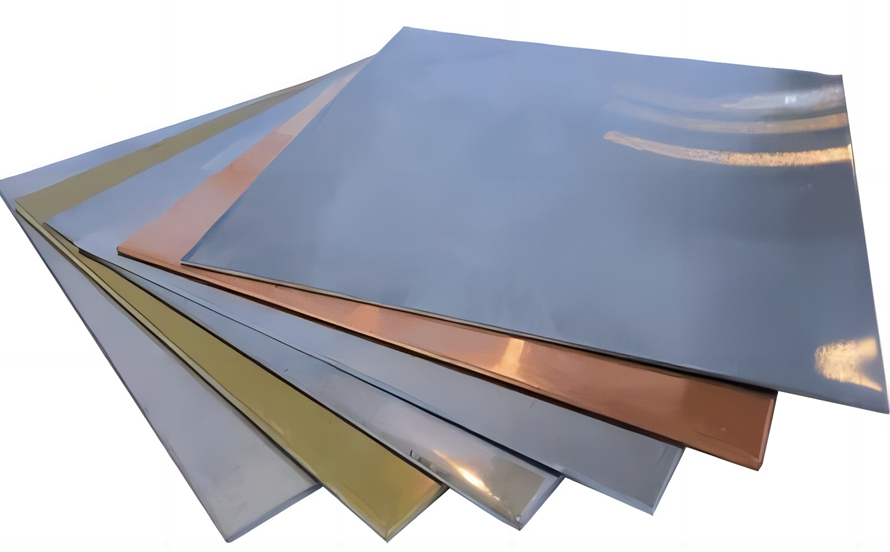
Copper Foil PCB | HTE vs RTF Copper Foil | Copper Foil PCB Manufacturers

April 14th, 2025

What is Copper Foil PCB?

A copper foil PCB is a type of printed circuit board where copper foil is laminated onto the base material to form the conductive layer. This copper layer is what carries electrical signals and power between different parts of the board. Without it, a PCB wouldn’t function at all.

The copper is typically applied through lamination, where thin sheets of copper foil are bonded to a substrate, usually made of fiberglass-reinforced epoxy resin like FR4. This copper layer is then etched to create precise paths, known as traces, that connect components across the board.

There are also different thicknesses of copper foil used, which affect the board’s ability to carry current and dissipate heat. The standard thickness is usually 1 oz/ftÂČ (about 35ÎŒm), but heavier copper options like 2 oz or 3 oz are often used in power electronics or high-temperature applications.

Copper Foil PCB | HTE vs RTF Copper Foil | Copper Foil PCB Manufacturers

What is the Purpose of Copper Foil in PCB?

The main role of copper foil is to carry electric current across the circuit. It’s the path for data, signals, and energy. Without copper foil, there would be no communication between components.

Besides that, copper foil helps in thermal transfer. When current flows, heat is generated. Copper helps in spreading this heat evenly, reducing hot spots. That’s key in designs with dense parts or power-hungry chips. Also, copper layers add mechanical strength to the board, supporting solder joints and reducing flex.

What are the Different Types of Copper Foils?

Copper foil types vary based on how they’re made, how rough they are, and what kind of performance they offer in real PCB applications. Choosing the right type can make a big difference in signal clarity, layer adhesion, and long-term reliability. Let’s see the most common types used in the PCB industry:

What are the Different Types of Copper Foils?

1. Electrodeposited (ED) Copper Foil

Electrodeposited copper foil is the most widely used type in standard rigid PCBs. It’s made through an electrochemical process where copper ions are deposited onto a rotating stainless steel drum. The side in contact with the drum becomes smooth, while the other side is naturally rough.

ED copper foil is great for multilayer rigid boards, consumer electronics, and automotive circuits. When treated with surface chemicals, it bonds well to laminates and resists layer separation.

2. Rolled Annealed (RA) Copper Foil

RA copper foil is made by mechanically rolling solid copper into very thin sheets and then annealing it (heating and cooling) to relieve stress. You’ll find RA copper in flex circuits, flex-rigid PCBs, wearable electronics, and mobile devices. When boards must flex without breaking, RA is the go-to.

3. Reverse Treated Foil (RTF)

RTF is a type of ED foil where the shiny side is treated instead of the rough side. This treatment adds micro-etching or chemical bonding to enhance adhesion between the copper and the laminate. RTF is popular in HDI (High-Density Interconnect) boards, high-speed digital circuits, and RF designs where signal loss must be controlled.

4. Very Low Profile (VLP) and Ultra-Low Profile (ULP) Copper Foils

These are smoother versions of standard ED foils, created to reduce conductor roughness. VLP and ULP foils are still electrodeposited, but they go through extra steps to minimize surface peaks and valleys. They are used in high-speed digital systems, data centers, 5G antennas, and any application where clean signal transmission matters.

5. High-Temperature Elongation (HTE) Copper Foil

HTE copper foil is a variant of ED copper, enhanced for high thermal and mechanical stress. It resists cracking under repeated heating and cooling cycles. HTE is preferred for automotive, power electronics, and multilayer PCBs that go through reflow soldering or see high current loads.

6. Resin-Coated Copper Foil (RCC)

RCC combines copper foil with a thin layer of resin. This resin bonds directly to the core without needing prepreg sheets, which simplifies the lamination process. Mainly in mobile phones, compact devices, or where thin layers and high accuracy are needed.

Here is a summary comparison table between them:

Copper Foil TypeStrengthFlexibilitySmoothnessSignal PerformanceApplication
EDHighLowModerateStandardRigid PCBs
RAMedium  HighHighGoodFlex PCBs
RTFHighMediumTreated  ExcellentRF, HDI
VLP/ULP  MediumMediumVery HighSuperior5G, high-speed
HTEVery HighLow  ModerateStandardPower boards
RCCLowMediumHighGoodThin mobile boards

What is the Roughness of Copper Foil in PCB?

‌The roughness of copper foil on PCB ‌ refers to the unsmoothness of the copper foil surface, Copper foil roughness affects how well signals move through the board. In high-speed designs, surface texture matters a lot. Rough copper increases insertion loss. This weakens the signal and causes noise.

What is the Roughness of Copper Foil in PCB?

Roughness is usually measured in microns, which is usually quantified by Ra, Rz and Rq. Lower values are better for RF or high-speed data.

  • ‌Ra‌: The arithmetic average of the absolute value of the contour deviation over the sampling length, applicable to copper foil surface.
  • ‌Rz‌: Sum of the average of the 5 largest profile peak heights and the average of the 5 largest profile valley depths over the sampling length for copper foil rough surface.
  • ‌Rq‌: Means RMS (Root means square) value, it also is a roughness index.‌

PCB Copper Thickness Chart

Copper thickness is often given in ounces per square foot. But that doesn’t mean much until you convert it. Here’s a helpful chart:

Copper Weight (oz/ftÂČ)Thickness (”m)Thickness (mil)
0.5 oz~17 ”m~0.67 mil
1 oz~35 ”m~1.37 mil
2 oz~70 ”m~2.74 mil
3 oz~105 ”m~4.11 mil
4 oz~140 ”m~5.48 mil
  • For single & double sided PCB, the copper foil thickness is about 35um, 50um, 70um;
  • For multi-layer PCB, its outer layer copper thickness is 35um, and inner layer copper thickness is 17.5um (1/2oz).

Designers choose copper weight based on current flow and thermal limits. Thicker copper is used in power PCBs. Thinner layers are more common in signal circuits or HDI boards.

HTE vs RTF copper foil

When it comes to choosing the right copper foil for high-performance PCBs, HTE (High-Temperature Elongation) and RTF (Reverse Treated Foil) are two of the most commonly used options.

  • HTE Copper Foil

HTE copper foil is a specially processed electrodeposited foil that’s engineered to handle high thermal and mechanical stress. The term “high-temperature elongation” refers to the foil’s improved flexibility and stretch resistance when exposed to heat.

It’s treated chemically to improve adhesion strength, making it more reliable during multiple soldering cycles. The surface has a consistent profile that bonds well with different dielectric materials.

Key Features of HTE Foil:

  • Strong peel strength
  • Durable under repeated heating
  • Excellent for plated-through-hole (PTH) reliability
  • Withstands lamination and solder reflow cycles
  • RTF Copper Foil

RTF, or Reverse Treated Foil, is also made through an electrodeposition process, but with one key difference: the shiny side gets treated instead of the rough side. This treatment applies a fine, uniform microstructure that enhances bonding without creating high surface roughness.

This smoother surface makes RTF a preferred option in high-speed signal and RF PCB applications where low signal loss is critical.

Key Features of RTF Foil:

  • Lower surface roughness
  • Better electrical performance at high frequencies
  • Improved signal integrity
  • Balanced peel strength and performance

PCB Copper Electrical Conductivity

Copper has one of the highest electrical conductivities of any metal. That’s why it’s the go-to choice for PCBs. The typical conductivity of copper used in PCBs is about 5.8 x 10⁷ S/m (Siemens per meter).

This high conductivity allows small traces to carry high current with low voltage drop. It also reduces signal distortion, which is key in high-speed or RF applications.

Still, conductivity depends on purity. Most PCB foils use 99.9% pure copper. If copper is oxidized or poorly handled, conductivity drops. That’s why clean processes and proper lamination are important.

How to Calculate Copper Thickness in PCB?

The thickness of copper in PCB can be calculated by the following methods:

1. Calculation of copper plating thickness by current density and plating time:

Plating thickness (um) = current density (ASF) x plating time (min) x plating efficiency × 0.0202‌. This formula takes into account the amount of electricity, equivalent, molar mass, density and other factors. The specific calculation process involves the product of current density, plating time and plating efficiency, then multiplying by a factor 0.0202‌.

‌2. Thickness calculated by weight of copper foil:

In the common option “copper-covered FR4, single-sided,1 oz”,1 oz indicates the thickness of the copper foil. 1 oz = 28.35 g/ftÂČ, copper foil density of 8.93 g/cmÂł, 1 square foot = 929.03 cmÂČ. Thus, 1 oz copper foil thickness = 28.35/8.93/929.03 ≈ 35um or 1.35mil ‌. Common PCB thicknesses include 1/2Oz = 17.5um, 1 oz = 35um, 2oz = 70um, and 3 oz = 105um.

How to Calculate Copper Thickness in PCB?

In addition to these two methods, you can also use our online pcb copper thickness calculator to calculate the copper thickness.

online pcb copper thickness calculator

Copper Foil PCB Manufacturers

Many trusted copper foil PCB manufacturers serve global markets. Some of the top names include:

1. Isola Group: Known for high-frequency and low-loss materials.

2. Kingboard: One of the world’s biggest copper clad laminate suppliers.

3. Ventec International: Offers low-profile copper foils and thermal substrates.

4. Mitsui Mining & Smelting: A top name in RTF and ultra-smooth foils.

5. Best Technology: Based in Asia, with 18+ years in the industry. We supply high-quality copper foil PCBs, from 0.5 oz to over 6 oz.

At Best Technology, we bring over 18 years of hands-on experience. We support standard and custom copper weights, including heavy copper for high-current boards. Our RTF and HTE options fit both signal-sensitive and power-heavy needs.

With fast lead times, in-house testing, and global delivery, we’re more than just a PCB maker. We’re your reliable partner for copper foil PCB solutions. Reach out today to explore your next project with confidence.

Fast turn PCB Board, Fast Turn Circuit Board Manufacturing

April 14th, 2025

What Is a Fast Turn PCB Board?

A fast turn PCB board is a printed circuit board manufactured and delivered in a short time, typically within 24 to 72 hours. These quick deliveries help speed up product development, especially during prototyping and pre-production stages. It’s a solution many engineers rely on when time is tight.

Engineers use fast turn PCBs for product validation. They want to see if a new circuit design performs well before moving to mass production. So, getting a board in days instead of weeks can make a huge difference.

Fast turn PCB Board, Fast Turn Circuit Board Manufacturing

What Are the Benefits of Fast Turn PCB Orders?

Ordering a fast turn PCB board brings several advantages to the table.

First, it speeds up your product timeline. You don’t need to wait weeks to test your circuit. If changes are needed, you can get a revised board quickly and keep things moving forward.

Second, it helps reduce project risks. The faster you test, the faster you detect potential design errors. Early detection saves money and prevents delays.

Third, it improves decision-making. With working samples in hand, your team can test real performance. It’s better than guessing or using simulation data only.

Lastly, fast turn options give your company a competitive edge. Getting to market faster often means better sales and stronger customer trust.

Best Technology’s Typical Turnaround Time for Fast Turn PCBs

At Best Technology, we understand the value of time. That’s why we’ve optimized our process to support urgent PCB orders.

For standard 2-layer fast turn PCBs, we usually deliver in 24 to 48 hours. For 4-layer boards, it may take 48 to 72 hours depending on complexity. Our team works around the clock to meet those deadlines.

Even for more complex boards — such as HDI or metal-core PCBs — we still maintain one of the quickest turnaround times in the industry. And we don’t compromise on quality. Each board goes through full inspection and electrical testing before it reaches you. The detailed turnaround time is:

Prototype(<1mÂČ) Layers   Normal Service   Expedited Service
      FR4 PCB1 Layer3-4 days24 hours
2 Layers4-6 days24 hours
4 Layers8-10 days48 hours
6 Layers8-10 days72 hours
8 Layers10~14 days72-96 hours
10 Layers14-18 days72-96 hours
HDI (1+N+1 2+N+2)2.5 – 3.5weeksTBD (depend on design)

We don’t just print boards fast. We manage the process with strict planning, from materials to delivery. That’s why so many clients come back to us for every new project.

Factors That Affect the Turnaround Time of Prototypes

Even though we push for speed, several factors can influence how long a fast turn circuit board takes to produce. Knowing these helps avoid delays.

  • Circuit Board Design and Test Procedures

The design stage impacts everything. A simple, well-structured layout speeds up processing. Complex routing, fine-pitch components, or tight spacing can add extra review time.

Test procedures matter too. If a special test is needed, like impedance control or functional test setup, it adds to the schedule. Providing clear instructions in advance helps us prepare and avoid delays.

  • Lamination Cycles

For multilayer boards, each lamination cycle takes time. A 4-layer multi-layer board needs one cycle, while an 8-layer may need several. More layers mean longer pressing times and more careful control.

Quick builds still go through these steps. We just start immediately and plan shifts to manage it faster. That’s why sharing the full stack-up early is so important.

  • Via-in-Pad Plated Over

Via-in-pad designs are helpful for high-density layouts. But they add a few extra steps in production. We need to drill, plate, and fill those vias carefully. After that, we cap and flatten them before plating the surface.

This extra effort adds time compared to standard vias. If your board uses VIPPO, it’s best to let us know upfront so we can fast-track these processes.

  • Fabrication Drawing Specifications

Precise drawings help avoid back-and-forth communication. If drawings are unclear or missing details like dimensions, tolerances, or hole types, we’ll need to clarify before production.

Clear drawings lead to fast fabrication. They also reduce the risk of mistakes. That’s why we suggest using IPC-2581 or Gerber X2 format with notes included.

  • Surface Finish

Surface finish choice also plays a role. ENIG, OSP, HASL, or hard gold all have different process times. For example, ENIG takes longer than HASL because it involves two plating steps.

If speed matters most, we can recommend the best finish based on your needs. Some finishes can still meet performance goals while shaving off hours from the process.

  • Assembly Drawings and Notes

If you also need PCB assembly, complete documentation is key. Missing part placements, unclear polarity marks, or unreferenced BOM items slow everything down.

Providing all files in one go—BOM, pick and place, centroid file, and notes—helps avoid delays. When everything’s ready, our SMT line can move fast and precise.

Fast Turn Circuit Board Manufacturing

Manufacturing a fast turn circuit board isn’t about rushing. It’s about knowing how to work smart, reduce waste, and prevent rework.

At Best Technology, we keep a reserve stock of core materials and prepreg. That way, we can start production immediately without waiting for supply.

We also use automatic routing, inline AOI, and robotic drilling machines to keep operations smooth. Our teams work in shifts, so production doesn’t stop, even at night or on holidays.

Every department is synchronized. CAM engineers review your files fast, material control prepares the stack-up, and QA teams check every step. That’s how we manage fast output without losing accuracy.

We also run a parallel system for urgent jobs. These special jobs go into our “fast-lane” line, separated from standard orders. This ensures time-sensitive boards don’t get stuck behind large-volume orders.

Why Should You Choose Best Technology as Your Preferred Partner?

Choosing a fast turn PCB partner isn’t just about delivery speed. It’s about trust, communication, and consistent results. Best Technology stands out because we offer more than just fast service.

  • Experienced team: We’ve been in this field for over 18 years. Our engineers know what works and how to prevent problems early.
  • Clear communication: Our team responds quickly. We give you updates, clarify questions, and solve problems before they become delays.
  • Flexible production: Whether you need 1 board or 10,000, we scale easily. We also support special needs like rigid-flex, metal core, or ceramic boards with fast turn options.
  • Global shipping: We work with trusted logistics partners. Boards reach you safely and on time, even across borders.
  • Reliable quality: Every board goes through full inspection, AOI, flying probe, and E-test. Even fast jobs go through our strict quality checks.

When you work with Best Technology, you get speed, support, and security in every step. That’s why companies in medical, industrial, and automotive industries continue to rely on us.

Double-sided PCB Manufacturer, Double Layer PCB Manufacturer

April 11th, 2025

Double-sided PCB manufacturer is a phrase you’ll come across when sourcing dependable circuit boards. Whether you’re building compact electronics or advanced control panels, these boards are the backbone. However, choosing the right manufacturer isn’t always easy. In this blog, we’ll walk you through essential points like how they’re made, where they’re used, and how to find the best one.

Best Technology is a professional double-sided PCB manufacturer, who always deliver consistently on time. There is 97% on-time delivery rate across 40 countries by Best Technology. We have advanced inspection technology used in double-sided PCB manufacturing processes, such as Automated optical inspection (AOI), 3D X-ray tomography for BGA voiding analysis, and In-circuit testing (ICT) fixtures for 100% functional validation. We support 24/7 engineering support with 2-hour DFM feedback. Best Technology has possessed AS9100D aerospace certification, IATF 16949 automotive QMS.

Whether you require double-sided PCB design guidance, double-sided PCB prototype development, double-sided PCB fabrication, or full-scale double-sided PCB assembly solutions, our team is available to address your needs at any time. A warm welcome to contact us via sales@bestpcbs.com to discuss your specific needs for double-sided PCB.

Double-Sided PCB Manufacturer, Double Layer PCB Manufacturer

What is a Double-Sided PCB?

A double-sided PCB is also called a double-layer PCB. It has copper traces on both sides connected through vias, allowing component placement on either surface. As a cost-effective solution between single-sided and multilayer PCBs‌, it provides 60% higher wiring density than single-layer boards‌. These PCBs are widely used in consumer electronics (e.g., smartphone motherboards)‌, automotive controls‌, and industrial automation systems‌, balancing performance and manufacturing costs.

How Are Double-Sided PCBs Manufactured?

Double-sided PCB manufacturers follow a series of precise and professional steps to produce reliable circuit boards. At Best Technology, we use a proven process designed to ensure performance, quality, and consistency. Here’s how we do it:

1.     CAM Engineering Processing

  • It all starts with careful design file preparation. Our CAM engineers review Gerber files, optimize them, and ensure everything is ready for manufacturing. They prepare the data used throughout the production line.

2.     Drilling (Mechanical or Laser Drilling)

  • Next, we drill holes for vias and through-hole components. Depending on the design, we use either mechanical drills or laser drilling methods. This step lays the foundation for reliable connections between the two copper layers.

3.     Hole Metallization (Chemical Copper Plating → Electroplating)

  • Once drilling is done, we chemically deposit a thin layer of copper inside the holes. This is followed by electroplating to thicken the copper, which creates conductive paths between layers.

4.     Outer Layer Pattern Imaging (Lamination → Exposure → Developing)

  • Here, we apply a photosensitive dry film on the board and expose it to UV light through a photo-tool. After developing, the unexposed areas are removed, revealing the copper that will form the final circuit pattern.

5.     Pattern Plating (Copper + Tin)

  • We then plate the exposed copper with a thicker layer of copper, followed by a tin layer to protect it during the next etching step. This builds up the conductive traces to the right thickness.

6.     Etching (Film Removal → Etching → Tin Stripping)

  • After plating, we strip off the photoresist. Then we etch away the unwanted copper. The tin layer acts as a barrier and is later removed, leaving behind clean copper traces.

7.     Solder Mask Application (Coating → Exposure → Developing)

  • We apply a green solder mask to protect the copper circuitry. The board is exposed again to define areas where components will be soldered, then developed to wash away the excess.

8.     Surface Finishing (ENIG, HASL, OSP, etc.)

  • Now it’s time for surface treatment. We apply finishes like ENIG (Electroless Nickel Immersion Gold), HASL (Hot Air Solder Leveling), or OSP (Organic Solderability Preservative). These enhance solderability and prevent oxidation.

9.     Mechanical Profiling (Routing/V-Cut/Punching)

  • Boards are shaped and separated using different techniques like milling, V-cutting, or punching. This step ensures the board fits perfectly into its final application.

10.   Electrical Testing & Final Inspection (AOI/Flying Probe/Impedance Testing)

  • Finally, each board undergoes full electrical testing using AOI (Automated Optical Inspection), flying probe tests, and impedance checks. Our team performs a final inspection to ensure every board meets strict quality standards.

This detailed process ensures every double-sided PCB from Best Technology is dependable, high-quality, and ready for advanced applications.

Double-Sided PCB Manufacturer

How Do You Make a Double Layer PCB?

Double Layer PCB is also named Double Sided PCB. The Double Layer PCB manufacturing process is the same as above double sided PCB manufacturing process listed. As a leading double layer PCB manufacturer, we are happy to provide quick double layer PCB manufacturing service to you.

Double Layer PCB Manufacturer

How Are Double-Sided PCBs Soldered?

Double sided PCB soldering uses different techniques depending on component types. If both sides have surface-mount devices (SMD), one side is reflow soldered first. Then, the second side is processed with care to avoid disturbing the first.

Through-hole components usually go through wave soldering. For mixed assemblies, selective soldering is used to avoid reworking finished parts. Skilled operators or automated machines handle the job. Quality checks follow to catch defects.

Double sided PCB assembly is a key part of this process. Good manufacturers use AOI (automated optical inspection) and sometimes X-ray to ensure quality.

Double-Sided PCB Manufacturer

How Much Does a Double-Sided PCB Manufacturer Charge for Custom Boards?

Pricing depends on several factors:

  • Board size and quantity
  • Copper weight and layer thickness
  • Hole count and via complexity
  • Solder mask color, surface finish
  • Lead time and testing

A custom board might start from a few dollars each for small runs, but the price drops with higher volumes. Always ask for a quote based on your actual Gerber files. A reliable double-sided PCB manufacturer will also offer suggestions to cut costs.

What is the Best PCB Manufacturer?

Finding the best double-sided PCB manufacturer is a key step when quality, turnaround time, and budget all matter. India has become a growing hub for PCB production due to its skilled labor and advanced factories. Here’s a brief overview of some trusted manufacturers based in India.

Top 5 Double Sided PCB Manufacturers in India:

AT&S India Pvt. Ltd.

  • One of the leading PCB manufacturers globally, AT&S operates a large plant in Nanjangud. They serve automotive, medical, and industrial electronics. Their processes meet strict European standards.

Genus Electrotech Ltd.

  • Located in Gujarat, Genus offers end-to-end PCB fabrication and assembly services. Their facility supports double-sided and multi-layer PCB production with a strong domestic presence.

Shogini Technoarts Pvt. Ltd.

  • This Pune-based company specializes in quick-turn PCB solutions and has decades of experience. They cater to medium and high-volume orders with reliable customer service.

Fine-Line Circuits Ltd.

  • A Mumbai-based exporter of double-sided and multilayer PCBs, they serve the aerospace, industrial, and telecom markets. Their consistent export quality makes them a preferred choice overseas.

CIPSA-TEC India Pvt. Ltd.

  • CIPSA-TEC runs a well-equipped plant in Bangalore. They provide single, double, and multi-layer boards with lead-free processes and strong quality control.

These companies have invested in modern equipment, skilled engineers, and global certifications. That means you get better quality and support at competitive pricing. India’s PCB manufacturing industry is growing fast. Whether you need a simple double-layer board or a complex assembly, these manufacturers have the resources. Comparing capabilities and support is crucial. Always ask for samples, visit facilities if possible, and go with the one that best fits your project’s needs.

How to Choose a Reliable Double-Sided PCB Manufacturer?

Choosing a double-sided PCB manufacturer goes beyond browsing websites. Look for the following signs of a reliable partner:

  • Clear communication and fast response
  • Transparent pricing
  • Quality management system in place
  • Samples available before bulk orders
  • Engineering support for layout review

Check if they’ve worked in your industry. A factory that supplies boards for automotive controls may not be ideal for LED lighting. The right match saves you time and stress.

What Are the Typical Applications Served by a Double-Sided PCB Manufacturer?

Double-sided PCB applications are found everywhere. Here are a few areas where they are commonly used:

  • Consumer Electronics: Remote controls, toys, smartwatches
  • Industrial Controls: Motor drivers, automation circuits
  • LED Systems: Light engines, drivers, and power management
  • Medical Devices: Compact monitors and diagnostics tools
  • Telecom: Signal repeaters, interface modules

These boards fit well between low-cost single sided options and high-end multi-layer PCBs. A good manufacturer will help you pick the right stack-up and material based on your end use.

Double Layer PCB Manufacturer

In conclusion, double-sided PCBs bridge the gap between simplicity and complexity. When you work with a reliable double-sided PCB manufacturer, you get strong performance and good value. You also save time during design and fewer headaches during production.

Best Technology has more than 18 years of experience as a double-sided PCB manufacturer. We provide one-stop solutions from double-sided PCB prototype to double-sided PCB mass production. With a strict quality system, fast lead times, and responsive support, we’re ready to help with your next project. Just feel free to reach out to us via sales@bestpcbs.com for quick support.