PCB manufacturing PCB manufacturing
Home > Blog

Posts Tagged ‘IC Board’

Great IC Board Solutions for Reliable Electronic Systems
Wednesday, December 31st, 2025

IC board, the fundamental platform that mounts and connects integrated circuits, is the unsung hero behind every reliable electronic system. This article explores the intricacies of IC board design, components, troubleshooting, and manufacturing, providing a comprehensive guide for engineers and product developers to achieve unwavering system reliability.

Have you ever struggled with electronic failures, signal interference, or costly production rework? Let’s pinpoint five key challenges you might face:

  • Signal integrity issues like crosstalk and EMI causing erratic system behavior.
  • Thermal management failures leading to premature IC board components​ degradation.
  • Physical and electrical defects from unreliable manufacturing or assembly.
  • Difficulty in prototyping and testing IC circuit board​ designs efficiently.
  • High costs and delays from redesigns and IC board repair​ after failures.

Addressing these pain points requires a systematic approach and partnership with a capable manufacturer. The following solutions form the foundation for building robust electronic systems:

  • Implementing advanced design rules and simulation for layout optimization.
  • Integrating strategic thermal management into the IC board design​ from the start.
  • Adhering to stringent, certified manufacturing and quality control processes.
  • Utilizing reliable prototyping services and comprehensive IC test board​ strategies.
  • Engaging in early design collaboration with manufacturing experts (DFM).

At EBest Circuit (Best Technology), we specialize in transforming these solutions into reality. As a professional PCB and assembly manufacturer with extensive expertise in IC PCB board​ fabrication, we pride ourselves on delivering high-reliability, high-performance boards. Our commitment to quality and advanced capabilities ensures your integrated circuit​ systems are built on a foundation of excellence. For inquiries, pls feel free to contact us at sales@bestpcbs.com.
ic board

What Is an IC Board?

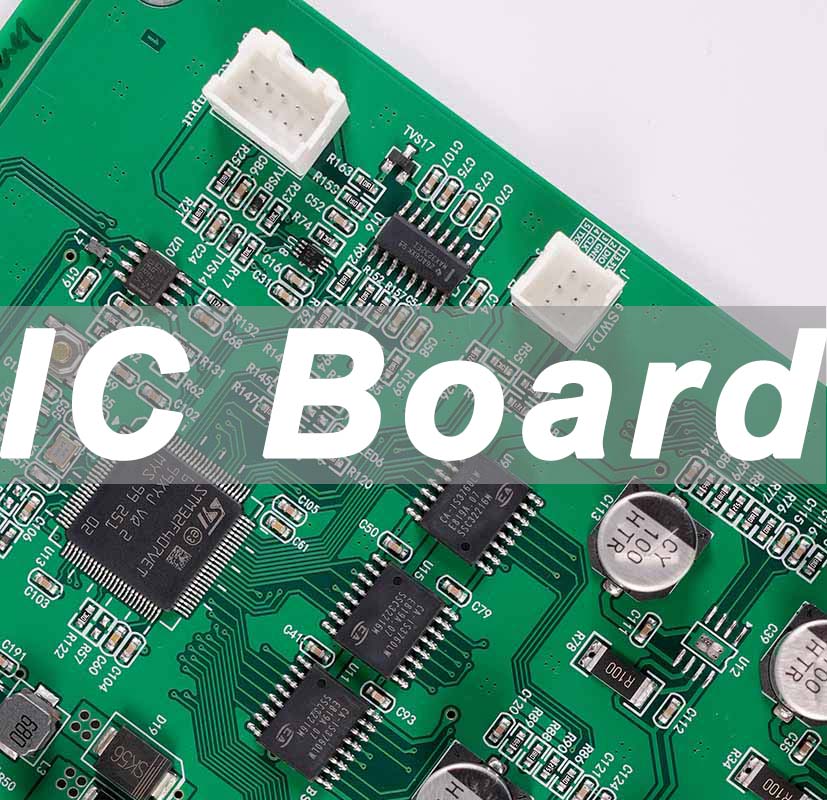
An IC board, most commonly a Printed Circuit Board (PCB), is the physical platform that mechanically supports and electrically connects the various components of an electronic system using conductive tracks and pads. Its primary role is to provide a stable, organized, and reliable environment for ICs (Integrated Circuits)​ and other parts to function as intended. Think of it as the nervous system and skeleton of any electronic device, from a simple breadboard​ prototype to the sophisticated logIC board​ in your smartphone.

Core Functions and Types:

  • Mechanical Foundation:​ Provides a solid base to mount chips, resistors, capacitors, and connectors.
  • Electrical Interconnect:​ Creates the wiring (traces) that allows signals and power to travel between components.
  • Thermal Management:​ Often includes design features (like thermal vias or planes) to dissipate heat from powerful ICs.
  • Protection & Support:​ Offers physical protection and organizes the IC board components​ into a compact form factor.

The term “IC board” can refer to several specific types, depending on context:

Board TypeDescriptionCommon Use Case
IC PCB BoardThe standard, fabricated board with etched copper traces.Virtually all commercial electronics.
IC Breakout BoardA small PCB that adapts a difficult-to-solder IC (like a QFN) to a easier DIP or header format.Prototyping and development.
IC Test BoardA custom board designed specifically to validate the functionality of a particular IC.Production validation and QA.
BreadboardA reusable solderless platform for temporary prototyping and experimenting with circuit designs.Education and initial concept verification.

In summary, an IC board​ is the critical substrate that bridges the abstract world of circuit schematics with the physical world of functional hardware, making it essential for reliable electronic systems.
ic board

What Are the Essential IC Board Components on an IC PCB Board?

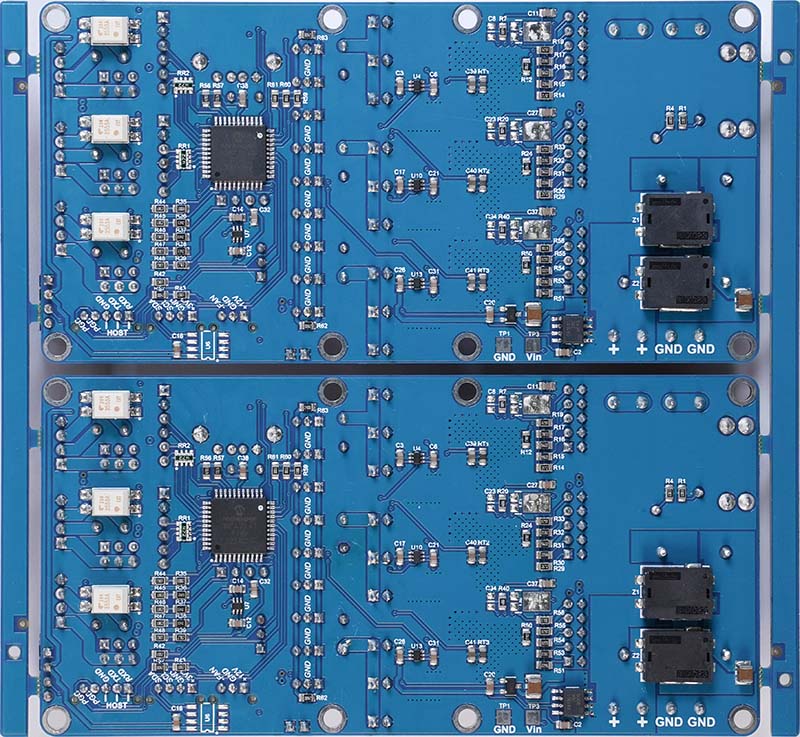
A fully assembled IC PCB board​ is a miniaturized ecosystem. Beyond the integrated circuit​ itself, numerous supporting components are essential for stable operation. Understanding these parts is crucial for both IC board design​ and troubleshooting circuit board with IC​ issues.

The Supporting Cast for the IC:

The IC is the “brain,” but it cannot function alone. Key supporting components include:

  • Decoupling Capacitors:​ Placed close to the IC’s power pins, these are arguably the most critical supporting components. They filter high-frequency noise on the power rail, providing a local, stable charge reservoir to prevent digital switching noise from causing malfunctions. A missing or faulty decoupling cap is a common cause of erratic IC behavior.
  • Crystal Oscillators & Resonators:​ For ICs that require a precise timing reference (like microcontrollers and communication chips), these components provide the essential clock signal. They determine the speed and synchronization of the system’s operations.
  • Voltage Regulators:​ Most ICs require a specific, clean voltage (e.g., 3.3V, 1.8V). Voltage regulator modules (VRMs) or linear regulators convert the board’s main input power (e.g., 12V or 5V) to these required levels with high stability.
  • Resistors & Pull-up/Pull-down Networks:​ These set bias points, limit current, and define default logic states on IC pins (especially for configuration and I/O pins), ensuring the circuit starts and operates in a known, intended state.
  • Connectors & Headers:​ Provide the interface for power input, programming, debugging (like JTAG), and communication with other boards or peripherals (USB, Ethernet). They are the gateway to the outside world.
  • Protection Components:​ Transient Voltage Suppression (TVS) diodes, fuses, and ferrite beads protect sensitive IC board components​ from electrostatic discharge (ESD), voltage spikes, and electromagnetic interference (EMI).

In essence, the reliability of the integrated circuit board​ depends as much on the correct selection and placement of these supporting components as on the IC itself. A holistic IC board design​ approach considers this entire ecosystem.

How Does an IC Board in Mobile Devices Support Core Functions?

The IC board in mobile​ phones, often called the main logic board or motherboard, is a marvel of miniaturization and high-density integration. It is the central nervous system that orchestrates all core functions within an extremely constrained space, making its design critical for performance and reliability.

Enabling Core Mobile Functions Through Advanced PCB Technology:

Modern smartphone PCBs are typically high-density interconnect (HDI) boards with multiple layers (often 10+), micro-vias, and fine-pitch components. Here’s how this specialized IC board​ supports key functions:

  • Processing & Memory:​ The Application Processor (AP) and Memory (RAM, Flash) are the largest ICs​ on the board, connected via hundreds of ultra-high-speed traces. The PCB​ design must ensure signal integrity for these data buses running at GHz speeds to prevent crashes and data corruption.
  • Radio Communication (RF):​ Sections of the board dedicated to WiFi, Bluetooth, and cellular modems are carefully isolated and impedance-controlled. Specific IC board materials​ with stable dielectric constants (like Rogers laminates) are often used here to ensure clear signal transmission and reception.
  • Power Management:​ A complex Power Management IC (PMIC)​ distributes and regulates multiple voltage levels to different subsystems from the single battery source. The IC board design​ uses thick power planes and careful routing to minimize losses and heat.
  • Sensor Integration:​ The board hosts smaller ICs​ for the accelerometer, gyroscope, proximity sensor, etc., requiring precise placement and stable connections for accurate data.
  • User Interface:​ The touchscreen controller IC​ and audio codec IC​ are critical. Faults in connections to these, like a damaged touch IC​ or audio IC, directly impact user experience, often necessitating IC board repair.

This dense integration means a single point of failure—a cracked solder joint, a damaged trace, or a faulty IC on circuit board—can disable the entire device. Therefore, manufacturing quality and robust IC board design​ are paramount for mobile reliability.

What Makes an Integrated Circuit Board Different From a Breadboard?

While both are used to build circuits, an integrated circuit board (PCB) and a breadboard serve completely different roles in the development cycle. The distinction between them marks the shift from idea to real product.

Prototype vs. Product

A breadboard is built for quick experimentation.
An IC PCB board is engineered for long-term reliability and real-world performance.

FeatureBreadboardIntegrated Circuit Board (PCB)
PurposeTemporary prototypingPermanent, product-grade use
ConstructionPlastic grid, no solderFR-4 board with copper traces
ConnectionsClip-based, easy to loosenSoldered, fixed, controlled impedance
ReliabilityLow, noise-proneHigh, stable, durable
Speed CapabilityPoor for high-frequencyExcellent for high-speed/RF
Form FactorBulkyCompact, customized
CostLow, reusableHigher upfront, low volume cost

Summary

You use a breadboard to verify concepts.
You use an integrated circuit board to build real, reliable electronics.

The transition from breadboard to PCB is the essential turning point from idea → manufacturable product.

What Should Engineers Consider During IC Board Design for Better Reliability?

IC board design​ is where reliability is either built-in or compromised. Moving from a functional schematic to a robust, manufacturable layout involves critical engineering decisions that directly impact system performance and longevity.

Designing for Reliability: Key Principles.

Reliable IC board design​ proactively addresses electrical, thermal, and mechanical challenges. Here are essential considerations:

  • Stack-up & Material Selection:​ The choice of layer count, copper weight, and substrate material (standard FR-4 vs. high-frequency laminates) sets the foundation. A proper stack-up ensures controlled impedance for high-speed signals and manages power distribution.
  • Power Integrity (PI):​ Use dedicated, solid power and ground planes. Implement a robust network of decoupling capacitors of varying values close to each IC’s power pins. Simulate the Power Distribution Network (PDN) to avoid voltage droop and noise.
  • Signal Integrity (SI):​ Route critical high-speed traces (clocks, differential pairs, DDR memory) with controlled impedance, appropriate length matching, and minimal via transitions. Provide adequate spacing to prevent crosstalk. Simulation tools are invaluable here.
  • Thermal Management:​ Identify heat-generating ICs​ (processors, power regulators). Use thermal relief pads, arrays of thermal vias under packages to conduct heat to inner planes, and plan for heatsinks or airflow. Proper IC board design​ prevents hotspots that accelerate failure.
  • Electromagnetic Compatibility (EMC):​ Minimize loop areas for high-current paths. Use guard traces or ground pours for sensitive analog sections. Proper filtering on all I/O lines is crucial to pass emissions and immunity standards.
  • Design for Manufacturing (DFM):​ Adhere to your manufacturer’s capabilities (min trace/space, hole sizes, solder mask clearances). This prevents costly fab issues and ensures high yield. This is where partnering with an expert like EBest Circuit​ provides immense value.
  • Testability:​ Include test points for critical signals and voltages to facilitate production testing and future troubleshooting circuit board with IC​ faults.

By rigorously applying these principles during the IC board design​ phase, engineers create the blueprint for a Great IC Board Solution​ that ensures Reliable ElectronIC Systems​ from the start.

How are IC Boards Produced?

The production of a reliable IC PCB board is a precise, multi-stage process that turns digital Gerber files into a fully functional circuit board. Each step plays a direct role in electrical performance, durability, and long-term system stability.

From Design Files to Finished Assembly

Manufacturing an integrated circuit board involves two main phases: Fabrication (creating the bare PCB) and Assembly (mounting components to complete the board).

Streamlined Production Overview

StageKey ProcessesImpact on Reliability
FabricationImaging, etching, lamination, drilling, platingEstablishes trace accuracy, via quality, and overall board integrity
Assembly (PCBA)Solder paste printing, pick-and-place, reflow soldering, inspectionEnsures strong solder joints and consistent electrical/mechanical stability

To conclude, although the workflow appears straightforward, every stage requires tight process control—temperature profiles, alignment accuracy, plating quality, soldering parameters, and automated inspection. A manufacturer’s capability in executing these steps with precision is what separates a basic prototype from a truly product-grade, high-reliability IC board.

How to Remove IC Chip From Circuit Board Without Damaging Traces?

Removing an IC from a circuit board​ is a common task in IC board repair, rework, or salvage. Doing it correctly is crucial to avoid damaging the delicate PCB traces, which can render the board unusable.

Safe Desoldering Techniques for IC Removal.

The goal is to simultaneously melt all solder joints of the IC so it can be lifted off cleanly. Here are effective methods:

  1. Hot Air Rework Station (Best for SMD ICs):​ This is the most common professional tool.
    • Use the appropriate nozzle to concentrate heat on the IC.
    • Apply flux around the pins to aid heat transfer and clean old solder.
    • Use a low-to-medium airflow to avoid blowing away small components.
    • Heat the IC evenly in a circular motion until the solder melts (visible shift/shine), then gently lift it with tweezers.
  2. Soldering Iron with Solder Wick (For Through-Hole or few-pin SMD):
    • Apply flux to the braid.
    • Place the hot iron and braid over a pin to wick up the molten solder.
    • Repeat for all pins. This can be slow for multi-pin ICs and risks pad damage from prolonged heat.
  3. Specialized Desoldering Tools:
    • Desoldering Pump (Solder Sucker):​ Effective for through-hole components. Melt solder on a pin, then quickly place the pump tip and trigger suction.
    • Desoldering Tweezers:​ A specialized tool with two heated tips designed to grip and heat both sides of an SMD component (like a SOP) simultaneously for easy removal.

Critical Tip:​ Always test IC on circuit board​ to confirm it’s faulty before attempting removal. Pre-heating the entire board (with a preheater) can reduce thermal shock and make desoldering easier, especially for large, ground-plane-connected ICs. Patience and the right tool are key to successful IC board repair.

How to Test IC on Circuit Board to Identify Faulty IC Boards?

Testing an IC on a circuit board​ is a diagnostic art, essential for identifying the root cause of failure in what appears to be a faulty IC board. A systematic approach saves time over guesswork.

A Systematic Diagnostic Approach.

Start broad and narrow down. Always begin by verifying power and basic board conditions before blaming the IC.

  1. Visual Inspection: Look for obvious signs: burnt marks, cracked IC packages, bulging capacitors, or poor solder joints (cracks, bridging). Use a magnifier or microscope.
  2. Basic Power Checks:
    • Measure Voltage:​ Use a multimeter to verify the correct voltage is present at the IC’s power pins (VCC, VDD). Check against the datasheet.
    • Check for Shorts:​ Test resistance between power and ground pins. A near-zero reading could indicate a shorted IC or capacitor.
  3. Thermal Check:Power the board briefly and carefully feel (or use a thermal camera) for overheating components. An abnormally hot or cold IC can be a clue.
  4. Signal Analysis (Requires Oscilloscope):
    • Check Clock & Reset:​ Verify the presence, frequency, and shape of critical input signals like clock and reset lines.
    • Monitor Inputs/Outputs:​ Compare the actual signals on the IC’s pins with the expected behavior from the schematic or datasheet. A good input with a bad/no output suggests a faulty IC.
  5. Compare & Substitute:
    • Compare with a Known Good Board:​ If available, compare voltage and signal readings between a faulty and a working board.
    • IC Substitution:​ If you have determined with high confidence that an IC is faulty and have the skill to replace it, swapping in a new one is the definitive test.

Remember, the problem isn’t always the most complex chip. Often, a failed passive component (like a decoupling capacitor) can cause the IC to malfunction. This methodical troubleshooting circuit board with IC​ process helps accurately isolate the true fault.

In conclusion, IC boards​ form the essential, reliable backbone of all modern electronics, from the simplest gadget to the most complex system. This guide has detailed their components, design principles, production, and maintenance, providing a roadmap for creating robust electronic solutions.

Achieving this reliability requires expertise at every stage. EBest Circuit (Best Technology)​ is your partner in this mission. We combine advanced manufacturing capabilities with deep technical knowledge to produce high-quality IC PCB boards​ that meet stringent reliability standards. For more information or if you would like to send us any inquiry, please send us an email through the contact form at the bottom of our Contact Page.

FAQs

1. How to Troubleshoot a Circuit Board with an IC?

Follow a structured process:
1) Visual Inspection​ for physical damage.
2) Power Analysis​ – verify all supply voltages and check for shorts.
3) Signal Probing​ – use an oscilloscope to check critical inputs (clock, data) and outputs against expected behavior.
4) Thermal Imaging​ can reveal overheating components.
5) Isolate Sections​ – if possible, disconnect subsections to localize the fault.
6) Compare​ readings with a known-good board. Start with the simple, external factors (power, connections) before concluding the IC itself is dead.

2. How to Solder IC Board?

For through-hole ICs, insert the IC, tack one corner pin to hold it, then solder all pins quickly with a fine-tip iron, avoiding bridges. For Surface Mount (SMD) ICs, the preferred method is reflow soldering:

  • Apply solder paste accurately to pads using a stencil.
  • Place the IC carefully with tweezers or a pick-and-place machine.
  • Heat the board in a controlled reflow oven or with a hot air rework station​ (for hand soldering), following the paste’s temperature profile. Use plenty of flux to ensure clean, reliable joints and prevent tombstoning. For hand-soldering fine-pitch ICs, the “drag soldering” technique with a chisel tip and flux is effective.
ic board

IC Board Assembly Manufacturer in China, Fast Delivery
Thursday, October 30th, 2025

How to assembly a IC board? Let’s discover components, function, application, design spec and guide, assembly process for IC circuit board.

Are you worried about these problems?

  • Miss market opportunities due to delivery delays?
  • Struggle with high costs squeezing profits?
  • Face technical barriers in design realization?

As a IC board manufacturer, EBest Circuit (Best Technology) can provide you service and solutions:

  • Reliability assurance: Full-spectrum testing including high-temp/humidity, thermal shock, and vibration extends product life by over 30%, backed by verifiable data.
  • Flexible customization: Agile production scales from 50-piece small batches to large-volume manufacturing, with precise BOM traceability to meet diverse needs.
  • Eco-compliance guarantee: Full compliance with RoHS 2.0/REACH standards using lead-free solder and recyclable materials, ensuring smooth entry into EU/US markets.

Welcome to contact us if you have any request for IC board: sales@bestpcbs.com.

What Is the IC board?

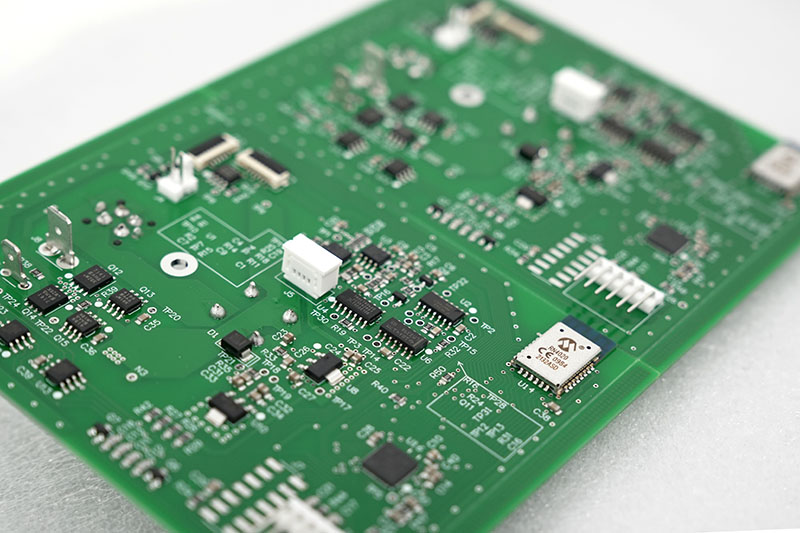
An IC board (also called as Integrated Circuit Board) is a substrate made from insulating materials such as fiberglass epoxy resin, featuring finely etched metal traces (wiring) on its surface. It is used to mount integrated circuit chips (ICs) and other electronic components, providing mechanical support, electrical connection pathways, and forming complete circuits to serve as the core circuit board enabling electronic device operation.

What Is the IC board?

What Are Components of IC Board?

Components of IC Board:

  • Substrate Material: The core carrier, commonly made of fiberglass epoxy resin (FR-4), BT resin, ABF film, ceramic substrate (alumina/aluminum nitride), or silicon wafer, providing mechanical support, insulation, and thermal dissipation pathways.
  • Metal Wiring Layer: Precisely etched copper or aluminum traces forming a multi-layer electrical network (e.g., power planes, ground planes) with interlayer connections via vias (conductive/non-conductive), enabling signal transmission.
  • Component Mounting Areas: Pads, sockets, and surface-mount points for securing chips, resistors, capacitors, and other components while ensuring reliable electrical contact.
  • Packaging Structure: Standard formats such as DIP, SOIC, QFN, etc., which protect internal circuits from environmental damage and provide external interfaces (e.g., pins, solder balls).
  • Solder Mask: Coating non-solder regions (e.g., green/red oil) to prevent short circuits.
  • Silkscreen Layer: Labels indicating component positions, models, and functional identifiers for maintenance and assembly.
  • Surface Finish Layer: Processes like HASL (hot air solder leveling), ENIG (electroless nickel immersion gold), or immersion silver to prevent copper oxidation and enhance solder reliability.
  • Thermal Management System: Heat-conductive materials, heat sinks, or thermal via designs to efficiently dissipate chip heat and ensure stable operation.
  • Insulation/Dielectric Layer: Insulating materials (e.g., epoxy resin) within the substrate to isolate conductive layers and maintain electrical safety.
  • Functional Module Integration: Internal circuits including transistors (MOSFET/BJT), logic gates, arithmetic logic units (ALU), caches, and I/O interfaces, enabling core functions like computation and control.
  • Package Substrate (IC Substrate): Serving as a bridge between the chip and PCB, it employs high-density wiring (e.g., ABF/BT substrate) to connect micron-scale pads to PCBs while providing mechanical support and thermal pathways.

What Are Functions of IC Circuit Board?

Functions of IC Circuit Board:

  • Mechanical Support and Fixation: Provides a stable physical installation platform for integrated circuit chips, resistors, capacitors, and other electronic components, ensuring they remain securely positioned and undamaged during device operation.
  • Electrical Connection and Signal Transmission: Enables electrical interconnection between components through surface-etched metal traces and multi-layer wiring structures, efficiently transmitting power, control signals, and data signals.
  • Thermal Management: Utilizes substrate materials (such as ceramic or metal substrates) or built-in thermal structures (like thermal vias or heat sinks) to rapidly dissipate heat generated by chips, maintaining stable operating temperatures.
  • Environmental Protection: Employs packaging structures (e.g., DIP, QFN) and solder mask layers (green/red oil) to shield internal circuits from environmental hazards such as moisture, dust, and chemical corrosion.
  • Interface and External Connection: Offers standardized interfaces (e.g., pins, solder balls, connectors) for reliable electrical connections to external circuits, power supplies, or other devices.
  • Functional Integration and Modularity: Integrates core circuit modules including transistors, logic gates, memory cells, etc., supporting computation, control, storage, and other essential functions of electronic devices while enabling highly compact designs.
  • Cost Control and Scalable Production: Reduces manufacturing costs per unit through standardized designs, batch production, and automated assembly, while improving production efficiency and yield rates.
  • Signal Integrity Assurance: Minimizes signal loss, crosstalk, and electromagnetic interference during transmission via precision wiring design, impedance matching, and shielding measures, ensuring stable high-speed signal transmission.
What Are Functions of IC Circuit Board?

What Are Applications of IC Board?

Applications of IC Board:

  • Tablet PC Image Processing
  • Smart Home Appliance Control
  • 5G Base Station Signal Transmission
  • Router Network Data Forwarding
  • Autonomous Driving Environmental Perception
  • Vehicle Battery Management System
  • Medical Imaging Equipment Diagnosis
  • Industrial Robot Motion Control
  • Aerospace Navigation and Positioning
  • Data Center High-Performance Computing
  • Smart Grid Energy Monitoring
  • Solar Power Generation Conversion
  • Smart Meter Remote Meter Reading
  • Medical Life Support System
  • Industrial Sensor Data Acquisition
  • Satellite Communication Signal Processing
  • Aircraft Flight Control System
  • Server Storage Chip Management
  • Consumer Electronics Audio Processing

IC PCB Board Design Specification

Design ParameterTypical Value/Range
Layer Count2–40+ layers (depending on complexity)
Board Thickness0.2–8.0mm (standard FR4: 1.6mm)
Substrate TypeFR4, High-Frequency Materials (e.g., Rogers/Arlon)
Minimum Trace Width0.05–0.1mm (outer layers)
Minimum Trace Spacing0.05–0.1mm
Single-Ended Impedance50±5Ω
Differential Impedance90–100Ω (e.g., USB2.0/HDMI)
PTH Diameter≥0.10mm (mechanical drilling)
Microvia Diameter0.04–0.10mm (laser drilling)
Pad DiameterHole size +0.1–0.3mm (minimum annular ring)
Surface FinishENIG, Immersion Tin, Immersion Silver
Dielectric Constant (εᵣ)4.2–4.5 (FR4)
Signal Layer Count3–6 layers (typical multi-layer boards)
Board Size≤508×610mm (maximum)
Layer Alignment Accuracy±0.1mm
Thickness Tolerance±8%

How to Design A IC Board?

1. Requirement Analysis and Specification Formulation

  • Scene-specific demand refinement: For consumer electronics (e.g., smartphone main frequency ≥3GHz), industrial control (temperature resistance -40~125℃), automotive electronics (AEC-Q100 certification) and other scenarios, quantify specific indicators (e.g., power noise ≤2% VCC).
  • Standard and regulatory alignment: Clarify IPC-A-610 soldering standards, RoHS environmental requirements, EMC/EMI testing specifications (e.g., CISPR 25), and reserve design margins to address process fluctuations.

2. Architecture Design and Planning

  • Modular design strategy: Adopt IP core reuse (e.g., CPU soft core, DDR controller), define clear interface protocols (I2C/SPI/PCIe), and evaluate module-level power distribution (e.g., dynamic power proportion ≤70%).
  • Process-material-package collaboration: Select substrates based on signal rate (FR4 for ≤1GHz, PTFE/ceramic for high-frequency scenarios), match packaging forms (QFN/BGA), and verify thermo-mechanical reliability (e.g., CTE matching).

3. Circuit Design and Simulation

  • Mixed-signal design: Distinguish digital/analog regions, adopt isolation strips (≥3 times line width) to reduce crosstalk; analog circuits require separate power/ground planes and decoupling capacitor gradients (1μF+10nF).
  • Multidimensional simulation verification: Pre-simulation includes functional verification (Verilog-AMS models), timing analysis (setup/hold checks), signal integrity (eye diagram margin ≥20% UI); post-simulation incorporates parasitic parameter extraction (R/C/L) to verify actual delay ≤10% of clock cycle.

4. Physical Layout Design

  • Intelligent layout algorithm: Use automatic layout tools (e.g., Cadence Innovus) to optimize component positions, manually adjust critical paths (e.g., clock tree) to reduce delay; place thermally sensitive components (e.g., power transistors) near heat sinks and reserve thermal via arrays.
  • Wiring rule deepening: High-speed differential pairs (e.g., USB3.0) adopt equal-length routing (error ≤5mil), spacing ≥2 times line width; power plane segmentation avoids sharp angles, copper foil thickness ≥2oz for enhanced current capacity.

5. Layout Implementation and Verification

  • Advanced process adaptation: For processes below 28nm, adopt double patterning technology (DPT) to resolve lithography limits; incorporate dummy fills to improve uniformity and guard rings to suppress noise.
  • Multi-round verification closed loop: After DRC/ERC/LVS checks, perform power integrity analysis (IR-Drop ≤50mV), signal integrity review (reflection/crosstalk ≤5%); modify netlists via ECO if necessary and re-verify.

6. Post-Simulation and Parameter Extraction

  • Thermal-electrical coupling analysis: Use Ansys Icepak for thermal simulation, combine electrical parameters (e.g., on-resistance) to evaluate hotspot distribution; critical devices (e.g., MOSFETs) maintain junction temperature ≤125℃ with thermal allowance.
  • Reliability accelerated testing: Validate long-term reliability through high-temperature operating life (HTOL), temperature cycling (TC); package-level tests (e.g., solder ball shear force ≥10N) ensure mechanical strength.

7. Manufacturing File Output

  • Process file standardization: Generate manufacturing instructions including layer stack structures (layer thickness/material), impedance control tables, drilling parameters (hole diameter/tolerance), and confirm process capabilities (e.g., minimum line width/spacing) with foundries.
  • Supply chain full-process management: Establish BOM lists, audit supplier qualifications (e.g., ISO certification), plan SMT process parameters (temperature curves), and design test fixtures (e.g., JTAG interfaces) for mass production testing.

8. Testing and Validation

  • Multi-stage testing strategy: Prototype phase includes functional testing (e.g., I/O level verification), boundary scan (JTAG chain detection); mass production employs statistical process control (SPC) to monitor yield, and samples undergo environmental stress tests (e.g., 85℃/85%RH constant humidity).
  • Document digital archiving: Use PDM systems to manage design files (layouts/simulation reports), test data (eye diagrams/temperature rise curves), and change records, supporting traceability and iterative optimization.
How to Design A IC Board?

    IC Board Assembly Processes

    1. Wafer Dicing and Selection

    • Dicing Technology Evolution: Mechanical blade dicing uses diamond-coated blades for wafers over 100μm, while laser dicing employs UV/IR lasers for contactless cutting of ultra-thin wafers (<100μm) and complex patterns. Post-dicing cleaning involves deionized water rinsing to remove silicon debris and UV exposure to reduce blue tape adhesion for easier die picking.
    • Die Selection Process: Utilizes vacuum suction or robotic arms with high-precision vision systems to select qualified chips, rejecting edge-defective dies. Yield control integrates AOI detection for real-time feedback.

    2. Die Attach

    • Adhesive Systems: Conductive adhesives (e.g., silver paste) for high thermal conductivity applications, non-conductive adhesives for insulation, and solder pastes (Sn-Ag-Cu) for high-temperature reliability. Curing profiles match material properties—thermal curing at 175–185°C or UV curing for 90–120 seconds.
    • Precision Alignment: High-precision die bonders achieve ±0.05mm positional accuracy using dual-vision systems and pressure sensors to control bonding force, preventing chip damage.

    3. Wire Bonding

    • Material Selection: Gold wires (20–30μm) for high-frequency reliability, aluminum wires for cost efficiency (lower strength), and copper wires with nitrogen protection for oxidation resistance. Bonding methods include thermosonic (gold) or ultrasonic (aluminum) techniques, ensuring bond strength ≥5g without non-stick bonds.
    • Process Optimization: Bonding parameters (force, temperature, time) are optimized via DOE experiments. X-ray inspection confirms void-free bonds, while SEM analyzes microstructural integrity.

    4. Surface Mount Technology (SMT)

    • Solder Paste Printing: Stencil printing maintains solder paste thickness deviation ≤±15%, with SPI verification for uniformity. High-density PCBs use stepped stencils (0.03mm local thickening) to compensate solder volume.
    • Placement and Reflow: High-speed pick-and-place machines achieve 0201 component placement accuracy ±25μm. Reflow uses 10-zone nitrogen-protected furnaces, peak temperature 235–245°C for 40–60 seconds, monitored by thermocouples. AOI checks 11 solder joint criteria, with 3D detection for BGA shadow elimination.

    5. Through-Hole Technology (THT)

    • Wave Soldering: Turbulent waves break through oxidation layers, while smooth waves form solder joints. Process parameters: 2–5 seconds at 240–260°C. Flux spray systems precisely control coating volume, and preheat gradients minimize thermal shock.
    • Lead Forming: DIP/PGA component leads are bent using precision dies to match PCB hole dimensions, with tolerance ≤0.1mm.

    6. Encapsulation and Protection

    • Material Selection: Plastic molding (epoxy) for cost efficiency (limited thermal resistance), ceramic for high-frequency/high-power, and metal for optimal thermal conductivity. Underfill materials use capillary action to fill BGA gaps, eliminating thermal stress.
    • Process Refinement: Transfer molding pressure 10–20MPa, curing time 90–120 seconds. Vacuum degassing reduces encapsulation voids, with solder paste oxidation <1% for enhanced joint reliability.

    7. Testing and Validation

    • Electrical Testing: ICT checks opens/shorts, flying probe tests cover high-density boards, and functional tests verify system performance. DC tests measure terminal voltage/current, while AC tests evaluate gain/distortion.
    • Reliability Testing: High-temperature/humidity (85°C/85% RH), thermal cycling (-40°C to 125°C), and vibration (5–2000Hz) screen for latent defects. AEC-Q standards apply to automotive electronics, supporting 2000V/200A high-power testing.

    8. Quality Control Essentials

    • Statistical Process Control: SPC charts monitor solder paste thickness, placement accuracy, and soldering temperature. Process capability indices (Cp/Cpk) assess stability via Minitab visualization.
    • Traceability System: Batch records include wafer lot IDs, equipment parameters, and operator info, stored in cloud systems for 10-year traceability. ESD protection maintains workstation grounding resistance <1Ω.

    9. Common Issues and Solutions

    • Solder Joint Defects: Reflow profile optimization with extended preheat and nitrogen protection reduces oxidation. Metallographic analysis ensures IMC layer thickness ≤5μm for reliability.
    • Die Warpage Control: Substrate warpage <0.75% using high-Tg materials. Vacuum degassing and <1% solder paste oxidation minimize voids.

    10. Environmental Compliance

    • Lead-Free Processes: Compliant with RoHS using Sn-Ag-Cu solder (lead content <1000ppm). Waste management includes segregated recycling of solder dross and adhesive waste, with emissions treated via activated carbon adsorption and combustion.
    • Circular Economy: Metal/plastic waste repurposed into recycled products; agricultural waste converted to organic fertilizer or bioenergy for full lifecycle sustainability.
    IC Board Assembly Processes

    Why Choose EBest Circuit (Best Technology) as IC Board Assembly Manufacturer?

    Reasons why choose us as IC board assembly manufacturer:

    • Proven Industry Expertise: With 15 years of deep expertise in IC board assembly, serving over 200 Fortune 500 companies globally. Certified success stories across automotive electronics (AEC-Q100), industrial control, and consumer electronics, empowering client value upgrades through professional experience.
    • 5-Year Warranty Assurance: Backed by industry-leading warranty terms, providing clients with long-term reliability confidence without compromising service quality.
    • Cost Optimization: Leverage economies of scale and intelligent supply chain optimization to reduce raw material costs by 15%-20%. Combined with lean production models, this minimizes process waste, delivering highly competitive pricing that boosts client profit margins.
    • Rigorous Quality Control: Implement AOI+X-ray dual-inspection systems for 100% solder joint verification. SPC statistical process control ensures critical parameters achieve Cp/Cpk ≥1.67, maintaining yield rates above 99.8% to slash post-sale repair costs and return risks.
    • Lightning-Fast Delivery: Innovative “3-5-7” rapid delivery system—3 days for prototype validation, 5 days for pilot production, and 7 days for mass production launch. Dynamic capacity allocation reduces emergency order lead times by 40%, empowering clients to seize market opportunities swiftly.
    • Comprehensive Technical Support: Dedicated 20-member engineering team provides end-to-end technical accompaniment from DFM design to mass production troubleshooting. Capable of handling ultra-precision processes like 0201 component placement and 01005 micro-resistor welding, ensuring 100% design realizability.
    • Global Environmental Compliance: Full compliance with RoHS 2.0 and REACH standards using lead-free solder (Pb content <1000ppm) and recyclable materials. Certified under ISO 14001 environmental management system, facilitating smooth customs clearance for European and American markets.
    • Flexible Customized Production: Supports agile switching from low-MOQ (as low as 50 pieces) multi-variety batches to large-scale production. Smart material management systems enable precise BOM traceability, meeting diverse customization demands.
    • Comprehensive Reliability Validation: Rigorous testing includes high-temperature/humidity (85°C/85%RH), thermal shock (-40°C~125°C for 1000 cycles), and mechanical vibration (5-2000Hz) to extend product lifespan by over 30% and enhance market reputation.

    Welcome to contact us if you have any request for IC board assembly: sales@bestpcbs.com.