





A ceramic PCB can be a strong choice for high temperature electronics when FR4, standard metal core PCB, or ordinary laminate materials cannot provide enough temperature stability, insulation, or heat transfer. The right material still depends on actual operating temperature, heat load, thermal cycling, CTE matching, copper structure, assembly method, and inspection requirements.
What Does Ceramic PCB High Temperature Resistant Mean?
Ceramic PCB high temperature resistant means the circuit substrate can keep useful electrical insulation, dimensional stability, and mechanical integrity in a hotter environment than many organic PCB materials can tolerate.
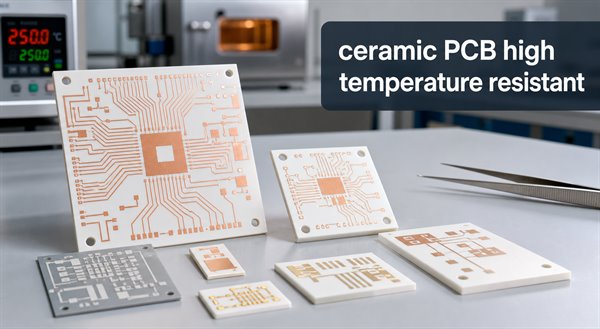
For PCB buyers, high temperature resistance should not be read as one simple number. A board may survive a short thermal event but still fail in long-term operation because of copper stress, solder joint fatigue, ceramic cracking, metallization adhesion, component limits, or repeated thermal cycling.
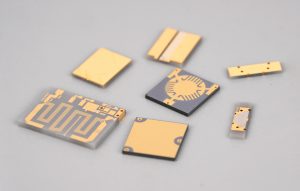
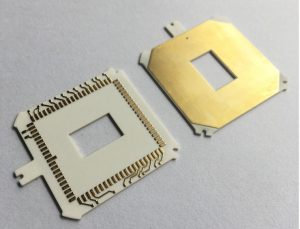
A ceramic PCB is usually chosen when the substrate must support both heat transfer and electrical reliability. Alumina, aluminum nitride, silicon nitride, thick film ceramic circuits, DBC ceramic PCB, and other ceramic substrate options each solve a different high temperature problem.
Why Choose Ceramic PCB for High Temperature Applications?
Choose ceramic PCB for high temperature applications when the board must handle heat, insulation, and dimensional stability at the same time.
Standard FR4 PCB works well for many electronic products, but its resin system limits long-term high temperature reliability. High Tg FR4 can improve heat resistance, yet it is still an organic laminate. Ceramic substrates are inorganic, so they can offer stronger temperature stability and lower thermal expansion in harsh environments.
Common high temperature ceramic PCB applications include LED modules, power electronics, semiconductor modules, automotive electronics, industrial sensors, heating control circuits, aerospace electronics, high-voltage insulation circuits, and compact assemblies where heat cannot be removed easily through a standard board stack.
| PCB Option | High Temperature Fit | Buyer Note |
| FR4 PCB | Good for many standard products | Check Tg, Td, operating temperature, and soldering profile |
| High Tg FR4 | Better than standard FR4 | Useful when temperature is elevated but not extreme |
| Metal core PCB | Good heat spreading | Often used for LEDs and power boards, but dielectric layer matters |
| Ceramic PCB | Strong heat resistance and insulation | Best when heat, voltage, reliability, and size all matter |
| DBC ceramic PCB | Power module and high current applications | Useful when copper thickness and heat transfer are both important |
What Temperature Can a Ceramic PCB Withstand?
A ceramic PCB can often tolerate much higher substrate temperatures than organic PCB laminates, but the real usable temperature depends on material, metallization, assembly, components, solder, coating, and operating time.
It is risky to ask only for “maximum temperature.” For a production design, define the continuous operating temperature, peak temperature, dwell time, temperature cycling range, heating and cooling rate, and whether the board will carry power during the high temperature condition.
EBest Circuit’s ceramic PCB page lists high-temperature resistance as a ceramic PCB process advantage and covers ceramic materials including Al2O3 and AlN. Public technical references also commonly describe ceramic substrates as suitable for high-power and high-reliability applications where FR4 temperature limits are not enough.
How Does Ceramic PCB Thermal Conductivity Affect Heat Dissipation?
Ceramic PCB thermal conductivity affects how quickly heat can move through the substrate from components to a heat sink, chassis, or surrounding structure.
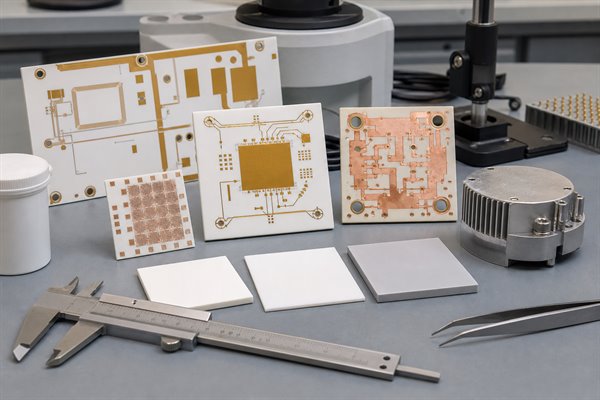
Thermal conductivity is not the same as temperature resistance. A material can tolerate high temperature but still conduct heat poorly. Alumina ceramic PCB is often cost-effective and stable, while AlN ceramic PCB usually provides much higher thermal conductivity for stronger heat transfer. Silicon nitride may be selected when mechanical strength and thermal cycling reliability are more important.
| Material | Thermal Behavior | Typical Decision Logic |
| Al2O3 / alumina | Moderate ceramic thermal conductivity | Cost-effective choice for many high temperature ceramic PCB projects |
| AlN | Higher thermal conductivity | Useful for high-power modules and compact heat paths |
| Si3N4 | Good strength and thermal cycling behavior | Consider when mechanical reliability is a major concern |
| Metal core PCB | Good heat spreading through metal base | Good for many LED and power applications, but not always ceramic-level insulation |
For accurate selection, review the full thermal path: component package, solder layer, copper area, ceramic thickness, substrate material, interface material, heat sink, airflow, and mounting pressure.
Why Does Ceramic PCB CTE Matter in High Temperature Design?
Ceramic PCB CTE, or coefficient of thermal expansion, matters because materials expand and contract as temperature changes.
If the ceramic substrate, copper layer, solder joint, component package, and mounting structure expand at very different rates, thermal cycling can create stress. That stress may lead to cracks, delamination, solder fatigue, conductor damage, or loss of electrical reliability.
CTE matching is especially important in power modules, high-temperature sensors, automotive electronics, aerospace electronics, and products exposed to repeated heating and cooling. Buyers should provide the expected temperature cycle, not only the maximum temperature.
Al2O3 vs AlN vs Si3N4: Which Ceramic PCB Material Should You Choose?
The best ceramic PCB material depends on whether the design needs lower cost, higher thermal conductivity, stronger mechanical reliability, or better thermal cycling performance.
Al2O3 is often the first ceramic PCB material to review because it is widely used and cost-effective. AlN is usually selected when the design needs much stronger heat transfer. Si3N4 can be attractive for demanding thermal cycling or mechanical stress conditions, but availability, process route, and cost should be reviewed early.
| Material | Strength | Limitation | Best Use |
| Al2O3 ceramic PCB | Stable, economical, mature | Lower thermal conductivity than AlN | General high temperature ceramic PCB, sensors, LEDs, hybrid circuits |
| AlN ceramic PCB | High thermal conductivity | Higher cost and stricter processing | High-power modules, compact thermal designs, advanced LEDs |
| Si3N4 ceramic PCB | Mechanical strength and thermal cycling potential | Cost and process availability need review | Demanding power electronics and reliability-focused applications |
Ceramic PCB vs FR4 vs Metal Core PCB for High Temperature Use
Ceramic PCB, FR4, and metal core PCB solve different temperature and heat problems, so the best choice depends on the real operating environment.
FR4 is usually best when cost, multilayer routing, and normal operating temperatures matter most. Metal core PCB is often useful when heat spreading is needed from LEDs or power devices. Ceramic PCB becomes more attractive when the board must combine high temperature stability, insulation, compact size, and reliable heat transfer.
If the circuit has high voltage, high heat flux, repeated thermal cycling, or a small heat path, ceramic PCB should be reviewed before the layout is locked.
Which Ceramic PCB Manufacturing Process Fits High Temperature PCBs?
The manufacturing process should match the temperature, current, line width, copper thickness, and reliability requirement.
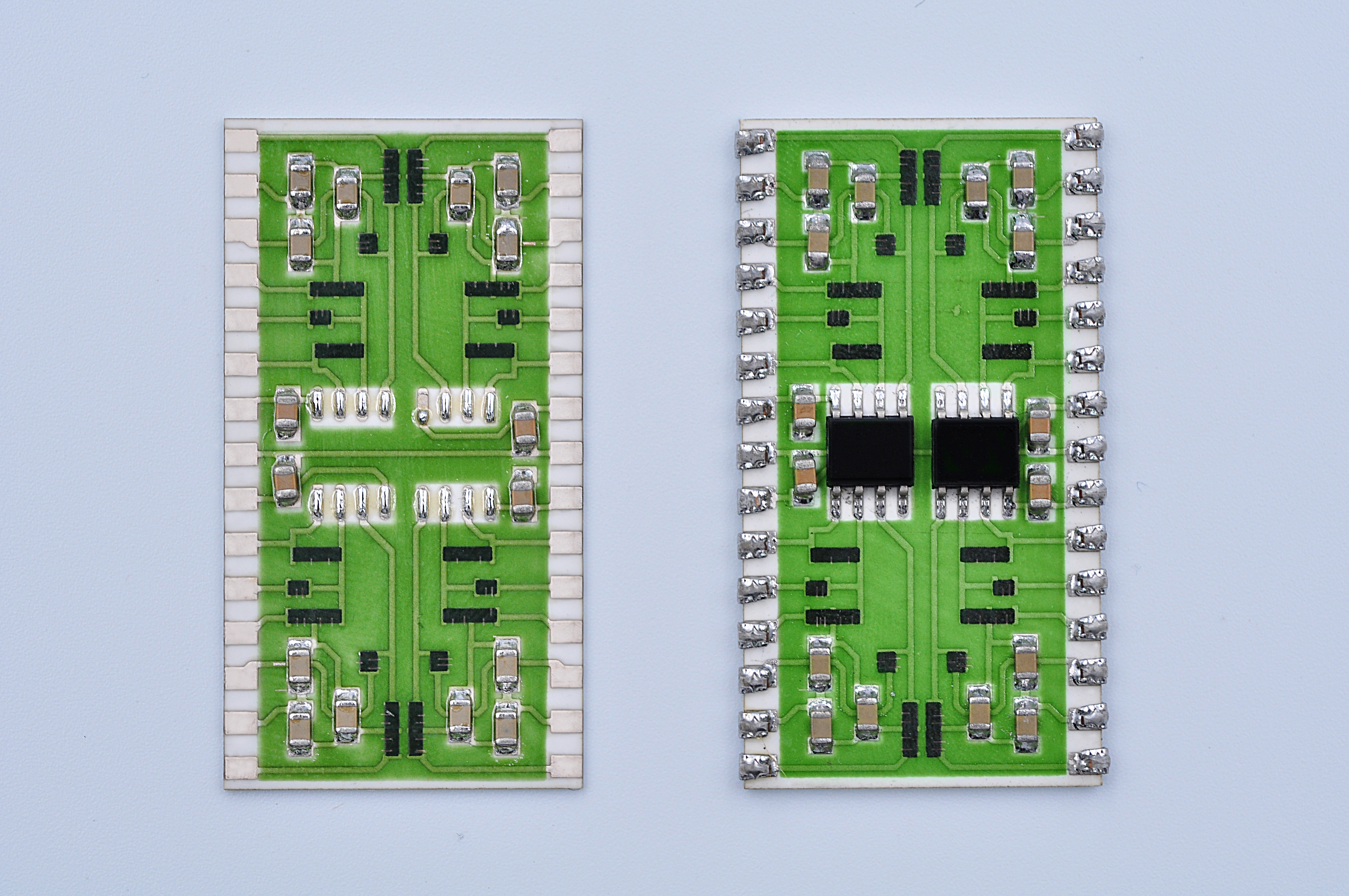
Thick film ceramic PCB is useful for hybrid circuits, sensors, and designs that need fired conductor patterns on ceramic. Thin film ceramic PCB supports finer circuit features and precision applications. DBC ceramic PCB is often used where bonded copper, power handling, and heat transfer are important.
| Process | Useful For | High Temperature Note |
| Thick film | Sensors, hybrid circuits, fired conductors | Review conductor paste and firing system |
| Thin film | Fine lines, precision circuits, compact modules | Useful when pattern accuracy matters |
| DBC | Power modules and higher current paths | Review copper thickness, ceramic thickness, and thermal cycling |
| HTCC / LTCC | Multilayer ceramic structures and packages | Use when the design needs ceramic multilayer integration |
What Design Checks Help Prevent High Temperature PCB Failure?
High temperature PCB failure is often caused by the whole assembly, not only the ceramic substrate.
- Check continuous temperature, peak temperature, and thermal cycling range.
- Review CTE compatibility between ceramic, copper, solder, and component packages.
- Confirm copper thickness and conductor adhesion for the process.
- Check solder alloy, attachment method, and component temperature ratings.
- Review ceramic thickness, board outline, holes, slots, and edge stress.
- Confirm whether conformal coating, potting, or enclosure materials can survive the same temperature.
- Define inspection and reliability testing before production.
For procurement teams, a “high temperature ceramic PCB” quote should include more than Gerber files. It should include application temperature, power dissipation, operating environment, assembly requirements, and reliability expectations.
What Should You Provide for a High Temperature Ceramic PCB Quote?
A complete RFQ helps the manufacturer choose the right ceramic material, process, tolerance, copper structure, and test plan.
- Gerber files, drill file, and mechanical drawing.
- Preferred ceramic material, such as Al2O3, AlN, or Si3N4.
- Operating temperature, peak temperature, and temperature cycle profile.
- Power dissipation, current load, and heat source area.
- Copper thickness, conductor method, and surface finish.
- Minimum line width, spacing, hole size, and tolerance requirements.
- Assembly method, component type, solder requirement, and testing needs.
- Prototype quantity, mass production estimate, and delivery expectation.
How EBest Circuit Supports High Temperature Ceramic PCB Projects?
EBest Circuit supports ceramic PCB manufacturing and related PCB/PCBA services for customers evaluating high temperature, high thermal conductivity, and high reliability circuit requirements.
Relevant capabilities include ceramic PCB, thick film ceramic PCB, thin film ceramic PCB, DBC ceramic PCB, FR4 PCB, metal core PCB, component sourcing, and PCB assembly. For high temperature ceramic PCB projects, the engineering review should focus on material, thermal conductivity, CTE, copper structure, process route, testing, and assembly compatibility.
If the design is still early, send the working temperature, heat source details, voltage/current requirement, and expected environment. This helps the team suggest whether Al2O3, AlN, Si3N4, DBC, thick film, thin film, FR4, or metal core PCB is the better starting point.
FAQ
Is ceramic PCB good for high temperature?
Yes. Ceramic PCB is often good for high temperature electronics because ceramic substrates provide strong insulation, stable dimensions, and better heat resistance than many organic PCB laminates. The final reliability still depends on copper, solder, components, assembly, and thermal cycling.
What is the best material for high temperature ceramic PCB?
There is no single best material for every high temperature ceramic PCB. Al2O3 is often cost-effective, AlN is useful when high thermal conductivity is needed, and Si3N4 may be considered when mechanical strength and thermal cycling reliability are major concerns.
Is thermal conductivity the same as temperature resistance?
No. Thermal conductivity describes how well heat moves through a material. Temperature resistance describes how well the material and assembly survive heat. A board can tolerate high temperature but still need better heat spreading, or conduct heat well but fail because of CTE stress or assembly limits.
Why is CTE important for ceramic PCB?
CTE matters because ceramic, copper, solder, and components expand at different rates when temperature changes. Poor CTE matching can create mechanical stress, which may cause cracking, delamination, or solder joint fatigue during thermal cycling.
Can FR4 be used for high temperature PCB?
FR4 can be used in many moderate-temperature electronics, and high Tg FR4 can improve thermal margin. For harsher environments, stronger insulation, high heat flux, or repeated thermal cycling, ceramic PCB or another high temperature substrate may be a better fit.
When should I choose metal core PCB instead of ceramic PCB?
Choose metal core PCB when heat spreading through a metal base is enough and the circuit does not require ceramic-level insulation, temperature stability, or CTE behavior. LEDs and some power boards often use metal core PCB, while ceramic PCB fits more demanding thermal and reliability cases.
What affects the cost of high temperature ceramic PCB?
Cost depends on ceramic material, substrate thickness, board size, process type, copper thickness, line width, holes, tolerance, surface finish, inspection, assembly, quantity, and lead time. AlN, fine features, tight tolerances, and special reliability testing usually increase cost.
What files are needed for a high temperature ceramic PCB quote?
Send Gerber files, drill files, drawings, stackup notes, ceramic material preference, operating temperature, thermal cycling profile, current and voltage requirements, copper thickness, surface finish, quantity, and assembly or testing requirements if needed.
Conclusion
A ceramic PCB can solve high temperature PCB problems when the design needs more than ordinary laminate heat resistance. The right choice depends on temperature profile, thermal conductivity, CTE, material type, manufacturing process, copper structure, assembly method, and quality inspection.
If you are evaluating high temperature ceramic PCB, Al2O3 PCB, AlN PCB, DBC ceramic PCB, thick film ceramic PCB, or ceramic PCB assembly, EBest Circuit can review your drawings and help choose a practical manufacturing path. Contact our engineering team for technical support and a quote at sales@bestpcbs.com.
You may also like

Tags: ceramic PCB, High Temperature PCB, PCB Materials, thermal conductivity