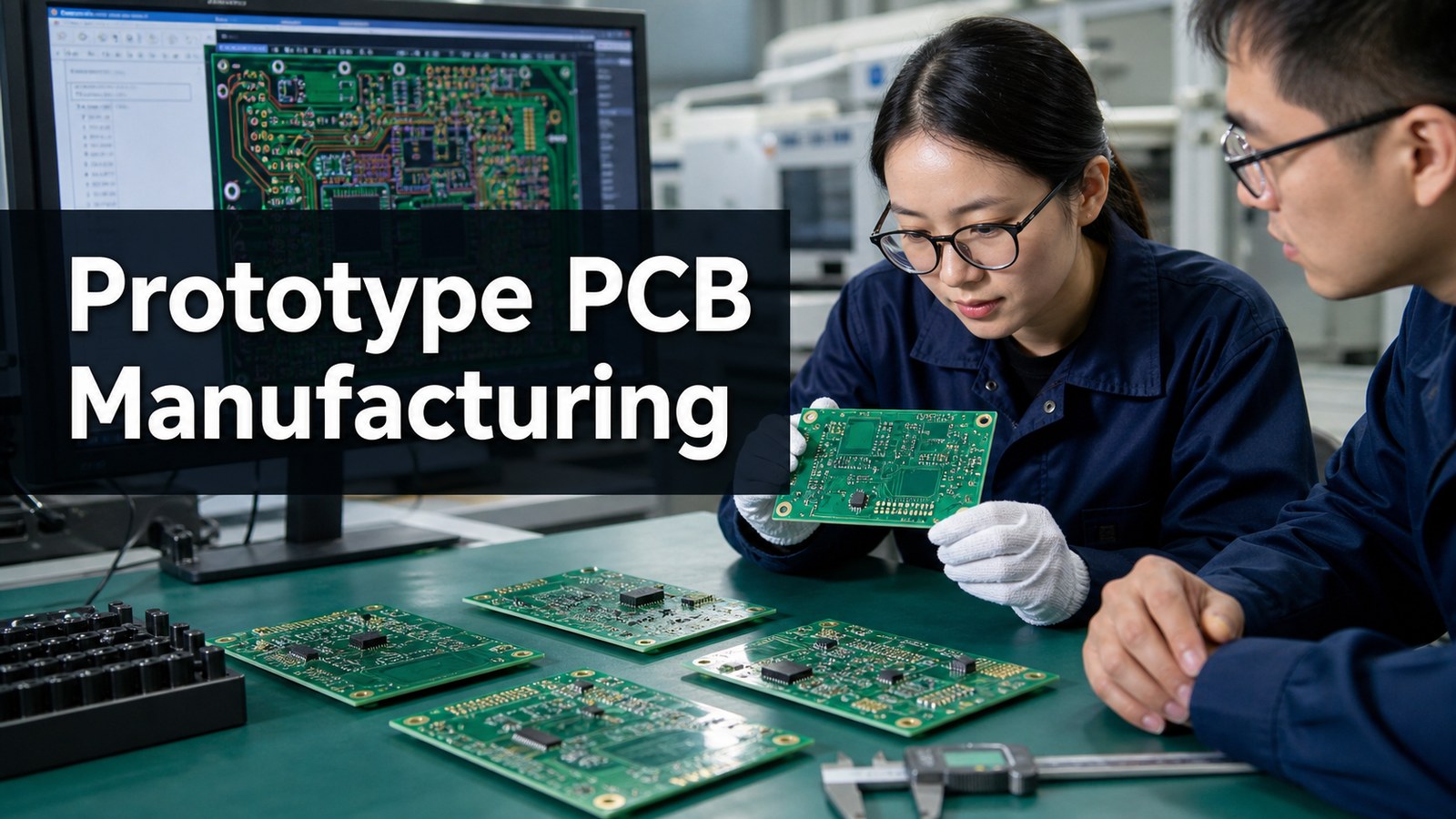
Prototype PCB manufacturing is the first controlled build of a printed circuit board used to test design function, manufacturability, assembly fit and supplier assumptions before larger production. A prototype order should not only answer “Can the board turn on?” It should reveal DFM issues, material risks, quote assumptions, testing gaps and changes needed before low-volume or production release.
This guide is written for engineers and buyers preparing a prototype PCB manufacturing RFQ. It follows the current search intent: fast prototype suppliers, low-cost prototype options, prototype-to-production decisions, assembly questions and practical file preparation.
Prototype PCB Manufacturing at a Glance
A good prototype PCB build should validate the design, the files and the manufacturing route before the project becomes expensive to change. If the first build only checks price and delivery speed, the next build may repeat the same hidden problems.
| Prototype goal | What to check | Why it matters |
|---|---|---|
| Electrical function | Power, signal, interfaces, test points and bring-up plan | Confirms the circuit can be debugged and measured. |
| Manufacturability | Trace width, spacing, drill, annular ring, stackup and finish | Finds problems before repeat orders. |
| Assembly fit | BOM, CPL, footprints, polarity and mechanical clearance | Prevents rework during PCBA. |
| Production path | Material, panelization, testing and revision control | Reduces the gap between prototype and low-volume production. |
Will Your Prototype PCB Reveal Problems Early Enough?
Prototype PCB projects should expose design and manufacturing risks quickly, not create avoidable delays from missing files or unclear assumptions.
| Customer Pain Point | Project Risk | How bestpcbs Helps |
|---|---|---|
| The first prototype is ordered without a DFM check | Footprint, drill, clearance or panelization issues may force a new revision | bestpcbs reviews Gerber or ODB++ files, drill data and fabrication notes before release. |
| Prototype files do not match the intended assembly plan | The bare board may arrive before BOM, CPL or assembly issues are visible | bestpcbs checks assembly files together with fabrication data when PCBA is required. |
| Schedule pressure removes basic checks | Fast delivery can turn into rework if the design is not production-ready | bestpcbs clarifies critical specifications and test expectations before confirming the order path. |
| Prototype and production requirements are different | A board that works once may be hard to repeat at volume | bestpcbs helps buyers keep material, finish, testing and revision notes clear for later production. |
Prototype PCB Manufacturing Checks Before Release
Prototype PCB manufacturing should help the buyer learn quickly without creating avoidable rework. A fast prototype is only useful when the supplier reviews fabrication data, drill files, materials, finish, panelization and assembly needs before release.
Before ordering, confirm the file package, revision, board quantity, test scope, shipping expectation and whether the prototype is intended for engineering validation, customer samples or a path toward production.
When a Prototype PCB Is the Right Step
A prototype PCB is the right step when the design still needs electrical validation, mechanical fit checks, firmware bring-up, thermal review or assembly confirmation. It is not just a cheaper version of production.
Prototype builds are especially useful before changing to low-volume orders, committing expensive components, locking the enclosure, or adding functional test fixtures. If your project needs mounted components, connect the bare board plan with the PCBA and PCB assembly service requirements.
Files Required for Prototype PCB Manufacturing
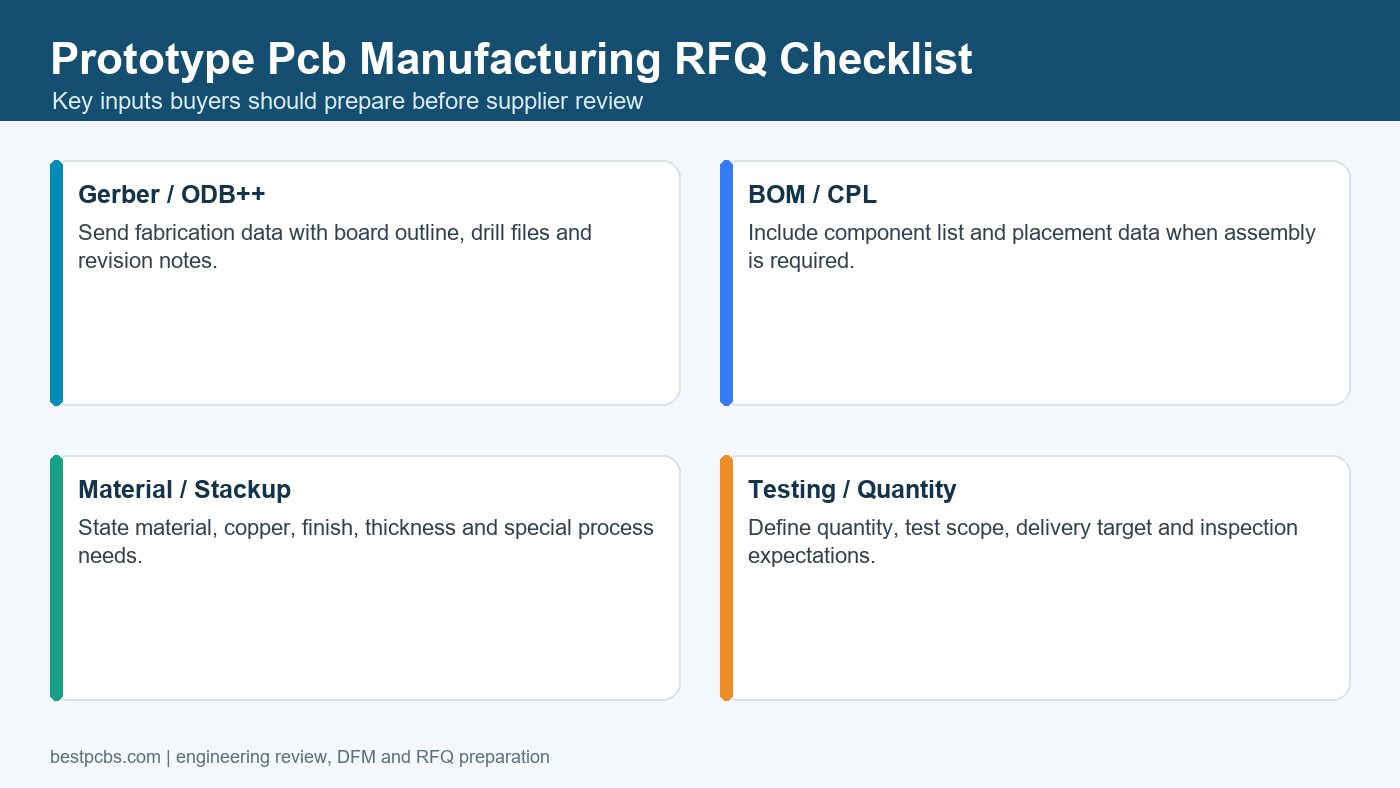
A prototype PCB quote needs complete fabrication files and clear build assumptions, even when the order quantity is small. Incomplete files slow quoting and hide cost changes.
| RFQ file | Why it matters |
|---|---|
| Gerber or ODB++ | Defines copper, mask, silkscreen, drill and outline data. |
| Drill files | Clarifies plated holes, vias, slots and mechanical holes. |
| Stackup notes | Defines layer count, material, copper and thickness assumptions. |
| BOM and CPL | Required when prototype assembly is included. |
| Assembly drawing | Clarifies polarity, connectors, keepouts and special notes. |
| Test requirements | Defines what must be checked before shipment. |
DFM Review Before Prototype Release
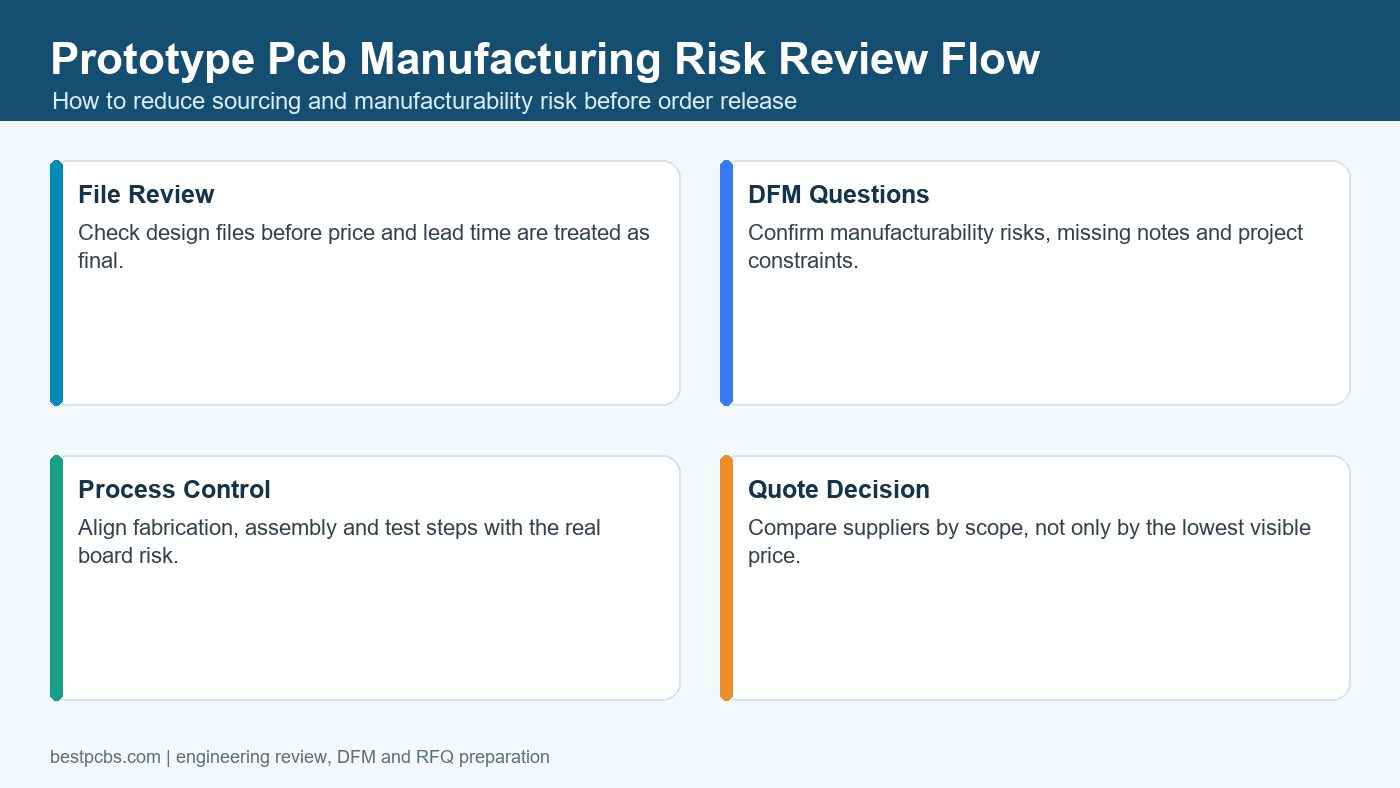
DFM review should happen before prototype release because small layout issues can turn a quick prototype into a delayed debug cycle. The most useful prototype is the one that teaches the team what to change next.
Check trace width, spacing, drill size, annular ring, solder mask bridge, copper-to-edge clearance, panelization and stackup. The PCB design for manufacturability checklist is a useful internal reference before sending files.
Prototype PCB Cost Drivers
Prototype PCB cost is driven by layer count, size, material, finish, hole count, fine features, delivery speed, assembly scope and testing. Low unit price can be misleading if setup, shipping, component sourcing or rework is ignored.
| Cost factor | Why it changes the quote | How to control it |
|---|---|---|
| Layer count and size | More layers and larger boards use more process capacity. | Prototype only the area needed when possible. |
| Material and finish | Special laminates or finishes may need extra procurement. | Use standard materials unless the test requires otherwise. |
| Assembly | BOM sourcing and placement add setup work. | Provide clean BOM, CPL and approved substitutions. |
| Urgency | Quick-turn orders can increase cost and limit review time. | Separate real deadline from preferred date. |
Prototype PCB Assembly Considerations
Prototype PCB assembly should be planned with BOM readiness, component availability, footprint accuracy, polarity, CPL rotation and inspection needs. Many first-build problems are assembly-data problems, not fabrication problems.
Send approved part numbers, alternates, customer-supplied component notes, placement data and any programming or functional test requirements. The component sourcing support page is relevant when parts are included in the prototype order.
Testing and Bring-Up Planning
Prototype testing should match the question the build is supposed to answer. If the prototype is for power validation, RF behavior, firmware bring-up or mechanical fit, the test plan should say so before the order starts.
- Define whether you need only bare-board electrical test or assembled board checks.
- Provide firmware, test jigs or acceptance criteria if functional testing is requested.
- Mark critical nets, controlled impedance and high-current sections.
- Plan how the engineering team will inspect and debug the first build.
Prototype to Low-Volume Production
The move from prototype to low-volume production should be based on revision control, DFM fixes, component availability and test results. A prototype that works once is not automatically ready for repeat orders.
Before repeating the build, record design changes, supplier comments, assembly issues, test failures and accepted deviations. If the project is moving into limited production, compare the prototype notes with the low volume PCB manufacturing quote checklist.
How to Compare Prototype PCB Manufacturers
Compare prototype PCB manufacturers by review quality, file handling, assembly options, testing clarity and transition support, not only by the lowest cart price. A fast order is only helpful if it gives usable feedback.
- Do they check Gerber, drill, stackup, BOM and CPL together?
- Do they explain assumptions before taking payment?
- Can they support the materials and finishes needed for the real product?
- Do they offer assembly or only bare boards?
- Can the same supplier help when the order moves to low volume?
Online Ordering vs Engineering Review
Online ordering is efficient for simple prototypes, while engineering review is safer for complex boards, controlled impedance, unusual materials, tight mechanical fit or assembly risk. The right path depends on what can go wrong.
If the design is straightforward, an online quote may be enough. If the board involves HDI, rigid-flex, RF, heavy copper, ceramic or dense PCBA, request an engineering review before release. The PCB manufacturer online guide explains when upload-based ordering needs extra checks.
Common Prototype PCB Manufacturing Mistakes
Common prototype mistakes include ordering too quickly, sending incomplete assembly files, ignoring DFM notes, testing the wrong thing and failing to capture revision changes. These mistakes can make the second build no better than the first.
- Do not skip stackup and material notes because the order is small.
- Do not compare quotes unless finish, delivery and testing scope match.
- Do not send a BOM without approved alternates or sourcing rules.
- Do not assume the prototype supplier understands the production goal unless you state it.
- Do not move to production until prototype findings are documented.
Frequently Asked Questions About Prototype PCB Manufacturing
What is prototype PCB manufacturing?
Prototype PCB manufacturing is the small-batch fabrication of circuit boards used to validate design function, manufacturability, assembly fit and test assumptions before larger production.
How many prototype PCBs should I order?
Order enough boards for engineering bring-up, destructive testing if needed, firmware work, assembly checks and backup samples. The right quantity depends on the test plan.
Can prototype PCB manufacturing include assembly?
Yes, if the supplier offers PCBA. You should provide BOM, CPL, assembly drawings, component sourcing rules and test requirements.
Should I choose the cheapest prototype PCB supplier?
Not automatically. Choose the supplier that matches your risk level, file review needs, material requirements, assembly scope and transition plan to low-volume or production builds.
Final RFQ Recommendation
Before ordering a prototype PCB, prepare files that let the supplier quote the real build and help your team learn from the first article. A good prototype should reduce uncertainty before the next revision or production order.
For a prototype PCB manufacturing quotation, send your Gerber or ODB++ files, drill files, stackup, material and finish requirements, quantity, BOM, CPL, assembly drawings if needed, testing requirements and target lead time to sales@bestpcbs.com. The Best Technology / bestpcbs team can review the package and help identify which prototype assumptions should be confirmed before fabrication, assembly or low-volume release.
You may also like



Tags: pcb manufacturing, pcb prototype, PCB Supplier Selection