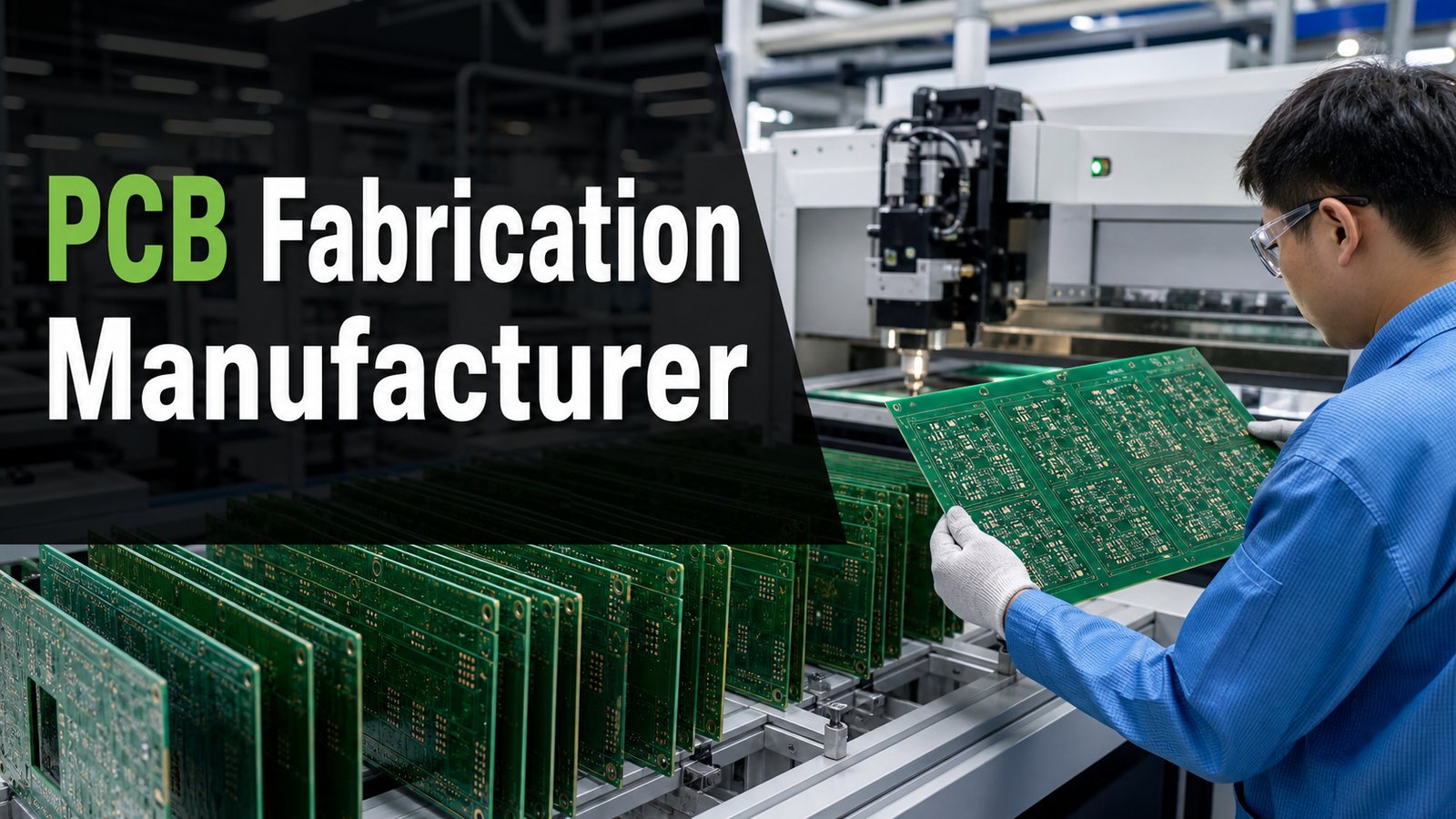
A PCB fabrication manufacturer builds the bare printed circuit board from your design files, then verifies that the board can support assembly, testing, and the product environment. For buyers, the strongest supplier is not simply the one with the lowest board price. It is the manufacturer that can review your files, explain process risks, and help prevent expensive surprises before production starts.
This guide explains how to compare PCB fabrication manufacturers when you need prototype boards, low-volume builds, or production-ready bare boards. It focuses on DFM review, materials, surface finish, quality checks, quotation files, and supplier questions that help engineers and purchasing teams choose a safer manufacturing path.
PCB Fabrication Manufacturer at a Glance
A PCB fabrication manufacturer converts Gerber or ODB++ data into finished bare boards through material preparation, imaging, etching, drilling, plating, solder mask, surface finish, routing, inspection, and electrical testing. The exact flow changes with board type, layer count, material, copper, finish, and special process requirements.
| Buyer need | What the manufacturer should check | Why it matters |
|---|---|---|
| Prototype board | Files, outline, drill data, solder mask, quick DFM issues | Finds design problems before assembly or product testing. |
| Engineering build | Stackup, copper, impedance, material, finish, panelization | Improves repeatability before volume release. |
| Production board | Quality plan, test coverage, packaging, revision control | Reduces field risk and purchasing uncertainty. |
When You Need a Fabrication Manufacturer Instead of Only a Broker
You need a fabrication-focused manufacturer when your board has engineering risk that should be reviewed before production, not only priced from uploaded files. A broker or trading path may be acceptable for simple boards, but it can add communication gaps when the design needs stackup review, material confirmation, controlled impedance, heavy copper, special finish, or strict inspection requirements.
Ask who performs DFM review, who confirms process capability, who answers engineering questions, and who owns quality feedback if a board issue appears after assembly. For buyers who also need components mounted, the PCBA and PCB assembly service page is a useful companion reference.
DFM Review Before Fabrication
DFM review checks whether the design can be fabricated consistently with the selected material, copper, holes, clearances, surface finish, and panel requirements. It should happen before the board enters production because late corrections can change cost, lead time, and risk.
Review points include trace and spacing, annular ring, via type, drill-to-copper clearance, solder mask dams, copper balance, board edge clearance, slot notes, controlled impedance details, panel tooling, and whether drawings match Gerber data. For a deeper design-side checklist, see the PCB design for manufacturability checklist.
PCB Types and Materials to Confirm
The board type and material should be confirmed before quoting because they affect process route, manufacturability, inspection, and assembly behavior. Common projects may use FR-4, while other designs may require high-Tg material, metal-core PCB, ceramic substrate, high-frequency material, flex, rigid-flex, or heavier copper.
Do not publish or accept exact capability numbers unless they are checked against the latest Best Technology process capability files and the specific project notes. For RFQ purposes, send the intended material, board thickness, copper weight, surface finish, layer count, impedance need, and operating environment so the manufacturer can confirm feasibility instead of guessing.
Layer Count, Stackup and Controlled Impedance
Stackup decisions should be treated as manufacturing requirements, not only layout preferences. Layer count, dielectric thickness, copper distribution, reference planes, impedance targets, and finished board thickness can affect performance and fabrication consistency.
If impedance matters, provide impedance values, tolerance expectations, trace geometry assumptions, and stackup notes. If the design is not locked, ask the manufacturer to review the proposed stackup before routing or before final release. This helps avoid a board that is theoretically correct but hard to manufacture repeatably.
Surface Finish and Solderability Choices
Surface finish should be selected according to component pitch, soldering method, shelf life, cost target, and reliability needs. The right finish for a basic prototype may not be the right finish for a fine-pitch, production, or connector-heavy board.
| Question | Why to ask it |
|---|---|
| Will the board use fine-pitch or BGA components? | Pad flatness and solderability become more important. |
| How long may boards wait before assembly? | Shelf-life expectations can affect finish choice. |
| Are edge connectors or special pads used? | Some finishes or process notes may need early confirmation. |
Quality Control and Electrical Testing
A suitable PCB fabrication manufacturer should explain what inspection and testing apply to your board, rather than leaving quality as a vague promise. Bare board checks can include visual inspection, dimensional checks, solder mask review, surface finish inspection, and electrical testing based on the order requirements.
For boards that later become PCBAs, bare board quality also affects assembly yield. Missing solder mask, poor hole quality, incorrect finish, or dimensional drift can create downstream assembly problems even when the original issue began in fabrication.
Cost Drivers in PCB Fabrication
PCB fabrication cost is driven by complexity, not by board area alone. A smaller board can cost more than a larger board if it needs tight spacing, small holes, special material, controlled impedance, heavy copper, special finish, or strict inspection.
| Cost factor | Typical reason | How to reduce uncertainty |
|---|---|---|
| Layer count | More process steps and tighter registration needs | Send stackup and finished thickness target. |
| Drill and via design | Small holes and dense vias raise process difficulty | Clarify via type and drill file details. |
| Material | Special laminates can affect sourcing and production | Provide preferred and acceptable alternatives. |
| Testing | Extra inspection or test setup adds effort | Define acceptance criteria before quoting. |
RFQ Files a PCB Fabrication Manufacturer Needs
A complete RFQ package lets the manufacturer quote the real board instead of making assumptions that may change later. Missing files are one of the simplest reasons for quote delay, wrong pricing, and production holds.
- Gerber or ODB++ data
- Drill files and slot notes
- Board outline or mechanical drawing
- Stackup, layer count, board thickness, material, copper, and finish requirements
- Controlled impedance notes if applicable
- Quantity, revision, delivery target, inspection and packaging requirements
The PCB manufacturer online guide explains how to organize these files before sending them for engineering review.
How to Compare Manufacturer Responses
Compare supplier responses by clarity, engineering review quality, and risk control, not only by the number at the bottom of the quote. A useful quote should explain assumptions, unresolved questions, material choices, special process notes, and anything that needs customer confirmation.
- Did the supplier identify missing files or unclear notes?
- Did they explain which requirements need capability confirmation?
- Did they ask about assembly or test needs that affect fabrication?
- Did they avoid unsupported claims about fastest lead time, perfect yield, or guaranteed certification?
- Did the quote separate bare board requirements from optional assembly or sourcing needs?
Common Sourcing Mistakes to Avoid
The most common mistake is choosing a PCB fabrication manufacturer before the board requirements are clear. Buyers also run into problems when they compare quotes with different assumptions, ignore DFM questions, skip material confirmation, or leave testing requirements until after production.
If your project will later require component sourcing or turnkey assembly, make that clear early. Component availability and assembly method can change the safest fabrication choices. Bestpcbs buyers can reference component sourcing support when the bare board decision is connected to the full PCBA supply chain.
Frequently Asked Questions About PCB Fabrication Manufacturers
What does a PCB fabrication manufacturer do?
A PCB fabrication manufacturer builds bare printed circuit boards from design data. The work includes material processing, copper patterning, drilling, plating, solder mask, surface finish, routing, inspection, and testing.
Is PCB fabrication the same as PCB assembly?
No. Fabrication makes the bare board. Assembly mounts and solders components onto that board. Many buyers need both steps coordinated, especially when DFM, BOM, CPL, inspection, and test requirements are connected.
What files should I send for a PCB fabrication quote?
Send Gerber or ODB++, drill files, board outline, stackup notes, material, copper, surface finish, quantity, delivery target, and any special inspection or packaging requirements.
How do I know if a quote is realistic?
A realistic quote states assumptions clearly and asks questions when project data is incomplete. Be careful when a quote is unusually low but does not mention material, finish, testing, or unresolved engineering details.
Final RFQ Recommendation
Before choosing a PCB fabrication manufacturer, send enough information for a real engineering review and compare how each supplier handles uncertainty. The best starting point is a clean package with Gerber or ODB++, drill files, stackup, material, copper, finish, quantity, revision, delivery target, and inspection requirements.
For a PCB fabrication review or quotation, send your Gerber or ODB++ files, drawings, stackup notes, quantity, material expectations, surface finish, testing needs, and target lead time to sales@bestpcbs.com. The Best Technology / bestpcbs team can review the fabrication path, flag missing information, and help prepare the board for prototype, low-volume, or production use.
You may also like



Tags: pcb fabrication, pcb manufacturing, PCB Supplier Selection