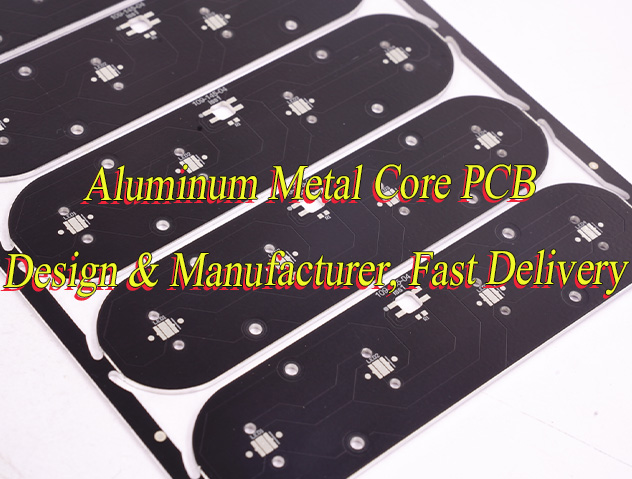
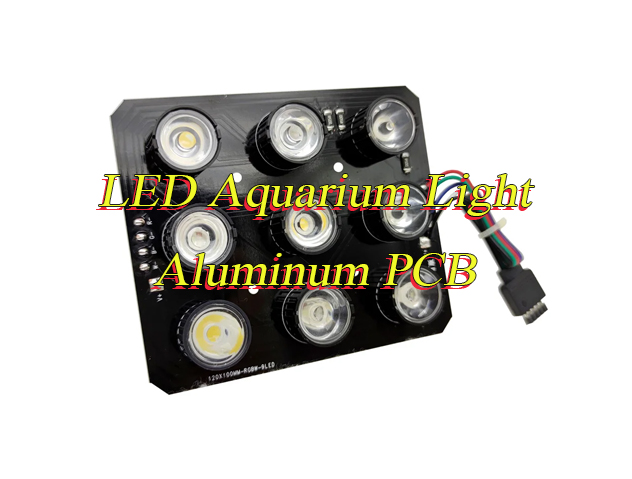
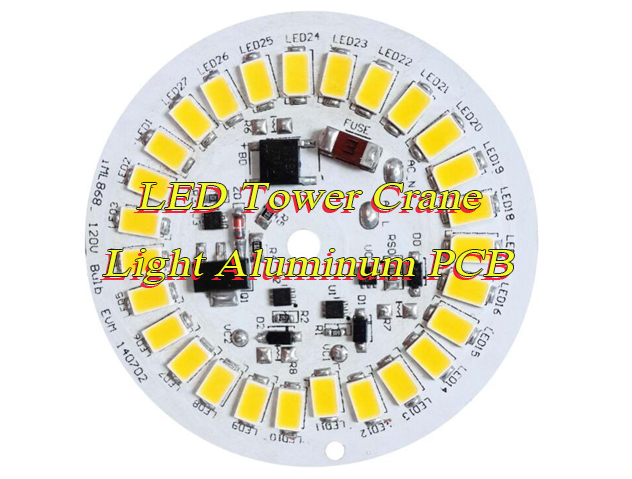
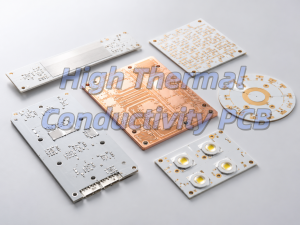
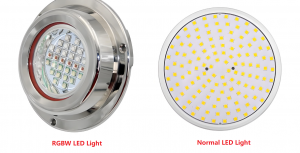
LED module assembly is not just about placing LEDs onto a PCB. A reliable lighting board needs the right PCB base, stable solder joints, correct LED polarity, controlled heat transfer, and suitable protection for the working environment.
For many lighting products, the customer already controls the final lamp housing, optics, driver, structure, and product-level validation. The PCB and PCBA partner focuses on the assembled lighting board: MCPCB fabrication, SMT LED mounting, soldering control, coating support, and basic testing.
This guide explains what buyers should know before sourcing LED module assembly for lighting boards.
What Is LED Module Assembly?
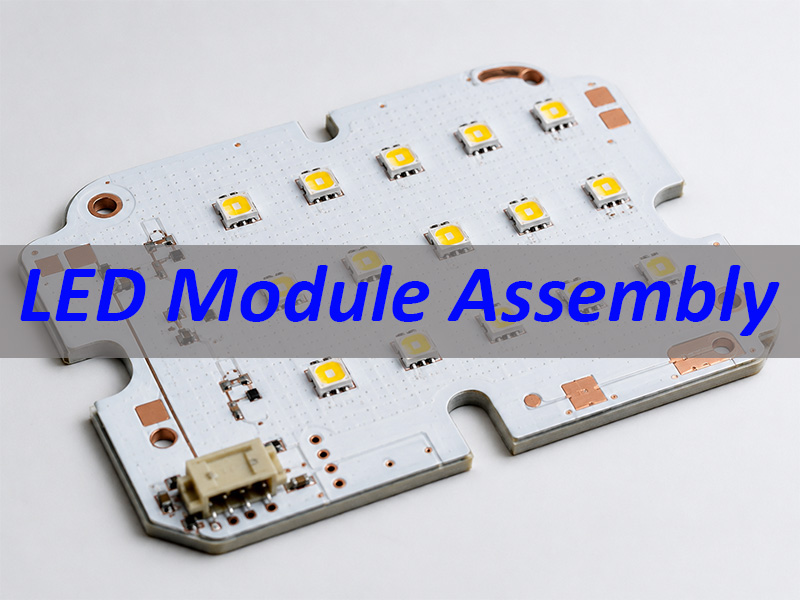
LED module assembly is the process of turning a bare LED PCB into an assembled lighting board. It usually includes PCB fabrication, solder paste printing, SMT LED mounting, lead-free reflow soldering, inspection, testing, and sometimes protective coating.
In PCB manufacturing, an LED module does not always mean a complete finished lamp. It usually means the LED board inside the product. The housing, lens, driver, thermal structure, final packaging, and product certification may still belong to the customer’s final product scope.
This distinction matters. If you need only the bare board, you are requesting LED PCB or MCPCB fabrication. If you need LEDs mounted and tested, you are requesting LED module assembly or LED PCB assembly.
| Item | LED PCB | LED Module |
|---|---|---|
| Status | Bare board | Assembled lighting board |
| LEDs | Not mounted | Mounted and soldered |
| Function | Cannot light up alone | Can be powered and tested |
| Main service | PCB fabrication | PCB + SMT assembly |
| Quality focus | Material, copper, finish | Soldering, polarity, function |
Why Are MCPCBs Used in LED Lighting Boards?
LEDs generate heat during operation. If heat stays near the LED package and solder joint, the module may face faster brightness decay, color shift, solder stress, or early failure. That is why many LED lighting boards use MCPCBs, especially aluminium core PCBs.
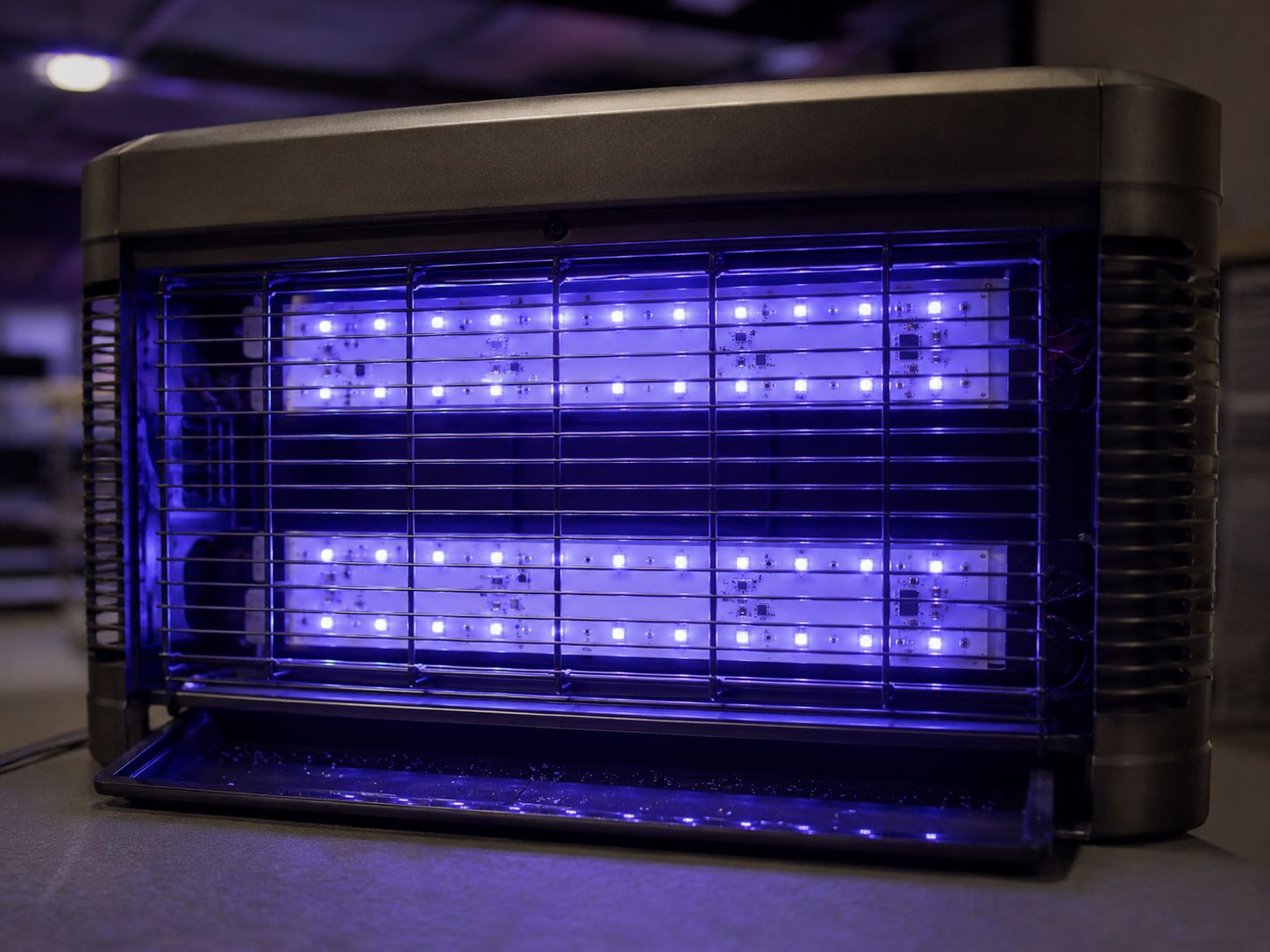
A metal-core PCB gives heat a better path from the LED pad area toward the metal base. This is especially useful for compact lighting boards, circular LED modules, UV LED boards, insect trap modules, and higher-power LED applications.
| Thermal Factor | FR4 Example | IMS / MCPCB Example | Meaning |
|---|---|---|---|
| Thermal conductivity | About 0.25 W/m·K | About 3 W/m·K dielectric | Better heat transfer |
| Junction-to-ambient thermal resistance | 61.56°C/W | 39.1°C/W | Lower thermal resistance |
| Main role | Circuit carrier | Circuit carrier + heat-spreading base | More suitable for many LED boards |
This does not mean every LED board must use aluminum PCB. Low-power LED boards may still use FR4. But when heat, service life, compact space, or continuous operation matters, MCPCB is often the safer starting point.
The PCB manufacturer’s role is to build the selected board structure correctly: metal base, dielectric layer, copper thickness, solder mask, surface finish, outline, flatness, and solderability.
How Does LED Module Assembly Work?
A good LED module starts with file review. Before production, the manufacturer should check the Gerber files, BOM, pick-and-place file, LED datasheet, polarity information, coating requirement, and testing requirement.
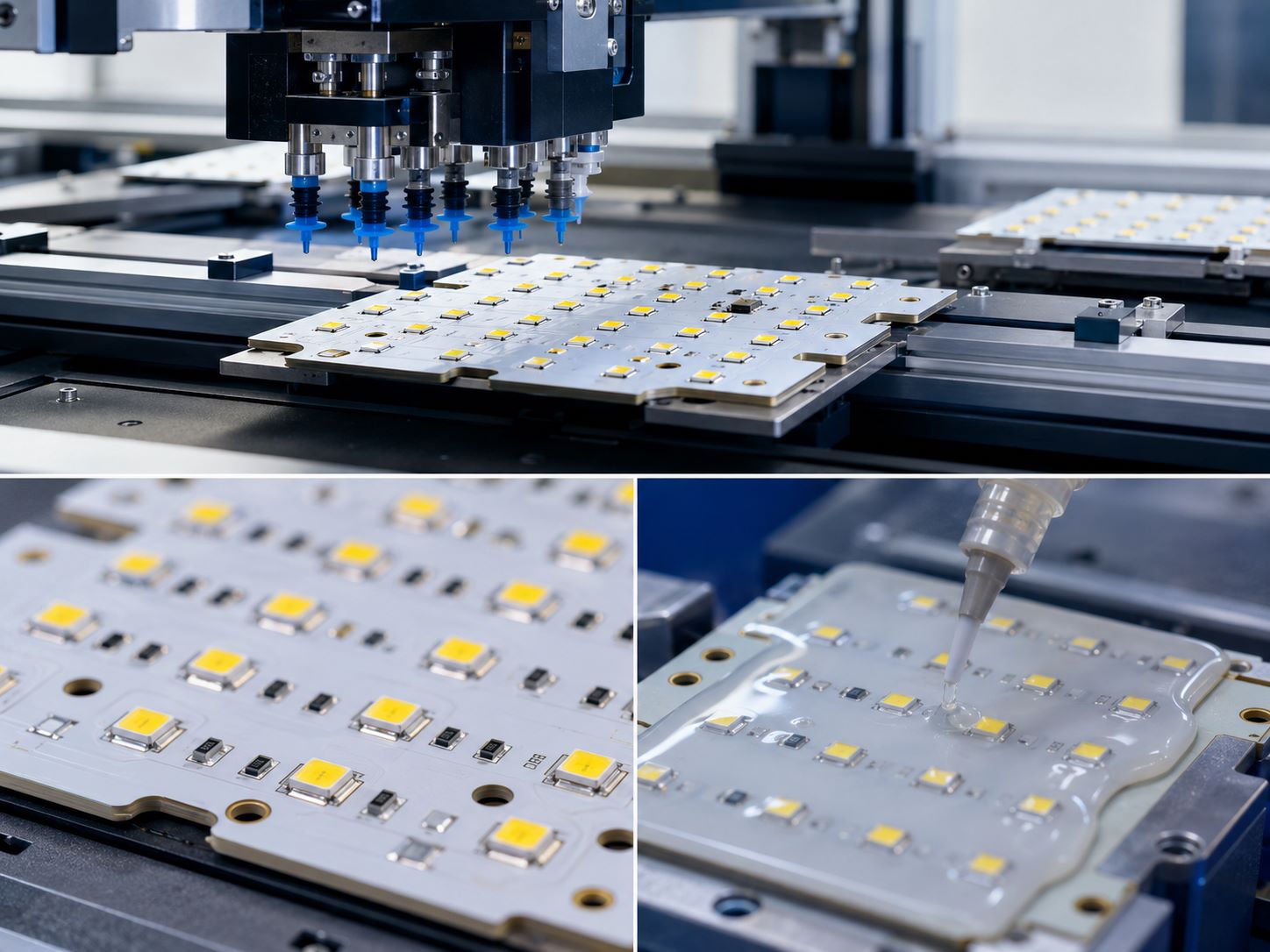
After that, the MCPCB is fabricated, LEDs are prepared, solder paste is printed, LEDs are placed by SMT equipment, and the board goes through lead-free reflow soldering. After reflow, the module is inspected, tested, and coated if required.
A practical flow looks like this:
| Step | What to Check |
|---|---|
| File review | Gerber, BOM, polarity, coating area |
| MCPCB fabrication | Material, copper, finish, flatness |
| LED preparation | Part number, bin, reel label, polarity |
| SMT mounting | Paste volume, placement, reflow profile |
| Inspection | Visual, AOI, polarity check |
| Testing | Electrical and power-on test |
| Coating | Area, thickness, keep-out zones |
The process is straightforward, but the risk is in the details. Wrong LED polarity, unstable solder paste volume, poor pad wetting, or unclear coating areas can all create defects during batch production.
What Affects LED SMT Assembly Quality?
LED SMT quality depends on PCB solderability, LED package condition, solder paste control, placement accuracy, and reflow stability.
The first key point is polarity. LEDs are directional components. If polarity is reversed, the module may not light up. Polarity should be clear in the datasheet, BOM, assembly drawing, and first article inspection.
The second key point is solder volume. Too much solder can cause LED tilt or movement. Too little solder can create weak joints. On aluminum PCBs, the metal base also affects heat absorption during reflow, so the reflow profile should be verified with the actual board when needed.
The third key point is LED bin control. For lighting boards, mixed LED bins can cause visible brightness or color differences even if every LED turns on.
| Risk | Result | Control Point |
|---|---|---|
| Wrong polarity | LED does not light | Polarity check |
| Too much solder | Tilt or shifting | Stencil and paste control |
| Too little solder | Weak joint | Paste process control |
| Poor wetting | Unstable soldering | Surface finish and reflow |
| Mixed LED bins | Color or brightness mismatch | Reel and bin traceability |
For customer-supplied LEDs, the assembler should confirm reel labels, bin codes, polarity marks, storage condition, and spare quantity before production.
How Does PCB Layout Support Heat Dissipation?
PCB layout can support heat dissipation, but it does not replace full lamp thermal design. This boundary should be clear.
From the PCB and PCBA side, the focus is on manufacturable details: LED thermal pad connection, copper area, current path width, solder mask opening, pad solderability, board flatness, and MCPCB material selection.
A typical heat path in an aluminum PCB LED module is:
LED package → solder joint → copper pad → thermal dielectric layer → aluminum base → housing or air.
The PCB/PCBA manufacturer can support the first part of this path through board fabrication and SMT quality control. But final temperature still depends on the customer’s housing, heat sink, airflow, screw pressure, thermal interface, LED current, and working environment.
So the right message is not “we design the whole lamp thermal system.” The right message is: the PCB and assembly process help build a stable thermal path inside the LED lighting board.
When Is Protective Coating Needed?
Protective coating is useful when LED modules may face moisture, dust, insects, condensation, cleaning exposure, or semi-outdoor conditions. This is common in insect light traps, industrial lighting, agricultural lighting, and boards used in harsh environments.
Silicone conformal coating is often used on LED boards because it is flexible and suitable for environmental protection. But coating must be controlled carefully.
| Coating Type | Typical Thickness Range |
|---|---|
| Acrylic / Epoxy / Urethane | 0.03–0.13 mm |
| Silicone | 0.05–0.21 mm |
| Parylene | 0.01–0.05 mm |
The coating drawing should define where coating is required and where it must be avoided. Connectors, test points, screw holes, contact areas, and optical surfaces may need keep-out zones.
Poor coating control can create bubbles, uneven appearance, blocked connectors, contaminated pads, or reduced light performance. For LED modules, coating is both a protection process and a quality-control point.
How Should LED Modules Be Tested?
Power-on testing is necessary, but it is not the whole quality check. A module can light up and still have weak solder joints, mixed LED bins, coating defects, or unstable current.
A practical LED module test plan may include:
| Test Item | Purpose |
|---|---|
| Visual inspection | Check appearance and contamination |
| AOI | Check placement and visible solder joints |
| Polarity check | Prevent reversed LEDs |
| Electrical test | Check shorts, opens, continuity |
| Power-on test | Confirm light-up function |
| Current check | Confirm operating condition |
| Coating inspection | Check coverage and keep-out areas |
| Sample aging | Find early failures before shipment |
The test scope should match the application. A simple indoor board may need basic testing. A higher-reliability or semi-outdoor lighting board may need stricter inspection, current checks, coating inspection, and sample aging.
Buyers should define test voltage, current limit, inspection standard, coating acceptance criteria, and aging requirement before quotation.
What Should Buyers Prepare Before an LED Module RFQ?
A clear RFQ helps the supplier quote faster and avoid wrong assumptions. For early discussion, a rough drawing may be enough for a ballpark estimate. For formal quotation, complete engineering files are needed.
Useful RFQ documents include:
| RFQ File | Why It Matters |
|---|---|
| Gerber and drill files | PCB fabrication |
| BOM | Component and assembly review |
| Pick-and-place file | SMT programming |
| LED datasheet | Package, polarity, soldering data |
| Assembly drawing | Placement and special notes |
| Coating drawing | Coating and keep-out control |
| Test requirement | Inspection and quotation scope |
| Quantity | Price and lead time |
If LEDs are supplied by the customer, also provide part number, manufacturer, reel label, bin code, polarity mark, storage condition, MSL information if applicable, and spare quantity for SMT loss.
The more complete the RFQ, the easier it is to confirm feasibility, sample lead time, production cost, and quality control.
LED Module Assembly Case Study: How Does EBest Circuit Support MCPCB and SMT Projects?
A practical LED module assembly project often starts with a clear board specification. For one LED lighting board project, EBest Circuit supported a single-sided aluminum PCB with 2.0 mm finished thickness, 2 W/m·K thermal conductivity, 2 oz copper, white solder mask, black legend, and OSP surface finish.
| Board Requirement | Specification | Assembly Value |
|---|---|---|
| PCB structure | Single-sided aluminum PCB | LED board base |
| Finished thickness | 2.0 mm ±10% | Board rigidity |
| Thermal conductivity | 2 W/m·K | Heat transfer |
| Copper weight | 2 oz | Current support |
| Solder mask | White solder mask | Light reflection |
| Legend | Black legend | Clear marking |
| Surface finish | OSP | SMT soldering |
For this type of LED module assembly, the focus is not only PCB fabrication. The assembly process also needs to control LED polarity, solder paste volume, placement accuracy, and reflow soldering. If silicone conformal coating is required, the coating area and keep-out zones should be confirmed before production.
In this project type, EBest Circuit’s role is focused: manufacture the MCPCB, support SMT LED mounting, control soldering quality, and prepare the assembled lighting board for the customer’s next production step. The final lamp housing, optics, driver system, and product-level thermal validation remain part of the customer’s complete product design.
This case shows why LED module assembly should be evaluated as a combined PCB and SMT PCB manufacturing process. Board material, copper weight, surface finish, LED placement, and testing all affect the final reliability of the lighting board.
Why Choose EBest Circuit (Best Technology) for LED Module Assembly?
For LED module assembly projects, buyers need more than an SMT supplier who can simply place LEDs. A reliable LED lighting board often involves PCB fabrication, component control, SMT assembly, soldering quality, protective coating, inspection, and production traceability. When these steps are handled by separate suppliers, communication gaps and production risks can increase.
EBest Circuit (Best Technology) supports LED lighting board projects with an integrated PCB and PCBA manufacturing approach. Before production, our team can review Gerber files, BOM, pick-and-place data, LED datasheets, coating requirements, and test requirements to help customers identify potential manufacturing issues during the sample stage.
| Advantage | Value for LED Module Assembly |
|---|---|
| PCB + PCBA factories | Fewer handoff risks |
| MCPCB and LED board experience | Better process understanding |
| DFM and BOM review | Earlier issue detection |
| SMT LED mounting | Prototype to batch support |
| Consigned LED support | Customer-specified parts |
| Coating and testing support | More complete delivery |
| Digital traceability | Batch and progress tracking |
| Quality certifications | Higher quality control needs |
These advantages apply to different LED lighting board projects, including aluminum LED boards, FR4 LED boards, UV LED modules, industrial lighting boards, insect trap LED modules, customer-supplied LED assembly projects, and LED modules that require protective coating or basic function testing. The board material, copper weight, surface finish, LED package, and test requirements may vary, but the goal is the same: helping customers move from design files to controlled production.
EBest Circuit’s value is not claiming to design the complete finished lamp. Our focus is LED lighting board manufacturing: PCB fabrication, SMT LED mounting, process review, consigned material handling, coating support, inspection, and basic testing. The final lamp housing, optics, driver system, and product-level thermal validation remain part of the customer’s complete product design.
With 20 years of PCB and PCBA manufacturing experience, engineering support, quality systems, and traceable production management, EBest Circuit helps customers move LED lighting board projects from sample validation to more stable batch production.
FAQs About LED Module Assembly
What is LED module assembly?
LED module assembly is the process of fabricating an LED PCB, mounting LEDs and related components, soldering them, inspecting the board, and testing the assembled lighting board.
Is LED module assembly the same as finished lamp manufacturing?
No. LED module assembly usually focuses on the lighting board. Finished lamp manufacturing may also include housing, optics, driver integration, mechanical assembly, labeling, packaging, and product-level certification.
Why are aluminum PCBs used for LED modules?
Aluminum PCBs are used because they provide a better thermal path than standard FR4 in many LED lighting applications.
Can customer-supplied LEDs be used?
Yes. Consigned LEDs can be used if the buyer provides clear part numbers, reel labels, bin codes, polarity information, storage details, and enough spare quantity for SMT process loss.
What is silicone conformal coating used for?
Silicone conformal coating helps protect LED modules from moisture, dust, insect contamination, and environmental exposure.
What files are needed for a quote?
Gerber files, BOM, pick-and-place file, assembly drawing, LED datasheet, coating drawing, test requirements, and quantity are usually needed.
To summarize, LED module assembly is not only about mounting LEDs. A reliable lighting board depends on MCPCB material, copper layout, soldering quality, LED polarity, component traceability, protective coating, and defined testing.
For buyers, the better partner is not simply a supplier who can place LEDs. It is a PCB and PCBA manufacturer who understands how board fabrication and SMT assembly affect LED module reliability.
EBest Circuit supports LED lighting board projects with MCPCB fabrication, SMT LED mounting, consigned LED handling, conformal coating, and basic module testing. Pls feel free to send your Gerber files, BOM, pick-and-place data, LED datasheets, coating requirements, and test requirements to sales@bestpcbs.com for review.