





Circuit boards applications uses electronics devices refers to how Printed Circuit Boards support, connect, and control the functions of modern electronic products across consumer, industrial, medical, automotive, and other advanced sectors. This article explains where PCBs are used, how they work, which board types and materials fit different scenarios, and how to choose the right PCB partner for reliable results.
What problems do customers usually face when selecting PCBs for electronic devices?
- The device works in theory, but the PCB fails in real operating conditions.
- The board is too bulky for compact product design.
- Heat, moisture, or vibration shortens product life.
- Material choice is unclear, especially for RF, power, or harsh environments.
- A supplier can build boards, but cannot support application-driven optimization.
A capable PCB manufacturer solves these issues by matching the board to the real application environment.
- Use application-specific PCB structures and stackups.
- Reduce board size through HDI and optimized layout support.
- Improve durability with thermal and environmental design controls.
- Recommend the right substrate for signal, power, and reliability needs.
- Provide engineering support from DFM review to mass production.
EBest Circuit (Best Technology) is a professional PCB and PCBA manufacturer serving customers across consumer electronics, industrial control, medical devices, automotive electronics, RF products, LED systems, and high-reliability applications. We support projects with engineering review, material selection, PCB fabrication, component sourcing, SMT assembly, testing, and fast communication throughout the process. For project support, pls feel free to contact us via sales@bestpcbs.com.
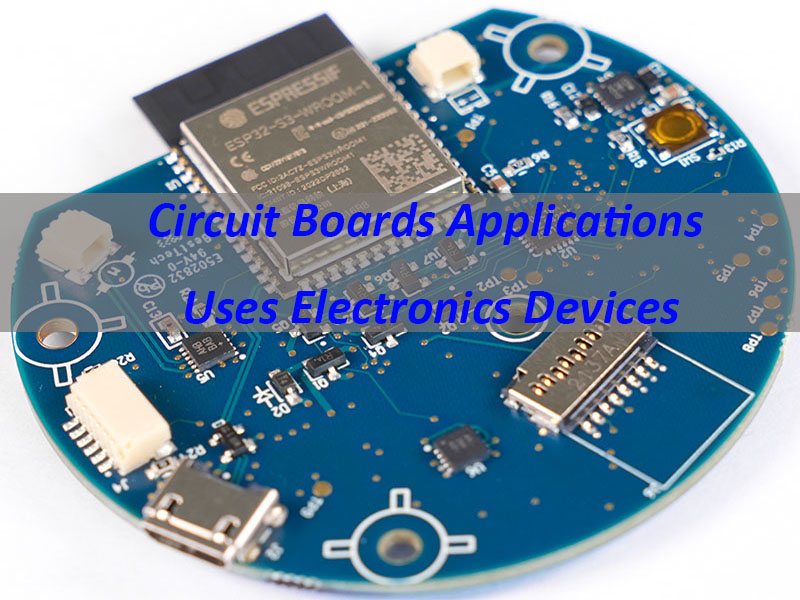
What Are Circuit Boards Applications Uses in Electronic Devices?
When people search for Applications of circuit boards in electronic devices or Circuit board applications in electronics, they are usually asking a practical question: where are PCBs used, and what do they actually do inside a product? A PCB is not just a mounting platform. It is the electrical foundation that links components, manages signals, distributes power, and helps a device operate as one complete system.
At the application level, PCBs serve several core functions:
- Electrical connection: link ICs, resistors, capacitors, connectors, and sensors
- Signal routing: guide analog, digital, RF, and high-speed signals through controlled paths
- Power distribution: deliver stable voltage and current to all functional blocks
- Mechanical support: hold components in fixed positions for reliable assembly
- Thermal assistance: help move heat away from power devices and LEDs
- System integration: combine control, sensing, communication, and power modules on one board
A quick application view looks like this:
| PCB Role | What It Does in a Device |
|---|---|
| Connection | Links all electronic parts |
| Control | Supports processing and logic |
| Power | Feeds current to subsystems |
| Communication | Carries data and RF signals |
| Thermal support | Helps reduce hot spots |
| Structure | Supports assembly and compact design |
In short, circuit boards uses applications electronics devices is really about how PCBs make modern electronics possible. Without them, devices would be larger, less reliable, harder to manufacture, and far more expensive to integrate.
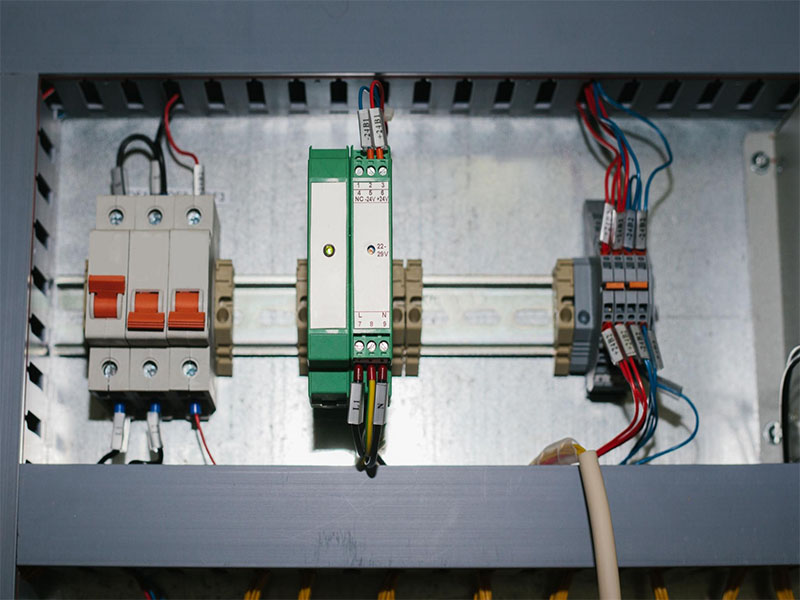
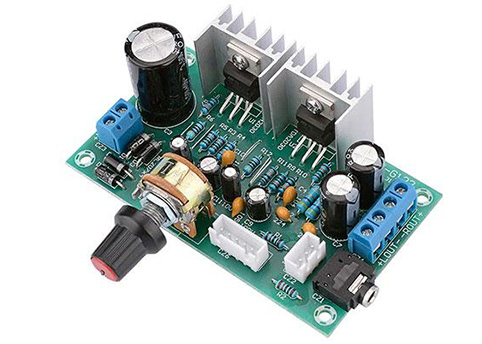
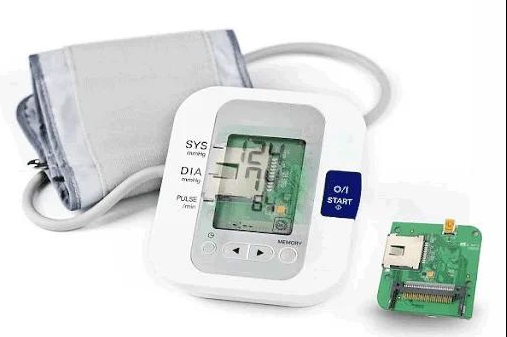
Why Are Circuit Boards Essential in Modern Electronic Devices?
Modern electronics demand more than simple connectivity. Devices now combine processors, wireless modules, displays, sensors, batteries, cameras, and power circuits in very limited space. PCBs are essential because they organize this complexity into a manufacturable, repeatable, and scalable platform.
Their importance becomes even clearer when products must meet commercial targets such as lower size, faster speed, stable performance, and long service life. A good PCB design improves both engineering performance and business outcomes.
Key reasons PCBs are essential include:
- They enable compact integration
Multilayer PCBs allow many circuits to fit into a small area. - They improve electrical consistency
Controlled traces and reference planes help stabilize signal behavior. - They support mass production
Standardized fabrication and assembly make large-scale manufacturing possible. - They increase product reliability
Well-designed PCBs reduce loose wiring, assembly errors, and connection failure. - They help optimize cost
Integrating more functions into one board can reduce cable, connector, and labor costs. - They support modern interfaces
Bluetooth, Wi-Fi, GPS, USB, CAN, Ethernet, and RF systems all rely on PCB design quality.
For many products, PCB quality directly affects user experience. A smartphone with poor board design may overheat. A medical monitor with unstable signal routing may lose data accuracy. An automotive controller with weak vibration resistance may fail early.
So when discussing circuit board applications in electronics, the real point is not only where the board is used, but why it is indispensable to modern product architecture.
What Types of Electronic Devices Use Circuit Boards Today?
PCBs appear in almost every category of electronic equipment. Some devices use a basic single-sided board. Others rely on complex HDI, rigid-flex, RF, ceramic, or metal-core designs. The device category usually determines the PCB structure, material system, thermal requirement, and assembly complexity.
Here are the main device groups using PCBs today:
- Consumer electronics: smartphones, tablets, laptops, smartwatches, TVs, headphones
- Home appliances: refrigerators, washing machines, coffee makers, air conditioners
- Industrial equipment: PLCs, drives, inverters, HMI panels, robotic controls
- Medical devices: monitoring systems, imaging units, infusion pumps, portable diagnostics
- Automotive electronics: ECUs, lighting modules, BMS units, infotainment systems, sensors
- Telecom and RF devices: routers, base stations, antenna units, GPS modules
- Security devices: cameras, alarm systems, smart locks, motion sensors
- Energy systems: solar inverters, battery storage controllers, smart meters, charging systems
A simple way to view this is by application demand:
| Device Type | Typical PCB Need |
|---|---|
| Smartphone | HDI, multilayer, compact layout |
| LED light | Thermal management, MCPCB |
| Automotive ECU | High reliability, vibration resistance |
| Medical monitor | Stable signals, compliance support |
| Router / RF unit | Controlled impedance, low-loss material |
| Industrial controller | Durability, long service life |
This wide adoption explains why Applications of circuit boards in electronic devices is such a strong topic. It covers both daily-use electronics and critical systems that must operate under far more demanding conditions.
What Are the Most Common Circuit Board Applications in Electronics?
Although PCBs are used almost everywhere, certain applications appear far more often in search behavior and purchasing demand. These common uses create the best bridge between SEO traffic and practical buyer intent.
The most common PCB applications in electronics include the following:
Signal control boards
Used in logic control, processing, and communication modules.
Power conversion boards
Used in chargers, power supplies, inverters, and motor drives.
Interface boards
Used for display control, user input, connectors, and external communication.
Sensor boards
Used in wearables, automotive systems, industrial monitoring, and IoT products.
RF and wireless boards
Used in Bluetooth, Wi-Fi, GPS, and antenna-linked systems.
LED and lighting boards
Used in home lighting, automotive lights, indicators, and medical illumination.
Embedded controller boards
Used in smart appliances, industrial machines, and automotive modules.
A compact comparison is helpful here:
| Application | Typical Product Examples |
|---|---|
| Signal processing | Phones, tablets, computers |
| Power management | Chargers, inverters, adapters |
| Sensing | Smartwatches, industrial meters |
| Wireless communication | Routers, GPS units, IoT modules |
| Lighting | LED lamps, dashboard lighting |
| Automation control | PLCs, robotic controllers |
These are the everyday realities behind circuit boards applications uses electronics devices. The board may be hidden, but its role is central in nearly every function the user sees.
In summary, the most common applications combine control, power, communication, sensing, and interface management. That is why PCB demand remains broad across nearly all electronics markets.
How Do Circuit Boards Function Inside Electronic Devices?
Inside an electronic device, a PCB works as a coordinated electrical platform. It does not “think” by itself, but it allows processors, memory, sensors, connectors, and power devices to exchange energy and information in a controlled way.
A PCB functions through several structural elements:
- Copper traces carry electrical signals and current
- Pads create solderable connection points for components
- Vias connect different copper layers
- Planes provide stable ground and power reference areas
- Solder mask protects copper and controls solder bridging
- Silkscreen supports identification and assembly
- Substrate provides insulation and mechanical strength
A simplified function path inside a device often follows this logic:
- Power enters the board through a connector or battery terminal.
- Power circuits regulate voltage for each subsystem.
- A controller or processor receives input data.
- Signals move through traces to memory, sensors, or output modules.
- The board sends commands to motors, displays, communication chips, or LEDs.
For high-speed or RF devices, PCB function also depends on electrical design rules such as:
- controlled impedance
- return path continuity
- trace length balance
- isolation between noise-sensitive circuits
- reference plane integrity
A commonly used signal principle is:

This reminds designers that transmission line impedance depends on inductance and capacitance per unit length. In practical PCB design, trace width, dielectric thickness, and material properties all affect signal quality.
So, in real product operation, a PCB is the controlled environment that allows electronic components to behave correctly, safely, and repeatedly.
What Types of Circuit Boards Are Used in Different Applications?
Different applications need different board structures. A low-cost toy and a medical control unit should not use the same PCB strategy. The board type must fit the device’s electrical, thermal, mechanical, and cost requirements.
The most common PCB types include:
Single-sided PCB
Used in simple, low-cost electronics with limited circuitry.
Double-sided PCB
Used where moderate circuit density is required.
Multilayer PCB
Used in smartphones, computers, telecom, and industrial controls with complex routing needs.
HDI PCB
Used in compact, high-performance devices that need fine lines, microvias, and dense interconnection.
Flexible PCB
Used where bending, folding, or space-saving interconnect is required.
Rigid-flex PCB
Used in medical, military, aerospace, and premium compact devices.
Metal Core PCB
Used mainly in LED and power applications for better heat transfer.
A selection summary:
| PCB Type | Best Fit |
|---|---|
| Single-sided | Basic consumer products |
| Double-sided | General electronics control |
| Multilayer | Computing, telecom, industrial |
| HDI | Smartphones, wearables |
| Flex | Cameras, foldable interconnect |
| Rigid-flex | Medical, aerospace, compact systems |
| MCPCB | LED, power modules |
Choosing the correct board type improves not only function, but also assembly yield, product lifetime, and cost efficiency. That is why board type selection should always follow actual application conditions, not habit alone.
What Materials Are Used in Circuit Boards for Different Applications?
PCB material selection has a direct impact on electrical performance, thermal stability, durability, manufacturability, and cost. Many buyers begin with FR4, but not every application should stay there.
The most common PCB materials are:
- FR4: the standard choice for general electronics
- High-Tg FR4: better for higher thermal stress and lead-free assembly
- Aluminum base: strong heat transfer for LED and power boards
- Copper base: excellent heat spreading for demanding thermal designs
- Rogers / PTFE materials: used in RF and microwave circuits
- Ceramic substrates: used in high-temperature, high-power, or high-reliability electronics
- Polyimide: common in flexible and rigid-flex PCB construction
Material comparison:
| Material | Typical Use |
|---|---|
| FR4 | General electronics |
| High-Tg FR4 | Industrial and automotive control |
| Aluminum | LED lighting, power modules |
| Rogers | RF, antenna, microwave |
| Ceramic | Power, aerospace, high-heat environments |
| Polyimide | Flex and rigid-flex boards |
Two important parameters often influence material choice:
- Dielectric constant (Dk): affects signal speed and impedance
- Thermal conductivity: affects heat transfer ability
For example, an RF design may prioritize low and stable Dk. An LED board may prioritize thermal conductivity. A compact wearable may prioritize thin profile and flex endurance.
In short, materials should be selected by application physics, not by default preference. That is one of the most overlooked but most valuable parts of Circuit board applications in electronics.
How Do Circuit Boards Differ Across Industries Like Medical, Automotive, and Aerospace?
A PCB used in a Bluetooth speaker is very different from one used in a medical monitor or flight-related control module. Industry differences shape design rules, material selection, testing methods, certification expectations, and documentation depth.
Here is how industry priorities differ:
Medical electronics
Focus on precision, long-term stability, traceability, and strict process control.
Automotive electronics
Focus on vibration resistance, thermal cycling, long life, and high reliability.
Aerospace electronics
Focus on extreme durability, low weight, performance consistency, and rigorous compliance.
Industrial electronics
Focus on robustness, uptime, electrical isolation, and long service life.
Consumer electronics
Focus on compactness, speed, appearance, and cost-sensitive manufacturing.
A compact view:
| Industry | Main PCB Priority |
|---|---|
| Medical | Accuracy and reliability |
| Automotive | Heat and vibration resistance |
| Aerospace | Harsh-environment performance |
| Industrial | Durability and stability |
| Consumer | Miniaturization and cost control |
This matters because the same “PCB” cannot be optimized for every field in the same way. Application-driven design is what separates commodity production from real engineering support.
For buyers, this means supplier capability should be judged by industry understanding, not only by quoted price.
How Do Thermal Management and Environmental Conditions Affect PCB Performance?
Thermal load and environmental stress are two of the most common reasons a PCB underperforms in real-world use. A board may pass an electrical test on the bench and still fail later in field operation because heat buildup, humidity, contamination, shock, or vibration were underestimated.
Common environmental stress factors include:
- High temperature
- Thermal cycling
- Humidity and condensation
- Dust and contamination
- Mechanical vibration
- Chemical exposure
- Outdoor UV and weathering
Thermal and environmental design responses include:
- Use higher-Tg or specialty substrates.
- Add thermal vias and copper balance.
- Choose aluminum or copper core when needed.
- Apply conformal coating for moisture or contamination risk.
- Reinforce assembly for vibration-sensitive environments.
- Optimize spacing for high-voltage or high-heat regions.
For power devices, heat generation can be estimated by:

This simple relationship shows why current load and resistance matter so much in trace heating, connector temperature rise, and power device stress.
A brief design matrix:
| Condition | Typical PCB Response |
|---|---|
| High heat | MCPCB, thermal vias, thicker copper |
| Humidity | Conformal coating, sealed design |
| Vibration | Rigid support, stronger assembly |
| RF heat + signal | Low-loss laminate + thermal design |
| Outdoor use | Protective finish and weather resistance |
In practical terms, good PCB performance is never only about schematic correctness. It is also about surviving the environment where the product will actually live.
How Is High-Density Interconnect (HDI) Used in Advanced Electronic Devices?
HDI PCB technology is one of the main reasons modern electronics can be thinner, lighter, and more powerful. It allows more electrical connections in less space, which is essential for advanced electronic devices.
HDI typically involves:
- finer trace and space
- microvias
- blind and buried vias
- higher pad density
- tighter component pitch support
HDI is widely used in:
- smartphones
- tablets
- smartwatches
- compact medical devices
- camera modules
- advanced communication devices
Why HDI matters:
- Smaller footprint for dense circuit integration
- Shorter signal paths for better performance
- More routing freedom in compact products
- Support for finer-pitch components such as BGAs and chip-scale packages
- Improved electrical efficiency in dense digital systems
A simple comparison:
| Standard Multilayer PCB | HDI PCB |
|---|---|
| Moderate density | Very high density |
| Larger vias | Microvias possible |
| More board area needed | Smaller area possible |
| Standard routing | Fine-pitch routing support |
For companies building portable electronics, HDI often shifts from “nice to have” to “necessary to compete.” It is one of the clearest examples of how PCB technology directly shapes product form and function.
How to Choose the Right Circuit Board for Electronic Devices?
Choosing the right PCB starts with the application, not the fabrication method alone. Many selection problems happen because teams begin with a familiar board type instead of asking what the device actually demands.
A practical PCB selection path includes these questions:
- What is the product environment?
Indoor, outdoor, medical, industrial, automotive, or RF? - How much space is available?
Does the product need HDI, flex, or rigid-flex? - How much heat will it generate?
Is FR4 enough, or is MCPCB or ceramic better? - What signal type is involved?
Low-speed control, high-speed digital, RF, or power? - What reliability level is required?
Consumer-grade, industrial-grade, or mission-critical? - What volume and budget are expected?
Prototype, low-volume, or mass production? - What assembly and test support is needed?
SMT, THT, X-ray, ICT, functional test, coating?
A fast decision guide:
| Design Need | Better PCB Direction |
|---|---|
| Lowest cost | Single or double-sided FR4 |
| High function density | Multilayer or HDI |
| Heat dissipation | Aluminum, copper core, ceramic |
| Bending / compact packaging | Flex or rigid-flex |
| RF performance | Rogers or other low-loss laminate |
| Harsh conditions | High-Tg, coating, reinforced design |
This is where a strong supplier adds value. The right manufacturer should not only build to print, but also help refine stackup, manufacturability, thermal strategy, assembly method, and risk control before production begins.
Why Choose a Professional PCB Manufacturer for Your Electronic Device Applications?
A professional PCB manufacturer brings more than factory capacity. The real value is application understanding, engineering coordination, process control, and consistency from prototype through volume production.
For electronic device projects, the supplier should help with:
- material selection
- stackup recommendation
- DFM and DFA review
- impedance and thermal considerations
- prototype-to-production transition
- assembly quality and testing
- traceability and communication
Why customers work with EBest Circuit (Best Technology):
- One-stop service from PCB fabrication to PCBA and testing
- Support for diverse industries including medical, industrial, automotive, RF, and LED
- Engineering-first communication for manufacturability and cost balance
- Flexible production support from prototypes to volume orders
- Fast response and practical project coordination
A good manufacturer helps reduce redesign loops, lower risk, and shorten time to market. That matters even more when the product is compact, thermally sensitive, or expected to work under demanding field conditions.
If your project involves Applications of circuit boards in electronic devices, working with a capable manufacturing partner can determine whether the product merely functions, or performs reliably in the real world.
For support on PCB and PCBA projects, contact sales@bestpcbs.com.
To sum up, circuit boards applications uses electronics devices describes the many ways PCBs enable connection, control, power delivery, signal transmission, and product integration across modern electronics. From consumer products to medical systems, automotive electronics, industrial equipment, and RF devices, the right PCB structure, material, and manufacturing strategy directly affect performance, reliability, and cost.
EBest Circuit (Best Technology) provides professional PCB and PCBA solutions for a wide range of electronic device applications, with practical engineering support, stable manufacturing quality, and responsive service for both prototypes and production orders. To discuss your project, contact sales@bestpcbs.com.
FAQs About Circuit Boards Applications Uses in Electronic Devices
What is the main use of a circuit board?
The main use of a circuit board is to electrically connect and support components so the device can process signals, distribute power, and perform its intended function.
Which electronic devices use circuit boards the most?
Smartphones, computers, TVs, industrial controllers, automotive systems, medical devices, and communication equipment all use PCBs extensively.
Are circuit boards used in all electronic devices?
Almost all modern electronic devices use some form of PCB, although the board type and complexity vary by product function and size.
What industries rely most on circuit boards?
Consumer electronics, automotive, medical, industrial automation, telecom, aerospace, energy, and security sectors all rely heavily on PCBs.
What materials are commonly used in PCBs?
FR4 is the most common. Aluminum, copper core, Rogers, ceramic, and polyimide are also widely used for specialized applications.
How do environmental factors affect PCB performance?
Heat, humidity, vibration, dust, chemicals, and outdoor exposure can shorten PCB life or reduce performance if the design and material choice are not matched to the environment.
What is HDI PCB and where is it used?
HDI PCB is a high-density interconnect board using finer features and microvias. It is commonly used in smartphones, wearables, compact medical devices, and other advanced electronics.
How to select the right PCB for a specific application?
Selection should be based on electrical performance, thermal demand, size constraints, reliability target, operating environment, and manufacturing volume.
You may also like
Tags: Applications of circuit boards in electronic devices, Circuit board applications in electronics, Circuit Boards Applications Uses Electronics Devices, circuit boards uses applications electronics devices