





LED Sign Board Light Aluminum PCB is the core technology behind modern illuminated signage, delivering superior heat dissipation, longer lifespan, and stable brightness. This article explains how to design, manufacture, and optimize LED aluminum PCB sign boards for reliable and scalable applications.
EBest Circuit (Best Technology) is a specialized MCPCB manufacturer of LED Sign Board Light Aluminum PCB, with over 20 years of experience in thermal management and outdoor lighting applications. We focus on delivering high-reliability aluminum PCBs designed for harsh environments, offering strong waterproof performance, UV resistance, and stable heat dissipation to ensure long-term operation of outdoor advertising systems. Our engineering team optimizes thermal conductivity and circuit layout to maintain consistent brightness and prevent light decay, helping your LED signage stand out with uniform illumination. With in-house fabrication, assembly, and strict quality control systems, we ensure stable batch consistency and reliable supply for large-scale projects. From material selection to final testing, every step is engineered to meet the demanding requirements of outdoor LED sign boards. Pls feel free to call us anytime at +86-755-2909-1601 to discuss your LED aluminum PCB project.
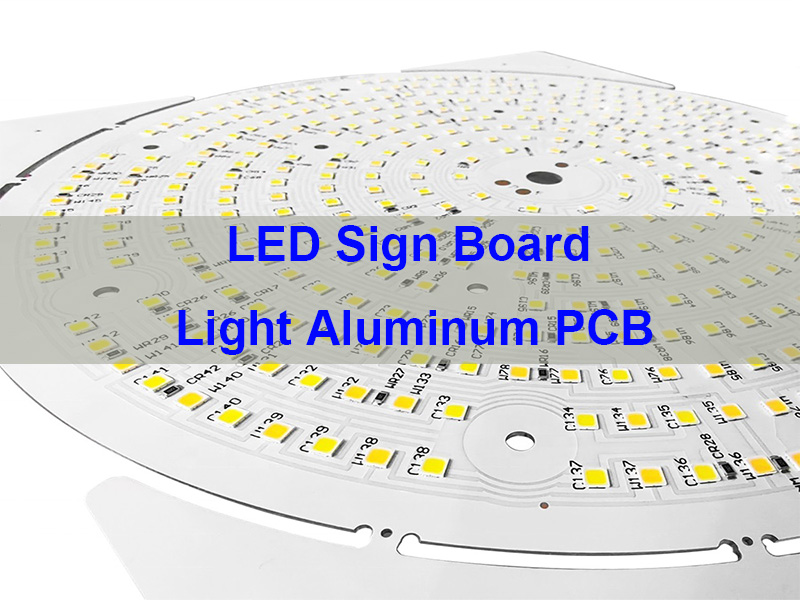
Why Choose a Reliable LED Sign Board Light Aluminum PCB Manufacturer?
LED Sign Board Light Aluminum PCB requires strict control of thermal performance, soldering quality, and long-term reliability. EBest Circuit (Best Technology) provides a complete solution from PCB fabrication to assembly, ensuring stable LED brightness and extended service life.
Core Parameters You Should Care About:
- Thermal conductivity: 1.0–3.0 W/m·K (standard aluminum base)
- Copper thickness: 1–3 oz for high current LED circuits
- Board thickness: 1.0–1.6 mm aluminum substrate
- Surface finish: HASL / ENIG for stable soldering
- Operating temperature: -40°C to 125°C
Why choose EBest Circuit (Best Technology)?
- Quality: Strict AOI + X-ray inspection ensures stable LED solder joints
- Lead time: Fast turnaround within 1.5 weeks for PCBA
- Service: professional engineering team supports full lifecycle optimization
- Supply chain: Integrated sourcing avoids component shortages
If you are sourcing LED Aluminum PCB Sign Light Board, working with a vertically integrated manufacturer significantly reduces risk and improves product consistency. You are warmly welcome to contact us at sales@bestpcbs.com to arrange a factory visit.
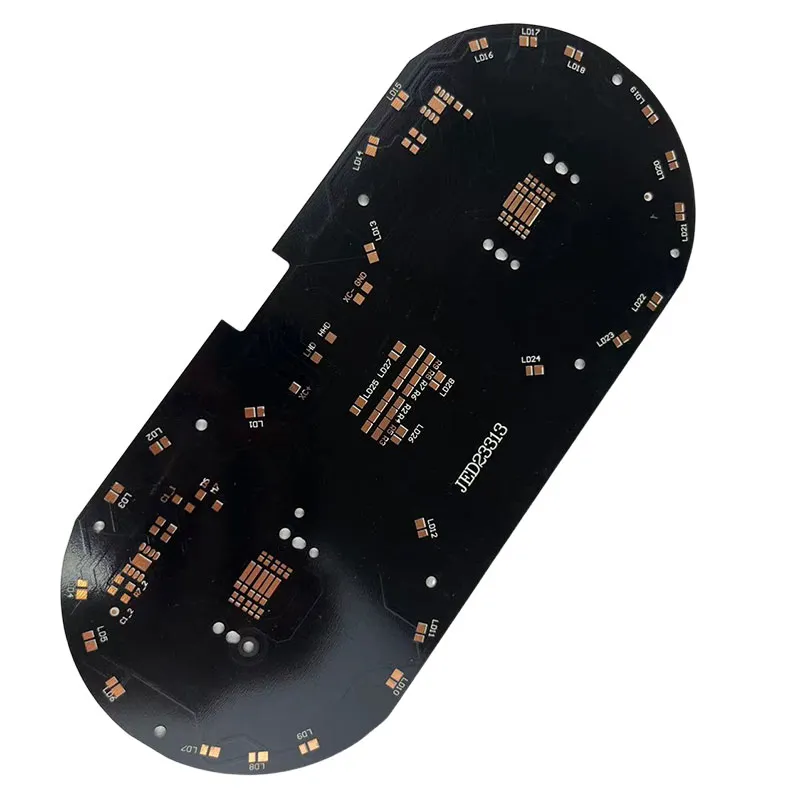
What Is an LED Light PCB and Why Use Aluminum Substrate?
LED Light PCB is a circuit board designed specifically to power and control LED components. Aluminum PCBs are preferred because they dissipate heat efficiently, preventing LED degradation.
Key advantages:
- Excellent heat transfer from LED junction to base
- Improved LED lifespan and brightness consistency
- Reduced risk of thermal runaway
- Compact design for LED sign boards
How Does Aluminum PCB Improve LED Sign Board Performance?
The answer is simple: thermal management. Heat is the primary failure factor in LED sign boards.
Performance comparison:
| Parameter | FR4 PCB | Aluminum PCB |
|---|---|---|
| Thermal conductivity | 0.3 W/m·K | 1.0–3.0 W/m·K |
| LED lifespan | Lower | Higher |
| Heat dissipation | Poor | Excellent |
| Reliability | Moderate | High |
This is why Aluminum Board LED PCB Sign Light dominates outdoor and high-brightness signage.
What Services and Certifications Do We Provide for LED Aluminum PCB Sign Light Board?
| Category | Details |
|---|---|
| PCB Fabrication | Aluminum PCB, MCPCB, multi-layer LED boards |
| Assembly | SMT, DIP, automated through-hole assembly |
| Testing | AOI, X-ray, functional testing |
| Certifications | ISO9001, ISO13485, IATF16949, AS9100D |
| Traceability | MES system with 5-second tracking |
What Are the Most Common Challenges in LED Sign Board Aluminum PCB Projects?
Many users face similar issues when developing LED Sign Light Aluminum PCB Board.
Typical challenges:
- Uneven brightness across LED arrays
- Overheating leading to early failure
- Poor soldering reliability on aluminum base
- Design not optimized for manufacturability
- Inconsistent supply quality
How we solve them:
- Thermal simulation and optimized copper layout
- Controlled reflow profiles for aluminum substrates
- DFM analysis before production
- Stable component sourcing system
Looking for a stable pcb led solution? EBest Circuit (Best Technology) ensures consistency from prototype to volume production.
How to Design an Efficient LED Sign Board Light Aluminum PCB?
Design is the foundation of performance. A well-designed Led board sign ensures uniform light output and long-term reliability.
Design guidelines:
- Use wide copper traces for current distribution
- Ensure uniform LED spacing
- Optimize thermal vias (if multilayer)
- Avoid hotspots through balanced layout
How Is LED Aluminum PCB Manufactured Step by Step?
The quality of an LED aluminum PCB depends on process control at every stage, especially for single-sided thermoelectric separation copper-base boards. The full workflow is divided into panel fabrication and baseboard fabrication, followed by lamination and finishing.
Panel Fabrication Process
The panel defines the electrical circuit and current path. Its precision directly impacts LED brightness uniformity and reliability.
Process flow:
Cutting
Raw material is cut into production panels with controlled size and edge quality.
Baking
Panels are baked to remove moisture and stabilize material performance.
Circuit Formation
Circuit patterns are transferred onto copper, defining pads and traces.
Circuit QC (Visual Inspection)
Quick inspection to identify obvious defects like misalignment or missing patterns.
Etching
Unwanted copper is removed, forming the final circuit layout.
Etching QC (Visual + AOI + Testing)
Multi-level inspection ensures circuit integrity and detects opens/shorts early.
PP Lamination (Pure Glue)
Adhesive layer is applied for bonding with the aluminum base.
Drilling / Targeting
Positioning holes are created to ensure alignment accuracy.
Routing Slot (Boss Position)
Mechanical routing defines the convex platform structure.
Pending Lamination (Panel & Baseboard)
Panel is prepared and ready for bonding with the baseboard.
Baseboard Fabrication Process
The baseboard provides mechanical strength and heat dissipation. This stage ensures thermal stability and surface protection.
Process flow:
Cutting
Aluminum base is cut to required size.
Single-Side High-Temperature Film (If Needed)
Protective film is applied if not pre-coated.
Board Grinding
Surface is refined to improve adhesion and flatness.
Circuit Boss Formation (Dry Film / Wet Film)
Convex structure is formed for thermoelectric separation.
Etching
Material is etched to define structure and copper features.
Lamination (Panel & Baseboard)
Panel and baseboard are bonded—this is the key structural step.
Film Stripping
Temporary films are removed after lamination.
Targeting
Alignment is rechecked for accuracy.
Board Grinding
Surface is refined again for better coating performance.
Solder Mask (Standing → Baking → Exposure → Developing)
Protective layer is applied to prevent oxidation and short circuits.
Solder Mask QC
Inspection ensures proper coverage and alignment.
Legend Printing
Text and markings are added for identification.
Baking Cure
Final curing strengthens coatings and improves durability.
Surface Finish (OSP / ENIG / ENEPIG / Lead-Free HASL)
Surface treatment ensures solderability and corrosion resistance.
Profiling (Drilling / V-CUT / Routing)
Final board shape is defined.
Testing
Electrical testing verifies circuit performance.
FQC
Final inspection checks overall appearance and structure.
FQA
Quality assurance confirms readiness for shipment.
Vacuum Packaging
Boards are sealed to prevent moisture and contamination.
Warehousing
Products are stored with traceability.
Shipment
Finished boards are delivered to customers.
Why This Process Matters for LED Sign Boards
Each step ensures that the LED Sign Board Light Aluminum PCB delivers:
- Stable heat dissipation
- Consistent brightness
- Strong structural bonding
- Reliable outdoor performance
A well-controlled process is the foundation of long-lasting LED signage.
What Industries Use LED Aluminum PCB Sign Boards the Most?
LED letter sign board applications are expanding rapidly across industries.
| Industry | Application |
|---|---|
| Advertising | Outdoor signage, billboards |
| Retail | Storefront LED sign boards |
| Automotive | LED lighting modules |
| Smart city | Traffic signals, display panels |
How to Ensure Long-Term Reliability of LED Sign Light Aluminum PCB Board?
Reliability depends on materials, process, and testing.
Key factors:
- High thermal conductivity dielectric layer
- Stable solder joints with controlled reflow
- Proper coating for outdoor protection
- Full functional testing
How Does Automated Through Hole Assembly Improve LED PCB Quality?
Automation ensures consistency and reduces human error.
Benefits:
- Higher production efficiency
- Stable solder quality
- Reduced defect rates
What Are the Key Differences Between LED PCB Types?
| Type | Application | Advantage |
|---|---|---|
| FR4 PCB | Low-power LED | Low cost |
| Aluminum PCB | High-power LED | Thermal performance |
| Ceramic PCB | Extreme conditions | Best thermal stability |
How to Choose the Right LED Aluminum PCB Manufacturer?
Choosing the right partner directly impacts product quality.
Selection criteria:
- Experience in LED PCB manufacturing
- Full in-house production capability
- Strong engineering support
- Certifications and traceability systems

If you are looking for a reliable LED Sign Board Light Aluminum PCB manufacturer, EBest Circuit (Best Technology) provides complete solutions from design to assembly. Pls feel free to contact us anytime at sales@bestpcbs.com to start your project with a trusted partner.
FAQs About LED Sign Board Light Aluminum PCB
What is LED Sign Board Light Aluminum PCB?
It is a metal-core PCB designed to support LED lighting with efficient heat dissipation and stable performance.
Why use aluminum PCB for LED signs?
Aluminum improves thermal management, extending LED lifespan and maintaining brightness.
What thickness is best for LED aluminum PCB?
Typically 1.0–1.6 mm depending on application and thermal requirements.
How to improve LED PCB heat dissipation?
Use high thermal conductivity materials, optimize copper layout, and ensure proper mounting.
What surface finish is best for LED PCB?
ENIG provides better reliability, while HASL is cost-effective for standard applications.
Can aluminum PCB support high current LEDs?
Yes, with proper copper thickness and thermal design.
You may also like


Tags: Aluminum LED PCB Sign Board Light, Aluminum PCB LED Sign Board Light, LED Aluminum PCB Sign Light Board, Led board sign, Led letter sign board, led light pcb, LED Sign Board Light Aluminum PCB, LED Sign Light Aluminum PCB Board