





Before choosing a PCB assembly manufacturer in California, verify the actual build site, required assembly processes, material responsibility, inspection coverage, price basis and delivery assumptions. A nearby address is useful only when the quoted facility can build, inspect and document the specific product.
Hardware engineers need package and process compatibility; quality teams need acceptance evidence and traceability; buyers need comparable material, tooling, test, freight and schedule assumptions. All three teams should approve the same site identity, production route and acceptance plan before comparing quotations.

What Should a PCB Assembly Manufacturer in California Provide?
The contracted service must match the order from material receipt through final acceptance. Buyers should identify which operations occur at the quoted California site, which are subcontracted and which remain the buyer’s responsibility.
- Assembly scope: define SMT placement, through-hole assembly, mixed-technology processing, hand operations and any required depaneling or mechanical work.
- Material scope: assign bare-board and component purchasing, approved-source control, substitution approval, incoming inspection and unused-material disposition.
- Engineering scope: require DFM findings, BOM and footprint checks, stencil review, panel review and documented disposition of unresolved issues.
- Verification scope: specify workmanship criteria, AOI or X-ray coverage, programming, electrical or functional testing and the records returned with the shipment.
- Special-process scope: identify cleaning, conformal coating, cable installation, enclosure integration or other services only when the project needs them and the supplier confirms the responsible site.
The quotation and purchase order should name every included operation and handoff. If a process is outsourced, record the subcontracted scope, approval responsibility and acceptance evidence instead of treating the supplier’s general service list as the order plan.
How Can You Verify a PCB Assembly Manufacturer in California?
Verify the manufacturing location named for the order, not the headquarters or sales address. The quote should identify where placement, soldering, inspection and testing will occur and whether any material or data leaves that facility.
- Legal and operating identity: match the company name and manufacturing address across the quotation, purchase order, certificate of conformance and invoice.
- Site-specific capability: request confirmation that the named facility has the production line, inspection equipment, test resources and trained personnel required by the released product.
- Order routing: state whether California assembly is mandatory, preferred or one option in a comparative quote, then require written approval before routing changes.
- Subcontractor disclosure: identify outside PCB fabrication, coating, cable, environmental testing or other processes that affect product acceptance.
- Certificate boundary: check the legal entity, site, service scope and current validity of any certificate used during supplier approval.
For export-controlled or customer-restricted work, establish the permitted data path, personnel access and manufacturing location before releasing controlled files. A California keyword or mailing address does not establish compliance.
Which Process Capabilities Should a PCB Assembly Manufacturer in California Offer?
A capable supplier must cover the processes the released assembly actually requires and show how each process is controlled. Buyers should compare the product’s packages, board construction, thermal mass, side count and test access with the supplier’s documented process route.
| Process | Capability to Verify | Project Match | Acceptance Evidence |
| Incoming control | Board and component identity, quantity, packaging, moisture status and damage checks | Approved manufacturers, date or lot restrictions, customer-owned material and storage limits | Receiving record, discrepancy log and approved disposition |
| Stencil printing | Stencil selection, aperture review, paste control and print inspection for the actual land pattern | Fine-pitch leads, exposed pads, mixed thermal mass and double-sided assembly | Stencil release, paste record and first-article inspection result |
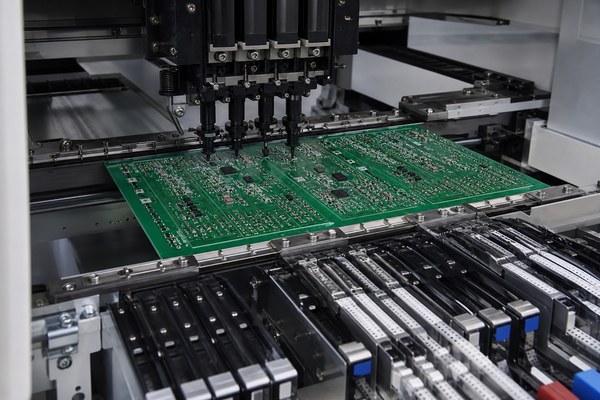
| SMT placement | Package handling, placement accuracy, feeder support, board support and program verification | Smallest package, tallest component, board size, panel format and component-side count | Approved machine program, first-article report and placement inspection |
| Reflow soldering | Profile development, oven capacity, alloy control and thermal monitoring | Component temperature limits, board thermal mass and mixed component population | Approved profile, lot record and workmanship result |
| Through-hole soldering | Wave, selective or controlled hand-soldering route with suitable fixtures and heat control | Connector mass, hole fill requirement, component clearance and heat-sensitive parts | Work instruction, process record and inspected solder-joint result |
| Hidden-joint inspection | X-ray method and coverage appropriate to BGA, QFN or other bottom-terminated components | Joint geometry, voiding risk, sampling plan and customer acceptance requirement | Inspection images or report with disposition of suspect joints |
| Programming and test | Firmware control, fixture interface, electrical limits, functional sequence and result capture | Programming method, test access, required firmware revision and product-level pass criteria | Controlled procedure, serial or lot-linked result and failure record |
| Optional finishing | Cleaning, coating, labeling or mechanical integration performed under an approved route | Residue limit, coating keep-outs, cure requirements, label data and enclosure interfaces | Process traveler, inspection record and customer-approved completion criteria |
A supplier does not need every optional process for every order. It does need a documented route for each required operation, a clear acceptance method and written approval before changing the route or subcontracting a controlled step.
How Do Turnkey and Consigned PCB Assembly Compare?
Turnkey assembly transfers purchasing responsibility to the supplier, while consigned assembly keeps material ownership and supply control with the buyer. The better model depends on component availability, approved-source restrictions, internal purchasing resources, inventory ownership and schedule risk.
| Decision Area | Turnkey Assembly | Consigned Assembly | Buyer Check |
| Material ownership | Supplier purchases agreed bare boards and components | Buyer supplies boards, components or complete kits | When ownership and liability transfer |
| Approved sources | Supplier buys from the approved manufacturer and channel list | Buyer controls purchasing source before consignment | AVL, traceability and substitution authority |
| Shortage management | Supplier reports availability and proposes approved recovery actions | Buyer replaces missing or unusable kit items | Who owns line-stop risk and expedite cost |
| Incoming inspection | Supplier verifies purchased material under the agreed plan | Assembler checks consigned material against agreed receipt criteria | Damage, moisture status, quantity and identity records |
| Excess and attrition | Terms define attrition allowance and disposition of supplier-purchased excess | Buyer normally supplies agreed overage and owns unused material | Return, storage, scrap and replenishment terms |
| Cost visibility | Quote combines material, purchasing service and assembly | Assembly quote excludes the buyer’s material acquisition cost | Compare total material, logistics and carrying cost |
| Schedule exposure | Start date depends on supplier procurement and material receipt | Start date depends on kit completeness and usable packaging | Material-ready date and policy for incomplete kits |
| Best fit | Teams seeking one commercial owner for sourcing and assembly | Controlled, proprietary, allocated or buyer-owned components | Internal purchasing capacity and risk ownership |
Partial turnkey is useful when the buyer consigns proprietary or allocated items and the supplier buys the remaining BOM. Whatever the model, the purchase order should define substitutions, attrition, moisture-sensitive handling, excess inventory, unusable material and shortage escalation.
What Should Buyers Include in a PCB Assembly RFQ?
An RFQ should give the assembler one consistent production identity and enough information to price material, engineering, assembly, inspection, test and delivery. Conflicting revisions or an undefined test scope make price and lead-time comparisons unreliable.
- Fabrication package: provide Gerber or approved intelligent data, drill files, outline, stackup, finish, controlled notes and the released board revision.
- BOM: include manufacturer names, complete part numbers, quantities, reference designators, approved alternates and do-not-fit status.
- Placement data: identify X/Y location, rotation, board side, origin convention and the same reference designators used by the BOM and drawing.
- Assembly drawing: define polarity, hardware, special soldering, keep-outs, labels, workmanship criteria and any customer-controlled process note.
- Test package: state the procedure, firmware, interfaces, fixtures, limits, expected output and who supplies each test resource.
- Demand profile: separate prototype, pilot and recurring quantities, requested delivery dates, forecast assumptions and the delivery location.
- Commercial boundary: assign purchasing responsibility, approved sources, substitutions, attrition, excess inventory, packaging, freight and tax treatment.
Ask the supplier to return an exceptions list with the quotation. Every exception should identify the affected file or line item, its cost or schedule effect and the decision required before material commitment.
How Should DFM and Component Sourcing Be Evaluated?
Evaluate DFM and sourcing by the decisions they produce, not by whether the supplier says a review was completed. Each finding should name the location or part, explain the manufacturing or supply consequence and record the approved response.
- Footprint alignment: compare package dimensions, polarity, pin count and reference designators across the library, BOM, placement file and assembly drawing.
- Solder-volume control: review fine-pitch apertures, exposed pads, mixed thermal mass and package combinations that may require a different stencil or paste strategy.
- Panel handling: confirm rails, fiducials, tooling holes, component-to-edge clearance, board support and the intended depaneling method.
- Supply status: check lifecycle, authorized availability, MOQ, moisture sensitivity, packaging condition and date or lot restrictions before purchase release.
- Substitution authority: require written approval before changing manufacturer, part number, package, electrical rating or compliance attribute.
A useful DFM output shows marked locations, severity, the recommended correction, the party responsible for disposition and the revision that incorporates the final decision.
What Quality and Test Evidence Should Buyers Request?
Request evidence that matches the assembly’s actual failure risks and acceptance requirements. The order should state what is inspected or measured, the coverage, the applicable criteria, the disposition process and the record returned for each lot.

- Solder-process record: identify the agreed workmanship requirement, alloy, controlled profile or soldering route and lot-linked process evidence.
- First-article result: confirm component identity, polarity, orientation, placement and special assembly features before releasing the remaining lot.
- AOI coverage: define the visible component and solder conditions inspected, plus the review and disposition of detected defects.
- X-ray coverage: use it where hidden joints create a relevant risk, and state the components, sampling level and acceptance basis instead of requesting it by default.
- Electrical or functional test: provide the procedure, fixtures, firmware, test limits and required result format; workmanship inspection cannot substitute for product-level function.
- Traceability record: agree which board, component, process, inspection, test and shipment identities must be linked to the delivered assembly.
AOI, X-ray and functional testing answer different questions. The verification plan should combine only the methods needed to detect the product’s identified assembly and operating risks.
What Determines PCB Assembly Price and Lead Time?
Price and lead time are driven by material readiness, engineering setup, process complexity, verification scope, lot size and delivery terms. Geography matters, but an incomplete BOM, missing fixture or unresolved substitution can change the schedule more than the distance to the factory.
| Cost or Schedule Driver | What Changes | Buyer Input | Quote Detail |
| Component availability | Material cost, purchasing start and risk of schedule movement | Approved manufacturers, alternates and date or lot restrictions | Quoted source, availability date, validity and substitution assumption |
| Lot quantity | Setup and engineering effort allocated across each assembly | Prototype, pilot, recurring lot and annual forecast | Price breaks, MOQ and setup allocation |
| Assembly complexity | Stencil, feeder, thermal profile, handling and process time | Package mix, side count, board size, thermal mass and special processes | Included route, assumptions and excluded operations |
| NRE and tooling | One-time engineering, stencil, carrier, fixture and programming charges | Released data, panel plan, test interface and reusable tooling status | Separate NRE lines, ownership and reuse conditions |
| Inspection and test | Equipment time, fixture development, operator time and report preparation | Coverage, sampling, procedure, limits and output format | Per-lot or per-unit test cost and included records |
| Engineering readiness | Time needed to resolve DFM, BOM, revision and test questions | One consistent release package and prompt issue disposition | Assumed approval date and effect of unresolved inputs |
| Delivery terms | Freight, insurance, packaging, taxes and delivery schedule | Delivery point, packaging needs and split-shipment rules | Manufacturing lead time separated from transit and buyer approval time |
When comparing each PCB assembly manufacturer in California, apply identical revisions, quantities, material rules, NRE, inspection, test and delivery terms. Return unclear exclusions for written resolution before comparing totals.
When Is a PCB Assembly Manufacturer in California the Better Choice?
A California supplier is the better choice when local engineering access, controlled domestic handling or shorter physical feedback loops outweigh the additional local cost. The decision should follow project constraints, not the assumption that proximity automatically improves quality.
- Frequent prototype changes: engineers can review first articles or resolve assembly questions without long-distance shipment of boards, fixtures or failed units.
- Manufacturing-location controls: customer, contract or regulatory requirements may restrict where files, parts and assemblies are handled.
- High-mix, low-volume work: a line configured for frequent changeovers may suit engineering builds better than a route set up for long repeat runs.
- Bulky support hardware: local handling can simplify the movement of enclosures, fixtures, test equipment or fragile integrated assemblies.
- On-site process review: quality or engineering teams may need direct access for build observation, issue disposition or failure analysis.
Each advantage still depends on the named site’s process match, current capacity, inspection coverage and documented order route. Ask for those confirmations in the quotation rather than inferring them from distance.
How Should California and Overseas PCB Assembly Be Compared?
Compare California and overseas routes with the same released files, quantities, material sources, test scope and delivery point. The useful comparison is total project cost and schedule risk, not unit assembly price alone.
| Decision Factor | California Route | Overseas Route | Buyer Verification |
| Prototype feedback | May simplify site visits, first-article review and return of failed units | Requires a defined remote review, sample shipment and issue-response path | Named engineering contact, review method and approval timing |
| Unit price | Local labor and operating structure may raise direct assembly cost | Production scale or integrated sourcing may reduce direct cost for some volumes | Same quantity, included processes, material basis and NRE allocation |
| Material cost | Depends on supplier purchasing reach and approved domestic or imported sources | Proximity to parts and PCB supply bases may improve sourcing for some BOMs | Manufacturer, channel, MOQ, excess ownership and availability date |
| Manufacturing lead time | May shorten physical coordination after material is ready | May offer scalable production capacity but requires remote approval planning | Separate material, engineering, production and approval durations |
| Transit and logistics | Domestic transport may reduce international freight and customs steps | International freight, customs and buffer time must be included | Delivered cost, packaging, insurance, duties and transit allowance |
| Change control | Local access may speed physical review but does not replace documentation | Remote coordination requires disciplined revision and approval control | Change notice, approval authority and effective revision |
| Quality evidence | Site access can support audits when the relevant records exist | Remote records and audits can be effective when scope and access are defined | Same acceptance criteria, inspection coverage, test output and traceability |
| Location and data control | Named California manufacture can be specified where required | Country, factory, subcontractors and data route require explicit approval | Actual build site, controlled-file path and subcontracted operations |
An overseas benchmark does not require moving the project. It shows whether the price difference comes from material, labor, tooling, inspection, freight, capacity or a different scope, allowing the buyer to choose with the real trade-offs visible.
FAQs About PCB Assembly Manufacturers in California
Q1: Can a California assembler use bare PCBs made elsewhere?
A1: Yes, when the order allows it. Identify the PCB fabrication site, approved sources, incoming inspection and traceability requirements so the assembly location is not mistaken for the board’s manufacturing origin.
Q2: Should buyers choose the nearest PCB assembly company?
A2: Choose by process fit first. Proximity helps only when the facility matches the package mix, quantity, inspection, test and documentation requirements and has capacity for the requested delivery window.
Q3: Can a buyer consign only selected components?
A3: Yes, partial turnkey can divide the BOM. The buyer may consign proprietary or allocated parts while the supplier purchases the balance, provided ownership, shortages, attrition and unused-material disposition are documented.
Q4: What should happen when the BOM and placement file disagree?
A4: Stop quotation or production release. Resolve the affected reference designators, update the controlled files and issue matching revisions before purchasing, stencil release or placement-program preparation.
Q5: How should moisture-sensitive components be supplied?
A5: Agree the packaging and exposure controls before shipment. Record moisture classification where applicable, sealed-package condition, humidity-card status, floor-life handling and the disposition process for material that arrives compromised.
Q6: Is X-ray inspection required for every BGA assembly?
A6: Not automatically. Define the hidden-joint risk, component coverage, sampling level and acceptance basis; X-ray supports the agreed inspection plan but does not replace electrical or functional verification.
Q7: Who supplies programming files and test fixtures?
A7: Assign each item in the RFQ. Identify who supplies firmware, programming hardware, fixture design, interface cables, golden units, test limits and maintenance so the quotation includes the complete test responsibility.
Q8: Can one supplier handle both prototypes and recurring production?
A8: Only if both routes are confirmed. Compare prototype changeover support with recurring capacity, tooling reuse, material planning, inspection records and change control instead of assuming a successful sample automatically scales.
Q9: Why does a PCB assembly quotation expire?
A9: Material availability and commercial assumptions change. Check component pricing, exchange-rate basis, quoted capacity, lead-time assumptions and approval deadlines before relying on an older quotation for purchase release.
Q10: What should be confirmed before issuing a purchase order?
A10: Confirm the site, revision, quantity and complete commercial scope. Include material ownership, process route, inspection and test records, NRE, approved substitutions, delivery terms and the written exceptions resolved during quotation.
Conclusion
Choose a California PCB assembly supplier by verified site identity, product-specific process capability, clear material ownership, useful inspection evidence and fully stated price and lead-time assumptions. A consistent RFQ lets engineering, quality and purchasing compare the same work instead of reconciling different hidden scopes after quotation.
If your project does not require a California-based manufacturing site, EBest Circuit can support it through our PCB production base in Vietnam. Our team provides PCB fabrication, DFM review, component sourcing, PCB assembly, inspection and project documentation through one commercial contact, reducing supplier handoffs while keeping the quoted scope clear. Send the released fabrication data, BOM, placement files, assembly drawing, quantities and test requirements to sales@bestpcbs.com for a project-specific quotation that identifies the proposed manufacturing route, testing scope, delivery terms and documented exceptions.
You may also like





Tags: California PCB, PCB Assembly, PCB Assembly manufacturer, PCB Supplier Selection