





Finding an aluminum PCB manufacturer in China is not difficult. The harder part is finding one whose material options, copper capability, thermal design support, mechanical tolerances, production model, and PCB assembly services actually match your project. A factory that is ideal for a standardized LED prototype may not be the right choice for a thick-copper power board, a multilayer aluminum PCB, or an OEM project moving directly into PCBA production.
This guide compares ten aluminum PCB manufacturers in China from a practical engineering and sourcing perspective. Rather than looking only at company size, the comparison focuses on what each supplier is better suited to manufacture and what you should check before releasing Gerber files or selecting a long-term production partner.
How We Selected the Top Aluminum PCB Manufacturers in China
A manufacturer should offer more than a page saying that aluminum PCBs are available. The useful differences appear in actual materials, board structures, manufacturing limits, engineering support, quality control, and the ability to move from prototype into repeat production.
The manufacturers below were considered around several practical factors:
- Aluminum PCB manufacturing experience
- Available board structures and materials
- Prototype and production support
- Engineering and DFM support
- PCB assembly capability
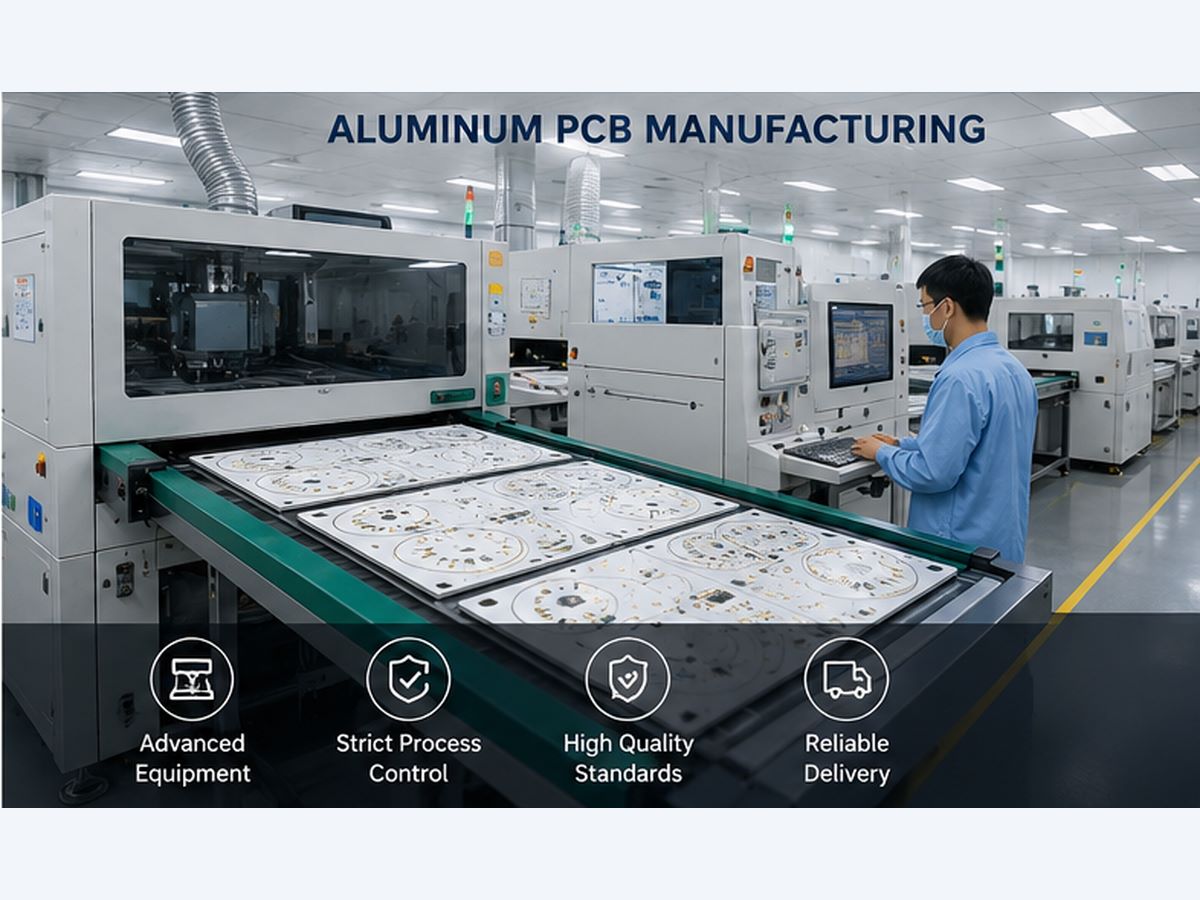
- Quality and process control
- Support for international projects
No single supplier is the best fit for every aluminum circuit board. The right choice depends on where your design is most demanding.
Top 10 Aluminum PCB Manufacturers in China
The table below provides a quick shortlist before looking at each supplier in more detail.
| No. | Manufacturer | Best For |
|---|---|---|
| 1 | PCBWay | Online prototyping |
| 2 | JLCPCB | Standard low-cost builds |
| 3 | ALLPCB | Online PCB + PCBA |
| 4 | EBest Circuit | Custom thermal PCB + PCBA |
| 5 | PCBasic | Prototype to production |
| 6 | Viasion Technology | Low-/mid-volume builds |
| 7 | RayMing Technology | Custom PCB + assembly |
| 8 | Hitech Circuits | LED / thermal PCB |
| 9 | Venture Electronics | Multilayer metal-core PCB |
| 10 | WellPCB | PCB + assembly |
1. PCBWay
- PCBWay is a widely used China-based PCB manufacturing platform with a dedicated aluminum PCB service alongside rigid, flex, rigid-flex, HDI, heavy-copper, metal-core, and other PCB technologies. Its online quotation model makes it particularly accessible during prototype development, where engineers want to upload files, select manufacturing parameters, and move quickly into a small build.
- The company also publishes information on different aluminum PCB structures, including multilayer constructions, rather than limiting the service to conventional one-layer LED boards. PCB assembly is available when the project needs to move beyond bare-board fabrication.
Best for: Engineers who prefer an online ordering workflow and need flexible prototype or custom PCB options.
2. JLCPCB
- JLCPCB is particularly attractive when the aluminum PCB fits a standardized manufacturing window. Its current metal-core PCB service includes aluminum- and copper-core options, while the published PCB capabilities identify one-layer aluminum-core boards as a supported material category.
- That clear process boundary is useful for straightforward prototypes. Engineers can determine early whether the board fits the available material and fabrication options instead of spending time on an open-ended RFQ.
- For more unusual structures, however, a supplier with a more engineering-led quotation process may be preferable.
Best for: Standardized aluminum PCB prototypes where online ordering and cost control are priorities.
3. ALLPCB
- ALLPCB combines online PCB manufacturing with component sourcing and PCB assembly. Its current aluminum PCB capability covers 1–2 layers, multiple copper weights, several board thicknesses, and different thermal-conductivity options. The same platform also supports SMT, THT, inspection, X-ray, programming, and functional testing.
- This makes ALLPCB relevant to buyers who want the convenience of an online sourcing model without necessarily stopping at the bare board.
- The published process range is also useful for initial screening because engineers can compare their stackup and copper requirements against defined limits before ordering.
Best for: Online aluminum PCB sourcing with downstream PCB assembly requirements.
4. EBest Circuit
- EBest Circuit has specialized in metal-core PCB manufacturing since 2006, covering aluminum PCB, copper-base PCB, COB MCPCB, thermoelectric-separation structures, prototype builds, volume production, and PCB assembly. Its product range includes single-layer, double-sided, multilayer, and other customized metal-base constructions.
- The manufacturing model is more suitable for projects that require engineering discussion than for designs that fit a fixed online template. Thermal material, copper weight, mechanical dimensions, dielectric construction, drilling, routing, and assembly requirements can be reviewed together before production.
- PCB fabrication can also be connected with component sourcing, SMT/THT assembly, inspection, and testing, reducing handoffs when the project is moving toward a finished PCBA.
Best for: Custom aluminum PCB projects that require engineering review and PCB + PCBA manufacturing under one supplier.
5. PCBasic
- PCBasic provides aluminum PCB fabrication as part of a wider PCB and PCBA manufacturing portfolio. Its published services cover aluminum and metal-core PCBs as well as PCB prototyping, low-volume production, component sourcing, SMT/THT assembly, and functional testing.
- That broader production scope makes it more relevant to product-development teams than a bare-board-only supplier. A design can begin with prototype fabrication and remain with the same supplier when assembly and subsequent production are required.
Best for: Projects expected to move from prototype into assembled production.
6. Viasion Technology
- Viasion Technology is a Shenzhen PCB manufacturer focused strongly on prototype and low- to medium-volume work. Its aluminum PCB offering includes single-layer, double-sided, and multilayer metal-core structures, together with PCB fabrication, component sourcing, assembly, and testing services.
- This production model suits projects where engineering communication and flexibility matter more than a fully automated online quotation.
- Viasion also manufactures other PCB technologies, which can be useful when one electronic product contains an aluminum power board alongside conventional FR4, flex, or other PCB types.
Best for: Low- to medium-volume custom PCB and PCBA projects.
7. RayMing Technology
- RayMing Technology, commonly known through the RayPCB brand, offers aluminum and metal-core PCB fabrication together with broader PCB manufacturing and turnkey assembly services. Its published metal-core portfolio includes aluminum- and copper-base constructions intended for applications where heat removal is an important part of board design.
- The company’s broader PCB capability is useful when a product requires more than one board technology. A power stage may use an aluminum core PCB while the controller remains on a standard FR4 or another specialized board.
Best for: Custom electronics projects combining aluminum boards with other PCB technologies.
8. Hitech Circuits
- Hitech Circuits has a relatively strong visible focus on aluminum PCB and LED PCB manufacturing. The company publishes single-layer, double-layer, and multilayer aluminum PCB capabilities and also provides PCB assembly and component-sourcing services.
- This background makes it especially relevant to LED lighting and other thermal applications where the metal-base board is not simply an occasional specialty product.
- Its wider PCB portfolio also includes copper-base, ceramic, HDI, rigid-flex, and high-frequency boards.
Best for: LED lighting and thermal-management PCB projects.
9. Venture Electronics
- Venture Electronics manufactures aluminum and broader metal-core PCBs in China and has a strong emphasis on LED and thermal-management applications. Its current fabrication information states support for 1–6 layer aluminum PCBs, alongside metal-core materials, PCB design assistance, fabrication, and assembly.
- That makes Venture worth considering when an aluminum PCB has moved beyond a simple single-layer structure and the engineering team needs more freedom in layer construction or material selection.
Best for: Multilayer aluminum PCB and customized metal-core projects.
10. WellPCB
- WellPCB provides aluminum PCB and broader metal-core PCB manufacturing together with PCB assembly and testing. Its metal-core offering covers aluminum and copper structures used in areas such as LED lighting, power electronics, and automotive electronics.
- The company positions its service around full-cycle manufacturing, so it is more relevant when sourcing extends beyond the bare PCB into component placement and finished assembly.
Best for: Metal-core PCB projects that also require assembly and downstream production.
What Is an Aluminum PCB?
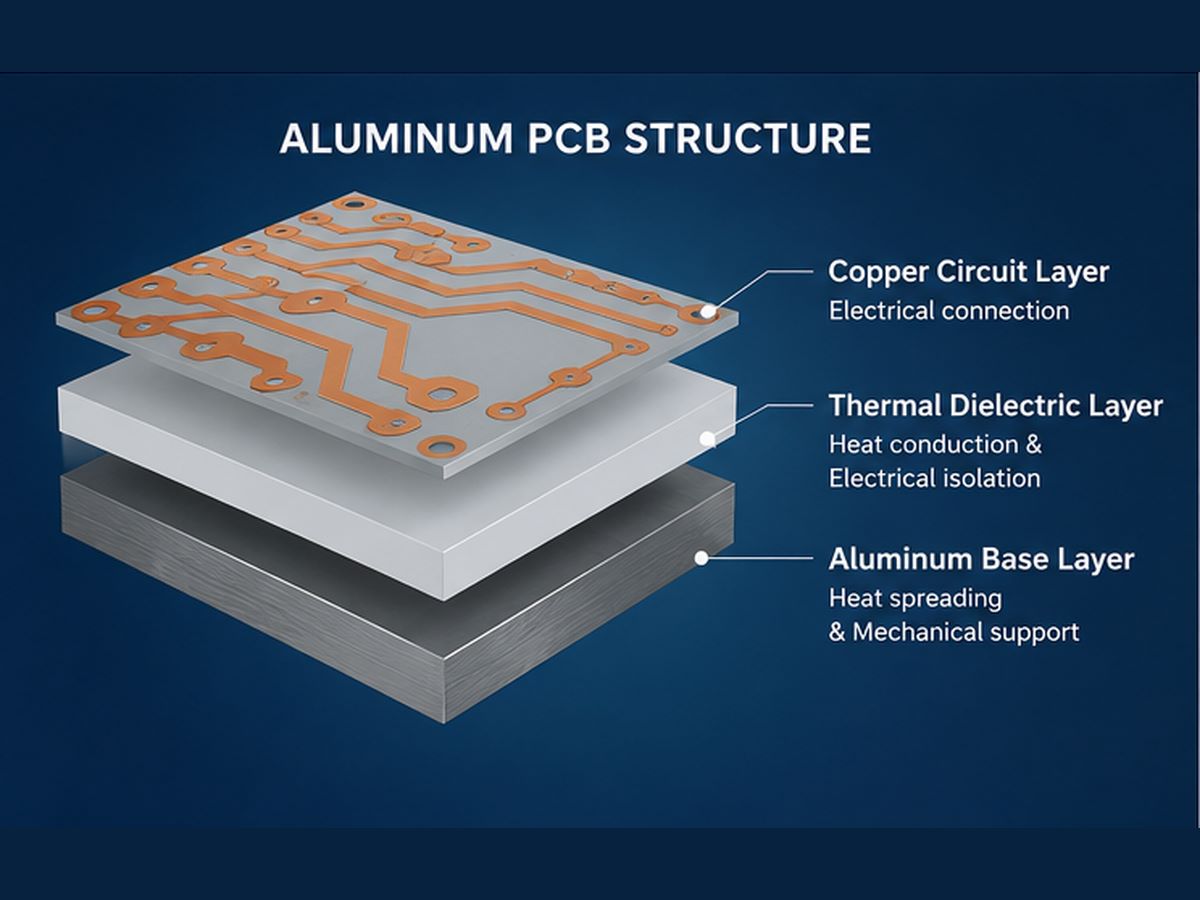
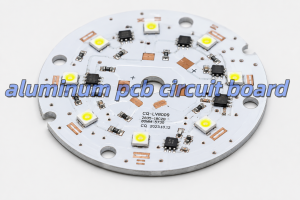
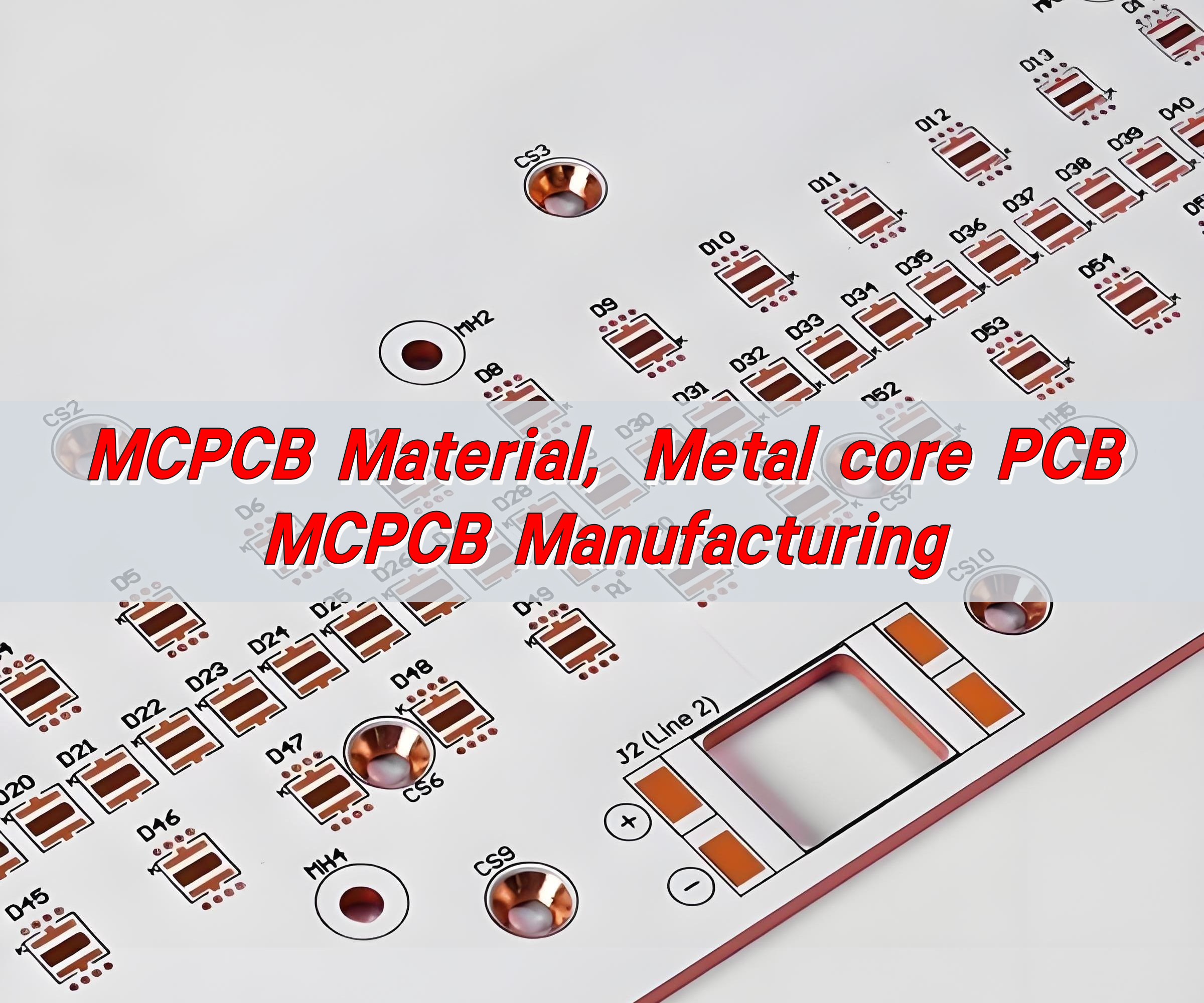
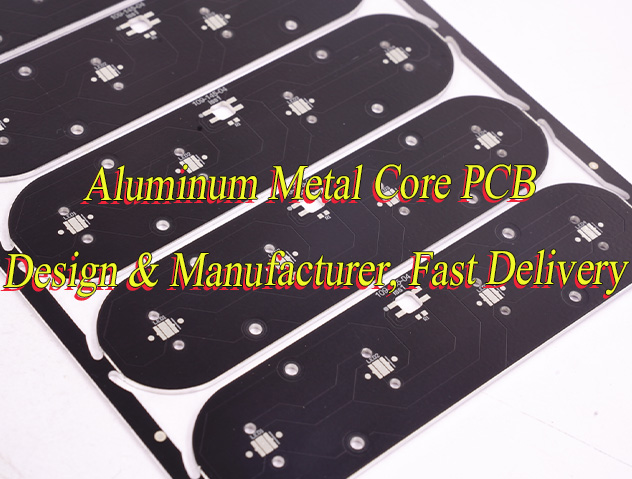
An aluminum PCB is a printed circuit board that uses an aluminum base to spread heat away from components. In a conventional single-sided construction, the main functional layers are:
Copper circuit → thermal dielectric → aluminum base
The copper carries current and forms the circuit pattern. The dielectric beneath it electrically isolates the circuit while conducting heat toward the aluminum substrate. The metal base then spreads that heat over a larger area and toward the housing or heat sink.
This structure is common in LED lighting, power converters, automotive electronics, motor drives, power modules, and other products with concentrated heat sources.
An aluminum PCB is one type of metal core PCB, or MCPCB. These terms are often used together in sourcing, but MCPCB is the broader category: the core or base can also be copper or another metal.
This distinction matters when talking to a metal core PCB manufacturer. A supplier that handles several metal-base structures may have more options when an aluminum substrate cannot meet the project’s thermal or electrical requirements.
What Aluminum PCB Manufacturing Capabilities Should You Check?
A statement such as “we manufacture aluminum PCBs” tells you very little about whether a supplier can actually build your design.
The useful comparison starts with the parameters that affect the fabrication drawing and stackup:
- Thermal material
- Board structure
- Copper thickness
- Board thickness
- Line width and spacing
- PTH and NPTH capability
- Board dimensions
- Routing and slots
- Outline tolerance
- V-scoring
- Surface finish
- Assembly support
EBest Circuit supports the following aluminum and metal-core PCB manufacturing capabilities:
| Capability | EBest Circuit |
|---|---|
| Thermal conductivity | 1–3 W/m·K standard; up to 8 W/m·K |
| Board structure | Single-, double-sided; selected multilayer |
| Copper thickness | Inner 0.5–3 oz; outer 1–3 oz |
| Board thickness | 0.8–3.0 mm standard |
| Max. size | 480 × 1180 mm |
| Min. PTH | 0.45 mm |
| Outline tolerance | ±0.15 mm |
| Surface finish | HASL, OSP, ENIG, Ag, Sn, gold finger |
Special materials, heavier copper, tighter tolerances, thicker substrates, and non-standard structures can be reviewed according to the stackup and fabrication drawing.
One parameter should never be judged in isolation. Copper thickness is a good example.
| Outer Copper | Standard Line / Space |
|---|---|
| 1 oz | 0.20 / 0.20 mm |
| 2 oz | 0.25 / 0.25 mm |
| 4 oz | 0.50 / 0.50 mm |
A manufacturer may advertise a very fine minimum trace width, but that figure often applies only to light copper. If your aluminum PCB carries higher current and requires heavier copper, the practical line/space capability changes.
That is why aluminum PCB manufacturing should be reviewed as a combination of material, copper, geometry, mechanical processing, and testing—not as a list of isolated maximum values.
What Materials Should an Aluminum PCB Manufacturer Offer?
When comparing metal core PCB material, many buyers focus first on the aluminum sheet. In practice, the thermal dielectric deserves at least as much attention.
A conventional aluminum PCB stack contains three main materials:
- Copper foil — carries current and forms the circuit.
- Thermal dielectric — transfers heat while maintaining electrical isolation.
- Aluminum substrate — spreads heat and provides mechanical support.
The dielectric sits directly in the thermal path. Its conductivity, thickness, dielectric strength, adhesion, and temperature behavior can therefore have a major effect on board performance.
This is also why the phrase “3 W/m·K aluminum PCB” does not describe the entire thermal design. Two materials with the same nominal conductivity can have different dielectric thicknesses, insulation characteristics, or thermal resistance.
For a power or thermal design, specify the material system around the actual requirement:
- Thermal conductivity
- Dielectric thickness
- Dielectric strength
- Copper weight
- Finished board thickness
- Operating voltage
- Mechanical requirements
EBest Circuit’s standard material range includes 1, 2, and 3 W/m·K thermal material classes, while higher-conductivity options from 3 to 8 W/m·K can be evaluated when the application requires them.
Higher thermal conductivity is useful only when it solves an actual thermal bottleneck. A higher headline W/m·K value should not replace a proper review of the complete heat path.
How Do You Verify an Aluminum PCB Manufacturer’s Quality?
A good-looking aluminum circuit board can still have problems that are difficult to see from the surface. Dielectric integrity, copper geometry, hole dimensions, mechanical tolerances, and insulation all matter to finished-board reliability.
A supplier review should therefore cover three areas.
Material control
The factory should be able to identify and trace the aluminum laminate, dielectric system, copper foil, and other critical materials used for the order.
Material substitution matters more than it may appear. A different dielectric can change thermal conductivity, insulation performance, thickness, adhesion, or mechanical behavior even when two finished boards look nearly identical.
Fabrication control
Useful checkpoints for an aluminum PCB include:
- Copper etching
- Finished copper thickness
- PTH and NPTH dimensions
- Routing and slot dimensions
- Board outline
- V-score condition
- Solder mask
- Surface finish
- Electrical continuity
- Electrical isolation
Mechanical processing also deserves attention because the metal substrate behaves differently from standard FR4 during drilling, routing, and V-scoring.
Quality-system control
The required level depends on the end product. Automotive, industrial, medical, aerospace, and other reliability-sensitive projects may require additional traceability, inspection records, process controls, or specific quality-system certifications.
Certificates are useful, but they are not the entire qualification process. The PCB drawing, material specification, acceptance criteria, inspection plan, and test requirements should agree before production starts.
How Do You Choose the Right Aluminum PCB Manufacturer in China?
Start with the requirement that gives you the least design flexibility. That usually removes unsuitable suppliers faster than comparing website claims or company size.
| Project | Check First |
|---|---|
| LED lighting | Thermal material |
| Power electronics | Dielectric + copper |
| Automotive | Quality + traceability |
| Prototype | Engineering response |
| Thick copper | Etching capability |
| Complex outline | Mechanical tolerance |
| OEM PCBA | PCB + assembly |
| Volume production | Repeatability |
For a standard one-layer aluminum PCB, an online manufacturer can be a very efficient option. If the board fits a published process window for material, thickness, copper, dimensions, and surface finish, there may be little reason to complicate sourcing.
The decision changes when the design includes heavier copper, a non-standard dielectric, unusual PTH or NPTH features, tight mechanical dimensions, multilayer construction, or customer-defined testing.
At that point, engineering communication becomes part of the manufacturing capability.
The same applies when the board will be assembled. Aluminum PCBs often carry LEDs, MOSFETs, power devices, drivers, converters, or other components that generate heat. PCB fabrication is only one part of the final thermal path.
If one supplier handles PCB fabrication and PCBA, the engineering review can also consider component placement, soldering, thermal interfaces, inspection, and functional testing.
For an OEM project, send the same controlled RFQ package to two or three shortlisted aluminum PCB manufacturers. Compare more than the quoted unit price.
Pay attention to the questions each supplier asks.
A manufacturer that checks the dielectric, copper weight, stackup, hole structure, outline, panelization, assembly requirements, and testing is showing you how it approaches manufacturability before the board reaches production.
What Should You Send for an Aluminum PCB Quote?
A Gerber file and quantity may be enough for a very simple board. For a customized aluminum PCB, they leave too much open to interpretation.
For bare-board fabrication, provide:
- Gerber or ODB++ files
- Fabrication drawing
- Board dimensions
- Layer structure
- Thermal material requirement
- Finished copper weight
- Finished board thickness
- Surface finish
- PTH / NPTH requirements
- Slots and routing details
- V-score requirements
- Quantity
- Inspection or testing requirements
If thermal conductivity is specified, make it clear what the value refers to. The manufacturer should not have to guess whether the requirement applies to the dielectric, laminate system, or another thermal interface.
For PCB assembly, also provide:
- BOM
- Pick-and-Place / CPL file
- Assembly drawing
- Approved manufacturer list, if applicable
- Programming files
- Inspection requirements
- Functional-test requirements
Complete RFQ data helps the manufacturer identify material or manufacturing conflicts before quotation instead of discovering them after production has already started.
FAQs About Aluminum PCB Manufacturers in China
Is an Aluminum PCB the Same as an MCPCB?
Not exactly. An aluminum PCB is one type of MCPCB. Metal core PCB is the broader term and can include aluminum, copper, or other metal-base structures. Aluminum is common because it offers a practical combination of thermal performance, weight, machinability, and cost.
Can Aluminum PCBs Be Multilayer?
Yes. Aluminum PCBs are not limited to simple one-layer LED boards. Several manufacturers offer double-sided or multilayer metal-base structures, although available stackups and fabrication limits vary considerably between suppliers.
What Thermal Conductivity Should I Choose for an Aluminum PCB?
Choose the dielectric according to the actual thermal and electrical requirements rather than automatically selecting the highest W/m·K rating. Dielectric thickness, insulation requirement, copper weight, component losses, board area, and the downstream heat sink all affect the final temperature.
Can an Aluminum PCB Manufacturer Also Provide PCB Assembly?
Yes. Many China-based aluminum PCB manufacturers also provide component sourcing, SMT/THT assembly, inspection, and testing. A combined service can reduce handoffs when the project moves from bare-board fabrication into PCBA production.
When Should I Consider Copper Core Instead of Aluminum?
Copper-base constructions become worth evaluating when heat flux, current density, or the required thermal path exceeds what a conventional aluminum structure can provide efficiently. Copper offers stronger bulk thermal performance, but it also increases material cost and weight, so the change should come from the design requirement rather than material preference.
Need an Aluminum PCB Manufacturer for Your Project? If your project is already moving from design into prototype or production, EBest Circuit can review the aluminum PCB stackup, thermal material, copper weight, mechanical requirements, and manufacturability before fabrication. For PCBA projects, you can also submit the BOM, Pick-and-Place file, assembly drawing, and testing requirements for a combined PCB + assembly review. Send your project files to sales@bestpcbs.com for engineering review and quotation.
You may also like


Tags: aluminum pcb, aluminum pcb manufacturer, Aluminum PCB Manufacturers