A medical device PCB design may work on the bench but still lose weeks in production because of mismatched revisions, unavailable parts, inaccessible test points, or unclear acceptance criteria.
Avoid those delays by releasing one buildable PCB/PCBA package before purchasing or tooling begins.
To simplify this handoff, EBest Circuit (Best Technology) gives you one sales contact backed by a three-person technical team for DFM, PCB fabrication, sourcing, assembly, inspection, and agreed testing.
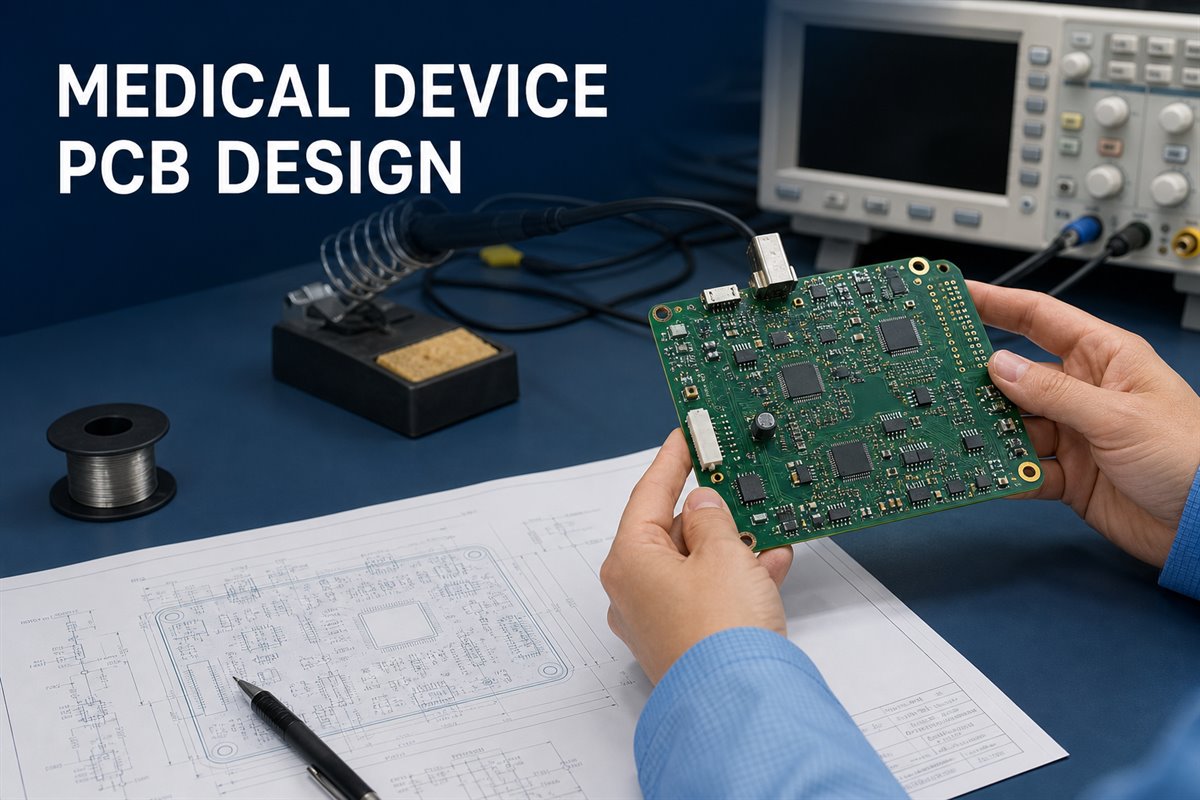
What Medical Device PCB Design Must Define Before Manufacturing
Get an accurate quotation and prevent revision mistakes by sending one approved manufacturing package.
Include:
- Gerber or approved ODB++/IPC-2581 data, drill files, and route data
- fabrication drawing, stackup, impedance requirements, materials, finish, and tolerances
- approved BOM with manufacturer part numbers and substitution rules
- centroid data and assembly drawings with polarity, variants, and do-not-fit parts
- programming, inspection, and test requirements with pass/fail criteria
- one consistent revision across all files
If the fabrication drawing says revision B while the BOM says revision C, production should stop for clarification. Resolving that conflict before material purchase costs less than rebuilding an assembled batch.
EBest provides a DFM report showing the affected feature, manufacturing risk, recommended action, and required approval.
PCB Design Methods That Reduce Manufacturing Risk
Protect the next production lot by checking whether the layout fits a stable manufacturing and inspection process—not merely whether it passes CAD rules.
Before layout release, confirm:
- trace, spacing, drill, annular ring, solder-mask, and copper-to-edge capability
- stackup availability and controlled-impedance compatibility
- component spacing, thermal pads, fiducials, tooling clearance, and depaneling method
- access for AOI, X-ray, flying probe, ICT, or functional testing
- whether HDI, via-in-pad, flex, or rigid-flex features are technically necessary
EBest’s experienced PCB/PCBA engineers identify process-fit problems before tooling, when changes cost less.
Material Selection for Reliable Medical PCBs
Avoid emergency substitutions by confirming material availability and approval rules before the build.
“FR-4” alone does not define laminate performance. Impedance, dimensional stability, assembly heat exposure, and future availability can depend on the exact laminate and construction.
Confirm in writing:
- whether the exact laminate is mandatory or an approved equivalent is allowed
- which dielectric values and thicknesses control impedance
- operating conditions and assembly heat-cycle requirements
- required material certificates, declarations, date codes, and lot records
- who can approve a substitute and how approval will be recorded
EBest provides a BOM optimization list covering availability, lifecycle, package, and alternative-part risks before purchasing. EBest works with 1,000+ supply-chain partners; you retain approval of electrical equivalence and design changes.
How Medical Device PCB Assembly Changes the Design Review
Reduce handoff errors by reviewing the PCB, BOM, assembly data, and test requirements as one release.
Once components are added, the review must also cover land patterns, polarity, paste apertures, component height, moisture sensitivity, programming, inspection, and test limits.
EBest coordinates PCB fabrication, component sourcing, assembly, and agreed testing through one team.
A release-ready assembly package should define:
- approved parts and substitution rules
- polarity, variants, and do-not-fit components
- solder alloy, paste, and relevant thermal constraints
- programming files and verification requirements
- inspection coverage and acceptance criteria
- test method, fixture, software version, and pass/fail responsibility
EBest supports samples and small batches, helping you verify manufacturing, assembly, and testing before scaling.
When files, materials, test scope, and capacity permit, EBest can deliver PCBAs in approximately 1.5 weeks. Confirm the project-specific schedule in the quotation.
DFM Checks Before Prototype Release
Release prototypes with fewer open questions by requesting a DFM report that leads to decisions.
The review should cover:
- stackup, thickness, copper weight, impedance, and drawing consistency
- trace, spacing, drill, annular ring, mask dam, and edge clearance
- via treatment, copper balance, panelization, tooling, and fiducials
- footprint-to-BOM consistency, polarity, clearance, and paste apertures
- test-point access and fixture constraints
- revision alignment across every production file
Separate release blockers, customer approvals, and optional improvements affecting cost, yield, or lead time. Link every approved deviation to the applicable revision.
EBest’s experienced R&D and PCB/PCBA engineers provide practical process recommendations—not unexplained factory questions.
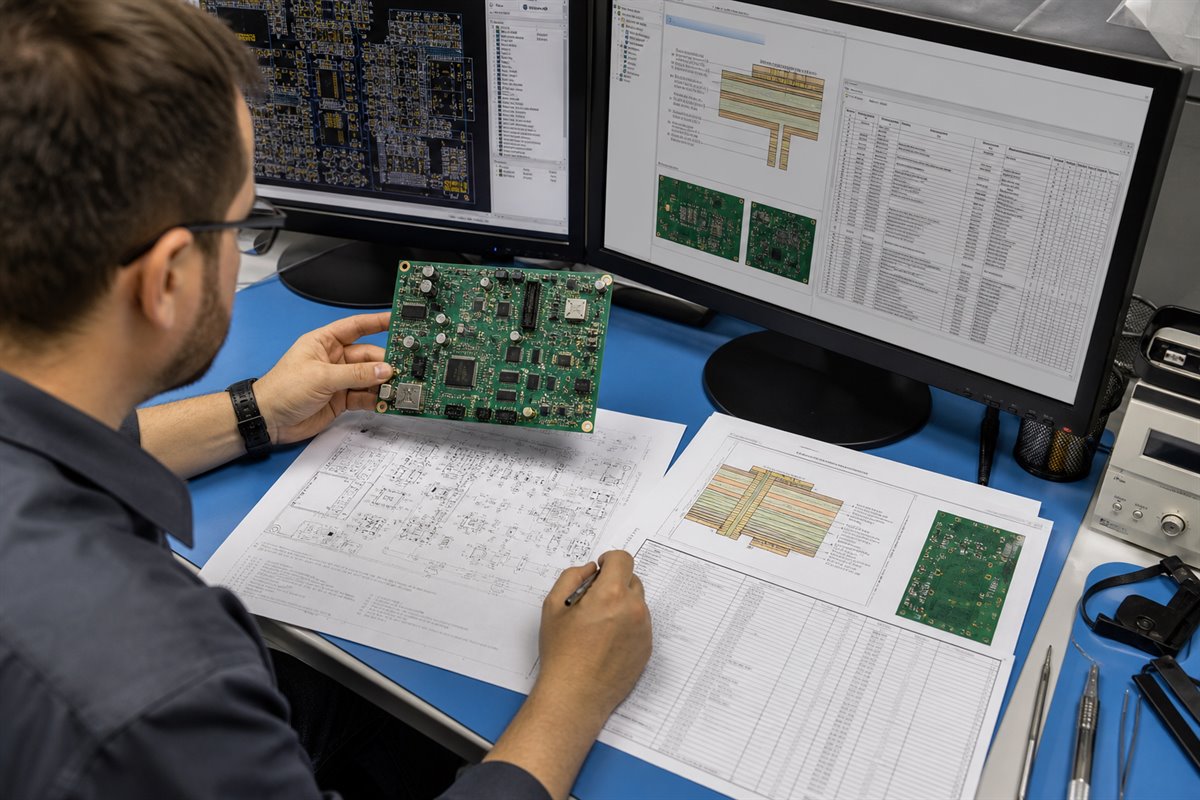
Inspection and Reliability Testing Evidence to Request
Make test results usable by defining what will be checked, against which limit, and what record you will receive. “100% tested” is not enough without a method and acceptance criteria.
Match each risk to evidence:
- material identity: manufacturer, lot, date-code, and incoming records
- bare-board opens and shorts: electrical or flying-probe results
- hidden solder joints: X-ray records where required
- placement and polarity: first-article and AOI records
- controlled characteristics: specified impedance, microsection, cleanliness, or solderability reports
- product function: customer-defined method, fixture, software, and pass/fail limits
- investigation: serial number, work order, traveler, nonconformance, and corrective-action records
EBest’s ISO 13485:2016-certified quality system supports controlled revisions, suppliers, records, traceability, and nonconformances. ISO 9001, IATF 16949, and AS9100D qualifications are also listed. These certifications do not replace final device certification.
Our digital workshop can trace material and product batches, production cycles, and progress in as little as five seconds, according to company-provided capability data.
A Medical Device PCB Design Example for Release Control
Suppose a monitoring-board project is moving from successful samples to a 100-unit pilot build. The PCB files are revision B, the BOM is revision C, two parts have long lead times, one diode has no polarity note, and “functional test” has no limits.
Starting immediately risks assembling the wrong revision, using an unapproved substitute, placing the diode incorrectly, and producing test results that cannot be repeated.
A safer release path is:
- Align all files under one approved revision.
- Record the revision, polarity, and test gaps in the DFM report.
- Provide BOM alternatives for customer approval before purchasing.
- Confirm panel, assembly, inspection, and test responsibilities.
- Build the pilot lot with the agreed production and traceability records.
- Return build feedback before the next quantity increase.
Move from a working prototype to repeatable pilot production with approved files, parts, tests, and records.
What to Include in a Medical PCB Manufacturing RFQ
Compare suppliers on the same scope by sending a decision-ready RFQ.
Include:
- prototype, pilot, and expected production quantities
- one revision-aligned PCB/PCBA release package
- material, stackup, finish, tolerance, workmanship, and panel requirements
- sourcing, substitution, and consigned-material rules
- programming, inspection, testing, documentation, and retention requirements
- packaging, labeling, traceability, and target delivery date
Ask suppliers to list assumptions, open questions, material risks, tooling charges, and lead-time conditions. This makes quotations easier to compare.
EBest combines 20 years of PCBA experience with in-house PCB and PCBA factories. The company reports serving 10,000+ engineers and 1,800+ customers.
Send controlled files, quantities, and evidence requirements to sales@bestpcbs.com. Receive DFM questions, sourcing risks, process recommendations, and a project-specific delivery plan before release.
FAQs About Medical Device PCB Design
What should I receive from a DFM review?
A written report showing the affected feature, manufacturing risk, proposed action, and required approval.
How does ISO 13485 help a medical PCB/PCBA buyer?
It supports controlled processes, records, suppliers, traceability, and nonconformance handling. It does not certify the finished medical device.
When should BOM availability be reviewed?
Check critical parts before layout freeze and review the approved BOM again before material release.
Can EBest support prototypes before volume production?
Yes. EBest supports samples and small batches so engineers can validate manufacturing, assembly, inspection, and testing before scaling.
What should I send for an accurate medical PCBA quotation?
For an accurate medical device PCB design quotation, send aligned PCB and assembly files, the approved BOM, quantities, material requirements, substitution rules, inspection and test scope, traceability needs, and target delivery date to sales@bestpcbs.com.
You may also like

Tags: Medical Device PCB Assembly, Medical Device PCB Design, Medical PCB