





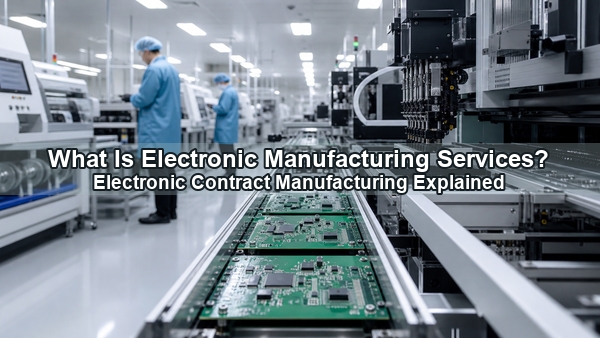
Electronic manufacturing services are outsourced engineering and production activities used to turn an electronic design into assembled, tested, and deliverable hardware. The scope may start with new product introduction and PCB fabrication, then continue through component sourcing, SMT and through-hole assembly, programming, inspection, functional testing, cable integration, and box build.
What Is Electronic Manufacturing Services?
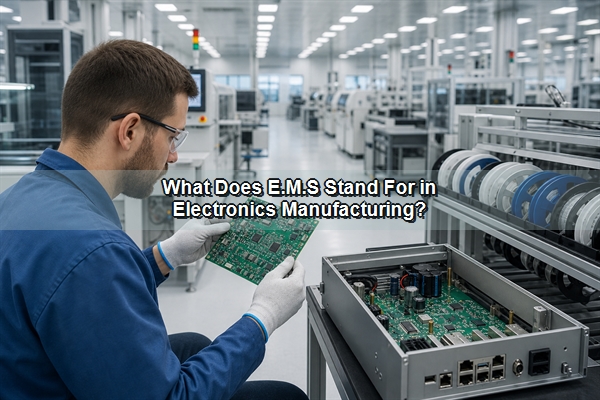
Electronic manufacturing services, commonly shortened to EMS, describe a manufacturing model in which a specialist company builds electronic assemblies or finished systems for another organization. The product owner usually controls the brand and product requirements, while the EMS provider executes an agreed portion of engineering, material control, manufacturing, inspection, testing, and fulfillment.
The exact boundary is contractual rather than universal. One program may require only PCB assembly from supplied materials. Another may include DFM review, PCB fabrication, component sourcing, firmware loading, conformal coating, cable assembly, enclosure integration, final test, and packaging. This is why EMS should be defined by the actual process scope rather than by the acronym alone.
What Does an EMS Company Do?
An EMS company converts controlled product data into a repeatable manufacturing process. It coordinates engineering release, materials, tooling, equipment programs, work instructions, process inspection, test results, nonconformance control, and production records.
At the PCB assembly level, this work can include stencil preparation, solder paste printing, 3D SPI, component placement, reflow, AOI, selective or wave soldering, X-ray inspection, programming, and functional testing. At system level, it may extend to wire harnesses, displays, power modules, mechanical parts, labels, and enclosure assembly.
Which Services Are Included in Electronic Manufacturing Services?
The service range normally follows the product lifecycle. A provider may perform every stage or only the modules assigned to it.
- Engineering review, NPI planning, DFM, DFA, DFT, and production documentation
- Prototype PCB, multilayer PCB, HDI, rigid-flex, metal-core, ceramic, or other board fabrication
- Approved component sourcing, incoming inspection, moisture control, and lot traceability
- SMT, through-hole, mixed-technology, BGA, press-fit, and manual assembly
- Firmware programming, calibration, AOI, X-ray, electrical test, and functional test
- Cleaning, coating, potting, wire harness assembly, box build, labeling, and packaging
- Controlled repair, rework, engineering-change implementation, and repeat production support
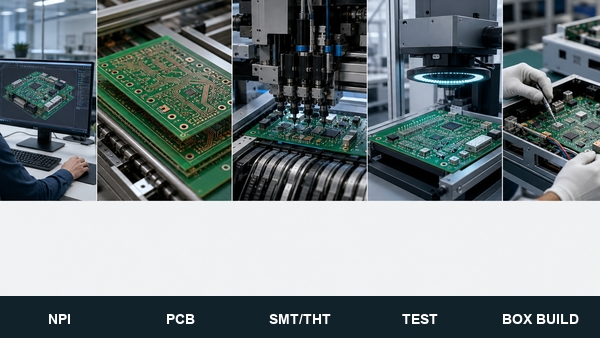
A service list is only meaningful when its interfaces are defined. For example, component sourcing requires an approved BOM and substitution policy; functional testing requires test limits and a controlled fixture; box build requires mechanical drawings, cable definitions, torque values, and product-level acceptance criteria.
How Does the EMS Process Work from NPI to Production?
The EMS process begins by converting design data into a controlled manufacturing package. During NPI, engineering teams align PCB data, BOM revisions, placement coordinates, assembly drawings, firmware, mechanical files, and test requirements. Conflicts must be resolved before machine programs and tooling are released.
Prototype builds then validate both the design and the process. The resulting evidence may include first-article inspection, solder paste measurements, placement verification, X-ray records for hidden joints, programming logs, and functional results. Corrections are incorporated through revision control before a pilot run confirms repeatability at a larger batch size.
Volume production adds tighter material planning, calibrated process windows, scheduled equipment maintenance, statistical monitoring, serialized or lot-level traceability, and formal change control. The manufacturing flow should remain linked to one approved revision so that the board data, BOM, software, test limits, and mechanical configuration cannot drift apart.
How Are DFM, DFA, and DFT Used in EMS?
DFM, DFA, and DFT are complementary reviews that reduce different manufacturing risks before production data is frozen.
| Review | Primary purpose | Typical checks |
|---|---|---|
| DFM | Confirm that the PCB and product can be manufactured within stable process limits | Stack-up, trace and space, drill-to-copper clearance, solder mask, panelization, materials, and tolerances |
| DFA | Make assembly efficient and reduce placement or soldering errors | Footprints, polarity, component spacing, fiducials, nozzle access, thermal balance, and hand-assembly access |
| DFT | Provide practical access and limits for inspection and electrical verification | Test points, probe clearance, boundary scan, programming access, fixture interfaces, and pass/fail criteria |
A useful review produces specific, traceable actions. It should identify the affected location, explain the manufacturing mechanism, and state whether the issue requires a design change, a process exception, or a test adjustment.
How Do SMT, THT, and Box Build Fit into EMS?
SMT handles most compact and high-density components by printing solder paste, placing parts automatically, and soldering them in a controlled reflow profile. The process is normally monitored with SPI before placement and AOI after reflow. X-ray is added when solder joints are hidden beneath BGA, QFN, LGA, or similar packages.
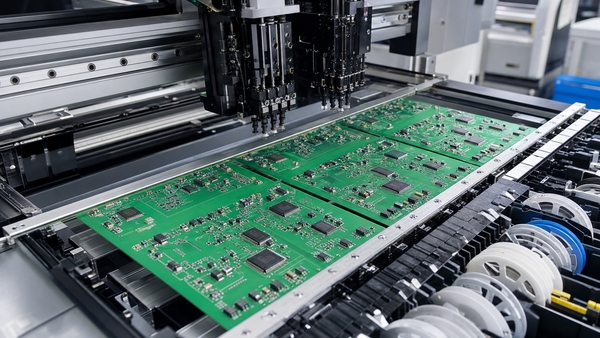
THT is used where leaded parts provide mechanical strength, power handling, connector retention, or compatibility with large transformers and relays. Components may be inserted manually or automatically, then soldered by wave, selective, or hand processes. Mixed assemblies need a sequence that protects temperature-sensitive parts and maintains access for inspection.
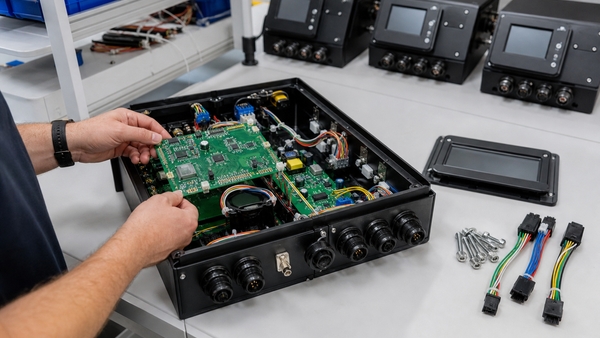
Box build begins after the PCBA has passed its defined inspections. It integrates the board with enclosures, displays, fans, switches, power supplies, thermal interfaces, cables, and labels. The final operation may include firmware configuration, calibration, dielectric or grounding checks, full functional test, and packaging.
How Are Electronic Assemblies Inspected and Tested?
No single inspection method can prove every aspect of an electronic assembly. A reliable test strategy combines methods according to the defect types that must be detected.
- SPI measures solder paste volume, area, height, and offset before components are placed.
- AOI checks visible component presence, orientation, polarity, solder fillets, and placement conditions.
- X-ray examines hidden solder joints, voiding patterns, bridging, and alignment under bottom-terminated packages.
- Flying-probe or ICT checks selected nets, component values, opens, shorts, and programmed electrical limits.
- Functional test powers the assembly and verifies interfaces, outputs, communication, control logic, and application behavior.
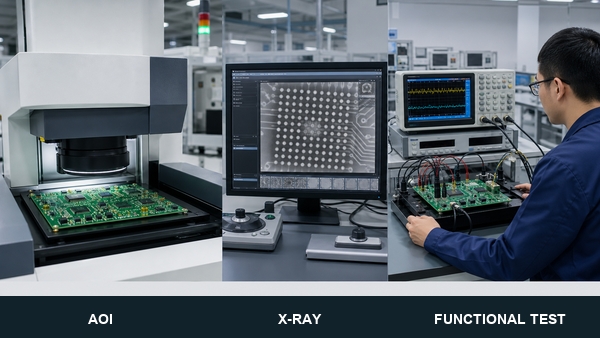
Inspection coverage should follow the product architecture. AOI cannot verify firmware behavior, and functional test may not reveal a marginal hidden solder joint without the right stimulus. Test results also need revision, serial or lot identity, equipment status, and acceptance limits to remain useful after production.
What Is the Difference Between EMS and OEM?
An OEM owns or markets the product under its brand, while an EMS provider performs assigned engineering and manufacturing services. The OEM generally defines product function, compliance goals, approved revisions, and market requirements. The EMS provider develops and controls the production process needed to build the approved configuration.
The boundary can vary. Some OEMs retain design, sourcing, firmware, and system testing while outsourcing only assembly. Others assign the EMS provider a broader lifecycle role. The difference is therefore based on ownership and responsibility, not simply on whether a company operates manufacturing equipment.
What Is the Difference Between EMS, ECM, CM, and ODM?
These terms overlap, but they emphasize different parts of the business relationship.
| Term | Main emphasis | Typical responsibility |
|---|---|---|
| EMS | Electronics manufacturing service scope | Engineering support, manufacturing, testing, integration, and lifecycle operations |
| ECM | Contractual outsourcing model for electronics | Builds electronic assemblies or products under another company’s specification |
| CM | General contract manufacturing | Manufactures a product or subassembly under contract; the term is not limited to electronics |
| ODM | Original design plus manufacturing | Develops a design or platform and manufactures versions for other brands |
EMS and ECM are often used interchangeably. EMS focuses on the collection of services; ECM emphasizes the contract-manufacturing relationship. For a deeper treatment of scope and commercial models, see the existing electronic contract manufacturing guide.
What Is an Example of Electronic Manufacturing?
An industrial controller provides a practical example. The process can begin with fabrication of a multilayer control PCB and a power-interface PCB. Components are then sourced to the approved BOM, inspected, moisture-managed where required, and assembled through SMT and THT processes.
After reflow and soldering, AOI and X-ray check workmanship, firmware is programmed, and the boards enter functional testing with simulated sensors, communication loads, and power conditions. The PCBAs are installed in an enclosure with a display, terminals, cable harnesses, and grounding hardware. A final system test confirms input handling, outputs, communications, alarms, and thermal behavior before packaging.
How Does EMS Support Prototypes and Volume Production?
Prototype EMS work prioritizes design learning, rapid revision, first-article visibility, and flexible materials. Tooling may be simplified, and manual operations may be acceptable when they do not hide production risks. Even so, machine programs, component identities, assembly findings, firmware, and test results should be recorded so that decisions are not lost between builds.
Pilot production verifies process capability at a representative batch size. It exposes panel-flow, feeder capacity, line balancing, fixture throughput, coating or curing time, packaging, and traceability issues that a small prototype lot may not reveal. Volume production then uses controlled work instructions, qualified equipment, stable material sources, defined sampling, and change approval to maintain repeatability.
Which Industries Use Electronic Manufacturing Services?
EMS is used wherever an electronic product requires repeatable assembly and documented verification. Industrial controls often need robust connectors, mixed SMT/THT assembly, power-stage testing, and long product life. Medical electronics may require stronger traceability and process documentation. Automotive electronics emphasize change control, environmental performance, and high-volume consistency.
Communication, aerospace, energy, test equipment, lighting, and consumer products use different combinations of high-speed layout, thermal management, compact packaging, coating, calibration, and system integration. The relevant EMS capability is the one that matches the actual board technology, component packages, test coverage, environment, and production stage.
FAQ About Electronic Manufacturing Services
What does EMS stand for in electronics?
EMS stands for electronic manufacturing services. The term covers outsourced engineering, assembly, testing, integration, and lifecycle operations for electronic products.
Is EMS the same as PCB assembly?
No. PCB assembly is one manufacturing operation within EMS. A broader EMS program may also include NPI, PCB fabrication, component control, programming, system test, cables, coating, box build, and packaging.
Does an EMS provider design electronic products?
Some providers offer design or design-assistance services, while others manufacture only from released product data. The assigned design responsibility must be stated clearly because it affects approvals, revision control, validation, and intellectual-property boundaries.
Can EMS include both prototypes and mass production?
Yes. The controls differ by stage, but one EMS provider can support prototypes, pilot runs, and volume production when its engineering, sourcing, equipment, test, and traceability systems cover the complete transfer.
What does an EMS provider test?
Testing can cover bare-PCB continuity, solder paste, visible assembly defects, hidden solder joints, circuit values, firmware programming, electrical interfaces, and final product functions. The required combination depends on product risk and test access.
Conclusion
Electronic manufacturing services connect product data with a controlled production system that can include NPI, PCB fabrication, component management, assembly, testing, box build, and repeat production. The most important distinction is not the acronym but the defined responsibility, revision control, manufacturing evidence, and test coverage at each stage.
EBest Circuit (Best Technology) supports PCB fabrication, component sourcing, SMT and through-hole assembly, inspection, functional testing, and box-build integration for prototype and production programs. For technical manufacturing support, contact sales@bestpcbs.com.
You may also like

Tags: box build assembly, Electronic Contract Manufacturing, electronic manufacturing services, EMS manufacturing, PCB Assembly