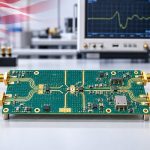
RO3003 is widely used across RF and microwave PCB because it offers stable electrical behavior, low loss, and smooth processing on modern PCB lines. Engineers often choose this laminate when they need predictable impedance, steady phase response, and strong thermal performance at high frequencies. Below is a comprehensive, fabrication-level RO3003 datasheet, covering electrical, mechanical, thermal, chemical, processing, and reliability properties.
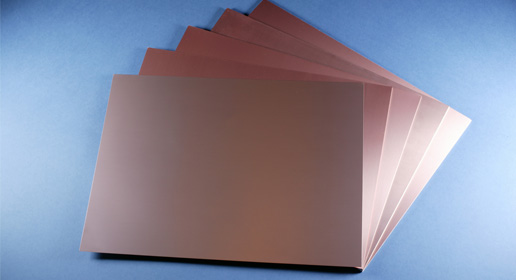
Rogers RO3003 Laminate Datasheet
Rogers RO3003™ Electrical Properties
| Parameter | Condition | Typical Value | Notes |
| Dielectric Constant (Dk) | 10 GHz (IPC-TM-650 2.5.5.5) | 3.00 ± 0.04 | Very stable across temperature and frequency |
| Dielectric Constant (Dk) | 2.5 GHz | 3.01 | Suitable for wideband RF |
| Dissipation Factor (Df) | 10 GHz | 0.0010 | Extremely low loss |
| Dissipation Factor (Df) | 2.5 GHz | 0.0009 | Excellent for mmWave |
| Volume Resistivity | 23°C / 50% RH | 1.7 × 10¹⁰ MΩ·cm | High electrical insulation |
| Surface Resistivity | 23°C / 50% RH | 5.7 × 10⁹ MΩ | Stable in damp conditions |
| Electric Strength | 0.5 mm thickness | 35 kV/mm | Strong dielectric barrier |
| Impedance Stability | -40°C to +85°C | ±1.3% | Very stable for antenna structures |
| Dk Temperature Coefficient (TCDk) | -40 to +85°C | -3 ppm/°C | Very low drift |
RO3003 is chosen often for 77 GHz radar, 24 GHz radar, and mmWave antennas because of these stable dielectric properties.
RO3003™ Material Thermal Properties
| Parameter | Typical Value | Notes |
| Thermal Conductivity | 0.5 W/m·K | Higher than FR4 |
| Usable Temperature Range | -55°C to +150°C | Suitable for automotive radar |
| Dimensional Stability (X/Y) | 0.2–0.3% | Strong laminate stability |
| Coefficient of Thermal Expansion (CTE) – X | 17 ppm/°C | Matches copper closely |
| CTE – Y | 17 ppm/°C | Helps reduce expansion stress |
| CTE – Z | 24 ppm/°C | Critical for microvias |
| Thermal Decomposition Temp (Td) | > 400°C | Much higher than FR4 |
| Thermal Stress | 288°C / 10 sec | No delamination |
| Specific Heat | 1.0 J/g-K | Supports stable power handling |
The matched X/Y CTE and moderate Z-axis CTE improve reliability in multi-layer RF boards, QFN modules, and BGA transitions.
RO3003™ Mechanical Properties
| Parameter | Condition | Typical Value |
| Tensile Modulus (MD) | 23°C | 18,000 MPa |
| Tensile Modulus (CD) | 23°C | 17,500 MPa |
| Flexural Strength | 23°C | 340 MPa |
| Peel Strength | 1 oz Cu, after thermal aging | 8.0 lb/in |
| Density | — | 2.1 g/cm³ |
| Hardness (Shore D) | — | 74 |
| Moisture Absorption | 48h @ 50°C water | 0.02% |
Low moisture absorption is one of the main reasons designers choose Ro3003 laminate for outdoor and long-range radio systems.
RO3003™ Chemical & Environmental Properties
| Property | Typical Value |
| Flammability | UL 94 V-0 |
| Fungus Resistance | Pass |
| Copper Corrosion Test | Pass |
| Water Absorption | 0.02% |
| RoHS | Compliant |
| Lead-Free Assembly | Fully supported |
The laminate performs well in harsh environments such as marine radar, industrial sensors, and automotive radar systems.
RO3003™ Thickness Availability
| Standard Thickness | Inches | Mil | Notes |
| 0.127 mm | 0.0050″ | 5 mil | Very common for antennas |
| 0.203 mm | 0.0080″ | 8 mil | Good for compact RF paths |
| 0.254 mm | 0.0100″ | 10 mil | LNA/PA front-end boards |
| 0.508 mm | 0.0200″ | 20 mil | Many GPS modules |
| 0.762 mm | 0.0300″ | 30 mil | Lower insertion loss |
| 1.524 mm | 0.0600″ | 60 mil | Large antennas or radar |
Copper foil options include:
| Copper Type | Standard Weight | Notes |
| ED Copper | ½ oz, 1 oz | Best for general RF |
| Reverse-Treat Copper (RTF) | ½ oz, 1 oz | Better for low-loss designs |
| Rolled Copper | Limited | Used for bending applications |
RO3003™ Available Panel Sizes
| Panel Size | Notes |
| 12″ × 18″ | Most common |
| 18″ × 24″ | Higher utilization |
| 24″ × 36″ | For mass production |
| Custom Cuts | By manufacturer |
Panel selection strongly affects Rogers 3003 price because utilization changes final cost.
RO3003™ Impedance Control Data
| Line Type | Result on 10 mil RO3003 | Notes |
| 50 Ω Microstrip | ~23 mil width | Typical, depends on copper |
| 75 Ω Microstrip | ~12 mil width | Used in satellite links |
| 100 Ω Differential Pair | 8–10 mil / 8–10 mil spacing | Depends on copper thickness |
| 90 Ω Diff Pair | 10–12 mil | Common in RF front ends |
For mmWave (60–86 GHz), designers often use:
| Feature | Typical Value |
| Via Stub Target | < 6 mil |
| CPWG Gap | 6–8 mil |
| Bends | Avoid sharp angles |
RO3003™ Reliability Properties
| Test | Result |
| Thermal Cycling | Excellent stability |
| IST Test | Low via fatigue |
| PTH Reliability | Stable with standard processes |
| Solder Float | No blistering |
| High-Temp Exposure | No resin cracking |
| Multi-Reflow Test | Stable after 3× lead-free reflow |
RO3003 is widely used in 77 GHz automotive radar because it withstands large temperature swings without drift.
RO3003™ Comparison Against Other Rogers Materials
| Parameter | RO3003 | RO4003C | RO4350B |
| Dk | 3.00 | 3.38 | 3.48 |
| Df | 0.0010 | 0.0027 | 0.0037 |
| Moisture Absorption | 0.02% | 0.04% | 0.06% |
| Thermal Conductivity | 0.5 W/m·K | 0.3 W/m·K | 0.6 W/m·K |
| Dimensional Stability | High | Medium | High |
| Fabrication Difficulty | Low | Very low | Low |
| Cost | Highest | Lowest | Medium |
| Best For | Radar, mmWave | General RF | Telecom, WiFi, RF modules |
RO3003™ Material Stack-Up Examples
- 1- Layer RF Antenna Stack-Up
| Layer | Material |
| Top Copper | 18 μm RTF |
| Dielectric | RO3003 10 mil |
| Ground Copper | 18 μm RTF |
- 2-Layer Balanced RF Module
| Layer | Material |
| Signal Layer | ½ oz copper |
| RO3003 Core | 20 mil |
| Ground Layer | 1 oz copper |
- Hybrid RF + Digital Stack-Up
| Layer | Material |
| Top Copper | RF traces |
| RO3003 | 10 mil |
| Adhesive Layer | — |
| FR4 Prepreg | Standard |
| FR4 Core | Digital circuits |
| Bottom Copper | Ground / digital signals |
If your next RF project involves RO3003 or other high-frequency laminates, our engineering team is ready to assist with simulations, stack-up proposals, prototype runs, and volume builds. You are welcome to contact EBest Circuit (Best Technology) for professional guidance and fast support as you move from concept to production.
Our teams support RF designers from the early stack-up stage through final production with careful engineering review, material guidance, and precise process control. Every PCB moves through certified systems, including ISO9001, ISO13485, IATF16949, and AS9100D, which gives customers confidence in long-term reliability.
You may also like


Tags: ro3003 material, rogers pcb