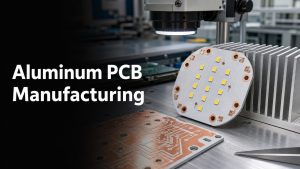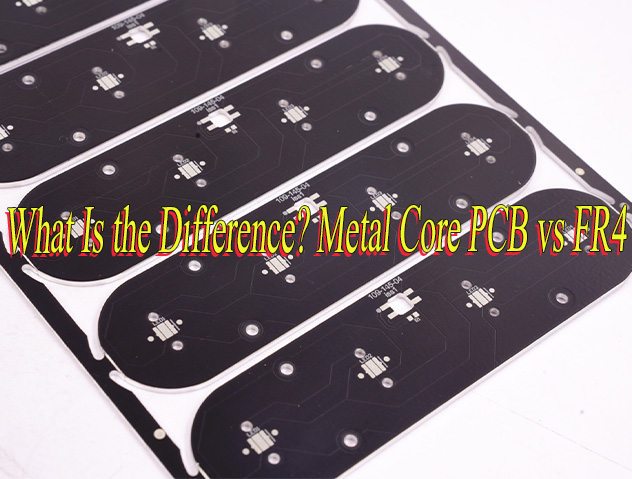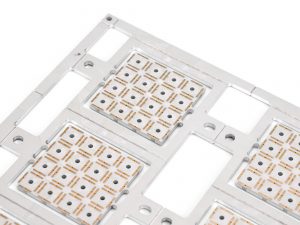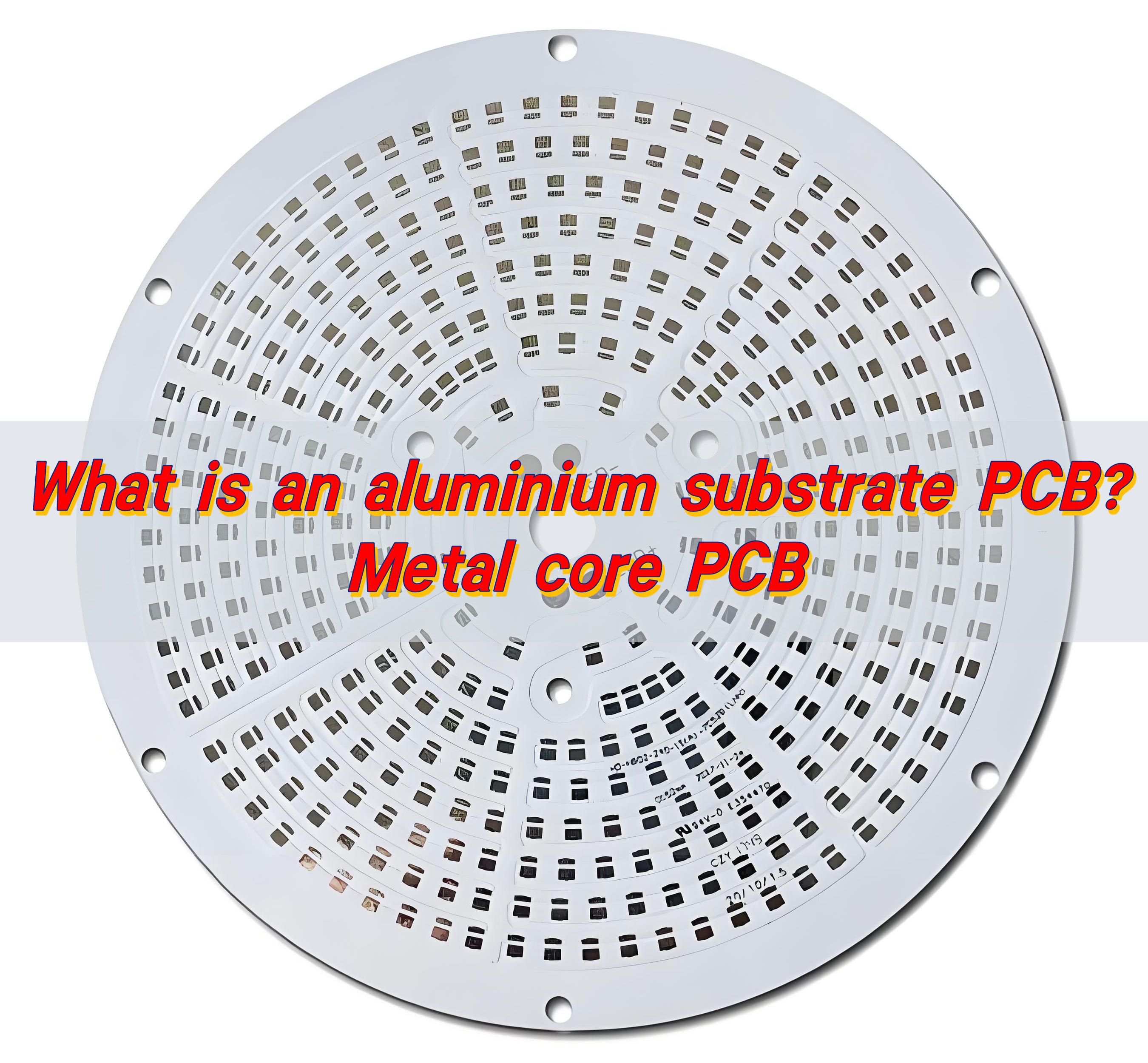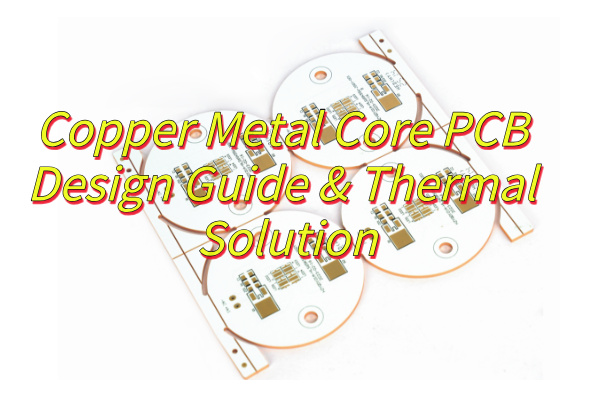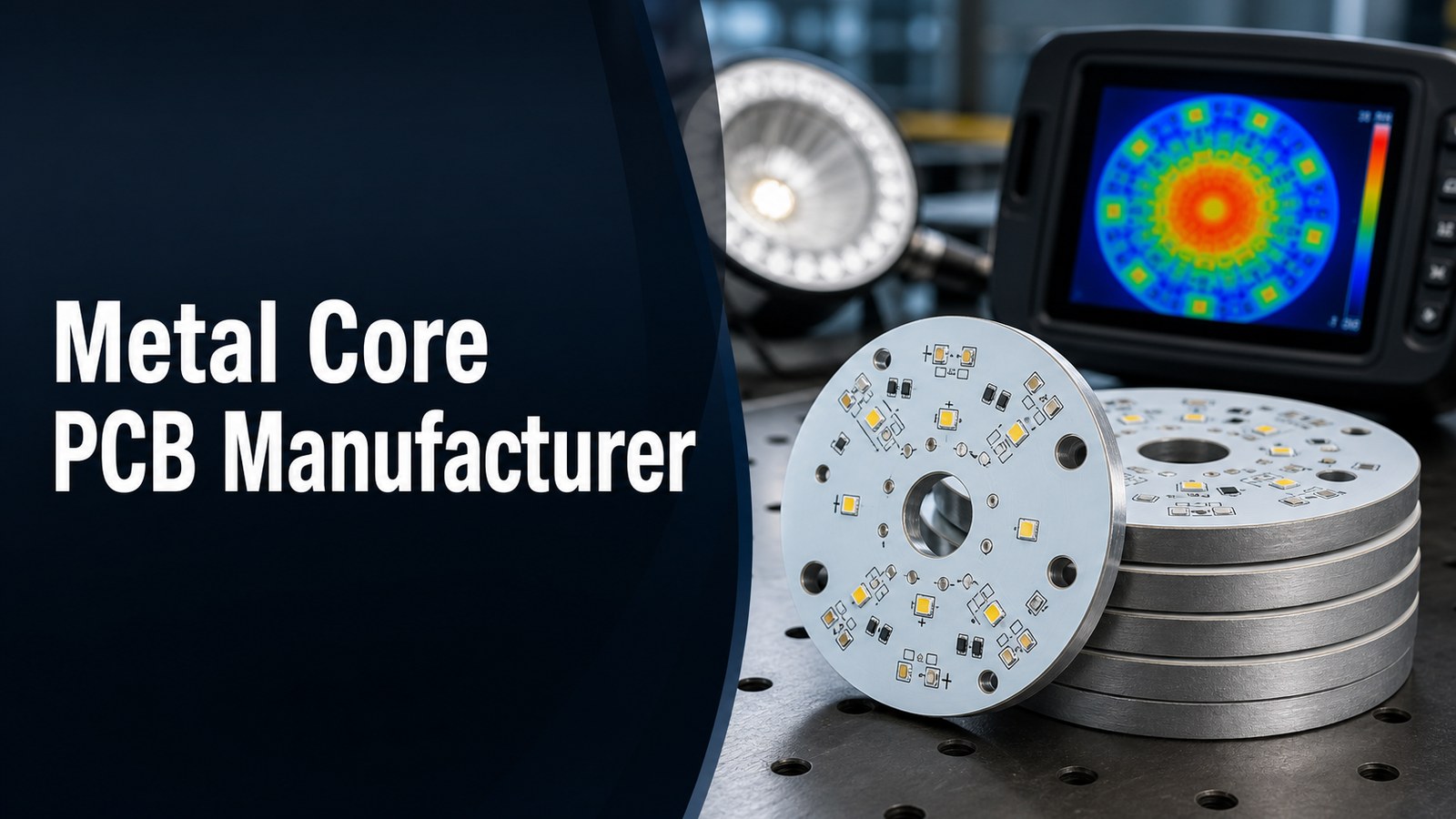
A metal core PCB manufacturer builds printed circuit boards that use an aluminum, copper or stainless steel base to move heat away from components more effectively than standard FR4 boards. Buyers usually search this keyword when they need MCPCB fabrication for LED lighting, power electronics, motor control, thermal modules or compact assemblies where heat cannot be ignored.
This guide explains how to compare metal core PCB manufacturers, what capability data to ask for, which files to prepare and how to avoid quote errors. It is based on the current supplier comparison landscape and verified Best Technology MCPCB capability data from the company process capability sheet.
Metal Core PCB Manufacturer at a Glance
A good metal core PCB manufacturer should be evaluated by thermal path, core material, dielectric, layer count, copper thickness, mechanical tolerance, surface finish, DFM review and assembly support. The lowest quote is not useful if the thermal requirement is misunderstood.
| Decision area | What to confirm | Why it matters |
|---|---|---|
| Core material | Aluminum, copper or stainless steel | Controls heat spreading, weight, machining and cost. |
| Thermal conductivity | Dielectric thermal performance and heat path | Determines whether heat can leave LEDs or power devices. |
| Layer structure | Single layer, double layer or multilayer MCPCB | Changes routing freedom and manufacturing complexity. |
| Assembly scope | BOM, CPL, polarity, thermal pads and inspection | Many MCPCB projects fail at assembly details. |
Is Your Metal Core PCB Project Being Limited by Thermal Assumptions?
Metal core PCB buyers need a supplier review that connects heat path, dielectric layer, copper, finish and assembly requirements.
| Customer Pain Point | Project Risk | How bestpcbs Helps |
|---|---|---|
| Thermal path is not defined | The board may not move heat away from LEDs or power devices as expected | bestpcbs asks for heat source location, operating environment and board structure before confirming the build path. |
| Dielectric and copper choices are unclear | Thermal behavior, cost and manufacturability can shift after quoting | bestpcbs reviews material, copper, thickness and finish expectations during RFQ review. |
| Assembly needs are separated from board design | Component placement and soldering constraints may affect thermal performance | bestpcbs checks BOM, CPL and assembly notes together with fabrication files when PCBA is needed. |
| Testing expectations are not written down | The buyer may not know which checks protect shipment quality | bestpcbs confirms electrical and project-specific inspection requirements before production. |
What Is the Metal Core of a PCB?
The metal core of a PCB is the heat-spreading base layer, usually aluminum or copper, placed under the circuit layer and dielectric to conduct heat away from high-power components. It is the reason MCPCBs are common in LED and power designs.
A basic metal core board includes a copper circuit layer, a thermally conductive dielectric and a metal base. Some designs use a direct thermal path structure such as 1 Layer SinkPAD Board when the heat path must be shorter than a conventional insulated metal substrate.
Metal Core PCB Buyer Priorities Before Supplier Selection
Metal core PCB buyers should confirm thermal path, dielectric selection, copper thickness, surface finish, assembly needs and testing before choosing a supplier. The lowest quote can become expensive if heat transfer or LED reliability requirements are unclear.
Share operating environment, heat source location, board thickness, copper weight, insulation expectations and assembly details so the supplier can review the project as a thermal product rather than a standard FR-4 board.
Metal Core PCB Capability Checklist
Best Technology capability data lists aluminum, copper and stainless steel base material options for MCPCB projects, with multiple base thicknesses, thermal conductivity levels and surface finishes. Use these figures as a quoting checklist, not as a substitute for project-specific engineering review.
| Capability item | Verified Best Technology data |
|---|---|
| Base materials | Aluminum, copper and stainless steel |
| Base material thickness, excluding copper | 0.30mm to 3.0mm listed options |
| Thermal conductivity | 1W, 1.5W, 2.0W and 3.0W options |
| Layer count | 1-10 layers |
| Board thickness | 0.6mm to 4.0mm |
| Copper thickness | 0.5oz to 10oz |
| Minimum line width/space | 4/4mil, 0.10/0.10mm |
| Surface treatment | ENIG, ENEPIG, OSP and lead-free HASL |
Aluminum, Copper and Stainless Steel Core Options
Aluminum core boards are common for cost-effective heat spreading, copper core boards are used when stronger thermal performance is needed, and stainless steel may fit projects with mechanical or environmental constraints. The right base depends on heat, weight, machining and budget.
The Metal Core PCB product page is the primary internal capability page for MCPCB, IMS boards, copper core boards and aluminum core boards.
Thermal Conductivity and Heat Path Decisions
Thermal conductivity should be selected from the heat target, component power, board area, dielectric, metal base and final heat sink connection. Do not choose a thermal value only because it sounds higher.
For high-power LEDs or power modules, ask whether the heat must pass through the dielectric or whether a direct thermal path structure is more suitable. If routing needs more copper layers on one side, review the Double Layers MCPCB option.
Layer Count, Thickness, Copper and Feature Limits
Metal core PCB complexity is controlled by layer count, total thickness, copper thickness, minimum line width/space, hole requirements and board size. These features should be fixed before comparing quotes.
Best Technology’s MCPCB sheet lists 1-10 layers, 0.6mm to 4.0mm board thickness, 0.5oz to 10oz copper and 4/4mil minimum line width/space. These values help buyers decide whether the board belongs in standard MCPCB, multilayer MCPCB or a more specialized thermal board review.
Surface Finishes, Solder Mask and Mechanical Details
Surface finish, solder mask color, hole tolerance and outline tolerance affect assembly quality and mechanical fit, especially on LED boards and metal housings. They should appear in the RFQ rather than being left to default settings.
The verified MCPCB sheet lists ENIG, ENEPIG, OSP and lead-free HASL as surface treatments, plus solder mask oil options in white, black, green, blue, yellow and red. White solder mask is common for LED lighting designs, but it should still be specified.
LED, Power Electronics and Heat Sink Applications
Metal core PCBs are commonly used when components generate enough heat that FR4 would make the design less reliable or less compact. Typical applications include LED lighting, power converters, motor controls, automotive lighting, heat sink modules and high-current control boards.
For LED projects, thermal path, surface reflectivity, mounting holes and polarity markings should be checked together. For high-current power projects, copper weight, creepage, clearance and mechanical grounding should be reviewed before release.
DFM Review Before MCPCB Manufacturing
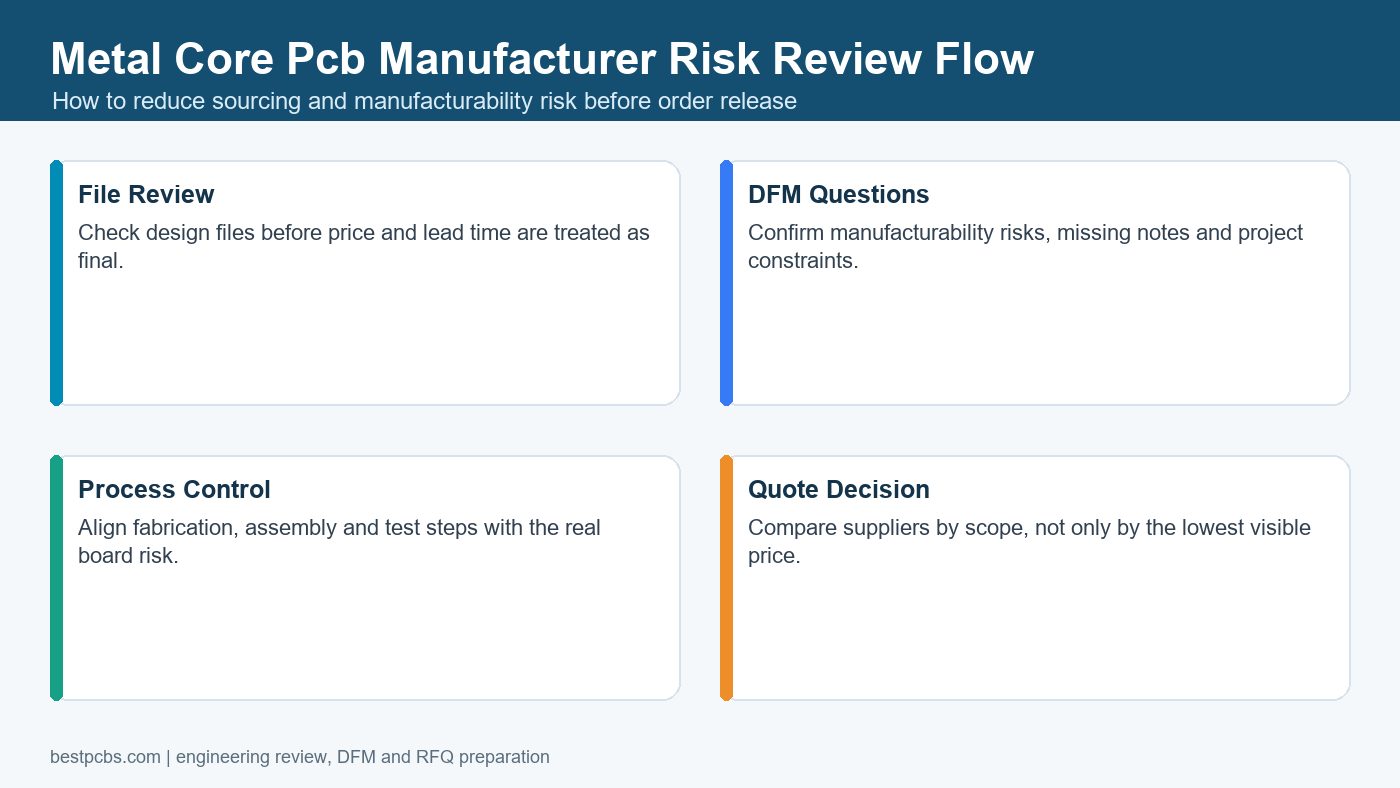
DFM review for MCPCB should check thermal pads, dielectric isolation, drilling, routing, board outline, metal exposure, solder mask bridge, copper weight and assembly clearance. A file that works for FR4 may not automatically be ready for metal core production.
Ask the manufacturer to review Gerber or ODB++ files, drill files, drawings and stackup notes before accepting the order. If the project has dense assembly, include the PCBA and PCB assembly service scope in the same conversation.
PCB Assembly and Component Sourcing for MCPCB
MCPCB assembly should be planned around thermal pads, LED polarity, component height, solder profile, heat-sensitive parts and inspection method. The bare board may be correct while the assembled board still fails if thermal and assembly details are separated.
Provide BOM, CPL, assembly drawing, polarity notes and any LED binning or approved substitution rules. If components are included, component sourcing support should be reviewed before the quote is finalized.
What Determines Metal Core PCB Cost?
Metal core PCB cost is driven by base material, thermal conductivity, layer count, copper thickness, board size, surface finish, machining, assembly scope, testing and lead time. A useful quote makes these assumptions visible.
| Cost factor | Why it matters | Buyer action |
|---|---|---|
| Base metal | Copper and special cores can cost more than standard aluminum. | State the thermal reason for the base choice. |
| Thermal conductivity | Higher thermal dielectric requirements can change material cost. | Use thermal simulation or component data to justify the value. |
| Mechanical work | Slots, countersinks, special holes and metal machining add process steps. | Send clear mechanical drawings. |
| Assembly | LED placement, polarity and thermal soldering add inspection needs. | Include BOM, CPL and assembly notes in the first RFQ. |
How to Compare Metal Core PCB Manufacturers
Compare metal core PCB manufacturers by verified capability, thermal engineering support, application fit, quote clarity and assembly readiness. A supplier that only repeats “MCPCB available” has not answered the real sourcing question.
- Can the manufacturer explain aluminum versus copper core tradeoffs?
- Do they ask for thermal conductivity and heat sink assumptions?
- Can they support single-layer, double-layer or multilayer MCPCB if needed?
- Do they review mechanical holes and board outline before quoting?
- Can they support assembly and testing for LED or power boards?
- Do they provide a clear RFQ path for prototype and repeat orders?
For broader supplier checks, the PCB assembly manufacturer RFQ checklist is useful when the MCPCB will be assembled rather than ordered as a bare board.
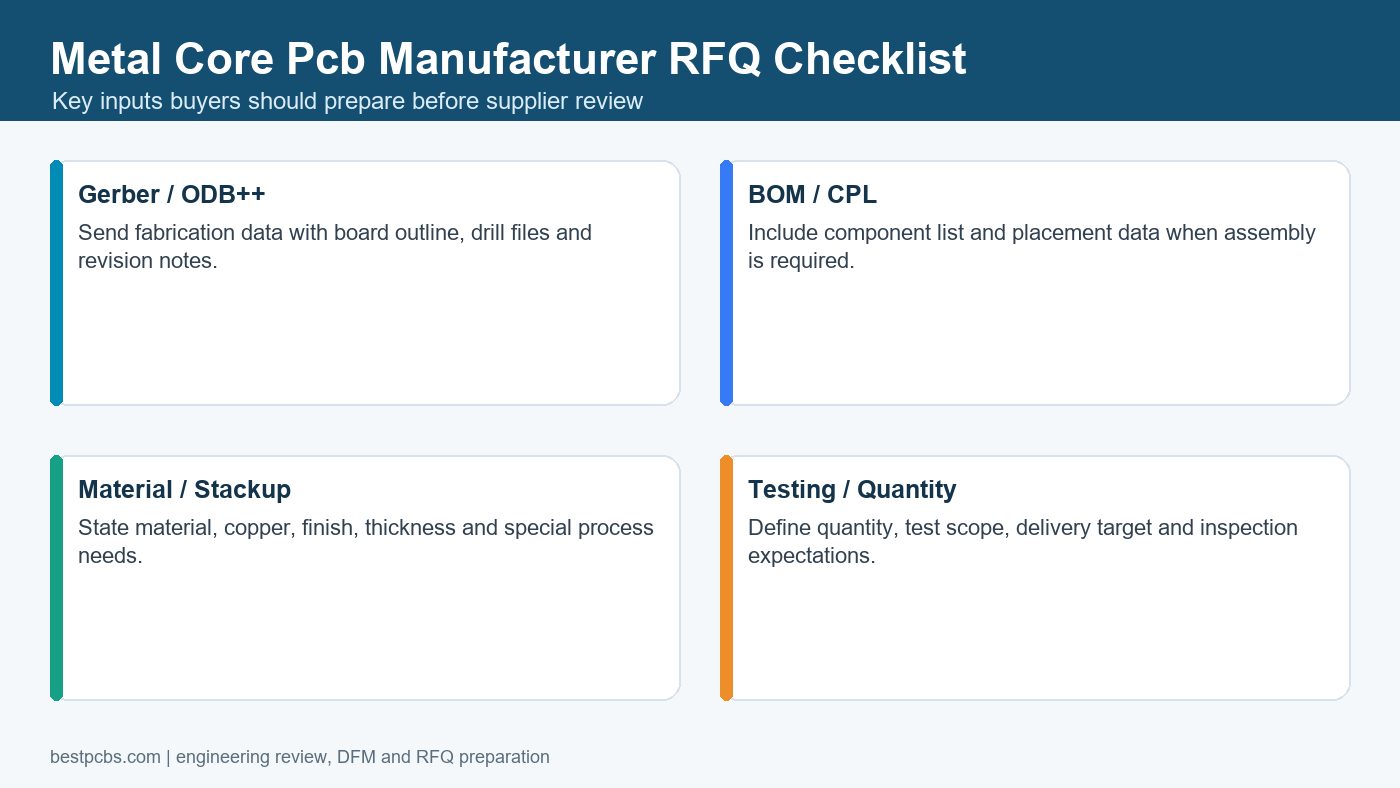
RFQ File Checklist for Metal Core PCB Projects
A complete MCPCB RFQ should describe the thermal requirement, not only the copper artwork. This is where many metal core PCB quotes become unclear.
- Gerber or ODB++ files and drill files.
- Layer count, base metal, dielectric and total thickness.
- Thermal conductivity requirement and heat sink contact area.
- Copper thickness, surface finish and solder mask color.
- Mechanical drawing for holes, slots, cutouts and tolerances.
- BOM, CPL and assembly drawing if PCBA is included.
- Testing, inspection, quantity and target lead time.
Frequently Asked Questions About Metal Core PCB Sourcing
What is a metal core PCB?
A metal core PCB is a printed circuit board with a metal base, usually aluminum or copper, used to improve heat spreading from components such as LEDs and power devices.
Is aluminum or copper better for MCPCB?
Aluminum is common for cost-effective thermal boards, while copper is selected when stronger heat spreading is required. The best choice depends on thermal load, weight, machining and budget.
Can metal core PCB include assembly?
Yes. MCPCB projects can include assembly, but the RFQ should include BOM, CPL, polarity notes, thermal pad requirements and inspection criteria.
What should I ask a metal core PCB manufacturer?
Ask about base material, thermal conductivity, thickness, copper, layer count, surface finish, mechanical tolerance, DFM review, assembly support and testing.
Final RFQ Recommendation
Choose a metal core PCB manufacturer only after the thermal path, core material, dielectric, copper, surface finish, mechanical details and assembly scope are clear. MCPCB is a heat-management decision as much as a PCB fabrication decision.
For a metal core PCB quote, send Gerber or ODB++ files, drill files, stackup and base material notes, thermal conductivity target, board thickness, copper thickness, surface finish, solder mask color, quantity, BOM, CPL, assembly drawings, testing requirements and target lead time to sales@bestpcbs.com. Best Technology / bestpcbs can review the package and help confirm whether the project fits standard MCPCB, aluminum PCB, copper core PCB, SinkPAD, PCBA or another thermal-board structure.