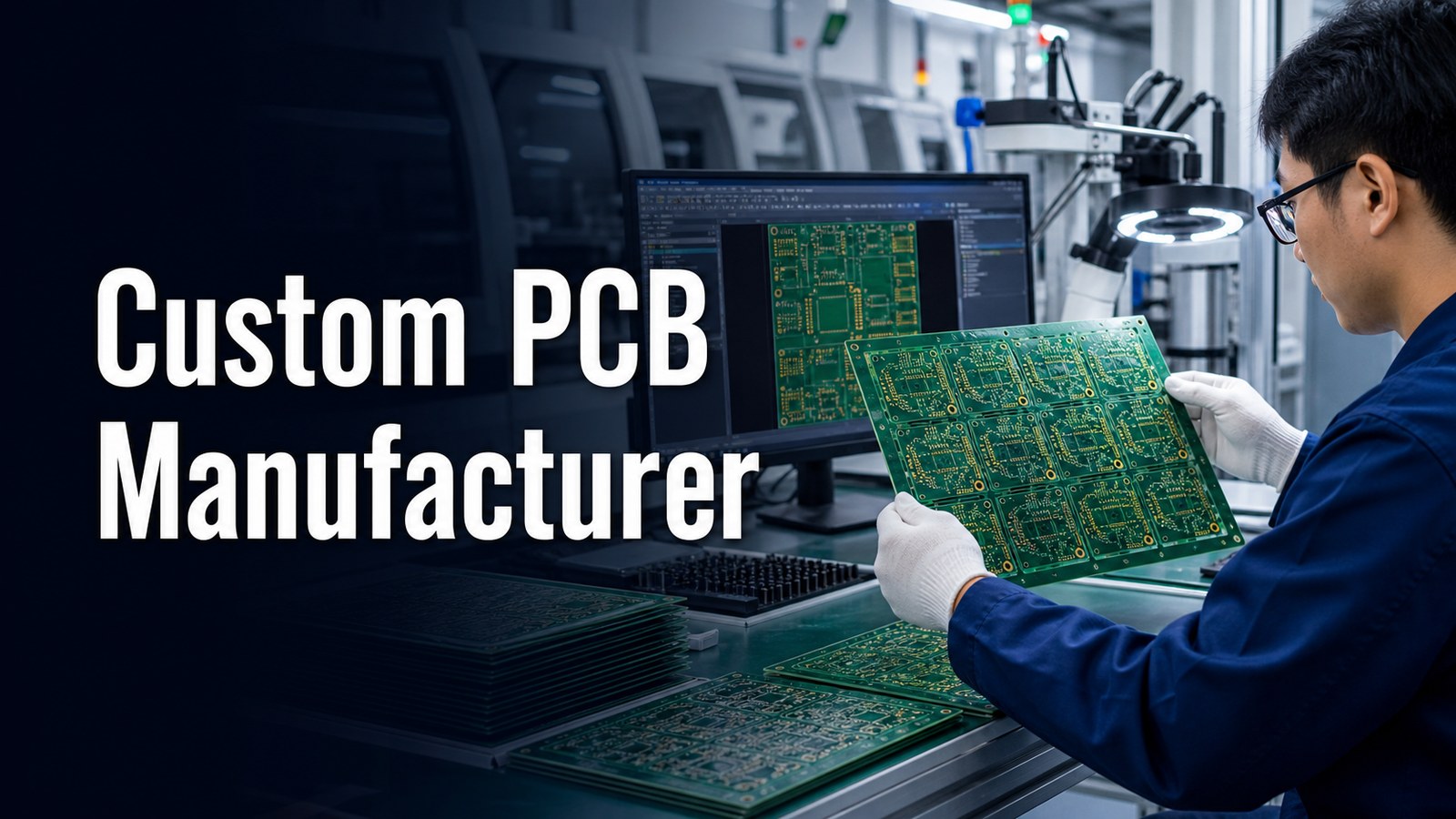
A custom PCB manufacturer should be chosen by file review quality, build capability, assembly scope, testing plan, communication and quote transparency, not only by the lowest instant price. The current supplier comparison landscape show that buyers are comparing online prototype suppliers, PCB fabrication companies, assembly providers and forum recommendations before ordering.
This guide helps engineers and purchasing teams compare custom PCB manufacturing options, prepare RFQ files and decide when bestpcbs is a practical supplier for prototypes, low-volume builds, special materials or PCB assembly.
Custom PCB Manufacturer at a Glance
A custom PCB manufacturer turns project-specific Gerber or ODB++ data into fabricated circuit boards, and may also support assembly, component sourcing, testing and production planning. The useful buying question is whether the supplier can review your actual project risk before production starts.
| Buyer question | What to check | Why it matters |
|---|---|---|
| Can they build the board? | Layer count, material, copper, drill, finish and special process fit | Custom PCB work depends on the actual stackup and feature limits. |
| Can they review the files? | DFM feedback, missing notes and quote assumptions | Prevents avoidable fabrication holds. |
| Is assembly included? | BOM, CPL, component sourcing, inspection and test scope | PCBA risk is often larger than bare-board risk. |
| Is the quote comparable? | Same files, same finish, same test, same freight and same lead-time assumptions | Different quote scopes make price comparisons misleading. |
Customer Pain Points in Custom PCB Manufacturing Projects
Custom PCB projects often fail at the handoff between design intent and manufacturing reality, so the supplier must help clarify files, materials, tolerances, assembly scope and inspection expectations before production.
| Customer Pain Point | Project Risk | How bestpcbs Helps |
|---|---|---|
| The Gerber or ODB++ package is released, but stackup, material or copper requirements are still incomplete. | The quote may look acceptable while the real build requirement remains undefined. | bestpcbs requests fabrication data, stackup notes, material, copper, finish and quantity together so engineering review can catch missing assumptions early. |
| The project needs both PCB fabrication and assembly, but BOM and placement data are not checked together. | Component risk, footprint mismatch or assembly constraints may appear after boards are already made. | bestpcbs can review PCB files with BOM and CPL when PCBA is required, helping buyers connect fabrication and assembly decisions before release. |
| Special requirements such as impedance, HDI, flex, rigid-flex, metal core, ceramic or heavy copper are not described clearly. | The supplier may quote a standard board even though the design needs a controlled process route. | bestpcbs asks buyers to call out special process, material, test and documentation needs so the quote can reflect the actual project risk. |
| The buyer wants a low price, but also needs fewer engineering surprises. | Missing DFM checks can lead to redesign, delay, scrap or unexpected cost later. | bestpcbs positions the RFQ around DFM review, manufacturability questions and acceptance requirements, not only unit price. |
Custom PCB Buyer Priorities Before Quote
Custom PCB buyers should define the board structure, material, finish, tolerance, assembly scope and testing needs before comparing suppliers. A custom quote is only useful when each supplier is pricing the same requirements.
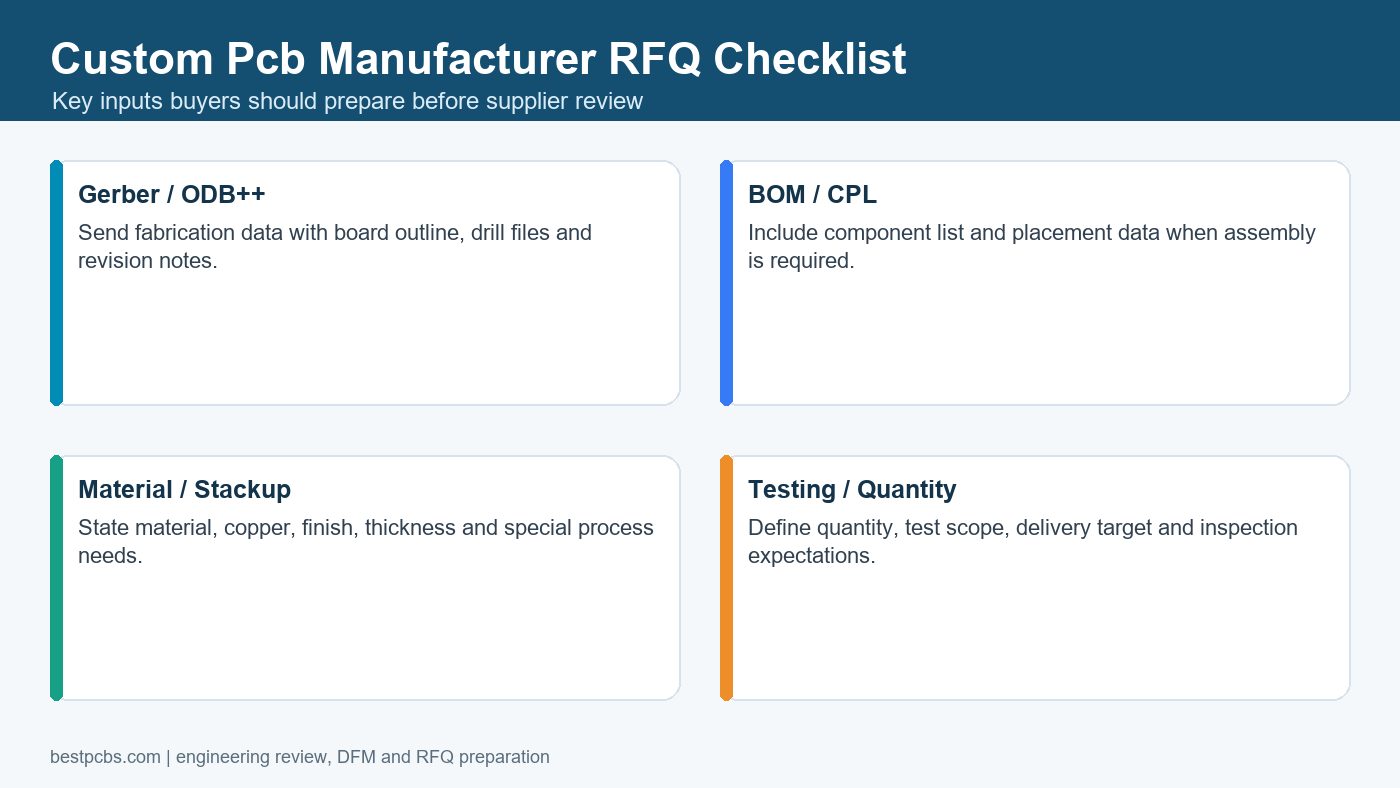
Prepare Gerber or ODB++ files, drill data, drawings, BOM, CPL, quantities and application notes. A supplier that reviews these files early can help identify missing details before cost, lead time or manufacturing risk becomes locked in.
When This Custom PCB Manufacturer Guide Fits
This guide fits buyers who need more than a commodity two-layer prototype order. It is especially useful when the design has controlled impedance, HDI, rigid-flex, high current, metal core, ceramic, RF, assembly or testing requirements that an instant calculator may not fully evaluate.
If the project is a broad supplier search, the existing custom PCB supplier page is a useful companion. This article focuses more narrowly on manufacturer selection and RFQ preparation.
Prototype, Low-Volume and Production Options
Prototype, low-volume and production PCB orders should be compared separately because each stage has a different risk profile. A supplier that is convenient for a first prototype may not be the right production partner if assembly, testing, revision control or special process support becomes important.
| Project stage | Main buyer need | Supplier check |
|---|---|---|
| Prototype | Fast learning and file validation | DFM review, material availability and revision feedback. |
| Low volume | Stable process before scaling | Repeatability, inspection, assembly data and cost assumptions. |
| Production | Yield, traceability and supply continuity | Process control, test plan, packaging and forecast support. |
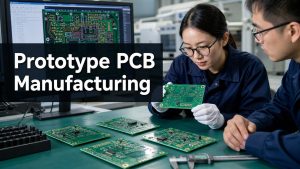
For prototype-specific preparation, see the prototype PCB manufacturing RFQ checklist.
PCB Types and Materials to Confirm
Custom PCB manufacturing becomes risky when the RFQ does not clearly state the board type, material and process assumptions. Buyers should tell the manufacturer what the board must do, not only send files and ask for price.
- FR4, high Tg, Rogers or other high-frequency material.
- Single-sided, double-sided, multilayer, HDI or rigid-flex structure.
- Heavy copper, metal core, ceramic or other special construction.
- Controlled impedance, plated slots, blind/buried vias or fine pitch features.
- Surface finish, solder mask color, board thickness and copper weight.
For deeper capability context, the PCB fabrication manufacturer selection guide and multi-layer PCB page are relevant internal references.
DFM Review Before Custom PCB Manufacturing
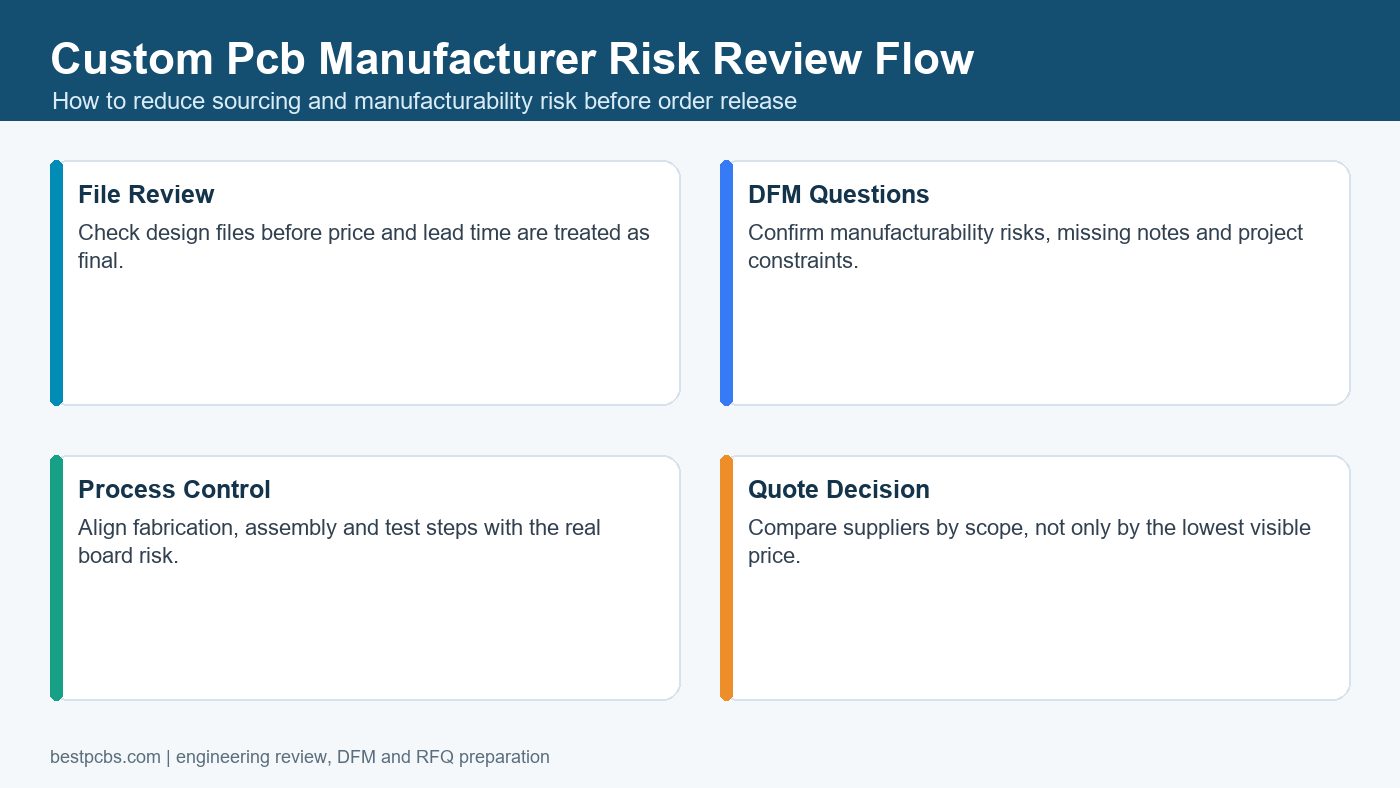
DFM review is the point where a custom PCB manufacturer proves whether it is only taking an order or actually reducing manufacturing risk. A good review should flag unclear notes, missing drill data, tight spacing, stackup conflicts, panelization issues, solder mask problems and assembly access concerns.
- Check minimum trace and spacing against copper and process needs.
- Review drill size, annular ring, slots, cutouts and board outline.
- Confirm stackup, dielectric, impedance and controlled layer order.
- Review panelization, fiducials and tooling holes if assembly is needed.
- Confirm solder mask openings, silkscreen readability and polarity marks.
- Identify which questions must be answered before production release.
PCB Assembly and Component Sourcing Scope
If the project needs PCBA, evaluate the manufacturer as a fabrication and assembly partner, not only as a bare-board supplier. Assembly introduces BOM risk, package mix, component sourcing, soldering profile, polarity, inspection and test requirements.
Bestpcbs can support PCBA and PCB assembly service together with board fabrication. Send BOM, CPL, assembly drawing, substitute rules and test requirements with the Gerber package so the assembly review happens early.
Testing and Quality Control Questions
Testing requirements should be defined before ordering because a low quote may include fewer checks than the project actually needs. Custom PCB quality is not only about whether the board powers on; it is about whether the board matches the design and can be repeated.
| Quality item | What to ask | Why it matters |
|---|---|---|
| Bare-board electrical test | Is continuity and isolation testing included? | Confirms the fabricated board matches the netlist. |
| Impedance report | Is controlled impedance verified when required? | Critical for high-speed and RF designs. |
| Assembly inspection | Will AOI, X-ray or functional checks be used? | Depends on component package and risk. |
| Traceability | How are revisions, lots and component substitutions controlled? | Important for repeat orders and field support. |
What Determines Custom PCB Manufacturing Cost?
Custom PCB cost is driven by board complexity, material, copper, surface finish, minimum features, testing, assembly scope, quantity, lead time and the completeness of the RFQ package. A cheap online price can change once missing requirements are added.
Use the custom PCB cost guide to compare quote drivers in more detail. For supplier selection, make sure each manufacturer is pricing the same board, same files, same tests and same shipping assumptions.
How to Compare Custom PCB Manufacturers
Compare custom PCB manufacturers by the questions they ask, the assumptions they document and the risks they help remove before production. Price still matters, but it should be compared after the scope is aligned.
- Do they support the required board type and material?
- Do they perform DFM review before release?
- Can they quote fabrication and assembly together when needed?
- Do they explain test, inspection and reporting assumptions?
- Can they handle prototype, low-volume and repeat production stages?
- Do they avoid unsupported promises about universal lead time or yield?
Quote Files to Prepare Before Contacting a Manufacturer
A complete RFQ package lets a custom PCB manufacturer quote the real project instead of guessing from partial design files. This is the easiest way to reduce delays and false quote comparisons.
- Gerber or ODB++ fabrication files and drill files.
- Stackup, material, copper, thickness and surface finish notes.
- Mechanical drawing for outline, slots, cutouts and critical dimensions.
- Controlled impedance requirements and special process notes.
- BOM, CPL and assembly drawing if PCBA is required.
- Testing, inspection, packaging and labeling requirements.
- Quantity, revision, project stage and target lead time.
Common Custom PCB Sourcing Risks
The most common sourcing risk is comparing manufacturers before the project scope is clear. That creates hidden differences in material, test coverage, assembly ownership, freight, lead time and revision control.
- Do not compare a bare-board quote with a turnkey PCBA quote.
- Do not assume instant online pricing includes every special process.
- Do not leave controlled impedance, testing or surface finish unclear.
- Do not wait until after the order to send BOM and CPL for assembly.
- Do not choose a supplier only because a forum recommends them for a different board type.
Frequently Asked Questions About Custom PCB Manufacturers
What is a custom PCB manufacturer?
A custom PCB manufacturer fabricates printed circuit boards from project-specific design files rather than selling a fixed standard board. The manufacturer may support prototypes, production boards, special materials, DFM review, assembly and testing depending on the project.
How do I choose a custom PCB manufacturer?
Choose by matching the supplier’s capability to your board type, material, stackup, assembly scope, testing needs and delivery plan. Then compare price after every supplier is quoting the same files and requirements.
Can one supplier handle both custom PCB fabrication and assembly?
Yes, if the supplier supports both fabrication and PCBA. A combined path can reduce handoff errors because Gerber or ODB++, BOM, CPL, assembly drawings and test notes can be reviewed together.
What should I send for a custom PCB quote?
Send Gerber or ODB++, drill files, stackup notes, material and finish requirements, quantity, mechanical drawings, testing requirements and target lead time. For assembly, also send BOM, CPL and assembly drawings.
Final RFQ Recommendation
Before choosing a custom PCB manufacturer, align the files, scope and acceptance criteria so every quote is based on the same project. This matters more than collecting many fast prices that do not include the same assumptions.
For a custom PCB quote, send Gerber or ODB++ files, drill data, stackup, material, copper, surface finish, mechanical drawings, BOM, CPL, assembly drawings, testing requirements, quantity and target lead time to sales@bestpcbs.com. Best Technology / bestpcbs can review the package, confirm which items need DFM or process checking and help compare the project as prototype fabrication, PCBA, low-volume production or a repeat manufacturing RFQ.