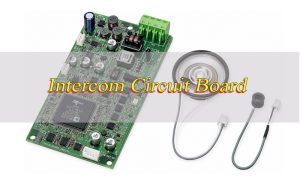
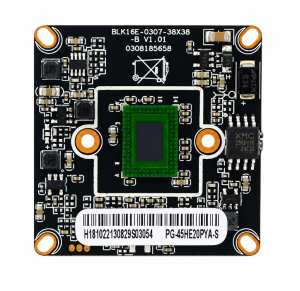
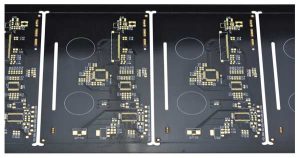
PCB beveling is a board-edge machining process used to create an angled edge on a printed circuit board. It is especially important for gold finger PCBs, edge connector boards, edge card PCBs, plug-in modules, and other boards that need to slide into a connector smoothly. A well-controlled PCB bevel edge can improve insertion, reduce connector wear, protect the gold finger area, and support more consistent assembly in production.
EBest Circuit (Best Technology) supports PCB fabrication, PCB beveling, gold finger processing, DFM review, PCB layout manufacturability feedback, PCBA assembly, testing, and shipment documentation. If you need PCB beveling for gold finger boards, edge connector boards, or batch PCB panels, you can send your available files to sales@bestpcbs.com for engineering review.
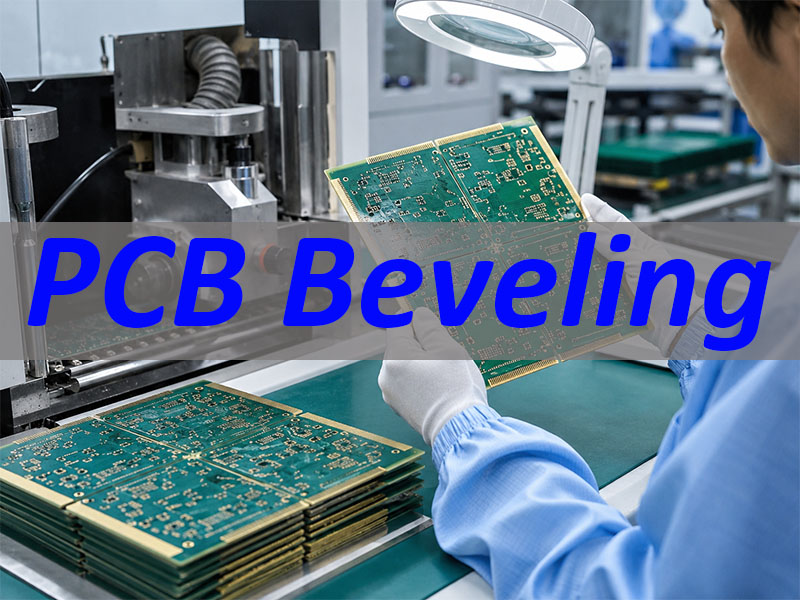
What Is PCB Beveling?
PCB beveling is the process of cutting or grinding the edge of a PCB into a sloped surface instead of leaving it as a straight 90-degree edge. This angled edge helps the board enter a connector more smoothly.
It is commonly used for:
- Gold finger PCB
- Edge connector PCB
- Edge card PCB
- Plug-in control boards
- Communication modules
- Industrial cards
- Test boards
- High-volume PCB panels requiring edge finishing
A PCB beveler is the machine or tool used to create this angled edge during PCB manufacturing. In most projects, the customer does not need to specify the machine itself. What matters more is the bevel angle, bevel side, bevel depth, board thickness, copper clearance, and gold finger location.
PCB beveling is different from normal routing or profiling. Routing defines the board outline. Beveling creates a controlled angled edge in a specific area, usually near the connector side.
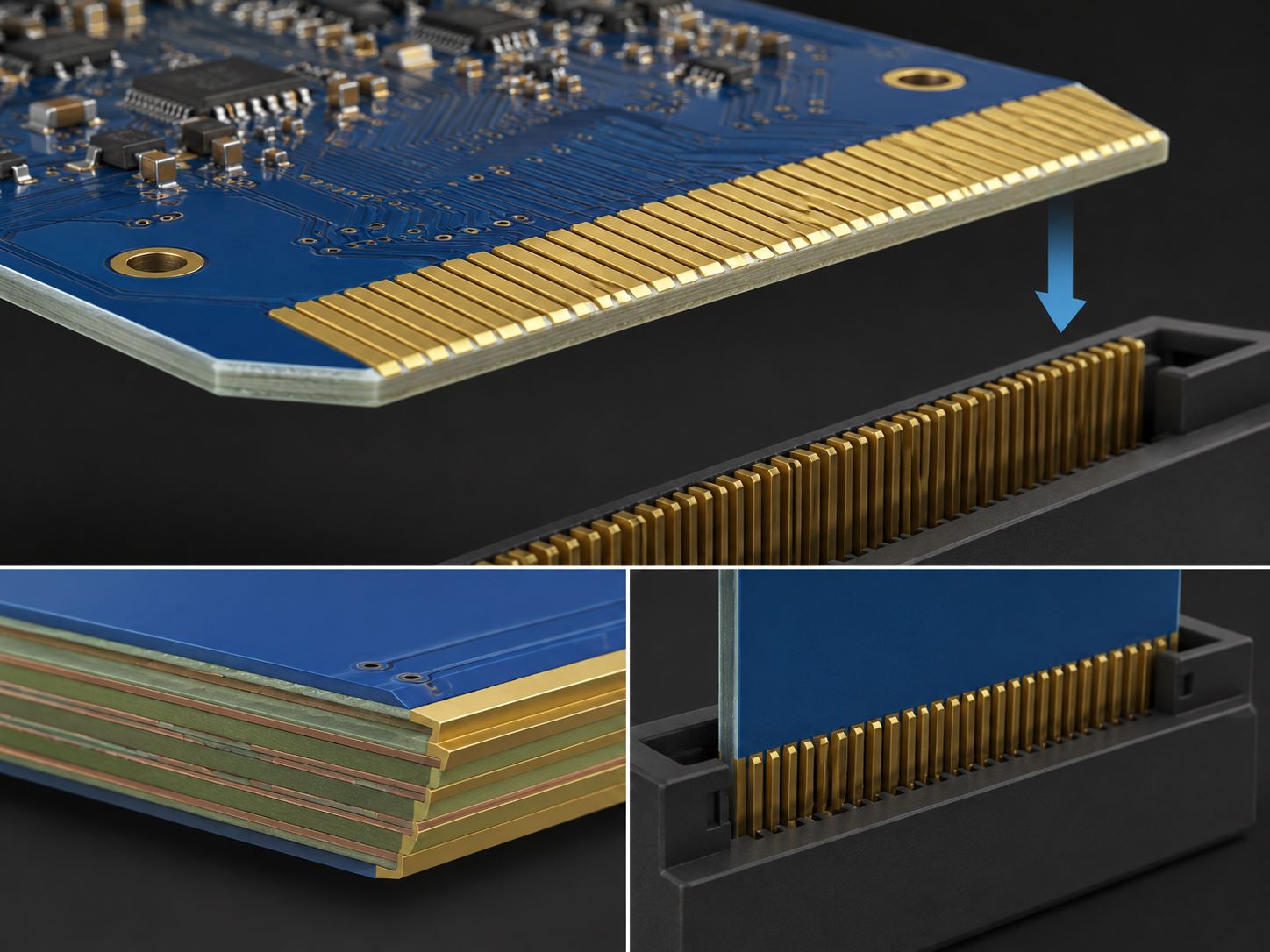
Why Do Gold Finger and Edge Connector PCBs Need Beveling?
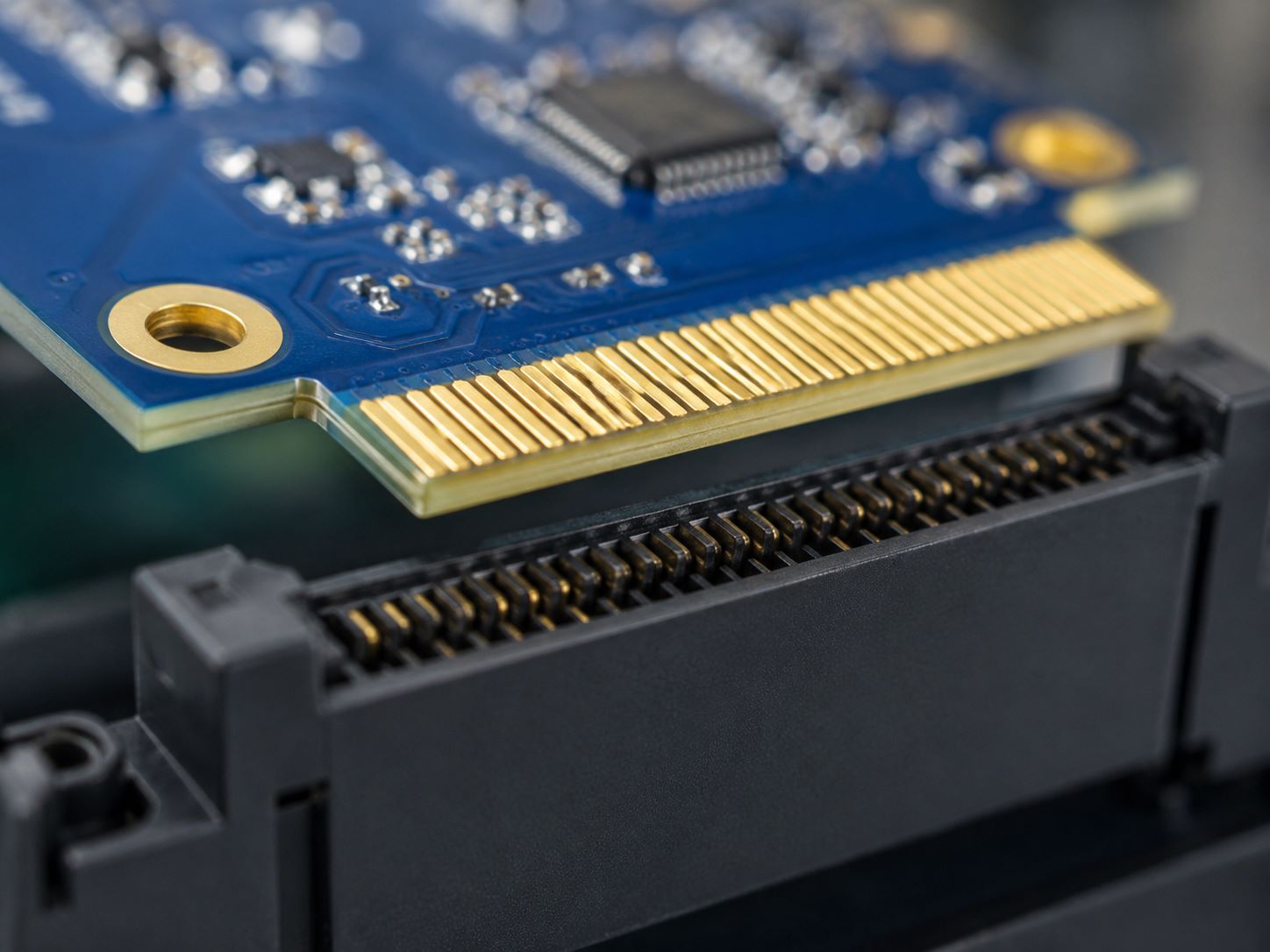
Gold finger and edge connector PCBs often need repeated insertion into sockets or card-edge connectors. Without beveling, the board edge may feel too sharp, create friction, or interfere with smooth connector insertion.
PCB gold finger beveling helps with:
- Smoother insertion
- The angled edge guides the board into the connector.
- It reduces resistance during plugging.
- Lower connector wear
- A sharp PCB edge may scratch or stress the connector.
- A beveled edge improves contact handling.
- Better gold finger protection
- Proper beveling helps reduce mechanical impact on the plated contact area.
- It supports stable mating between the PCB and connector.
- Cleaner assembly
- Plug-in boards are easier to install.
- Operators can insert the board with less force.
- More consistent product experience
- This is useful for industrial cards, communication boards, control modules, and other plug-in electronic products.
For edge card bevel PCB projects, beveling is not only a cosmetic process. It affects connector fit, insertion feel, long-term contact reliability, and production handling.
What Is a PCB Beveled Edge?
A PCB beveled edge is the angled part of the board edge after beveling. It is usually located on the connector side of the PCB, especially where gold fingers are placed.
A beveled edge may be required on:
- One side of the board edge
- Both sides of the board edge
- Only the gold finger edge
- A defined section of the PCB outline
- Individual boards or full panels before separation
Important points to confirm:
- Which edge needs beveling?
- Is the bevel on the top side, bottom side, or both sides?
- What bevel angle is required?
- What bevel depth or remaining thickness is required?
- Is there enough copper clearance from the board edge?
- Will the bevel affect gold finger contact length?
- Should the beveled edge be processed before or after surface finish?
Not every PCB edge should be beveled. For boards with copper close to the edge, plated slots, castellations, edge plating, or special mechanical structures, the beveling area should be reviewed before production.
EBest Circuit (Best Technology) can review the customer’s mechanical drawing and existing PCB layout files to check whether the bevel edge is manufacturable. This is part of DFM and layout manufacturability feedback, not original PCB design service.
What Bevel Angle Is Common for PCB Edge Connectors?
PCB bevel angle should follow the customer’s mechanical drawing or connector requirement. Commonly requested bevel angles include 20°, 30°, and 45°, depending on the connector structure, board thickness, insertion direction, and product requirement.
Common bevel angle considerations:
- 30° bevel
- Often used for edge connector and gold finger PCB projects
- Provides a moderate lead-in edge for insertion
- 45° bevel
- Common for stronger edge chamfering
- Useful when the connector or mechanical structure allows it
- 20° bevel
- Used in some plug-in applications
- May require more specific mechanical confirmation
Before production, the following points should be confirmed:
- Bevel angle
- Bevel side
- Bevel length
- Bevel depth
- Finished board thickness
- Gold finger length
- Connector requirement
- Copper-to-edge clearance
A reliable PCB beveling process should not rely on guesswork. If the bevel angle, bevel direction, or bevel depth is unclear, EBest Circuit (Best Technology) can raise an engineering question before production. This helps avoid mismatch between the PCB edge and the customer’s connector.
What PCB Beveling Capabilities Does EBest Circuit (Best Technology) Offer?
For PCB beveling projects, customers usually care about edge quality, angle control, gold finger protection, batch consistency, and whether the supplier understands connector-side requirements. EBest Circuit (Best Technology) supports PCB beveling for gold finger boards, edge connector boards, and batch PCB panels.
Key PCB beveling capabilities include:
- Gold finger beveling
- Suitable for gold finger PCB and edge connector PCB
- Helps improve plug-in performance and connector fit
- Common bevel angle support
- Supports common beveling requirements such as 20°, 30°, and 45°
- Other bevel angles can be reviewed according to project drawings
- Bevel side control
- Single-side beveling
- Double-side beveling
- Defined-edge beveling based on mechanical drawings
- Bevel depth control
- Reviewed according to board thickness and connector requirement
- Helps avoid excessive cutting into the contact area
- Gold finger area protection
- Checks bevel location against gold finger area
- Helps reduce scratch, burr, and plating damage risk
- Copper clearance review
- Reviews copper distance from board edge
- Helps avoid exposed copper after beveling
- Useful for multilayer boards with inner copper close to the edge
- Batch panel beveling
- Supports panel-level beveling review
- Suitable for prototype, small batch, and volume production
- Outgoing quality check
- Edge smoothness
- Burr control
- Chipping check
- Exposed copper check
- Visual inspection before shipment
EBest Circuit (Best Technology) reviews beveling requirements together with board thickness, surface finish, gold finger design, panel format, and assembly needs. This helps ensure the board is not only fabricated correctly, but also ready for connector insertion and downstream assembly.
How Are PCB Panels Beveled in Batch Production?
Batch PCB panel beveling is different from beveling one or two sample boards. When a customer has hundreds or thousands of laminate panels or PCB panels to be beveled, consistency becomes the main concern.
For batch PCB beveling, the following details should be checked:
- Panel size
- Board thickness
- Quantity
- Bevel side
- Bevel angle
- Bevel length
- Surface finish
- Gold finger location
- Panel handling method
- Packaging requirement
- Outgoing inspection standard
For example, if a customer says, “We have around 4000 laminate panels to be beveled,” the project should not be treated as a simple edge cut. The supplier should confirm whether the panels are bare laminate panels, processed PCB panels, gold finger panels, or assembled boards. Each situation may require different handling.
Key concerns in batch panel beveling:
- Consistency
- The bevel angle should remain stable across panels.
- The edge finish should be uniform.
- Handling safety
- Thin or large panels may need careful handling.
- Panel warpage and edge damage should be controlled.
- Edge quality
- Burrs, rough glass fiber, chipping, and exposed copper should be checked.
- Production efficiency
- Batch processing should match delivery schedule and packaging requirements.
- Clear approval before production
- Manufacturing files and beveling notes should be confirmed before batch release.
EBest Circuit (Best Technology) can review batch beveling requirements before production and confirm whether the project should be processed as individual boards, production panels, or customer-supplied laminate panels.
What Files and Notes Are Needed for PCB Beveling?
Customers do not need to prepare perfect documentation before contacting EBest Circuit (Best Technology). Available files can be sent first, and missing beveling details can be clarified during engineering review.
For an initial PCB beveling review, helpful information includes:
- Gerber files
- Drill files
- Mechanical drawing
- Board outline
- Board thickness
- Bevel edge location
- Bevel side
- Bevel angle
- Quantity
- Surface finish
- Panel or single-board delivery requirement
For gold finger or edge connector boards, also provide if available:
- Gold finger drawing
- Connector drawing
- Bevel depth requirement
- Gold plating requirement
- Copper clearance requirement
- Insertion direction
- Special packaging notes
Practical reminders:
- If the bevel angle is not marked, it should be confirmed before production.
- If the bevel side is unclear, an engineering question should be raised.
- If copper is too close to the board edge, manufacturability should be reviewed.
- If the board needs SMT assembly, beveling should be checked together with panelization and handling.
- If the project involves batch PCB panel beveling, panel size and packaging should be confirmed early.
For quotation and manufacturability review, customers can send available files to sales@bestpcbs.com. EBest Circuit (Best Technology) will review the project and advise what extra information is needed before production.
FAQs About PCB Beveling
What is PCB beveling?
PCB beveling is a board-edge machining process that creates an angled edge on a PCB. It is commonly used for gold finger boards, edge connector PCBs, and plug-in boards.
What is a beveler in PCB manufacturing?
A beveler is the machine or tool used to create the beveled edge on a PCB. In production, the more important details are bevel angle, bevel side, bevel depth, board thickness, and gold finger location.
Why do gold fingers need beveling?
Gold fingers often connect with edge card connectors. Beveling helps the PCB slide into the connector more smoothly and reduces mechanical wear during insertion.
What is a PCB beveled edge?
A PCB beveled edge is the angled board edge created by the beveling process. It is usually located at the connector side of the board.
What bevel angle is common for PCB edge connectors?
Commonly requested angles include 20°, 30°, and 45°. The final angle should follow the customer’s mechanical drawing or connector requirement.
Is PCB beveling only used for gold fingers?
No. Gold finger beveling is common, but PCB beveling can also be used for edge connector boards, plug-in modules, test cards, and other boards that require smooth insertion or edge finishing.
Can PCB panels be beveled in batch production?
Yes. PCB panels can be beveled in batch production. For large quantities, panel size, board thickness, bevel side, bevel angle, edge quality, and packaging should be confirmed before production.
What files are needed for PCB beveling?
Gerber files, drill files, mechanical drawings, board thickness, bevel angle, bevel side, bevel location, surface finish, and quantity are helpful. If the board has gold fingers, a connector drawing or gold finger drawing is also useful.
Can EBest Circuit (Best Technology) review PCB beveling before production?
Yes. EBest Circuit (Best Technology) can review beveling requirements, gold finger location, copper clearance, board thickness, panel format, and manufacturability before production.
How can I start a PCB beveling quotation?
Send your available files and beveling notes to sales@bestpcbs.com. EBest Circuit (Best Technology) will review the project and confirm whether any additional details are needed.