





Is Copper a Good Conductor of Heat? Yes, copper is a good conductor of heat. In fact, copper is one of the best common engineering metals for heat conduction. It transfers heat quickly because its atomic structure allows free electrons to move energy through the material efficiently. This is why copper is widely used in heat sinks, heat spreaders, electrical wiring, busbars, power electronics, thermal pads, and PCB designs that need better heat dissipation.
For EBest Circuit (Best Technology), the thermal conductivity of copper is not only a physics concept. It is directly related to PCB manufacturing, copper thickness selection, metal core PCB design, thermal vias, high-power LED boards, power modules, ceramic PCBs, and long-term PCBA reliability. If you are developing a PCB or PCBA project where heat must be controlled, pls feel free to send your Gerber files, stackup, copper thickness, power requirements, or thermal questions to sales@bestpcbs.com. Our engineering team can help review the manufacturing path before production starts.
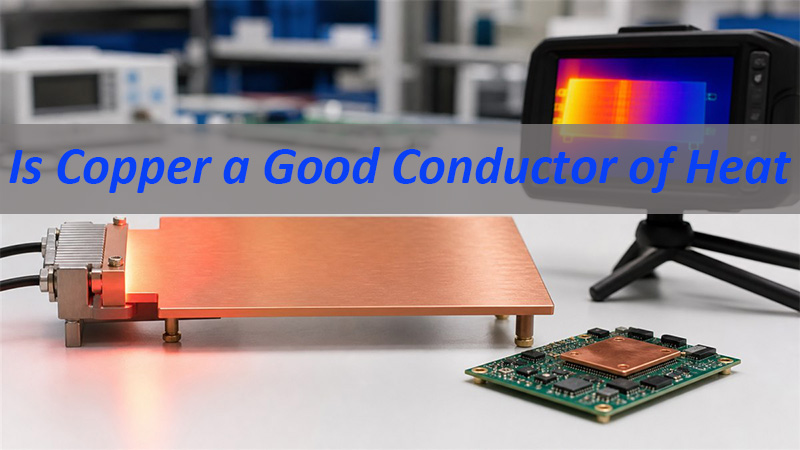
Is Copper a Good Conductor of Heat?
Copper is a very good conductor of heat. Pure copper has a thermal conductivity of roughly 390 to 400 W/m·K at room temperature, depending on purity and measurement conditions. This is much higher than many common metals and far higher than most plastics, glass, ceramics, FR4 laminate, and air.
In simple terms, copper can move heat away from a hot area quickly. If one side of a copper part is heated, the heat spreads through the copper much faster than it would through steel, FR4, or plastic. This fast heat transfer makes copper valuable in applications where temperature rise must be controlled.
Common examples include:
- Heat sinks and heat spreaders
- Electrical cables and busbars
- Power electronics
- LED lighting boards
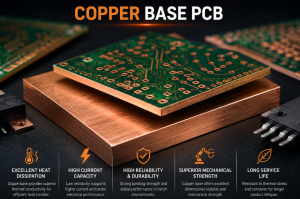
- Copper base PCBs
- Thermal vias in PCB layouts
- Metal core PCB structures
- Battery and charging systems
- Industrial control modules
Copper does not remove heat by magic. It still needs a thermal path to move heat into air, a metal housing, a heat sink, or another cooling structure. But as a conductor inside that path, copper performs very well.
Why Is Copper a Good Conductor of Heat?
Copper is a good conductor of heat because it has many free electrons. These electrons can move through the metal lattice and transfer thermal energy quickly from hotter areas to cooler areas.
In metals, heat is transferred mainly in two ways:
| Heat Transfer Path | What Happens |
|---|---|
| Free electrons | Electrons move energy through the metal |
| Atomic vibration | Energy passes through the metal lattice |
Copper is effective because free electrons move easily in its structure. When one part of a copper conductor becomes hot, energy is carried away quickly. This is also why copper is widely used as an electrical conductor. The same electron mobility that supports electrical current also helps with heat transfer.
This does not mean every copper part performs the same. Thermal performance also depends on:
- Copper purity
- Copper thickness
- Cross-sectional area
- Surface contact quality
- Interface material
- Oxidation or plating
- Heat source size
- Cooling method
For PCB applications, copper conductivity is only one part of the design. The PCB stackup, copper area, thermal vias, solder joints, base material, and heat sink contact all affect the final temperature.
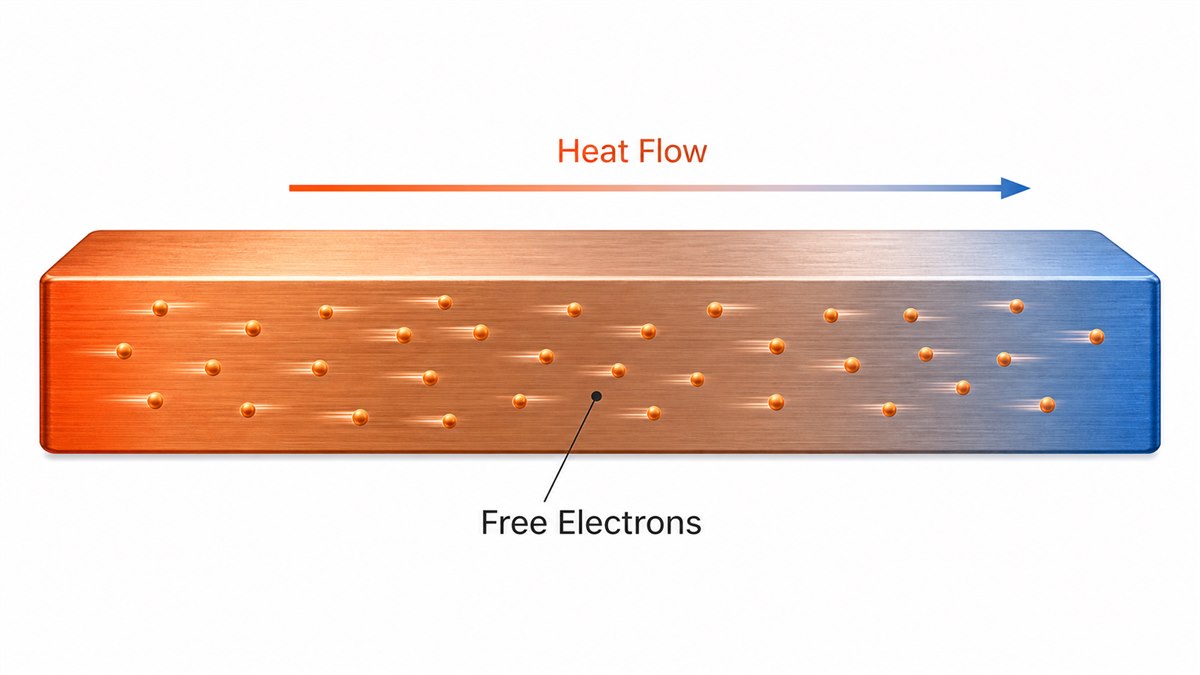
How Copper Conducts Heat in Simple Terms
Copper conducts heat by moving thermal energy from a high-temperature area to a lower-temperature area. If a copper trace, copper plane, or copper base is connected to a hot component, it can spread heat away from that component and reduce local hot spots.
Imagine a power LED mounted on a PCB. The LED generates heat at a small location. If the heat stays there, the LED junction temperature rises and reliability drops. Copper helps spread that heat sideways through copper pads, copper planes, thermal vias, or a metal core structure.
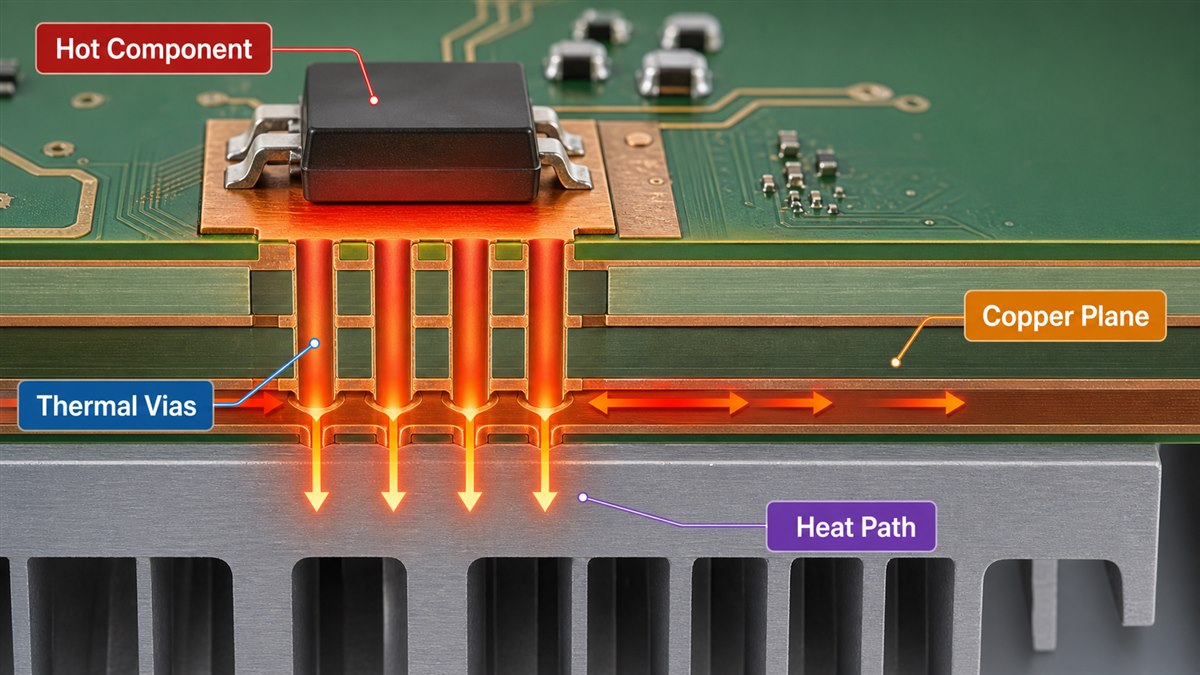
The basic heat path may look like this:
- The component generates heat.
- Heat moves through the solder joint.
- Heat enters copper pads or copper planes.
- Copper spreads the heat across a larger area.
- Heat moves into the PCB base, heat sink, housing, or air.
This is why PCB thermal design often uses large copper pours, thicker copper, thermal vias, copper base materials, or metal core PCBs. Copper gives heat a faster path than FR4 alone.
However, copper must be placed correctly. A small copper trace may not carry enough heat away from a high-power part. A larger copper area, better via structure, or direct thermal contact may be required.
Is Copper a Good Conductor of Electricity and Heat?
Yes, copper is a good conductor of electricity and heat. This combination is one reason copper is so common in electrical and electronic products.
Copper is used for electrical conduction because it has low electrical resistivity. Less resistance means less power loss and less unwanted heat generation. Copper is also used for thermal conduction because it can spread heat efficiently.
In PCB and PCBA projects, these two properties often work together:
- Copper traces carry current.
- Copper planes distribute power and ground.
- Copper pours spread heat.
- Thermal vias move heat between layers.
- Copper thickness affects current capacity and temperature rise.
- Copper base PCBs improve heat dissipation in high-power applications.
For example, a power board may need both high current capacity and thermal control. In that case, the engineering team may review copper thickness, trace width, copper balance, via count, thermal relief, solder mask opening, and heat sink connection together.
This is why copper selection is not only a material choice. It is part of the electrical, thermal, and manufacturing design of the product.
Why Is Copper a Good Conductor of Heat and Electricity?
Copper conducts both heat and electricity well because of its electron structure. Copper atoms provide mobile electrons that can move through the metal with relatively low resistance. These mobile electrons carry electrical charge and also transfer thermal energy.
This explains why good electrical conductors are often good heat conductors. Silver, copper, gold, and aluminum all conduct both electricity and heat well, although their cost, strength, weight, corrosion behavior, and manufacturing use cases differ.
Copper is especially popular because it offers a strong balance of:
- High electrical conductivity
- High thermal conductivity
- Good availability
- Reasonable cost compared with silver
- Good solderability
- Good manufacturability
- Wide use in PCB fabrication
In electronics, this balance matters. Silver may conduct better than copper, but it is too expensive for most PCB and power electronics structures. Aluminum is lighter and cheaper, but copper usually provides better conductivity and easier soldering in PCB applications.
For many PCB projects, copper remains the practical choice for current flow and heat spreading.
Is Copper a Very Good Conductor of Heat Compared With Other Metals?
Copper is a very good conductor of heat compared with most metals. Silver has higher thermal conductivity than copper, but copper is far more practical for most industrial and electronics applications. Aluminum also conducts heat well, but copper generally conducts heat better.
Approximate thermal conductivity values at room temperature are:
| Material | Approx. Thermal Conductivity |
|---|---|
| Silver | ~429 W/m·K |
| Copper | ~390-400 W/m·K |
| Aluminum | ~205-237 W/m·K |
| Brass | ~100-120 W/m·K |
| Iron | ~80 W/m·K |
| Stainless steel | ~15-25 W/m·K |
| FR4 laminate | Much lower than metals |
These values can vary by alloy, purity, temperature, and material condition. Still, the ranking is clear: copper is among the best practical heat-conductive metals.
For PCB manufacturing, the comparison is important because different materials serve different roles. FR4 provides insulation and mechanical support, but it does not conduct heat well. Copper provides the electrical and thermal path. Aluminum or copper base materials may be used when a normal FR4 board cannot move heat away fast enough.
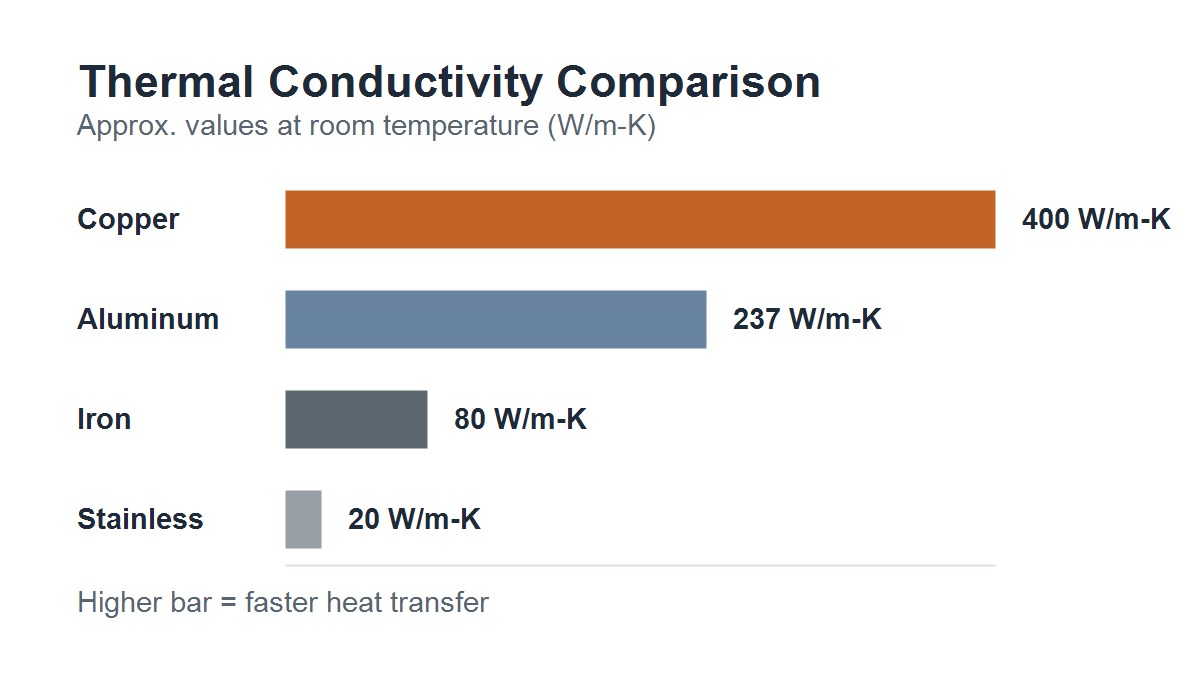
Copper vs Aluminum and Iron for Heat Conduction
Copper conducts heat better than aluminum and iron in most common engineering comparisons. This is why copper is often used when fast heat spreading is needed.
Copper vs aluminum:
- Copper has higher thermal conductivity.
- Aluminum is lighter.
- Aluminum is usually cheaper.
- Copper is easier to solder in PCB manufacturing.
- Aluminum is common in metal core PCB bases and heat sinks.
- Copper is common in traces, planes, vias, and copper base PCBs.
Copper vs iron:
- Copper conducts heat much better than iron.
- Iron is stronger and more structural.
- Iron is not commonly used as a PCB thermal conductor.
- Copper is better for electrical and thermal conduction.
This does not mean copper is always the best choice for every part. Aluminum may be better for lightweight heat sinks. Stainless steel may be better for mechanical strength and corrosion resistance. Ceramic may be better for insulation and thermal stability in some high-power modules.
The right material depends on the product goal. In PCB thermal management, copper is usually used where electrical and thermal paths must be efficient.
Why Copper Heat Conductivity Matters in PCB Design
Copper heat conductivity matters in PCB design because many electronic components generate heat during operation. If heat is not moved away efficiently, component temperature rises, performance changes, and long-term reliability can drop.
Heat-sensitive PCB applications include:
- High-power LED boards
- Power supplies
- Motor control boards
- Battery management systems
- Automotive electronics
- Industrial controllers
- RF power modules
- Charging equipment
- Ceramic PCB modules
- Metal core PCBs
In these products, copper can help reduce hot spots and spread heat over a larger area. But copper alone is not enough. The PCB layout and stackup must provide a complete thermal path.
Important PCB thermal design choices include:
- Copper thickness
- Copper area
- Trace width
- Copper plane design
- Thermal vias
- Via filling or plugging
- Solder mask opening
- Component pad design
- Metal core material
- Heat sink or housing contact
At EBest Circuit, our engineering team reviews copper thickness, stackup, component power, thermal requirements, and manufacturability together. This helps customers avoid designs that look acceptable electrically but fail because of temperature rise.
How Copper Helps PCB Heat Dissipation in Real Products
Copper helps PCB heat dissipation by spreading heat from hot components into a larger conductive area. The larger the effective copper area and the better the thermal path, the easier it is to reduce localized hot spots.
For standard FR4 PCBs, copper can help through:
- Wider traces
- Large copper pours
- Internal copper planes
- Thermal vias under power components
- Heavier copper layers
- Better copper balance
For higher-power products, a standard FR4 PCB may not be enough. In those cases, engineers may consider:
- Aluminum metal core PCB
- Copper base PCB
- Ceramic PCB
- Thick copper PCB
- Thermal interface material
- Heat sink integration
- One-stop PCB and PCBA thermal review
For example, a high-power LED module may need a metal core PCB to move heat from the LED pad into the metal base. A power module may need heavy copper traces and thermal vias. A ceramic PCB may be selected when the design needs insulation, high thermal conductivity, and thermal stability.
EBest Circuit provides FR4 PCB, metal core PCB, ceramic PCB, special PCB, PCB prototype, mass production, component sourcing, and PCB assembly services. For thermal projects, we can review whether the copper structure, material, and assembly process match the actual heat dissipation requirement.
FAQs About Copper as a Heat Conductor
Is copper a good conductor of heat?
Yes. Copper is a very good conductor of heat, with thermal conductivity around 390 to 400 W/m·K at room temperature. It transfers heat much better than iron, stainless steel, FR4, plastic, and many other common materials.
Why is copper a good conductor of heat?
Copper is a good conductor of heat because it has mobile free electrons. These electrons move energy through the metal quickly, allowing heat to spread from hot areas to cooler areas.
Is copper a good conductor of electricity and heat?
Yes. Copper conducts both electricity and heat well. This is why it is widely used in wires, busbars, PCB traces, copper planes, heat spreaders, and power electronics.
Is copper better than aluminum for heat conduction?
Copper usually conducts heat better than aluminum, but aluminum is lighter and often cheaper. In PCB applications, copper is widely used for traces and planes, while aluminum is often used as the base material in aluminum metal core PCBs.
Why does copper heat conductivity matter in PCBs?
Copper heat conductivity matters because PCB components can generate heat during operation. Copper traces, planes, pours, thermal vias, and metal core structures help move heat away from components and improve reliability.
Can EBest Circuit help with copper-based PCB heat dissipation?
Yes. EBest Circuit can support PCB fabrication, copper thickness review, metal core PCB, ceramic PCB, component sourcing, SMT assembly, DFM review, and PCBA testing for products that need better heat dissipation.
If your PCB project depends on copper heat conductivity, thermal vias, heavy copper, metal core PCB, ceramic PCB, or PCBA heat dissipation, send your Gerber files, stackup, BOM, drawings, and thermal requirements to sales@bestpcbs.com. Our team will help you review a practical path from prototype to production.
You may also like


Tags: Copper Heat Conductivity, is copper a good conductor of electricity and heat, Is Copper a Good Conductor of Heat