





Ceramic PCB manufacturer builds circuit boards on ceramic substrates instead of standard FR4 laminate. These boards are used when a project needs better heat dissipation, stronger insulation, higher temperature resistance, or stable performance in harsh operating environments. For engineers and buyers, choosing the right ceramic PCB manufacturer is not only about price. It is about material selection, process capability, quality control, delivery stability, and long-term production support.
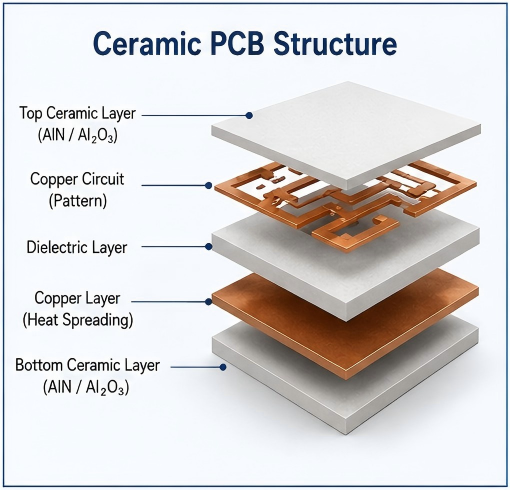
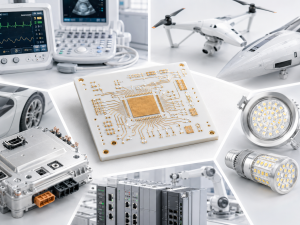
Ceramic PCBs are widely used in power electronics, aerospace systems, automotive modules, medical devices, LED lighting, RF equipment, industrial sensors, and high-reliability electronic assemblies. A qualified manufacturer should understand alumina, aluminum nitride, DPC, DBC, thick film, thin film, LTCC, HTCC, surface finishing, electrical testing, and assembly compatibility.
What Is a Ceramic PCB Manufacturer?
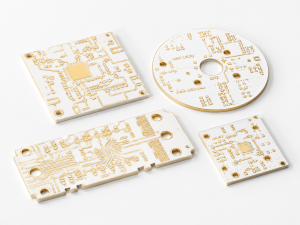
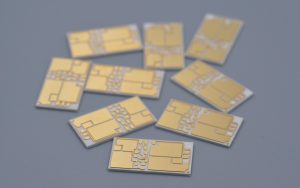
Ceramic PCB manufacturer is a company that designs, fabricates, tests, and supplies printed circuit boards based on ceramic substrates. Unlike standard PCB factories that mainly process FR4, a ceramic PCB manufacturer works with inorganic materials such as alumina, aluminum nitride, silicon nitride, or other advanced ceramics.
The main role is to convert ceramic substrates into reliable circuit carriers. This includes substrate selection, metallization, copper bonding, pattern imaging, etching, surface treatment, inspection, and final testing.
For high-power or high-temperature electronics, the manufacturer must control thermal conductivity, dielectric strength, copper adhesion, surface flatness, and dimensional tolerance. A small process error can affect soldering, heat transfer, or long-term reliability.
Why Are Ceramic PCBs Important in Modern Electronics?
Ceramic PCBs are important because many modern electronic products generate more heat in a smaller space. Standard FR4 boards are useful for many applications, but they have thermal limits. When heat cannot move away from components efficiently, devices may suffer from performance drift, solder fatigue, insulation breakdown, or early failure.
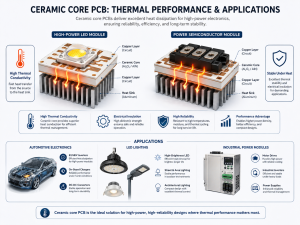
Ceramic materials offer high thermal conductivity, good electrical insulation, low thermal expansion, and strong resistance to moisture, chemicals, and high temperatures. This makes them suitable for power modules, LED packages, automotive electronics, aerospace controls, laser systems, RF circuits, and medical devices.
For buyers, ceramic PCBs are often selected when product reliability is more valuable than the lowest board cost.
How Does a Ceramic PCB Work?
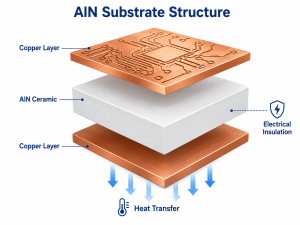
A ceramic PCB works as both an electrical circuit carrier and a thermal management platform. Conductive layers carry current and signals, while the ceramic substrate transfers heat away from hot components.
In a typical design, copper or metalized conductors are bonded to a ceramic base. Components are mounted on the circuit layer. When the device operates, heat moves from the component into the copper and then into the ceramic substrate. From there, heat can spread to a heatsink, housing, or cooling structure.
This structure reduces hot spots and helps maintain stable electrical performance. It is especially useful for power devices, high-current circuits, RF modules, and compact assemblies where temperature control is critical.
What Types of Ceramic PCBs Can Manufacturers Produce?
Different ceramic PCB types are selected according to circuit density, copper thickness, temperature range, and application requirements.
| Ceramic PCB Type | Main Feature | Typical Use |
|---|---|---|
| Alumina PCB | Cost-effective, stable, widely available | LED, sensors, industrial electronics |
| Aluminum Nitride PCB | High thermal conductivity | Power modules, aerospace, laser systems |
| DPC Ceramic PCB | Fine circuit pattern and plated copper | High-density ceramic circuits |
| DBC Ceramic PCB | Thick copper bonding | Power electronics, IGBT modules |
| Thick Film Ceramic PCB | Printed conductor paste, mature process | Sensors, heaters, hybrid circuits |
| Thin Film Ceramic PCB | High precision and fine lines | RF, microwave, precision electronics |
| LTCC PCB | Multilayer ceramic with co-fired metal | RF modules, compact electronic packages |
| HTCC PCB | High-temperature co-fired ceramic | Harsh environment electronics |
| AMB Ceramic Substrate | Strong copper-ceramic bonding | EV power modules, industrial drives |
A professional ceramic PCB manufacturer should not recommend one process for every project. The right choice depends on thermal load, circuit density, copper thickness, mechanical stress, working temperature, and target cost.
What Materials Are Used in Ceramic PCB Manufacturing?
The most common ceramic PCB materials are alumina and aluminum nitride.
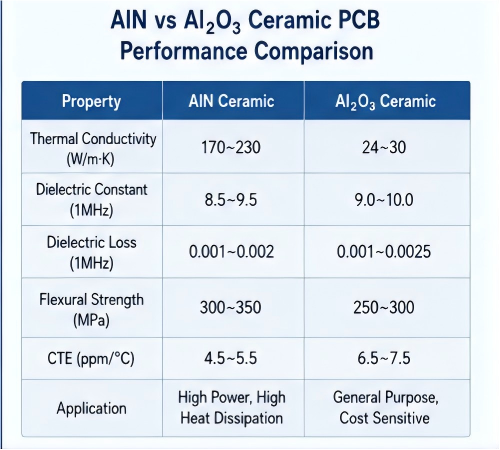
Alumina, also called Al₂O₃, is widely used because it offers stable insulation, good mechanical strength, mature supply, and reasonable cost. It is suitable for many industrial, LED, sensor, and electronic control applications.
Aluminum nitride, also called AlN, is chosen when heat dissipation is the main concern. It has much higher thermal conductivity than alumina, making it suitable for power modules, laser diodes, high-power LEDs, RF amplifiers, aerospace electronics, and compact high-heat devices.
Other materials may include silicon nitride, zirconia-toughened alumina, beryllium oxide alternatives, LTCC ceramic tape, HTCC ceramic systems, tungsten, molybdenum, silver paste, silver-palladium paste, copper, nickel, gold, ENIG, ENEPIG, and other surface finish materials.
What Is the Ceramic PCB Manufacturing Process?
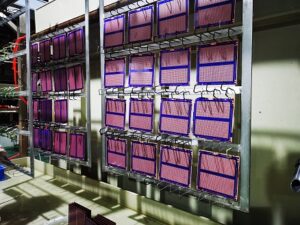
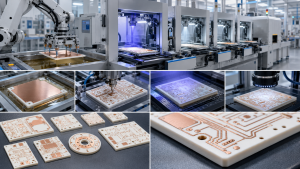
The ceramic PCB manufacturing process depends on the selected technology. However, a typical process may include material preparation, ceramic substrate cleaning, drilling or laser processing, metallization, copper deposition or bonding, imaging, etching, surface finish, testing, and packaging.
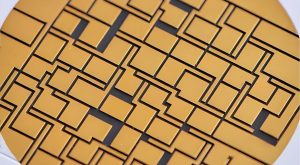
For DPC ceramic PCB fabrication, copper is usually deposited onto the ceramic surface through metallization and electroplating. This process supports fine lines, small spacing, and high precision.
For DBC ceramic PCB manufacturing, copper is directly bonded to ceramic under high temperature. It is suitable for thick copper and high-current power applications.
For thick film ceramic PCB production, conductive paste is printed onto the ceramic substrate and fired at high temperature. This process is common for sensors, heaters, and hybrid circuits.
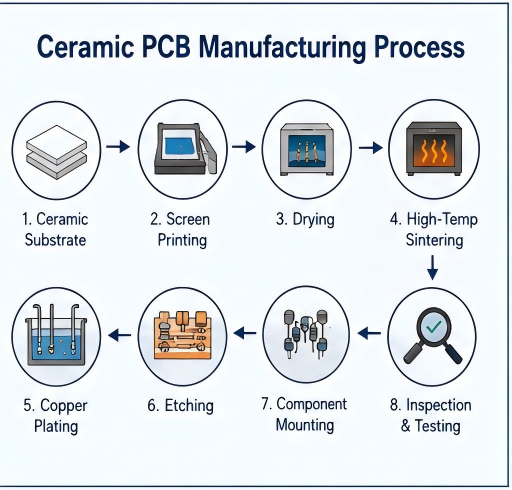
For LTCC and HTCC, ceramic layers and metal conductors are co-fired to form multilayer structures. These processes are used when compact multilayer ceramic integration is required.
What Are the Key Features of Ceramic PCBs?
Ceramic PCBs are valued for their thermal, electrical, and mechanical stability. Their most important features include high thermal conductivity, strong dielectric insulation, low thermal expansion, high temperature resistance, good chemical stability, and long service life in demanding environments.
They also support direct heat transfer from components to the substrate. This can reduce the need for complex thermal interface layers in some applications.
Another important feature is dimensional stability. Ceramic substrates do not expand and contract like many organic materials. This helps protect solder joints and components under repeated heating and cooling.
For precision electronics, ceramic PCBs can also support stable RF performance, low signal loss, and strong environmental resistance.
What Are the Advantages of Ceramic PCBs?
Ceramic PCBs offer several clear advantages for demanding electronic products.
They help remove heat more efficiently than standard FR4 boards. They maintain insulation under high voltage and high temperature. They resist moisture, corrosion, and harsh industrial environments. They also provide strong mechanical stability for compact assemblies.
For power electronics, ceramic PCBs can improve thermal paths and support higher current density. For aerospace and medical electronics, they help support reliability under strict operating requirements. For LED and laser applications, they help control junction temperature and extend product life.
The main advantage is not only performance. It is long-term stability in applications where failure is expensive.
What Are the Limitations of Ceramic PCBs?
Ceramic PCBs are not the best choice for every project. They usually cost more than FR4 boards. The material is harder and more brittle, so mechanical design must be handled carefully. Large panel sizes, complex shapes, or aggressive mechanical stress may increase production risk.
Some ceramic processes also require longer lead times, especially for multilayer LTCC, HTCC, DBC, or custom thick copper structures. Design changes after tooling or process setup may also increase cost.
For simple low-power circuits, FR4 may still be more economical. Ceramic PCBs should be selected when thermal, electrical, or environmental requirements justify the added cost.
How Do Alumina and Aluminum Nitride Ceramic PCBs Compare?
Alumina and aluminum nitride are the two most common materials buyers compare.
| Item | Alumina PCB | Aluminum Nitride PCB |
| Main Strength | Cost-effective and stable | Excellent heat dissipation |
| Thermal Performance | Moderate to good | High |
| Cost | Lower | Higher |
| Mechanical Strength | Good | Good, but process control is critical |
| Typical Applications | LED, sensors, controls, industrial boards | Power modules, aerospace, laser, RF, high-power LED |
| Best For | Balanced cost and reliability | High thermal conductivity projects |
If the product has moderate heat and needs a stable ceramic base, alumina is often suitable. If the product has high heat density or strict thermal control requirements, aluminum nitride is usually the better choice.
How to Choose the Right Ceramic PCB Technology?
The right ceramic PCB technology should be selected according to the electrical, thermal, mechanical, and cost requirements of the project.
Choose DPC when the design needs fine circuits, plated vias, better pattern accuracy, or compact layouts. Choose DBC when the project needs thick copper, high current capacity, and strong thermal transfer. Choose thick film when the circuit is suitable for printed paste conductors and mature hybrid circuit production. Choose thin film when very fine lines, RF behavior, or precision circuits are required.
LTCC is suitable for compact multilayer ceramic modules, especially RF and high-frequency products. HTCC is suitable for very high-temperature and harsh environment systems. AMB is often used for power modules that require strong bonding strength and thermal cycling reliability.
Where Are Ceramic PCBs Commonly Used?
Ceramic PCBs are used in industries where heat, reliability, insulation, and long service life matter.
Common applications include automotive power modules, EV charging systems, aerospace control boards, radar and RF modules, medical imaging systems, surgical devices, laser equipment, high-power LED lighting, industrial sensors, IGBT modules, semiconductor packaging, photovoltaic inverters, and telecom equipment.
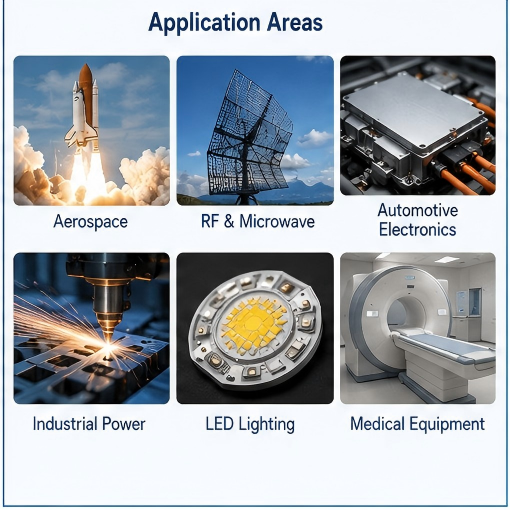
In aerospace applications, AlN ceramic PCBs are often selected for thermal performance and stability. In automotive electronics, DBC or AMB ceramic substrates may be used in power modules. In medical and industrial devices, alumina ceramic PCBs are often selected for insulation, cleanliness, and stable performance.
Practical Case: Ceramic PCB for High-Power LED Lighting
A high-power LED project often fails when heat remains trapped near the LED chip. The result may include brightness decay, color shift, solder fatigue, or shortened service life.
In this situation, a ceramic PCB can create a shorter heat path from the LED package to the heatsink. Alumina may be enough for medium-power lighting. Aluminum nitride is better when the LED module has high power density or limited cooling space.
For manufacturing, the key points include copper thickness, solder mask compatibility, surface finish, flatness, thermal interface design, and assembly temperature control. A ceramic PCB manufacturer should review both the board design and the final heat dissipation structure.
Practical Case: AlN Ceramic PCB for Aerospace Electronics
Aerospace electronics often require stable operation under vibration, temperature cycling, and restricted space. For high-power control modules or RF systems, aluminum nitride ceramic PCBs can help move heat away from sensitive components while maintaining electrical insulation.
In this type of project, the manufacturer must control substrate quality, copper adhesion, circuit tolerance, surface cleanliness, and reliability testing. The design should also consider thermal expansion matching, solder joint stress, and mounting pressure.
The right aerospace AlN ceramic PCB board manufacturer should provide engineering review before production, not only quote the Gerber files.
What Should Engineers Consider During Ceramic PCB Design?
Ceramic PCB design should begin with thermal and mechanical planning. Engineers should define the heat source, heat path, copper thickness, component placement, mounting structure, and cooling method before finalizing the layout.
Trace width, spacing, via design, substrate thickness, copper balance, edge clearance, and surface finish should match the chosen process. Sharp corners, large unsupported areas, and uneven copper distribution may increase stress risk.
For DBC and AMB boards, copper thickness and thermal cycling must be reviewed carefully. For DPC and thin film boards, fine-line capability and plating uniformity are important. For LTCC and HTCC, shrinkage control and layer alignment must be considered early.
What Manufacturing Issues Should Be Controlled?
Ceramic PCB manufacturing requires strict process control. Important risks include poor copper adhesion, ceramic cracking, uneven plating, over-etching, line width variation, surface contamination, warpage, incomplete vias, and weak solderability.
A reliable ceramic PCB manufacturer should control each stage with inspection points. This may include incoming ceramic inspection, surface cleaning control, metallization inspection, copper thickness measurement, line width and spacing inspection, adhesion testing, electrical testing, visual inspection, AOI, X-ray inspection, and final packaging review.
For batch production, process stability matters more than a single good sample. Buyers should ask how the manufacturer controls repeatability from prototype to mass production.
What Affects Ceramic PCB Cost?
Ceramic PCB cost is affected by material type, substrate thickness, copper thickness, process method, circuit precision, panel utilization, surface finish, testing requirements, order quantity, and lead time.
Aluminum nitride usually costs more than alumina. DBC and AMB may cost more when thick copper and high bonding strength are required. LTCC and HTCC can be expensive because they involve multilayer ceramic processing and firing control.
Fine lines, small holes, tight tolerances, special surface finishes, and reliability tests also increase cost. For cost-effective ceramic PCB manufacturing, the best strategy is not to choose the cheapest material. It is to match the material and process to the real working condition.
How Is Ceramic PCB Quality Tested?
Ceramic PCB quality testing usually includes dimensional inspection, visual inspection, copper thickness measurement, line width and spacing check, open and short electrical test, surface finish inspection, solderability test, adhesion test, thermal shock test, and high-voltage insulation test when required.
For power electronics, thermal cycling and bonding strength are especially important. For RF and high-frequency applications, impedance, dielectric performance, and surface roughness may need review. For medical or aerospace projects, additional traceability and process documentation may be required.
A strong manufacturer should provide test records, inspection reports, and process traceability for critical projects.
What Standards and Certifications Matter?
Ceramic PCB projects may involve IPC, UL, RoHS, REACH, ISO 9001, ISO 13485, IATF 16949, or industry-specific customer standards. The exact requirement depends on the product market.
IPC standards are commonly used for PCB workmanship and acceptance expectations. UL may matter when the final product needs safety recognition. RoHS and REACH are important for restricted substance compliance. ISO 13485 is relevant for medical supply chains. IATF 16949 is important for automotive electronics projects.
For global buyers, certification is not only a document. It shows whether the supplier has a controlled quality system.
Common Ceramic PCB Failure Modes and Root Causes
Ceramic PCB failure usually comes from design mismatch, process instability, or assembly stress.
Common failure modes include ceramic cracking, copper delamination, solder joint fatigue, insulation breakdown, hot spots, poor solderability, via failure, and surface contamination. Cracking may come from mechanical pressure, poor mounting design, or thermal shock. Copper delamination may come from weak metallization, poor bonding, or improper thermal cycling. Hot spots may come from insufficient copper area, wrong substrate choice, or poor heatsink contact.
A practical failure analysis should review the full chain: material, design, manufacturing, assembly, mounting, and operating environment.
How to Choose a Reliable Ceramic PCB Manufacturer?
A reliable ceramic PCB manufacturer should have real ceramic process capability, not only standard PCB production experience. Buyers should check material options, DPC capability, DBC capability, thick film or thin film support, multilayer ceramic experience, surface finish options, inspection equipment, and batch production records.
The manufacturer should also review your design before production. Good questions from a supplier are a positive sign. They may ask about working temperature, power density, voltage, current, thermal path, soldering method, final assembly, and reliability requirements.
For global sourcing, choose a China source factory that can provide custom manufacturing, prototype support, low-volume production, batch production, engineering communication, and stable export documentation without claiming false overseas facilities.
What Should Buyers Check Before Placing an Order?
Before placing an order, buyers should prepare complete Gerber files, material requirements, substrate thickness, copper thickness, surface finish, tolerance requirements, quantity, working temperature, voltage, current, assembly method, and testing requirements.
It is also helpful to share the application background. A board used in LED lighting, EV power modules, aerospace electronics, or medical equipment may require different process controls.
Buyers should confirm lead time, minimum order quantity, sample approval process, inspection standards, packaging method, export documents, and after-sales technical support. For repeat orders, they should also confirm how the supplier controls material batches and process consistency.
Frequently Asked Questions About Ceramic PCB Manufacturers
What does a ceramic PCB manufacturer do?
A ceramic PCB manufacturer produces circuit boards based on ceramic substrates such as alumina or aluminum nitride. The work includes material selection, circuit formation, metallization, copper bonding, surface finish, inspection, testing, and sometimes PCB assembly support.
Is ceramic PCB better than FR4 PCB?
Ceramic PCB is better when the project needs high thermal conductivity, high temperature resistance, strong insulation, or long-term stability in harsh environments. FR4 is still suitable for many low-power or cost-sensitive circuits.
Which ceramic PCB material is most common?
Alumina is the most common ceramic PCB material because it offers stable performance and reasonable cost. Aluminum nitride is used when the design needs much better heat dissipation.
What is the difference between DPC and DBC ceramic PCB?
DPC is often used for fine circuits and plated copper structures. DBC is better for thick copper, high-current, and power module applications. The right choice depends on current, heat, circuit density, and reliability needs.
Can ceramic PCBs be multilayer?
Yes. Multilayer ceramic PCBs can be produced by LTCC, HTCC, or other advanced ceramic processes. They are used when compact structure, high reliability, or RF integration is required.
Are ceramic PCBs suitable for aerospace electronics?
Yes. Ceramic PCBs are suitable for aerospace applications when the design needs high heat resistance, stable insulation, low thermal expansion, and strong reliability under harsh operating conditions.
Why is aluminum nitride used in high-power ceramic PCBs?
Aluminum nitride is selected because it offers high thermal conductivity while maintaining electrical insulation. It helps move heat away from power components, lasers, RF modules, and compact high-power devices.
What makes ceramic PCB manufacturing expensive?
Cost comes from ceramic material price, copper bonding method, circuit precision, substrate thickness, copper thickness, surface finish, testing requirements, yield control, and order quantity. Advanced processes such as LTCC, HTCC, DBC, and AMB often cost more.
Can ceramic PCBs be used for PCB assembly?
Yes. Ceramic PCBs can support SMT assembly, wire bonding, die attach, soldering, and other assembly methods. The manufacturer should confirm surface finish, flatness, soldering profile, and component compatibility before production.
What files are needed for a ceramic PCB quotation?
A manufacturer usually needs Gerber files, drill files, material requirement, substrate thickness, copper thickness, surface finish, quantity, tolerance, testing requirements, and application information. For assembly, BOM and pick-and-place files are also needed.
How do I reduce ceramic PCB cost without reducing quality?
Use the right material instead of the most expensive one. Avoid unnecessary tight tolerances, oversized substrates, excessive copper thickness, and complex surface finishes unless the application requires them. Early engineering review can also reduce rework.
What is the lead time for ceramic PCB production?
Lead time depends on process type, material availability, complexity, quantity, and testing requirements. Simple alumina or AlN prototypes are usually faster than multilayer LTCC, HTCC, DBC, or AMB production.
How can I judge whether a ceramic PCB supplier is reliable?
Check whether the supplier understands ceramic materials, process limits, quality testing, thermal management, and application risks. A reliable supplier should provide engineering feedback, inspection support, and stable prototype-to-batch production service.
Are Chinese ceramic PCB manufacturers suitable for global buyers?
Yes, many global buyers choose Chinese ceramic PCB manufacturers for custom production, flexible engineering support, prototype service, low-volume orders, and batch manufacturing. Buyers should verify real factory capability, certifications, quality control, and export experience.
Conclusion:
Ceramic PCB manufacturer should do more than produce a circuit board. The right supplier should help engineers select the correct substrate, match the right manufacturing process, control thermal and electrical risks, and support stable production from prototype to mass order.
If your project requires ceramic PCB prototype development, low-volume production, mass manufacturing, or a custom thermal management solution, our engineering team can help review your design, recommend suitable materials, and provide a practical quotation. Please contact us with your Gerber files, BOM, drawings, or application requirements, and we will support you with OEM manufacturing, ODM production, sample development, batch production, and custom engineering solutions. Email: sales@bestpcbs.com
You may also like
Tags: aln ceramic pcb manufacturer, alumina ceramic pcb manufacturer, Ceramic PCB manufacturer, ceramic pcb manufacturing