





Medical electronics PCB supplier selection affects the reliability, manufacturability, documentation, and long-term stability of medical device electronics. This blog explains how to evaluate a qualified PCB supplier for medical projects, what PCB manufacturing capabilities matter, and why DFM support should be checked before prototype or batch production.
As a medical electronics PCB supplier, EBest Circuit (Best Technology) supports medical PCB fabrication, PCBA assembly, component sourcing, DFM review, testing, and traceability-focused production. Our engineering team helps customers review PCB structure, materials, panelization, assembly risks, and documentation needs before manufacturing. For a professional project review, please send your Gerber files, BOM, and requirements to sales@bestpcbs.com.

Top 10 Medical Electronics PCB Suppliers in China
The following list is for supplier reference, not an official ranking. Each company has its own market focus, so buyers should compare PCB fabrication capability, DFM support, PCBA experience, quality control, testing, traceability, and communication efficiency before choosing a medical electronics PCB supplier.
| No. | Company | Company Positioning |
|---|---|---|
| 1 | EBest Circuit (Best Technology) | Engineer-oriented one-stop PCBA service provider |
| 2 | Venture Electronics | Design-to-turnkey PCB solution provider |
| 3 | Grandtop Group | Customized medical PCBA manufacturer |
| 4 | ChinaPCBA | Compliance-focused medical PCB assembly supplier |
| 5 | GNS PCBA | Medical-grade EMS manufacturing partner |
| 6 | JHYPCB | Quick-turn PCB prototype and assembly supplier |
| 7 | Viasion | Low-to-medium volume custom PCB manufacturer |
| 8 | Rich Full Joy | PCB design and manufacturing integration provider |
| 9 | KKPCB | Shenzhen-based medical PCB prototyping supplier |
| 10 | WellPCB | Online one-stop PCB and PCBA service provider |
For medical electronics buyers, the best supplier is not always the largest factory. A stronger choice is often the supplier that can understand the PCB design, review manufacturability risks early, control production records, and support repeatable quality from prototype to batch production.
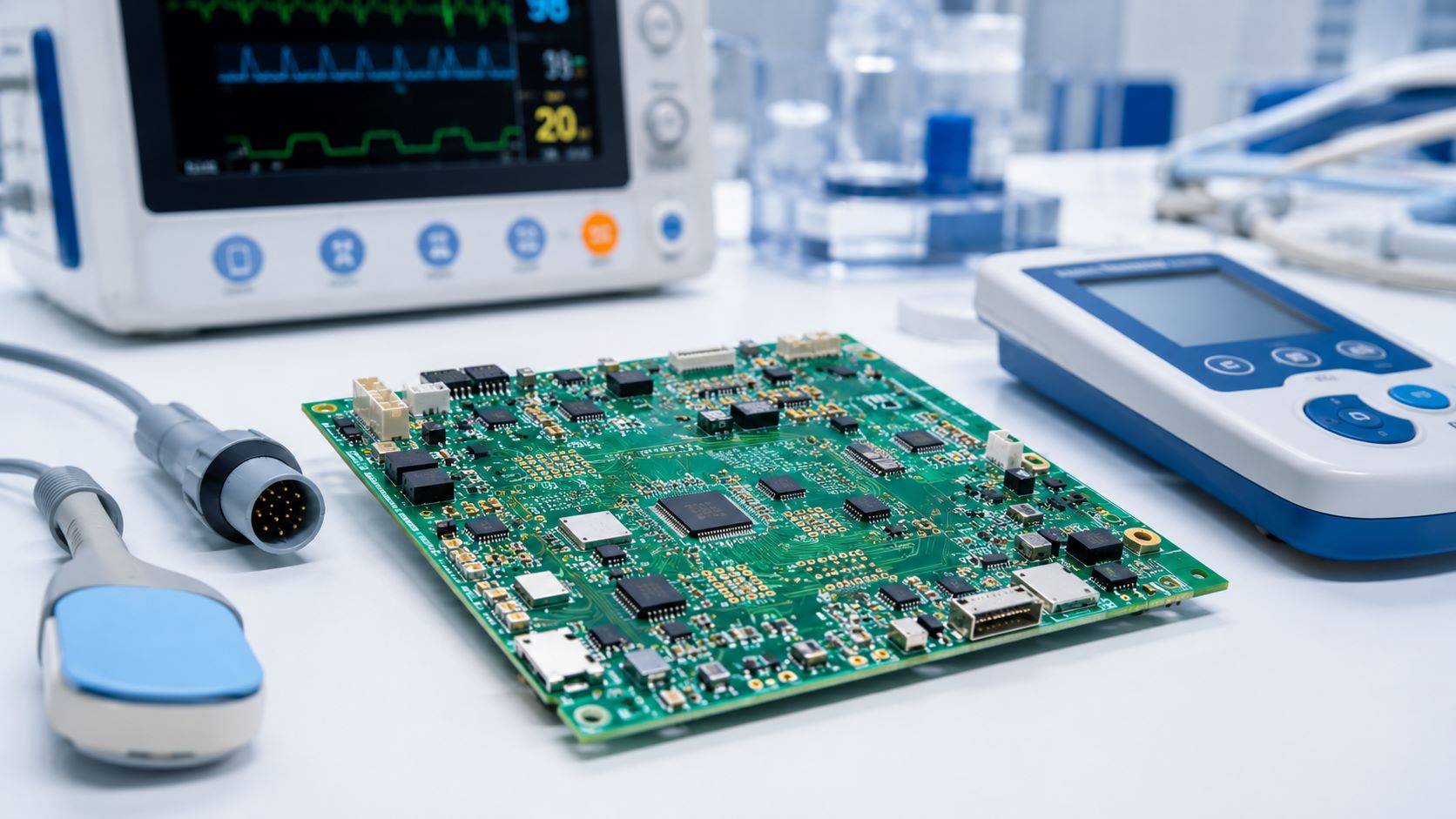
Why Are Medical PCB Assemblies Critical in Modern Medical Devices?
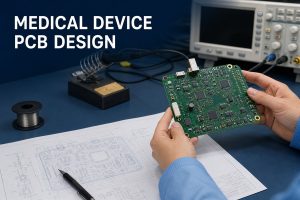
Medical PCB assemblies are critical because they carry the electronic functions inside medical devices. A PCB or PCBA may support sensing, power management, signal processing, communication, display control, battery charging, or safety-related monitoring.
For customers, the key points are:
- They affect device accuracy.
In diagnostic and monitoring equipment, signal quality depends on PCB layout, grounding, routing, material choice, and assembly stability. - They support long-term reliability.
Medical devices often need stable performance over repeated use. Solder joints, vias, copper layers, surface finish, and component quality all matter. - They influence production consistency.
A medical PCB should be designed and manufactured for repeatable production, not only one successful prototype build. - They require stronger documentation.
Medical customers may need COC, inspection records, test data, material information, and production traceability. - They connect design quality with real manufacturing.
A good design still needs correct stack-up, copper balance, panelization, solderability, and inspection planning.
In short, medical PCB assemblies are not ordinary circuit boards. They are controlled electronic modules that need engineering review, stable PCB manufacturing, reliable assembly, quality inspection, and traceability.
Why Is DFM Important for Medical PCB Assemblies?
DFM, or Design for Manufacturing, helps find manufacturing risks before the PCB enters fabrication or assembly. For medical PCB assemblies, this step is valuable because late design changes can delay validation, increase cost, and affect delivery plans.
The main value of DFM is simple:
- Find risks before production starts.
- Improve PCB manufacturability.
- Reduce assembly defects.
- Improve yield and consistency.
- Support smoother prototype-to-production transfer.
- Help customers avoid unnecessary manufacturing cost.
For medical PCB projects, a useful DFM review should check:
- Trace width and spacing.
- Via size and annular ring.
- Layer stack-up and copper balance.
- Board thickness and warpage risk.
- Solder mask clearance.
- Pad design for fine-pitch components.
- BGA and IC assembly risk.
- Fiducial marks and tooling holes.
- Panelization and process edge design.
- Test point accessibility.
- Surface finish suitability.
- Component spacing and polarity marking.
For example, if a medical PCB uses fine-pitch ICs or BGA packages, pad design and solder paste control become very important. If the panel lacks proper fiducial marks, SMT placement accuracy may be affected. If the copper balance is poor, the board may have higher warpage risk during reflow.
That is why a medical device PCB assembly manufacturer should not only quote the board. It should also review the files and give practical engineering feedback before production.
What Specialized PCB Technologies Are Used in Medical Applications?
Different medical devices need different PCB technologies. A reliable medical electronics PCB supplier should recommend the board structure based on application, signal requirement, thermal load, size limit, reliability target, and assembly complexity.
Common PCB technologies used in medical electronics include:
- Multilayer FR4 PCB
- Used in control boards, diagnostic equipment, monitoring systems, and communication modules.
- Supports compact routing, stable power planes, and better signal separation.
- High-Tg FR4 PCB
- Suitable for medical boards that need better thermal stability.
- Tg170 FR4 is often selected for multilayer boards that go through SMT reflow and long-term operation.
- HDI PCB
- Used in compact medical devices, handheld instruments, wearable electronics, and dense BGA layouts.
- Supports microvias, fine lines, and higher routing density.
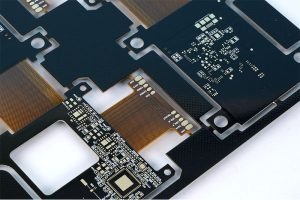
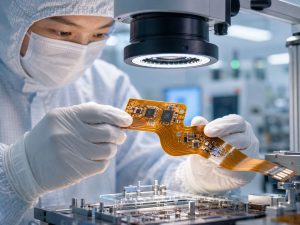
- Flexible PCB
- Used in wearable sensors, portable medical products, and lightweight electronic modules.
- Helps reduce space and improve mechanical flexibility.
- Rigid-Flex PCB
- Used when the product has limited internal space or moving sections.
- Reduces connectors and cable assembly, which can improve internal reliability.
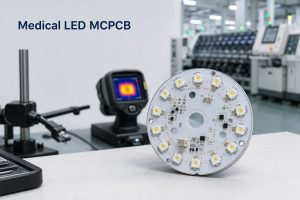
- Metal Core PCB
- Used in medical lighting, power modules, and thermal management applications.
- Helps transfer heat away from power components or LEDs.
- Ceramic PCB
- Used in high-power, high-thermal, laser-related, or special sensor applications.
- Offers excellent thermal conductivity and dimensional stability.
- High-Frequency PCB
- Used in wireless medical devices, RF modules, antenna boards, and communication-related medical equipment.
- Helps control signal loss and impedance stability.
- ENIG Surface Finish
- Common in medical PCB assemblies with fine-pitch components or BGA packages.
- Provides a flat pad surface and stable solderability.
The right technology is not always the most expensive one. The best choice is the PCB structure that matches the device’s electrical, mechanical, thermal, and quality requirements.
As a medical electronics PCB supplier, EBest Circuit (Best Technology) supports a wide range of medical circuit board technologies, including multilayer boards, High-Tg FR4 boards, HDI circuits, flexible circuits, rigid-flex boards, metal-based boards, ceramic substrates, RF circuit boards, and ENIG-finished PCBs. Our engineering team helps customers select the right board structure based on thermal demand, signal performance, assembly complexity, and production reliability. This allows medical electronics projects to move from design review to stable manufacturing with better technical control.
What Certifications Should a Medical Device PCB Assembly Manufacturer Have?
A medical device PCB assembly manufacturer should have a quality system that supports controlled production, traceability, documentation, and stable process management. For medical electronics, certifications are useful because they show whether the supplier has a structured way to manage quality, production records, and customer requirements.
A buyer should not only ask, “Do you have certificates?”
A better question is, “How do you apply these standards during real production?”
| Certification / Standard | What Buyers Should Check |
|---|---|
| ISO 13485 | Medical quality system and documentation control |
| ISO 9001 | General quality management foundation |
| IPC-A-610 | Assembly workmanship acceptance standard |
| IPC Class 2 / Class 3 | Required reliability level for the product |
| UL | Material or product safety recognition when required |
| RoHS / REACH | Environmental compliance for restricted substances |
| IATF 16949 | Useful for automotive-grade quality systems |
| AS9100D | Useful for aerospace or high-reliability projects |
For medical PCB assemblies, certifications are only part of the evaluation. The supplier should also show:
- Clear incoming material control.
- Stable PCB fabrication process control.
- SMT process control.
- AOI and X-ray inspection capability.
- Functional testing support when needed.
- Batch traceability.
- Documented quality records.
- Engineering communication before production.
A certificate gives confidence. A controlled process gives real reliability. EBest Circuit (Best Technology) supports medical PCB and PCBA projects with ISO 13485, ISO 9001, IATF 16949, and AS9100D certified quality systems, along with UL recognition, RoHS, and REACH compliance support. Beyond certificates, our focus is controlled material sourcing, stable PCB fabrication, SMT inspection, testing support, traceability, and complete shipment records.
How Does a Medical PCB Manufacturer Control Quality and Traceability?
A medical PCB manufacturer should control quality from engineering review to final shipment. The process should be layered, not dependent on one final inspection.
Engineering Review
- Check Gerber, drill, BOM, pick-and-place, assembly drawing, and special notes.
- Review stack-up, copper thickness, board thickness, surface finish, and panel design.
- Confirm DFM issues before fabrication and assembly.
Material Control
- Verify base material, copper foil, solder mask, surface finish, and components.
- Check approved sources for critical parts.
- Confirm substitutions with the customer before use.
- Keep batch and lot information when required.
PCB Fabrication Control
- Inspect inner layers before lamination.
- Control drilling, plating, imaging, etching, solder mask, and surface finish.
- Use electrical testing to check open and short circuits.
- Check dimensions, appearance, and finished thickness.
SMT Assembly Control
- Control solder paste printing.
- Use SPI to inspect solder paste volume and alignment.
- Use AOI to check placement, polarity, solder joints, and missing parts.
- Use X-ray for BGA, QFN, and hidden solder joints when needed.
- Control reflow profile according to board and component requirements.
Testing Control
- Support flying probe, ICT, functional testing, or custom test fixtures when required.
- Confirm test method before production.
- Record test results for quality review.
Traceability Control
- Link finished boards to material batches, production records, inspection data, and shipment information.
- Keep records available for repeat orders, quality audits, and failure analysis.
- Provide documents such as COC, inspection reports, or test records when required.
For medical electronics, traceability is not just paperwork. It helps customers understand what was built, when it was built, which materials were used, and how the product was inspected.
At EBest Circuit (Best Technology), quality and traceability are supported by our ISO 13485 quality management system and MES-based production tracking. From material receiving, PCB fabrication, SMT assembly, inspection, testing, to final shipment, key production data can be recorded and traced through the manufacturing process. This helps medical electronics customers gain clearer control over batch records, process status, inspection results, and shipment documentation, making each medical PCB project more transparent and reliable.
What Types of Medical PCB Assemblies Can Be Manufactured?
Medical PCB assemblies can be simple, compact, high-density, power-related, signal-sensitive, or thermally demanding. The supplier should match the board type to the actual device requirement.
Common medical PCB assembly types include:
- Medical Control Board Assembly
- Used in equipment control systems, operation panels, and embedded control modules.
- Sensor PCB Assembly
- Used in monitoring devices, diagnostic instruments, and signal acquisition modules.
- Power Management PCBA
- Used in battery charging, power conversion, protection circuits, and portable medical devices.
- Display and Interface PCBA
- Used in screens, keypads, control panels, and user operation modules.
- Communication PCB Assembly
- Used in Bluetooth, Wi-Fi, RF, and data transmission modules for connected medical devices.
- Wearable Medical PCBA
- Used in health monitoring devices, portable sensors, and compact patient-care electronics.
- Diagnostic Equipment PCBA
- Used in analyzers, laboratory instruments, measurement systems, and test equipment.
- Imaging-Related PCBA
- Used in signal processing, power control, and communication boards for imaging systems.
- Medical Lighting PCBA
- Used in LED light source boards, control boards, and thermal management modules.
- Rigid-Flex Medical PCBA
- Used in compact devices where flexible interconnection can reduce connectors and save space.
The best solution depends on board size, component density, operating environment, signal type, production volume, and testing requirements.
EBest Circuit (Best Technology) supports a wide range of medical PCB and PCBA projects, including multilayer FR4 boards, rigid-flex PCBs, HDI boards, sensor PCB assemblies, control boards, power management PCBAs, and communication-related medical electronics. With PCB fabrication, component sourcing, PCBA assembly, DFM review, testing, and traceability support under one workflow, we help customers move from prototype verification to stable production with fewer manufacturing risks.
Case Study: How EBest Circuit (Best Technology) Supports a Medical Electronics PCB Project
This case is based on an 8-layer FR4 PCB used in a medical electronics project. To protect customer confidentiality, the device details are described in a general way. The board was designed for a compact medical electronic module that required stable multilayer PCB manufacturing, multilayer PCB assembly, good solderability, controlled panelization, and shipment documentation.
Project Overview
- The customer needed a thin 8-layer medical PCB with Tg170 FR4 material, ENIG surface finish, and 1.0mm ±10% finished thickness. The board had limited layout space, so the stack-up, copper balance, surface finish, and panel design all needed careful review before production.
Customer Requirements
The main requirements included:
- 8-layer FR4 PCB structure.
- Tg170 high-Tg material.
- 1.0mm ±10% finished thickness.
- 0.5oz inner copper and 1oz outer copper.
- ENIG surface finish with Au 2u”.
- Green solder mask and white silkscreen.
- Maximum panel size of 45 × 40cm.
- Process edges and fiducial marks for production.
- Electronic COC provided with shipment.
Manufacturing Focus
This project required attention to several key points:
- Stack-up control: The 8-layer structure had to meet the 1.0mm thickness requirement.
- Thermal stability: Tg170 FR4 helped improve dimensional stability during fabrication and later assembly.
- Copper balance: 0.5oz inner copper and 1oz outer copper supported both routing and soldering reliability.
- Solderability: ENIG with Au 2u” provided a flat surface for fine-pitch assembly.
- Panelization: Process edges and fiducial marks helped support accurate SMT handling.
- Documentation: Electronic COC supported the customer’s internal quality records.
EBest Circuit’s Support
- EBest Circuit reviewed the project from both PCB manufacturing and assembly-readiness perspectives. Our engineering team checked the stack-up, copper balance, material selection, ENIG requirement, panel design, fiducial mark placement, and shipment documentation before production.
Project Result
- The PCB was manufactured according to the customer’s technical requirements and delivered with the required electronic COC. The project showed how a medical electronics PCB supplier can help reduce manufacturing risk through early engineering review, controlled fabrication, panelization support, and documentation readiness.
Case Board Specifications
| Item | Specification |
|---|---|
| Application | Medical electronics PCB project |
| PCB Type | Multilayer FR4 PCB |
| Layer Count | 8 layers |
| Base Material | FR4 |
| Tg Value | Tg170 |
| Inner Copper Thickness | 0.5oz |
| Outer Copper Thickness | 1oz |
| Finished Board Thickness | 1.0mm ±10% |
| Surface Finish | ENIG |
| Gold Thickness | Au 2u” |
| Solder Mask | Green |
| Silkscreen | White |
| Maximum Panel Size | 45 × 40cm |
| Panel Requirement | Process edge included with fiducial mark points |
| Shipment Document | Electronic COC provided |
How to Get a Quote from a Medical Electronics PCB Supplier?
To get an accurate quote from a medical electronics PCB supplier, customers should provide complete manufacturing and assembly information. A medical PCB quote is not only based on board size and quantity. It also depends on material, layer count, copper thickness, surface finish, tolerance, test requirements, component availability, assembly complexity, and documentation needs.
For bare PCB fabrication, the basic files and information should include:
- Gerber files
- Drill files
- Stack-up requirement
- Board thickness
- Copper thickness
- Surface finish
- Solder mask color
- Silkscreen color
- Material requirement
- Impedance requirement, if any
- Finished copper or hole wall requirement, if any
- Panelization requirement
- Quantity and delivery schedule
- Required certificates or reports
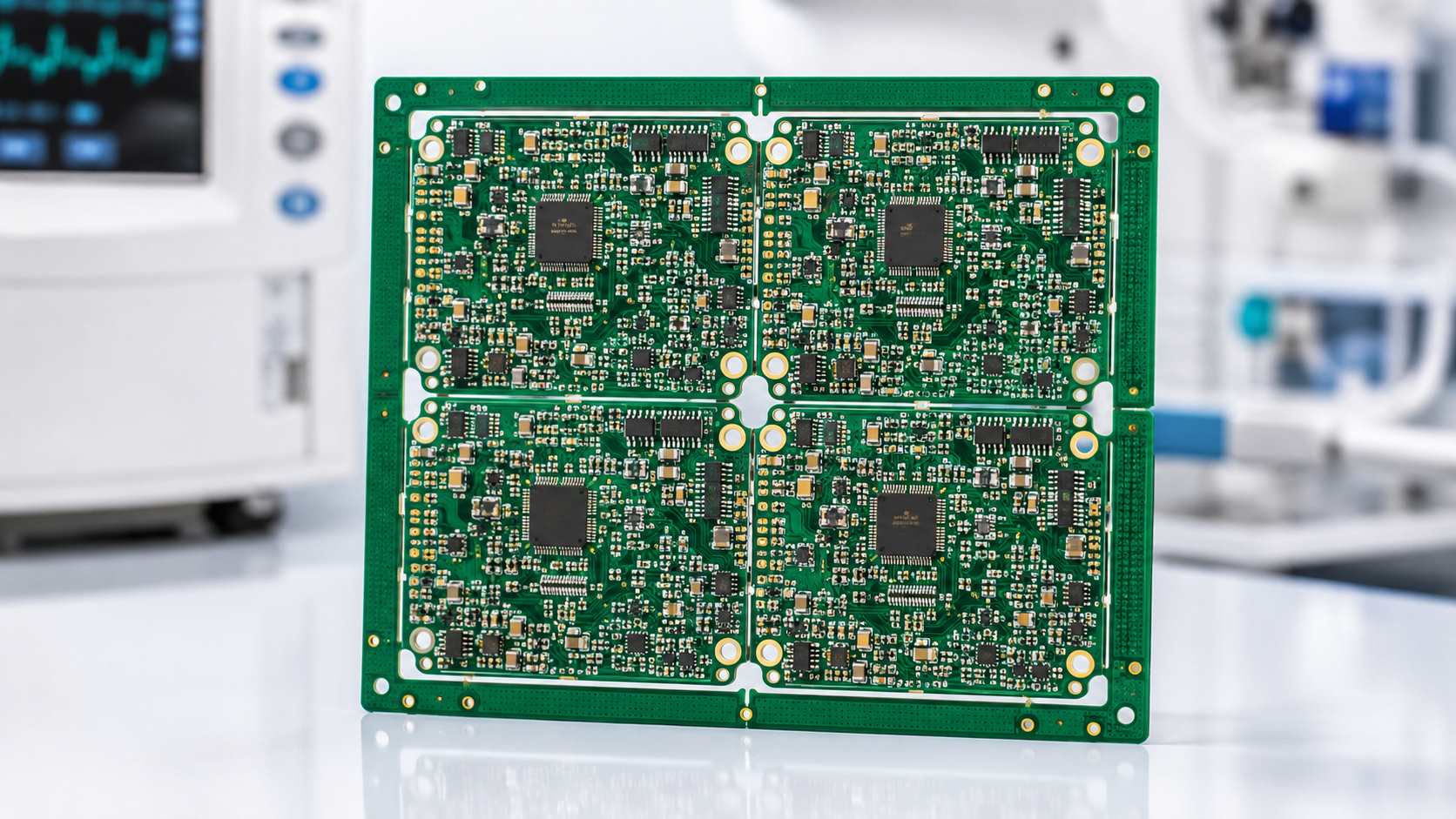
For PCBA quotation, the customer should also provide:
- BOM with manufacturer part numbers
- Pick-and-place file
- Assembly drawing
- Testing method
- Programming requirement, if any
- Functional test instructions, if any
- Special soldering or cleaning requirement
- Conformal coating requirement, if any
- Packaging requirement
- Approved vendor list, if required
- Substitute component rules
For medical projects, it is also helpful to share the end-use category. The supplier does not always need confidential product details, but basic application information helps engineering teams understand the reliability level. For example, a board used in a laboratory instrument may have different requirements from a wearable device, medical lighting board, or diagnostic control module.
Customers should also state documentation needs at the quotation stage. If the project requires COC, RoHS report, material declaration, first article inspection, test report, production photos, or traceability records, these should be confirmed before production. This avoids confusion near shipment.
When you request a quote from EBest Circuit (Best Technology), our team will not only calculate the PCB or PCBA cost. We will also review your Gerber files, BOM, stack-up, material requirements, panelization, test needs, and any potential manufacturing risks before production. This helps customers receive a more accurate quotation and practical engineering feedback at the same time. If you are working on a medical PCB or medical PCBA project, please send your files and requirements to sales@bestpcbs.com. Our engineering team will review your project and support you from quotation to manufacturing.
FAQs About Choosing a Medical Electronics PCB Supplier
What is a medical electronics PCB supplier?
A medical electronics PCB supplier provides PCB fabrication, PCBA assembly, component sourcing, testing, documentation, and manufacturing support for medical electronics projects.
Is a medical electronics PCB supplier different from a normal PCB factory?
Yes. A normal PCB factory may only focus on board fabrication. A medical electronics PCB supplier should also support DFM review, process control, inspection, traceability, and medical-grade documentation.
What files are needed for medical PCB assemblies?
For PCB fabrication, Gerber files, drill files, stack-up, and specifications are needed. For PCBA, the supplier also needs BOM, pick-and-place file, assembly drawing, and testing instructions.
Is ISO 13485 required for medical PCB assembly?
It depends on the product and customer requirement. However, ISO 13485 is highly relevant for medical device supply chains because it focuses on medical device quality management and documentation control.
What surface finish is suitable for medical PCB assemblies?
ENIG is commonly used because it provides good flatness and stable solderability. It is suitable for fine-pitch components, BGA packages, and many medical electronics boards.
Why is traceability important in medical PCB manufacturing?
Traceability connects the finished PCB or PCBA with material batches, production records, inspection data, and shipment documents. This helps with audits, repeat orders, and quality review.
Can medical PCBs use standard FR4 material?
Yes. Many medical PCBs use FR4. For higher thermal stability, High-Tg FR4 such as Tg170 may be selected.
What is the benefit of DFM for medical PCB assemblies?
DFM helps find design and manufacturing risks before production. It can reduce delays, improve yield, and make the board easier to manufacture consistently.
How should I compare medical electronics PCB suppliers?
Compare PCB fabrication capability, engineering support, certification status, PCBA experience, component sourcing, inspection process, testing support, documentation ability, and traceability system.
What should I provide when requesting a quote?
Please provide Gerber files, BOM, pick-and-place file, assembly drawing, quantity, delivery requirement, test method, and documentation needs. For medical PCB or PCBA projects, you can send your files to sales@bestpcbs.com. Our engineering team will review the project and provide practical feedback before quotation.
You may also like


Tags: Medical Electronics PCB Supplier, Medical PCB Assemblies, Medical PCB Manufacturing