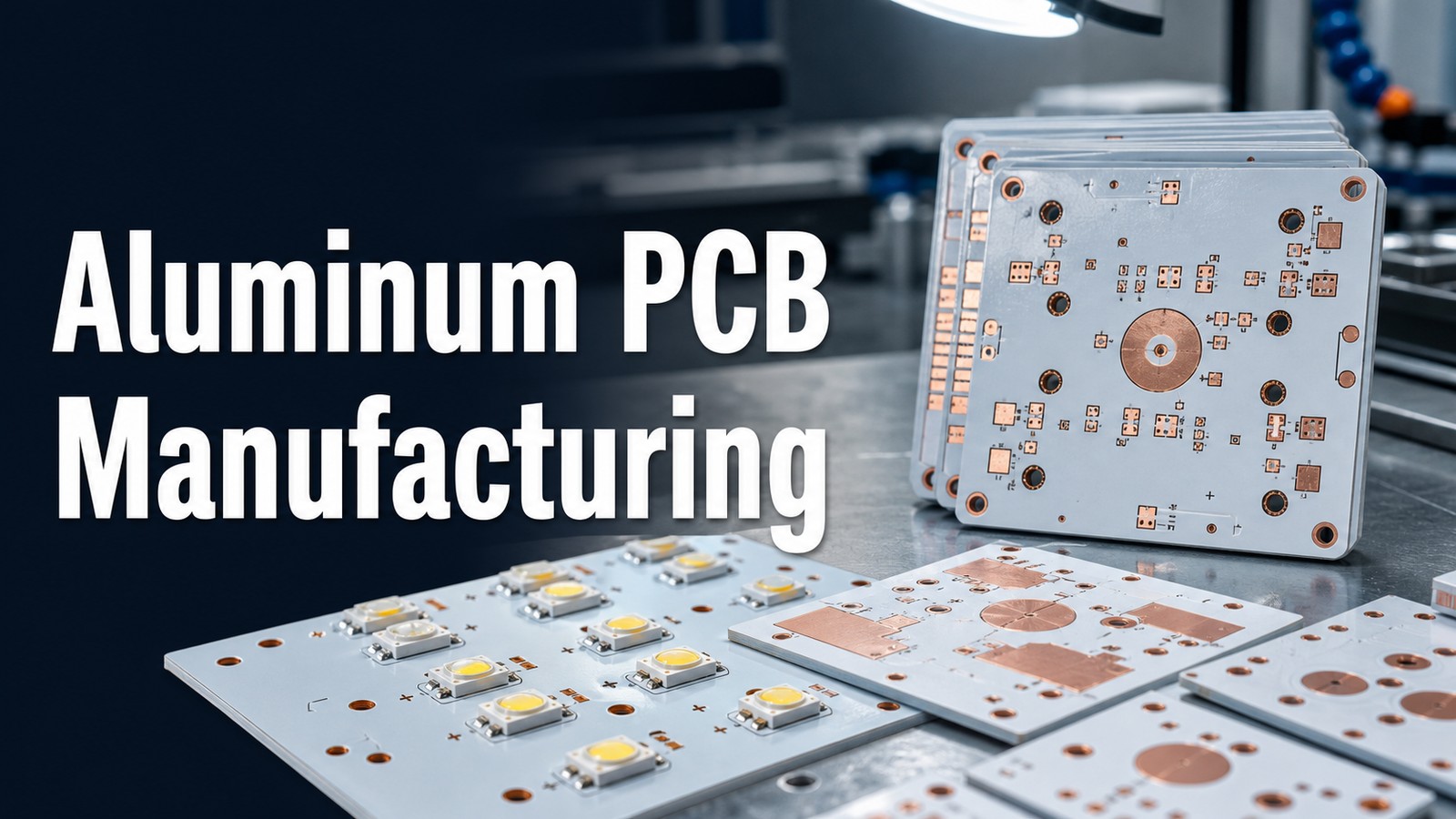
Aluminum PCB manufacturing builds printed circuit boards on a metal core so heat can move away from components more effectively than on a standard FR-4 board. It is commonly used for LED lighting, power electronics, automotive lighting, industrial controls and other assemblies where thermal path, dielectric layer and mechanical design affect reliability.
The buyer’s main job is to define thermal requirements, board shape, copper pattern, surface finish, assembly scope and test expectations before the quote is finalized.
Aluminum PCB projects fail when thermal design is treated as a material choice instead of a full manufacturing plan.
- The quote names an aluminum board but does not confirm thermal path, dielectric needs or component heat zones.
- LED pads, screw holes, board outline or metal-core routing constraints are reviewed too late.
- The buyer compares only bare-board price and misses surface finish, assembly, inspection and packaging scope.
- PCBA planning is separated from the metal-core design, creating soldering or mechanical fit risk.
- Repeat orders are delayed because files, drawings and acceptance notes were not controlled from the first build.
EBest Circuit supports aluminum PCB manufacturing with thermal design review, DFM feedback, PCBA coordination and RFQ planning.
- We review Gerber, ODB++, drill, drawings, material notes, copper, surface finish, quantity and target delivery before quoting.
- For LED and power electronics, we help buyers connect the thermal path, board outline, assembly scope and inspection plan.
- We support bare aluminum PCB fabrication and PCBA planning when components, soldering and test expectations are included.
- We focus on build clarity, cost control and repeat-order stability rather than quoting a simplified board only.
Aluminum PCB Manufacturing in One Practical Answer
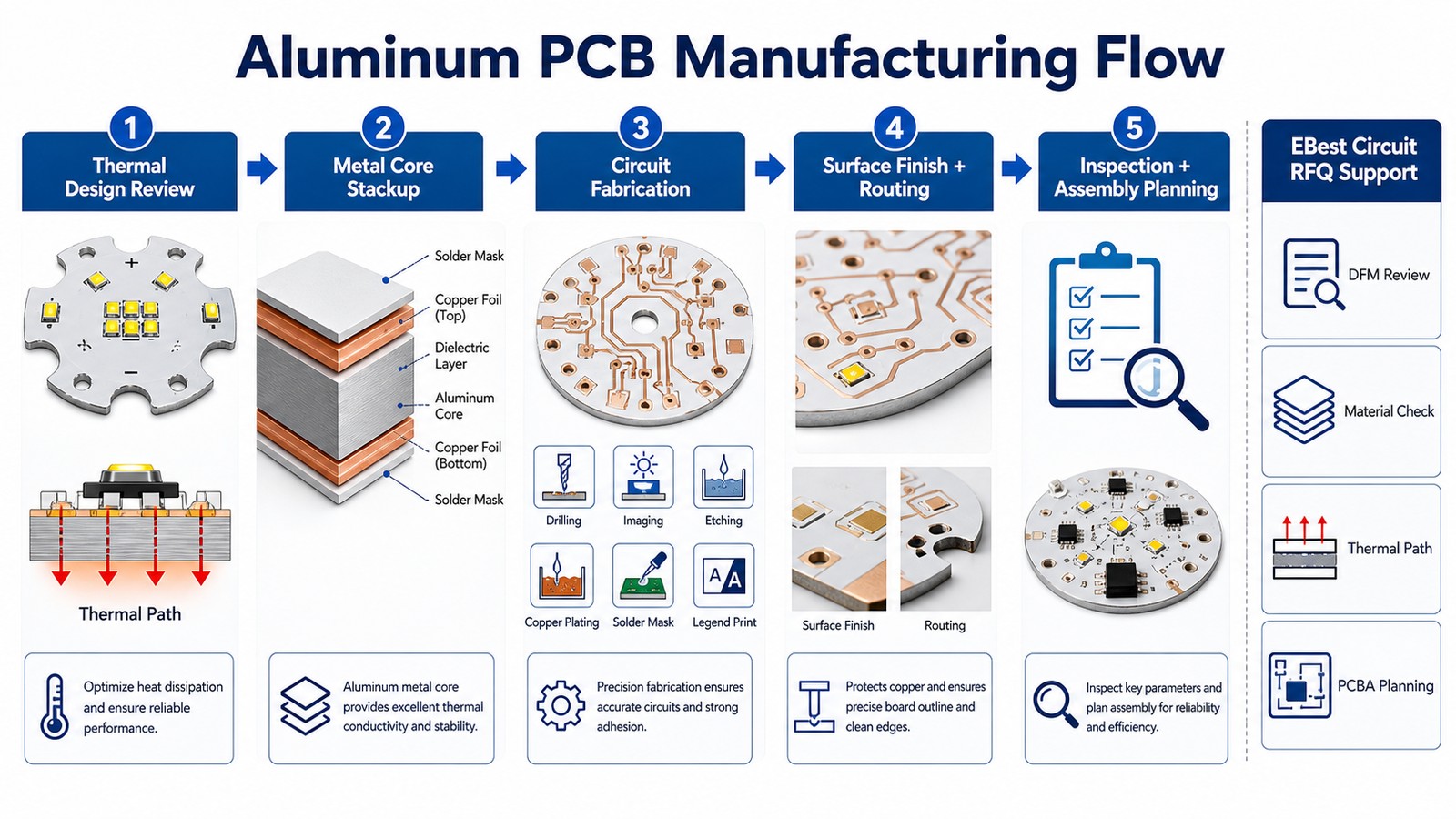
Aluminum PCB manufacturing uses a metal base, insulation layer and copper circuit layer to support electronics that need better heat spreading. The build should be reviewed as a thermal and mechanical product, not just a different PCB material.
When Aluminum PCB Manufacturing Is the Right Fit
Use aluminum PCBs when heat dissipation, mechanical stiffness and component temperature control are important to the design. Common applications include LED lighting modules, power converters, motor drivers, automotive lamps, industrial power boards and high-brightness lighting products.
Aluminum PCB Stackup and Thermal Path
The stackup determines how heat moves from the component through the copper and dielectric layer into the aluminum base. Buyers should clarify whether the design needs single-sided metal core, special shape routing, heat-spreading zones, screw mounting or assembly-side thermal constraints.
| Design Area | Buyer Should Confirm | Why It Matters |
|---|---|---|
| Thermal path | Heat source, pad layout and mounting method | Controls practical heat spreading |
| Metal core | Base material and mechanical shape | Affects rigidity, routing and assembly fit |
| Copper circuit | Trace width, pad size and current path | Supports electrical and thermal performance |
| Assembly scope | LEDs, connectors, polarity and test needs | Prevents PCBA surprises |
Material and Dielectric Review
Material review should focus on the thermal and electrical role of the insulation layer as well as the aluminum base. Do not approve a quote until the supplier understands the board use, power level, mechanical mounting and assembly conditions.
Circuit Fabrication and Board Outline Checks
Aluminum PCB fabrication needs careful review of copper pattern, holes, slots, outline, solder mask, silkscreen and edge quality. Metal-core boards can have different mechanical handling concerns from standard FR-4 boards. For fabrication scope, see EBest Circuit’s PCB manufacturing capabilities.
Need an aluminum PCB quote with thermal review?
Send Gerber, drawings, material notes, board thickness target, copper, quantity and assembly needs. EBest Circuit can review thermal path, DFM risk and quote readiness.
Gerber | Drawing | Material | Thermal path | PCBA | Testing
Surface Finish, Solder Mask and LED Pad Planning
Surface finish and pad design affect solderability, LED placement and assembly yield. Buyers should send component drawings, polarity notes, assembly expectations and any visual appearance requirements before supplier review.
PCBA Planning for Aluminum PCBs
Aluminum PCB projects often include assembly, especially for LED and power boards. PCBA planning should cover BOM, CPL, polarity, LED binning requirements when applicable, soldering method, inspection and functional test expectations. EBest Circuit’s PCBA services can align assembly scope with the board design.
Inspection and Testing for Aluminum PCB Builds
Inspection should match the product risk and assembly scope. Bare boards may need visual and electrical checks. Assembled boards may need AOI, polarity review, functional testing or application-specific acceptance checks. See the AOI in PCB manufacturing guide for inspection planning.
Cost Drivers in Aluminum PCB Manufacturing
Cost is affected by board size, metal core, dielectric needs, copper pattern, surface finish, routing complexity, assembly scope, inspection and quantity. A quote that excludes PCBA, test or packaging may not reflect the real project cost.
How Aluminum PCB Manufacturing Differs from FR-4 PCB Manufacturing
The biggest difference is the thermal and mechanical role of the metal base. FR-4 boards are usually selected for broad electronics use. Aluminum PCBs are selected when heat spreading and mechanical mounting are central to the product.
What to Send for an Aluminum PCB Quote
A complete RFQ should include Gerber or ODB++, drill, drawing, material notes, copper, surface finish, quantity, application, thermal requirements and delivery target. For assembly, add BOM, CPL, assembly drawing, polarity notes and test requirements. For supplier-selection context, see the aluminum PCB manufacturer guide.
Use EBest Circuit as your aluminum PCB quote benchmark.
A second engineering quote can help you compare thermal path, fabrication scope, PCBA needs, inspection and delivery planning before supplier selection.
Thermal design | Metal core | DFM | PCBA | Inspection | RFQ
Aluminum PCB Manufacturing FAQ
What is aluminum PCB manufacturing?
It is the fabrication of printed circuit boards using an aluminum metal base to support heat spreading and mechanical stability.
What applications use aluminum PCBs?
Common uses include LED lighting, power electronics, automotive lighting, industrial controls and electronics where heat movement matters.
Can aluminum PCBs be assembled as PCBA?
Yes. Many aluminum PCB projects include LEDs, connectors or power components and should be reviewed with BOM, CPL and assembly notes.
Can EBest Circuit support aluminum PCB manufacturing?
Yes. EBest Circuit can review aluminum PCB files, thermal requirements, DFM questions, assembly scope and RFQ inputs for prototype, low-volume and repeat builds.
Final RFQ Recommendation
Choose aluminum PCB manufacturing support that reviews thermal design, board fabrication and assembly scope together. That gives buyers a clearer cost, quality and delivery path before production starts.
Send your Gerber or ODB++, drill, drawings, material notes, copper, surface finish, BOM, CPL, quantity, testing requirements and target delivery plan to sales@bestpcbs.com. EBest Circuit can review your aluminum PCB manufacturing project and provide a practical quotation path for PCB fabrication, PCBA and thermal build planning.
You may also like

Tags: pcb manufacturing