





What Is an RF PCB?
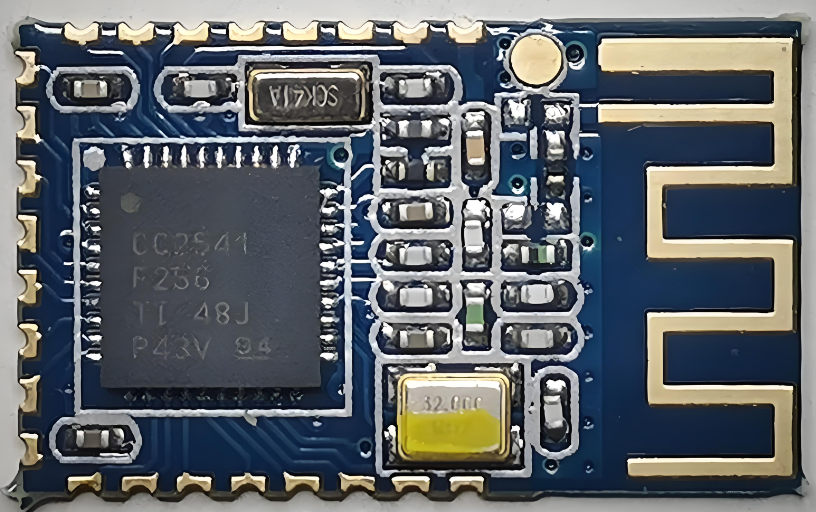
RF board, or Radio Frequency Printed Circuit Board, is engineered for circuits operating at high frequencies where signal integrity becomes highly sensitive to material properties. Typical RF designs work in the range of 300 MHz to 3 GHz, and many advanced systems extend far beyond this.
At these frequencies, standard FR4 materials often fail to maintain stable dielectric performance and low signal loss. As a result, specialized high frequency laminates are required. RF PCBs are therefore built using materials with low dielectric loss (Df) and stable dielectric constant (Dk) to ensure consistent signal transmission.
RF board is ideal for applications with higher operating frequency requirements. Right now, we normally use following material:
- Rogers. (Copper from 1/4 OZ to 2 OZ). Click here for PDF file for “Rogers-High-Frequency-Circuit-Materials” such as RO4233, RO4350, RO4003, and so on.
- PTFE (Dupon Telfon)
These boards are widely used in applications such as:
- Wireless communication systems
- RF antennas and modules
- Automotive radar (ADAS)
- Satellite and aerospace electronics
- Microwave devices
- IoT and high-speed signal systems
Why Use RF PCB Instead of Standard FR4?
FR4 is cost-effective and widely used, but its dielectric properties vary significantly at high frequencies. This leads to signal loss, impedance instability, and reduced system reliability in RF designs.
RF PCB materials solve these issues by offering:
- Lower signal loss at high frequency
- More stable dielectric constant across frequency range
- Better impedance control
- Reduced signal distortion
- Improved phase consistency
What Materials Are Used in RF PCB?
Material selection is the core of RF PCB performance. Different applications require different dielectric properties and processing characteristics.
Common RF PCB Materials
1. Rogers Laminates
Widely used in RF and microwave circuits due to balanced performance and manufacturability.
Typical grades include:
- RO4003C
- RO4350B
- RO4233
These materials offer:
- Stable dielectric constant
- Low loss tangent
- Good thermal reliability
2. PTFE-Based Materials (Teflon)
Used in more demanding RF designs where ultra-low loss is critical.
Advantages:
- Extremely low dielectric loss
- Excellent high frequency performance
Considerations:
- More complex processing
- Higher manufacturing cost
Copper Thickness Range
- Standard: 1/4 oz to 2 oz
- Custom: based on current load and thermal design
Rogers is often the practical choice for most RF designs, while PTFE is used when performance requirements are more demanding.
Rogers Laminate Material Parameters
Choosing the right Rogers material directly affects signal integrity, impedance stability, and insertion loss. Below is a comparison of commonly used Rogers laminates for RF PCB applications.
| Material | Dielectric Constant (Dk @10GHz) | Loss Tangent (Df @10GHz) | Thermal Conductivity (W/m·K) | Typical Application |
| RO4350B | 3.48 ±0.05 | 0.0037 | 0.62 | General RF, antennas, automotive radar |
| RO4003C | 3.55 ±0.05 | 0.0027 | 0.71 | RF communication, microwave circuits |
| RO4233 | 3.30 ±0.05 | 0.0025 | 0.65 | High frequency, low loss applications |
| RT5880 | 2.20 ±0.02 | 0.0009 | 0.20 | Ultra-low loss, aerospace, high-end RF |
| RO3003 | 3.00 ±0.04 | 0.0013 | 0.50 | High stability circuits, precision RF |
| RO3010 | 10.2 ±0.25 | 0.0023 | 0.95 | High dielectric designs, compact circuits |
RF Board Capability
- Base material: Rogers/Telfon
- Board Thickness: 0.5mm~3.0mm(0.02″~0.12″)
- Copper thickness: 0.5 OZ, 1.0 OZ, 2.0 OZ, 3.0 OZ
- Outline: Routing, punching, V-Cut
- Soldermask: White/Black/Blue/Green/Red Oil
- Legend/Silkscreen Color: Black/White
- Surface finishing: Immersion Gold, HASL, OSP
- Max Panel size: 600*500mm(23.62″*19.68″)
- Packing: Vacuum/Plastic bag
- Samples L/T: 7~9 Days
- MP L/T: 8~10 Days
RF PCB FAQs
1. What frequency requires RF PCB instead of FR4?
Typically, designs above 1 GHz or requiring strict impedance control should consider RF materials. Lower frequencies may still use FR4 depending on performance tolerance.
2. Is Rogers better than FR4?
For high frequency applications, yes. Rogers offers lower loss and more stable dielectric properties, which improves signal integrity.
3. Why is PTFE PCB more expensive?
PTFE materials are harder to process and require specialized manufacturing steps, which increases production cost.
4. Can RF PCB be used for mixed signal designs?
Yes. Hybrid stackups combining RF materials and FR4 are commonly used to balance performance and cost.
Start Your RF PCB Project Today
If you are designing RF or microwave circuits, choosing the right PCB is critical to performance.
At Best Technology, we combine material expertise, process control, and engineering support to deliver reliable RF PCB solutions.
📩 Send your design files to: sales@bestpcbs.com
Our engineering team will review your project and provide a fast quotation with optimization suggestions.
Tags: RF Board, RF PCB, RF PCB Design, RF PCB Manufacturer, rf pcb material