





Finding the right industrial control PCB manufacturer Australia buyers can rely on is not simply a matter of choosing the nearest factory or the lowest unit price. A control board may operate pumps, motors, relays, sensors, safety circuits, or communication modules for years in an electrical cabinet. One weak solder joint, unsuitable laminate choice, undocumented component substitution, or incomplete functional test can stop the equipment that depends on it.
Australian OEMs therefore need to compare manufacturers by project fit: bare-board capability, component sourcing, assembly, inspection, testing, traceability, engineering response, and repeat-order control. EBest Circuit (Best Technology) supports this complete path through its own PCB and PCBA factories, a supply network of more than 1,000 partners, 20 years of PCBA experience, and quality systems including ISO 9001, ISO 13485, IATF 16949, and AS9100D. To discuss an industrial control PCB or PCBA requirement, contact sales@bestpcbs.com.
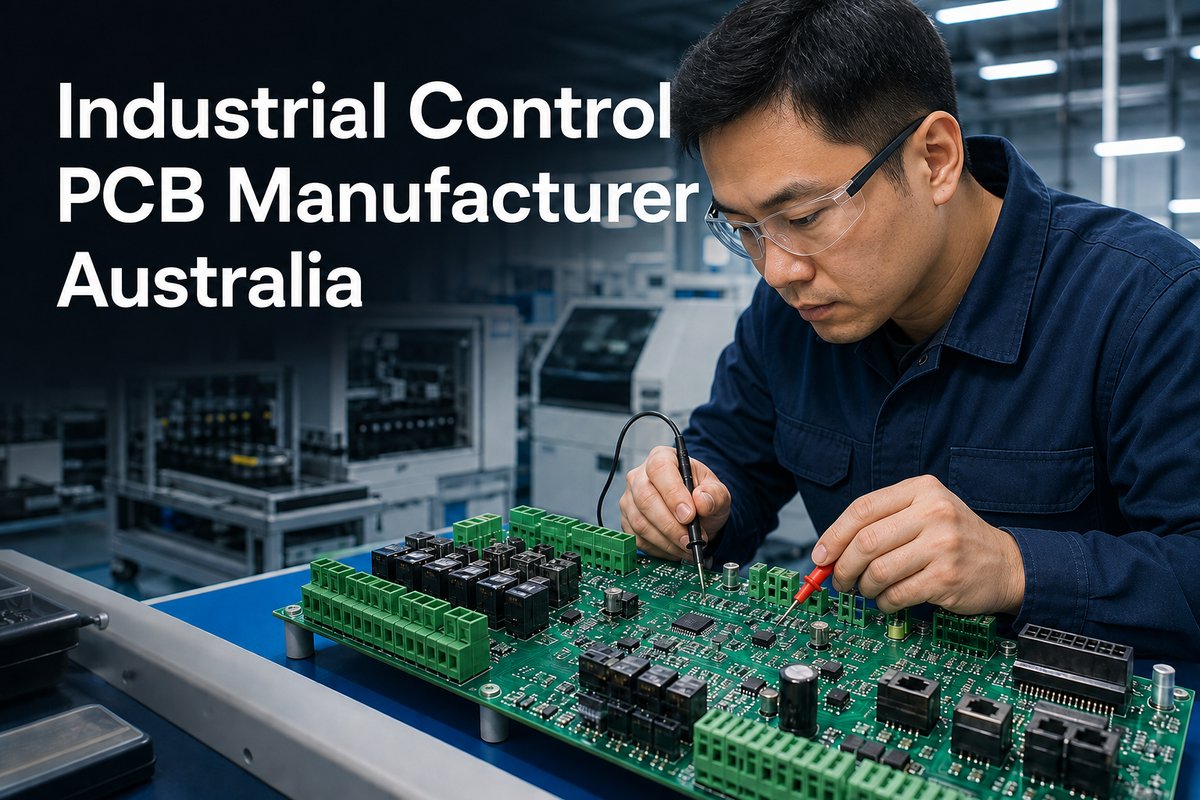
Industrial Control PCB Manufacturer Australia: 10 Companies to Compare in 2026
The following manufacturers represent different sourcing models available to Australian industrial-control buyers, including local PCB fabrication, contract electronics manufacturing, and Australian-managed supply routes.
- Alfatron – A Victoria-based manufacturer offering onshore PCB fabrication and assembly. Its published services include prototype assembly, AOI, ICT, X-ray inspection, conformal coating, and electromechanical assembly. It is a relevant candidate when sovereign Australian production is a firm requirement.
- Circuitwise Electronics Manufacturing – A Sydney-based contract electronics manufacturer serving high-reliability industrial and regulated applications. Its published scope includes SMT and through-hole assembly, FAI, 3D AOI, X-ray, box build, functional testing, and component-level traceability.
- Precision Electronic Technologies – An Australian engineering and manufacturing provider supporting PCB development, sourcing, assembly, and production. Its manufacturing network can suit buyers comparing local engineering access with a broader supply footprint.
- Elemental Electronics – A Victorian electronics developer and manufacturer focused on prototype and low-to-medium-volume production. It provides PCB assembly, product integration, test-fixture development, functional testing, and enclosure work.
- Hetech – A Brisbane electronics manufacturing provider offering prototyping, PCB assembly, inspection, testing, coating, and product integration. Its published industry coverage includes industrial automation and other high-reliability applications.
- Advanced Technology and Manufacturing (AT&M) – A Perth-based assembly provider supporting low- and higher-volume PCBA. Its published production capabilities include SMT, through-hole assembly, reflow, wave soldering, and workmanship aligned with IPC/J-STD requirements.
- OurPCB Australia – A PCB and PCBA supplier serving Australian customers through an overseas manufacturing model. It may fit buyers who want local communication while sourcing boards or assemblies from Asia.
- Rush PCB Australia – A supplier covering PCB prototypes, fabrication, and assembly for the Australian market. Buyers should confirm the production location, applicable capabilities, quality records, and test scope for their exact control-board build.
- QualiEco Circuits – An Australian supplier of PCB fabrication and contract assembly services. It can be considered for prototype, urgent, and repeat-order needs where an Asia-linked supply route is acceptable.
- Crystalaid – An Australian-owned and operated electronics manufacturer based in Queensland. Its published capabilities include SMT and through-hole PCB assembly, cable and harness assembly, testing, and box build for industrial and other high-reliability applications.
Shortlisting tip: Choose three or four candidates whose production model matches the project. Send each supplier the same controlled RFQ package and compare the resulting assumptions, exclusions, technical questions, test plan, evidence package, and delivery commitment – not only the quoted price.
Australia-Based vs China Industrial Control PCB Manufacturers
The better manufacturing location depends on what the project must protect. A local Australian supplier may be attractive when face-to-face engineering access, sovereign production, small local runs, or regulated procurement rules are decisive. A qualified China-based supplier can be competitive when the buyer needs a broader PCB process range, coordinated component sourcing, scalable assembly capacity, or cost control across repeat orders.
| Decision | Australia-based supplier | China-based supplier |
|---|---|---|
| Communication | Local time zone and easier site access | Confirm response owner and engineering handoff |
| Production | Useful when onshore manufacture is mandatory | Broader capacity and supply-chain options may be available |
| Cost | Can suit low-volume or locally controlled work | Often competitive for integrated and repeat production |
| Logistics | Short domestic transport route | Requires freight, customs, and buffer planning |
The country alone does not determine risk. Before nomination, compare revision control, approved-vendor handling, first-article approval, nonconformance response, test ownership, traceability, and the supplier’s ability to reproduce the same build months later.
Australian buyers can also use a hybrid sourcing strategy. Early engineering builds or sensitive programs may stay local, while a qualified China partner supports cost-controlled repeat production. The key is to release the same approved files, BOM, test limits, and change-control rules to every manufacturing route.
Industrial Control PCB Capabilities for Australian Automation Projects
EBest Circuit manufactures FR-4, heavy-copper, rigid-flex, metal-core, and ceramic boards for industrial controllers, power interfaces, motor-control units, and monitoring equipment.
| Industrial-control requirement | EBest Circuit capability |
|---|---|
| FR-4 layers and materials | 1–10 layers standard Up to 32 layers after review Low-, mid-, and high-Tg FR-4 |
| Copper and geometry | Copper up to 5 oz 4/4 mil line and space 0.20 mm finished holes |
| Special processes | Heavy copper up to 20 oz 3/3 mil line and space 0.15 mm finished holes after review |
| Thickness and finish | Common thickness: 0.4–3.5 mm HASL, OSP, ENIG, immersion silver/tin, ENEPIG, and hard gold |
| Other board types | Rigid-flex: up to 20 layers MCPCB: up to 10 layers Thin-film, DBC, DPC, and AMB ceramic boards |
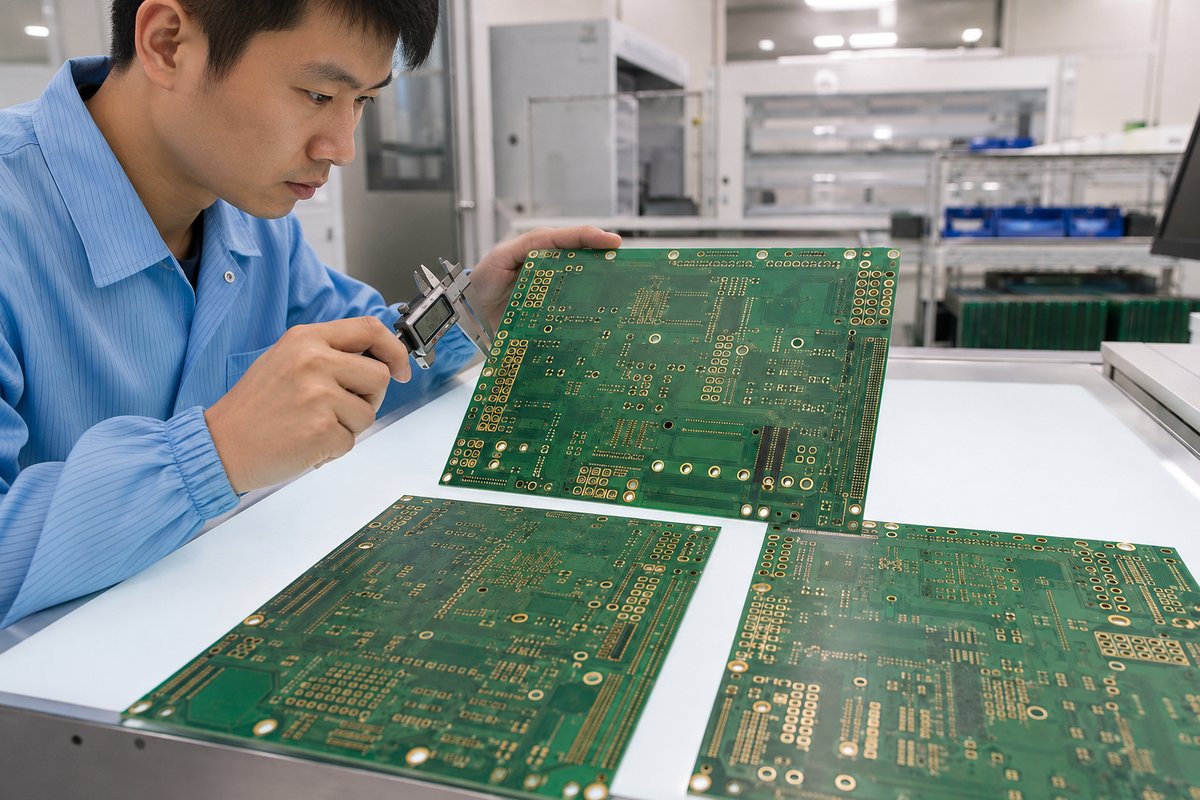
Special-process limits require project review. Send the Gerbers, drill files, fabrication drawing, stack-up, impedance requirements, IPC class, and critical tolerances. EBest Circuit can then confirm the production route and return DFM questions before release.
Industrial Control PCB Assembly for Australian Orders
EBest Circuit provides SMT, through-hole, and mixed-technology assembly for Australian industrial-control orders. This is useful for boards that combine fine-pitch ICs with relays, terminal blocks, transformers, large connectors, heat sinks, or other through-hole components.
| PCBA item | EBest Circuit capability |
|---|---|
| Placement capacity | Company capability data lists up to 13,200,000 component placements per day |
| Board size | From 0.2 × 0.2 inches to 20 × 20 inches; boards up to 22 × 47.5 inches require project review |
| Small components | Down to 01005 packages |
| Fine-pitch packages | BGA pitch down to 0.25 mm |
| Assembly processes | SMT, THT, and mixed assembly |
| Component packaging | Reels, cut tape, tubes, trays, and loose parts |
| Assembly production time | Capability data lists 1–5 days, subject to BOM readiness, process complexity, inspection, and testing |
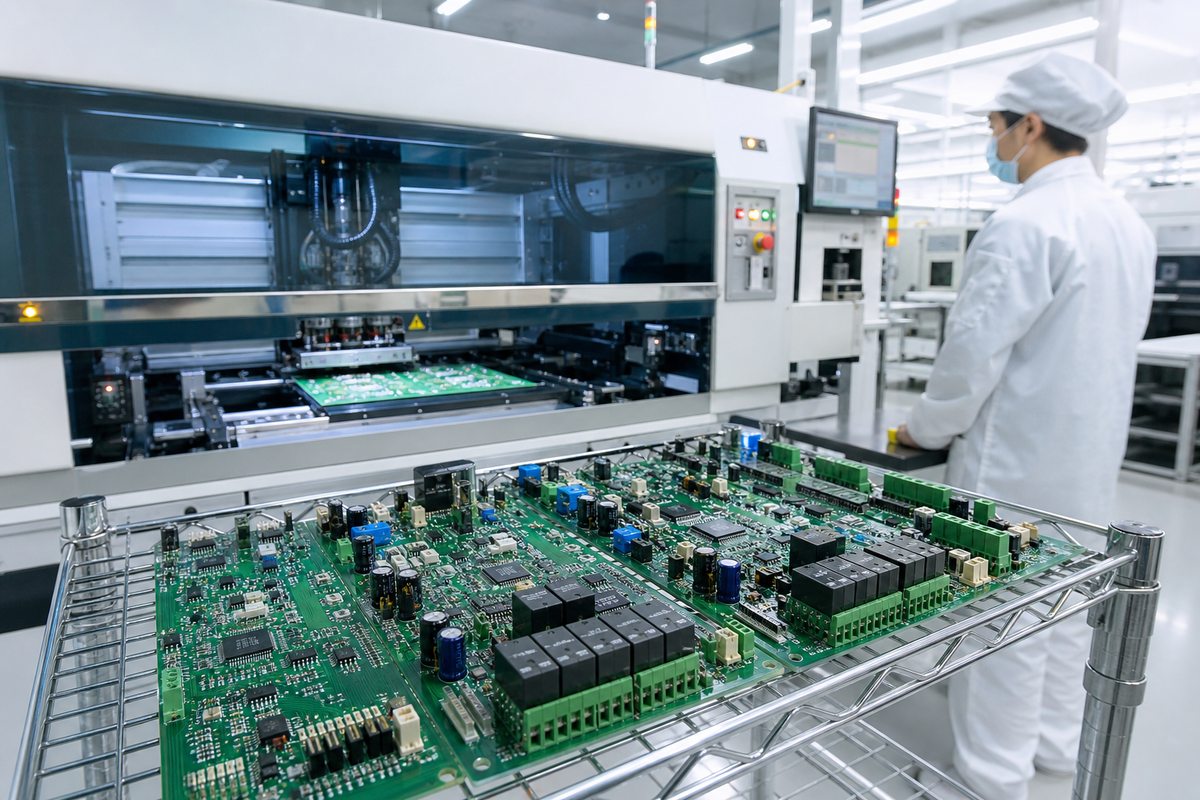
EBest Circuit can manage turnkey, consigned, or partial-turnkey builds. The service can combine BOM review, approved component procurement, stencil preparation, solder-paste printing, placement, reflow, through-hole insertion, wave or manual soldering, programming, cleaning, coating, testing, and final packaging according to the released order scope.
Before purchasing components, the team reviews manufacturer names, part numbers, packages, quantities, lifecycle risks, and approved-substitution rules. When a part is obsolete or has an unsuitable lead time, EBest Circuit can prepare a BOM optimisation or alternative-parts list for customer approval. No substitute is released merely because stock is available.
To receive a complete PCBA quotation, provide the BOM, centroid data, assembly drawings, Gerbers, approved-vendor requirements, soldering standard, programming files, test procedure, first-article quantity, production quantity, and repeat-order forecast.
Testing Evidence for Industrial Control PCB Orders to Australia
EBest Circuit can provide a project-specific inspection and test evidence package for Australian industrial-control orders. The exact records are agreed before production so that the delivered documentation matches the customer’s acceptance plan.
Available production and quality evidence includes:
- incoming-material and component verification records;
- solder-paste inspection records when SPI is included in the process plan;
- AOI results covering component position, polarity, solder condition, and missing parts;
- X-ray images or records for BGA, QFN, and other bottom-terminated packages when required;
- bare-PCB open-and-short electrical-test results;
- ICT or flying-probe results where the board design and agreed test route permit them;
- programming confirmation and functional-test results measured against customer-approved limits;
- first-article inspection and approved-deviation records; and
- final inspection, serial-number, batch, material, and process-traceability records.
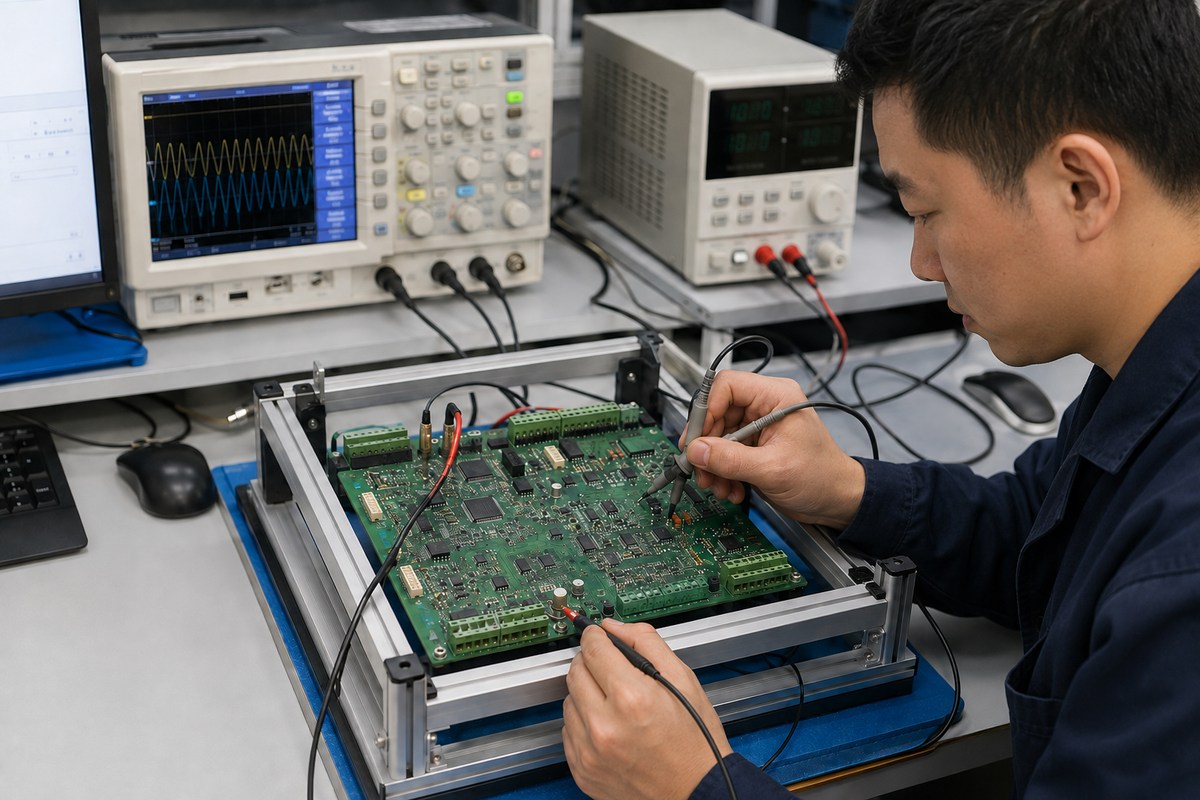
EBest Circuit’s digital workshop records material and product batches, production stages, and manufacturing progress. This helps the team retrieve the corresponding production information quickly when a customer reviews a batch, repeat order, or quality issue.
For functional testing, the customer should provide the procedure, firmware version, expected inputs and outputs, pass/fail limits, connector pinout, fixture interface, golden sample, and any required load or communication simulator. EBest Circuit can then implement the approved test at PCBA level and return the agreed results with the shipment.
Quality Certifications for Industrial Control PCB Manufacturing in Australia
A certificate is useful only when its scope and controls match the project. Buyers should request the current certificate, issuing body, covered site, expiry date, and manufacturing scope rather than relying on a logo displayed on a website.
Match the evidence to the application:
- ISO 9001 supports a general quality-management framework.
- ISO 13485 may be relevant when the control assembly forms part of a medical-device supply chain.
- IATF 16949 is relevant to automotive production controls when the project and manufacturing site fall within scope.
- AS9100D supports aerospace and defence quality-system requirements when applicable.
- IPC-A-600, IPC-A-610, IPC/WHMA-A-620, and J-STD-001 can define board, assembly, cable, and workmanship expectations when specified in the purchase package.
Beyond certificates, audit how the manufacturer controls incoming material, shelf life, calibration, ESD, nonconforming product, rework, corrective action, approved suppliers, engineering changes, and production records. The purchase order should state the required IPC class and any customer-specific acceptance criteria.
Lead Times for Industrial Control PCB Prototypes and Repeat Orders to Australia
EBest Circuit offers normal and expedited production for industrial-control prototypes. The published FR-4 times below apply to standard-specification prototype orders below one square metre. The PCBA figures cover assembly production and still depend on component readiness, fixture requirements, programming, coating, and the approved inspection plan.
| Product | Normal service | Fastest service |
|---|---|---|
| 1-layer FR-4 prototype | 7 days | 24 hours |
| 2-layer FR-4 prototype | 8 days | 24 hours |
| 4-layer FR-4 prototype | 10 days | 48 hours |
| 6-layer FR-4 prototype | 10 days | 72 hours |
| 8-layer FR-4 prototype | 12 days | 72 hours |
| PCBA | 1 week | 2 days |
The standard FR-4 reference covers normal FR-4 material from 0.4–1.6 mm, 0.5 or 1 oz copper, lead-free HASL, green solder mask, white silkscreen, line width and spacing above 8 mil, minimum hole above 0.3 mm, and minimum annular ring above 10 mil. A control board with heavy copper, fine lines, controlled impedance, special laminate, blind vias, coating, or unusual testing needs a project-specific schedule.
For an Australian shipment, EBest Circuit confirms the manufacturing schedule after reviewing PCB complexity, BOM availability, first-article approval, testing, documentation, and freight requirements. Repeat orders can move faster when the approved Gerbers, BOM revision, placement program, stencil, fixture, test limits, golden sample, and deviations remain under the same controlled revision.
Why Australian OEMs Choose EBest Circuit for Industrial Control PCB Projects
EBest Circuit supports Australian buyers who want one accountable manufacturing path from bare PCB through tested assembly. The business value is strongest when the project involves several technical handoffs that would otherwise be divided among unrelated suppliers.
Project support can include:
- in-house PCB and PCBA production coordinated under one order;
- DFM pre-review and a BOM optimisation list before release;
- PCB, component, assembly, and testing engineers supporting the customer’s commercial contact;
- prototype and small-batch builds for engineering validation before repeat production;
- sourcing support through more than 1,000 supply-chain partners;
- ISO 9001, ISO 13485, IATF 16949, and AS9100D quality systems, subject to project applicability; and
- digital batch and material tracking designed to retrieve production information within seconds.
The company has 20 years of PCBA experience and reports service to more than 10,000 engineers and 1,800 customers. Australian buyers may also arrange a factory visit to review the PCB and PCBA lines, inspection equipment, traceability controls, and the proposed production route before supplier approval.
Send sales@bestpcbs.com your controlled files, target quantity, application, testing requirements, and requested delivery date. The engineering team can then return project-specific questions and a quotation instead of a price based on incomplete assumptions.
Case Study: Industrial Control PCB for an Australian Automation System
An Australian customer ordered a 600-piece batch of four-layer FR-4 control boards for a battery-powered equipment system. The released specification called for a finished thickness of 1.6 mm, Tg of at least 170 degrees C, 35-micrometre internal and base outer-layer copper, ENIG with 3 microinches of gold, UL 94V-0 material, and RoHS-compliant production.
The board also carried manufacturing requirements that directly affected supplier selection:
- minimum plated-through-hole copper of 20 micrometres;
- minimum annular ring of 0.15 mm;
- solder-mask registration tolerance of +/-0.10 mm;
- automatic open-and-short electrical testing at 250 V;
- AOI and X-ray inspection after assembly;
- board cleaning after SMT with defined cosmetic acceptance requirements; and
- COC, electrical-test, copper-thickness, and final inspection reports.
EBest Circuit reviewed the fabrication package and assembly requirements before production, confirmed the panelisation and test expectations, and coordinated PCB fabrication with the following SMT build. One additional sample accompanied the 600 production boards for approval and quality reference.
This project shows why an industrial-control buyer should include measurable acceptance criteria in the RFQ. Board material, copper, plating, solder-mask tolerance, electrical-test voltage, cleaning, inspection method, and required reports were defined before manufacturing rather than left to general factory practice.
For a comparable Australian control-board project, send the Gerber files, fabrication drawing, BOM, placement data, assembly drawing, test limits, inspection requirements, production quantity, sample requirement, and delivery target to sales@bestpcbs.com. EBest Circuit can review the complete package and identify any manufacturing or documentation question before quotation and production release.
FAQs About Industrial Control PCB Manufacturer Australia
1. Should an Australian industrial-control OEM choose a local or overseas PCB manufacturer?
Choose according to the project’s procurement rules, engineering access, production volume, process requirements, cost target, and supply-chain risk. Local manufacture may be important for sovereign or highly sensitive work. A qualified overseas partner may be suitable when broader PCB capability, integrated sourcing, assembly capacity, or repeat-production cost is more important.
2. What files are required for an accurate industrial control PCB quotation?
Send Gerber and drill files, fabrication drawing, stack-up and impedance requirements, BOM, centroid data, assembly drawings, approved-substitute rules, firmware, test procedure, acceptance limits, quantity, and delivery target. Add enclosure or cable information if mechanical assembly is included.
3. Which tests should be specified for an industrial control PCB assembly?
The plan may combine bare-board electrical test, solder-paste inspection, AOI, X-ray, in-circuit testing, programming, and functional testing. Select methods according to component packages, circuit access, safety risk, expected failures, production volume, and the functions that must be verified before shipment.
4. Can EBest Circuit support prototypes and repeat industrial-control production?
Yes. EBest Circuit supports prototypes and small batches for design validation, then repeat PCBA production using the approved files, BOM, process settings, inspection requirements, and test limits. Lead time remains dependent on board complexity, component availability, fixture readiness, and production loading.
5. How should buyers audit an industrial control PCB manufacturer serving Australia?
Review the applicable certificates, factory scope, process capability, approved-supplier controls, ESD and calibration systems, material traceability, inspection equipment, test records, change control, nonconformance handling, and repeat-order controls. To evaluate EBest Circuit for an industrial control PCB manufacturer Australia project, arrange a factory visit or send the controlled RFQ package to sales@bestpcbs.com.
You may also like


Tags: Industrial Control PCB, Industrial Control PCB Assembly, industrial control PCB manufacturer Australia