





Alumina CTE describes the coefficient of thermal expansion of aluminum oxide ceramic, usually expressed in ppm/°C or ppm/K. For ceramic PCB and electronic packaging work, the number is useful only when it is tied to the alumina grade, temperature range, substrate thickness, copper design and the materials attached to the ceramic.
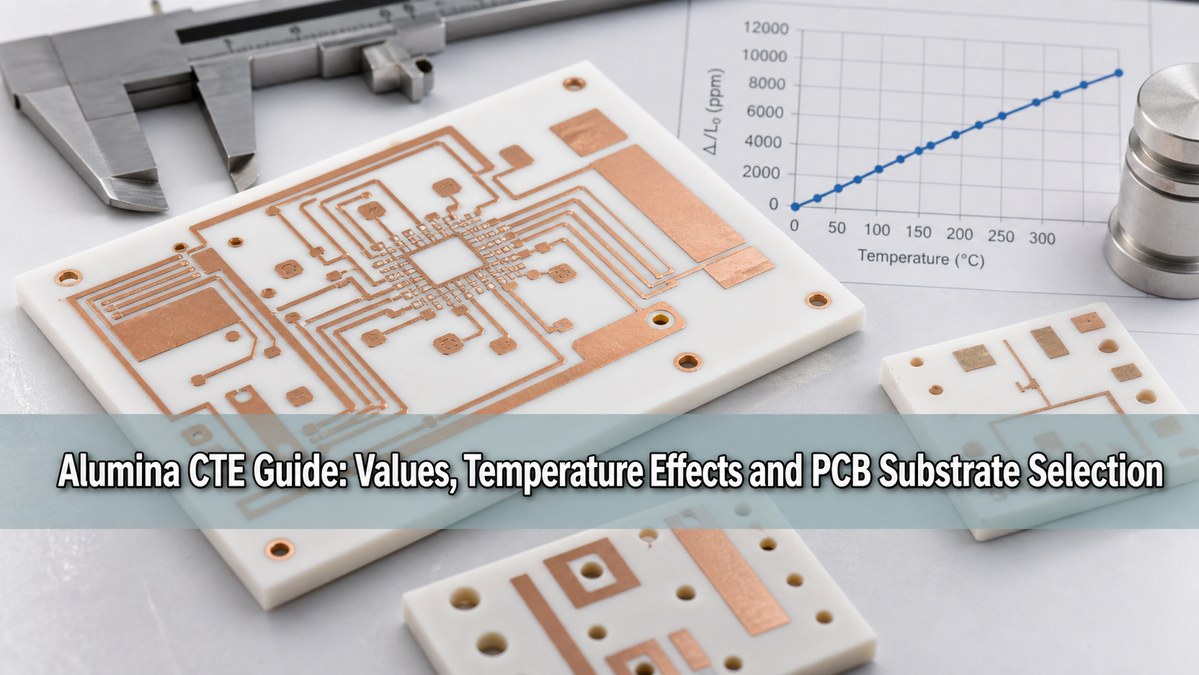
Most engineering discussions treat alumina as the practical ceramic baseline because it combines electrical insulation, mechanical stability, moderate thermal conductivity and lower cost than many high-performance ceramics. The key is not to use a single CTE value blindly. A ceramic substrate that looks acceptable on a datasheet can still create stress if the copper area is large, the temperature swing is wide, or the mounted device has a very different expansion rate.
What Does Alumina CTE Mean?
Alumina CTE is the rate at which alumina ceramic expands as temperature rises. In PCB and substrate work, it is normally discussed as linear expansion in ppm/°C. A value near 7 ppm/°C means a one-meter length would expand by about 7 micrometers for each 1°C temperature increase, but real designs must use the supplier’s stated test range.
Alumina is aluminum oxide ceramic, not aluminum metal. This distinction matters because aluminum metal has a much higher expansion rate and completely different electrical behavior. When a drawing says Al2O3, alumina ceramic or 96% alumina, the review should focus on ceramic substrate data rather than metal aluminum tables.
What Is a Typical Alumina CTE Value?
Common electronics-grade alumina is often specified around the mid-to-high single-digit ppm/°C range. For example, EBest’s existing Al2O3 substrate thermal expansion reference lists 7.4 ppm/K within 50°C to 100°C, while broader engineering references place alumina ceramic values in a similar range depending on purity and test method.
Use these values as screening data, not as release data. For a quote or design release, ask the supplier for the exact material grade, purity, thickness, measurement standard and temperature interval. 96% alumina, 99.6% alumina and metallized alumina substrates may not behave identically after firing, lapping, metallization and copper processing.
How Does Alumina CTE Change With Temperature?
Alumina CTE is temperature-dependent. Published research on alpha-alumina shows that thermal expansion is not perfectly constant across high-temperature ranges, and crystal orientation can also affect measured expansion. For PCB users, the practical point is simple: a room-temperature value is not enough for designs that cycle between cold start, soldering, operation and shutdown.
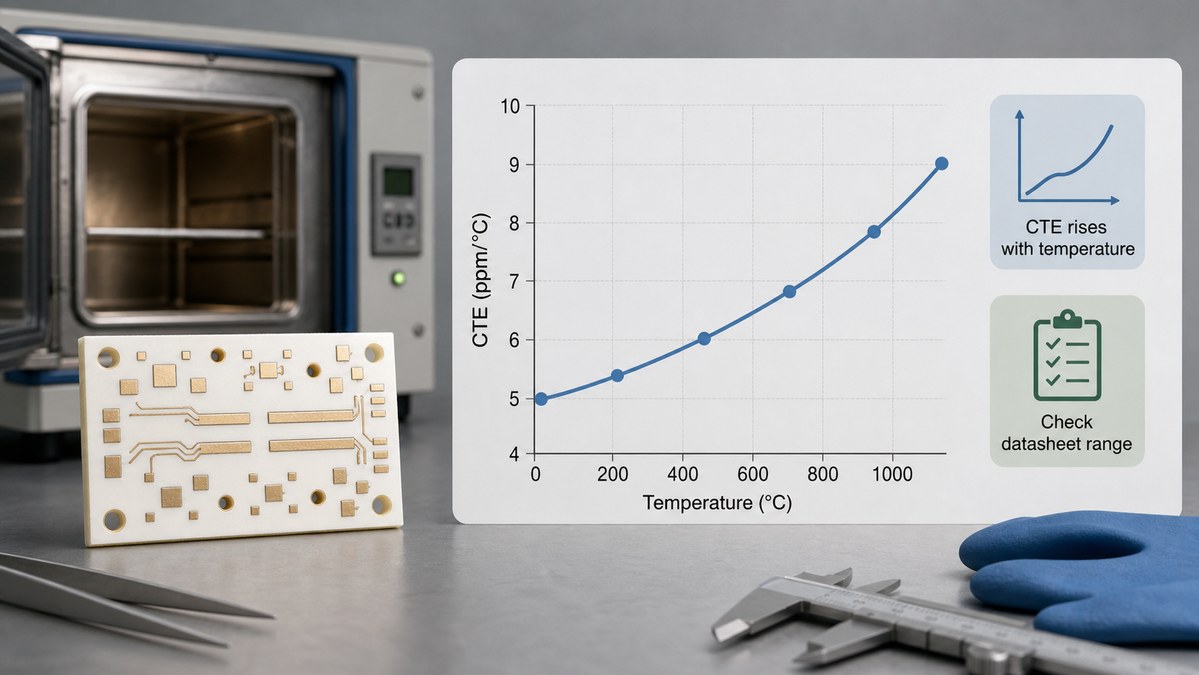
Define the operating and process temperature windows separately. Reflow exposure, high-temperature storage, power cycling and field operation can stress the substrate in different ways. If the application includes repeated thermal cycling, the CTE review should include copper thickness, solder alloy, die attach material, package size and mounting method.
How Does Alumina Compare With AlN, Zirconia, Silicon, Copper and FR4?
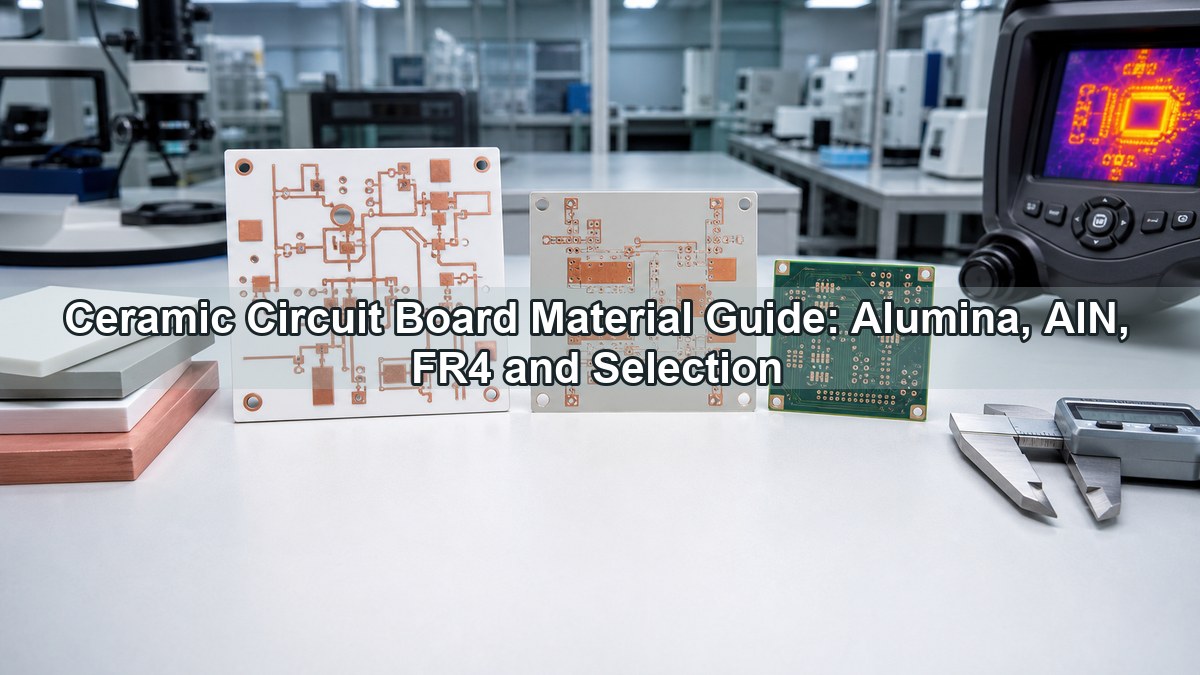
Alumina sits between low-expansion semiconductor materials and higher-expansion metals or organic laminates. That middle position is one reason it is useful in many ceramic PCB materials decisions, but it is not the best match for every device. Aluminum nitride PCB substrate is usually closer to silicon and offers much higher thermal conductivity; copper and FR4 expand much more, which can increase stress in some assemblies.
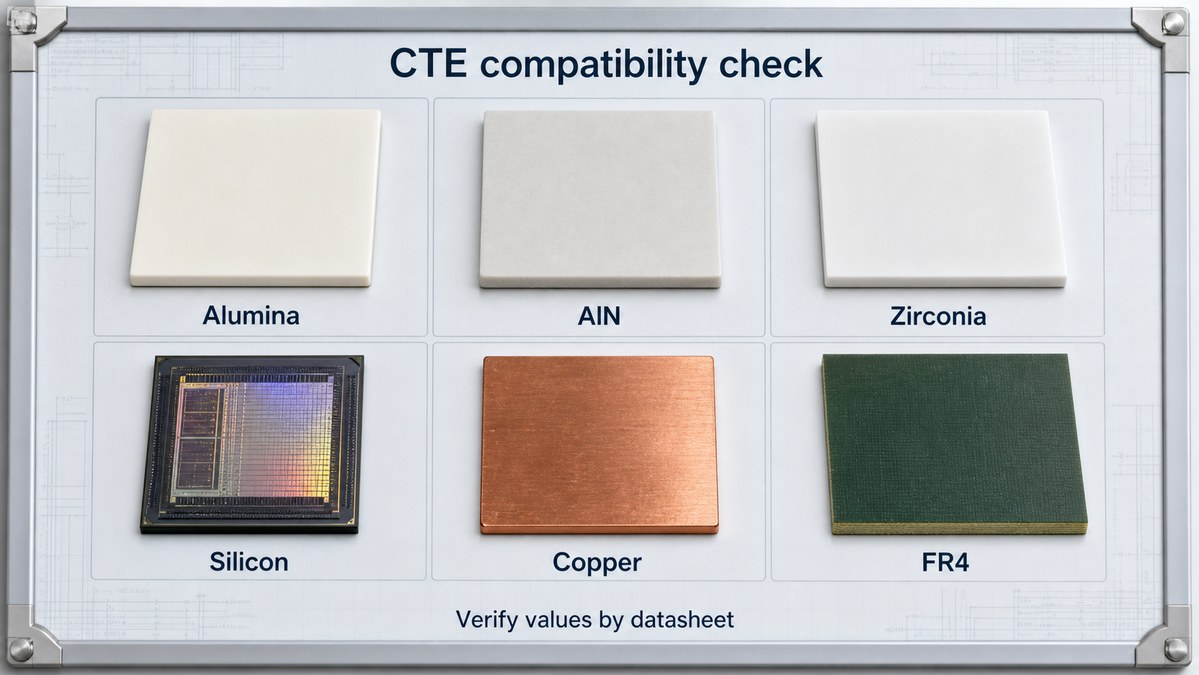
The decision logic should start with the parts being attached to the substrate. Silicon dies, power devices, copper planes, solder joints, ceramic body thickness and external heat sinks all participate in the stress system. A material with excellent thermal conductivity can still be the wrong choice if the expansion mismatch and mechanical constraints are not reviewed together.
| Material | Typical Role in Electronics | CTE Selection Note |
|---|---|---|
| Alumina ceramic | Cost-effective ceramic PCB and hybrid circuit substrate | Good baseline for insulation, stability and moderate heat spreading |
| Aluminum nitride | High-thermal ceramic substrate for power modules and LEDs | Often chosen when thermal conductivity and silicon matching justify higher cost |
| Zirconia | Structural ceramic and specialty insulating component | Review only when toughness or mechanical behavior is central to the design |
| Silicon | Semiconductor die material | Lower expansion than alumina, so die attach and cycling conditions matter |
| Copper | Conductor, heat spreader and metallization layer | Higher expansion than alumina, so copper balance and area can drive stress |
| FR4 | Standard organic PCB laminate | Lower cost, easier processing, but much weaker thermal and dimensional stability |
Why Does CTE Matter in Ceramic PCB Substrate Design?
CTE matters because ceramic PCB substrates combine materials that expand at different rates. Alumina may be stable, but the copper circuit, solder joint, component termination, die attach layer and external fasteners can move differently as temperature changes. Stress often concentrates at corners, large copper areas, solder interfaces, vias, slots and brittle ceramic edges.
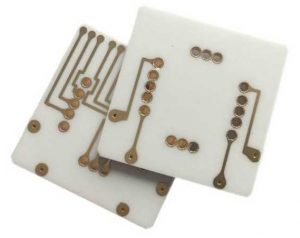
For alumina ceramic PCB design, review copper symmetry, copper thickness, pad size, isolation clearance, substrate thickness, edge distance and mounting holes before release. Thick copper can improve current and heat spreading, but it also increases mechanical loading during thermal cycling. Large asymmetric copper areas may warp or stress the ceramic more than a balanced layout.
When Should You Choose Alumina Instead of AlN or FR4?
Choose alumina when the design needs a ceramic insulating base, better heat resistance than FR4, stable dimensions and moderate thermal performance without the higher cost of AlN. It is often practical for LED modules, sensors, thick-film circuits, high-temperature control boards, power electronics interfaces and ceramic PCBA where electrical insulation and mechanical stability are more important than maximum thermal conductivity.
Choose AlN when the heat flux is high, the package is sensitive to thermal gradients, or closer CTE alignment to semiconductor devices is worth the added material and process cost. Choose FR4 or high-Tg FR4 when the design does not need a ceramic substrate and can pass thermal, voltage, dimensional and reliability requirements with standard PCB manufacturing capability.
What Should You Specify for an Alumina Ceramic PCB Quote?
A quote-ready package should make the thermal and mechanical assumptions visible. If the RFQ only says “alumina substrate,” the manufacturer still has to clarify grade, thickness, copper process, surface finish, tolerance and temperature conditions before judging manufacturability.
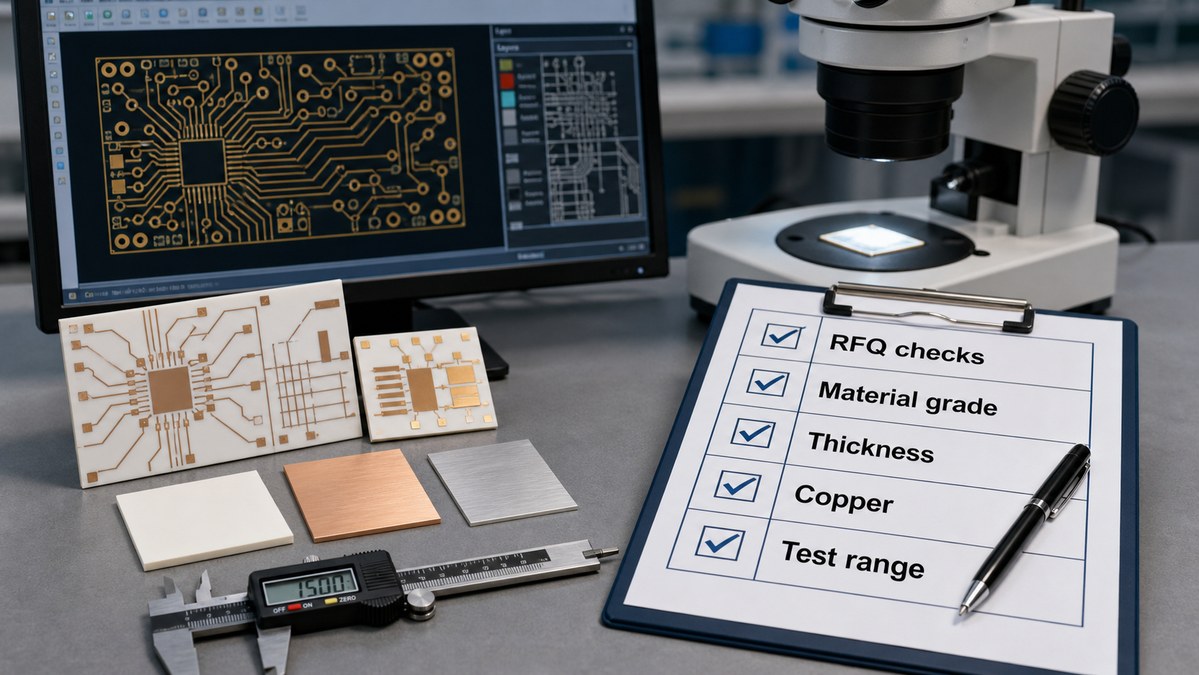
For EBest Circuit (Best Technology), a useful ceramic PCB inquiry normally includes Gerber files, stackup intent, material grade, substrate thickness, copper thickness, surface finish, outline tolerances, working temperature range, peak process temperature, expected cycling profile and assembly requirements. For ceramic PCB prototype work, EBest’s published capability references Al2O3 thermal conductivity at ≥24 W/m·K and AlN at ≥170 W/m·K, subject to design and material review.
- Material: 96% alumina, 99.6% alumina or specified supplier grade
- Substrate: thickness, outline, holes, slots, edge distance and flatness needs
- Metal: copper thickness, copper balance, metallization route and surface finish
- Thermal: operating range, cycling profile, heat source size and heat sink interface
- Assembly: soldering process, die attach, SMT/THT requirements and inspection needs
- Quality: dimensional inspection, electrical test, AOI, copper thickness check and reliability test request
FAQ
1. Is alumina CTE the same as aluminum CTE?
No. Alumina is aluminum oxide ceramic, while aluminum is metal. Alumina ceramic has much lower expansion and provides electrical insulation; aluminum metal has higher expansion and is conductive.
2. What unit is used for alumina CTE?
Alumina CTE is usually listed in ppm/°C or ppm/K. For temperature differences, 1°C and 1 K increments are equivalent, so the numerical ppm value is normally read the same way.
3. Is 96 alumina CTE different from 99.6 alumina CTE?
It can be different because purity, additives, porosity, firing process and supplier formulation affect ceramic properties. Always use the datasheet for the exact alumina grade being quoted.
4. Does lower CTE always mean a better ceramic PCB?
No. Lower CTE helps only when it improves the match to the attached materials and the thermal cycle. Thermal conductivity, dielectric strength, cost, copper process, mechanical strength and availability must be reviewed together.
5. Why does copper thickness affect alumina ceramic PCB reliability?
Copper expands more than alumina and adds mechanical force during heating and cooling. Thicker or unbalanced copper can increase stress, so copper area and symmetry should be reviewed with the substrate thickness and thermal cycle.
Conclusion
Alumina CTE is a useful starting point for ceramic PCB substrate selection, but it should be reviewed with material grade, temperature range, copper design, attached components and reliability expectations. Alumina is often the practical ceramic baseline when cost, insulation and dimensional stability matter; AlN or other materials belong in the review when heat flux, die matching or mechanical stress requires them. For alumina ceramic PCB fabrication or PCBA review, send your Gerbers, stackup, material notes and thermal requirements to EBest Circuit (Best Technology) at sales@bestpcbs.com.
You may also like

Tags: 96 alumina cte, alumina ceramic cte, alumina cte, alumina cte ppm, alumina cte vs temperature, aluminum nitride CTE, Ceramic PCB substrate