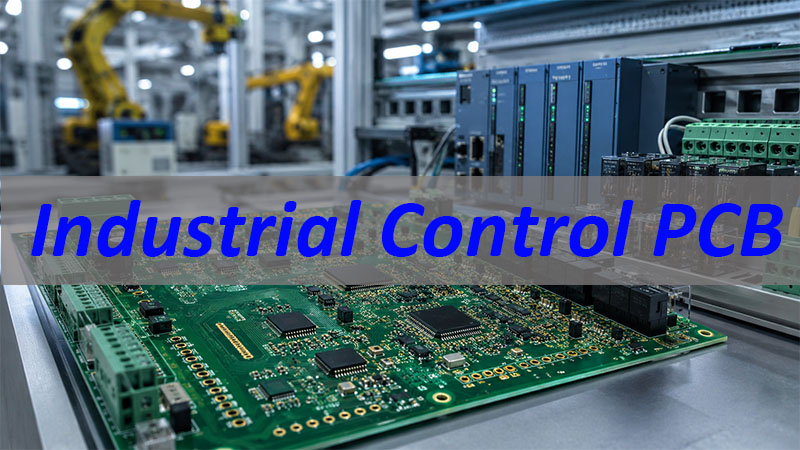
Industrial Control PCB is a printed circuit board designed for automation equipment, industrial controllers, PLC modules, control panels, temperature control systems, and other factory control devices. This article explains how EBest Circuit (Best Technology) supports Industrial Control PCB projects with early DFM review, PCB fabrication, material matching, industrial PCBA support, and manufacturing risk control.
What problems do OEM buyers often face when sourcing Industrial Control PCB projects?
- Incomplete files: Gerber, stack-up, drill, BOM, or test notes are missing.
- Wrong PCB type: FR4, multilayer, HDI, flexible PCB, or metal base options are not confirmed.
- Hidden production risk: Hole size, copper thickness, impedance, or solder mask rules are ignored.
- PCBA handoff issues: PCB fabrication and industrial control PCB assembly are handled separately.
- Unclear quotation: Industrial control PCB quotes vary because suppliers review different details.
EBEST reduces these risks through early engineering review and practical manufacturing support.
- File check: We review Gerber, drill, stack-up, material, copper, and test notes before production.
- PCB matching: We help match FR4, high-Tg FR4, multi-layer PCB, HDI printed circuit board, flexible PCB, or metal core PCB.
- Process review: We check copper weight, line width, spacing, holes, impedance, solder mask, and finish.
- PCBA support: We can add BOM review, SMT, DIP, AOI, X-ray when required, and customer-defined testing.
- Clearer quote: We quote based on real manufacturability, not just board size and quantity.
EBest Circuit (Best Technology) is a China industrial control PCB and PCBA manufacturer supporting industrial control FR4 PCB fabrication, industrial control PCBA, early DFM review, and turnkey project delivery. Our standard PCB capabilities include 1–50 layers, FR4 Tg 130–180 materials, 0.4–6.0 mm standard board thickness, FR4 inner copper from 0.5 oz to 6 oz, FR4 outer copper from 0.5 oz to 10 oz, controlled impedance, ENIG, ENEPIG, HASL, OSP, immersion tin, immersion silver, hard gold, soft gold, carbon ink, and gold finger plating. For industrial control PCB quotes, please send your Gerber files, stack-up, BOM, assembly drawing, copper thickness, surface finish, testing requirements, quantity, and delivery target to sales@bestpcbs.com.
What Should OEM Buyers Confirm Before Starting an Industrial Control PCB Project?
Industrial Control PCB projects should start with clear application and manufacturing requirements. This helps EBEST review whether the design can be built, assembled, tested, and repeated without unnecessary delays.
OEM buyers should confirm the following points before asking for industrial control PCB pricelist:
- Product use: PLC, control panel, motor control, sensor module, or temperature controller.
- PCB type: FR4, multilayer, HDI, flexible PCB, metal base, or high-frequency PCB.
- Board structure: Layer count, board thickness, copper weight, and stack-up.
- Reliability needs: Tg, impedance, surface finish, solder mask, and testing method.
- PCBA scope: Bare PCB only or PCB industrial controller assembly.
For example, a simple SMD PCB for industrial controller use may need standard FR4 and ENIG. A high-density PCB for industrial control systems may need finer line width, smaller vias, HDI structure, or controlled impedance. A control panel board with connectors and terminals may need stronger mechanical review and stable DIP assembly.
EBEST asks these questions early because industrial control boards often stay in production for years. A weak starting review can lead to repeat quotation changes, assembly problems, or unstable batch quality.
A clear project start gives the buyer a faster quote and gives the factory a better chance to control risk.
How Does EBEST Review Industrial Control PCB Files Before Production?
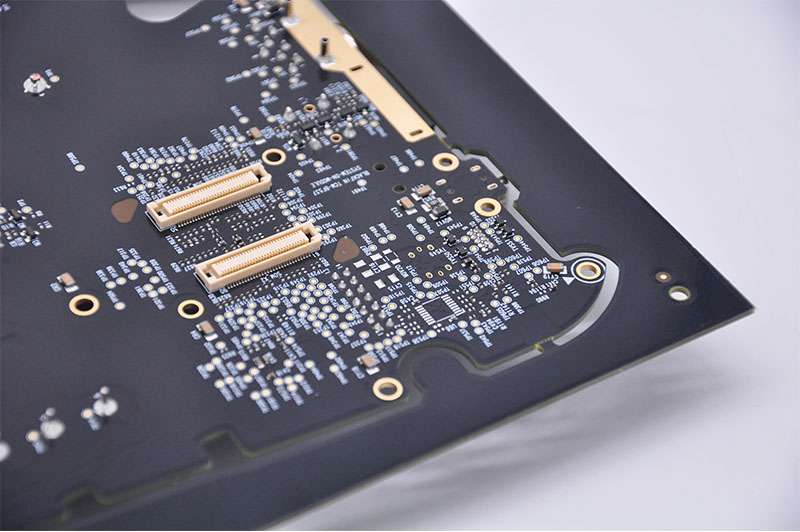
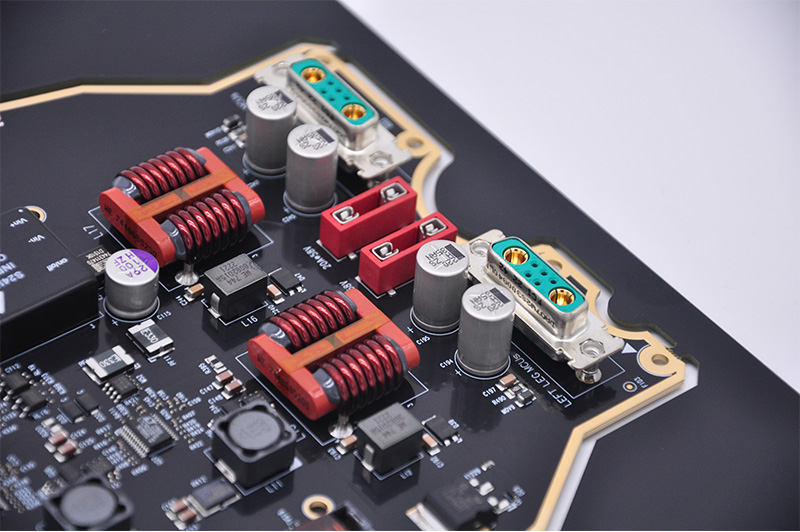
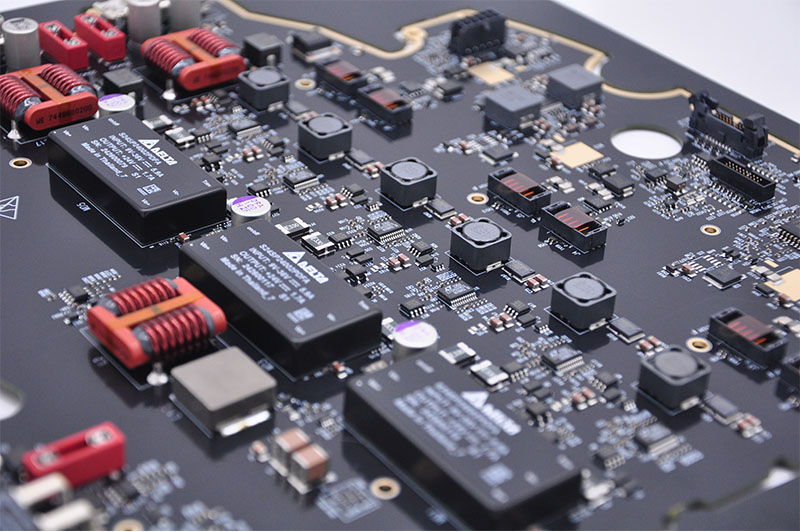
EBEST reviews Industrial Control PCB files before production to catch risks that may not be obvious from the board outline. The goal is not to slow the project down, but to prevent avoidable problems before fabrication and assembly.
Our early DFM review usually covers:
- Gerber and drill file completeness
- Layer count and stack-up
- FR4 Tg requirement
- Board thickness and tolerance
- Inner and outer copper weight
- Minimum line width and spacing
- Minimum mechanical hole size
- PTH and NPTH hole tolerance
- Impedance requirement
- Solder mask bridge and opening
- Surface finish
- Panelization and V-CUT design
- Gold finger or edge connector area
- BOM and assembly files if PCBA is required
EBEST’s standard PCB capability supports 1–50 layers and standard board thickness from 0.4 mm to 6.0 mm. For special projects, thinner, thicker, or higher-layer structures can be reviewed separately. This matters for industrial control system PCB projects because thick boards, dense routing, connectors, and repeated plugging can affect manufacturability.
For controlled impedance designs, EBEST reviews the stack-up, copper thickness, trace width, spacing, and impedance notes together. Our standard impedance tolerance is ±5Ω for impedance below 50Ω and ±10% for impedance of 50Ω or above.
A useful DFM review should tell the buyer what can be produced, what needs adjustment, and what may affect cost or lead time.
Which PCB Type Fits Industrial Control Applications?
Industrial control applications do not all use the same PCB type because signal density, current load, heat, space, and assembly needs are different.
EBEST can review the PCB type based on the actual control system.
Common options include:
- FR4 PCB: Suitable for standard control boards, I/O modules, sensor interfaces, and general industrial controller circuits.
- High-Tg FR4 PCB: Used for boards that need better heat resistance during assembly or long-term operation.
- Multilayer PCB: Suitable for PLC modules, automation controllers, and dense industrial control system PCB designs.
- HDI PCB: Used for compact controllers that need smaller vias, higher routing density, or limited board space.
- Flexible PCB / Rigid-Flex PCB: Suitable for moving parts, compact wiring, vibration-sensitive modules, or reduced connector use.
- Aluminum PCB: Used for LED industrial modules, thermal control areas, or power sections that need better heat spreading.
- High-Frequency PCB: Suitable for industrial communication modules or control boards using RF or low-loss materials.
EBEST supports FR4 Tg 130–180 materials and can also review Rogers, Taconic, Arlon, Nelco, and other specified materials when required.
The best PCB type is the one that fits the product’s current, heat, density, reliability, and assembly needs.
How Does EBEST Manufacture FR4 and Multilayer PCB for Industrial Controllers?
FR4 and multilayer PCB are common choices for industrial controllers because they support stable routing, controlled cost, and long-term manufacturability. EBEST manufactures these boards by reviewing material, copper, layer count, drilling, solder mask, and surface finish before production.
For industrial controller PCB projects, EBEST can support:
- 1–50 layer standard PCB production
- FR4 Tg 130–180 material options
- Standard board thickness from 0.4 mm to 6.0 mm
- FR4 inner copper from 0.5 oz to 6 oz
- FR4 outer copper from 0.5 oz to 10 oz
- Mechanical finished hole size from 0.15 mm to 6.5 mm
- Laser via minimum 0.10 mm under standard capability
- Standard through-hole aspect ratio up to 12:1
- Solder mask colors including green, black, blue, red, white, yellow, and others
- Surface finishes including HASL, lead-free HASL, ENIG, ENEPIG, OSP, immersion tin, immersion silver, hard gold, and soft gold
For multilayer PCB for industrial controller projects, the stack-up is important. The material, copper distribution, dielectric thickness, via structure, and impedance requirement all affect both electrical performance and production stability.
For thick copper designs, line width and spacing must be reviewed together with copper weight. A 1 oz board cannot use the same routing rule as a 6 oz, 10 oz, or heavier copper board.
EBEST manufactures FR4 and multilayer industrial control PCB projects with process review first, so the final board is not only built, but built with repeatable rules.
What PCBA Support Can EBEST Add to Industrial Control PCB Projects?
Many industrial control projects do not stop at bare PCB fabrication. After the board is made, customers may still need industrial control PCB assembly, SMD assembly, DIP assembly, connector soldering, inspection, and functional test support.
EBEST can add PCBA support when the project needs a more complete manufacturing workflow:
- BOM review and component sourcing review
- SMT assembly for SMD PCB industrial controller projects
- DIP assembly for connectors, relays, terminals, and large components
- BGA/QFN assembly when required
- AOI inspection
- X-ray inspection when required
- First article inspection
- Customer-defined functional testing
- Conformal coating or box-build support when required by the project
This is useful for industrial automation control panel PCB projects because these boards often include connectors, terminals, relays, communication ports, power input areas, and mixed SMT plus through-hole components.
If PCB fabrication and PCBA assembly are handled by different suppliers, the buyer may need to solve handoff issues alone. Common problems include incorrect component direction, unclear test points, poor connector fit, soldering difficulty, missing assembly notes, or late BOM changes.
EBEST’s value is to review the PCB and PCBA requirements together. This helps customers reduce repeated communication and improve project control from board fabrication to assembled controller board.
What Manufacturing Risks Should Industrial Control PCB Buyers Watch For?
Industrial Control PCB buyers should watch for manufacturing risks before the order enters production. Small details can become large problems when the board is used inside automation equipment or industrial controllers.
Common risks include:
- Wrong material grade
A low Tg material may not fit higher assembly or operating temperature needs. - Copper rule mismatch
High copper weight needs wider line width and spacing. - Hole and board thickness conflict
Small holes on thick boards may exceed practical aspect ratio limits. - Unclear impedance control
Without stack-up and impedance notes, the supplier may not quote or build correctly. - Weak connector area
Industrial control boards often need stable terminals, sockets, or gold finger contact areas. - Missing PCBA test plan
Electrical testing does not replace functional testing for assembled control boards.
EBEST helps reduce these risks through early DFM review, process capability review, material confirmation, impedance review, surface finish review, PCBA planning, inspection, and customer-defined testing.
For example, if a buyer only asks for an industrial control PCB pricelist, the quote may miss key risks. A reliable industrial control PCB supplier should ask about the product use, board structure, copper weight, assembly scope, and test requirement.
The best supplier is not the one that gives the fastest price. It is the one that finds problems before production.
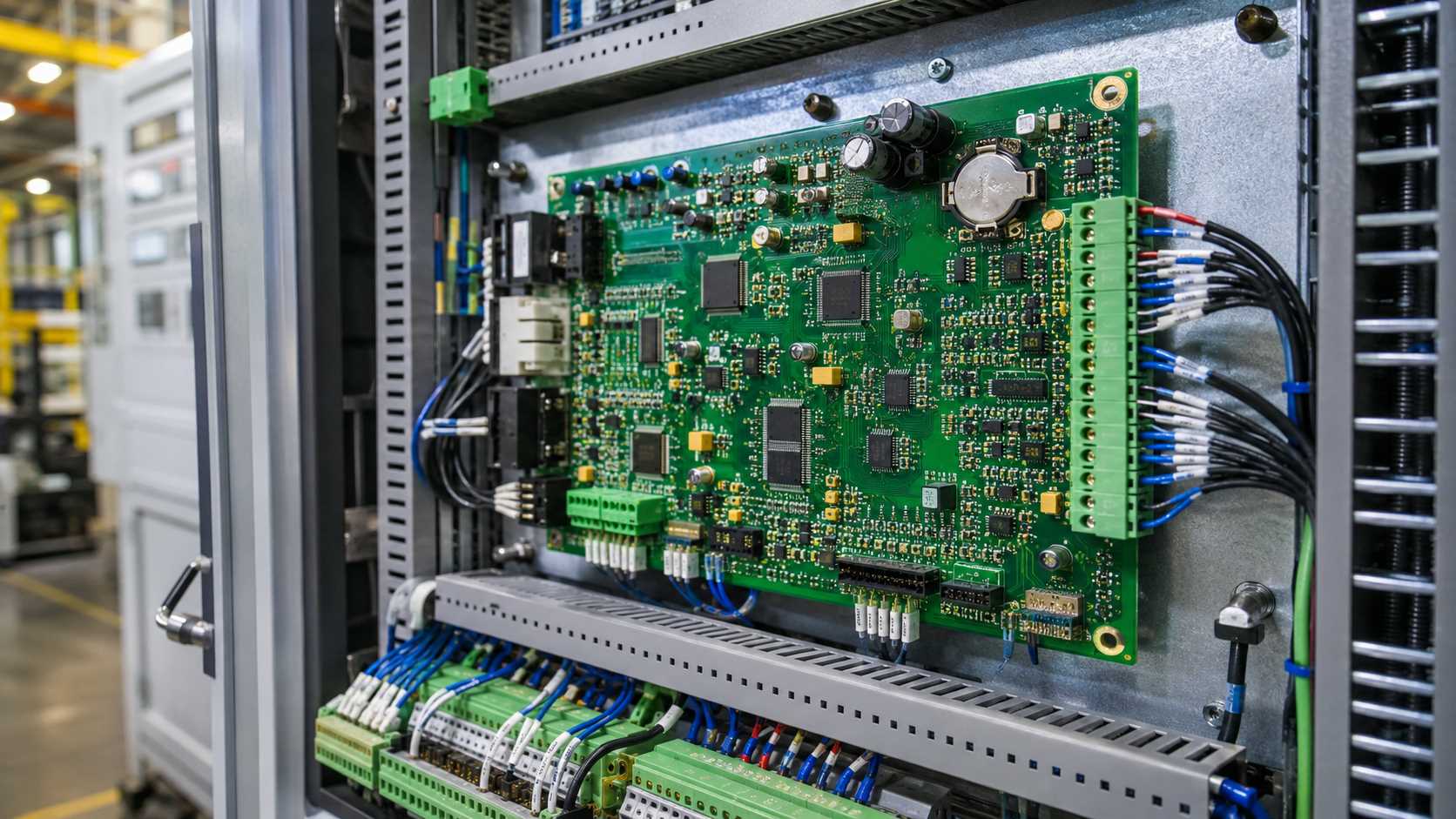
Industrial Control PCB Case: How Did EBEST Support an Automation Control Panel Project?
An OEM customer needed an Industrial Control PCB for an automation control panel used in factory equipment. The board was used inside an industrial controller module, requiring stable signal control, connector reliability, and smooth PCBA assembly.
EBEST supported the project through the following steps:
- Application review: The PCB was reviewed based on its use in an automation control panel and industrial controller module.
- PCB specification check: EBEST checked the 6-layer FR4 structure, Tg150 material, 1 oz inner and outer copper, 1.6 mm board thickness, and ENIG surface finish.
- Production file review: Gerber files, stack-up, copper thickness, board thickness, BOM, assembly drawing, connector areas, test points, and functional test requirements were reviewed before production.
- PCB and PCBA support: EBEST supported PCB fabrication, BOM review, SMT assembly, DIP connector assembly, AOI inspection, FAI, and customer-defined functional testing.
- Customer value: The customer reduced handoff risk between PCB fabrication, assembly, inspection, and testing.
Key project parameters:
- Application: Automation control panel PCB
- Product use: Industrial controller module
- PCB type: 6-layer FR4 PCB
- Material Tg: Tg150
- Copper thickness: 1 oz inner and outer copper
- Board thickness: 1.6 mm ±10%
- Solder mask / silkscreen: Green solder mask, white silkscreen
- Surface finish: ENIG
- Gold thickness: Au 1 μin
- Assembly support: SMT assembly and DIP connector assembly
- Inspection and testing: AOI, FAI, and customer-defined functional testing
FAQs About Industrial Control PCB
What Is an Industrial Control PCB?
An Industrial Control PCB is a printed circuit board used in automation equipment, PLC modules, control panels, industrial controllers, motor control units, temperature controllers, and factory control systems.
Can EBEST Support Industrial Control PCB Assembly?
Yes. EBEST can support industrial control PCB assembly with BOM review, component sourcing review, SMT assembly, DIP assembly, AOI inspection, X-ray inspection when required, FAI, and customer-defined functional testing.
What PCB Types Are Used in Industrial Control Systems?
Common options include FR4 PCB, high-Tg FR4 PCB, multilayer PCB, HDI PCB, flexible PCB, rigid-flex PCB, aluminum PCB, and high-frequency PCB.
What Files Should I Send for Industrial Control PCB Quotes?
Please send Gerber files, drill files, stack-up, material notes, copper thickness, surface finish, BOM, pick-and-place file, assembly drawing, testing requirement, quantity, and delivery target.
Can EBEST Manufacture Bulk Industrial Control FR4 PCB Orders?
Yes. EBEST can support bulk industrial control FR4 PCB and repeat orders after confirming material, copper thickness, surface finish, tolerance, testing, and PCBA requirements.
Is EBEST an Industrial Control PCB Manufacturer in China?
Yes. EBest Circuit (Best Technology) is a PCB and PCBA manufacturer in China supporting OEM customers with Industrial Control PCB fabrication, assembly support, DFM review, and engineering communication.
In closing, industrial control PCB is designed for automation equipment, industrial controllers, PLC modules, control panels, temperature control systems, and factory control electronics. This article explained how OEM buyers can confirm project requirements, use EBEST’s early DFM review, select the right PCB type, manufacture FR4 and multilayer PCB, add PCBA support, avoid manufacturing risks, and learn from an automation control panel case.
EBest Circuit (Best Technology) supports Industrial Control PCB projects with PCB fabrication, early DFM review, FR4 and multilayer production, HDI PCB, heavy copper PCB, metal base PCB, high-frequency PCB, industrial control PCB assembly, inspection, and customer-defined testing. For your next Industrial Control PCB project, please send your files and requirements to sales@bestpcbs.com.
You may also like

Tags: industrial control fr4 pcb factory, Industrial Control PCB, Industrial Control PCB Assembly