ENEPIG PCB Finish stands for Electroless Nickel Electroless Palladium Immersion Gold. It is a sophisticated, lead-free surface finishing process for printed circuit boards (PCBs) that provides exceptional reliability for demanding applications. This article will explore the key advantages of ENEPIG, compare it with other finishes like ENIG, and outline why it is the superior choice for high-reliability electronics.
Are you struggling to find a surface finish that balances superior solderability, long-term shelf life, and robust performance under stress, all without breaking the bank?
- Poor Wire Bonding Performance: Traditional finishes like ENIG can suffer from “black pad” nickel corrosion, leading to weak and unreliable gold or aluminum wire bonds, a critical failure point in advanced packaging.
- Limited Multiple Reflow Capability: Many finishes degrade after 2-3 solder reflow cycles, causing solder joint defects and limiting design flexibility for complex, double-sided assemblies.
- Short Shelf Life and Rapid Oxidation: Finishes like Immersion Silver or OSP quickly oxidize, leading to poor wetting and solderability defects if boards are not assembled within a short timeframe.
- Inconsistent Contact Reliability for Connectors: Repeated mating and unmating of connectors can wear through thin gold layers, exposing underlying nickel that corrodes and increases contact resistance.
- High Cost of Pure Gold Finishes: While thick hard gold offers excellent durability, its high material cost makes it prohibitively expensive for most commercial and industrial applications.
The solution to these persistent challenges lies in adopting the advanced ENEPIG surface finish. This technology directly addresses each pain point with a robust, multi-layer metallic structure.
- Superior Wire Bonding Integrity: The thin, uniform palladium layer in ENEPIG acts as a barrier, preventing nickel corrosion (“black pad”) and ensuring strong, reliable gold and aluminum wire bonds for IC packaging.
- Excellent Multiple Reflow Performance: The robust nickel-phosphorus and palladium layers withstand multiple solder reflow cycles (typically 5+), enabling complex, high-density assemblies without solderability loss.
- Extended Shelf Life: The final immersion gold layer provides excellent oxidation resistance, offering a typical shelf life of 12 months or more, which is perfect for pcb surface finish enepig needs in projects with long lead times.
- Enhanced Wear Resistance for Connectors: The combination of a hard nickel layer and a ductile palladium layer creates a durable surface that resists wear from connector cycles, maintaining stable contact resistance.
- Cost-Effective Alternative to Hard Gold: ENEPIG provides performance comparable to thick hard gold in many applications but at a significantly lower cost, as it uses only a thin layer of immersion gold.
At EBest Circuit (Best Technology), we are a specialized PCB and PCBA manufacturer with deep expertise in advanced surface finishes. Our state-of-the-art production lines and stringent quality control processes ensure that every ENEPIG PCB finish we deliver meets the highest standards of consistency and reliability. We partner with our clients to navigate technical challenges and deliver optimized solutions. For a consultation on your next project, pls feel free to contact us at sales@bestpcbs.com.
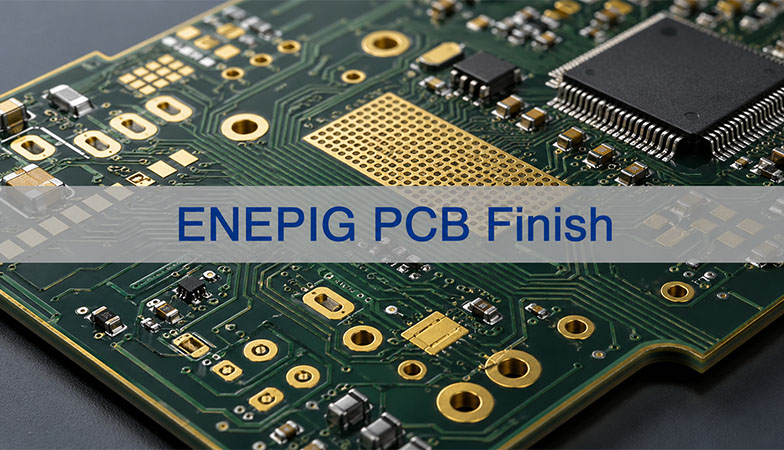
What Is ENEPIG PCB Finish?
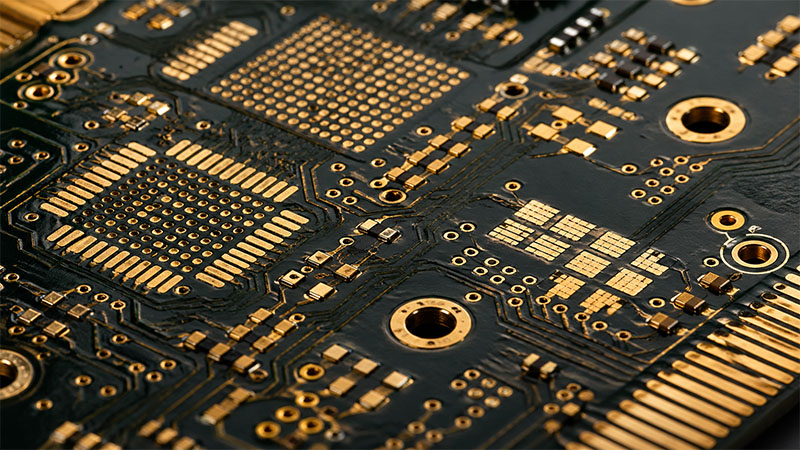
ENEPIG (Electroless Nickel Electroless Palladium Immersion Gold) is a multi-layer, metallic surface finish applied to the exposed copper circuitry of a PCB. It is renowned for its versatility and high reliability. Unlike single-layer finishes, ENEPIG builds a robust, composite barrier that protects the underlying copper and provides multiple functional benefits, making it ideal for demanding, high-value electronics.
The finish is constructed through a sequential chemical plating process:
- Electroless Nickel (EN): A nickel-phosphorus (Ni-P) alloy layer, typically 3-6 µm thick, is deposited on the copper. This layer acts as the primary diffusion barrier and provides a flat, hard surface.
- Electroless Palladium (EP): A thin palladium layer (0.05-0.2 µm) is plated over the nickel. This is the key differentiator. Palladium prevents the corrosion of the nickel layer (solving the “black pad” issue) and enhances wire bondability.
- Immersion Gold (IG): A very thin, pure gold layer (0.03-0.1 µm) is deposited over the palladium. Its primary function is to prevent oxidation of the palladium, ensuring excellent solderability and wire bondability over a long shelf life.
The synergy of these three layers creates a finish that is greater than the sum of its parts, offering a unique combination of solderability, bondability, and durability.
What Are the Main Advantages of ENEPIG PCB Finish?
ENEPIG PCB finish offers a compelling set of advantages that address the limitations of other common surface treatments, making it a top-tier choice for high-reliability applications. Its benefits stem from the intelligent design of its three-layer structure.
- Exceptional Solder Joint Reliability: The nickel layer provides a strong, intermetallic compound (IMC) formation with solder, while the palladium and gold layers ensure excellent wetting. This results in strong, void-free solder joints that withstand thermal cycling and mechanical stress.
- Superior Wire Bonding Capability: It is excellent for both gold and aluminum wire bonding. The palladium layer eliminates the risk of “black pad” syndrome associated with ENIG, ensuring high bond strength and low electrical resistance for chip-on-board (COB) and advanced packaging.
- Excellent Multiple Reflow Performance: The finish maintains its solderability through multiple reflow cycles (often 5 or more), which is critical for complex double-sided SMT assemblies, rework, and prototyping.
- Long Shelf Life: The inert gold surface provides superior anti-oxidation properties. ENEPIG-finished boards typically have a shelf life of 12 months under standard storage conditions, compared to 3-6 months for ENIG or just weeks for OSP/Immersion Silver.
- Good Electrical Performance: The finish provides a flat, smooth surface, which is beneficial for high-frequency signal integrity. It offers stable contact resistance, making it suitable for pcb surface finish enepig applications involving connectors and switches.
- Lead-Free and RoHS/REACH Compliant: The process is entirely lead-free and uses no hazardous substances restricted by major environmental regulations, ensuring global compliance.
ENEPIG vs. ENIG: What Is the Difference?
While both ENEPIG and ENIG (Electroless Nickel Immersion Gold) are widely used, the presence of the palladium layer in ENEPIG creates significant performance differences. Understanding these distinctions is crucial for selecting the right finish for your application.
The table below provides a direct comparison:
| Feature | ENIG (Ni/Au) | ENEPIG (Ni/Pd/Au) | Advantage |
|---|---|---|---|
| Layer Structure | Nickel + Immersion Gold | Nickel + Palladium + Immersion Gold | ENEPIG has an extra Pd barrier layer. |
| Wire Bonding | Prone to “Black Pad”, weaker bonds. | Excellent for both Au & Al wire bonding. | ENEPIG is far superior for packaging. |
| Multiple Reflow | Good for 2-3 cycles. | Excellent for 5+ cycles. | ENEPIG offers better durability. |
| Shelf Life | Good (~6-12 months). | Very Good (12+ months). | ENEPIG has a slight edge. |
| Cost | Lower. | Moderately higher. | ENIG is more cost-effective for standard needs. |
| Best For | Standard SMT, moderate reliability. | High-reliability, packaging, connectors. | Depends on application requirements. |
In summary, ENIG is a robust, cost-effective general-purpose finish. ENEPIG is the premium upgrade, specifically excelling in applications requiring superior wire bonding integrity, extended thermal cycle resistance, and maximum long-term reliability. The choice often comes down to whether the critical need for bonding or extreme reflow justifies the additional cost of the palladium layer.
What Applications Commonly Use ENEPIG PCB Finish?
ENEPIG PCB finish is the go-to solution for applications where failure is not an option. Its balanced portfolio of properties makes it indispensable in several high-tech and demanding sectors.
- Advanced IC Packaging & Semiconductor Testing: This is the primary application. ENEPIG is essential for chip-on-board (COB), flip-chip, and BGA substrates where reliable gold or aluminum wire bonding is critical. Its resistance to “black pad” is paramount here.
- Aerospace, Defense, and Medical Electronics: These fields demand extreme reliability over long product lifecycles and under harsh conditions (vibration, thermal cycling). ENEPIG’s robust solder joints and long shelf life are vital.
- Automotive Electronics (especially ADAS and powertrain): Under-hood modules and advanced driver-assistance systems require finishes that can withstand high temperatures, humidity, and constant vibration. ENEPIG’s multiple reflow capability supports complex designs.
- High-Frequency/RF Components: The smooth, flat surface of ENEPIG is beneficial for controlled impedance and low signal loss at high frequencies, making it suitable for RF PCBs, though other finishes like Immersion Silver may be preferred for ultimate performance.
- Connectors and Interposers: Applications involving frequent mating/unmating (e.g., board-to-board connectors, test sockets) benefit from ENEPIG’s wear resistance and reliable contact surface.
Is ENEPIG PCB Finish Suitable for High-Frequency and High-Speed PCBs?
Yes, ENEPIG PCB finish is a suitable and often excellent choice for many high-frequency and high-speed PCB applications, though with some important considerations compared to specialized finishes.
- Advantages for HF/HS Designs:
- Surface Smoothness: The electroless nickel layer provides a very flat and smooth surface, which minimizes signal scattering and skin effect losses at high frequencies, leading to better signal integrity.
- Good Consistency: The auto-catalytic process ensures uniform thickness across the board, which is critical for maintaining consistent impedance control.
- Reliable Solder Joints: For the components attached to these sensitive boards, ENEPIG ensures strong, reliable interconnections that won’t become points of failure.
- Considerations and Limitations:
- Nickel Layer Skin Effect: At very high frequencies (e.g., > 10 GHz), the nickel layer can become a concern. Nickel has higher resistivity and magnetic permeability compared to copper or silver. The signal, traveling on the skin of the conductor, encounters this nickel layer, which can introduce slightly higher insertion loss compared to a pure silver or copper finish.
- Comparison to ENIG: For HF applications, ENEPIG is generally similar to or slightly better than ENIG, as the thin palladium layer does not significantly worsen the high-frequency performance.
- Best Alternatives for Extreme HF: For millimeter-wave applications (e.g., 5G, radar) where minimal loss is absolutely critical, finishes like Immersion Silver (IAg) or Electroless Silver (EPAg) are often preferred due to silver’s superior conductivity. However, they trade off shelf life and wire bondability.
Conclusion for HF Use: ENEPIG is a high-reliability, all-rounder finish that performs very well for high-speed digital and most RF applications up to several GHz. It is chosen when the design also requires wire bonding, long shelf life, or extreme solder joint reliability. For loss-sensitive, ultra-high-frequency designs where bonding is not needed, a silver-based finish may be optimal.
How Long Is the Shelf Life of ENEPIG PCB Finish?
The shelf life of ENEPIG PCB finish is typically 12 months or more when stored under proper conditions, which is one of its key strengths. This extended shelf life is a direct result of its structure: the thin immersion gold layer on top perfectly seals the surface, preventing the oxidation of the underlying palladium and nickel layers.
- Standard Storage Conditions: To achieve this 12-month shelf life, boards should be stored in a temperature and humidity-controlled environment (e.g., < 30°C, < 70% relative humidity). They should be kept in sealed, moisture-barrier bags with desiccant.
- Comparison with Other Finishes:
- OSP & Immersion Silver: 3-6 months (prone to oxidation).
- HASL: 6-12 months (but with planarity issues).
- ENIG: 6-12 months.
- ENEPIG: 12+ months.
- Key Factor for Longevity: The quality and integrity of the final gold layer are crucial. A continuous, pore-free gold layer is essential for maximum oxidation resistance. Reputable suppliers like EBest Circuit employ strict process controls to ensure this quality.
This long shelf life provides tremendous logistical flexibility for manufacturers, allowing for longer inventory holding, global shipping, and assembly scheduling without the urgency imposed by more reactive finishes.
What Quality Control Tests Are Needed for ENEPIG Surface Finish?
Implementing rigorous Quality Control (QC) is non-negotiable for ENEPIG surface finish due to its complex multi-layer structure. Key tests focus on verifying the thickness, composition, and functionality of each layer.
A comprehensive QC regimen includes:
- X-Ray Fluorescence (XRF): This is the primary non-destructive test. It measures the thickness of each metal layer (Ni, Pd, Au) accurately and ensures they are within the specified range (e.g., Ni: 3-6 µm, Pd: 0.05-0.2 µm, Au: 0.03-0.1 µm).
- Solderability Test (e.g., Wetting Balance Test): Quantitatively measures the solder wetting force and speed, verifying the finish’s performance for the actual assembly process, even after accelerated aging.
- Wire Bondability Test: For applications requiring it, destructive pull and shear tests are performed on bonded wires (both gold and aluminum) to validate bond strength and ensure the absence of “black pad” defects.
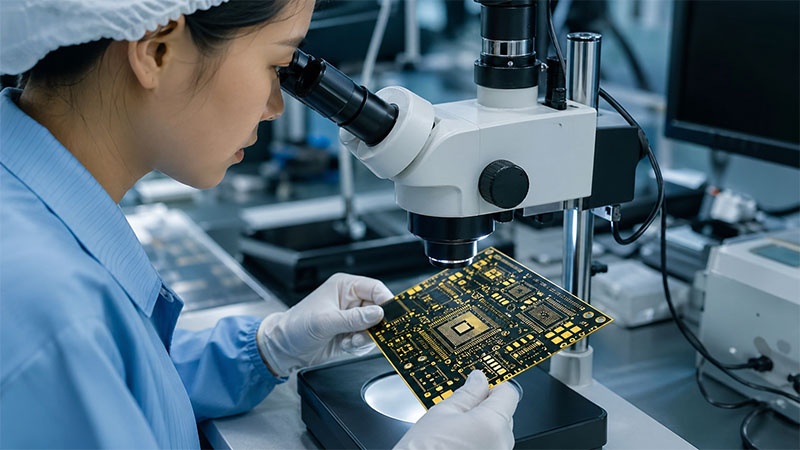
- Cross-Sectional Analysis: A destructive test where a sample is potted, polished, and examined under a microscope. It checks for layer uniformity, adhesion, and the absence of voids or corrosion at the interfaces.
- Visual Inspection & Adhesion Test: Automated Optical Inspection (AOI) checks for discoloration, blotches, or skipping. A simple tape test can verify the adhesion of the finish to the underlying copper.
- PCT/HAST Testing: Pressure Cooker Test or Highly Accelerated Stress Test subjects boards to high temperature and humidity to simulate long-term aging and verify the finish’s resistance to corrosion and oxidation.
How to Evaluate a PCB Supplier’s ENEPIG Surface Finish Capability?
Choosing the right supplier for your ENEPIG PCB finish is as important as specifying the finish itself. Here is a framework for evaluation:
- Process Control & Certification: Inquire about their process control charts, chemical bath maintenance schedules, and industry certifications (e.g., IATF 16949 for automotive, ISO 13485 for medical). A disciplined process is the foundation of consistency.
- Quality Control Data & Reports: Request sample QC reports. A reputable supplier should readily provide XRF thickness data, solderability test results, and even cross-sectional micrographs as evidence of their capability and consistency.
- Technical Support & DFM Feedback: Assess their engineering team’s expertise. Can they provide Design for Manufacturability (DFM) feedback specific to ENEPIG, such as optimal pad design for wire bonding or solder mask dam requirements?
- Sample Evaluation: Before placing a production order, always request physical samples. Perform your own solderability tests, and if applicable, wire bonding trials. Examine the surface finish for uniformity and color consistency.
- Application Experience: Ask for case studies or references for projects similar to yours, especially in your target industry (e.g., medical, automotive). Proven experience in high-reliability sectors is a strong positive indicator.
- Supply Chain Transparency: Understand the source of their chemicals and palladium. Suppliers partnering with reputable chemical vendors typically achieve more stable and higher-quality results.
In closing, ENEPIG PCB Finish represents the pinnacle of versatility and reliability in PCB surface finishes. This article has detailed its structure, advantages over alternatives like ENIG, and its critical role in high-reliability sectors from aerospace to advanced packaging. By understanding its long shelf life, rigorous QC needs, and supplier evaluation criteria, you can confidently specify pcb surface finish enepig for your most demanding projects.
At EBest Circuit (Best Technology), we specialize in manufacturing high-reliability PCBs with advanced finishes like ENEPIG. Our commitment to stringent process control, comprehensive testing, and expert technical support ensures your boards perform as designed, batch after batch. Pls feel free to contact our engineering team anytime at sales@bestpcbs.com for a consultation.