





LED Grow Light Aluminum PCB is a metal-core printed circuit board designed for grow lighting systems, using an aluminum base to improve heat dissipation, support high-density LED layout, and ensure stable long-term lighting performance. This article explains how LED Grow Light Aluminum PCB designs work, what parameters matter before production, how to improve thermal reliability, and how to choose the right manufacturing partner for custom projects.
EBest Circuit (Best Technology) is a professional LED Grow Light Aluminum PCB manufacturer with solid experience in thermal design, spectrum-compatible PCB structure, and stable production for plant lighting applications. We understand that grow light projects are not only about making a board, but about balancing heat dissipation, spectrum layout compatibility, structural reliability, and long-term operating stability in real working conditions. For customers who care about thermal consistency, optical adaptation, scalable supply, and dependable long-run performance, we provide practical engineering support from PCB design review to manufacturing execution. Whether your focus is product quality, thermal efficiency, structural matching, or batch supply capability, our team can help turn your grow light concept into a production-ready and reliable solution. Pls feel free to contact us anytime at +86-755-2909-1601 to discuss your LED Grow Light Aluminum PCB project.
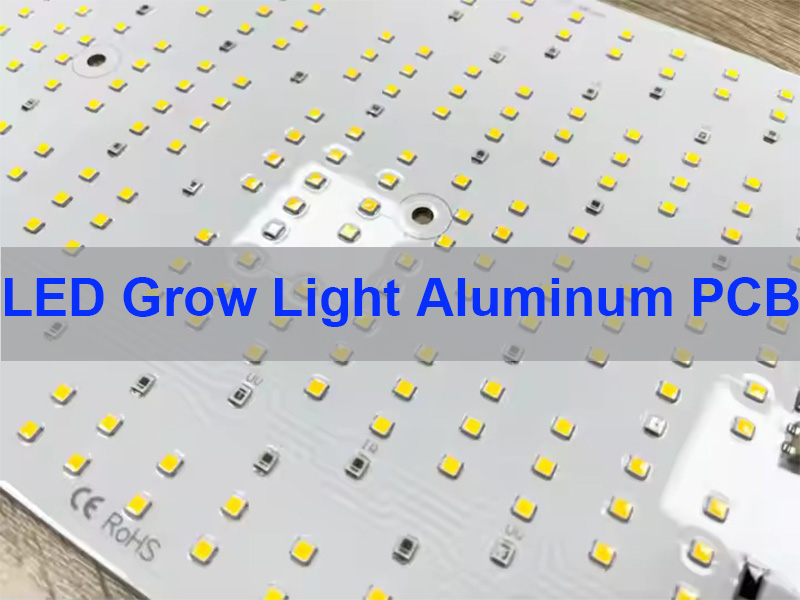
What Is LED Grow Light Aluminum PCB and Why Is It Common in Plant Lighting?
LED Grow Light Aluminum PCB is a metal-core circuit board built with an aluminum base to improve heat dissipation for LED lighting applications. In plant lighting, it is commonly used because the board must support continuous operation, high LED density, and stable junction temperature under demanding daily use.
Compared with a standard board, an aluminum-based structure moves heat away from the LED package more efficiently. That helps reduce thermal accumulation and supports more consistent optical and electrical performance across the board.
Why it is widely used in grow lights
- Supports high-power and medium-power LED arrays
- Improves thermal spreading across long bars and panel boards
- Provides good mechanical support for thin or extended fixtures
- Works well in linear, strip, round, and custom fixture designs
For many horticulture products, the board is not just a substrate. It is a thermal platform. That is why board selection has a direct effect on performance and service life.
Notably, aluminum PCB is common in grow lights because thermal control and structural stability matter every day of operation. To sum up, it offers a practical foundation for reliable LED plant-lighting assemblies.
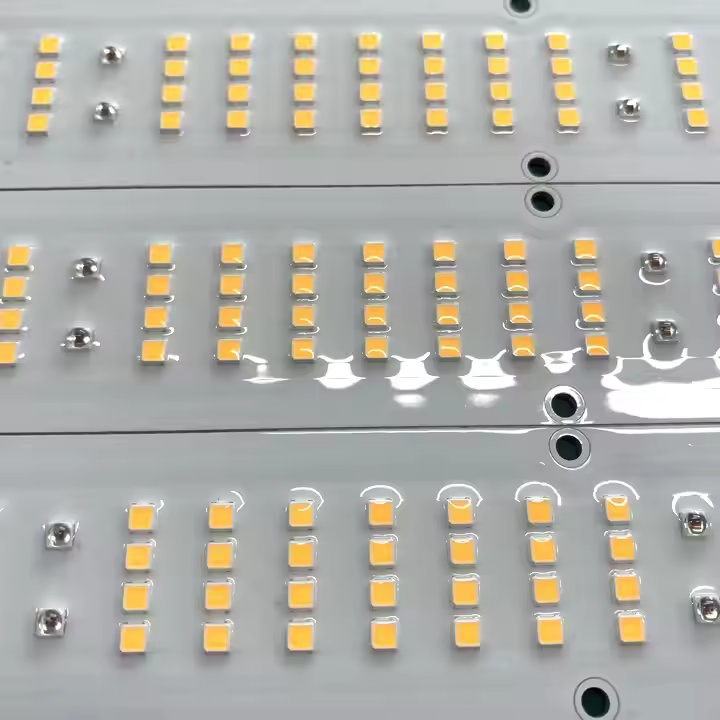
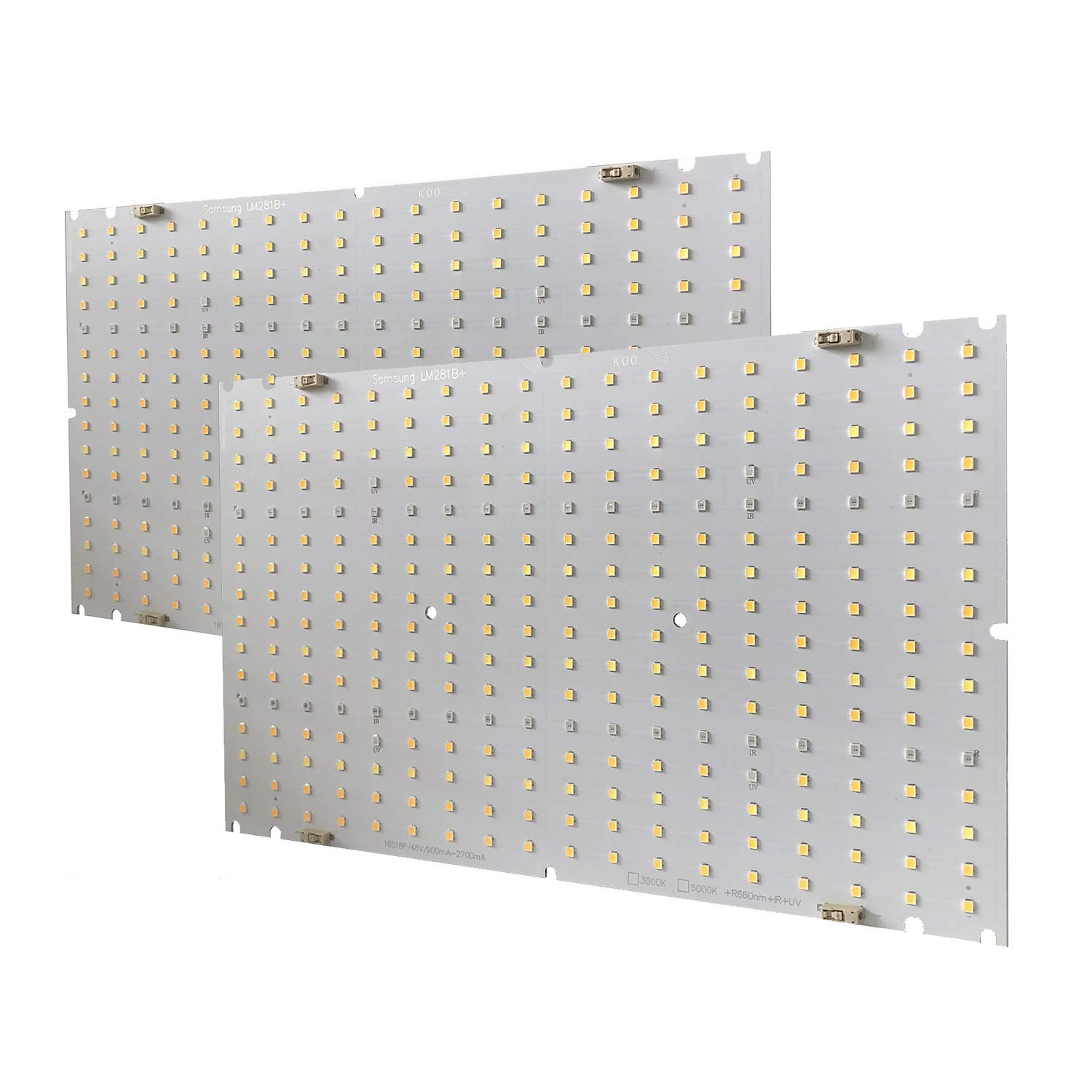
Why Is Aluminum PCB Better Than Standard FR4 for Grow Light Applications?
For most grow-light boards, aluminum is preferred because the job is thermal before it is decorative. Standard FR4 can still work in lower-power designs, but once LED density rises, heat becomes harder to spread and remove. That is where aluminum PCB offers a clear advantage.
Aluminum PCB versus FR4 for grow light products
| Item | Aluminum PCB | FR4 PCB |
|---|---|---|
| Heat dissipation | Strong | Moderate |
| Rigidity | Higher | Moderate |
| LED density fit | Better | Limited |
| Heatsink coupling | Direct | Indirect |
| Typical use | Light engine | Control board |
| Long-run stability | Better | Lower |
This does not mean FR4 has no place. In many fixtures, the driver or control section can still use FR4, while the LED light board uses aluminum. That mixed approach is practical when each board has a different job.
As a result, aluminum PCB is usually the better fit when the LED board carries the real thermal load. From a product standpoint, that helps keep the fixture more stable during sustained use.
How Is an Aluminum PCB LED Grow Light Board Structured?
The structure of an Aluminum PCB LED Grow Light board is simple in appearance but important in function. A typical board contains a copper circuit layer, a thermally conductive dielectric layer, and an aluminum base. These layers work together to carry current, insulate electrically, and move heat downward into the metal substrate.
Main layers in a typical grow light aluminum PCB
- Copper circuit layer for electrical routing and LED pad connection
- Thermal dielectric layer for electrical isolation with heat transfer capability
- Aluminum base layer for heat spreading and structural support
Optional design elements
- Solder mask and legend
- Reflective white surface for light efficiency in some designs
- Mounting holes for direct heatsink fastening
- Connector areas for modular assembly
- Custom outline for bars, rings, panels, or segmented boards
Good structure selection is not only about thermal conductivity. It is also about assembly compatibility, flatness, and whether the board fits the mechanical design of the final lamp.
In real-world applications, the board stack directly shapes thermal behavior and assembly stability. Therefore, the structure should always be chosen with the final fixture in mind.
Why More Buyers Start with the Right LED Grow Light Aluminum PCB Partner?
If your end product depends on stable brightness, even heat spreading, and repeatable assembly, your supplier choice affects the result from the first file review. A capable manufacturer does more than make a board. They check thermal paths, pad geometry, current load, soldering windows, and the match between board design and final fixture structure.
That matters even more in plant lighting. These products often run for long daily cycles, use dense LED arrays, and work in warm or humid environments. A weak board design can lead to hot spots, color shift, shortened LED life, or uneven performance across the fixture.
What you should expect before placing an order
- Core parameter review including board size, aluminum thickness, copper weight, thermal dielectric, voltage, current, LED count, and mounting method
- DFM support to improve manufacturability before tooling starts
- Assembly compatibility checks for SMT process, reflow profile, connector fit, and final heatsink attachment
- Project communication that is fast, clear, and technical enough to solve issues early
If you are sourcing PCB Aluminum LED Grow Light products for a new or ongoing project, EBest Circuit (Best Technology) can support fabrication, assembly, and engineering review in one workflow. Send your files to sales@bestpcbs.com for a technical evaluation and production support.
Therefore, a strong supplier reduces redesign risk before the first batch starts. In practice, that improves manufacturability, thermal stability, and delivery confidence at the same time.
Why Choose Us for LED Grow Light Aluminum PCB?
Buyers do not only compare boards. They compare consistency, response speed, process control, and whether a supplier can support real production conditions. For LED Grow Light Aluminum PCB projects, the most important value usually comes from thermal design awareness, assembly experience, and supply continuity.
Why customers choose EBest Circuit (Best Technology)
- Quality focus with controlled manufacturing and inspection for aluminum PCB and LED assembly projects
- Lead time support for samples, pilot runs, and repeat production
- Engineering service with DFM feedback, stack-up advice, and assembly-oriented review
- Supply support for PCB fabrication, SMT assembly, and one-stop project coordination
- Communication efficiency so technical questions are solved quickly instead of being delayed between teams
What this means for your project
A grow light board is not just a lighting PCB. It is part of a full thermal and electrical system. We review the board as a working product, not as an isolated drawing. That helps reduce board warpage risk, poor solder joints, current imbalance, and avoidable layout revisions.
For buyers looking for Light Grow LED Aluminum PCB, Grow Light Aluminum PCB LED, or PCB LED Grow Light Aluminum production support, we can help turn design data into a stable and repeatable build.
Overall, choosing the right manufacturer improves both board performance and project coordination. As a result, the product reaches assembly with fewer unknowns and better long-term consistency.
What Services and Certifications Should a LED Grow Light Aluminum PCB Supplier Have?
A qualified supplier should offer more than bare-board fabrication. For horticulture lighting, it is better to work with a manufacturer that can review the design, build the board, assemble the LEDs, and control traceability during production. That shortens communication loops and helps keep thermal and assembly decisions aligned.
Our service scope and certifications
| Category | Details | Why It Matters for LED Grow Light Aluminum PCB |
|---|---|---|
| PCB Fabrication | Aluminum PCB, MCPCB, custom board sizes, prototype to production | Supports custom thermal structures and LED board formats |
| PCBA Service | LED SMT assembly, connector assembly, functional support | Improves build consistency for populated grow light boards |
| Engineering Support | DFM review, pad design check, manufacturability advice | Helps prevent rework and process instability |
| Supply Coordination | One-stop handling for PCB and assembly workflow | Reduces handoff issues between multiple vendors |
| ISO 9001 | Quality management system | Supports process discipline and documentation control |
| ISO 13485 | Medical quality system capability | Shows strong process rigor and traceability awareness |
| IATF 16949 | Automotive quality system capability | Reflects high expectations for consistency and process control |
| AS9100D | Aerospace quality system capability | Demonstrates disciplined production management |
These capabilities are useful because many grow-light projects move from custom sampling into recurring production. A supplier with stable systems is better prepared for that transition.
From an engineering perspective, service range and quality systems directly affect repeatability. In real-world projects, that means smoother transfer from design files to finished boards.
What Problems Do Buyers Usually Face with LED Grow Light Aluminum PCB Projects and How Do We Solve Them?
Most buyers are not struggling with the basic concept of an aluminum board. They struggle with execution. The common problems are uneven temperature rise, unstable assembly yield, unclear design input, LED mismatch, and uncertainty about how the board will behave once mounted into a real fixture.
Common pain points and our solutions
| Pain Point | Typical Issue | Our Support |
|---|---|---|
| Thermal hot spots | Uneven heat | Thermal layout review |
| Unclear files | Missing notes | Early file check |
| Assembly instability | Solder inconsistency | DFM optimization |
| Custom dimensions | Hard to process | Shape-based planning |
| Long-run reliability | Performance drift | Stable material choice |
| Supplier coordination | Slow handoff | One-stop execution |
If you are developing a custom Aluminum PCB LED Grow Light product, we can review the files and help convert concept drawings into a production-ready board structure. Orders and technical inquiries can be sent to sales@bestpcbs.com.
In short, most failures come from the gap between design intent and production reality. This means early engineering review is often the fastest way to protect yield and long-term stability.
What Core Parameters Should You Confirm Before Ordering LED Grow Light Aluminum PCB?
Before production starts, buyers should confirm the board parameters that most affect performance and manufacturability. This saves time, reduces back-and-forth, and helps the supplier make the right recommendations from the start.
Key parameters to confirm
- Board size and shape such as strip, round, square, or custom linear panel
- Aluminum thickness based on structural and thermal needs
- Copper thickness based on current load and routing width
- Dielectric type based on insulation and heat transfer targets
- LED package and quantity such as mid-power, high-power, or mixed spectrum layout
- Input voltage and drive method including series-parallel arrangement
- Mounting method such as screws, adhesive interface, or integrated heatsink contact
- Environmental expectation including humidity, enclosure style, and operating duration
Why this matters
A board that looks correct on paper may still become difficult to assemble if pad spacing is tight, connector placement is awkward, or the board is too long for stable process handling. Clear data prevents those avoidable issues.
If you need support defining these parameters for Light LED Grow Aluminum PCB or Grow Light LED Aluminum PCB projects, EBest Circuit (Best Technology) can review the requirements before release.
This means better parameter clarity leads to better fabrication and assembly decisions. Overall, early specification control is one of the simplest ways to improve project stability.
How Do Spectrum Design and LED Layout Affect Grow Light Board Performance?
In grow-light products, board design is closely tied to spectrum strategy. The board must physically support the LED mix, spacing, and current distribution needed for plant growth targets. That makes the layout important not only for electrical routing, but also for light uniformity and thermal balance.
What layout decisions usually matter most
- LED spacing to avoid clustered hot spots and uneven light distribution
- Mixed wavelength placement for full-spectrum or targeted plant-light recipes
- Series and parallel planning for current balance and driver compatibility
- Board length and segmentation for modular fixtures and easier thermal spreading
Common spectrum choices in grow light boards
- Full-spectrum white combinations for general plant growth
- Red-enhanced layouts for flowering support
- Blue-support combinations for vegetative growth and compact morphology
- Mixed custom arrays for specialized horticulture systems
A good layout should keep electrical performance, thermal behavior, and optical goals aligned. If only one of those is optimized, the final product may still feel unbalanced in real use.
From an application view, smart LED placement improves both board reliability and lighting consistency. Notably, layout quality often decides whether a grow light feels engineered or merely assembled.
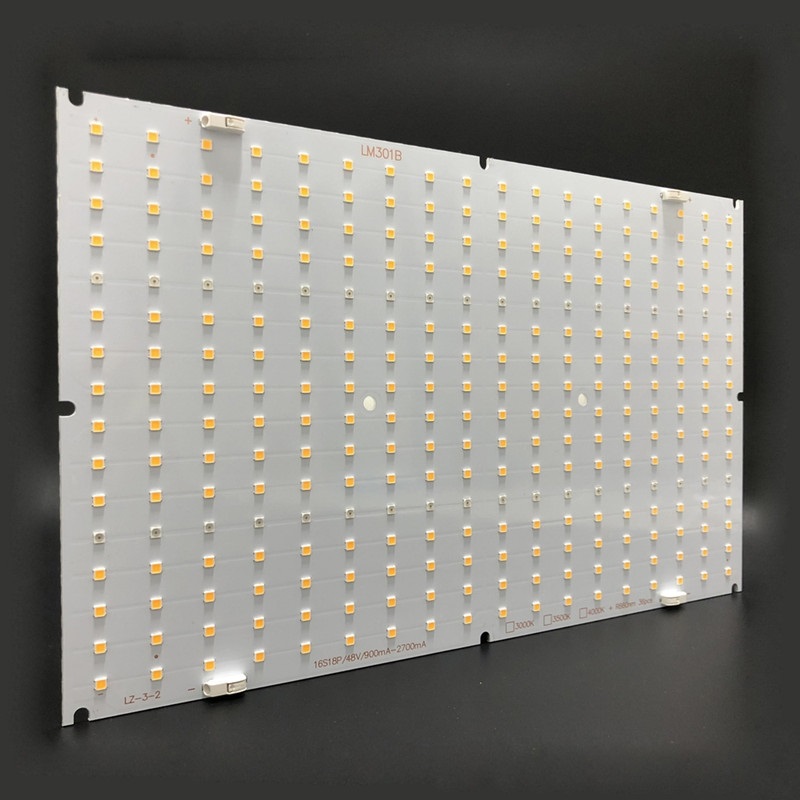
How Do Thermal Design and Assembly Control the Reliability of LED Aluminum PCB Grow Light Products?
Thermal design is one of the biggest factors behind long-term grow-light reliability. Even a good aluminum board will not perform well if the heat path is incomplete. The substrate, copper layout, dielectric, soldering process, and heatsink interface all need to work together.
Thermal and assembly factors that matter most
- Uniform copper distribution to reduce localized temperature rise
- Proper LED spacing to avoid thermal crowding
- Stable reflow profile to protect solder quality and LED integrity
- Flat board condition for strong contact with the heatsink surface
- Reliable interface attachment using the right mounting method and contact pressure
Why assembly quality matters
Many field issues do not start from the substrate alone. They start from poor solder joints, uneven contact to the metal body, or layout choices that create current imbalance. A well-built board should be easy to assemble and easy to cool.
At EBest Circuit (Best Technology), we treat LED Grow Light Aluminum PCB products as both a PCB job and an LED assembly job. That approach helps reduce practical risks before the product reaches final housing integration.
In practice, reliability comes from the full thermal path rather than from one material choice alone. As a result, board design and assembly discipline must be developed together.
Which Industries Commonly Use LED Grow Light Aluminum PCB and What Do Real PCB Cases Look Like?
LED Grow Light Aluminum PCB is not limited to one type of customer. The same board technology appears across several controlled-lighting sectors where heat, uniform output, and long runtime matter.
Four common application sectors
| Industry | Product Form | PCB Need | Typical Case |
|---|---|---|---|
| Indoor Grow Tents | Light bars, panels | Tight-space cooling | Long bar board |
| Commercial Greenhouses | High-output modules | Long-cycle stability | Segmented board |
| Vertical Farming | Slim rack lights | Uniform output | Narrow custom board |
| Seedling Systems | Compact light units | Precise LED layout | Small-format board |
These cases show that the board is often shaped by the final mechanical and agricultural goal. Some projects need long rigid bars. Others need compact boards with careful spectrum grouping. The board structure should match the use case, not the other way around.
To sum up, aluminum grow-light boards are used wherever stable light output and controlled heat matter. In short, the right PCB structure helps each sector build more reliable lighting platforms.
How Should You Compare Different LED Grow Light Aluminum PCB Design Options?
Not every grow-light board should be designed the same way. The best option depends on power density, fixture geometry, assembly plan, and environmental exposure. A good comparison should focus on the working condition of the product rather than on appearance alone.
Comparison of common design directions
| Design Type | Best Fit | Main Strength | Engineering Focus |
|---|---|---|---|
| Linear aluminum board | Grow bars, racks | Heat spreading | Flatness, mounting |
| Round aluminum board | Compact lamps | Center balance | Footprint control |
| Segmented panel board | Large fixtures | Modularity | Panel planning |
| Mixed-board system | Split-function products | Flexibility | Board coordination |
For custom projects, the right answer usually comes from the product structure, not from a template. That is why supplier review is valuable before finalizing the design for production.
From a design standpoint, comparing options early prevents unnecessary board revisions later. Therefore, board format selection should always support manufacturability and real application use. Finally, if you are looking for a reliable supplier for LED Grow Light Aluminum PCB products, EBest Circuit (Best Technology) is ready to support your project. For technical review, custom manufacturing, or order inquiries, please contact sales@bestpcbs.com.
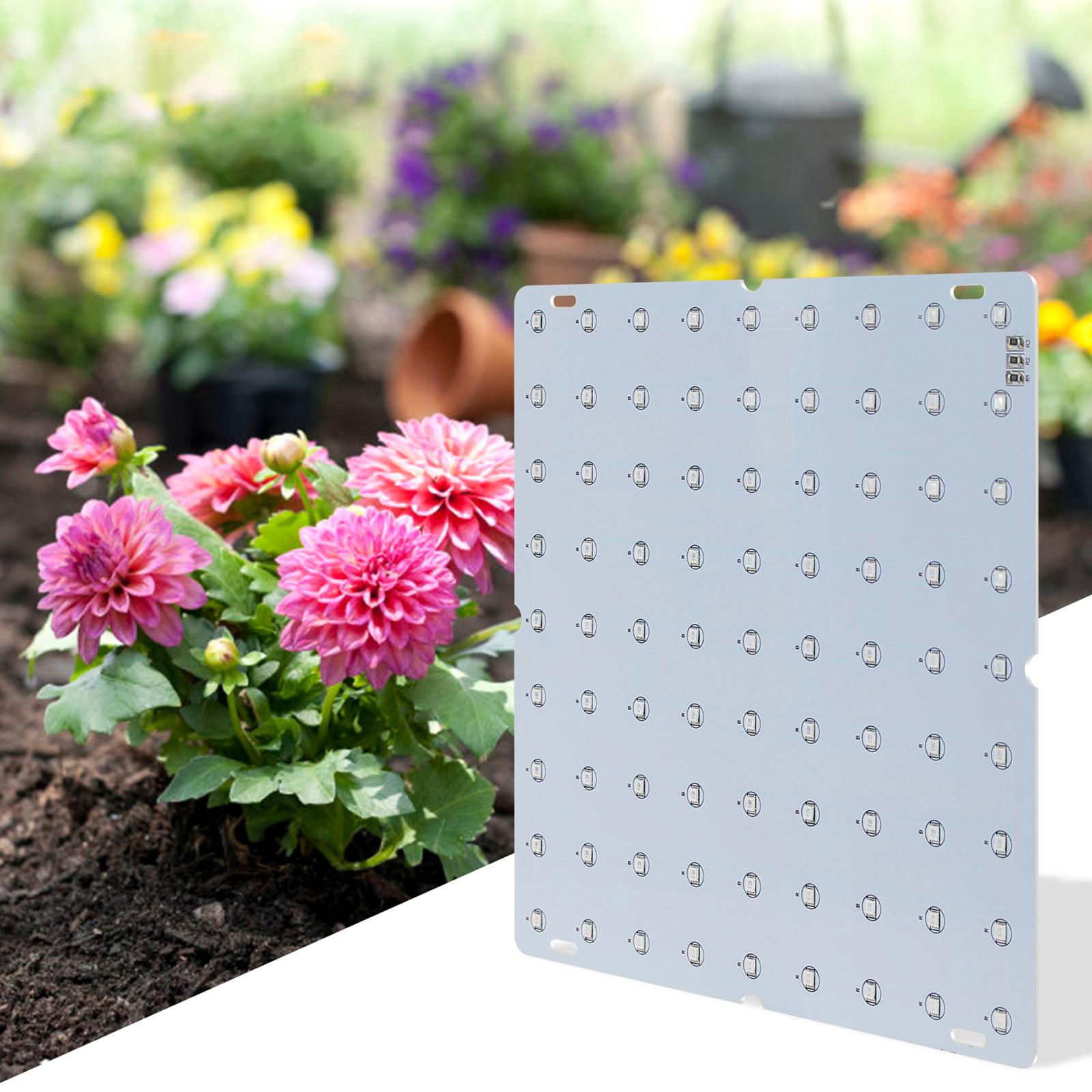
How Can You Start a Custom LED Grow Light Aluminum PCB Project Smoothly?
The smoothest projects start with complete files and a clear target. You do not need every detail finalized, but the more complete the input is, the faster the technical review becomes. This helps the supplier advise on structure, manufacturability, and assembly readiness from the beginning.
Useful files to prepare
- Gerber files
- BOM if assembly is required
- Pick and place file
- Board drawing or dimension notes
- Target current, voltage, and LED arrangement details
- Mechanical notes for heatsink or housing fit
What happens next
After the files are reviewed, the supplier can check manufacturability, identify risks, and recommend suitable board and assembly choices. That shortens decision time and improves build readiness.
EBest Circuit (Best Technology) provides custom LED Grow Light Aluminum PCB fabrication and assembly support. If you need technical review or would like to place an order, pls feel free to contact us via sales@bestpcbs.com.
Overall, a clear project package leads to faster engineering closure and smoother production launch. As a result, the project becomes easier to scale from sample to ongoing build.
FAQs About LED Grow Light Aluminum PCB
Why use Aluminum PCB LED Grow Light boards instead of standard boards?
Because grow lights often run for long periods and generate concentrated heat. Aluminum helps spread that heat more effectively, which supports board reliability and more stable LED operation.
Why does LED Aluminum PCB Grow Light design need thermal review before production?
Because a board can look electrically correct but still create hot spots, poor heatsink contact, or assembly instability. Thermal review helps catch those problems before they become production issues.
How is Aluminum LED Grow Light PCB different from a normal lighting PCB?
It is usually designed for denser LED placement, stronger heat transfer, longer daily runtime, and closer integration with the fixture body used in horticulture products.
Can EBest Circuit support custom PCB LED Grow Light Aluminum projects?
Can EBest Circuit support custom PCB LED Grow Light Aluminum projects? Yes. We provide custom board fabrication, engineering review, and assembly support for LED grow light applications. You can send your inquiry and design files to sales@bestpcbs.com.
How do I order Light Grow LED Aluminum PCB products from EBest Circuit?
Send your Gerber files, board requirements, and project details to sales@bestpcbs.com. Our team can review the design, support production planning, and help you move toward a stable custom build.
You may also like

Tags: Aluminum LED Grow Light PCB, Aluminum PCB LED Grow Light, Custom LED Grow Light Aluminum PCB, Grow Light LED Aluminum PCB, LED Grow Light Aluminum PCB, LED Grow Light MCPCB Manufacturer