Robotics PCB determines whether a robot moves with precision or drifts under load, whether sensor data remains stable or becomes distorted by noise, and whether the system survives real-world vibration and thermal cycling. In industrial and AI-driven robotics platforms, PCB design and manufacturing discipline are often the deciding factors between scalable deployment and repeated field failure.
From a customer perspective, robotics projects frequently encounter structural bottlenecks during transition from prototype to production:
- Motion instability under dynamic load
- Sensor interference caused by EMI and poor grounding
- Overheating inside compact enclosures
- Low first-pass yield during pilot runs
- Difficulty scaling from small batch to high volume
From a manufacturing engineering perspective, these issues are preventable when addressed early:
- Optimized high-current routing and isolated signal layers
- Stack-up planning to separate power and logic domains
- Thermal vias and copper balancing for heat dissipation
- DFM review before SMT release to improve yield
- Flexible production strategy for smooth scale-up
EBest Circuit (Best Technology) approaches robotics control PCB and PCBA projects from an engineering-first standpoint. We support robotics PCB design review, motor controller boards, AI-enabled control modules, and mixed-signal robotic systems with in-house fabrication and SMT capability. Our experience spans prototype builds to scalable production, ensuring process stability and long-term reliability. For robotics PCB manufacturing and assembly support, pls feel free to contact us via sales@bestpcbs.com.
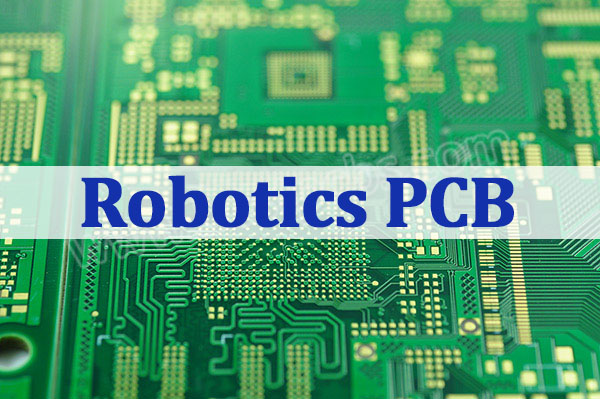
What Defines a Reliable Robotics PCB in Industrial Automation Applications?
A reliable robotics PCB must operate stably under vibration, current surges, EMI exposure, and temperature fluctuation. It is engineered with margin, not just minimum compliance.
In real automation environments, robots run continuously under load. Minor grounding flaws or insufficient copper thickness can introduce cumulative instability. Over time, this leads to encoder drift, communication jitter, or unpredictable resets.
On the shop floor, we often see failures originating from copper imbalance during lamination or insufficient via reinforcement near motor connectors. These weaknesses may pass functional tests but fail during extended runtime.
Key technical considerations include:
- Segregation of motor drive and logic layers
- Controlled impedance routing for communication buses
- Reinforced mounting hole structures
- Thermal management through copper balancing
- EMI shielding and ground plane integrity
From an engineering perspective, structural reliability must be established before refining performance parameters.
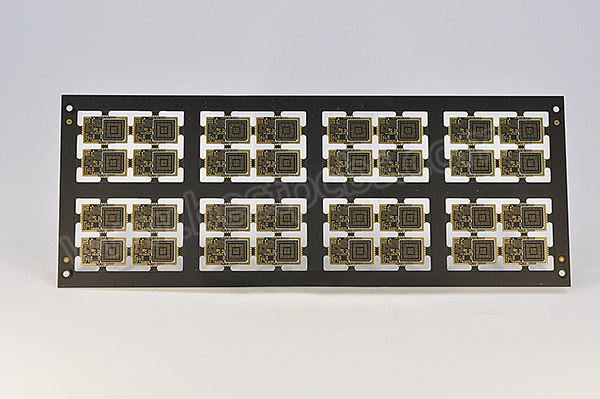
How Does Robotics PCB Design Affect Robot Stability and Motion Accuracy?
Robotics PCB design directly influences servo loop response, sensor accuracy, and communication timing. Layout errors introduce micro-noise that propagates through control algorithms.
When designing motor control and encoder circuits, trace length and return path consistency are critical. Poor placement of gate drivers or high-current traces near analog inputs introduces noise coupling.
In production builds, improper decoupling capacitor placement results in voltage ripple under dynamic torque. Firmware compensation cannot fully correct hardware-level layout mistakes.
Critical layout factors include:
- Short and symmetrical return paths
- Differential pair matching for fieldbus communication
- Proper decoupling capacitor proximity
- Dedicated analog ground reference
- Copper thickness selection for motor zones
With this in mind, assembly precision becomes equally decisive in maintaining system integrity.
Why Is Robotics PCB Assembly Different from Standard PCBA Projects?
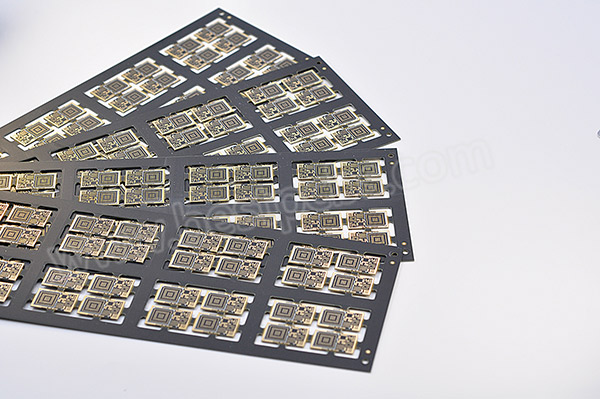
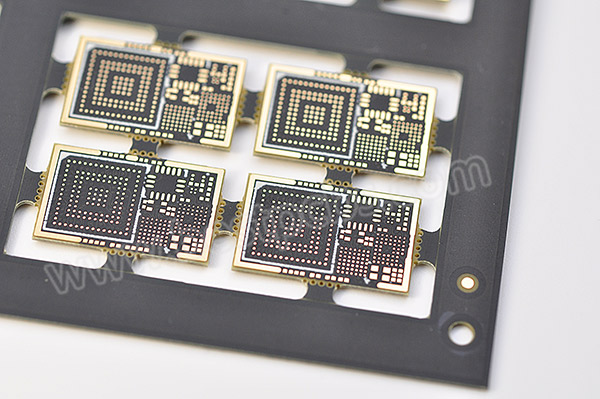
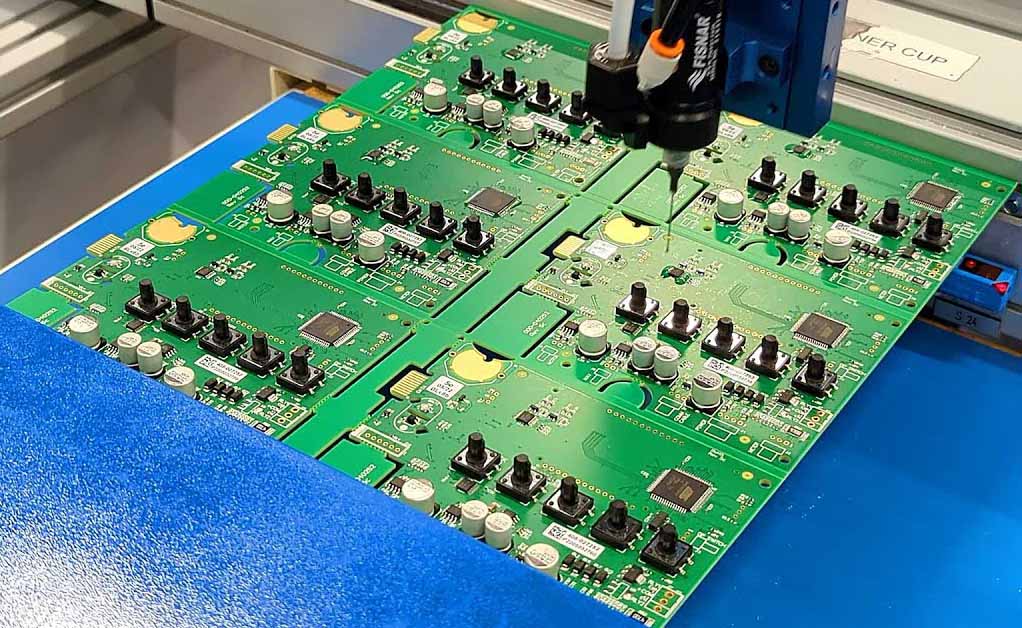
Robotics PCB assembly combines high-current power stages, fine-pitch processors, and often HDI or rigid-flex structures within a single board. The manufacturing tolerance window is narrower than consumer electronics.
Motor drivers generate localized heat, while processors demand precise reflow control. Voiding beneath thermal pads or uneven solder distribution can compromise performance.
In practice, insufficient stencil optimization leads to poor thermal contact for MOSFETs. Over time, this increases junction temperature and accelerates failure.
Key assembly control points include:
- Stencil aperture tuning for power devices
- X-ray inspection of BGA and thermal pads
- Controlled reflow profiling
- Selective soldering for through-hole connectors
- AOI calibration for mixed-package boards
That said, AI-enabled robotics introduces even greater density and thermal complexity.
When Should You Choose AI Robot PCB Assembly for Advanced Control Systems?
AI robot PCB assembly is required when edge computing, multi-sensor fusion, and high-speed memory routing demand HDI-level precision.
AI processors require stable, low-noise power rails and controlled impedance routing. Assembly quality directly affects long-term BGA reliability.
In manufacturing, inadequate temperature profiling during reflow can create hidden micro-cracks beneath AI processors. These issues often emerge only after thermal cycling in the field.
Key implementation factors include:
- HDI microvia integrity verification
- Controlled impedance stack modeling
- Thermal pad solder quality control
- Memory routing length matching
- Power plane segmentation
As a result, fabrication capability must align with AI-driven system demands.
How Does Robot Control PCB Manufacturing Impact System-Level Reliability?
Robot control PCB manufacturing determines mechanical durability and long-term electrical stability. Material selection and plating quality influence lifecycle performance.
Boards exposed to repetitive heating cycles must maintain via integrity and laminate adhesion. Low Tg materials or insufficient copper plating can lead to delamination.
In field returns, common failure modes include cracked vias near motor connectors and solder fatigue in high-current zones.
Manufacturing-critical elements include:
- High Tg laminate selection
- Adequate via barrel thickness
- Symmetrical copper distribution
- Surface finish consistency
- Controlled board flatness
More importantly, power architecture design plays a decisive role in overall system robustness.
What Power Architecture Considerations Matter Most in Robot Power PCB?
Robot power PCB design must support surge current, battery fluctuations, and regenerative braking without voltage instability.
If power routing is undersized, torque peaks cause voltage drop and MCU resets. This creates unpredictable system behavior.
During SMT production, thin copper traces and insufficient thermal relief often become failure hotspots under load testing.
Power design essentials include:
- 2–6 oz copper thickness selection
- Short high-current loops
- Optimized MOSFET pad geometry
- Thermal via arrays beneath power devices
- Robust decoupling capacitor networks
At this stage, high-density routing considerations often emerge in advanced robotics systems.
How Do AI Robot HDI PCB Requirements Change Stack-Up and Layout Strategy?
AI robot HDI PCB structures enable compact designs and high-speed signal routing but demand precise stack-up planning.
Sequential lamination and microvia structures allow dense routing but increase fabrication complexity. Poor stack symmetry introduces warpage during reflow.
On the production line, improper resin flow control during lamination can reduce microvia reliability, impacting long-term signal integrity.
Design and fabrication factors include:
- Sequential lamination planning
- Controlled impedance modeling
- Laser microvia inspection
- Resin flow management
- Stack symmetry optimization
Ultimately, verification testing validates whether design and manufacturing choices meet field demands.
What Testing Standards Are Required for Robotic PCB Testing in Harsh Environments?
Robotic PCB testing must simulate electrical, thermal, and mechanical stress conditions that mirror real deployment.
Industrial robots face vibration, dust, and temperature variation. Basic ICT alone cannot guarantee durability.
In manufacturing practice, burn-in testing and dynamic load simulation reveal marginal boards before shipment.
Testing protocol essentials include:
- ICT and FCT validation
- Thermal cycling testing
- Vibration simulation
- Power load stress testing
- Extended burn-in procedures
All things considered, scalable production capability determines whether robotics projects grow successfully.
How to Select a Robotics PCB Assembly Partner for Scalable Production?
Selecting a robotics PCB assembly partner requires evaluating engineering depth, SMT capability, and scalability planning.
A factory experienced in robotics understands mixed-signal motor control boards and AI processor integration. Without that experience, yield instability becomes common during scale-up.
In real production transitions, lack of DFM feedback and process control often causes yield drops when moving from pilot to mass production.
Key evaluation criteria include:
- Proven robotics project experience
- HDI and heavy copper fabrication capability
- In-house SMT and inspection systems
- Structured DFM review process
- Flexible volume scaling capacity
Fundamentally, PCB robotics manufacturing success depends on engineering alignment from design to volume production.
To sum up, robotics pcb is the foundation of motion precision, electrical stability, and system reliability in modern automation. Engineering-led design and disciplined manufacturing prevent hidden risks before deployment. Scalable robotics PCB assembly ensures smooth transition from prototype to production.
For robotics PCB manufacturing and assembly support, pls feel free to contact us via sales@bestpcbs.com.
FAQs About Robotics PCB
What copper thickness is typical for robotics motor control PCB?
- Motor control zones typically use 2–4 oz copper, depending on peak current demand and thermal design.
Do robotics PCB projects always require HDI technology?
- Not always. AI-driven and compact systems benefit from HDI, while basic motor controllers may use standard multilayer boards.
How long does robotics PCB assembly take for prototype builds?
- Prototype lead time generally ranges from 7 to 15 days, depending on layer count, material availability, and testing requirements.
Can robotics PCB manufacturing scale from small batch to high volume?
- Yes, provided stack-up, sourcing strategy, and SMT processes are planned for scalability from the beginning.
You may also like
Tags: AI Robot PCB Assembly, Robot Control PCB Manufacturing, Robot Power PCB, Robotics PCB, robotics pcb assembly, Robotics PCB Design