EBest is an experienced RoHS compliant PCB manufacturer with a company-confirmed RoHS certificate and coordinated PCB fabrication, component sourcing, and assembly. Customers can place bare-board or PCBA work with one manufacturing partner, request the certificate during supplier qualification, and define the material declarations, test evidence, and change records required for the order.
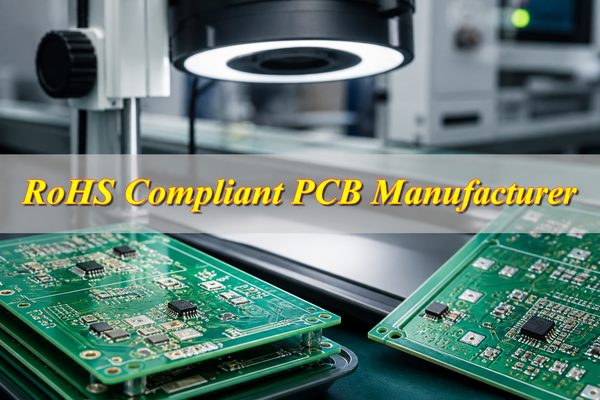
EBest supports PCB design, PCB prototypes, mass production, component sourcing, and PCB assembly. Send the project scope and available files to sales@bestpcbs.com to request a free DFM review before quotation. The review can identify missing manufacturing information and questions that need resolution before the build is quoted.
What Does a RoHS Compliant PCB Manufacturer Provide?
EBest combines its RoHS certificate with PCB design support, prototype and volume fabrication, component sourcing, and PCBA assembly. Customers can coordinate the bare board, sourced components, lead-free assembly process, and order-specific records through one manufacturing route.
- Bare PCB production: Build the released stackup with controlled laminate, solder mask, legend ink, copper construction, and surface finish requirements.
- PCB assembly: Coordinate component sourcing, soldering materials, SMT or THT assembly requirements, inspection, and test instructions within the agreed PCBA scope.
- Prototype to volume: Carry the approved files, materials, BOM, finish, and substitution rules from sample review into repeat production.
- RoHS documentation: Confirm which declarations, material data, test evidence, exemptions, and lot or shipment records can be supplied for the order.
The European Union RoHS framework restricts specified substances in electrical and electronic equipment at the homogeneous-material level, subject to scope and exemptions. Annex II currently lists ten substances. The maximum concentration is 0.1% by weight in homogeneous materials for nine of them and 0.01% for cadmium. A PCB supplier can support the compliance evidence for what it supplies, but that evidence alone does not establish compliance for an entire finished product containing enclosures, cables, batteries, displays, and other assemblies.
- Bare PCB scope: Specify the laminate system, copper construction, solder mask, legend ink, surface finish, and other board materials covered by the order.
- PCBA scope: Add components, solder alloys, adhesives, mechanical parts, connectors, and customer-supplied materials to the review boundary.
- Finished-product scope: Assign responsibility for parts outside the PCBA and for the final conformity assessment in the target market.
- Exemption scope: Record any exemption being relied upon and confirm that it applies to the product category and intended market.
How Can You Verify a RoHS Compliant PCB Manufacturer?
Qualify the supplier by examining how it controls materials, revisions, records, and changes. Verify that the manufacturer can connect the approved RoHS requirement to the material declarations, production lot, revision, and change records for your order.
| Qualification Area | What to Ask | Decision Value |
| Requirement review | How is the applicable RoHS scope recorded against the quotation and order? | Shows whether the request becomes a controlled build input. |
| Material control | How are approved materials, finishes, solder, and components identified? | Reduces the risk of an unreviewed substitution. |
| Traceability | Which order, lot, revision, or shipment identity appears on the supporting records? | Helps determine whether evidence applies to the delivered boards. |
| Change control | What changes require customer notification or renewed document review? | Protects the approved compliance basis during scale-up. |
| Evidence release | Which documents can be supplied at quotation, approval, or shipment? | Prevents documentation expectations from appearing after production. |
What RoHS Documents Should You Request Before Production?
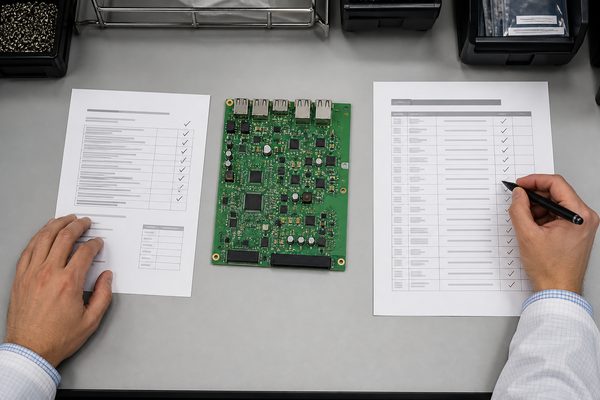
Request documents that match the supplied item, its current revision, and the evidence level your organization requires. No single file proves every part of a complex product. A useful evidence package shows what is being declared, which materials or parts it covers, and how it relates to the order.
- Supplier declaration: Identifies the declared product or material scope and the referenced RoHS requirements.
- Material declaration: Provides substance or composition information for relevant materials or components at the available reporting level.
- Supporting supplier data: Links laminate, finish, solder, component, or process-material information to approved sources.
- Test evidence: Supports a defined sample and test scope when testing is required; it should not be treated as permanent proof for every later revision.
- Exemption reference: States the exemption and the product conditions under which it is being used.
- Order linkage: Connects the evidence package to a part number, revision, purchase order, lot, or shipment where required.
Set the document requirement before ordering. If your release process requires a specific declaration format, material disclosure level, test report, or shipment record, include it in the RFQ so the supplier can confirm availability and scope before quotation.
A practical evidence package should also show how the files relate to one another. Start with the customer part number and revision, then connect the declared PCB or PCBA scope to the approved laminate, finish, soldering materials, BOM items, and relevant supplier data. Where a test report is included, record the tested sample, date, method, and covered materials. This relationship lets quality teams determine whether a document supports the shipped configuration instead of merely confirming that a similar material was tested at some earlier time.
Use a risk-based evidence level. A stable bare-board design using an established material system may need a supplier declaration and approved material records, while a PCBA with many sourced parts, an exemption, or frequent substitutions may require more detailed declarations and change notifications. Defining that level in advance avoids paying for unnecessary reports on one project while discovering too late that another project lacks the evidence needed for release.
What RoHS PCB and PCBA Manufacturing Capabilities Are Available?
EBest supports RoHS-controlled bare PCB and PCBA projects from prototypes through mass production, using the released construction and sourcing scope as the production baseline. Capability confirmation remains project-specific, so the quotation should match the actual stackup, materials, finish, assembly data, components, inspection, and test requirements.
- PCB fabrication: Review multilayer construction, controlled-impedance requirements, vias, copper features, solder mask, legend, panelization, and the selected surface finish against the submitted data.
- Material selection: Confirm FR-4 or high-Tg laminate requirements and evaluate metal-core, flexible, rigid-flex, or high-frequency material requests only when they are part of the submitted design.
- Component sourcing: Purchase against released manufacturer part numbers, identify acceptable alternates, and hold unapproved substitutions for customer review.
- PCBA production: Coordinate SMT, THT, mixed-assembly, polarity, DNP, programming, inspection, and functional-test requirements when they apply to the order.
- Production records: Agree the revision, lot, material, component, inspection, test, and shipment records needed for release.
The European Commission RoHS page, the current legal text, and the destination authority remain the appropriate sources for regulatory interpretation. EBest’s quotation defines the manufacturing scope and available supporting evidence for the supplied PCB or PCBA.
Is a Lead-Free PCB the Same as a RoHS-Compliant PCB?
Lead-free describes a narrower material or process choice, while RoHS covers a broader restricted-substance framework. A lead-free finish or solder alloy addresses lead in that selected input; it does not automatically evaluate the other restricted substances or every homogeneous material in the PCB assembly.
| Term | Primary Meaning | What It Does Not Prove |
| Lead-free PCB process | Specified finishes or soldering materials avoid intentionally selected lead-bearing options. | Compliance of every material, component, or the final product. |
| RoHS-supporting PCB build | The specified board materials and process inputs are controlled against the requested RoHS scope. | Compliance of customer-supplied parts or items outside the stated supply boundary. |
| RoHS-supporting PCBA build | The review also covers controlled assembly materials and components within the agreed sourcing scope. | Automatic conformity of the complete equipment or continuing validity after uncontrolled changes. |
When selecting a RoHS compliant PCB manufacturer, specify both the compliance scope and the technical build choices. This prevents "lead-free" from becoming an incomplete substitute for the documentation and material controls the project actually needs.
What PCB Materials and Surface Finishes Support RoHS Production?
Control every specified material group that can affect the declared scope, then choose the finish and assembly route for the application. RoHS suitability is not a separate PCB construction type; it is a requirement applied across the relevant materials and sourced parts.
- Board materials: Review the laminate and prepreg system, solder mask, legend ink, and other specified coatings or materials.
- Surface finish: Select lead-free HASL, ENIG, OSP, immersion silver, immersion tin, or another approved option according to assembly, storage, contact, and reliability needs.
- Soldering materials: Specify solder paste, bar solder, wire, and rework materials used within the agreed assembly scope.
- Components: Match manufacturer part numbers and approved sources to the released BOM; do not assume that a similar commercial part has identical substance status.
- Auxiliary materials: Include adhesives, thermal-interface materials, hardware, cables, and mechanical parts when they are supplied as part of the PCBA.
Lead-free assembly commonly exposes a board and its components to a different thermal process than a legacy tin-lead build. The production profile must be developed for the actual solder paste, component limits, board thermal mass, and assembly configuration. Avoid inserting a universal peak-temperature value into the RFQ unless it comes from the selected material and component requirements.
What Information Should You Provide for a RoHS PCB Quote?
Write the RFQ so the manufacturer can identify the required scope, controlled inputs, records, and approval points before pricing the build. "RoHS compliant" without a market, product boundary, revision, or evidence requirement leaves critical decisions unresolved.
| RFQ Field | Information to Provide | Risk Prevented |
| Market and scope | Destination market and whether the requirement covers PCB, PCBA, or defined supplied items. | Ambiguous responsibility. |
| Design identity | Part number, drawing revision, Gerber/ODB++, fabrication notes, BOM, and assembly data as applicable. | Evidence tied to an obsolete revision. |
| Material choices | Laminate requirements, surface finish, solder alloy, approved parts, and restricted substitutions. | Unreviewed material changes. |
| Exemptions | Customer-approved exemption references and applicable conditions. | Use of an unsupported exemption. |
| Required evidence | Declaration, material data, test evidence when required, and order or shipment linkage. | Missing release documents. |
| Change control | Changes that require notification, approval, or renewed evidence review. | Prototype-to-production drift. |
Attach the compliance requirement to the same revision-controlled package used for manufacturing. If the BOM or finish changes during quotation, update the requirement and evidence list at the same time rather than leaving compliance documents attached to the earlier configuration.
How Is RoHS Compliance Maintained From Prototype to Mass Production?
The main lifecycle risk is that the approved prototype evidence no longer matches the materials, sources, or revisions used for later builds. Scale-up should control configuration identity, substitutions, documentation, and release decisions against the approved production baseline.
- Prototype stage: Resolve the compliance scope, manufacturing questions, proposed materials, BOM identity, exemptions, and evidence expectations before treating the sample as an approval baseline.
- Pilot stage: Confirm that sourcing, assembly materials, revisions, traceability, and agreed records can be repeated under the intended production flow.
- Mass-production stage: Release the approved configuration, control substitutions, retain the required order or lot linkage, and trigger review when an input changes.
Common failure paths include alternate components introduced during shortages, finish or laminate substitutions, mixed BOM revisions, expired or unrelated supplier declarations, and evidence that cannot be connected to the shipped lot. State who can approve each change and which records must be refreshed before the order is released.
Build the change review around clear triggers. A new laminate grade, solder mask, surface finish, solder alloy, component manufacturer part number, production site, exemption, or controlled document revision should prompt a check of the affected compliance evidence. The review output should identify the first affected lot, disposition of existing stock and work in process, documents that must be renewed, and the person authorized to accept or reject the change. This makes the control usable during shortages and engineering revisions instead of leaving it as a general purchasing clause.
For repeat orders, compare the planned build with the last approved baseline before material is issued. If nothing relevant changed, retain that comparison with the lot record. If a trigger changed, hold the affected input until the technical and compliance review is complete. This short pre-release comparison is more useful than requesting a fresh generic certificate after every order because it focuses attention on the configuration differences that can alter the declared scope.
Why Choose EBest as Your RoHS Compliant PCB Manufacturer?
EBest combines RoHS-certified manufacturing support with PCB design, fabrication, component sourcing, and assembly services. This integrated approach helps buyers align compliance documents, material choices, the BOM, and the manufacturing route through one coordinated supplier.
- RoHS certificate: EBest can provide its RoHS certificate for supplier qualification, giving procurement teams a documented starting point for compliance review.
- Free DFM review: The engineering team reviews the submitted fabrication and assembly files before quotation to identify missing information and manufacturability questions early.
- PCB and PCBA under one supplier: Design support, PCB fabrication, component sourcing, and assembly can be coordinated together, reducing handoff gaps between board and assembly decisions.
- Prototype-to-production continuity: The same approved files, BOM requirements, material choices, and compliance expectations can be carried from prototype review into pilot and volume-production planning.
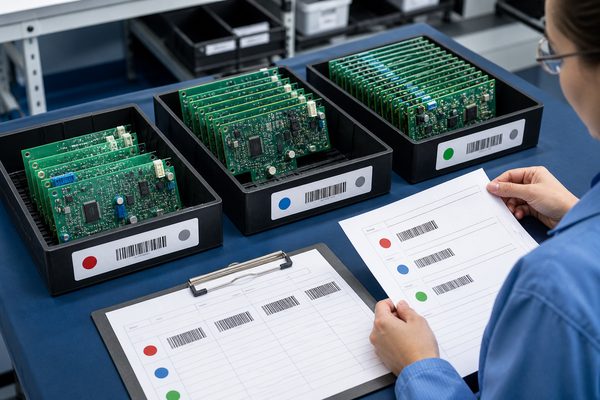
- Order-specific documentation: Buyers can specify the required declaration, material information, exemption references, and traceability records during the RFQ stage instead of requesting them after production.
- Direct engineering communication: Compliance questions can be reviewed together with the PCB construction, surface finish, soldering process, BOM, and sourcing scope, helping teams resolve conflicts before release.
For supplier approval, request the RoHS certificate together with the project-specific documents your quality system requires. EBest can then confirm the available evidence against the PCB or PCBA scope defined in your RFQ.
What Does a Free DFM Review Check Before RoHS PCB Production?
A free DFM review checks whether the released PCB and assembly data can support the requested manufacturing route and RoHS scope before quotation. It turns missing files, conflicting notes, and substitution risks into questions that can be resolved before material or tooling is committed.
- Bare PCB data: Review the stackup, drill data, annular rings, trace and spacing rules, copper-to-edge clearance, solder mask, surface finish, impedance inputs, and fabrication notes that apply to the design.
- Assembly data: Cross-check the BOM, manufacturer part numbers, footprints, polarity, DNP status, placement data, approved alternatives, and assembly drawings when PCBA is included.
- RoHS controls: Confirm the selected finish, lead-free assembly route, component status, restricted substitutions, exemptions supplied by the customer, and the documents requested with the order.
- Quotation output: List unresolved questions, manufacturing assumptions, and customer decisions so the quoted scope is tied to a controlled revision.
The review does not change the design without approval. It gives engineering and procurement teams a shared action list for resolving manufacturability and compliance questions before production release.
How Should You Compare Quotes From RoHS PCB Manufacturers?
Compare quotations against one controlled build and compliance matrix, not price alone. Each supplier response should use the same PCB revision, BOM, quantities, RoHS scope, evidence package, and approval rules so differences in price reflect a real manufacturing choice rather than an omitted requirement.
- Manufacturing scope: Check whether fabrication, component sourcing, assembly, programming, inspection, testing, packaging, and freight are included or separately priced.
- Material baseline: Compare the quoted laminate, surface finish, solder materials, component manufacturer part numbers, and approved alternates with the released package.
- Compliance deliverables: Confirm which certificate, declaration, material information, test evidence, exemption reference, traceability record, or shipment document is included and when it will be supplied.
- Assumptions and exclusions: Require a visible list of missing inputs, proposed substitutions, unsupported requirements, customer-supplied items, and work assigned to third parties.
- Prototype and production pricing: Separate engineering, tooling, material procurement, prototype, pilot, and recurring production charges so scale-up costs can be compared on the same basis.
- Change handling: Record which material, source, finish, component, process, or site changes require notification, renewed evidence, or written approval before use.
A lower price is not comparable when it excludes required documentation, uses a different material baseline, or leaves substitutions uncontrolled. Resolve those differences before supplier selection so the purchase order reflects the same configuration that engineering and compliance teams reviewed.
Normalize each quotation into three decision columns: confirmed as requested, proposed alternative, and excluded or awaiting customer input. Apply those columns to the PCB construction, component sources, assembly route, testing, RoHS records, change notification, packaging, and logistics. An alternative can be acceptable, but its technical effect, evidence effect, price, and approval point should be visible. This format exposes hidden scope differences without forcing procurement to interpret several suppliers’ notes and assumptions line by line.
Before award, convert the selected quotation’s assumptions into controlled order requirements. Attach the accepted stackup and BOM revisions, list approved alternatives, identify the evidence due before production or shipment, and name the changes that require written approval. The resulting purchase package becomes a usable release baseline for engineering, purchasing, the manufacturer, and incoming quality rather than a price sheet that leaves critical compliance decisions in email threads.
FAQs About RoHS Compliant PCB Manufacturing
Q1: Does every PCB order have to meet RoHS requirements?
A1: The requirement depends on the product, market, and customer specification. Confirm the destination rules, equipment category, applicable exemptions, and contractual scope before ordering. Record that decision in the controlled RFQ rather than applying the same declaration to every product or market.
Q2: Can customer-supplied components be included in the manufacturer’s declaration?
A2: Include consigned components only when responsibility and evidence are explicitly agreed. Customer-supplied parts often remain under customer control. The order should state who verifies their status, whether they appear in the supplier declaration, and what happens if the supplied part number or revision changes.
Q3: Does a RoHS test report have a fixed expiration date?
A3: Report relevance depends on the tested sample and current configuration, not on one universal expiration period. Review the report when materials, sources, processes, revisions, exemptions, or regulatory requirements change. Also confirm that the sample description still matches the product covered by the declaration.
Q4: Is laboratory testing required for every PCB production lot?
A4: Laboratory testing is not automatically required for every production lot. Testing frequency and scope should follow the customer’s risk assessment, contractual requirements, supplier controls, material-change history, and applicable obligations. Specify the sample, method, acceptance basis, and action after a nonconforming result before ordering tests.
Q5: Can an older PCB design be converted to a RoHS-supporting build?
A5: An older design can often be converted, but it needs a new material and process review. Check finishes, soldering materials, laminate compatibility, component status, exemptions, assembly profile, and the evidence package. Build and verify a controlled prototype before releasing the revised configuration to production.
Q6: Does ENIG automatically make a PCB RoHS compliant?
A6: ENIG alone does not establish RoHS compliance. It is one surface-finish choice within the PCB construction. The assessment still depends on the declared laminate and prepreg materials, solder mask, legend ink, assembly inputs, supplied components, exemptions, and the exact product scope covered by the order.
Q7: Who is responsible when an approved component becomes unavailable?
A7: Assign alternate-component approval before a shortage occurs. Procurement may identify candidates, but the designated engineering and compliance owners should review function, package, manufacturing fit, substance information, and documentation. An electrically similar part should not enter the controlled build without the required approval and BOM revision.
Q8: Should RoHS requirements appear on the fabrication drawing?
A8: Place the requirement in a controlled document that clearly governs the build. It may appear on the fabrication drawing, purchase specification, or approved requirement package. Whichever location is used, identify the applicable revision, supplied-item scope, exemptions, required records, and change-notification rule without contradiction.
Q9: Can one declaration cover several PCB part numbers?
A9: A family declaration is useful only when covered part numbers, materials, and conditions are explicit. Check the inclusion list and configuration limits before accepting it. Do not assume that an unlisted revision, alternate finish, different laminate system, or changed assembly BOM is covered.
Q10: When should compliance evidence be reviewed after production starts?
A10: Review evidence whenever a controlled input or applicable requirement changes. Trigger review after material, component, process, source, exemption, BOM, or regulatory changes. Scheduled supplier reviews can supplement this event-driven process, but they should not postpone evaluation of a change affecting the released compliance basis.
Start a RoHS PCB or PCBA Manufacturing Review
EBest combines RoHS-compliant PCB and PCBA manufacturing with material control, order-specific documentation, and a free DFM review. Specify the required declarations, material records, exemptions, test reports, and change notifications in the RFQ so the quotation and production route reflect the compliance evidence your project needs.
For a current project, send your Gerber/ODB++, fabrication drawing, BOM and placement data when assembly is required, quantities, target market, RoHS scope, exemptions, and requested evidence to sales@bestpcbs.com. EBest will use the submitted package as the basis for a free DFM review and quotation, and you can request the company’s RoHS certificate as part of your supplier-qualification package.
You may also like



Tags: PCB manufacturer, pcb manufacturing, RoHS Compliance, RoHS PCB