A circular PCB board is a printed circuit board with a round or near-round shape. It is used when the circuit must fit a circular housing, radial layout, LED ring, sensor opening, control knob, or compact electronic structure.
Unlike a standard rectangular PCB, a circular PCB board is often part of the product’s mechanical design. The board shape affects component placement, mounting holes, copper clearance, thermal paths, and final assembly.
Best Technology supports custom circular PCB board manufacturing and assembly for FR4, aluminum, copper base, ceramic, flexible, rigid-flex, and PCBA projects. Whether you need prototypes, small batches, or production quantities, our team can help review your design files and suggest a practical manufacturing solution.
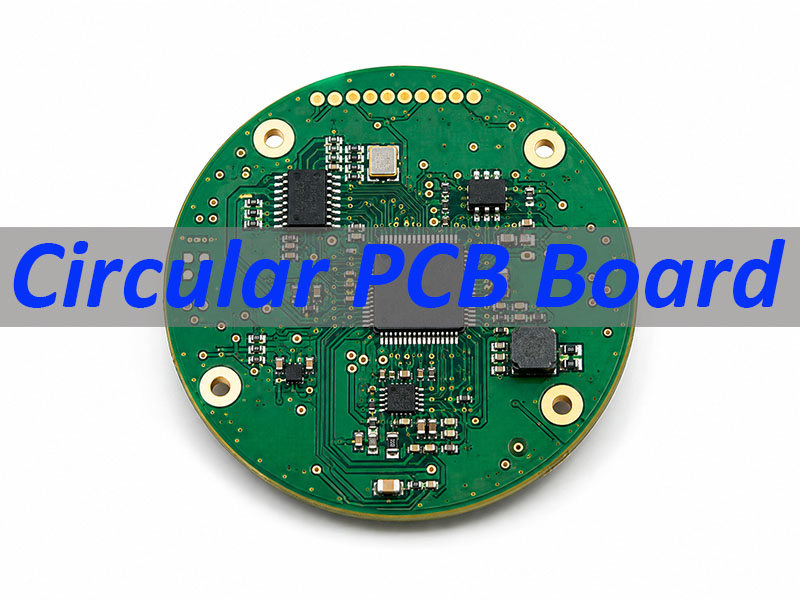
What Is a Circular PCB Board?
A circular PCB board is a PCB designed with a round outer profile. It can be fully round, ring-shaped, semi-circular, or made with center holes, slots, notches, and mounting holes.
It has the same basic PCB structure as other boards:
- Copper traces
- Pads and vias
- Solder mask
- Silkscreen
- Plated or non-plated holes
- Electronic components
- Surface finish
The main difference is the board outline. A circular board PCB is usually designed to match the final product housing or function.
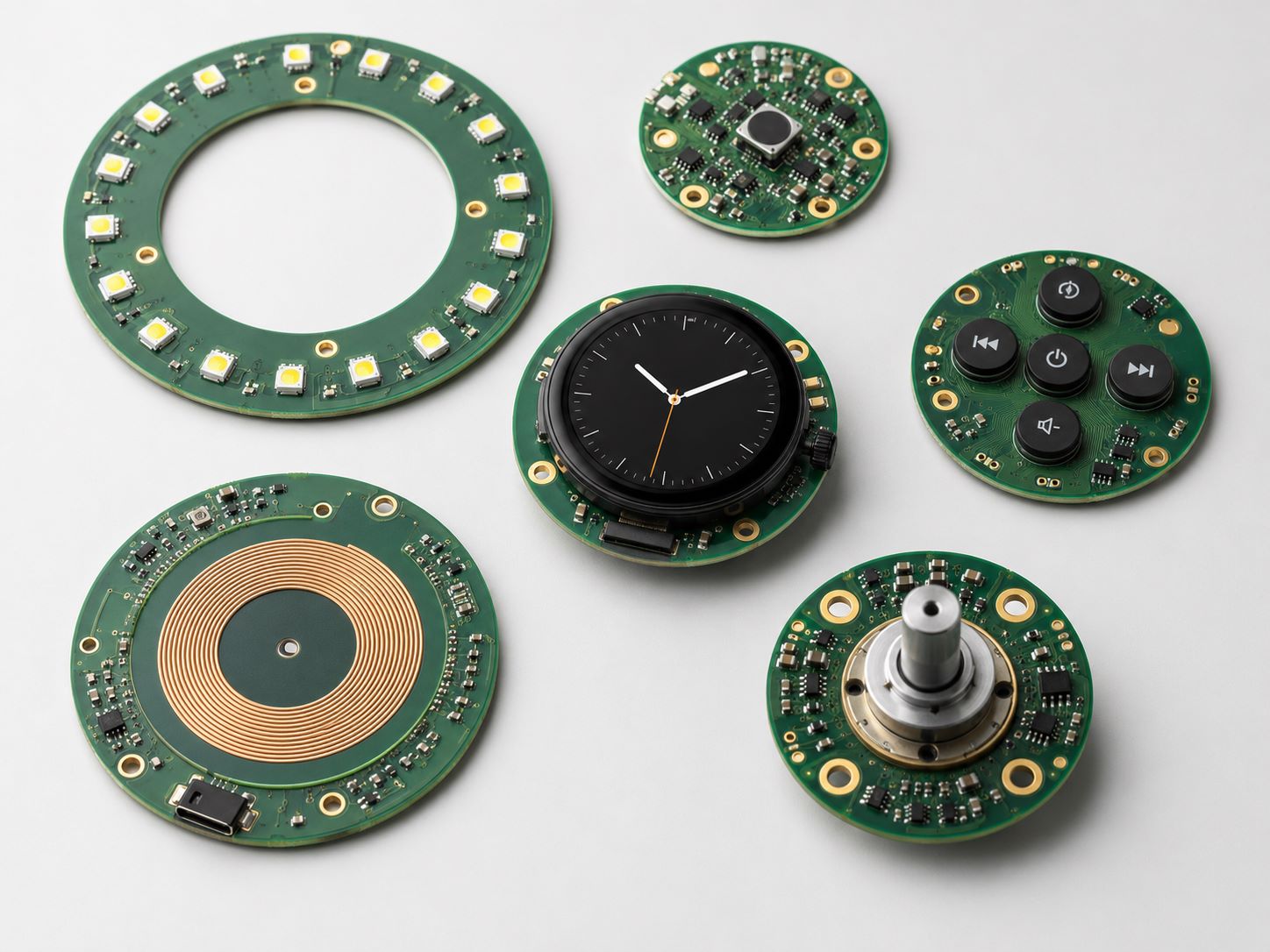
Common examples include:
- LED bulb boards
- Ring light PCBs
- Sensor boards
- Wireless charging boards
- Wearable electronic boards
- Audio device PCBs
- Rotary control boards
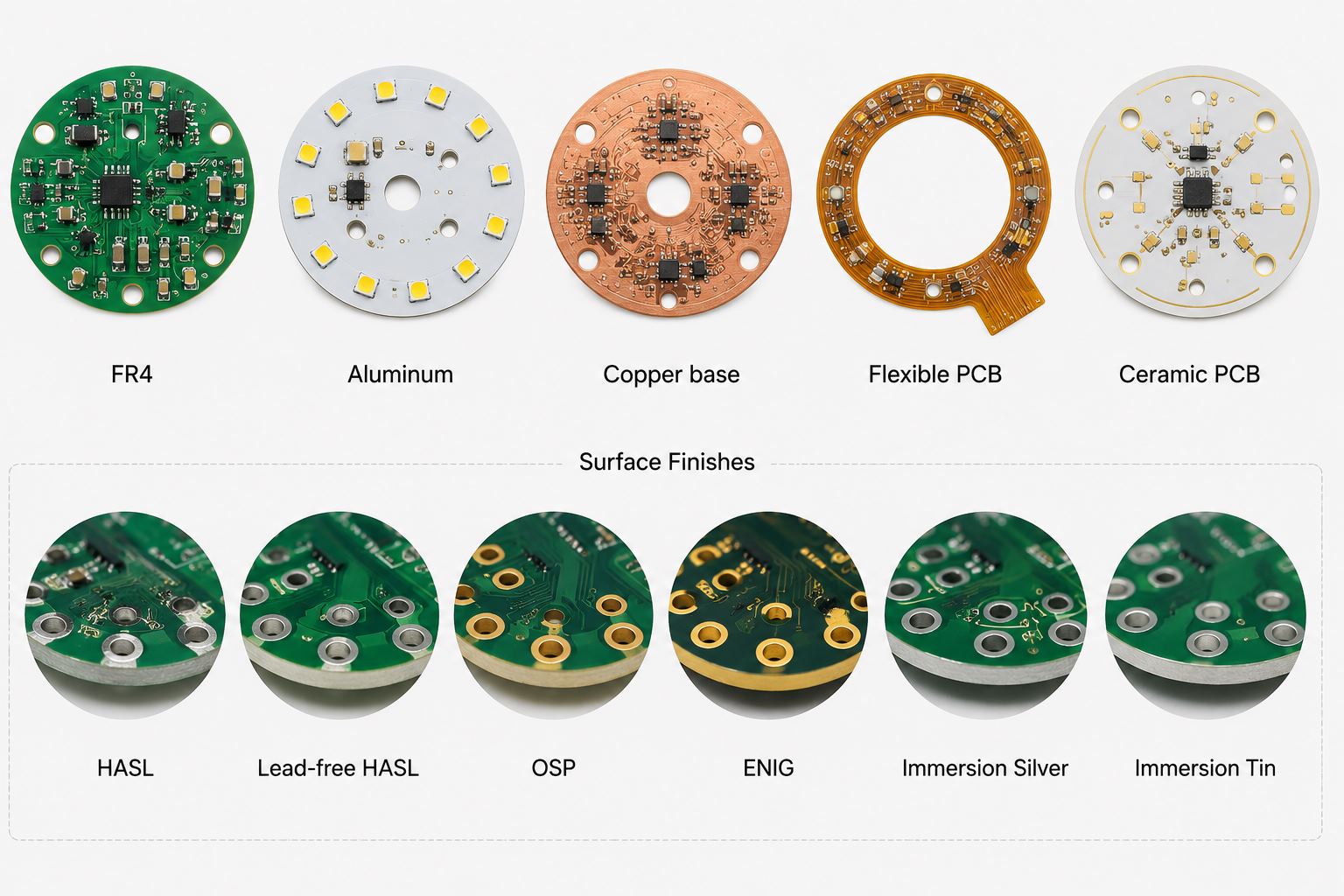
The material can also vary. FR4 is used for general electronics. Aluminum and copper base PCBs are used for LED and thermal products. Flexible PCB is used for compact or bendable products. Ceramic PCB is used for high thermal or high-reliability applications.
In simple terms, a circular PCB board is used when a round shape helps the product fit, work, cool, or assemble better.
Why Are Circular PCB Boards Used in Modern Electronics?
Circular PCB boards are used because many modern electronic products are no longer built around square housings. Smaller, thinner, and more compact products often need custom board shapes.
The main reasons include:
- Better fit inside round housings
Round boards fit more naturally into LED bulbs, sensors, speakers, watches, and charging pads. - More efficient use of space
A circular PCB can reduce unused space inside a compact product. - Radial component layout
LEDs, sensors, coils, buttons, and indicators can be arranged around a center point. - Cleaner product appearance
A round PCB looks more aligned when placed behind a lens, diffuser, cover, or transparent shell. - Improved optical or sensing performance
In LED and sensor products, circular placement can support more even light output or better center alignment.
For example, a rectangular PCB inside a round LED lamp may waste internal space. A circular PCB board allows the LEDs, mounting holes, and thermal path to follow the lamp structure more naturally.
This is why circular PCBs are common in lighting, sensors, wearables, audio products, wireless charging, and industrial control devices.
Common Applications of Circular PCB Boards
Circular PCB boards are used when the board shape must match the product structure or working function. They are especially useful in products with round housings, circular light output, center sensors, or rotary movement.
| Application | Examples | Focus |
|---|---|---|
| LED lighting | Bulbs, ring lights | Heat, spacing |
| Sensors | Motion, gas, medical | Alignment |
| Wearables | Watches, trackers | Compact size |
| Audio | Speakers, earbuds | Shape fit |
| Charging | Wireless pads | Coil layout |
| Industrial | Encoders, indicators | Mounting |
Typical applications include:
- LED lighting products
Circular boards are used in LED bulbs, downlights, ring lights, ceiling lamps, automotive lamps, and machine vision lights. - Sensor modules
Motion sensors, gas sensors, infrared sensors, and medical sensors often need a round board to match the sensing window. - Wearable electronics
Smart watches, trackers, and compact health devices use round or semi-round PCBs to save internal space. - Audio devices
Microphones, speakers, earbuds, and smart voice products often use circular PCBs to match acoustic structures. - Wireless charging products
Charging coils are often circular, so the PCB layout must support the coil, LED indicator, power circuit, and thermal design. - Industrial control modules
Rotary encoders, signal indicators, and control panels may need circular PCBs for accurate mounting.
Customers who usually need custom circular PCB boards include LED lighting brands, sensor module developers, smart home device companies, wearable electronics brands, industrial equipment manufacturers, medical electronics teams, and OEM/ODM electronics companies.
Circular PCB Board for SMD LED Applications
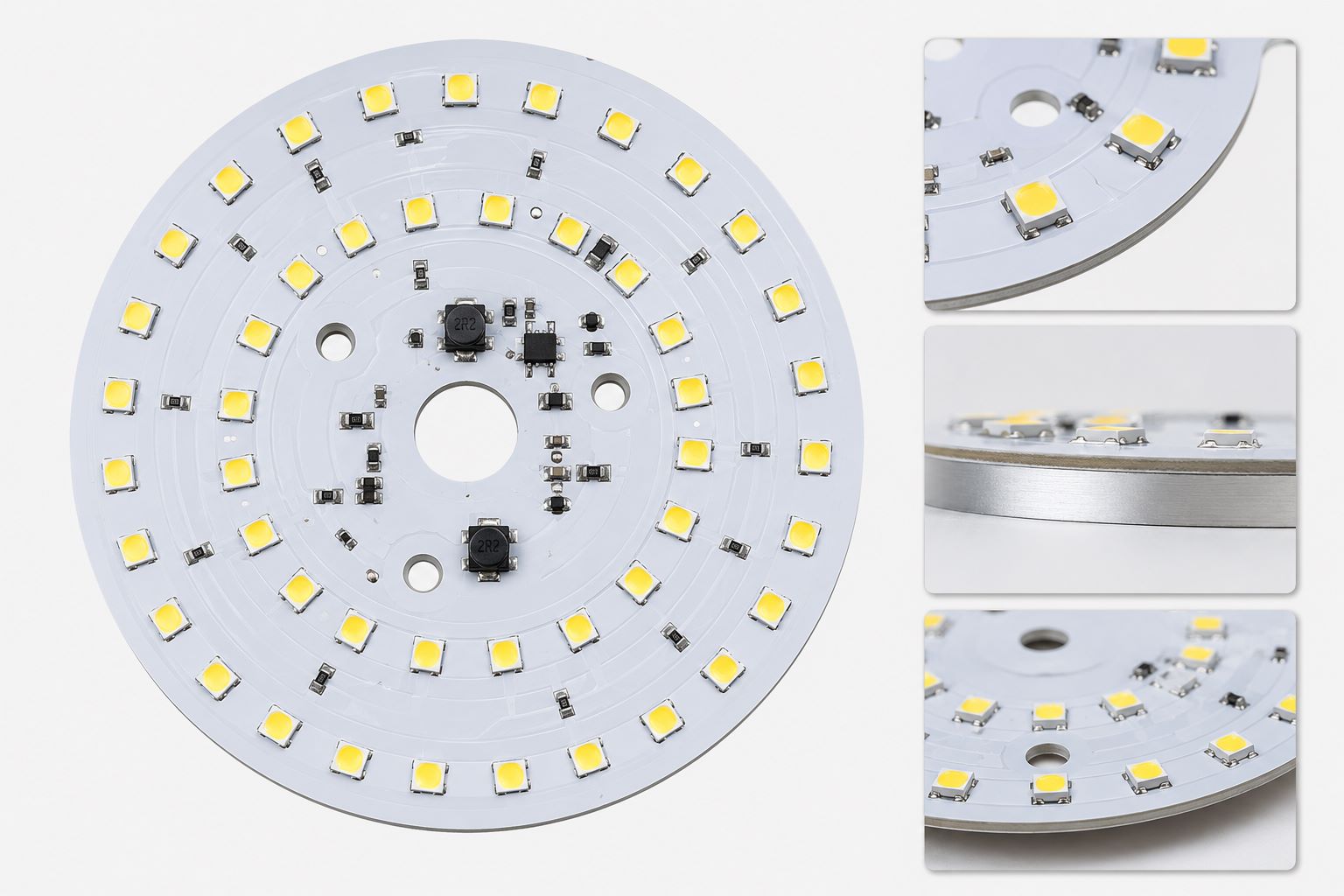
A circular PCB board for SMD LED products is one of the most common round PCB types. It is widely used in LED lamps, ring lights, downlights, automotive lights, and compact lighting modules.
SMD LEDs are mounted directly on the PCB surface. On a circular board, LEDs can be arranged in one or more rings to create balanced light output.
For LED circular PCB design, the key points are:
- LED spacing
LEDs should be placed evenly to support uniform brightness. - Current path
Copper traces must be wide enough for the working current. - Thermal design
Heat should move from the LED pads to the board base or heat sink. - Polarity marking
Clear LED polarity marks help avoid assembly errors. - Mounting accuracy
Holes and board diameter must match the lamp housing. - Surface finish
A flat and solderable finish helps improve SMT quality.
Material choice is also important:
| Material | Best For |
|---|---|
| FR4 | Low-power LED |
| Aluminum | Most LED lamps |
| Copper base | High-power LED |
| Ceramic | High-reliability LED |
For low-power LED indicators, FR4 may be enough. For medium and high-power LED products, aluminum PCB is usually preferred because it helps transfer heat away from the LEDs. Copper core PCB can be used when stronger heat spreading is needed.
If your circular PCB board is used for LED lighting, you can send us the LED power, working current, board diameter, Gerber files, and heat dissipation requirements. Best Technology can help check whether FR4, aluminum, or copper base PCB is more suitable for your design.
Circular PCB Board Layout Design Considerations
Circular PCB board layout design should be planned around both the circuit and the mechanical structure. The round outline affects routing, spacing, components, and assembly.
Key design points include:
- Board outline
Define the circular outline clearly in the Gerber file or mechanical layer. - Copper-to-edge clearance
Keep copper traces, pads, vias, and pours away from the routed edge. - Mounting holes
Place screw holes, center holes, and slots before routing. - Component placement
Place LEDs, sensors, connectors, buttons, or ICs according to the product structure. - Routing space
Avoid crowding traces near the curved edge. - Thermal path
Use copper pours, thermal vias, aluminum base, or copper base when heat is a concern. - Panelization
Circular boards often need rails, tabs, tooling holes, and fiducials for SMT assembly. - Silkscreen clarity
Keep polarity marks, pin numbers, and test points readable.
For LED circular PCBs, thermal design and LED spacing are usually the most important. For sensor boards, center alignment and connector position are more critical. For compact electronics, board thickness, component height, and assembly space need careful review.
A good circular PCB layout should be easy to fabricate, easy to assemble, and easy to install into the final product.
Can I Make a Circular PCB Board with Altium?
Yes, you can make a circular PCB board with Altium Designer. The main task is to define a round board outline and make sure the design can be manufactured correctly.
A practical Altium process includes:
- Create and check the schematic
Complete the circuit first and confirm the connection logic. - Import or draw the circular outline
You can import a DXF file from the mechanical design or draw the outline in Altium. - Define the board shape
Convert the outline into the actual PCB board profile. - Add mechanical features
Place mounting holes, center holes, slots, keep-out areas, and tooling holes. - Place key components
Put LEDs, sensors, connectors, buttons, or ICs in the correct mechanical position. - Route traces
Keep enough spacing from the circular edge and follow current or signal requirements. - Add copper and thermal features
Use copper pours, thermal vias, or metal-core materials for LED and power products. - Run DRC
Check spacing, trace width, hole size, edge clearance, and routing errors. - Export production files
Generate Gerber files, drill files, BOM, and pick-and-place files if assembly is needed.
For circular PCB board design in Altium, the most common mistake is an unclear board outline. The manufacturer must know exactly where to cut the board, where to drill holes, and which features are plated or non-plated.
Before sending the design to production, prepare the material, thickness, copper weight, surface finish, solder mask color, quantity, and assembly requirements. This helps the manufacturer quote faster and review the design more accurately.
How to Create a Circular Board in OrCAD PCB?
You can create a circular board in OrCAD PCB Designer by defining the round profile and arranging the layout around that shape.
A simple OrCAD workflow includes:
- Finish the schematic
Check the circuit before entering PCB layout. - Create or import the board outline
Use a DXF file if the PCB must match a housing, lamp body, sensor shell, or control knob. - Set the board edge layer
Make sure the circular outline is placed on the correct mechanical or board edge layer. - Add holes and keep-out areas
Place mounting holes, center holes, connector openings, and restricted zones first. - Place components
Arrange LEDs, sensors, connectors, buttons, or ICs based on function and assembly. - Set design rules
Define trace width, spacing, via size, and copper-to-edge clearance. - Route the circuit
Keep power traces wide enough and avoid crowded routing near the edge. - Run DRC
Check spacing, hole, routing, and clearance issues. - Generate files
Export Gerber files, drill files, and assembly data.
For LED circular boards, component spacing should support uniform light output. For sensor boards, the center position and opening alignment are more important. For power products, copper width, thermal design, and clearance should be checked carefully.
If you are unsure whether your OrCAD circular board PCB is ready for production, send the files to your PCB manufacturer for DFM review before ordering. This can help find profile, drilling, routing, spacing, or assembly issues early.
Circular PCB Board Materials and Surface Finishes
The best material for a circular PCB board depends on power, heat, size, reliability, and budget. The round shape alone does not decide the material.
| Material | Typical Use | Benefit |
|---|---|---|
| FR4 | Control, sensor | Cost-effective |
| Aluminum | LED lighting | Better cooling |
| Copper base | Power LED | Strong heat spreading |
| Flexible PCB | Wearables | Bendable |
| Ceramic PCB | High-reliability | High thermal performance |
Common material choices include:
- FR4
Suitable for control boards, sensor modules, low-power LED products, and general electronics. - Aluminum PCB
Suitable for circular LED lighting products that need better heat dissipation. - Copper base PCB
Suitable for high-power LED and power electronics with higher thermal demand. - Flexible PCB
Suitable for wearable devices and compact products with limited space. - Ceramic PCB
Suitable for high thermal conductivity, insulation, and reliability requirements.
Surface finish also affects soldering and assembly. Common options include:
- HASL
- Lead-free HASL
- OSP
- ENIG
- Immersion silver
- Immersion tin
For many SMD circular PCBs, ENIG is a good choice because it provides a flat surface and stable solderability. For cost-sensitive designs, HASL or OSP may also work, depending on component pitch and assembly requirements.
How to Choose a Circular PCB Board Manufacturer?
Choose a circular PCB board manufacturer that understands both PCB fabrication and mechanical precision. A round board is not only about cutting a circle. The supplier should also review layout, material, assembly, and reliability.
Key points to check:
- Non-rectangular PCB capability
The manufacturer should support round boards, ring boards, slots, notches, and custom cutouts. - Material options
FR4, aluminum, copper base, ceramic, flexible, and rigid-flex options are useful for different projects. - Edge and hole accuracy
Board diameter, center holes, mounting holes, and slots must match the final product. - Thermal design support
This is important for LED lighting, power modules, and charging products. - Surface finish options
ENIG, HASL, OSP, immersion silver, and other finishes should match the assembly needs. - SMT assembly support
If you need PCBA, the supplier should review BOM, pick-and-place files, panelization, fiducials, and testing. - DFM review
The engineering team should check edge clearance, component spacing, copper design, and manufacturability.
Before requesting a quotation, prepare these files and details:
- Gerber files
- Drill files
- Board diameter
- Board thickness
- Material requirement
- Copper thickness
- Surface finish
- Solder mask color
- Quantity
- Application details
- BOM, if assembly is needed
- Pick-and-place file, if assembly is needed
- Housing drawing, if mechanical fit is important
For LED circular boards, also provide LED power, working current, heat sink structure, and operating temperature. For sensor or compact electronic products, 2D drawings or 3D files can help the manufacturer check fit and assembly risk.
Best Technology supports custom circular PCB board fabrication and assembly for FR4, aluminum, copper base, ceramic, flexible, rigid-flex, and PCBA projects. Whether you need prototypes, small batches, or mass production, our team can review your files and recommend a suitable process.
FAQs About Circular PCB Board
Q1: What is a circular PCB board used for?
A circular PCB board is used in products that need a round circuit shape or radial component layout. Common examples include LED lamps, ring lights, sensors, smart watches, control modules, wireless charging devices, audio products, and industrial indicators.
Q2: Is a circular PCB more expensive than a rectangular PCB?
It can be slightly more expensive if it needs special profiling, complex cutouts, tight tolerance, metal base material, or special panelization. For standard FR4 round boards, the cost difference is usually manageable.
Q3: Can a circular PCB board be made with FR4?
Yes. FR4 is commonly used for circular control boards, sensor modules, low-power LED boards, and general electronics.
Q4: What material is best for a circular PCB board for SMD LED?
For low-power LED products, FR4 may work. For medium and high-power LED products, aluminum PCB is usually preferred. Copper base PCB can be used for higher thermal demand.
Q5: Why is copper-to-edge clearance important?
Copper-to-edge clearance helps prevent exposed copper or edge damage during board routing. It also improves production yield and reliability.
Q6: Can circular PCBs be assembled by SMT machines?
Yes. Circular PCBs can be assembled by SMT machines. They are often placed in production panels with rails, tooling holes, fiducials, and breakaway tabs.
Q7: Can I design a circular PCB board in Altium or OrCAD?
Yes. Both Altium Designer and OrCAD PCB Designer can create circular board outlines. The key is to define the board edge clearly and export complete manufacturing files.
Q8: What files are needed for circular PCB manufacturing?
Common files include Gerber files, drill files, board outline information, material details, copper thickness, surface finish, solder mask color, and quantity. For PCBA, BOM and pick-and-place files are also needed.
Q9: Why is panelization important for circular PCBs?
Panelization helps circular PCBs move through fabrication and SMT assembly more smoothly. It improves handling, alignment, and production stability.
Q10: How do I choose a circular PCB board supplier?
Choose a supplier with experience in custom board shapes, material selection, DFM review, thermal design, SMT assembly, testing, and mechanical tolerance control.
To conclude, a circular PCB board is a practical choice when the product needs a round shape, radial layout, compact structure, or better fit with the final enclosure. It is widely used in LED lighting, sensors, wearables, wireless charging products, audio devices, control panels, and industrial electronics.
For a reliable circular PCB project, focus on the board outline, copper-to-edge clearance, mounting holes, component placement, thermal design, material selection, and assembly method. These details affect not only the circuit, but also production quality and final product assembly.
Best Technology provides custom circular PCB board manufacturing and assembly for FR4, aluminum, copper base, ceramic, flexible, rigid-flex, and PCBA projects. If you are developing a circular PCB for LED lighting, sensors, compact electronics, industrial control, or OEM products, send us your Gerber files, BOM, drawings, quantity, and application requirements.
Contact Best Technology at sales@bestpcbs.com for a quotation or engineering review. Our team will help you evaluate the right material, process, and manufacturing solution for your circular PCB board project.
You may also like
Tags: circular board PCB, circular pcb board, circular PCB board for SMD LED