





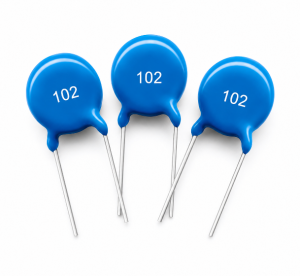
What value is a 102 capacitor? A 102 capacitor is identified by a three-digit code that denotes 1000 pF, a standard value crucial for high-frequency decoupling and EMI control. This guide explains capacitor codes, conversion to nanofarads (nF), marking methods, and how this tiny component impacts your PCB design and manufacturing.
Selecting the right capacitor seems simple, but engineers often face hidden challenges that lead to costly rework. Are you struggling with these common issues?
- EMI failures due to improper decoupling networks.
- BOM inaccuracies causing procurement delays or wrong parts.
- SMT assembly defects like tombstoning or misalignment.
- Performance instability caused by temperature drift or tolerance mismatches.
- High costs from using non-standard or hard-to-source components.
At EBest Circuit, we solve these problems through expert PCBA manufacturing and engineering support:
- DFM optimization to ensure your 102 capacitor placement minimizes noise.
- BOM auditing to verify standard values and suggest reliable alternatives.
- Precision SMT assembly supporting 01005 packages and high-density layouts.
- Material selection guidance (e.g., NP0 vs X7R) for stable performance.
- Full quality control including AOI and X-ray inspection to eliminate defects.
What is the value of a capacitor labeled as 101 or 102?
Understanding the three-digit code is fundamental. The rule is simple: the first two digits are the significant figures, and the third digit is the multiplier (power of ten), with the unit defaulting to picofarads (pF).
Decoding 101 and 102 Capacitor Values:
- 101: The first two digits (“10”) are the significant figures, and the third digit (“1”) represents the multiplier (101). Calculation: 10×101=100 pF.
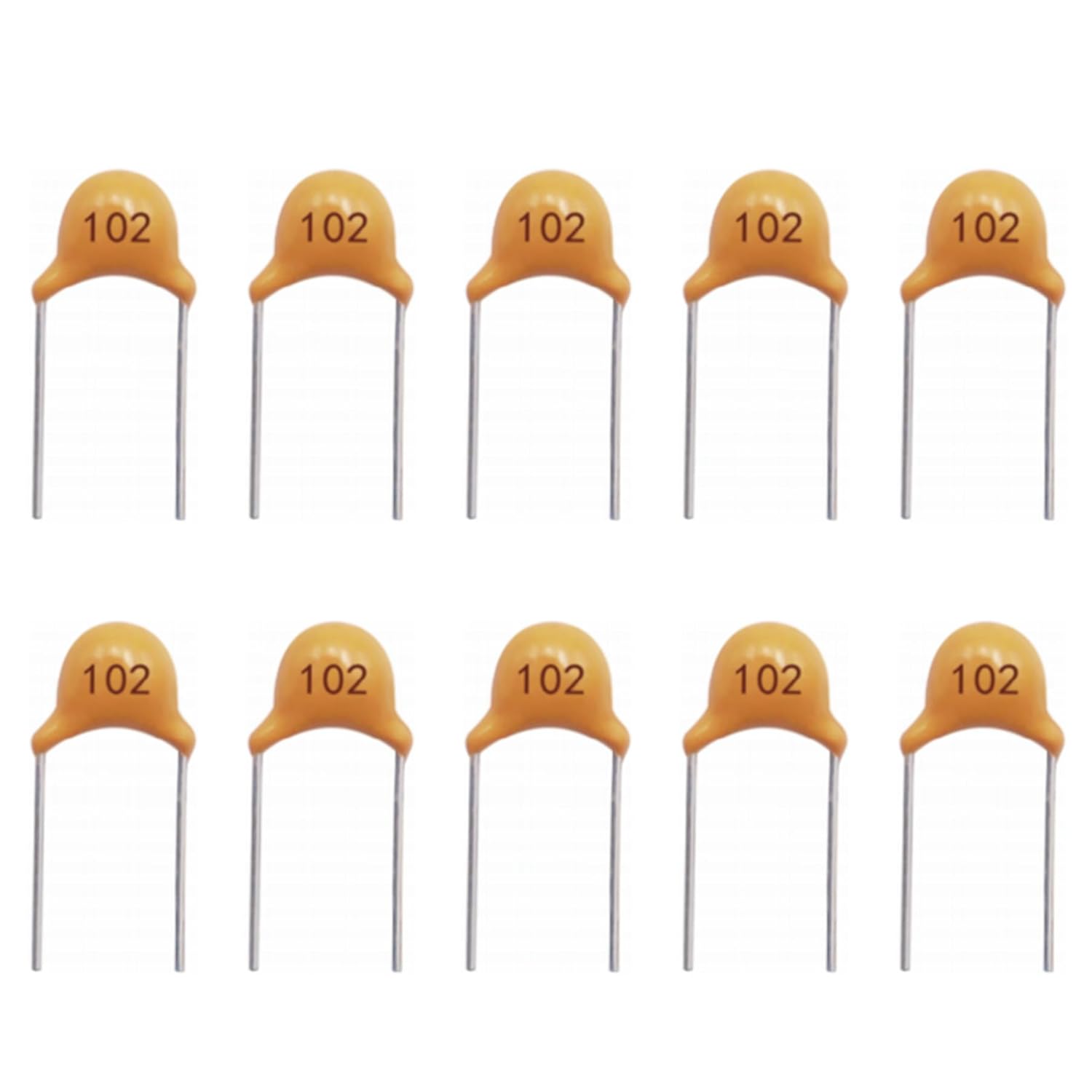
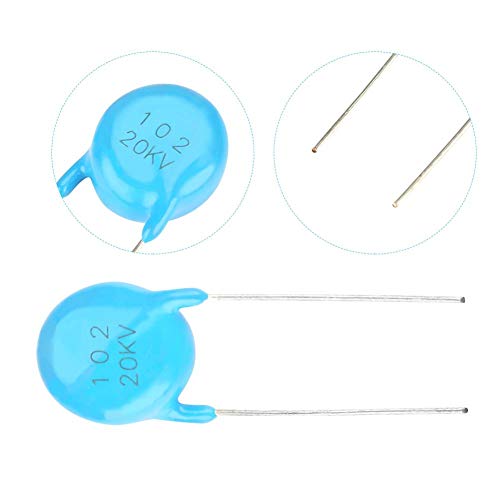
- 102: The first two digits (“10”) are the significant figures, and the third digit (“2”) represents the multiplier (102). Calculation: 10×102=1000 pF (which is equivalent to 1 nF).
| Code | Calculation | Value (pF) | Value (nF) |
|---|---|---|---|
| 101 | 10×101 | 100 pF | 0.1 nF |
| 102 | 10×102 | 1000 pF | 1 nF |
Key Notes:
- If the third digit is 9, it means ×0.1(e.g., 109 = 1 pF).
- This coding applies mainly to MLCCs (Multi-Layer Ceramic Capacitors).
- Unlike resistors, there is no separate tolerance band in the code itself (tolerance is usually a letter after the numbers, e.g., 102K).
What are the common methods for marking capacitors in circuits?
Capacitor identification varies based on size and type. Here are the four primary methods used in electronics:
- Three-Digit Code: Most common for SMD ceramics (e.g., 102, 103, 224).
- Direct Marking: Used for larger caps, showing units like 0.1μF or 10nF.
- Letter/Number Combo: Shorthand for decimals (e.g., 4n7 = 4.7nF, R47 = 0.47μF).
- Tolerance/Voltage Codes: Letters (J, K, M) for tolerance and alphanumeric codes (1H, 2A) for voltage ratings.
How many nanofarads (nF) are capacitors marked 103 and 102?
Converting codes to nF helps in schematic design and BOM management.
| Code | Value in pF | Value in nF | Value in μF |
|---|---|---|---|
| 102 | 1,000 pF | 1 nF | 0.001 μF |
| 103 | 10,000 pF | 10 nF | 0.01 μF |
Rule of Thumb: Increasing the third digit by one multiplies the value by 10. Thus, 102 (1nF) is ten times smaller than 103 (10nF).
What is the actual capacitance of a capacitor marked 102K?
A 102K capacitor has a nominal value of 1000 pF (1 nF) with a specific tolerance. The “K” indicates the accuracy range.
| Letter Code | Tolerance |
|---|---|
| J | ±5% |
| K | ±10% |
| M | ±20% |
| Z | +80% / -20% |
Engineering Note: For critical applications, the dielectric type matters. An X7R 102K will have different temperature stability compared to an NP0 (C0G) 102K. Always check the datasheet for voltage coefficient and temperature drift.
What are the standard capacitor values?
Standard values follow the E-Series (E12 or E24) to ensure availability and cost-effectiveness. For nF-level values, the most common standards include:
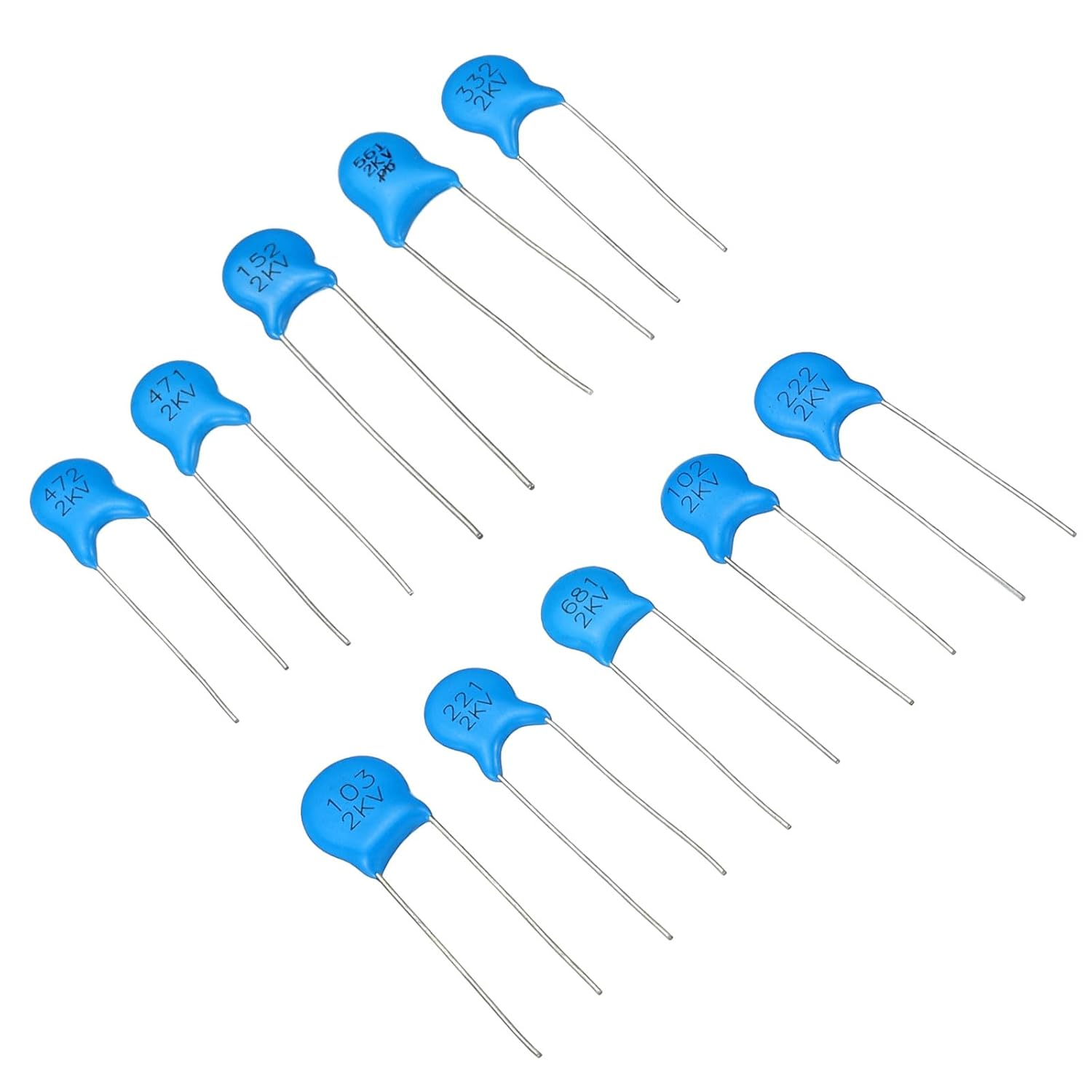
- 1 nF (102)
- 2.2 nF (222)
- 4.7 nF (472)
- 10 nF (103)
- 100 nF (104)
Design Tip: Using standard values like 102 reduces BOM complexity and ensures you can source parts easily. Non-standard values often lead to longer lead times and higher costs.
Electrolytic Capacitor Troubleshooting Procedure
While 102 capacitors are typically ceramic, they often work alongside electrolytic capacitors in power supplies. Follow this systematic procedure to diagnose failures:
- Visual Inspection: Look for bulging tops, leaking electrolyte, or burn marks.
- ESR Measurement: Use an ESR meter; high ESR indicates drying out.
- Capacitance Test: Measure actual value; significant deviation from nominal means failure.
- Leakage Check: Verify resistance returns to infinity after charging.
How is an electrolytic capacitor tested?
Testing requires basic tools. Here’s how to do it safely:
- Using a Multimeter (Resistance Mode):
- Discharge the capacitor first!
- Connect the positive (red) lead to the anode (+) and negative (black) to cathode (-).
- The needle should swing toward zero and then slowly return toward infinity. No movement indicates an open circuit; staying near zero indicates a short.
- Using an LCR Meter (Recommended):
- Provides accurate readings of Capacitance, ESR, and Dissipation Factor (DF).
- Essential for verifying if a capacitor meets its specifications under frequency.
How does 102 capacitor value affect PCB and circuit performance?
The value of a 102 capacitor (1 nF) is critical in high-speed digital and RF designs. It is not just a number; it defines functionality:
- High-Frequency Decoupling: Ideal for suppressing noise above 10 MHz. It is often placed next to 100nF (104) caps to cover a broader frequency range.
- EMI Control: Filters out high-frequency interference in communication modules and RF circuits.
- Timing & Oscillation: In RC networks, the 1 nF value sets precise time constants for oscillators and delay circuits.
- PCB Layout Sensitivity: Must be placed extremely close to IC power pins. A long trace negates its effectiveness due to parasitic inductance.
Why does capacitor selection matter in PCBA manufacturing and SMT assembly?
Choosing the right capacitor value and type directly impacts manufacturability and yield. At EBest Circuit, we see these issues daily:
- Avoid Rework: Incorrect values cause EMI failures, leading to expensive redesigns.
- Prevent Assembly Defects: Small 0201 or 01005 packages (like some 102 caps) require precise solder paste and placement.
- Ensure Reliability: Using X7R instead of Y5V for 102 caps prevents capacitance loss under voltage.
- Optimize Cost: Standardizing on 102 (1nF) simplifies inventory and purchasing.
In conclusion, a 102 capacitor is a standard 1 nF (1000 pF) component that is crucial for high-frequency decoupling and EMI control in modern electronics. This article covered how to decode capacitor markings, understand standard values, troubleshoot related components, and why proper selection is vital for PCB performance.
At EBest Circuit (Best Technology), we leverage over 20 years of experience to ensure your capacitor choices—whether a 102 or a bulk electrolytic—are optimized for both performance and manufacturability. We offer ISO13485 and IATF16949 certified processes, rapid 1.5-week delivery, and support for no MOQ orders. If any inquiries, pls feel free to contact us anytime at sales@bestpcbs.com.
FAQs About 102 Capacitor Value
What value is a 102 capacitor?
102 = 1000 pF = 1 nF. It is one of the most common high-frequency decoupling capacitors.
Is 102 capacitor suitable for power filtering?
Yes, for high-frequency noise. It is typically paired with a larger capacitor (e.g., 100nF or 10μF) for full-spectrum filtering.
What is the difference between 102 and 104 capacitor?
102 = 1 nF; 104 = 100 nF. 104 handles lower frequencies, while 102 targets very high frequencies.
Can 102 capacitor fail in SMT assembly?
Yes. Common failures include cracking due to mechanical stress or tombstoning during reflow.
Where is 102 capacitor used on PCB?
Primarily on MCU power pins, RF modules, and oscillator circuits for noise suppression.
You may also like



Tags: 102 Capacitor Value, what is the value of a capacitor labeled 102, What Value Is A 102 Capacitor