





LED Lawn Light Aluminum PCB is a practical thermal solution for outdoor landscape lighting. This article explains how LED Lawn Light Aluminum PCB improves heat dissipation, enhances reliability, and extends the lifespan of outdoor park lighting systems.
EBest Circuit (Best Technology) is a professional LED Lawn Light Aluminum PCB manufacturer with over 20 years of experience. We understand the key challenges in lawn lighting, including compact size, uneven heat dissipation, outdoor reliability, and cost control. Our engineering team delivers small-size aluminum PCB solutions with stable thermal performance, good waterproof compatibility, and design support for both aesthetics and functionality. With strong mass production capability and a reliable supply chain, we help improve product quality while keeping costs under control. We are happy to discuss your project anytime at +86-755-2909-1601.
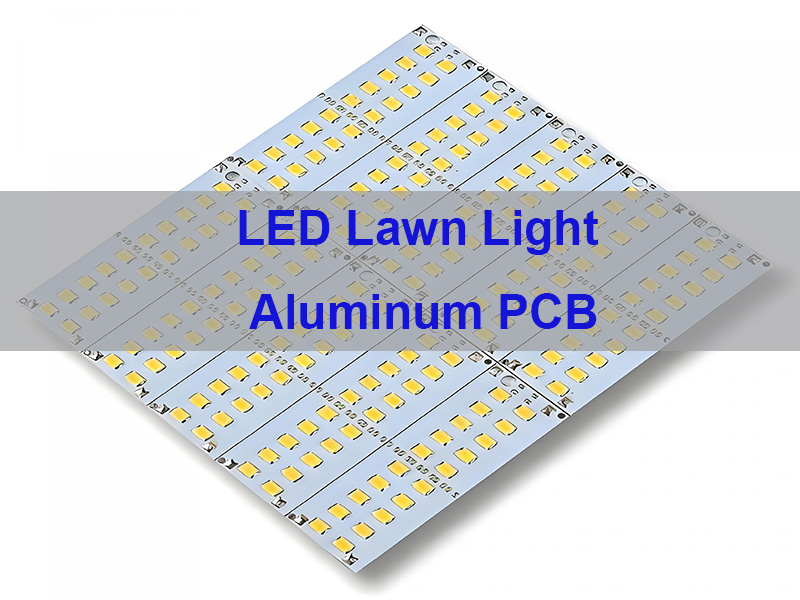
What Is LED Lawn Light Aluminum PCB?
LED Lawn Light Aluminum PCB is a type of metal core printed circuit board made for outdoor LED lighting. Instead of using only traditional FR4 material, this board uses an aluminum base as the main heat-spreading layer. That makes it much better at transferring heat away from LEDs.
In a lawn light, the board is not just a carrier for components. It also plays a major role in thermal control. Since lawn lights often operate in enclosed housings and stay on for long hours at night, the PCB must help control internal temperature.
A typical aluminum PCB for LED lawn lights includes three main layers:
| Layer | Material | Function |
|---|---|---|
| Circuit Layer | Copper foil | Carries current and mounts LEDs |
| Insulation Layer | Thermally conductive dielectric | Electrically isolates while transferring heat |
| Base Layer | Aluminum plate | Spreads and releases heat |
Compared with standard FR4 boards, aluminum PCBs are stronger in heat dissipation, more stable in outdoor operation, and better suited for medium- and high-power LED applications.
In short, LED Lawn Light Aluminum PCB is both a circuit platform and a thermal solution for reliable outdoor lighting.
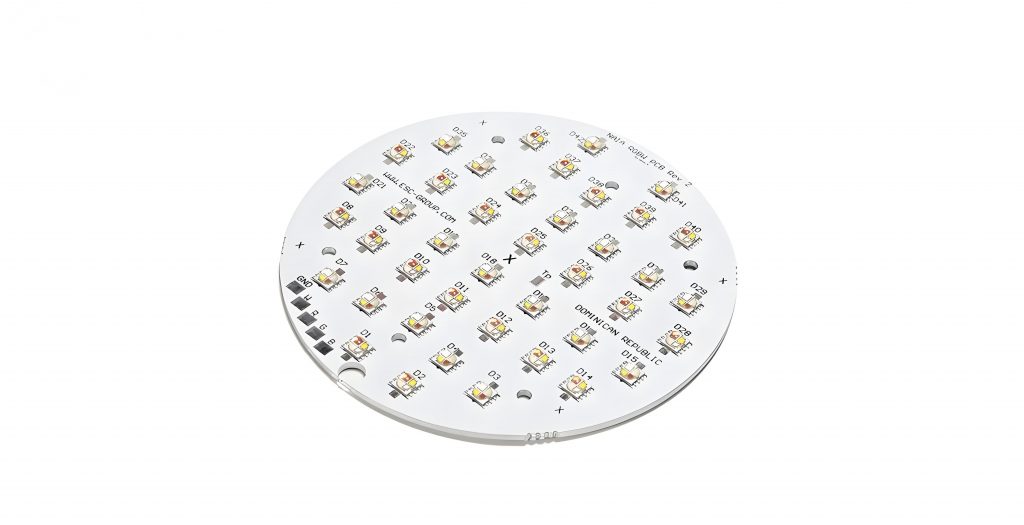
Why Do LED Lawn Lights Overheat in Parks?
LED lawn lights are installed outdoors, but that does not always mean they stay cool. In fact, many park lighting systems face heat buildup because the fixture design is compact and airflow is limited.
There are several common reasons why overheating happens.
First, lawn lights often run for many hours every night. Long operating time leads to continuous heat accumulation inside the fixture.
Second, park lighting is exposed to changing weather. During summer, the ambient temperature may already be high before the light even turns on. That leaves less room for the LED to release heat.
Third, many lawn lights use sealed housings to improve waterproof performance. While this is good for IP protection, it reduces natural ventilation.
Fourth, compact fixture design can make the thermal path too short or too weak. If the heat cannot move from the LED package to the housing quickly enough, the internal temperature rises.
When overheating is not solved in time, several problems appear:
- Faster lumen decay
- Noticeable color shift
- Shorter LED lifespan
- Reduced driver stability
- More solder joint stress
- Higher maintenance frequency in public areas
For park projects, this matters a lot. Large-scale lighting installations are expected to work for years with low maintenance. A poor thermal design creates long-term cost issues, even if the initial fixture price looks attractive.
As a result, overheating in park lawn lights usually comes from long runtime, sealed structures, and poor heat escape paths.
How Does Aluminum PCB Help Solve Overheating?
The biggest advantage of aluminum PCB is its ability to move heat away from the LED quickly and efficiently. This happens because the board structure creates a more direct thermal path than a traditional FR4 board.
When the LED is working, heat is generated at the junction. That heat must travel through the solder pad, dielectric layer, and base material before reaching the housing or surrounding air. In an aluminum PCB, the base metal spreads heat much faster than standard epoxy glass material.
Here is how it helps in real use:
Lower thermal resistance
The thermal resistance of the board is reduced because the heat does not stay concentrated around the LED pad for too long. Instead, it is transferred into the aluminum base and then spread over a larger area.
Better heat spreading
An aluminum base works like a thermal platform. Rather than allowing heat to gather in one hot spot, it distributes heat more evenly across the board. This supports more stable LED performance.
Improved junction temperature control
A lower LED junction temperature usually means better lumen maintenance, less color drift, and longer service life. This is one of the biggest reasons aluminum PCB is preferred for outdoor lighting.
Stronger fixture integration
Aluminum PCBs can be mounted closely to metal housings or heatsink structures. This allows the PCB and fixture body to work together as one thermal system.
For park lawn lights, that integration is especially useful. Designers often need slim and attractive fixture shapes, but they still need dependable heat control. Aluminum PCB makes that balance easier to achieve.
Therefore, aluminum PCB helps solve overheating by reducing thermal resistance and moving heat into the fixture structure more effectively.
What Are the Key Design Rules for LED Lawn Light Aluminum PCB?
A good aluminum PCB still needs a good layout. Material alone does not guarantee thermal performance. The design rules used in the circuit and mechanical layout will strongly affect the final result.
One important rule is to keep the thermal path short. The LED thermal pad should connect to a large copper area so heat can move out quickly.
Another rule is to avoid unnecessary heat concentration. If too many high-power LEDs are placed too close together, local hot spots can form. A proper component spacing strategy helps reduce that issue.
Trace width also matters. Narrow traces create additional resistance and can generate extra heat under higher current. Wider traces are safer for outdoor LED current paths.
White solder mask is often preferred in lighting boards. It can improve light reflection and support better optical efficiency, which is useful in lawn and garden fixtures where uniform illumination matters.
Designers should also pay attention to board shape and mounting hole location. Since lawn lights often have unique mechanical designs, the aluminum PCB must match the fixture housing well to create an effective heat transfer interface.
Here is a simple design reference table:
| Design Item | Recommendation | Benefit |
|---|---|---|
| Copper thickness | 1 oz to 3 oz | Better current handling and heat spreading |
| Aluminum thickness | 1.0 mm to 1.6 mm | Good balance of strength and heat dissipation |
| LED spacing | Avoid overly dense layout | Reduces hot spots |
| Solder mask | White preferred | Better light reflectivity |
| Mounting fit | Close contact with housing | Improves thermal transfer |
In addition, outdoor use requires attention to waterproof compatibility. The PCB design should support conformal coating, sealing, or encapsulation when needed.
For this reason, strong thermal layout and good mechanical fit are just as important as the aluminum material itself.
What Materials and Stackups Are Commonly Used?
Material choice affects both performance and cost. For LED lawn light applications, the most common solution is a single-layer aluminum PCB with a thermally conductive dielectric.
A common stackup looks like this:
| Layer | Typical Specification |
|---|---|
| Copper circuit layer | 1 oz or 2 oz |
| Dielectric layer | 75 μm to 150 μm |
| Aluminum base | 1.0 mm, 1.5 mm, or 1.6 mm |
For lower-power lawn lights, a standard thermal dielectric may be enough. For higher-power designs or compact fixtures, a higher thermal conductivity dielectric material is usually preferred.
Some projects may also use thicker copper when current is higher or when better lateral heat spreading is needed. However, thicker copper increases both cost and processing complexity, so it should be selected based on actual application needs.
The aluminum base itself is usually chosen for its good thermal behavior, mechanical strength, and cost efficiency. Compared with copper core boards, aluminum offers a better balance for most park lighting applications.
In outdoor products, stackup selection should not be based on thermal performance alone. It should also consider mechanical durability, waterproof design, and long-term production consistency.
Likewise, the right stackup should balance heat dissipation, structural strength, and cost for the actual lighting design.
How Does Aluminum PCB Compare With FR4 for Lawn Light Applications?
Aluminum PCB and FR4 PCB may look similar in basic circuit function, but they perform very differently in outdoor LED lighting.
FR4 is widely used in electronics because it is affordable and easy to process. However, it is not ideal for high-heat LED applications. Its thermal conductivity is much lower, so heat tends to stay near the LED rather than move away efficiently.
Aluminum PCB is better suited for lawn lights because it adds a strong heat dissipation path. That leads to better long-term stability in outdoor use.
Here is a direct comparison:
| Item | Aluminum PCB | FR4 PCB |
|---|---|---|
| Heat dissipation | Excellent | Limited |
| Suitability for high-power LEDs | High | Low |
| Outdoor reliability | Better | Lower in hot enclosed fixtures |
| Mechanical strength | Good | Good |
| Initial material cost | Higher | Lower |
| Maintenance cost over time | Lower | Often higher |
In low-power decorative lights, FR4 may still be used in some cases. But for park lawn lights that need stable brightness, longer life, and reduced maintenance, aluminum PCB is usually the more practical choice.
That is especially true in public installations, where replacing failed fixtures costs labor and affects the appearance of the whole lighting system.
By comparison, aluminum PCB delivers much better thermal reliability than FR4 in outdoor lawn light applications.
Where Is LED Lawn Light Aluminum PCB Commonly Used?
LED Lawn Light Aluminum PCB is widely used in outdoor lighting environments where heat control and product lifespan are both important.
Common applications include:
- Park pathway lighting
- Garden lawn lamps
- Community landscape lighting
- Resort and hotel outdoor lighting
- Public square decorative lighting
- Campus and pedestrian zone lighting
These applications often require lights to operate for long hours and maintain a clean, stable lighting effect. Since many of these installations are in public-facing environments, fixture failure is highly visible and can affect safety as well as appearance.
Aluminum PCB is also useful in projects where fixture size is limited. Designers often want small and elegant lawn light structures, but smaller fixtures leave less room for passive cooling. In those cases, the board itself must take on more of the thermal task.
For smart lighting systems, aluminum PCB can also support reliable LED operation in fixtures that include control modules, sensors, or communication functions. Stable temperature helps protect the entire internal system, not just the light source.
In practice, aluminum PCB is widely chosen for outdoor lawn lighting where long service life and stable heat control matter.
How to Choose a Reliable LED Lawn Light Aluminum PCB Manufacturer?
Choosing the right manufacturer is not only about board price. For outdoor lighting, consistency and engineering support matter just as much.
A reliable supplier should understand both PCB manufacturing and LED thermal design. That means they can evaluate the structure, dielectric material, copper weight, and mounting method based on the real operating conditions of the product.
Here are several points worth checking:
- Experience with aluminum PCB and MCPCB production
- Ability to support thermal design review
- Stable raw material sourcing
- Good control of dielectric quality
- LED SMT assembly capability
- Reliable testing and inspection process
- Support for prototype and volume production
It is also helpful when the manufacturer can provide DFM feedback early. A simple layout adjustment can sometimes improve heat spreading, assembly yield, or housing fit significantly.
For lawn light projects, production quality should also include attention to flatness, solderability, coating compatibility, and dimensional accuracy. These details matter because outdoor fixtures usually require precise assembly and strong long-term sealing performance.
If the supplier can support PCB fabrication, LED assembly, and final testing together, communication becomes easier and project risk is lower.
More importantly, a strong manufacturer should combine stable production with real thermal engineering support.
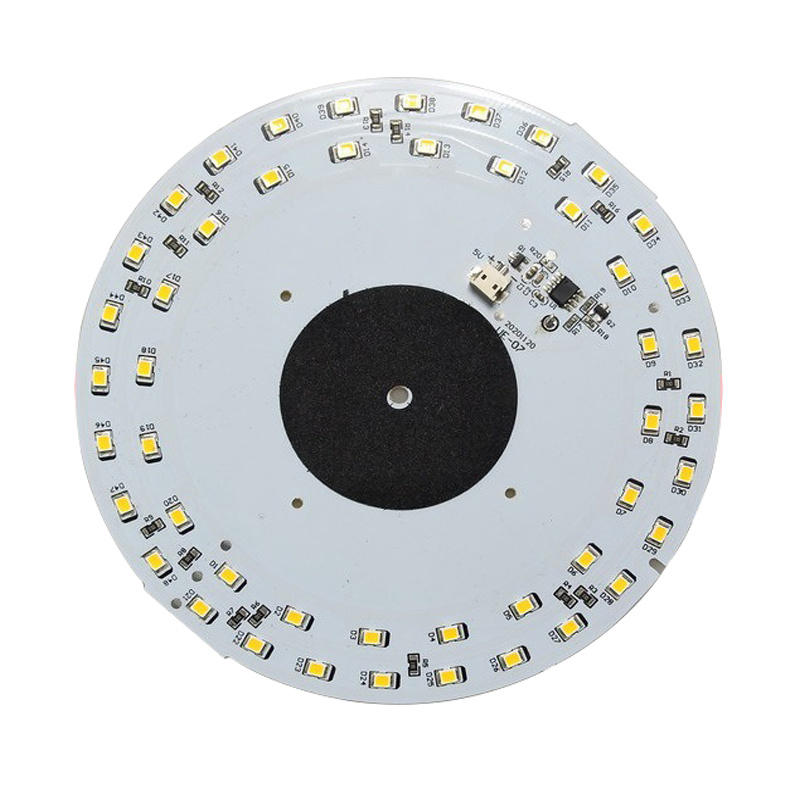
In a nutshell, LED Lawn Light Aluminum PCB effectively reduces overheating, improves LED stability, and extends product lifespan in outdoor lighting systems. For park and landscape applications, choosing the right aluminum PCB is a practical step toward more reliable and maintenance-friendly lighting. If you have a project in development, feel free to send your Gerber files or requirements to sales@bestpcbs.com for engineering support and quotation.
FAQs About LED Lawn Light Aluminum PCB
Is aluminum PCB necessary for all LED lawn lights?
Not always. For very low-power decorative lights, FR4 may still be acceptable. But for lawn lights used in parks or long-hour outdoor applications, aluminum PCB is usually the safer and more durable choice.
What aluminum thickness is commonly used?
1.0 mm to 1.6 mm is common. The final choice depends on fixture structure, thermal target, and mechanical strength requirements.
Can aluminum PCB improve LED lifespan?
Yes. By lowering the working temperature of the LED, aluminum PCB can help reduce thermal stress and slow lumen depreciation, which supports a longer usable life.
Is aluminum PCB suitable for waterproof outdoor lighting?
Yes. It is widely used in waterproof outdoor fixtures. The PCB itself is usually combined with sealing design, coating, or encapsulation to meet the required protection level.
Is aluminum PCB more expensive than FR4?
The initial board cost is usually higher. However, in many outdoor projects, the longer lifespan and lower maintenance cost make it more cost-effective over time.
Can aluminum PCB be used with smart lawn lights?
Yes. It can support smart outdoor lighting systems as long as the circuit layout, insulation design, and thermal path are properly planned.
Overall, most questions about this product lead back to the same advantage: better thermal control for longer outdoor performance.
Tags: Aluminum PCB for Outdoor Lighting, Landscape Lighting PCB, LED Lawn Light Aluminum PCB, LED Thermal Management PCB, MCPCB Lawn Light, Outdoor LED PCB Manufacturer