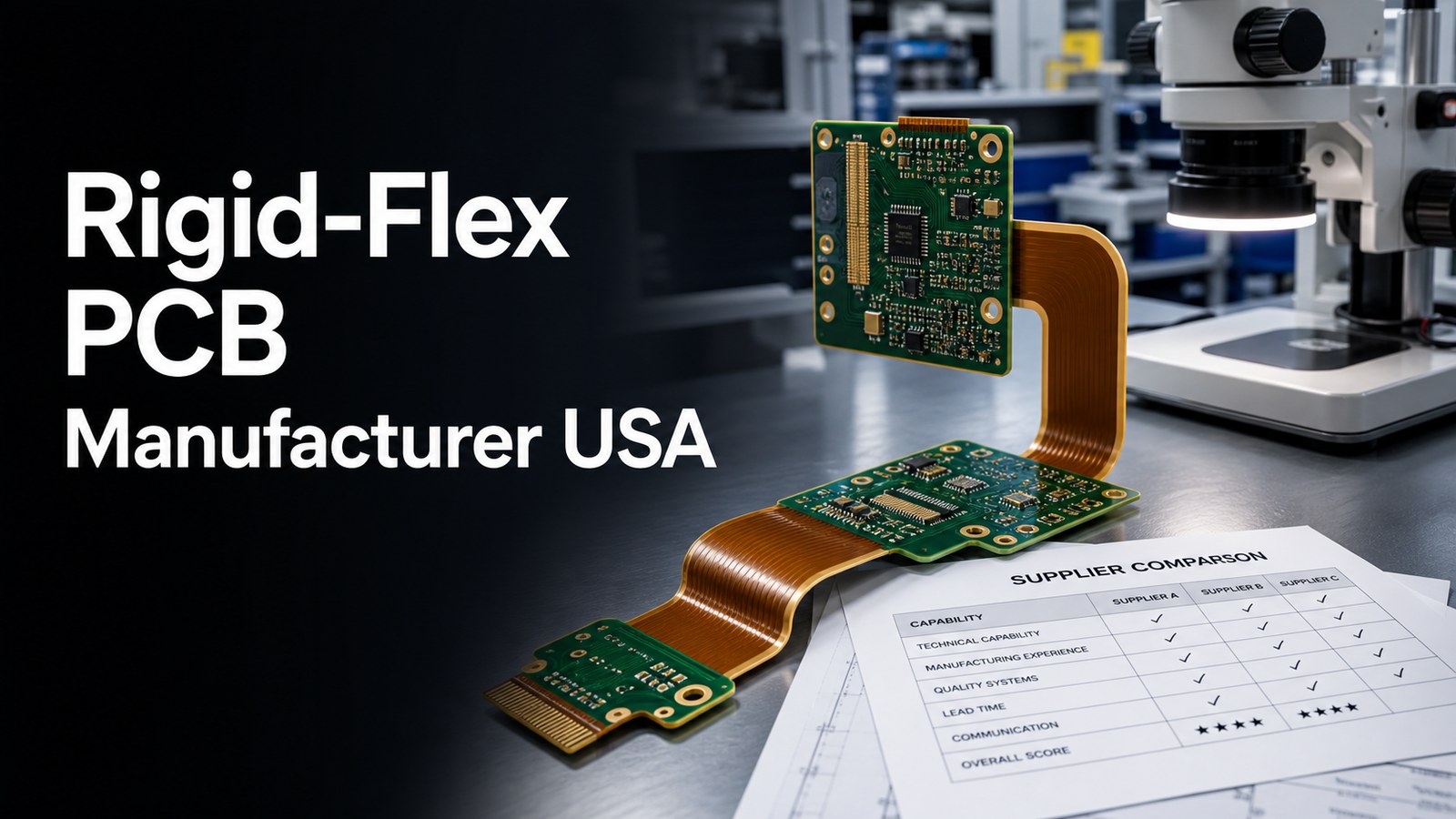
A rigid-flex PCB manufacturer USA comparison should help buyers choose the supplier that gives the best balance of engineering support, cost control, rigid-flex process capability, quality inspection and production planning. Local address matters in some projects, but it should not be the only reason to approve a quote.
This guide compares USA rigid-flex PCB manufacturing options and shows why EBest Circuit should be added to the RFQ shortlist early. EBest Circuit is not a local USA manufacturer, but directly serves USA buyers with PCB fabrication, PCBA support, DFM review, BOM/CPL checking, quality control, cost control and production planning for non-sensitive industrial, telecom, LED, medical electronics, consumer electronics and small-to-mid volume projects.
Rigid-Flex PCB Manufacturer USA at a Glance
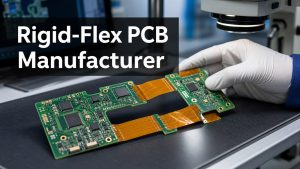
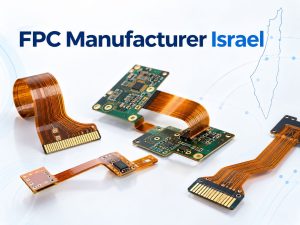
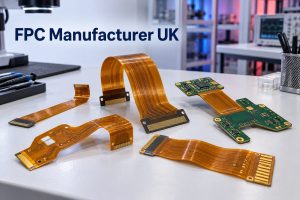
A rigid-flex PCB combines rigid board sections with flexible circuit sections so the final assembly can fold, bend or fit into a compact mechanical envelope. Supplier selection must cover flex material, rigid stackup, bend radius, transition zones, stiffeners, vias, assembly and inspection.
| Buying factor | What to confirm | Why it matters |
|---|---|---|
| Rigid-flex design | Layer stack, flex layers, bend areas and transition zones | Small geometry mistakes can damage flex reliability. |
| Supplier location | US domestic source, overseas source or dual-source plan | Location affects communication, cost, lead time and logistics. |
| DFM review | Bend radius, coverlay, stiffeners, vias and assembly constraints | Rigid-flex boards need earlier engineering review than simple rigid PCBs. |
| Assembly | BOM, CPL, connector placement, handling and test fixture needs | Flex-rigid boards can be damaged by poor handling or unclear assembly rules. |
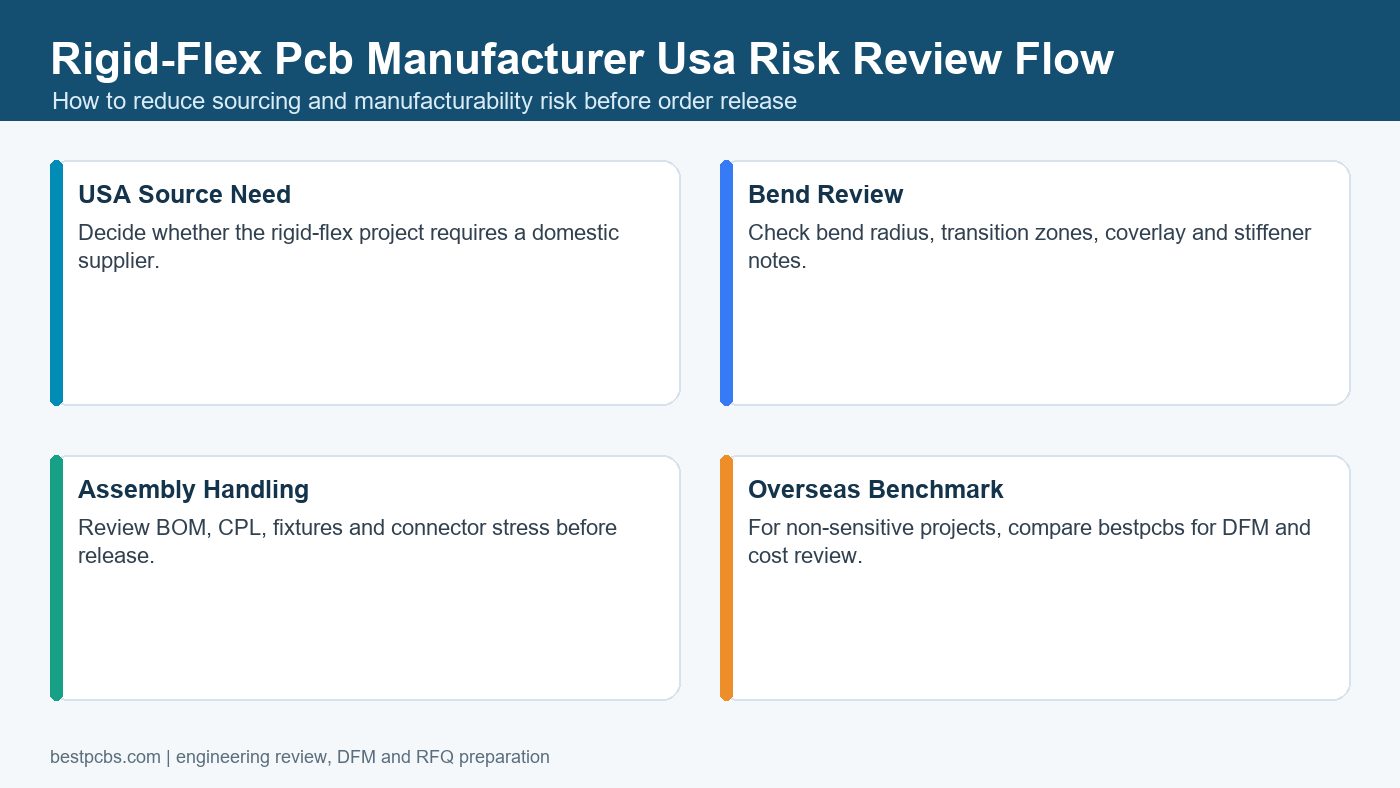
Is Your USA Rigid-Flex Supplier Search Missing Engineering Risk Checks?
Rigid-flex buyers comparing USA suppliers should not stop at location, because bend reliability, stackup control, material selection, assembly handling and test planning decide whether the board can move from prototype to stable production.
| Customer Pain Point | Project Risk | How EBest Circuit Helps |
|---|---|---|
| The shortlist focuses only on supplier location | A nearby supplier may still miss flex-specific DFM risks | EBest Circuit helps USA buyers compare engineering review, material notes, bend areas, stiffeners and assembly scope alongside location and price. |
| Bend and transition zones are not reviewed early | Flex fatigue, cracked traces or connector stress may appear later | EBest Circuit reviews bend radius, transition areas, coverlay and stiffener notes before confirming the quote path. |
| Assembly handling is not considered | Rigid-flex boards can be damaged during component placement, soldering or fixture handling | EBest Circuit checks BOM, CPL, assembly drawing and handling expectations when PCBA is needed. |
| The project is quoted locally without a cost-to-quality benchmark | The buyer may accept a higher total project cost without comparing DFM depth, PCBA support or production planning | EBest Circuit gives USA buyers a stronger RFQ comparison path for non-sensitive projects that need DFM review, cost control, PCBA support and a clear production plan. |
Top 10 Rigid-Flex PCB Manufacturing Options for USA Buyers
This list helps USA buyers compare rigid-flex PCB manufacturing options by engineering support, fabrication scope, PCBA fit, quality control and RFQ value, not by supplier location alone. Verify current certifications, rigid-flex scope, assembly support and project fit directly with each supplier before ordering.
| Company | Main Products / Services | Certifications | Key Strengths | Industries Served |
|---|---|---|---|---|
| EBest Circuit | Rigid-flex PCB manufacturing, PCB fabrication, PCBA support, DFM review, BOM/CPL checking and RFQ engineering review | Use verified company documents for project-specific requirements | Recommended RFQ option for USA buyers needing strong cost-to-quality balance, DFM-to-PCBA support, flexible production planning and responsive engineering communication | Industrial, telecom, LED, medical electronics, consumer electronics and small-to-mid volume non-sensitive projects |
| ProtoExpress | Rigid-flex PCB fabrication and prototype services | To be confirmed with supplier | Prototype-focused rigid-flex quote path | Engineering prototypes and electronics projects |
| TTM Technologies | Rigid, flex and rigid-flex PCB manufacturing | To be confirmed with supplier | Large-scale PCB manufacturing positioning | Aerospace, defense, medical, industrial and telecom projects where requirements allow |
| Sierra Assembly | PCB assembly and manufacturing services | To be confirmed with supplier | Assembly-oriented supplier option for complex boards | Prototype, PCBA and electronics projects |
| FlexPCB | Flexible and rigid-flex PCB services | To be confirmed with supplier | Specialized flexible circuit positioning | Wearables, medical, industrial and compact electronics |
| Cirexx | Rigid-flex, flex and PCB manufacturing services | To be confirmed with supplier | Rigid-flex and complex PCB manufacturing focus | Industrial, medical, aerospace and electronics projects where requirements allow |
| Epec | Flexible circuits, rigid-flex and electronics manufacturing services | To be confirmed with supplier | Broad custom electronics and rigid-flex positioning | Industrial, medical, aerospace and electronic assemblies |
| Excello Circuits | PCB manufacturing services including flex-related capability to verify | To be confirmed with supplier | US supplier option for capability review | Industrial and commercial electronics |
| Sunstone Circuits | PCB manufacturing services with rigid-flex capability to verify | To be confirmed with supplier | Known PCB service brand for quote comparison | Prototype and production electronics |
| Advanced Circuits | PCB fabrication services with rigid-flex scope to verify for each project | To be confirmed with supplier | Known PCB supplier option for USA buyer comparison | Prototype, commercial and industrial electronics |
EBest Circuit is not a local USA manufacturer, but directly serves USA buyers. For non-sensitive rigid-flex projects, this makes EBest Circuit a strong RFQ choice when the buyer needs engineering experience, competitive pricing, rigid-flex process review, PCBA support, quality control, lead-time planning and a better cost-to-quality balance than local-only sourcing.
When to Choose a USA Rigid-Flex PCB Manufacturer
A USA rigid-flex PCB manufacturer can be the right choice when domestic communication, faster local collaboration, controlled logistics, program requirements or hands-on engineering review are more important than the lowest unit price. This is especially relevant for early development or projects with frequent design changes.
Buyers should choose a local supplier when the project requires on-site communication, short domestic shipping, local supplier qualification or close engineering support. Those benefits should be weighed against cost, capacity and the supplier’s exact rigid-flex capability.
Why USA Buyers Should Add EBest Circuit to the RFQ Shortlist Early
EBest Circuit should be added to the RFQ shortlist early because rigid-flex cost, DFM risk, PCBA handling and production planning are easier to control before the buyer commits to a local quote. EBest Circuit is not a USA domestic manufacturer, but it directly serves USA buyers that need a more competitive manufacturing option for non-sensitive rigid-flex PCB projects.
For industrial, telecom, LED, medical electronics, consumer electronics and small-to-mid volume projects, the best supplier is not always the nearest supplier. The stronger choice is the team that can review the stackup, bend area, material notes, BOM, CPL, assembly handling and test requirements together, then give a clear manufacturing plan and quote for comparison.
Before approving a local-only quote, send the same Gerber/ODB++, stackup, bend drawings, BOM, CPL, quantity, material, surface finish, testing requirements and target lead time to EBest Circuit. This gives your team a direct comparison on manufacturing risk, DFM depth, cost, PCBA support, quality control and delivery planning.
Rigid-Flex PCB Design Details to Confirm
Rigid-flex boards require clear mechanical and electrical design details before a supplier can quote accurately. The RFQ should not only include Gerber files; it should explain bend areas, material expectations, stiffeners and assembly constraints.
- Rigid and flex layer count, stackup and copper weight.
- Bend radius, bend direction and dynamic or static flex use.
- Coverlay, stiffeners, adhesives and transition area requirements.
- Via placement, plated through holes and keepout zones near bends.
- Connector, component and test point placement constraints.
Materials, Bend Radius and Transition Zones
Material selection and bend-zone design are central to rigid-flex reliability. Flex sections are usually based on polyimide-type flexible materials, while rigid sections may use FR-4 or other project-specific materials. Exact material and stackup choices must be confirmed during project review.
Do not place vias, heavy copper features or stiff components too close to flex bend areas unless the design has been reviewed. For a broader flex supplier comparison, see the rigid-flex PCB manufacturer guide.
DFM Review Before Rigid-Flex PCB Production
DFM review should happen before quote approval because rigid-flex errors can be expensive to correct after fabrication starts. The supplier should review bend radius, coverlay openings, rigid-to-flex transitions, panelization, stiffeners, drill data and assembly handling.
For general manufacturability preparation, use the PCB design and manufacturing DFM guide together with rigid-flex-specific checks.
Assembly and Testing for Rigid-Flex Boards
Assembly planning should protect the flexible sections while ensuring components, connectors and test access are practical. Handling, fixture design and packaging can matter as much as soldering quality.
If the project needs mounted components, send BOM, CPL, assembly drawing, polarity notes and testing expectations. The PCBA service is relevant when fabrication and assembly need a combined review.
How to Compare USA Rigid-Flex Suppliers
Compare US suppliers by their rigid-flex experience, DFM questions, material options, engineering communication, assembly support and quote transparency. A supplier’s location is useful only if the technical review is also strong.
| Supplier question | Good answer | Warning sign |
|---|---|---|
| Can you review bend areas before production? | They ask for bend radius, stackup and mechanical drawings. | They quote from Gerber only with no rigid-flex questions. |
| Can you support assembly? | They request BOM, CPL, fixture and handling notes. | They treat assembly as a separate afterthought. |
| What is included in quality checks? | They explain electrical, visual, dimensional and project-specific checks. | They rely on vague quality claims. |
What Determines Rigid-Flex PCB Cost?
Rigid-flex PCB cost depends on layer count, flex material, rigid stackup, bend complexity, coverlay, stiffeners, drill requirements, assembly, testing, quantity and supplier location. US manufacturing may reduce communication and logistics friction, while overseas sourcing may reduce some production costs when the design is stable.
For broader cost context, compare the project with the custom PCB cost guide.
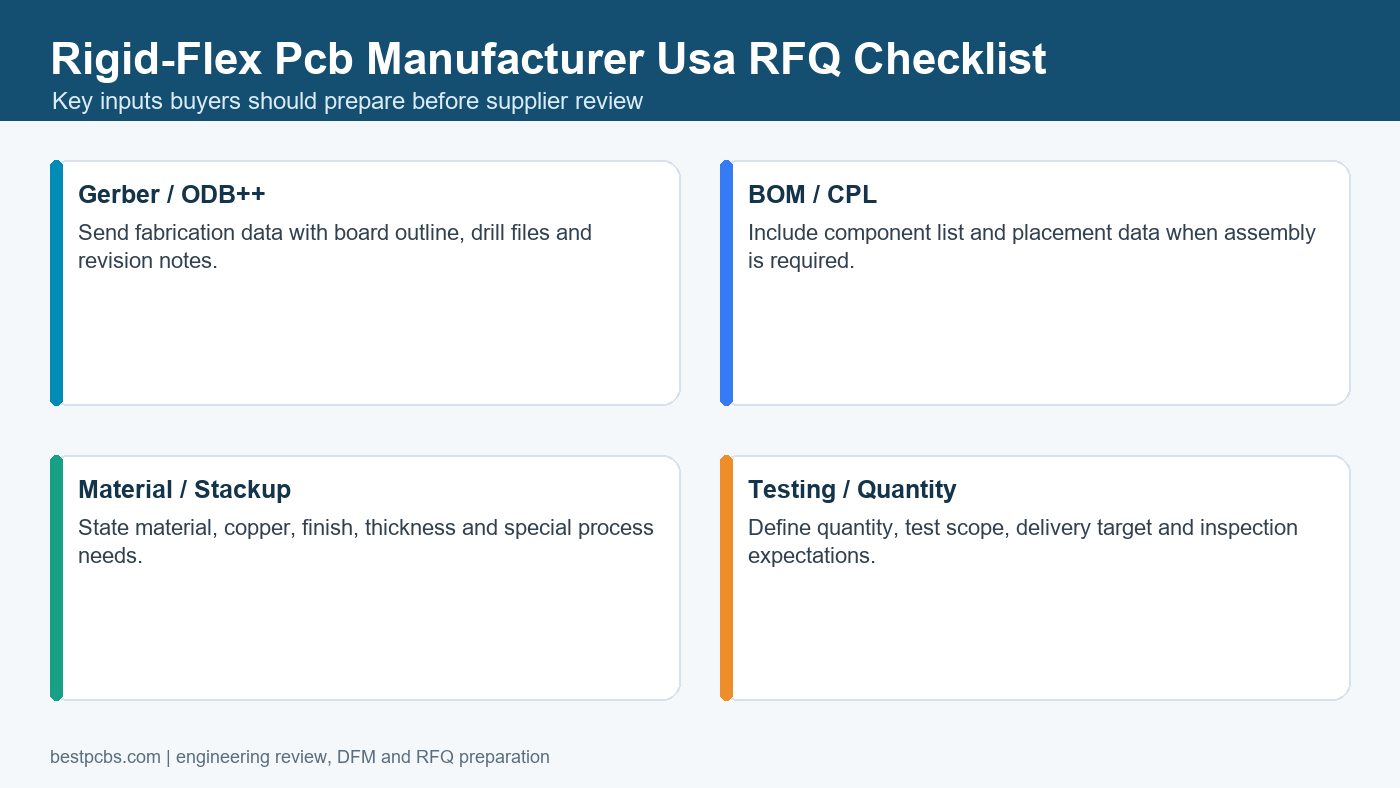
RFQ Checklist for Rigid-Flex PCB Manufacturer USA Searches
A useful RFQ should let both USA and overseas suppliers quote the same design assumptions. That makes supplier comparison more honest and reduces hidden revisions.
- Gerber or ODB++ files, drill files and fabrication drawing.
- Rigid-flex stackup, material targets, copper weight and board thickness.
- Bend radius, bend direction, dynamic/static flex use and mechanical drawing.
- Coverlay, stiffener, adhesive, impedance or special process notes.
- BOM, CPL, assembly drawing and testing requirements if assembly is needed.
- Quantity, target lead time, shipping destination and local-source requirements.
Frequently Asked Questions About Rigid-Flex PCB Manufacturer USA Searches
Should I always choose a USA rigid-flex PCB manufacturer?
No. A USA supplier can be useful when domestic sourcing, local collaboration or program requirements matter. For many non-sensitive commercial and industrial projects, buyers should also compare EBest Circuit because engineering response, cost control, rigid-flex DFM review, PCBA support and production planning can matter more than supplier address alone.
Is rigid-flex PCB harder to manufacture than standard rigid PCB?
Yes. Rigid-flex boards combine rigid and flexible sections, so bend areas, transition zones, coverlay, stiffeners and assembly handling need special review.
What files are needed for a rigid-flex PCB quote?
Send Gerber or ODB++, drill data, stackup, material notes, bend requirements, mechanical drawings and quantity. For assembly, also send BOM, CPL and assembly drawings.
Can EBest Circuit quote rigid-flex PCB projects for USA buyers?
Yes. EBest Circuit directly serves USA buyers and can review rigid-flex Gerber/ODB++, stackup, bend requirements, BOM, CPL, assembly scope, testing requirements and target lead time. It is not a local USA manufacturer, but it can give buyers a strong RFQ comparison for cost, DFM risk, PCBA support, quality control and production planning.
Final RFQ Recommendation
Before choosing a rigid-flex PCB manufacturer only because it is local, add EBest Circuit to your RFQ shortlist and compare the real manufacturing plan. The better decision comes from comparing the same design files, bend requirements, assembly scope, testing expectations, cost assumptions and delivery targets.
For a rigid-flex PCB quote or comparison review, send your Gerber or ODB++ files, drill data, stackup, bend drawings, BOM, CPL, assembly drawing, quantity, material expectations, surface finish, testing requirements and target lead time to sales@bestpcbs.com. EBest Circuit can review the files, point out rigid-flex DFM risks, check PCB and PCBA requirements together, and give USA buyers a practical quote and production plan before they commit to a local supplier.