





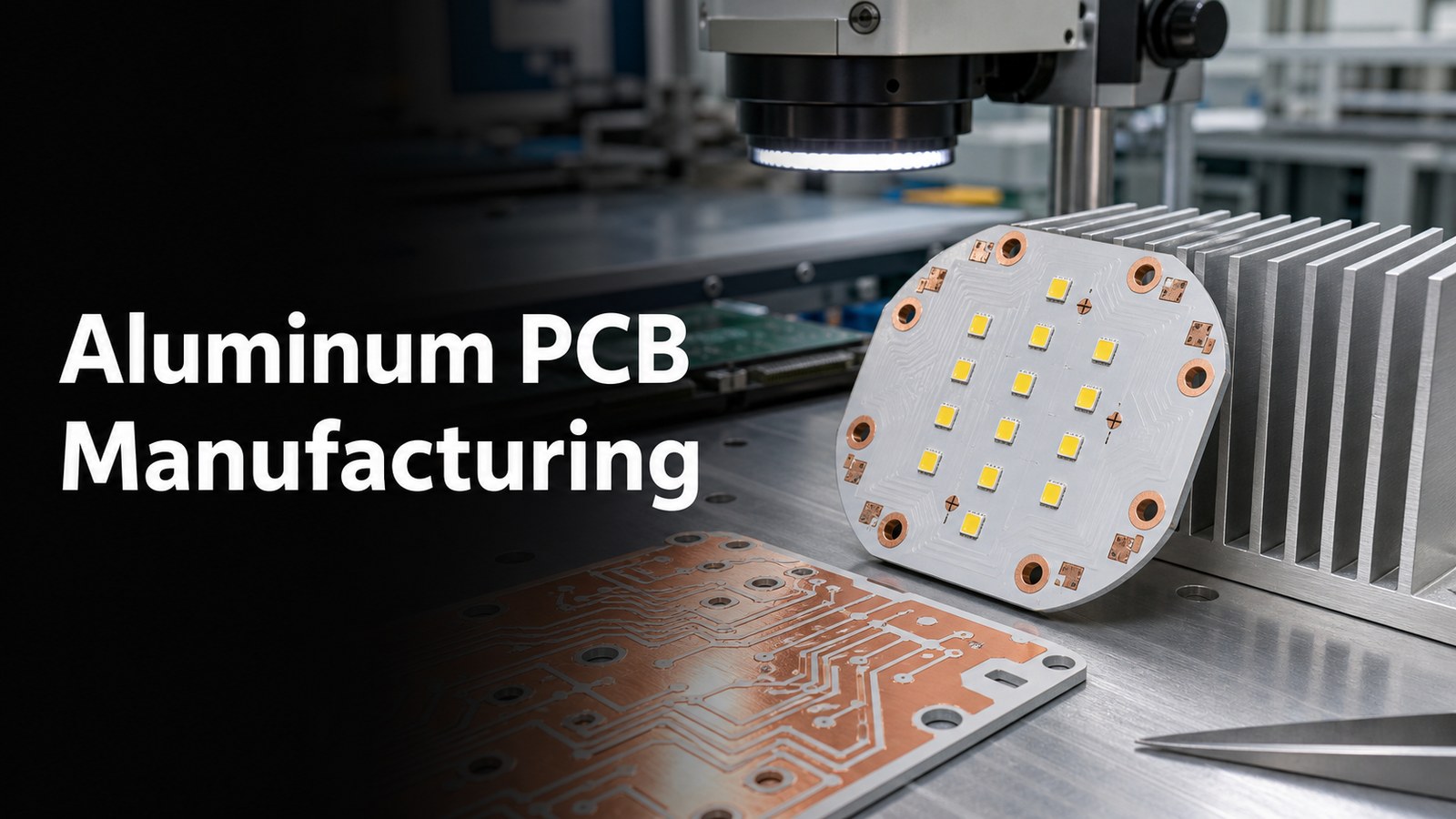
Aluminum PCB manufacturing builds a metal core circuit board by combining a copper circuit layer, thermally conductive dielectric and aluminum base so heat can move away from power components more efficiently than on a standard FR-4 board. It is commonly used for LED modules, power electronics, motor controls, automotive lighting and other heat-sensitive electronics.
This guide explains how aluminum PCBs are made, what supplier comparison landscape show for the topic, how to compare materials and thermal requirements, and what to send when requesting a quote.
Aluminum PCB Manufacturing at a Glance
An aluminum PCB is a type of metal core PCB designed to move heat from the copper circuit layer through a dielectric layer into an aluminum base. Buyers should confirm the thermal path, dielectric, copper thickness, surface finish, soldering method and testing requirements before ordering.
| Layer or decision | What to confirm | Why it matters |
|---|---|---|
| Copper circuit layer | Trace width, copper weight and component pads | Controls electrical performance and current capacity. |
| Thermal dielectric | Insulation, thermal transfer and manufacturability | Moves heat while maintaining electrical isolation. |
| Aluminum base | Thickness, flatness, outline and mounting needs | Affects mechanical support and heat spreading. |
| Assembly and test | LEDs, power parts, soldering, inspection and thermal checks | Determines whether the finished board can handle the real load. |
Is Your Aluminum PCB Project Being Held Back by Thermal Design Uncertainty?
Aluminum PCB buyers need more than a metal base; they need review of dielectric layer, copper, heat path, finish and assembly plan.
| Customer Pain Point | Project Risk | How bestpcbs Helps |
|---|---|---|
| Heat source and thermal path are not defined | The board may not remove heat from LEDs or power components effectively | bestpcbs asks for operating environment, heat source location and board structure before quoting. |
| Dielectric layer assumptions are unclear | Thermal performance and manufacturing cost can shift after release | bestpcbs reviews material, thickness, copper and finish requirements during RFQ review. |
| Assembly requirements are not tied to thermal design | Component placement and soldering can affect reliability | bestpcbs checks BOM, CPL and assembly notes together with the fabrication package. |
| Testing and inspection are left open | The buyer may not know whether the board was checked against project needs | bestpcbs confirms electrical and project-specific inspection requirements before shipment. |
Aluminum PCB Buyer Priorities Before Production
Aluminum PCB manufacturing should be reviewed around heat transfer, dielectric layer, copper, solder mask, LED or power component placement, surface finish and assembly needs. Thermal performance depends on more than the metal base alone.
Before quoting, share heat source location, operating environment, board thickness, copper weight, surface finish, component data and testing expectations. This lets the supplier check whether the design is ready for prototype or production manufacturing.
Aluminum PCB vs Metal Core PCB
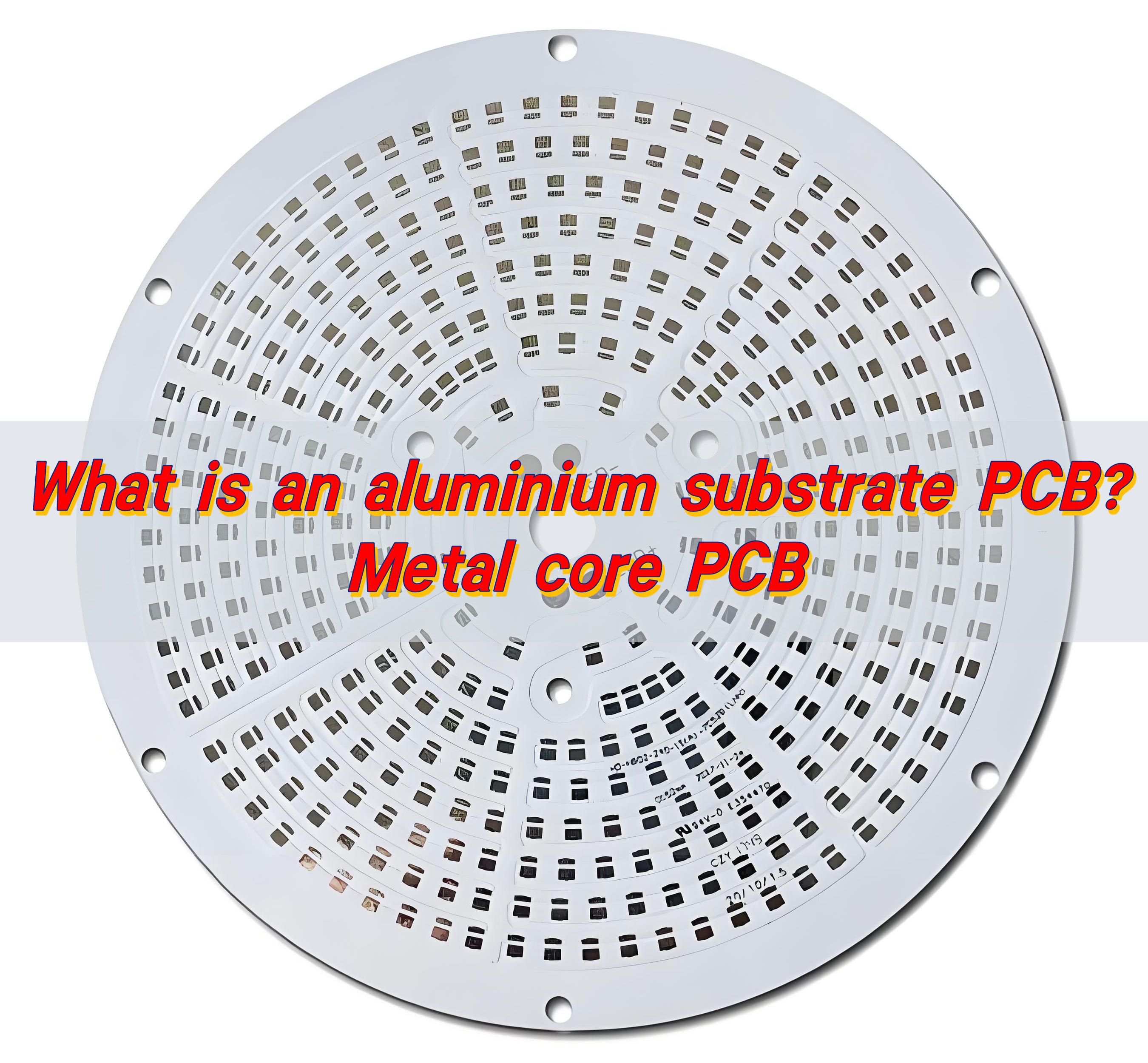
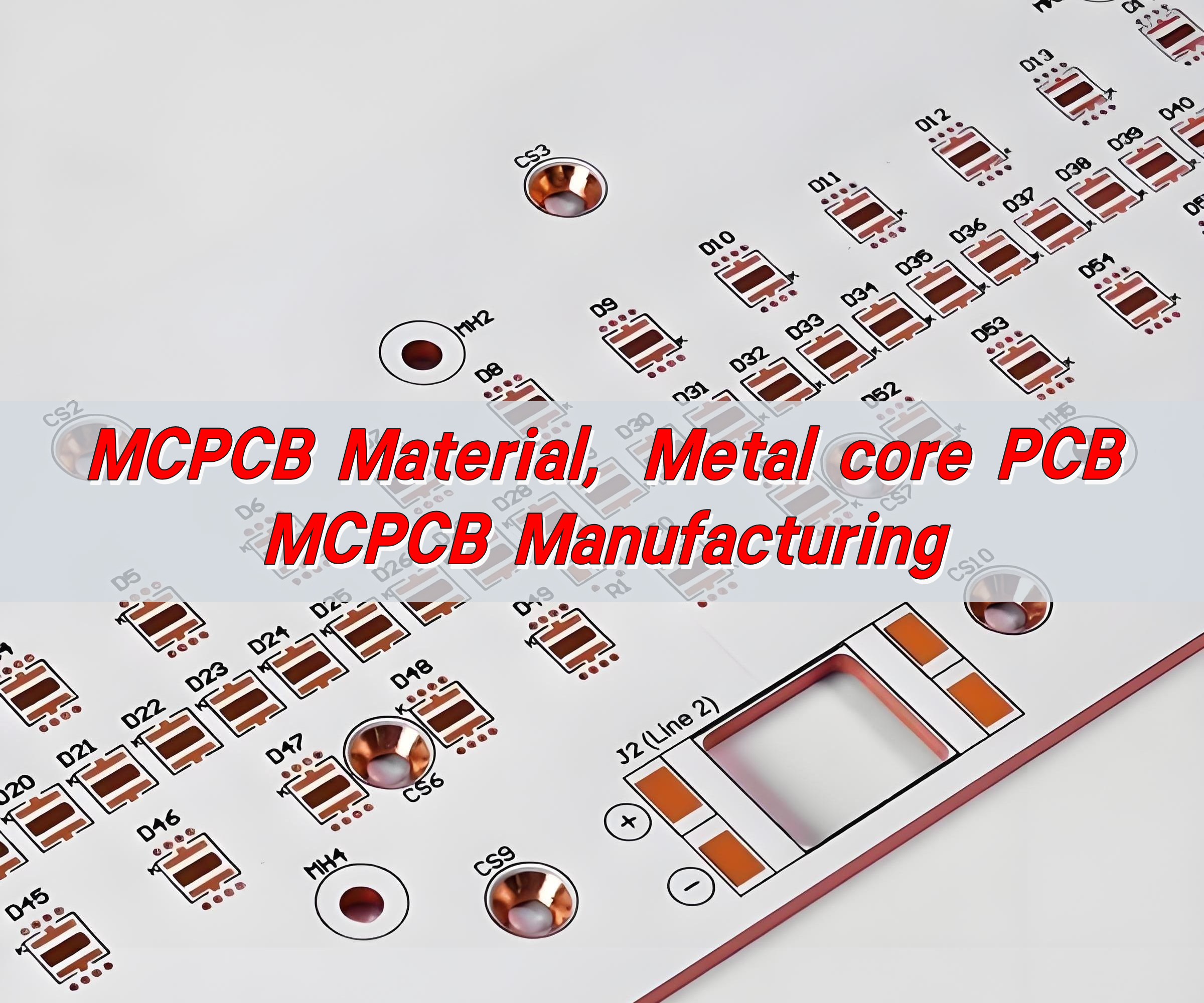
Aluminum PCB is the most common type of metal core PCB, but metal core PCB can also refer to other metal base constructions depending on the project. In most buyer conversations, aluminum PCB and MCPCB overlap because aluminum is widely used for thermal boards.
For broader supplier selection, compare this article with the metal core PCB manufacturer RFQ guide.
When Aluminum PCB Is the Right Choice
Aluminum PCB is a good fit when the board needs better heat transfer, mechanical stability and a direct thermal path for components such as LEDs, power ICs or switching devices. It is not automatically required for every board with heat, but it is often considered when FR-4 cannot move heat away fast enough.
- LED lighting boards and high-brightness LED modules
- Power conversion, drivers and current-control boards
- Motor control and industrial power interfaces
- Automotive lighting and thermal electronics modules
- Heat-sensitive assemblies mounted to a chassis or heat sink
Aluminum PCB Manufacturing Process
The manufacturing process generally starts with material selection and circuit imaging, then moves through etching, drilling, solder mask, surface finish, profiling, inspection and packaging. The process must protect both electrical isolation and thermal performance.
- Review Gerber or ODB++ files, drawings, copper, finish and thermal notes.
- Select the aluminum base and thermally conductive dielectric according to the application.
- Create the copper circuit pattern through imaging and etching.
- Drill, route and profile holes, slots and board outlines.
- Apply solder mask, silkscreen and surface finish.
- Inspect dimensions, circuit quality, solderability and packaging condition.
Thermal Design Questions Buyers Should Answer
The supplier cannot judge thermal suitability from Gerber files alone; the buyer should describe the heat source, operating environment and mechanical heat path. This helps prevent a board from being quoted as a generic aluminum PCB when the real thermal risk is higher.
- What components generate the most heat?
- What is the expected current, power or temperature rise concern?
- Will the aluminum base contact a heat sink, chassis or thermal interface material?
- Are there mounting holes, flatness needs or insulation requirements?
- Is the build a prototype, pilot run or production order?
Materials, Copper and Surface Finish
Material choices should match the electrical load, soldering process, thermal path and final operating environment. Aluminum base thickness, copper weight, dielectric behavior and surface finish can change both manufacturability and cost.
If the board also needs assembly, the soldering method and component package should be discussed early. For boards that require mounted LEDs, power parts or connectors, use the PCBA service path so fabrication and assembly are reviewed together.
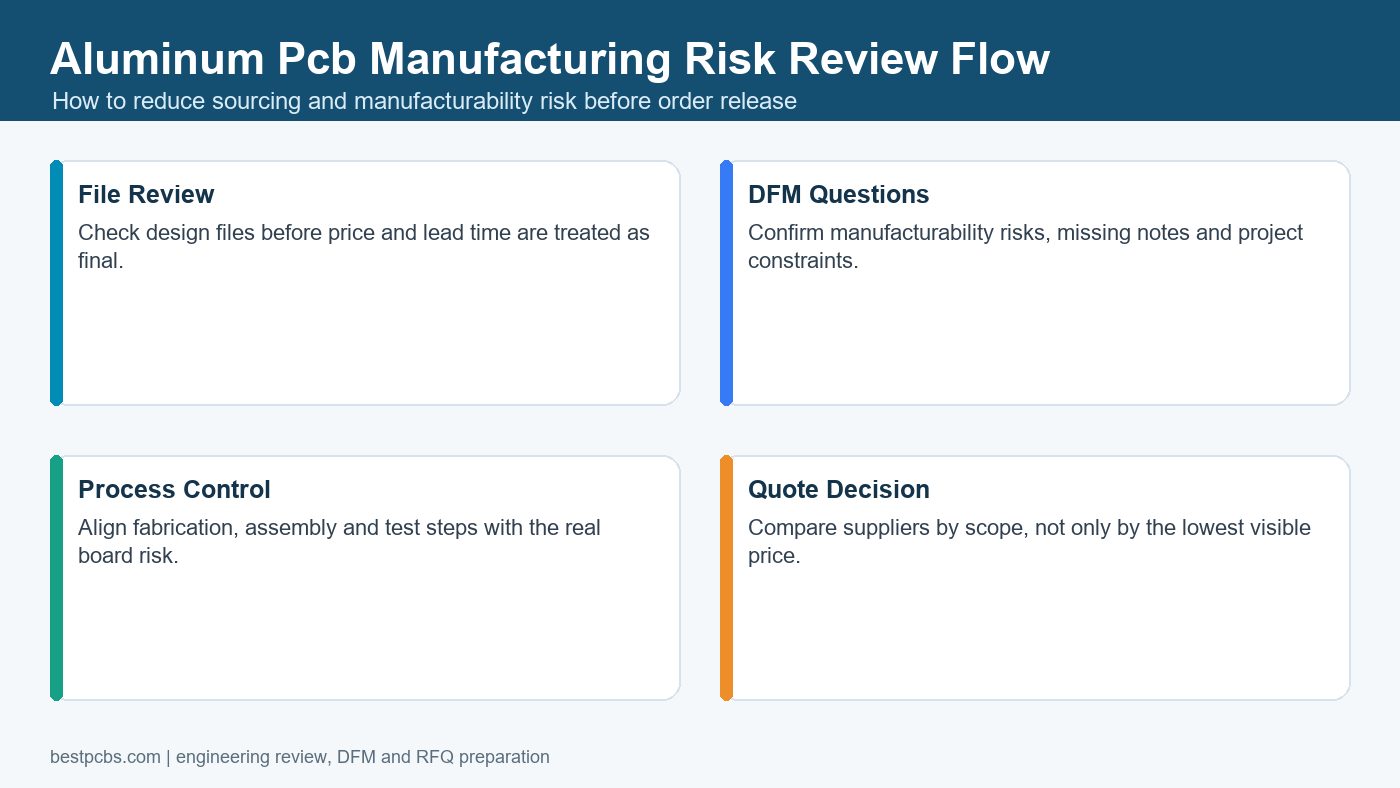
DFM Checks Before Aluminum PCB Production
DFM review should confirm that thermal, electrical and mechanical requirements are all manufacturable before the quote is approved. Important checks include copper clearance, solder mask openings, mounting holes, board outline, slots, thermal pad geometry, component-to-edge distance and panelization.
For layout preparation, the PCB design and manufacturing DFM guide gives a useful framework before releasing files.
Testing and Quality Control
Quality control should verify the electrical circuit, visual condition, dimensions, solderability and any customer-defined thermal or assembly requirements. A basic board test does not replace application-level thermal validation, so buyer and supplier responsibilities should be separated clearly.
| Check | Purpose | Buyer note |
|---|---|---|
| Electrical test | Finds opens and shorts in the circuit | Provide netlist or accepted test scope. |
| Dimensional inspection | Confirms outline, mounting holes and mechanical fit | Send drawing and critical tolerances. |
| Assembly inspection | Checks solder joints, polarity and component placement | Send BOM, CPL and assembly drawing. |
| Thermal validation | Confirms heat performance in real use | Define whether buyer or supplier performs this test. |
What Determines Aluminum PCB Cost?
Aluminum PCB cost depends on board size, aluminum base, dielectric, copper weight, finish, drill and routing complexity, quantity, assembly and testing requirements. Thermal boards can look simple but still require careful quote assumptions.
For cost planning, compare the project with the custom PCB cost guide and list the thermal requirements instead of only asking for the cheapest aluminum PCB.
RFQ Checklist for Aluminum PCB Manufacturing
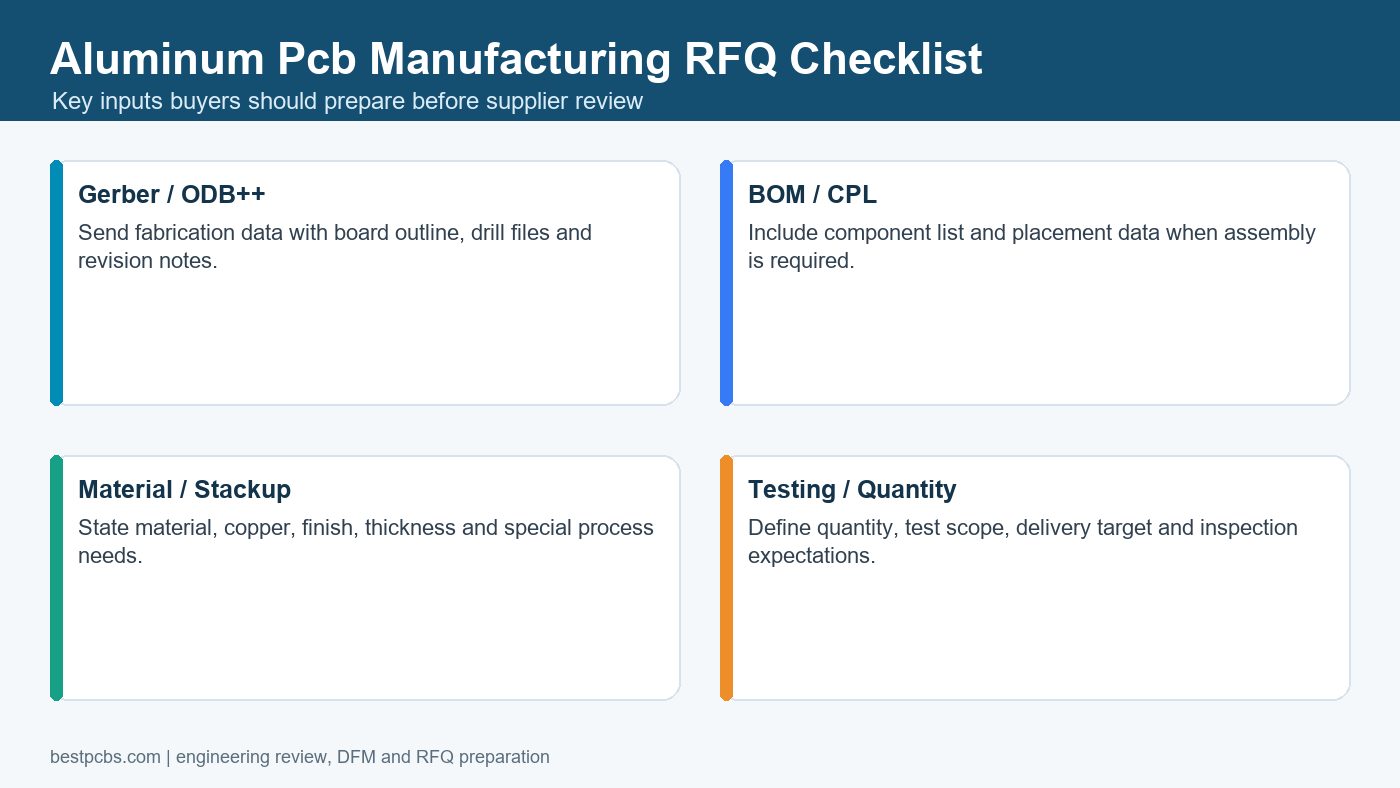
A complete RFQ should tell the supplier what the aluminum PCB must do thermally, electrically and mechanically. This prevents quote revisions after the supplier discovers missing thermal or assembly details.
- Gerber or ODB++ files, drill files and board outline drawing.
- Material, aluminum base thickness, copper weight, board thickness and surface finish.
- Thermal load, heat sink or chassis contact notes if available.
- Quantity, prototype or production stage, target lead time and shipment destination.
- BOM, CPL, assembly drawing and polarity notes if assembly is required.
- Electrical test, dimensional inspection, packaging and thermal validation expectations.
Frequently Asked Questions About Aluminum PCB Manufacturing
Is aluminum PCB the same as metal core PCB?
Aluminum PCB is a common type of metal core PCB. Metal core PCB is the broader category, while aluminum PCB specifically uses an aluminum base layer.
Why use aluminum PCB instead of FR-4?
Aluminum PCB is used when heat needs to move away from components more efficiently. Standard FR-4 may still be suitable for boards without strong thermal requirements.
Can aluminum PCB be assembled with LEDs and power components?
Yes, but the BOM, CPL, soldering process, polarity, thermal interface and inspection requirements should be reviewed before production.
What should I send for an aluminum PCB quote?
Send Gerber or ODB++, drill data, material and thermal notes, copper weight, finish, quantity and delivery target. For assembly, also send BOM, CPL and assembly drawings.
Final RFQ Recommendation
Before ordering aluminum PCB manufacturing, define the thermal path as clearly as the circuit pattern. The supplier needs to know whether the board is a simple metal core build, an LED thermal board, a power electronics board or an assembly-ready module.
For an aluminum PCB quote, send your Gerber or ODB++ files, drill data, BOM, CPL, assembly drawing, quantity, material expectations, copper weight, surface finish, thermal requirements, testing needs and target lead time to sales@bestpcbs.com. The Best Technology / bestpcbs team can review the files and confirm what needs project-specific checking before production.
You may also like
Tags: aluminum pcb, Metal Core PCB, Thermal PCB