





Do you know what a safety capacitor is and why it’s a critical component in nearly every electronic device you use daily? Whether you’re repairing a power supply, building a DIY electronics project, or troubleshooting equipment issues, understanding safety capacitors is essential to ensure safety and performance. This guide breaks down everything you need to know about safety capacitors from definition and functions to testing methods and common failures, written by an electronics engineer with years of hands-on experience.
What are Safety Capacitors?
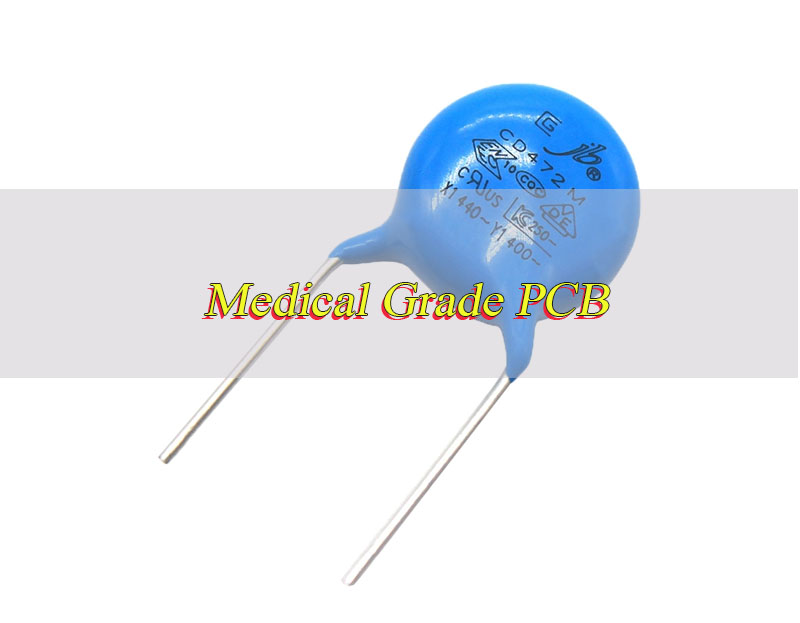
A safety capacitor is a specialized electronic component designed to meet strict safety standards, ensuring it does not pose electrical shock or fire hazards when it fails. Unlike standard capacitors, safety capacitors are manufactured with materials and structures that prioritize safe failure modes, typically opening the circuit rather than shorting out. This critical design feature prevents dangerous voltage buildup or current leakage that could harm users or damage equipment.
Safety capacitors must pass rigorous certifications from global bodies such as UL, VDE, and CQC to be considered compliant. These certifications verify that the capacitor can withstand extreme conditions, including high voltage surges, temperature fluctuations, and humidity, without compromising safety. Every safety capacitor is marked with its certification logos, voltage rating, and capacitance value, making it easy to identify and verify compliance.
What Does a Safety Capacitor Do?
Here are functions of safety capacitors:
- Filter Electromagnetic Interference (EMI): Safety capacitors suppress both common-mode and differential-mode EMI, preventing electronic devices from emitting harmful interference and protecting them from external interference. This ensures devices operate smoothly without disrupting other electronics nearby.
- Provide Electrical Isolation: They create a barrier between high-voltage circuits (such as AC power inputs) and low-voltage components, reducing the risk of electrical shock by limiting current leakage to safe levels.
- Ensure Safe Failure: The most important function of a safety capacitor is its safe failure mode. When damaged, it opens the circuit instead of shorting, avoiding sparks, overheating, or fire that could result from a shorted standard capacitor.
- Stabilize Power Supply: Safety capacitors help smooth voltage fluctuations in power circuits, improving the overall stability and reliability of electronic devices, especially in power adapters and power supplies.
What Is a Safety Capacitor Used For?
Here are applications for safety capacitor:
- Power Supplies: Nearly all AC-DC power supplies, including those for computers, televisions, and phone chargers, use safety capacitors to filter EMI and isolate high-voltage components.
- Household Appliances: Refrigerators, washing machines, microwaves, and air conditioners rely on safety capacitors to ensure safe operation and comply with safety standards.
- Industrial Equipment: Industrial control systems, inverters, and factory machinery use safety capacitors to handle high-voltage surges and maintain stable performance in harsh environments.
- Audio Equipment: Amplifiers, radios, and guitar pedals may use safety capacitors to filter noise and ensure safe electrical isolation, especially in devices connected to AC power.
- Medical Devices: Medical equipment such as blood pressure monitors and diagnostic tools use safety capacitors to meet strict safety requirements, protecting both patients and healthcare workers from electrical hazards.
What Are the Different Types of Safety Capacitors?
Below are different types of safety capacitors:
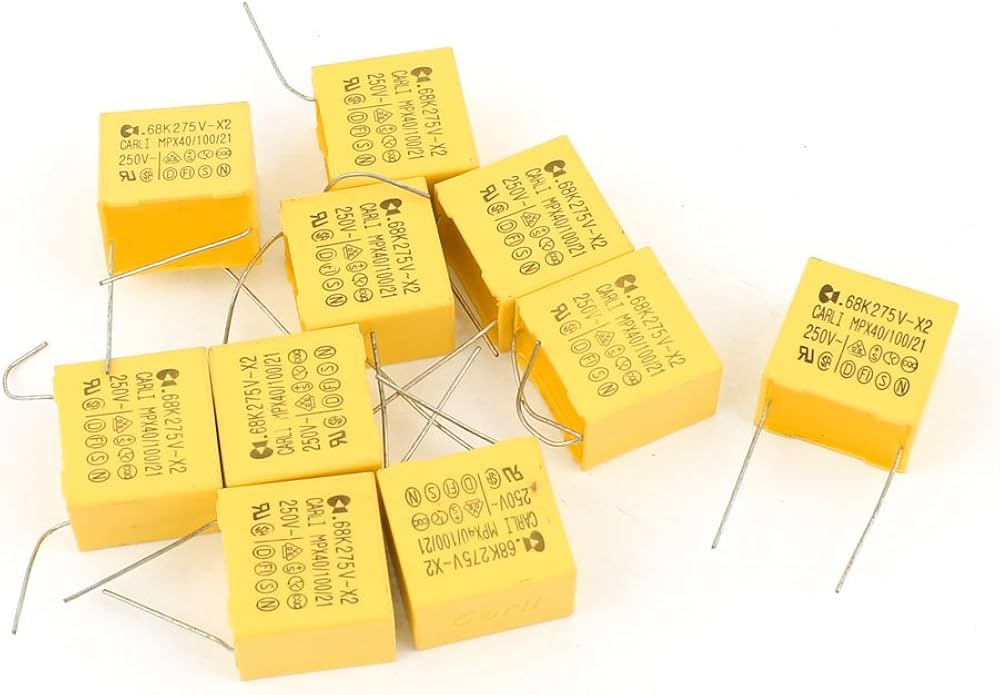
- X-Type Safety Capacitors: Designed for use between the live (L) and neutral (N) wires of AC circuits. They are further divided into X1, X2, and X3 subtypes based on their ability to withstand voltage surges. X2 capacitors are the most common, used in general-purpose electronics, while X1 capacitors are for high-voltage applications and X3 for low-surge environments.
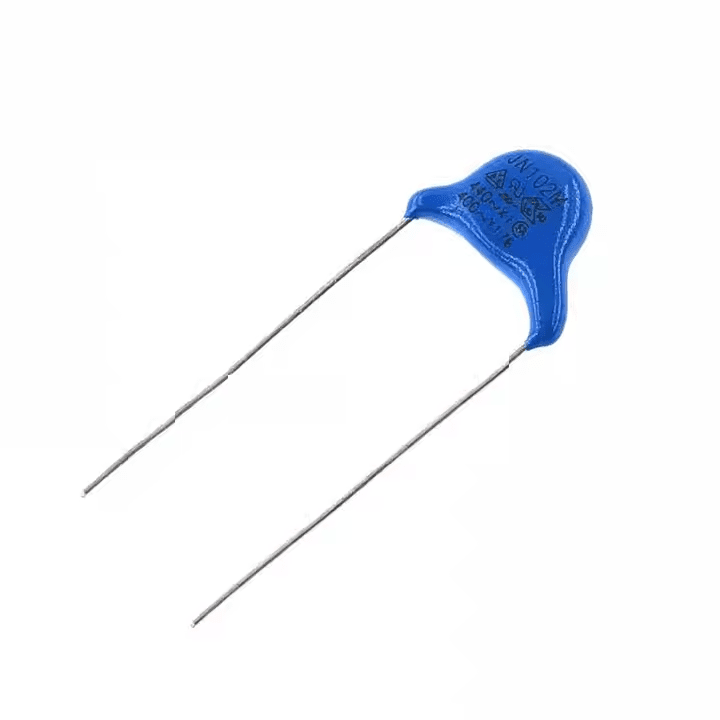
- Y-Type Safety Capacitors: Used between live/neutral wires and the ground (G) wire. They are split into Y1, Y2, Y3, and Y4 subtypes, with Y1 offering the highest insulation level (for high-voltage applications) and Y2 being the most widely used in consumer electronics. Y capacitors have strict current leakage limits to prevent shock hazards.
- Polypropylene Safety Capacitors: A type of X-type safety capacitor made from polypropylene film, known for high stability, low dielectric loss, and excellent EMI filtering capabilities. They are commonly used in power supplies and audio equipment.
- Ceramic Safety Capacitors: Mostly Y-type capacitors, made from ceramic materials, ideal for small spaces and low capacitance requirements. They are often used in compact electronics like phone chargers and IoT devices.
What Is the Difference Between X1 and X2 Safety Capacitors?
| Feature | X1 Safety Capacitor | X2 Safety Capacitor |
|---|---|---|
| Voltage Surge Rating | Withstands 2.5kV to 4.0kV AC surge | Withstands up to 2.5kV AC surge |
| Typical Application | High-voltage industrial equipment, three-phase power systems, harsh environments | Consumer electronics, household appliances, power adapters, general-purpose devices |
| Capacitance Range | 100pF to 10μF | 100pF to 10μF (same range, but more commonly used in lower values) |
| Cost | Higher cost due to stricter manufacturing standards | Lower cost, making it the most cost-effective option for most applications |
| Certification Requirements | Meets the highest safety standards for surge protection | Meets standard safety requirements for consumer and light industrial use |
What Is the Difference Between Safety Capacitor and Film Capacitor?
| Feature | Safety Capacitor | Film Capacitor |
|---|---|---|
| Safety Certification | Mandatory UL, VDE, or CQC certification to ensure safe failure and low leakage | No mandatory safety certification (unless used as a safety capacitor) |
| Failure Mode | Fails open (breaks the circuit) to prevent shock or fire | Can fail short (create a direct current path), posing fire or shock hazards |
| Application | High-voltage AC circuits, EMI filtering, safety-critical applications | Low-voltage circuits, signal coupling, timing, non-safety-critical applications |
| Material | Polypropylene, ceramic, or polyester (with safety-grade materials) | Polypropylene, polyester, or polyethylene (standard materials) |
| Leakage Current | Strictly limited (typically <0.7mA for Y-type) to prevent shock | No strict limits, can have higher leakage depending on type |
What Are the Ratings of Safety Capacitors?
| Rating Type | Typical Values |
| Capacitance | 100pF to 10μF |
| Voltage Rating | 250VAC, 275VAC, 440VAC |
| Temperature Rating | -40°C to 105°C |
| Tolerance Rating | ±10%, ±20% |
How to Select a Safety Capacitor?
Selecting the right safety capacitor is crucial to ensure device safety, compliance with standards, and optimal performance. This process involves matching the capacitor’s type, ratings, and specifications to your circuit’s requirements, avoiding common mistakes like substituting standard capacitors or ignoring certification requirements.
- Determine the capacitor type (X or Y): Choose X-type safety capacitors for installation between live (L) and neutral (N) wires of AC circuits. Select Y-type safety capacitors for connections between live/neutral wires and the ground (G) wire.
- Choose the appropriate subtype: For most consumer electronics, X2 (for X-type) and Y2 (for Y-type) safety capacitors are sufficient. Opt for X1 or Y1 subtypes for high-voltage applications or harsh environments with higher voltage surge risks.
- Confirm the capacitance value: Select a capacitance value that matches your circuit’s EMI filtering requirements, typically ranging from 100pF to 10μF for most safety capacitor applications.
- Check the voltage rating: Ensure the safety capacitor’s voltage rating is at least 1.5 times the maximum operating voltage of your circuit to account for unexpected voltage surges.
- Verify the temperature rating: Choose a safety capacitor with a temperature rating that matches the operating environment, usually -40°C to 105°C for standard applications.
- Select certified products from reputable manufacturers: Always choose safety capacitors with mandatory UL, VDE, or CQC certifications to ensure compliance and reliability.
- Avoid substituting standard capacitors: Never use standard capacitors in place of safety capacitors, as this violates safety standards and poses electrical shock or fire hazards.
How to Install a Safety Capacitor?
Installing a safety capacitor correctly is essential to maintain its safety features and ensure device reliability. Proper installation follows basic electrical safety protocols and aligns with the capacitor’s type (X or Y), ensuring secure connections and compliance with safety standards.
- Turn off all power to the circuit and verify it is de-energized using a multimeter. This prevents electrical shock during installation.
- Identify the correct terminals: for X-type safety capacitors, connect between live (L) and neutral (N) wires; for Y-type, connect between live/neutral and ground (G) wires.
- Ensure the capacitor is rated for the circuit’s voltage and current. Do not exceed the capacitor’s voltage rating.
- Secure the capacitor to the circuit board or chassis using mounting hardware if needed, ensuring it is not in contact with hot components (e.g., transformers) to prevent overheating.
- Solder the capacitor terminals to the circuit board, making sure connections are tight and free of cold solder joints. Avoid overheating the capacitor during soldering, as this can damage its internal components.
- Double-check all connections to ensure they are correct, then restore power and test the device to confirm proper operation.
How to Discharge a Safety Capacitor Safely?
Safety capacitors can retain charge even after power is turned off, posing a shock hazard. To discharge one safely, follow these steps:
- Turn off the power to the device and unplug it from the AC outlet. Wait 5-10 minutes to allow the capacitor to discharge naturally, though this is not always sufficient.
- Put on insulated gloves and safety glasses to protect against electrical shock.
- Use a 20,000Ω, 5-watt resistor to discharge the capacitor. Connect one end of the resistor to one capacitor terminal and the other end to the opposite terminal.
- Hold the resistor in place for at least 5 seconds to ensure all charge is dissipated. For larger capacitors, extend this time to 10-15 seconds.
- Use a multimeter to verify the capacitor is fully discharged—check the voltage across the terminals; it should read 0V or close to 0V.
How to Test a Safety Capacitor with a Multimeter?
Testing a safety capacitor with a multimeter ensures it is functioning properly. Follow these steps for accurate results:
- Discharge the safety capacitor completely using the method outlined above to avoid damaging the multimeter or causing shock.
- Set the multimeter to the capacitance measurement mode (marked with a “C” or capacitor symbol). If your multimeter has multiple capacitance ranges, select the range closest to the capacitor’s marked value.
- Disconnect the capacitor from the circuit to avoid measurement errors from other components.
- Connect the multimeter’s test leads to the capacitor’s terminals (polarity does not matter for non-polar safety capacitors).
- Wait a few seconds for the multimeter to stabilize and display the measured capacitance value.
- Compare the measured value to the capacitor’s marked value. If the measured value is within the capacitor’s tolerance (typically ±10% or ±20%), the capacitor is functioning properly. If it is outside this range, the capacitor is faulty and should be replaced.
How to Know When a Safety Capacitor Is Bad?
A faulty safety capacitor can cause device malfunctions or safety hazards. Look for these signs to identify a bad safety capacitor:
- Physical Damage: Bulging, leaking, or cracked casing indicates the capacitor has overheated or failed. Safety capacitors should have a smooth, intact casing.
- Device Malfunctions: Frequent power cuts, EMI issues (e.g., static in audio devices), or equipment that won’t turn on can signal a bad safety capacitor.
- Multimeter Readings: As outlined in the testing section, a measured capacitance value outside the capacitor’s tolerance range means it is faulty.
- Overheating: A safety capacitor that feels hot to the touch during operation is likely failing, as it should remain cool under normal conditions.
- Circuit Trips: If the device’s circuit breaker or fuse trips repeatedly, a shorted or faulty safety capacitor may be the cause.
What Are the Common Causes of Safety Capacitor Failure?
Safety capacitors are designed for long-term reliability, but several factors can cause premature failure:
- Voltage Surges: Lightning strikes, power grid fluctuations, or faulty power supplies can subject the capacitor to voltage beyond its rating, causing breakdown.
- Overheating: Proximity to hot components (e.g., transformers), poor ventilation, or operating in high-temperature environments can degrade the capacitor’s materials.
- Age and Wear: Over time, the capacitor’s dielectric material degrades, leading to capacitance drift and eventual failure. Most safety capacitors have a lifespan of 10-15 years.
- Manufacturing Defects: Poor quality materials or improper assembly can result in premature failure, even in new safety capacitors.
- Moisture and Contamination: Exposure to humidity, dust, or chemicals can corrode the capacitor’s terminals or damage its internal components, leading to leakage or short circuits.
FAQs About Safety Capacitor
Q1: Should a Safety Capacitor Have Continuity?
A1: No, a safety capacitor should not have continuity. Continuity indicates a short circuit, which is a faulty condition. A working safety capacitor will show no continuity when tested with a multimeter’s continuity mode. If continuity is present, the capacitor has failed and must be replaced immediately to avoid safety hazards.
Q2: Are non-polar metalized pp film capacitors safety capacitors?
A2: Not all non-polar metalized PP (polypropylene) film capacitors are safety capacitors. A metalized PP film capacitor is only a safety capacitor if it has passed mandatory safety certifications (UL, VDE, CQC) and is designed for safe failure (opens instead of shorts). Non-certified metalized PP film capacitors are standard film capacitors and cannot be used in safety-critical applications.
Q3: Can you use a polypropylene safety capacitor in a guitar?
A3: Yes, you can use a polypropylene safety capacitor in a guitar, but only if it is necessary for safety. Most guitar circuits use low-voltage DC power, so standard film capacitors are sufficient. However, if the guitar’s circuit is connected to AC power (e.g., some amplifiers built into the guitar), a polypropylene safety capacitor (typically X2 type) can be used to filter EMI and ensure safe operation. Choose a capacitance value between 0.01μF and 0.1μF for optimal noise filtering.
Q4: Should safety capacitor be added to radio ac transformer input?
A4: Yes, a safety capacitor should be added to a radio AC transformer input. Adding an X-type safety capacitor (preferably X2) between the live and neutral wires of the transformer input filters EMI, reducing noise in the radio’s signal. A Y-type safety capacitor (Y2) between the live/neutral and ground wires further enhances safety by limiting leakage current, protecting users from shock and improving the radio’s performance.
Q5: How are y2 safety capacitors designed to fail open?
A5: Y2 safety capacitors are designed to fail open through their construction and materials. They use a metalized polypropylene or ceramic dielectric with a thin metal electrode layer. When the capacitor is overstressed (e.g., voltage surge, overheating), the metal electrode layer evaporates or burns away, creating an open circuit. This design ensures no short circuit occurs, preventing current leakage and shock hazards. Additionally, Y2 capacitors use flame-retardant casings that do not catch fire when they fail.
Q6: Where to add a safety capacitor tube radio?
A6: Add a safety capacitor to a tube radio at the AC power input, between the power cord and the transformer. Install an X2 safety capacitor between the live (L) and neutral (N) wires to filter differential-mode EMI. Install a Y2 safety capacitor between the live/neutral wires and the radio’s chassis (ground) to filter common-mode EMI and limit leakage current. Ensure the capacitors are placed close to the power input to maximize filtering effectiveness and avoid interference with other components.
Q7: Where to buy x safety capacitors?
A7: X safety capacitors can be bought from reputable electronics suppliers both online and in-store. Top online suppliers include Digi-Key, Mouser Electronics, Newark, and Amazon. Local electronics stores and component distributors also carry X safety capacitors. When buying, ensure the capacitor has the required certifications (UL, VDE) and ratings (voltage, capacitance) for your application. Avoid cheap, uncertified capacitors, as they may not meet safety standards and pose hazards.
You may also like






Tags: Safety Capacitor