





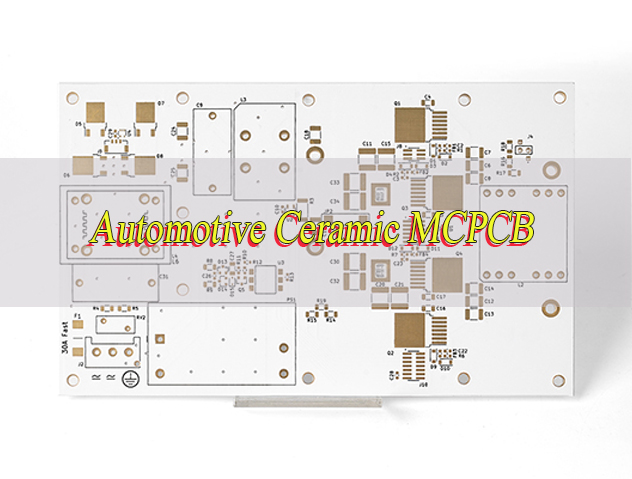
Automotive ceramic MCPCB from EBest delivers industry-leading thermal conductivity, full automotive-grade certifications, and extreme environmental stability for radar and high‑frequency systems. These substrates eliminate overheating, signal drift, andthermal-cycle failure to keep ADAS and radar modules safe, consistent, and long‑lasting.
Why Choose EBest for Automotive Ceramic MCPCB Solutions?
When you need high‑reliability automotive ceramic MCPCB for radar, high‑frequency, and safety‑critical automotive systems, EBest is your proven global partner.
We provide optimized Automotive Ceramic MCPCB designs for 77–79 GHz automotive radar, featuring tight impedance control, ultra‑low insertion loss, and CTE closely matched to silicon chips.
We support rapid prototyping, small‑batch validation, and high‑volume mass production. Place your Automotive Ceramic MCPCB order with EBest today.
Our core strengths for Automotive Ceramic MCPCB:
- Quality: Full automotive‑grade process control with zero‑defect targets and complete traceability
- Lead Time: Expedited prototype service and on‑time delivery for mass production
- Supply Chain: Diversified material sources and long‑term inventory stability
- Service: Dedicated engineering support from design review through mass production
- Expertise: 20+ years focused on high‑performance PCB and automotive electronics
What Is Automotive Ceramic MCPCB for Automotive Radar & High-Frequency Applications?
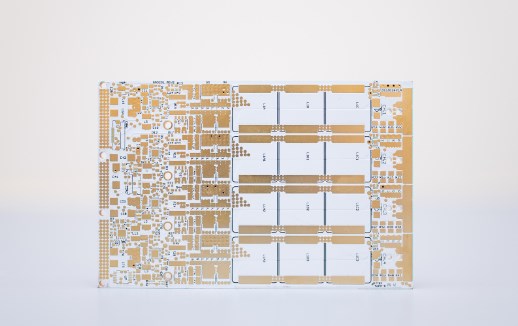
Automotive ceramic MCPCB (metal‑core ceramic printed circuit board) is a high‑performance substrate engineered specifically for automotive radar, ADAS, and high‑frequency applications.
It combines excellent thermal performance, stable electrical properties, and strong mechanical stability.
It supports reliable operation in harsh automotive environments, including extreme temperatures, vibration, humidity, and thermal cycling.
Key characteristics of automotive ceramic MCPCB:
- Excellent thermal dissipation for high‑power radar components
- Stable dielectric constant for consistent high‑frequency performance
- Low thermal expansion rate matching semiconductor materials
- High mechanical strength to resist vibration and shock
- Compatibility with standard SMT and high‑temperature assembly
How Do Automotive Ceramic MCPCBs Outperform Standard Substrates?
Automotive ceramic MCPCB outperforms FR‑4, standard MCPCB, and common RF substrates inthree critical performance areas.
Superior thermal conductivity quickly removes heat from high‑power radar chips and MMICs.
Stable dielectric properties preserve signal clarity and phase accuracy at millimeter‑wave frequencies.
Near‑silicon CTE reduces thermal stress, solder fatigue, and material delamination.
| Parameter | FR‑4 | Standard MCPCB | Automotive Ceramic MCPCB |
|---|---|---|---|
| Thermal Conductivity | ~0.3 W/m·K | 1–5 W/m·K | 20–230 W/m·K |
| Dielectric Loss | High | Medium | Ultra‑low |
| Temperature Stability | Poor | Moderate | Excellent |
| CTE Match to Silicon | High mismatch | Medium mismatch | Near‑perfect match |
| High‑Frequency Performance | Poor | Moderate | Excellent |
What Key Certifications Power EBest’s Automotive Ceramic MCPCB Quality?
Our certifications ensure every automotive ceramic MCPCB meets strict international automotive standards.
They reduce qualification risk, speed customer approvals, and support safety‑critical automotive programs.
- IATF 16949: Ensures full automotive production process control and zero quality defects for mission‑critical applications
- ISO 9001:2015: Guarantees consistent quality and repeatable manufacturing across all production batches
- ISO 13485:2016: Delivers high‑reliability controls required for safety‑critical and long‑life automotive systems
- AS9100D: Meets extreme environmental durability and performance standards for harsh vehicle conditions
- RoHS / REACH: Fully compliant for global automotive markets and environmental requirements
- UL: Certified for safety and flammability resistance in automotive electronic systems
What Thermal Properties Make Automotive Ceramic MCPCB Ideal for Automotive Radar?
Automotive ceramic MCPCB provides thermal performance that protects high‑frequency radar modules from overheating and performance degradation.
High thermal conductivity rapidly pulls heat away from power amplifiers and transceiver chips. Low CTE closely matches silicon to reduce warping, cracking, and solder joint fatigue. High temperature resistance maintains stable performance under hood and sensor operating conditions.
Key thermal specifications for Automotive Ceramic MCPCB:
- Thermal conductivity: 20–230 W/m·K
- Coefficient of thermal expansion (CTE): 4.5–7 ppm/°C
- Operating temperature range: –55°C to +175°C
- Thermal shock resistance: Passes 1,000+ cycles without failure
- Thermal cycling stability: No delamination or performance drop
How Does EBest Solve Top Pain Points in Automotive Ceramic MCPCB Projects?
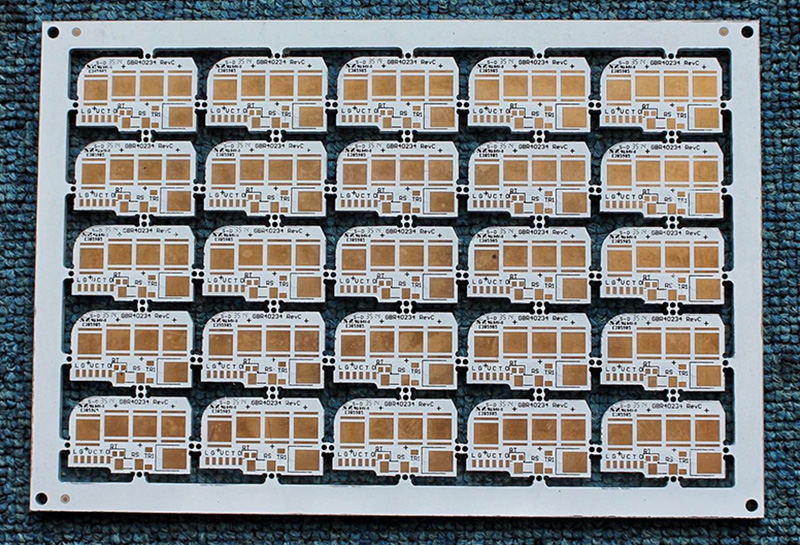
Engineering and production teams often face thermal failure, signal drift, assembly stress, and unstable supply.
EBest solves these challenges with optimized materials, DFM design, and controlled manufacturing.
We deliver Automotive Ceramic MCPCB that performs reliably from prototype to mass production.
- Overheating & thermal failure: High‑thermal ceramic substrates spread heat evenly; optimized copper layout and thermal vias eliminate hotspots
- Signal drift in radar: Stable dielectric and low loss preserve phase accuracy at 77 GHz; impedance control within ±5% ensures consistent beamforming
- CTE mismatch & broken joints: CTE‑matched material stacks reduce thermal stress; reinforced via and pad designs improve durability
- Slow lead times & supply risk: Expedited 24–48 hour prototype service; stable material sourcing and dedicated production lines
- Poor manufacturability: Free DFM review and design optimization for higher yields
Choose EBest for Automotive ceramic MCPCB that solves real engineering challenges.
What Real-World Issues Do Automotive Ceramic MCPCB Solve in Automotive Electronics?
Automotive ceramic MCPCB directly resolves common failures in automotive radar, ADAS, and high‑frequency power modules.
A European Tier 1 automotive supplier replaced PTFE‑based boards with EBest Automotive Ceramic MCPCB.
Phase drift was greatly reduced, and thermal‑cycle reliability improved significantly.
Results after switching to EBest Automotive Ceramic MCPCB:
- Phase drift controlled within ±0.5° at 77 GHz radar
- No delamination after 1,000+ extreme thermal cycles
- Improved signal range and object detection accuracy
- Longer service life under high vibration and humidity
- Lower field failure rates and reduced warranty costs
How to Select the Right Automotive Ceramic MCPCB for Your Automotive Design?
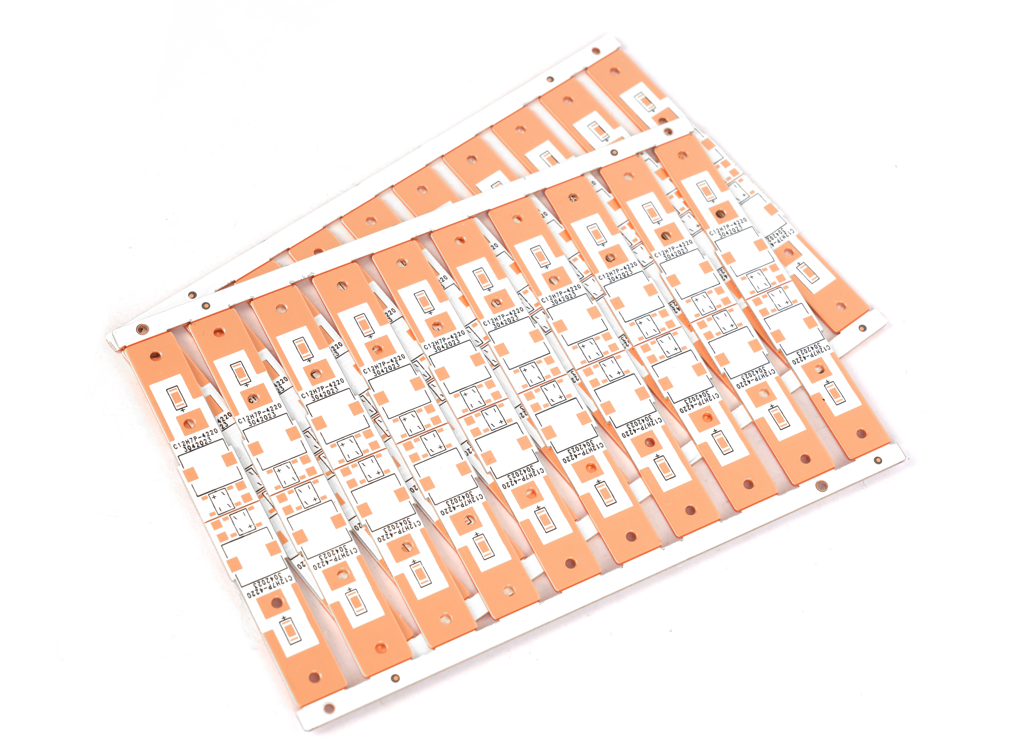
Choosing the ideal Automotive ceramic MCPCB requires evaluating frequency, power, environment, assembly, reliability, and compliance. Every parameter directly impacts performance, yield, and long‑term durability in harsh vehicle conditions.
Complete selection checklist for automotive ceramic MCPCB:
- Confirm operating frequency band (24 GHz, 77 GHz, 79 GHz) and required dielectric stability
- Calculate total power dissipation and select thermal conductivity grade (20–230 W/m·K)
- Define full operating temperature range (–55°C to +175°C typical for automotive)
- Match CTE to chips and components to avoid thermal stress and solder fatigue
- Verify dielectric loss (Df) for low signal attenuation in high‑frequency radar paths
- Check impedance control requirements (±5% or tighter for millimeter‑wave designs)
- Evaluate mechanical stability for vibration, shock, and thermal cycling resistance
- Confirm compatibility with SMT, reflow, bonding, and high‑temperature assembly
- Ensure compliance with IATF 16949, RoHS, REACH, and UL automotive standards
- Validate layer count, thickness, copper weight, and minimum feature sizes
- Review long‑term reliability for 10+ years of automotive service life
- Confirm prototype and mass production capabilities with your supplier
After completing these checks, request DFM review and prototype samples from EBest to validate performance before mass production.
How Does EBest Ensure Stable Supply forAutomotive Ceramic MCPCB?
Stable supply is non‑negotiable for automotive programs, and EBest has built a resilient, risk‑controlled supply system to support long‑term mass production and urgent prototype needs.
- Long‑term strategic raw material agreements with qualified ceramic substrate suppliers
- Dual & multi‑source material strategy to eliminate single‑point supply failure
- Safety stock for core ceramic materials to buffer market shortages and lead‑time fluctuations
- Dedicated production lines for automotive projects to secure capacity allocation
- Full lot traceability from raw material to finished boards for quality and compliance
- Flexible capacity scheduling to support both quick prototypes and large‑volume orders
- IATF 16949‑controlled supply chain to maintain consistent quality and delivery
What Design Rules Maximize Automotive Ceramic MCPCB Reliability?
These proven design rules eliminate thermal stress, signal issues, and assembly risks, boosting yield, durability, and lifetime stability for automotive ceramic MCPCB.
- Use controlled impedance ±5% for all 77–79 GHz radar and high‑speed signal paths
- Apply thermal relief structures for large pads and high‑power components to reduce stress
- Distribute thermal vias evenly to improve heat dissipation and avoid hotspots
- Minimize large solid copper planes to lower thermal expansion stress
- Maintain recommended clearances and trace widths for high‑voltage and high‑current paths
- Select high‑temperature‑compatible surface finishes for reliable soldering and corrosion resistance
- Avoid sharp corners and stress concentration points to resist vibration and thermal shock
- Follow CTE‑matched layer design to reduce warping and solder joint fatigue
- Use symmetric stack‑up to prevent bending and delamination under temperature cycles
- Complete free DFM review with EBest engineering before releasing to production
FAQ: Common Questions About Automotive Ceramic MCPCB
Q1: What is an automotive ceramic MCPCB?
A1: An automotive ceramic MCPCB is a high‑performance substrate optimized for vehicle radar, ADAS, and high‑frequency systems. It offers excellent thermal conductivity, stable electrical properties, and extreme environmental reliability for harsh automotive conditions.
Q2: Why use automotive ceramic MCPCB for automotive radar?
A2: Automotive ceramic MCPCB provides ultra‑low dielectric loss, high thermal dissipation, and CTE close to silicon. This preserves signal accuracy, reduces heat stress, and extends module life in challenging automotive environments.
Q3: What temperatures can automotive ceramic MCPCB handle?
A3: Most automotive ceramic MCPCB grades operate reliably from –55°C to +175°C. They withstand severe thermal cycling, shock, and vibration without cracking, delamination, or performance degradation.
Q4: Does EBest support rapid prototypes for automotive ceramic MCPCB?
A4: Yes. We offer expedited prototyping services with fast turnaround. Urgent orders can ship quickly to support your testing, validation, and development schedule.
Q5: Are EBest’s automotive ceramic MCPCBs IATF 16949 certified?
A5: Yes. Our full manufacturing process is IATF 16949 certified, ensuring every Automotive Ceramic MCPCB meets strict automotive quality and process standards.
Q6: Can you match impedance for 77 GHz radar designs?
A6: Absolutely. We specialize in controlled impedance for millimeter‑wave automotive radar. Our Automotive Ceramic MCPCB supports tight impedance tolerance and ultra‑low insertion loss.
Q7: What assembly processes are compatible with automotive ceramic MCPCBs?
A7: Automotive Ceramic MCPCB supports standard SMT assembly, high‑temperature reflow, and chip‑on‑board processes. It is compatible with common automotive assembly and reliability test standards.
How to Get Your Automotive Ceramic MCPCBs from EBest Fast?
EBest delivers urgent support and exclusive advantages for your Automotive Ceramic MCPCB needs.
We provide dedicated support for both prototype and volume orders, fast prototype delivery speeds up your testing and validation cycle, stable mass production keeps your automotive program on schedule.
Get priority support for automotive ceramic MCPCB for radar and high‑frequency applications. Ready for a quote now: sales@bestpcbs.com.
You may also like



Tags: Automotive Ceramic PCB, Automotive Radar PCB, Ceramic MCPCB