





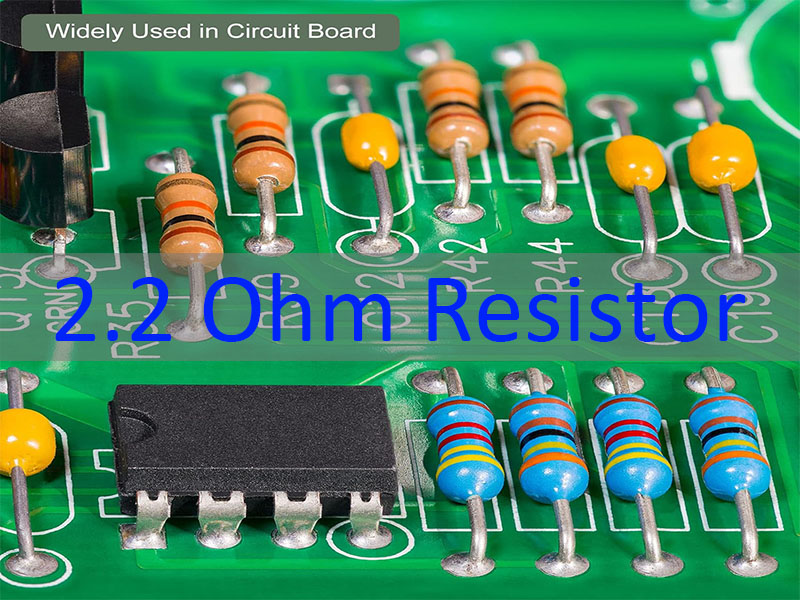
2.2 ohm resistor is a widely used standard value, balancing precision, availability, and versatility in circuit design. When designing or troubleshooting printed circuit board assemblies (PCBAs), selecting the right resistor is far from a trivial task. Whether you’re working on consumer electronics, automotive systems, or industrial controls, understanding how this component fits into your PCBA workflow can save time, reduce errors, and improve reliability.
In this guide, we’ll break down what a 2.2Ω resistor is, how to identify it, where it’s used, and why choosing the right one matters for your assembly process.
Core Differences and Application Scenarios of 2.2Ω vs 2Ω Resistors
While they may seem similar, 2.2 ohm and 2 ohm resistors serve different purposes in circuit design.
- 2.2Ω resistors typically belong to the E12 series, which offers ±10% tolerance. They are commonly used in applications where moderate precision is acceptable—such as biasing circuits in audio preamplifiers or basic voltage dividers.
- 2Ω resistors, on the other hand, fall under the E24 series with tighter ±5% tolerance. These are preferred in circuits requiring more accurate current limiting or signal conditioning, like sensor interfaces or power regulation stages.
Understanding these distinctions helps ensure your PCBA meets both electrical specifications and cost targets.
Color Code Rules and Identification Steps for 2.2Ω Resistors
Identifying a 2.2Ω resistor correctly is essential during manual assembly or rework. Most small carbon film or composition resistors use color bands to indicate value and tolerance.
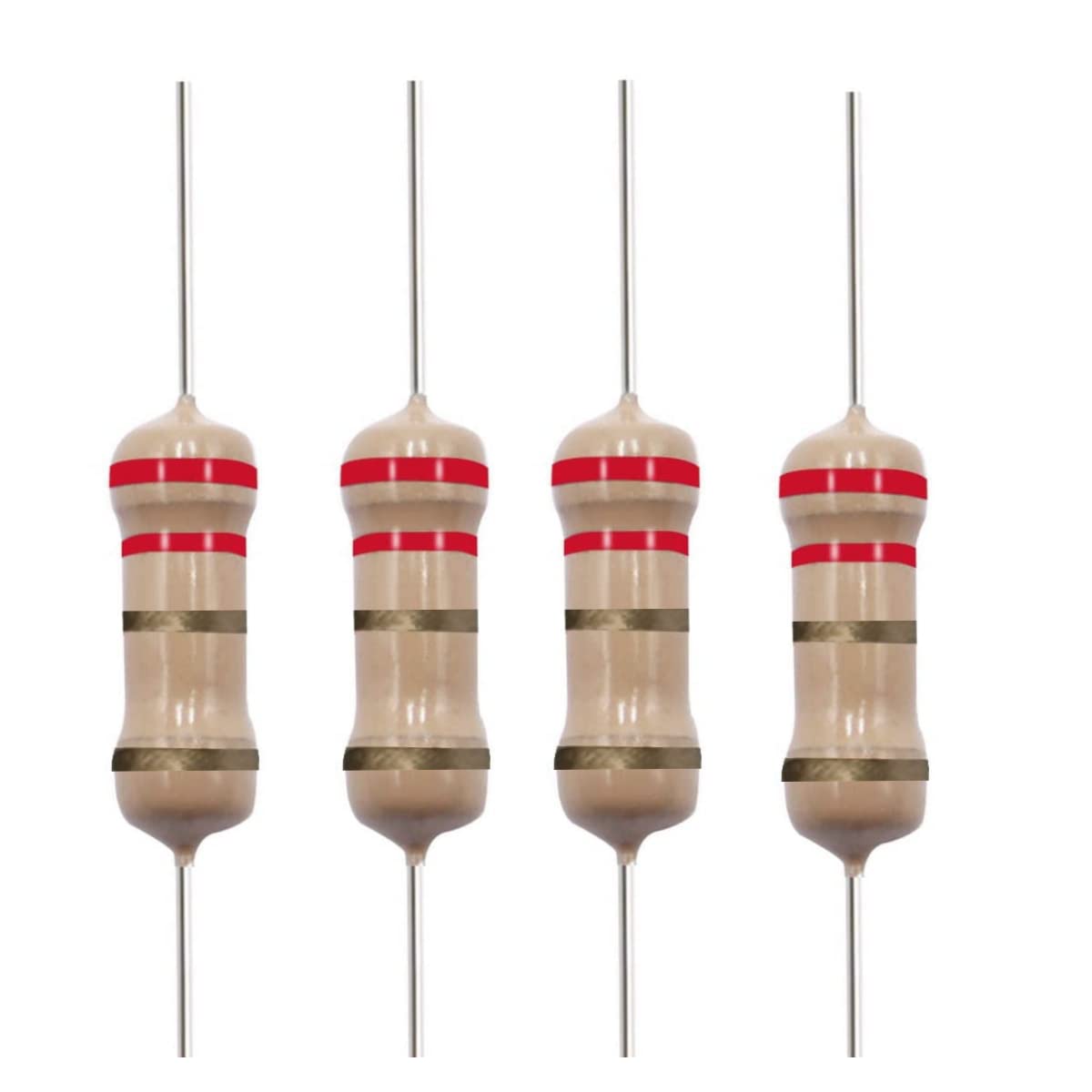
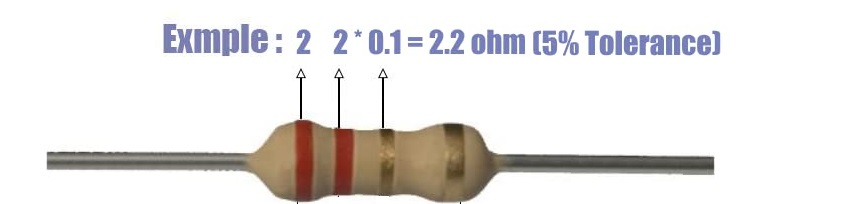
For a 2.2Ω resistor, the standard four-band configuration is:
- Red (2) – First digit
- Red (2) – Second digit
- Gold (×0.1) – Multiplier
- Gold (±5%) – Tolerance
So:
Red – Red – Gold – Gold = 2.2Ω ±5%
If only three bands are present—Red – Red – Gold—it still represents 2.2Ω, with a default ±20% tolerance (no fourth band).
This quick recognition method is especially useful when verifying components before soldering onto a PCB.
Color Code Identification and Common Misconceptions of 2.2kΩ Resistors
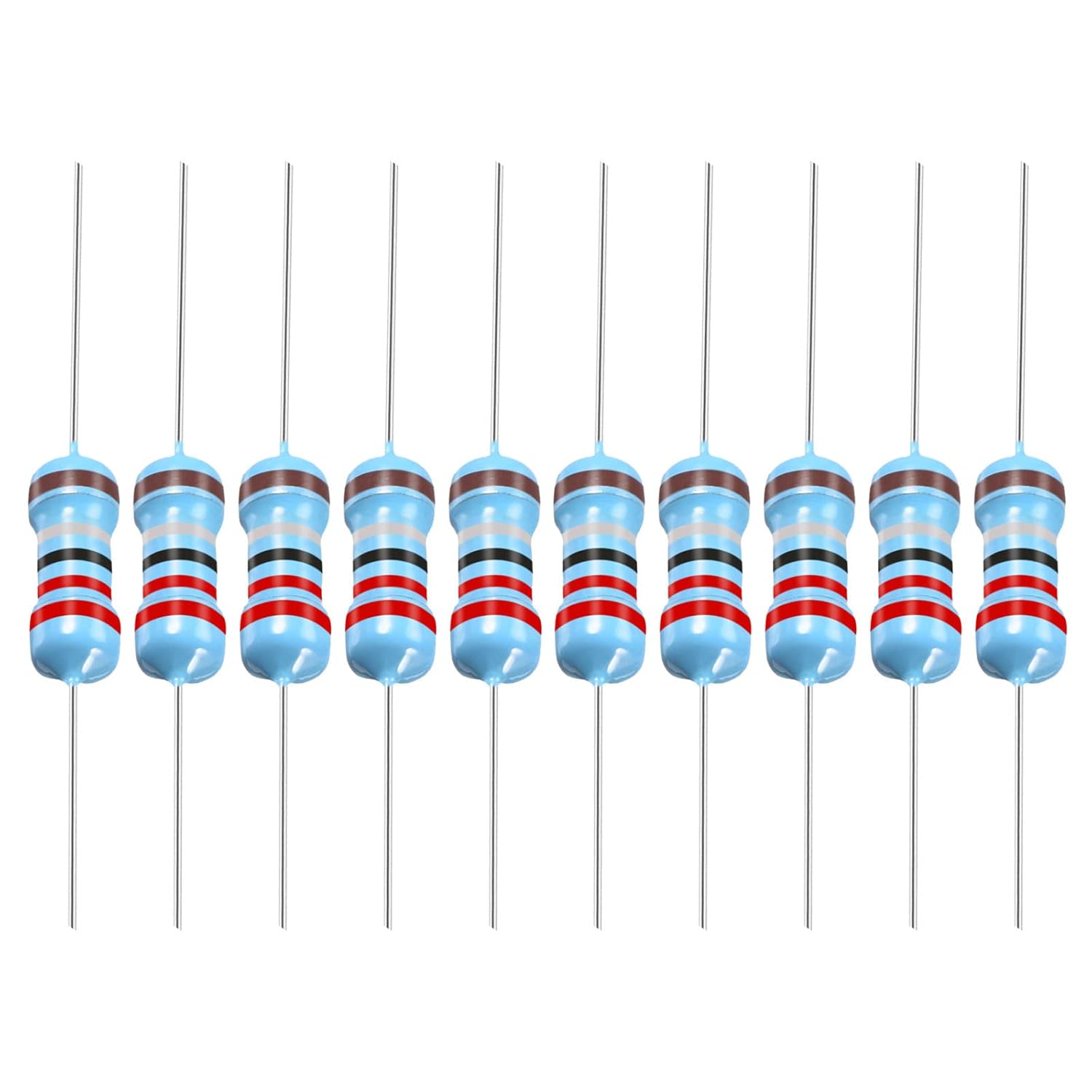
It’s easy to confuse 2.2Ω with 2.2kΩ, but their color codes differ significantly.
A 2.2kΩ resistor uses:
- Red (2) – First digit
- Red (2) – Second digit
- Red (×100) – Multiplier
- Gold or Silver – Tolerance (±5% or ±10%)
So: Red – Red – Red – Gold = 2.2kΩ ±5%
The key difference lies in the third band: gold (×0.1) for 2.2Ω vs. red (×100) for 2.2kΩ. Misreading this can lead to incorrect circuit behavior—something we help customers avoid through clear documentation and component verification during our turnkey PCBA service.
Measurement Methods and Precautions for 2Ω Resistors
Before placing a resistor on a board, it’s wise to confirm its actual resistance—especially for critical applications.
To measure a 2Ω resistor using a multimeter:
- Set the dial to the lowest resistance range (e.g., ×1Ω).
- Touch the probes together and adjust the zero knob if needed.
- Place the probes firmly on each lead of the resistor—avoid touching the metal tips with your fingers to prevent body resistance interference.
A properly functioning 2Ω resistor should read close to 2.0Ω (within tolerance). If it reads open or significantly off, discard it before assembly.
Current and Voltage Calculation Examples for 2Ω Resistors in Circuits
Knowing how a 2Ω resistor behaves electrically helps validate your design.
Here are two practical examples:
- Example 1: A 2A current flows through a 2Ω resistor. Using Ohm’s Law:
V = I × R = 2A × 2Ω = 4V→ Voltage drop across the resistor is 4 volts. - Example 2: A 2V battery powers a circuit with a 2Ω resistor.
I = V / R = 2V / 2Ω = 1A→ Current flowing through the resistor is 1 ampere.
These calculations are vital when sizing resistors for power dissipation and thermal management—especially in high-current PCBA designs.
Buying Guide for 2Ω Resistors
Not all 2Ω resistors are created equal. When sourcing for your PCBA project, consider:
- Power rating: For higher currents, choose a 2.2Ω 2W resistor or higher to prevent overheating.
- Tolerance: Use ±5% (E24) for precision; ±10% (E12) for general use.
- Type: Carbon film for cost-sensitive projects; metal film for better stability and low noise.
We source components directly from authorized distributors like Digi-Key, Mouser, and TTI to ensure authenticity and traceability. Our in-house inventory also includes common values like 2Ω and 2.2Ω, helping accelerate your prototype or production timeline.
Special Application: The Role and Selection of 2Ω Airbag Resistors in Automotive Safety
One specialized use of 2Ω resistors is in automotive airbag systems. Here, a 2Ω resistor simulates the airbag squib load during diagnostic testing—ensuring the control module detects a valid circuit without deploying the bag.
For this application, resistors must meet strict requirements:
- High reliability under vibration and temperature extremes
- Tight tolerance (often ±1%)
- Compliance with automotive-grade standards
We support automotive PCBA projects with IATF 16949-certified processes, ensuring safety-critical components like airbag resistors are handled with utmost care.
Troubleshooting and Replacement Solutions for 2.2Ω and 2Ω Resistors
During PCBA debugging, resistor failure is not uncommon. Common issues include:
- Overheating: A 2Ω resistor burning out due to excessive current. Check if the circuit exceeds the resistor’s power rating.
- Drift: A 2.2Ω resistor changing value over time—often due to heat or poor-quality materials. Replace with a metal film type for better stability.
When replacing, always match:
- Same resistance value
- Equal or higher power rating
- Similar tolerance and temperature coefficient
Our engineering team can assist with failure analysis and recommend suitable alternatives if a specific part is unavailable.
How to Choose the Right 2.2 Ohm Resistor for Reliable PCBA Assembly?
Selecting the optimal 2.2Ω resistor involves more than just picking a number.
Consider:
- Circuit function: Is it for current sensing, biasing, or protection?
- Environmental conditions: Will it face heat, humidity, or vibration?
- Assembly method: SMT or through-hole? We support both, including 01005 miniature components and high-power packages.
At Best Technology, we don’t just assemble boards—we partner with you from design to delivery. With 20 years of PCB and PCBA experience, ISO 9001, IATF 16949, and RoHS compliance, and a 97% on-time delivery rate, we ensure your 2.2Ω resistors—and every other component—perform exactly as intended. Need help with your next PCBA project? Pls feel free to contact us anytime for a free consultation and quote.
You may also like





Tags: 2 ohm resistor, 2.2 ohm resistor, Resistor color code