





EBest Circuit (Best Technology) brings nearly 20 years of PCB manufacturing experience to high-current and power distribution projects. We provide one-stop support for bus bar PCB solutions, covering layout review, engineering evaluation, prototyping, mass production, and after-sales service.
Our manufacturing system is backed by ISO9001, ISO13485, IATF16949, and UL certifications, helping customers build reliable products for demanding industries. Whether you need a custom embedded bus bar PCB, copper inlay PCB, or extruded copper PCB, our team can tailor the structure to your current, thermal, and mechanical requirements.
What is Bus Bar PCB?
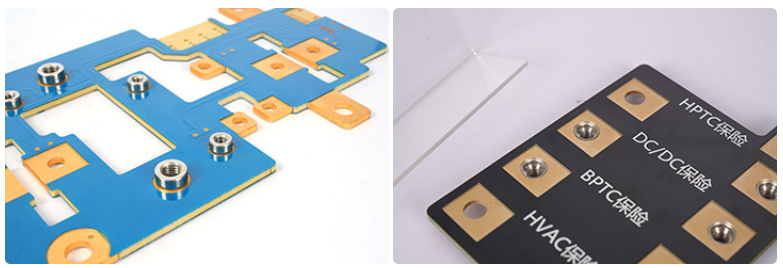
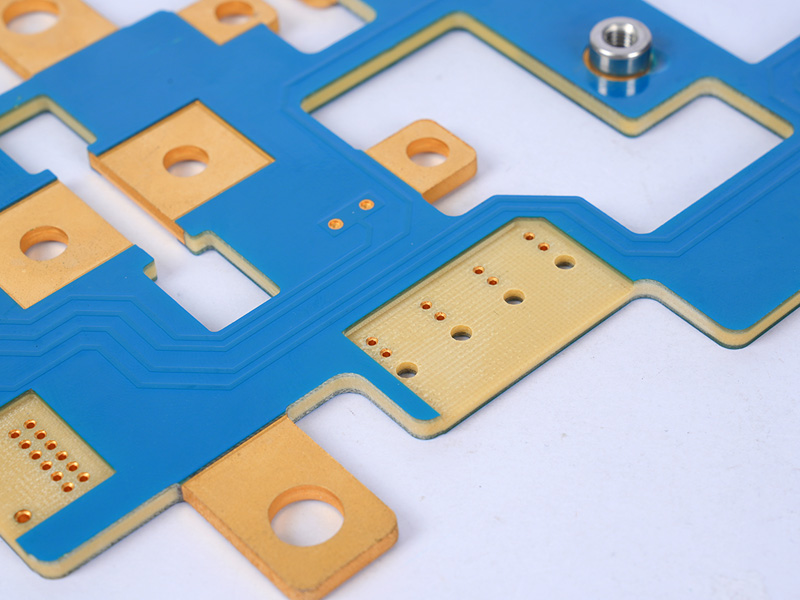
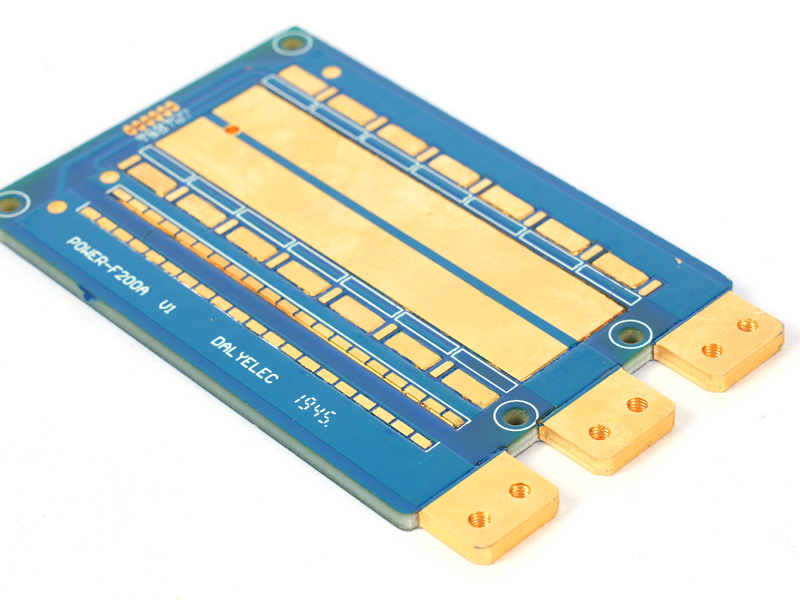
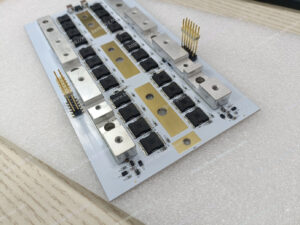
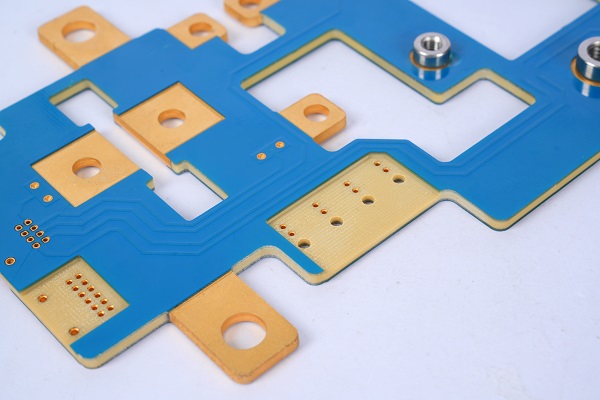
A bus bar PCB, also known as an embedded bus bar, busbar PCB, extruded copper PCB, or copper inlay PCB, is a specialized type of heavy copper PCB designed specifically to distribute power efficiently across different components on a board. Unlike traditional PCBs, which use copper traces etched into layers of non-conductive substrate to form circuits, bus bar PCBs integrate thick, solid bars of conductive material—often copper or aluminum—to handle higher currents.
The bus bar PCBs can also serve as mechanical connectors within the system, designed to accommodate screws and other metal parts for direct connections with other PCBs or system components.
Advantages of Bus Bar PCB
- The PCB stiffener busbars can increase the rigidity and strength of circuit boards, so they can be used in severe environments like automotives, military instruments, aerospace, etc.
- Higher power distribution and current-carry capabilities for power supply circuits or high-power applications.
- The low voltage drop characteristic allows all components to maintain stable power delivery, especially under high load conditions.
- The conductive bars in bus bar PCBs acts as an effective heat sink, helping to dissipate heat more efficiently than standard fiberglass PCBs, avoiding overheating problems during use.
- The ability to handle higher currents simplifies the design and assembly process without the need for multiple layout or complex traces.
- Bus bar PCBs can be used as electrical conduit, can also be used as mechanical connector.
- They are often custom designed to meet specific application requirements, providing solutions that are not possible with standard PCB technology.
Basic Parameter of Bus Bar PCB Manufacturing
At EBest Circuit, bus bar PCB manufacturing can be customized according to current demand, installation method, and product structure. Typical capabilities include:
- Minimum spacing between copper bars: 0.8–1.0mm
- Copper bar thickness: 1.0–3.0mm
- Current carrying capacity: 50–300A
- Copper bar forming: bars can be bent based on project requirements
- Surface finish options: ENIG, immersion silver, gold plating
- Board thickness: 3.0–6.0mm
- Hole wall copper thickness: ≥25um
- Aspect ratio: 1:6 or 1:7
- Example: for 1.0mm copper, minimum hole size can be 0.7mm
- Layer count: typically 3–4 layers, with additional layers available after engineering review
- Maximum dimension is 600*400mm for standard bus bar PCB, 900*600mm for double sided PCB
- The lead time of 3-4L bus bar PCB is around 13-15days, add 3days per layer over 4 layers.
These values may vary depending on the bus bar design, material selection, drilling limitations, and final assembly requirements.
Design Guide for Bus Bar PCB
- Copper or aluminum is typically used for the bus bars due to their excellent conductivity and thermal properties. Copper is more conductive, while aluminum is lighter and offers better resistance to oxidation.
- Choose substrates capable of handling high thermal loads and providing good electrical insulation. Common material we used is FR-4.
- Determine the maximum current that each busbar needs to carry, so we can know the required cross-sectional area of the bus to minimize drag and heat buildup.
- Use the length of the bus and the resistivity of the material to calculate the allowable voltage drop on the bus to ensure that it remains within an acceptable range.
- Add mechanical mounting points to the bus, such as screw holes or connector slots.
- Consider the mechanical stresses that the PCB may encounter, ensuring that the bus is flexible enough to withstand bending and strong enough to support structural loads.
Where Are Bus Bar PCBs Used?
Bus bar PCBs are used in products that require strong current handling, efficient heat control, and compact power routing. Common applications include:
- Electric vehicles
- Renewable energy systems
- Industrial automation equipment
- Power distribution units
- Data center power systems
- High-power spacecraft electronics
- Consumer electronics with heavy current demand
- Power inverters and converters
- Aerospace and defense systems
In these fields, designers often need a solution that goes beyond standard heavy copper routing. Bus bar PCBs provide a practical way to combine power transmission, thermal performance, and mechanical integration in one board structure.
Need a Custom Bus Bar PCB?
If you are developing a high-current product and need a reliable bus bar PCB manufacturer, EBest Circuit can help. We support custom structures based on your current load, board dimensions, copper thickness, thermal requirements, and assembly needs.
Send us your drawings, Gerber files, or project requirements, and our team will review the design and provide a suitable manufacturing solution.
You may also like
Tags: Bus Bar PCB, bus bar pcb manufacturer, busbar copper pcb, Busbar PCB, embedded busbar pcb