





Hybrid car MCPCB refers to metal core printed circuit boards designed specifically for hybrid vehicles, where efficient thermal management is critical to ensure stable operation of dual power systems. This article explores key challenges in thermal control, practical solutions, and essential considerations when selecting and manufacturing hybrid vehicle MCPCBs.
Are you struggling with overheating issues, inconsistent performance, or certification hurdles in your hybrid vehicle projects?
- Overheating in high-power battery and motor systems causing failures.
- Difficulty achieving uniform heat dissipation across dual power sources.
- Limited space for PCB layout while maintaining thermal efficiency.
- High cost from rework and low yield due to poor thermal design.
- Compliance risks without proper automotive-grade certifications.
To address these challenges, manufacturers must adopt targeted thermal strategies that align with hybrid vehicle demands.
- Use aluminum-based MCPCBs for superior thermal conductivity and heat spreading.
- Optimize copper thickness and via placement to enhance heat transfer paths.
- Implement compact layout designs that balance power density and cooling.
- Apply advanced solder mask and surface finishes to improve durability.
- Ensure IATF16949-certified production processes for quality assurance.
EBest Circuit (Best Technology) is a professional automotive hybrid vehicle aluminum MCPCB manufacturer specializing in high power MCPCB for hybrid car battery systems. With IATF16949 certification and extensive experience in thermal management solutions, we deliver reliable, high-performance MCPCBs tailored for dual power systems. Pls feel free to contact us at sales@bestpcbs.com for customized solutions.
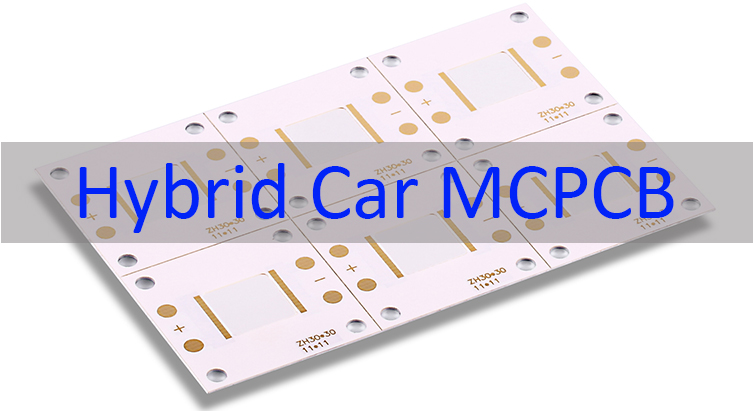
What Is a Hybrid Car MCPCB?
A hybrid car MCPCB is a metal core PCB engineered to manage heat in hybrid vehicles’ dual power systems—typically combining an internal combustion engine with electric motors and batteries. These boards use aluminum or copper cores to dissipate heat efficiently, ensuring stable operation under high current and temperature conditions.
| Feature | Benefit |
|---|---|
| Metal Core (Aluminum/Copper) | High thermal conductivity |
| Thick Copper Layers | Improved current carrying capacity |
| Automotive-Grade Materials | Reliability in harsh environments |
| Custom Layout Options | Space optimization for dual systems |
Hybrid car MCPCBs are essential for balancing electrical performance and thermal safety in modern hybrid vehicles.
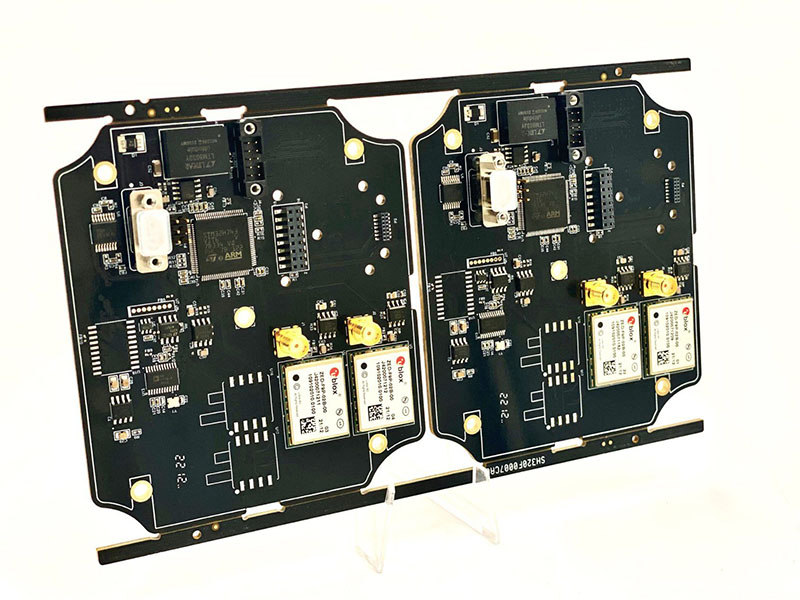
How to Select the Right Hybrid Car MCPCB for Dual Power Thermal Needs?
Choosing the correct MCPCB involves evaluating thermal load, space constraints, and system integration. Key factors include material selection, layer structure, and thermal interface compatibility.
- Assess total power dissipation from both ICE and electric drivetrain components.
- Select aluminum MCPCB for cost-effective thermal performance.
- Match dielectric thickness to required insulation and heat transfer rates.
- Verify compatibility with cooling methods (air, liquid, or conduction).
- Ensure design supports high-frequency switching and EMI control.
Proper selection directly impacts system efficiency and longevity.
What Is the Future Trend of Hybrid Vehicle MCPCB Technology?
The future of hybrid vehicle MCPCB technology focuses on higher integration, better thermal performance, and smarter manufacturing.
- Increased use of hybrid car MCPCB thermal management solution with embedded cooling channels.
- Adoption of thinner dielectric layers for faster heat dissipation.
- Integration of sensors for real-time thermal monitoring.
- Shift toward eco-friendly materials and lead-free processes.
- Growth of IATF16949 certified hybrid car MCPCB supplier networks globally.
These trends aim to support next-gen hybrid systems with higher power density and tighter packaging.
How to Optimize Layout Design for Hybrid Car MCPCB Thermal Performance?
Optimizing layout is critical for effective thermal management in dual power systems.
| Design Element | Optimization Strategy |
|---|---|
| Component Placement | Position high-heat parts near thermal vias |
| Via Design | Use thermal vias under power devices |
| Copper Traces | Widen traces for high-current paths |
| Layer Stack-up | Place power layers close to metal core |
| Clearance | Maintain spacing for airflow and insulation |
A well-optimized layout reduces hot spots and improves overall system reliability.
What Certifications Are Essential for a Hybrid Car MCPCB Manufacturer?
Certifications validate a manufacturer’s capability to meet automotive standards.
- IATF16949 – Mandatory for automotive quality management.
- ISO 9001 – General quality assurance.
- UL Certification – Safety compliance for materials.
- RoHS & REACH – Environmental and hazardous substance compliance.
- AEC-Q200 – Component-level reliability for automotive electronics.
Working with a IATF16949 certified hybrid car MCPCB supplier ensures consistent quality and regulatory compliance.
Top 10 Automotive Hybrid Aluminum PCB Manufacturers In China
China hosts several leading manufacturers offering automotive hybrid vehicle aluminum MCPCB solutions. Key players include:
- EBest Circuit (Best Technology)
- Shenzhen Kinwong Electronic Co., Ltd.
- Guangdong Chaohua Technology Co., Ltd.
- Wus Group
- Huizhou Zhongke Circuit Technology Co., Ltd.
- Shenzhen Sun & Lynn Circuits Co., Ltd.
- Jiangsu Zhongtian Technology Co., Ltd.
- Shenzhen Fastprint Circuit Tech Co., Ltd.
- Guangzhou Shiyuan Electronic Technology Co., Ltd.
- Shenzhen Jove Enterprises Co., Ltd.
These companies combine scale, technology, and certification readiness for global automotive clients.
Why Choose EBest Circuit (Best Technology) for Manufacturing Hybrid car MCPCB?
EBest Circuit stands out through specialized expertise in high power MCPCB for hybrid car battery systems and proven thermal solutions.
- Dedicated R&D team for thermal simulation and design.
- Full in-house production from prototyping to mass manufacturing.
- Strict adherence to IATF16949 and automotive testing protocols.
- Flexible customization for dual power system architectures.
- Transparent pricing with fast turnaround times.
We provide end-to-end support to help customers overcome thermal challenges in hybrid vehicles.
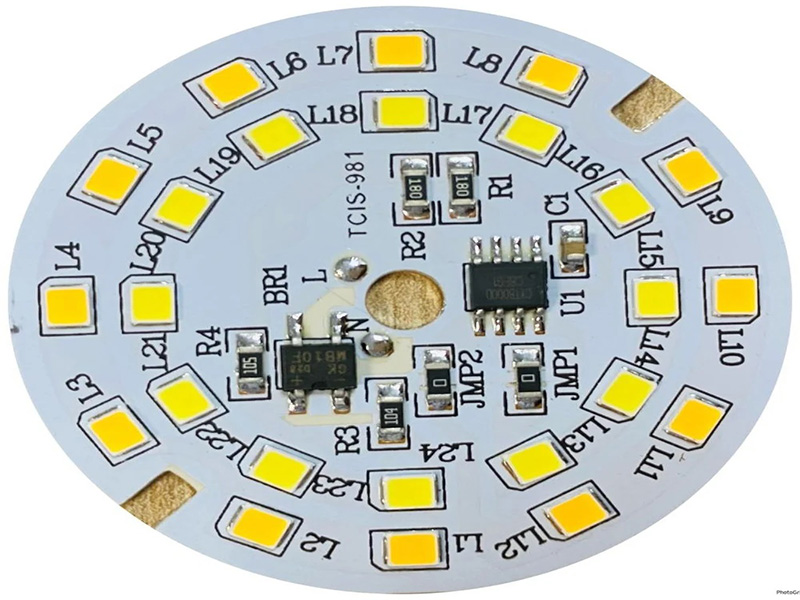
In closing, hybrid car MCPCB plays a vital role in managing thermal loads within dual power systems, ensuring safety, efficiency, and reliability. This article covered key selection criteria, design optimization, industry trends, and certification requirements for hybrid vehicle MCPCBs. EBest Circuit (Best Technology) delivers expert hybrid car MCPCB thermal management solution backed by IATF16949 certification and deep automotive experience. For inquiries, pls feel free to contact us at sales@bestpcbs.com.
FAQs About Hybrid Car MCPCB
Q: Can hybrid car MCPCBs handle high-voltage battery systems?
A: Yes, with proper dielectric insulation and thick copper layers, they support high-voltage applications safely.
Q: How does aluminum MCPCB compare to FR4 in thermal performance?
A: Aluminum MCPCB offers 8–10x better thermal conductivity than standard FR4, making it ideal for power electronics.
Q: Is thermal simulation necessary before production?
A: Highly recommended to predict hot spots and optimize layout early in the design phase.
Q: What is the typical lead time for hybrid vehicle MCPCBs?
A: Prototypes: 5–7 days; Mass production: 2–3 weeks depending on complexity.
Q: Do you support international shipping and technical support?
A: Yes, we serve global clients with logistics and engineering support.
Tags: aluminum mcpcb manufacturing, dual power pcbs, high power battery pcbs, hybrid car mcpcb, iatf16949 certified pcbs