





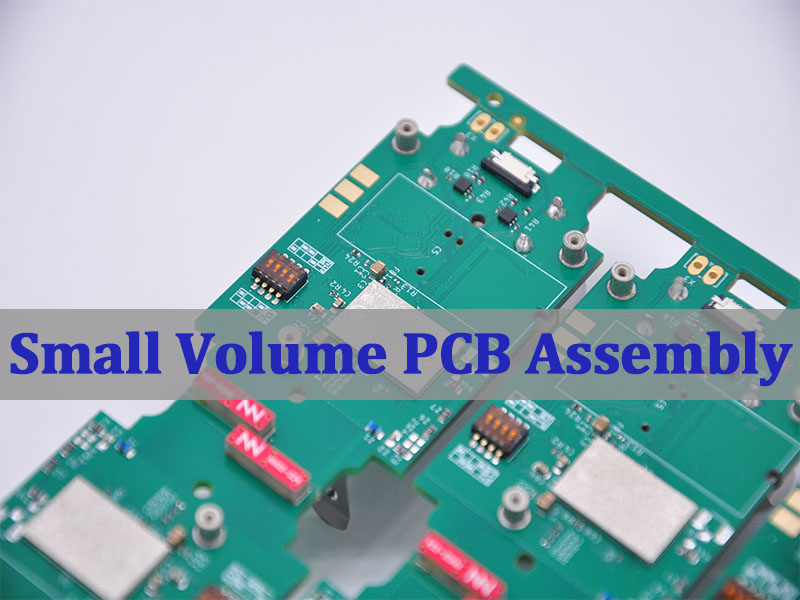
Small volume PCB assembly refers to PCB assembly runs produced in limited quantities—typically ranging from a few boards to several hundred units—primarily used for prototyping, engineering validation, pilot runs, and early market introduction. Unlike mass production, the goal of small volume PCB assembly is not cost minimization, but risk control, design verification, and manufacturability validation.
Have you ever experienced early PCB builds that looked fine on paper but failed once assembled?
Common challenges engineers face in small volume PCB assembly include:
- Assembly issues appearing only after the first physical build
- Frequent BOM or design changes disrupting production flow
- High per-unit cost without clear cost drivers
- Long lead times caused by poor coordination
- Difficulty transitioning prototypes into stable production
Corresponding manufacturing solutions include:
- Engineering-led DFM review before assembly
- Flexible process planning for frequent revisions
- Transparent cost structure focused on setup and risk drivers
- Dedicated project coordination for small batches
- Scalable process design aligned with future volume builds
As an established PCB and PCBA manufacturer, EBest Circuit (Best Technology) supports customers from early prototypes to volume production. Our engineers, customer managers, and sales teams know the ropes, combining professional training with hands-on manufacturing expertise. Rather than getting caught up in a rat race of price competition, we prioritize engineering value and long-term collaboration. Our no-MOQ policy is designed to support small-volume PCBA builds, enabling faster validation and smoother scaling. Having partnered with leading brands across the United States, Germany, Israel, and Australia for nearly two decades, we bring proven, real-world PCBA solution experience to every project. For more information or to submit an inquiry, please use the contact form on our Contact page.
What Is Small Volume PCB Assembly and When Is It Required?
Small volume PCB assembly is typically applied during development stages where designs are still evolving and production risks must be identified early. Quantities usually range from single-digit prototypes to a few hundred boards, depending on project maturity.
From an engineering perspective, this phase is where most hidden issues surface. Footprint tolerances, solder joint behavior, component availability, and thermal performance often behave differently in real builds than in simulation.
In real manufacturing environments, small volume PCB assembly is commonly required for:
- Engineering validation (EVT) to confirm circuit functionality
- Design validation (DVT) to verify assembly feasibility
- Process validation (PVT) to assess yield stability
- Compliance and certification testing
- Pilot runs before market launch
| Project Stage | Why Small Volume Assembly Is Used |
|---|---|
| EVT | Detect schematic and layout flaws |
| DVT | Validate assembly consistency |
| PVT | Stabilize yield before scale |
| Pilot | Limit risk exposure |
From an engineering standpoint, recognizing these stages early prevents costly redesigns later.
How Does PCB Assembly Small Volume Differ From Mass Production?
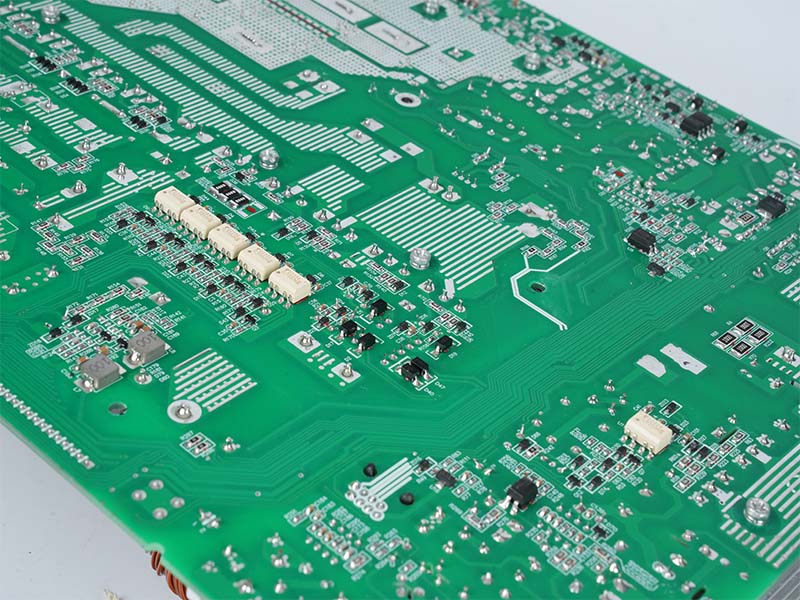
PCB assembly small volume differs fundamentally from mass production in both priorities and execution. While mass production focuses on throughput and unit cost, small volume assembly prioritizes flexibility, inspection depth, and engineering feedback.
In practice, small volume builds often involve manual or semi-automated steps, frequent setup changes, and closer human oversight. This allows engineers to observe problems directly instead of relying solely on statistical process control.
Key differences include:
- Higher engineering involvement per build
- Frequent BOM and design revisions
- More intensive inspection and documentation
- Lower automation dependency
- Shorter feedback loops
In practice, treating small volume builds like mass production often leads to missed risks and rework.
Why Do Engineers Choose Small Volume PCB Assembly for Early Builds?
Engineers choose small volume PCB assembly because it allows them to validate assumptions before committing resources. Early builds act as a safety net, exposing real-world behavior that simulations cannot fully predict.
From a practical standpoint, early assembly reveals:
- Component fit and orientation issues
- Solderability and pad design problems
- Thermal and power distribution behavior
- Assembly accessibility for test and debug
These insights are difficult—if not impossible—to gain without physical boards.
With this in mind, small volume PCB assembly serves as a decision-making tool rather than a production shortcut.
How Does China PCB Assembly Small Volume Support Rapid Product Validation?
China PCB assembly small volume offers a mature ecosystem that balances speed, engineering expertise, and supply chain access. This makes it well suited for rapid product validation without excessive cost exposure.
In real manufacturing scenarios, advantages include:
- Fast component sourcing through established suppliers
- Skilled assembly labor experienced with complex designs
- Integrated PCB fabrication and PCBA workflows
- Short iteration cycles for revised builds
These factors allow engineering teams to test, adjust, and retest designs efficiently.
As a result, development timelines can be shortened without sacrificing build quality.
What Engineering Challenges Are Common in Small Volume PCB Assembly?
Despite its flexibility, small volume PCB assembly introduces unique challenges that must be actively managed. These challenges stem from frequent change and limited repetition.
Common issues include:
- BOM instability and component substitutions
- Incomplete or evolving documentation
- Manual process variability
- Higher sensitivity to operator skill
If unmanaged, these challenges can distort validation results and delay decision-making.
Under real manufacturing conditions, engineering oversight is essential to keep data meaningful.
How Does Small Volume PCB Assembly Cost Compare Across Build Stages?
Small volume PCB assembly cost is driven less by material quantity and more by setup effort, engineering time, and inspection intensity. Understanding this helps teams budget realistically.
| Build Stage | Primary Cost Driver |
|---|---|
| Prototype | Setup and engineering |
| Pilot Run | Yield learning |
| Pre-production | Process optimization |
Attempting to force mass-production pricing logic onto small volume builds often leads to hidden costs.
That said, transparent cost models allow smarter scaling decisions.
What Quality Controls Matter Most in Small Volume PCB Assembly?
Quality in small volume PCB assembly depends on discipline rather than automation. With fewer boards, each unit carries more informational value.
Critical quality controls include:
- First article inspection (FAI)
- AOI and functional testing
- Documented rework procedures
- Lot-level traceability
These controls ensure early builds generate reliable engineering feedback.
More importantly, consistent quality control protects downstream scalability.
How Can Small Volume PCB Assembly Scale Smoothly Into Production?
Scaling successfully requires aligning early builds with future production requirements. Decisions made during small volume assembly often determine whether scaling is smooth or painful.
Best practices include:
- Using production-ready footprints early
- Freezing process documentation progressively
- Tracking yield trends from the first lot
- Aligning supplier choices with volume needs
At this stage, small volume assembly becomes a strategic investment rather than a temporary step.
Why Choose EBest Circuit (Best Technology) for Small Volume PCB Assembly?
EBest Circuit (Best Technology) combines engineering discipline with execution capability to support small volume PCB assembly effectively.
Our strengths include:
- A 1+3 technical support model, with three dedicated engineers assigned to each project
- DFM review and BOM optimization
- One-stop PCB fabrication and PCBA assembly
- Prototype and small-batch specialization
- MES-enabled traceability and inventory control
Ultimately, we help engineers move from concept to production with confidence.
What it ultimately boils down to is that small volume PCB assembly enables engineers to validate designs, manage risk, and prepare for scalable production. This article explored how small volume assembly works, how costs and quality are controlled, and how it supports product development. EBest Circuit (Best Technology) delivers engineering-led execution, digital traceability, and one-stop PCB/PCBA services to support every stage. A warm welcome to contact us at sales@bestpcbs.com to discuss your small volume PCB assembly project.
FAQ: Small Volume PCB Assembly
Q1: What quantity is considered small volume PCB assembly?
Small volume PCB assembly typically ranges from a few units to several hundred boards, depending on complexity and project stage.
Q2: Is small volume PCB assembly suitable for production?
Yes. It is often used for pilot runs and early market validation before scaling to mass production.
Q3: Why is DFM important in small volume PCB assembly?
DFM identifies layout and assembly risks early, reducing rework and delays during later stages.
Q4: Can small volume PCB assembly transition into volume manufacturing?
Yes, when processes and documentation are planned correctly from the start.
Tags: China PCB Assembly Small Volume, PCB Assembly Small Volume, Small Volume PCB Assembly, Small Volume PCB Assembly Cost