





A Female N Type to Male SMA Type Adapter is a passive radio frequency (RF) component designed to create a seamless and reliable connection between two different types of coaxial connectors: a female N-type port and a male SMA-type. This article will demystify this essential adapter, exploring its function, common types, key applications, and how to select the right one for your project, ultimately linking its performance to the critical role of high-quality PCB and PCBA manufacturing.
Sourcing the correct interconnect components can be frustrating and costly, leading to project delays and performance issues. What are the most common pain points when dealing with RF adapters like the N female to SMA male?
- Signal Loss and Mismatch: Using adapters with poor impedance control (deviating from 50Ω) causes signal reflections, increased VSWR, and degraded system performance.
- Incompatibility Confusion: Difficulty distinguishing between SMA, RP-SMA, and N-type interfaces leads to ordering mistakes, wasted resources, and rework.
- Mechanical Failure: Low-quality adapters with poor plating or weak structural integrity can break, loosen, or wear out quickly, especially in field-testing environments.
- Frequency Limitations: Selecting an adapter not rated for the required frequency band (e.g., using a low-frequency adapter for a high-frequency application) results in unexpected signal attenuation.
- Supply Chain Inconsistency: Difficulty finding a reliable manufacturer capable of delivering high-performance, consistent-quality adapters PCB circuit in both prototype and production volumes.
These challenges highlight the need for a supplier that understands both the component and the underlying RF principles. The solution lies in partnering with a manufacturer with expertise that extends from the connector itself to the printed circuit boards it interfaces with.
- Precision Impedance Matching: Ensuring strict impedance control (e.g., ±5%) through expert PCB design and manufacturing to minimize signal loss and reflection.
- Interface Standardization Guidance: Providing clear specifications and diagrams to help customers navigate the complex landscape of RF connector types and avoid compatibility errors.
- Robust Mechanical Construction: Utilizing high-quality materials (e.g., gold plating over nickel) and precision machining to ensure durable, reliable connections that withstand mating cycles and harsh environments.
- Broad Frequency Optimization: Designing and testing adapters to perform optimally across their specified frequency range, up to 18 GHz for SMA and higher for N-type.
- Reliable, Scalable Production: Offering end-to-end PCB and PCBA support from PCB prototype to volume production with consistent quality, backed by certifications like ISO 13485, IATF 16949 and AS9100D.
At BEST Technology, we are not just a PCB manufacturer; we are a specialized provider of high-frequency PCBs and assemblies. Our deep expertise in RF materials like Rogers and our certified, multi-location PCBA facilities ensure that the components you depend on, from adapters to the boards they connect, are built to the highest standards of performance and reliability. Pls feel free to contact us at sales@bestpcbs.com to discuss your project requirements.
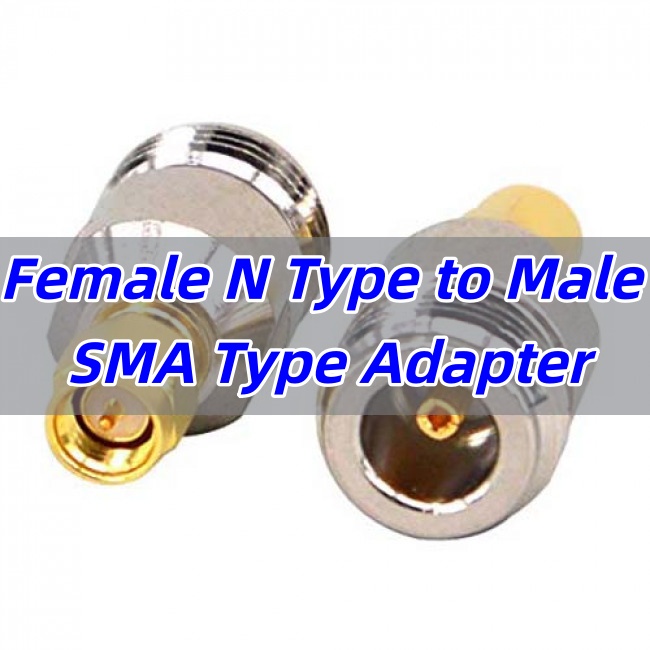
What Does a Female N Type to Male SMA Type Adapter Do in RF Links?
PCB → SMA Female → SMA Male (Adapter) → N-Type Female(Adapter)
In a typical RF board, an SMA female connector is mounted at the board edge as the RF I/O point. The adapter’s SMA male end simply screws onto this PCB-mounted SMA female, turning the board’s SMA interface into an N-type female interface on the spot. In other words, the adapter acts as a mechanical and electrical “front end change,” converting the PCB’s small SMA port into a larger, rugged N-type interface without altering the PCB design.
In essence, this adapter acts as a bridge. Its primary function is to enable a connection between equipment or cables that would otherwise be incompatible due to their different connector genders and types. This is crucial in RF systems where maintaining a continuous, controlled impedance path is paramount to signal integrity.
- Interface Conversion:
It physically mates a device with a female N-type (typically a larger, more robust connector used for base stations or outdoor equipment) to a cable with a male SMA (common on smaller devices like GPS modules, Wi-Fi cards, or test equipment).
- Impedance Continuity:
A high-quality adapter is engineered to maintain a constant characteristic impedance (almost always 50 Ohms for these connectors) through the transition.
This prevents impedance discontinuities that cause signal reflections, leading to loss and measurement inaccuracies.
- Signal Pathway Extension:
It allows for the flexible configuration of test benches and operational systems without requiring custom-made cables, saving time and cost during system integration or troubleshooting.
In summary, the female N type to male SMA type adapter is a fundamental tool for ensuring connectivity and signal fidelity across diverse RF components.
What Are the Common RF Adapter Types Used Between N-Type, SMA, and RP-SMA Interfaces?
Understanding the “family” of adapters helps prevent costly mistakes. The main categories are defined by the connector interfaces they bridge.
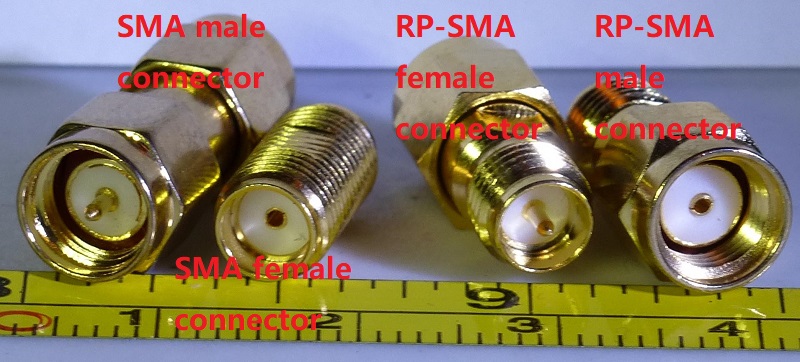
The threads define whether a connector is male or female:
If the connector has inner threads, it is male.
If it has outer threads, it is female.
This rule is the same for both SMA and RP-SMA connectors.
The center contact defines the polarity:
“Reverse polarity” in RP-SMA only refers to the gender of the center contact, not the threads.
In a standard SMA connector:
• a male connector has an inner threads + center pin,
• a female connector has a outer threads + center socket.
In an RP-SMA connector, this is reversed:
• an RP-SMA male has an inner threads + center socket,
• an RP-SMA female has a outer threads + center pin.
| Center pin | Center receptacle | |
|---|---|---|
| Internal thread | SMA male/plug | RP-SMA male/plug |
| External thread | RP-SMA female/jack | SMA female/jack |
N-Type ↔ SMA Series
This is the standard series. Both N and SMA connectors have a sexed interface: male connectors have an inner threads + center pin, and female connectors have a outer threads + center socket.
- N Female to SMA Male: Connects a device with an N-type female to a cable with an SMA male.
- N Male to SMA Female: Connects a device with an SMA female to a cable with an N-type male.
N-Type ↔ RP-SMA Series
The “Reverse Polarity” (RP-SMA) interface was created as a proprietary measure to prevent connection with standard consumer equipment. The gender of the center conductor is reversed.
- RP-SMA Male to N Type Female: The RP-SMA male has a center socket (instead of a pin), and it mates with an N-type female.
- N-Type Male to RP-SMA Female: The RP-SMA female has a center pin, and it mates with an N-type male.
Adapter Interface Specifications
| Adapter Type | End 1 | End 1 Thread | End 1 Center Contact | End 2 | End 2 Thread | End 2 Center Contact |
|---|---|---|---|---|---|---|
| RP-SMA Male to N Type Female | RP-SMA Male | Inner Thread | Center Socket (RP Style) | N-Type Female | Outer Thread | Center Socket |
| N Type Male to RP-SMA Female | N-Type Male | Inner Thread | Center Pin | RP-SMA Female | Outer Thread | Center Pin (RP Style) |
This classification clarifies the relationships, ensuring you select the correct N type female to SMA male adapter or its RP-SMA counterpart for your specific need.
When Should Engineers Use an N Type Female to SMA Male Adapter?
This specific adapter is frequently deployed in specific scenarios where equipment interoperability is key.
- Connecting Test Equipment to Antennas: When a vector network analyzer (VNA) with an N-type output port needs to test a device or antenna with an SMA connector, this adapter provides the necessary link.
- Base Station Integration: To interface a macro-cell base station (often using robust N-type connections) with a smaller, SMA-based repeater or a femtocell unit.
- Lab and Development Environments: During R&D, when prototyping with SMA-ended evaluation boards but needing to connect to larger, N-type-based infrastructure cables for range or durability.
The decision to use an N type female to SMA male adapter is driven by the need for a reliable, low-loss transition between equipment tiers of different physical scales and connector standards.
How Does an N Type Male to SMA Female Adapter Support Stable Signal Conversion?
The stability of the signal conversion hinges on the precision manufacturing of the adapter itself, a process deeply connected to high-quality PCB and assembly principles.
- Precision Center Conductor Alignment:
The internal center pin and socket must be perfectly aligned to ensure a smooth, low-resistance electrical path.
Any misalignment creates an impedance bump, disrupting the signal.
- Dielectric Material Quality:
The insulator (often Teflon) must have stable electrical properties and low loss to prevent signal attenuation, especially at higher frequencies.
- Robust Outer Connector Body:
A sturdy, well-plated outer shell provides consistent grounding and shielding against electromagnetic interference (EMI), which is critical for signal integrity.
Therefore, an N type male to SMA female adapter from a quality supplier functions as a seamless extension of the transmission line, not a compromise.
Why Do Wireless Devices Often Need an RP SMA Male to N Type Female Adapter Cable?
Many consumer wireless devices, such as Wi-Fi routers and drones, use RP-SMA connectors on their external antenna ports to comply with regulatory standards. However, professional-grade external antennas or test equipment often use standard N-type connectors.
- An RP SMA male to N type female adapter cable is essential to connect these consumer devices to a more robust or specialized antenna system.
- This is common in applications like enhancing cellular reception with an external antenna or connecting a Wi-Fi device to a spectrum analyzer for testing.
How to Pick the Right RP SMA Male to N Type Female Adapter for Field Testing?
Field testing demands durability and reliability. When selecting an adapter, consider:
- Frequency Range:
Ensure the adapter’s specified frequency range covers your application (e.g., 2.4 GHz/5 GHz for Wi-Fi, higher for 5G).
- Construction Quality:
Look for features like a hex crimp nut for easy hand-tightening, a stainless steel body, and gold-plated contacts for corrosion resistance.
- VSWR Specification:
VSWR is read as a ratio, and lower values are always better. A value near 1:1 means very little signal is reflected.
For an RP SMA Male to N Type Female Adapter, a VSWR of around 1.20:1 is considered good.
Values near 1.10:1 indicate excellent quality, while anything above 1.50:1 shows noticeable mismatch.
If the VSWR approaches 2.0:1, the adapter is poor quality and will degrade RF performance.
| VSWR Range | Performance Meaning | Quality Level |
|---|---|---|
| 1.10:1 – 1.20:1 | Very low reflection, excellent matching | High quality |
| ≤ 1.25:1 | Good for most RF field tests | Good quality |
| 1.30:1 – 1.50:1 | Noticeable mismatch begins | Average |
| ≥ 2.00:1 | Strong reflection, unstable performance | Poor quality |
Choosing the right RP SMA male to N type female adapter ensures accurate measurements and prevents failures in demanding outdoor environments.
Why Choose an SMA Female to N Type Male Adapter for Compact RF Modules?
Compact RF modules (e.g., Bluetooth or Zigbee modules) often have SMA female connectors due to their small size.
To connect these modules to a larger system using N-type cables, an SMA female to N type male adapter is the ideal solution.
It provides a secure, impedance-matched interface without putting mechanical stress on the module’s small PCB-mounted connector.
How to Select the Best Female N Type to Male SMA Type Adapter for Your Project?
Selecting the right RF adapter is critical for system performance. The best choice is not always the most expensive one, but the one that optimally balances key specifications with your project’s requirements and budget.
1. Electrical Specifications
These parameters determine if the adapter will work in your application at all.
- Frequency Range: The adapter must support your system’s highest frequency.
- Standard Grade (up to 6-8 GHz): Suitable for Wi-Fi, 4G-LTE, and general applications.
- Precision Grade (up to 12-12.5 GHz): Ideal for test and measurement, point-to-point radio.
- High-Performance (up to 18+ GHz): Necessary for R&D and high-frequency instrumentation.
- Guidance: Always select an adapter with a frequency rating exceeding your system’s maximum operating frequency.
- Voltage Standing Wave Ratio (VSWR): Measures impedance matching; a value closer to 1.00 is ideal. A high VSWR causes signal reflection and power loss.
- Guidance: Review the supplier’s VSWR-vs-Frequency chart to ensure it meets your requirements (e.g., <1.25:1) across your operating band.
- Impedance: The standard for most RF applications is 50 Ohms; simply confirm this value.
- Insertion Loss: Represents the signal power lost through the adapter. While lower is better, it requires careful consideration.
- Key Trade-off: Ultra-low loss demands superior materials and precision manufacturing, which increases cost.
- Low-Frequency/Short-Range: Loss differences are minimal; a cost-effective adapter is often sufficient.
- High-Frequency/Critical Applications: Investing in a low-loss model is necessary for signal integrity.
2. Mechanical Specifications:
These factors impact physical robustness, mating cycle life, and ease of use.
- Connector Gender/Type: You have specified a Female N-Type (outer thread) to Male SMA (inner thread) adapter.
- Mating Torque: High-quality adapters specify a recommended tightening torque (e.g., 8 in-lbs for SMA). Over-tightening can damage the connector.
- Plating: The finish determines corrosion resistance, durability, and electrical conductivity.
- Internal Contacts: Typically gold-plated for excellent conductivity and oxidation resistance. Thicker gold plating enhances longevity.
- External Shell: Often nickel-plated for corrosion resistance, with a final finish of gold, silver, or passivation.
- Cable Interface (if applicable): For cable assemblies, also consider the cable’s specifications (e.g., diameter, flexibility) and the quality of the connector attachment.
3. Environmental Needs:
The adapter must survive and perform reliably in your project’s environment.
- Operating Temperature Range:
- Commercial: -10°C to +70°C
- Industrial: -40°C to +85°C
- Military: -55°C to +125°C
- Moisture & Corrosion Resistance: For harsh environments (marine, industrial), look for stainless steel construction and robust plating. An IP rating for dust/water ingress protection may be necessary.
- IP Rating: For outdoor or wash-down environments, specify a sealed adapter with an appropriate IP rating (e.g., IP67).
4. Supplier Reliability:
The supplier’s reputation is your guarantee of performance and a stable supply chain.
- Proven Track Record: Prioritize established RF component manufacturers and distributors (e.g., Huber+Suhner, Pasternack, Amphenol, Rosenberger) known for quality and consistency.
- Comprehensive Documentation: Reliable suppliers provide detailed datasheets with full electrical specifications and S-parameter plots.
- Quality Certifications: Look for ISO 9001 quality management system certification, especially for production volume purchases.
Ultimate Balance: Performance, Robustness, and Cost
The “best” adapter is defined by your project’s specific priorities. Use the following table as a guide:
| Project Type | Recommended Adapter Grade | Priority | Example Suppliers |
|---|---|---|---|
| Consumer Electronics / Basic IoT | Standard Grade (up to 6 GHz) | Cost-Effectiveness | Value-line brands on major distributor websites (e.g., Digi-Key, Mouser) |
| Communications Equipment / Test Systems | Precision Grade (up to 12.5 GHz) | Performance & Reliability Balance | Pasternack, Amphenol RF |
| R&D / High-End Instrumentation | High-Performance (up to 18+ GHz) | Performance Above All | Huber+Suhner, Rosenberger |
| Military / Aerospace / Harsh Environments | Military-Grade, Stainless Steel | Durability & Environmental Resilience | Specialist military-grade manufacturers |
In summary, the selection process involves clearly defining your electrical, mechanical, and environmental needs, and then choosing a high-quality adapter from a reputable supplier that meets those requirements without exceeding your necessary performance threshold and budget.
Why Does Adapter Performance Depend on High-Quality PCB and PCBA Production?
While an adapter may seem like a simple mechanical part, its core performance is an extension of precision RF engineering, which is rooted in PCB and PCBA expertise.
High-Frequency PCB Precision That Supports Stable Adapter Performance
- An RF adapter can only perform as well as the PCB it connects to.
- High-frequency launches, trace geometry, and impedance transitions must be fabricated with tight tolerances to avoid added loss or reflections.
- EBest Circuit (Best Technology) specializes in RF PCB fabrication with precise impedance control and consistent stackup accuracy, ensuring that SMA or N-type adapters mounted on the board operate with predictable, low-loss performance.
RF Material Expertise Ensuring Low-Loss Transitions
- Many adapters connect directly to traces routed on Rogers, PTFE, hydrocarbon laminates, or hybrid RF stackups.
- Our team has extensive experience processing these materials, enabling cleaner transitions, lower dielectric loss, and stable RF behavior across multi-GHz bands.
- The result is an adapter-to-PCB interface that preserves signal integrity rather than degrading it.
Reliable PCBA Assembly for Robust Connector Mounting
- The mechanical reliability of an RF adapter depends on how well it is soldered and supported on the PCB. Poor solder joints or insufficient anchoring can cause intermittent behavior, impedance jumps, or connector damage.
- With SMT factories in China and Vietnam, EBest Circuit (Best Technology) delivers high-precision assembly for SMA, N-type, MMCX, U.FL, and other RF connectors, ensuring dependable long-term stability.
Surface Finishes Optimized for Long-Term RF Contact Integrity
- The performance of an RF adapter ultimately relies on the pad finish it mates with.
- EBest Circuit (Best Technology) provides specialized surface treatments—ENIG, ENEPIG, immersion silver, hard gold—chosen according to frequency requirements, durability, and corrosion resistance.
- A stable, low-resistance contact surface ensures the adapter maintains consistent RF performance over thousands of mating cycles.
Certified Manufacturing That Supports Consistent RF PCB Quality
- RF systems demand predictable, repeatable quality.
- EBest Circuit (Best Technology) operates under AS9100D, IATF16949, ISO13485, and ISO9001, ensuring strict process control from PCB prototypes, fabrication to final assembly.
- This allows engineers to trust that each PCB and PCBA batch will interact with their N-type or SMA adapters exactly as intended, from prototype builds through full-scale production.
Therefore, partnering with a manufacturer like BEST Technology, which holds certifications like AS9100D and IATF 16949 and has over 19 years of experience with high-frequency materials, guarantees that the components integral to your RF system. Our integrated approach from PCB fabrication to PCBA assembly ensures consistency and quality from the ground up.
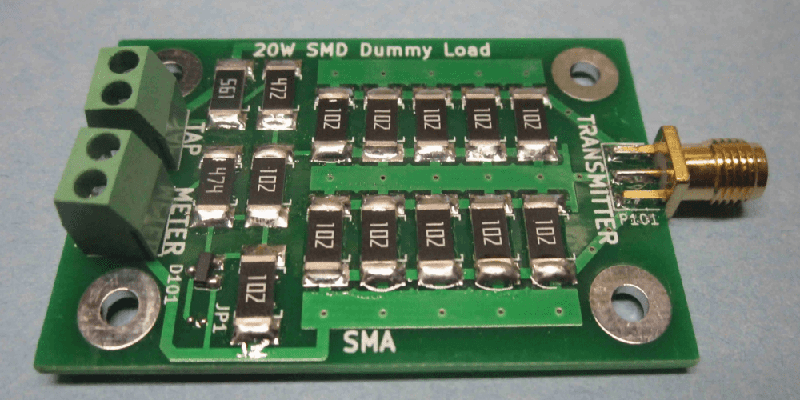
To conclude, a Female N Type to Male SMA Type Adapter is a critical interconnect component that ensures signal integrity and compatibility between different RF interfaces. This article has detailed its functions, varieties, and selection criteria, emphasizing that optimal performance is achieved only through precision manufacturing. The reliability of such RF components is inextricably linked to the quality of the underlying manufacturing processes, particularly in PCB and PCBA. BEST Technology leverages its expertise in high-frequency PCB materials, stringent impedance control, and certified, scalable production capabilities to support the creation of reliable RF systems. For your next radio frequency adapter PCB or PCBA project requiring robust interconnect solutions, pls feel free to contact our experts at sales@bestpcbs.com.
Tags: Female N Type to Male SMA Type Adapter, n type female to sma male adapter, n type male to sma female adapter, n-type male to rp-sma female adapter, rp sma male to n type female adapter cable