


To request an aerospace pcb quick quote, provide the released fabrication files, specified laminate and stackup, quantities, acceptance requirements, and required delivery date in one package. At EBest Circuit, we review those requirements alongside manufacturability, material availability, inspection, and documentation before confirming price and schedule. We support PCB fabrication, engineering review, component sourcing, and PCBA, so you can define a bare-board order or an integrated build. A useful quick quote states what we will manufacture and verify; it is not simply the lowest price generated from layer count and board dimensions.

Key Takeaways
- A fast quotation starts with one consistent revision of the fabrication data, drawing, stackup, and quality requirements.
- Separate budgetary pricing from a production quotation with confirmed materials, inspection scope, documentation, and delivery assumptions.
- Our general FR-4 capability references include 1–10 layers as standard and 10–32 layers as special processing; aerospace acceptance requires a separate project review.
- Specify the laminate grade, finished thickness, copper requirements, hole construction, surface finish, and controlled-impedance targets rather than only writing “aerospace grade.”
- AS9100D concerns the quality management system. It does not replace the board specification, applicable IPC requirements, or customer approval.
- Material procurement, sequential lamination, inspection coupons, and required records can determine the schedule even when the initial quote is quick.
- Compare total scope, including tooling, testing, documentation, and shipping, instead of comparing board unit prices alone.
How Do You Get an Aerospace PCB Quick Quote?
Send a complete, revision-controlled RFQ and identify any requirements that are fixed, negotiable, or still awaiting design approval. That lets us separate genuine manufacturing questions from missing information and return a quotation with fewer assumptions.
- Identify the build. State whether the order is bare PCB fabrication, an assembled board, a development prototype, or production hardware.
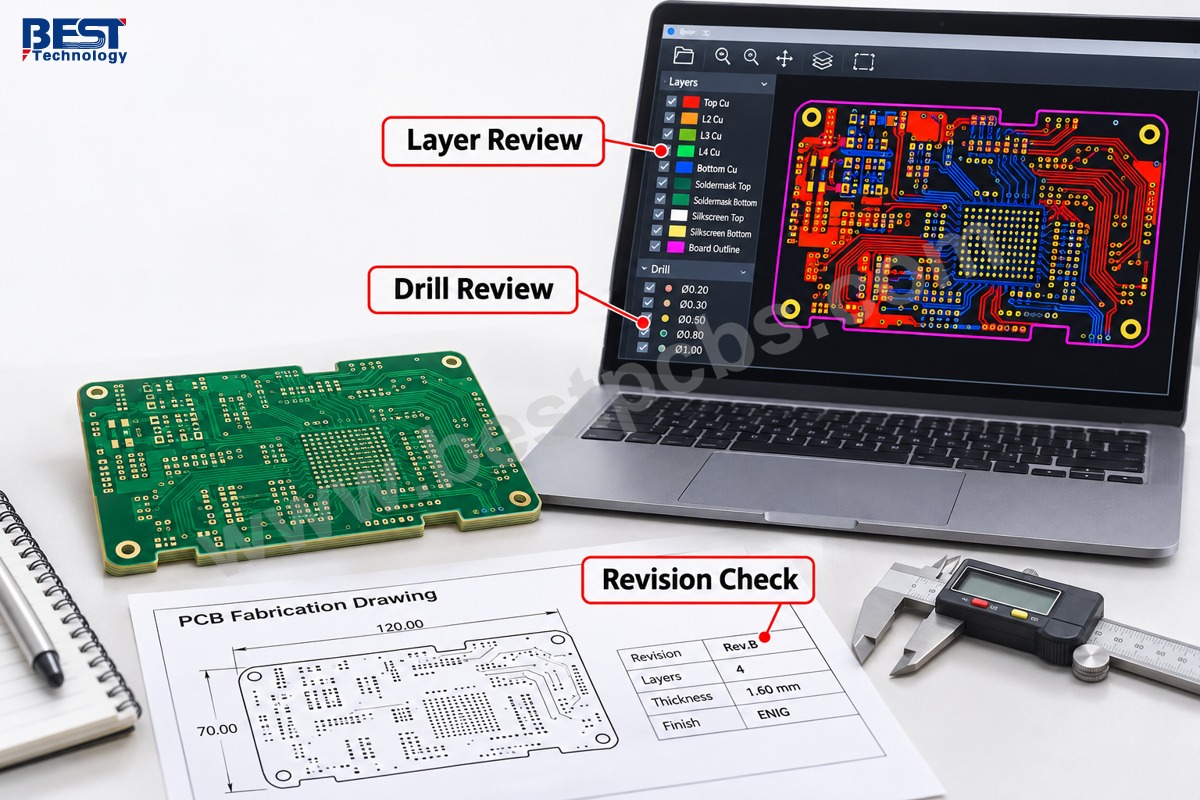
- Release one data set. Match the Gerber or ODB++ files, drill data, fabrication drawing, and stackup revision.
- Define acceptance. Include the specified standards and revisions, inspection coverage, records, and customer-specific requirements.
- Give the commercial targets. State quantities, requested delivery, shipping destination, and whether we may propose alternative materials or schedules.
For an early budget, we can review a preliminary stackup as a provisional input. Keep that price budgetary until you confirm the missing requirements. A quick response and a production-ready quotation are different milestones.
Which Manufacturing Capabilities Can We Review?
We review multilayer FR-4, high-Tg, HDI, RF, heavy-copper, and rigid-flex requirements against the actual construction and the applicable manufacturing route. The figures below are our general FR-4 process references, not automatic approval for an aerospace program.
Our PCB fabrication capabilities provide a starting point for discussing the following features:
| FR-4 Feature | Standard Processing | Special Processing |
|---|---|---|
| Layer count | 1–10 layers | 10–32 layers |
| Minimum finished mechanical hole | 0.20 mm | 0.15 mm |
| Through-hole aspect ratio | Up to 8:1 | Up to 10:1 |
| Inner-layer line/space, 0.5 oz or 1 oz copper | 4/4 mil | 3/3 mil |
| Outer-layer line/space, 1 oz copper | 4/4 mil | 3/3 mil |
These capabilities cannot be combined indiscriminately. A 32-layer board, the smallest mechanical hole, thick copper, and the finest line spacing may not belong to one feasible construction. We check the complete combination, including plating, registration, material, and inspection requirements, before accepting the build.
For assembled aerospace circuit boards, our scope can also include component sourcing, SMT and through-hole assembly, AOI, X-ray, and specified functional testing. Supplier qualification and customer approval must cover the actual fabrication or assembly scope being purchased.
What Information Makes the RFQ Ready for Review?
A review-ready RFQ contains enough information to identify the exact construction, quantity, acceptance criteria, and delivery scope. Gerber data alone does not define the laminate grade, inspection records, or approved substitutions.
| RFQ Item | Required Detail |
|---|---|
| Fabrication data | Gerber or ODB++, drill files, board outline, drawing number and revision |
| Stackup and material | Layer sequence, laminate grade, dielectric construction, finished thickness and tolerance |
| Copper and holes | Starting or finished copper as applicable, finished hole sizes, plated/non-plated definition, special via construction |
| Electrical requirements | Impedance targets, tolerances, reference layers, coupon requirements, netlist where required |
| Finish and markings | Surface finish and thickness specification, solder mask, legend, identification requirements |
| Quality package | Standards and revisions, class, applicable addenda, inspection plan, certificates and reports |
| Commercial scope | Quantity breaks, required delivery, destination, individual boards or delivered panels |
| Assembly, if included | BOM, placement data, assembly drawing, approved substitutions, programming and test requirements |
For example, quoting 10, 50, and 200 boards from the same released design gives a clearer view of setup and batch costs than requesting a single unspecified “prototype price.” Those quantities are an RFQ example, not a minimum-order requirement.
How Do Material and Stackup Affect an Aerospace PCB Quick Quote?
The specified laminate grade, dielectric thicknesses, copper distribution, and lamination sequence determine material purchasing and much of the fabrication work. “High-Tg FR-4” or “RF material” is not precise enough when the released design requires a particular grade.
Do not price a Rogers RO4350B RF construction and a high-Tg epoxy multilayer board as interchangeable materials. If the drawing names a laminate, we review that material and its required construction. An alternative needs technical evaluation and customer approval, not just a similar advertised property.
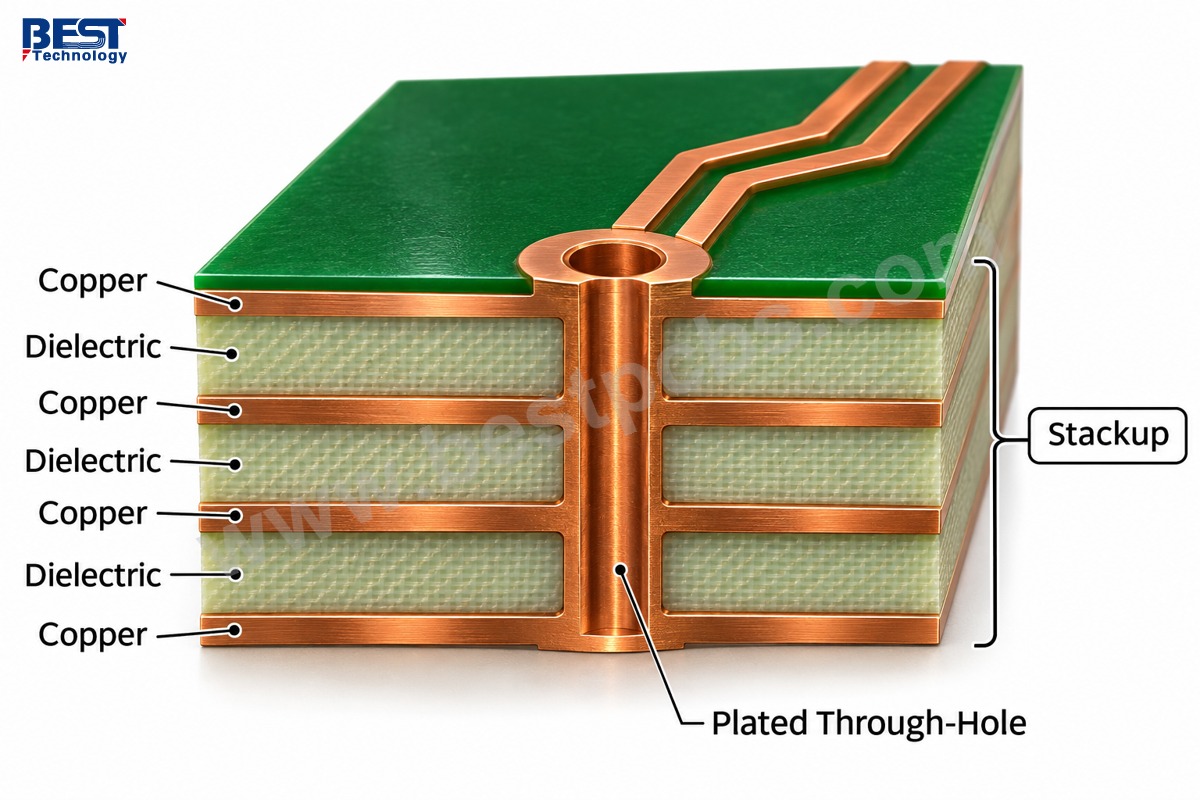
For an illustrative 8-layer, 1.6 mm board with 1 oz finished outer copper, the drawing still needs to identify internal copper, dielectric construction, and any controlled-impedance layers. A 50 Ω single-ended target and a 100 Ω differential target also need their reference layers and tolerances. Those example targets do not define a universal aerospace stackup.
Blind or buried vias can add processing stages and registration controls. Heavy copper can change etching and lamination requirements. We use the PCB design and DFM review to resolve such interactions before treating the construction as ready for production.
Which Standards and Certifications Belong in the Quote?
The quote should name the contractual board or assembly standards, required revisions and class, relevant aerospace addenda, and the supplier quality-system scope. “Aerospace PCB” is an application description, not a complete acceptance specification.
- AS9100D: aerospace quality management system requirements; review the certificate’s entity, site, scope, and validity.
- IPC-6012: qualification and performance requirements for rigid printed boards, with the agreed class and any specified addendum.
- IPC-A-600: printed-board acceptability criteria used with the applicable procurement requirements.
- J-STD-001 and IPC-A-610: soldering requirements and assembly acceptability when PCBA is included.
- Customer requirements: source approval, first-article reporting, material restrictions, record retention, and any additional verification.
Our published company quality information lists AS9100D and ISO 9001:2015. For supplier approval, confirm the current certificate and applicable manufacturing scope with our team. Neither a quality-system certificate nor a Class 3 reference should be treated as proof that a particular board is approved for every flight or space application.
What Inspection and Traceability Should Be Priced?
An aerospace PCB quick quote should price the inspection coverage and delivery records that your purchase order requires, including electrical testing, dimensional verification, specified coupons, material identification, and lot traceability. Requirements added after the quote can change both cost and release timing.
Our PCB inspection capabilities include flying-probe electrical testing, microsection analysis, impedance testing, and copper-thickness measurement. For your project, the inspection plan defines which methods we use, their coverage, acceptance criteria, and the records we supply.
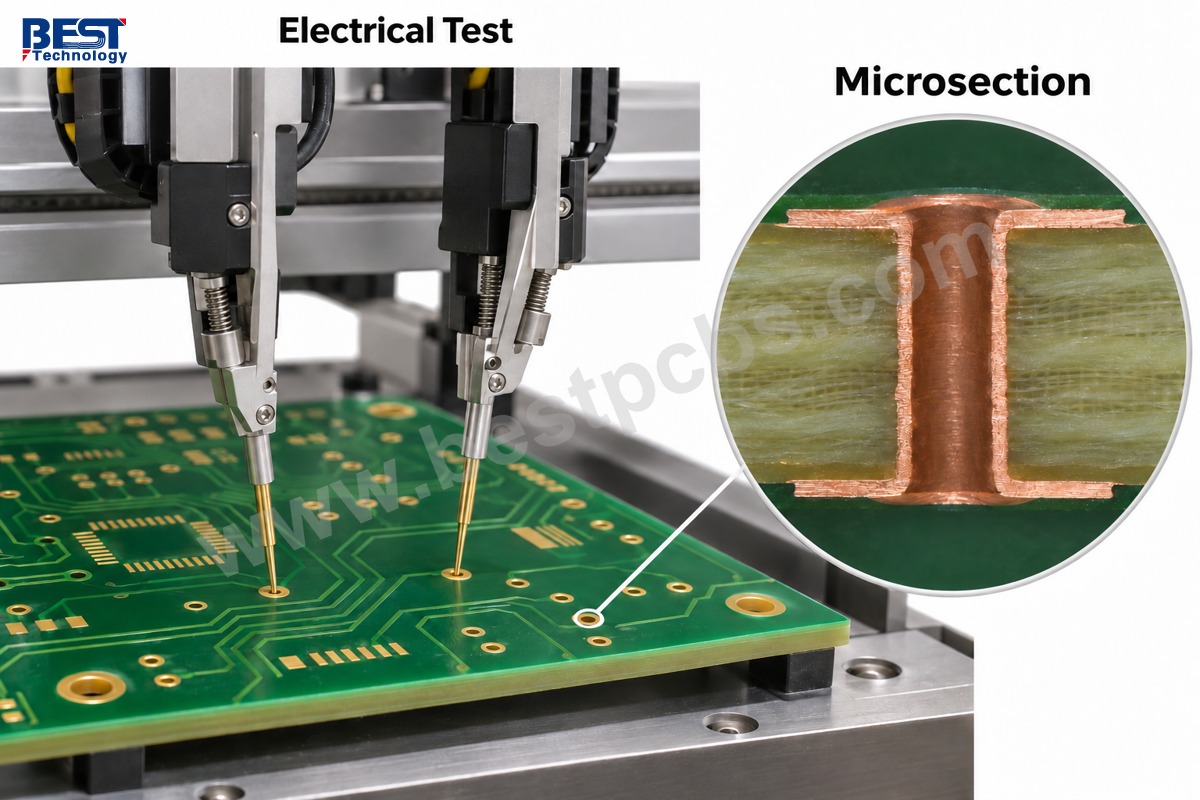
For example, a controlled-impedance order may require a coupon and measured report, while a plated-hole evaluation may require microsection preparation. These are different checks. Electrical continuity testing alone does not establish hole-wall construction or dielectric performance.
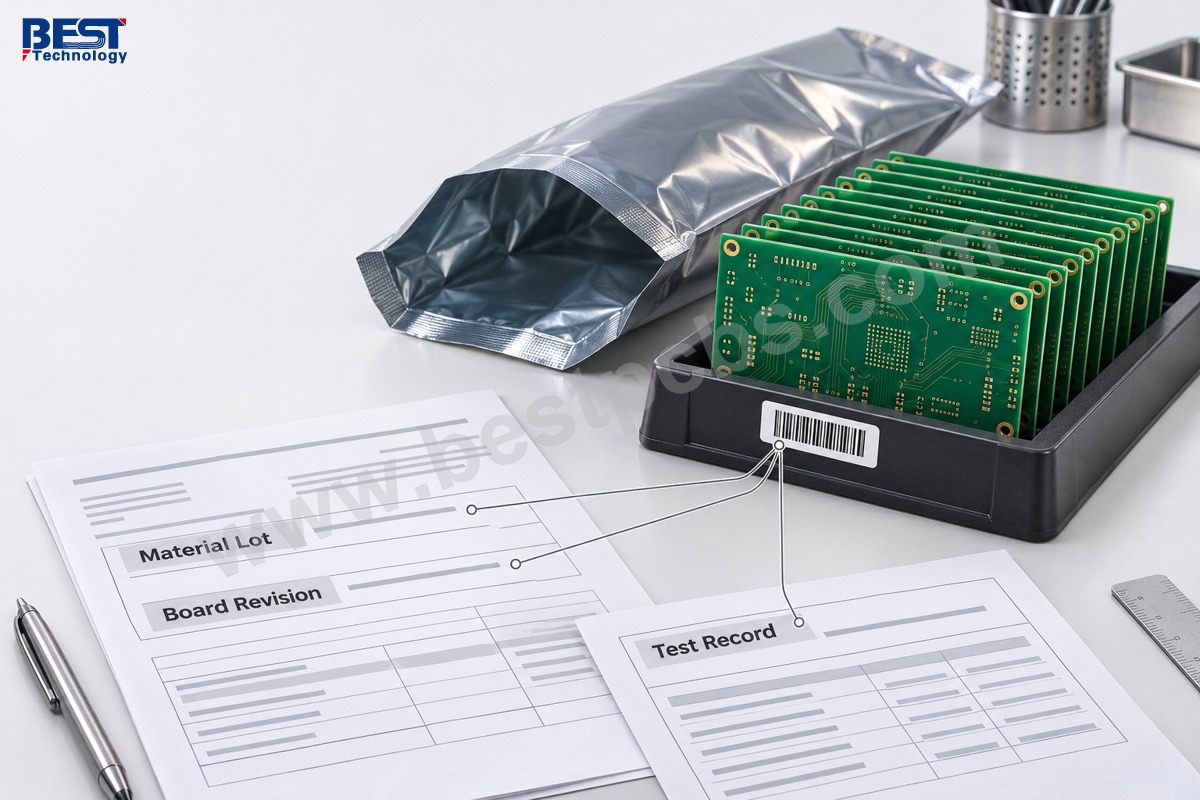
Traceability requirements should specify how the board revision, manufacturing lot, material identification, and test records are linked. If you need serial-level identification or a specific certificate of conformity format, state it in the RFQ. Do not assume a generic packing label will satisfy that requirement.
Aerospace PCB Quick Quote: What Determines Cost and Lead Time?
Material availability, construction complexity, batch size, testing, and documentation determine the achievable schedule and price. A quick quotation does not mean the specified laminate, fabrication stages, or qualification work can be compressed into a standard rush service.
- Material availability: an exact laminate, core thickness, or copper construction may need purchasing before fabrication can begin.
- Process route: additional lamination, special via processing, tight registration, or unusual finishes can add stages.
- Panel utilization: board size, delivered panel requirements, and coupons affect how many usable boards fit into a manufacturing panel.
- Verification: required sample preparation, reports, and customer release points must be included in the schedule.
- Assembly scope: component availability, approved sourcing, programming, and test fixtures add dependencies beyond bare-board fabrication.
Ask the quotation to identify the scheduling start point: for example, approval of engineering queries, material availability, and receipt of the released data and purchase order. Separate shipping time from manufacturing time. We confirm the applicable schedule after reviewing the actual requirements rather than applying a general prototype lead time to every aerospace order.
How Should You Compare Aerospace PCB Quotes?
Make a PCB quote comparison on the same revision, material, inspection scope, documentation, quantities, and delivery basis. Otherwise, a lower unit price may simply exclude work included elsewhere.
Check whether tooling and engineering charges are separate, whether the price includes electrical testing and impedance reports, and whether the delivery quantity refers to individual boards or panels. For an assembled order, also compare component sourcing, attrition allowances, programming, test-fixture charges, and the agreed functional test.
Review the deviations and assumptions in an aerospace PCB quick quote before comparing price totals. A material substitution, omitted coupon, or unspecified acceptance class can make two quotations technically different. Resolve those differences first; then compare the total cost for the same deliverable.
FAQs About Aerospace PCB Quoting
Can I request pricing before the design is released?
Yes. Provide the preliminary construction, quantities, and known requirements for budgetary review. Identify unresolved details explicitly. We should reconfirm manufacturing pricing and scheduling once you release the design data and acceptance requirements.
Do I need to include a BOM for a bare-board order?
No. We normally need a BOM when your order includes component sourcing or assembly. A bare-board RFQ instead needs complete fabrication and material requirements, quantities, and the relevant inspection and documentation scope.
Does every aerospace PCB require the same material?
No. The application, electrical design, temperature conditions, mechanical requirements, and approved specification determine material selection. Do not assume a ground-support board and flight hardware share the same qualification or material requirements.
Can changing the delivery panel reduce the price?
It can, when a different panel arrangement improves manufacturing utilization or assembly handling. Any proposal must preserve board geometry, coupon requirements, assembly access, and approved delivery conditions. Review and approve panel changes before production.
Should I send confidential drawings in the first email?
Use the approved disclosure process for your project. Request an NDA and agree on a suitable transfer channel before sharing confidential files. Confirm authorization before transmitting any controlled technical data and establish whether the recipient can accept the project.
Request an Aerospace PCB Quick Quote from EBest Circuit
Send your released fabrication package, quantity breaks, required delivery date, and acceptance requirements to sales@bestpcbs.com. At EBest Circuit, we can review PCB fabrication alongside PCB assembly services when you need one coordinated build. State the application and qualification requirements at the start so we can evaluate the manufacturing scope, identify open questions, and prepare a quotation you can use for a purchasing decision.
You may also like








Tags: aerospace circuit boards, aerospace PCB, aerospace pcb quick quote, pcb board quote, pcb quote comparison