

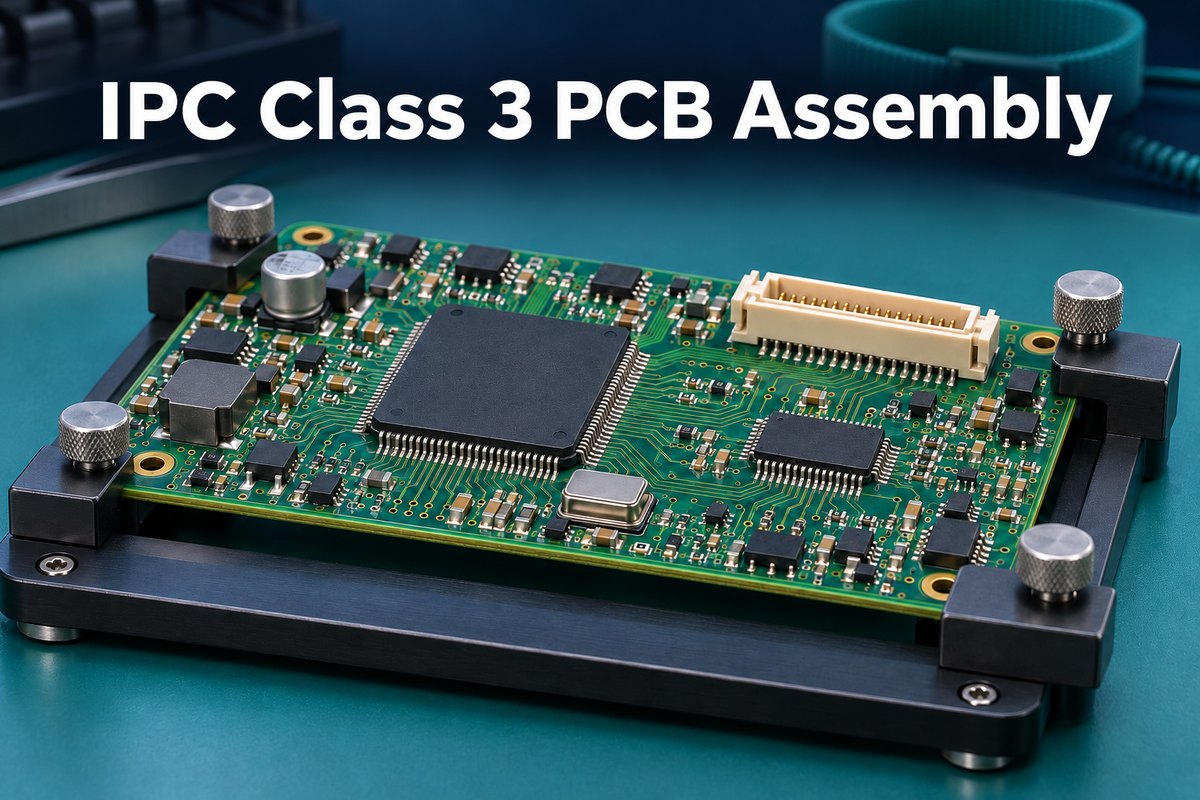
IPC Class 3 PCB assembly is intended for electronics that must keep running or respond on demand when failure would have serious consequences. A Class 3 build can put three different inspection problems on one board: exposed controller leads, solder balls under a BGA and connector pins inside plated holes.
At EBest Circuit, engineers with 20 years of PCB and PCBA experience review your design before we release it to our own PCB and assembly factories. You receive a design-for-manufacture (DFM) report and a BOM optimization list. For a fine-pitch BGA, that review can flag a footprint mismatch before parts are ordered and identify hidden joints that need X-ray inspection. Send your assembly drawing and BOM to sales@bestpcbs.com for an engineering review and turnkey quote.
Which Products Need IPC Class 3 PCB Assembly?
Flight control computers, ventilator controllers and railway signaling boards are examples of products that may require IPC Class 3 PCB assembly. The common requirement is that the board must keep working without interruption or respond reliably at the moment it is needed.
| Application | Examples of boards and equipment |
|---|---|
| Aerospace | Flight control computers, satellite telemetry boards |
| Defense | Radar signal processors, tactical radio controllers |
| Life-support and implantable devices | Ventilator controllers, pacemaker pulse generators |
| Diagnostics and patient monitoring | MRI acquisition boards, patient-monitor alarm boards |
| Automotive safety | Airbag control units, electronic braking controllers |
| Rail transport | Signaling interlocks, onboard brake controllers |
| Nuclear and grid protection | Reactor trip controllers, protective relay boards |
| Industrial safety | Emergency-stop controllers, safety interlock boards |
| Remote or harsh environments | Subsea instrument controllers, downhole telemetry boards |
The product owner specifies the IPC class for the individual assembly. For example, a patient monitor’s alarm board and a service accessory for the same monitor can have different acceptance requirements.
IPC Class 2 vs Class 3 for Solder Joints
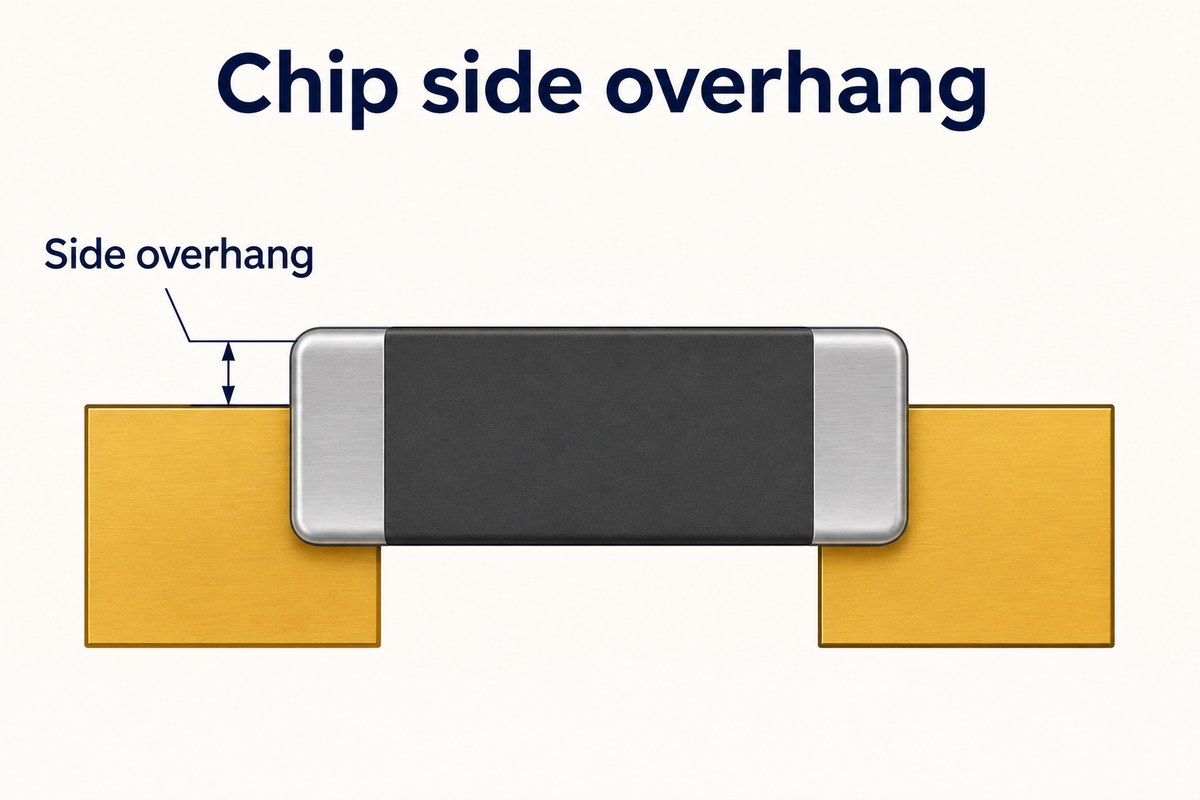
The same placement offset can satisfy a Class 2 limit and exceed a Class 3 limit. Consider a rectangular chip whose termination extends sideways beyond its pad. Under the side-overhang criterion in IPC-A-610E §8.3.2.1, the narrower of the termination and pad determines the reference width.
For a 0.40 mm termination on a 0.50 mm pad, the reference width is 0.40 mm.
| Side overhang | Class 2 | Class 3 |
|---|---|---|
| Maximum, % of reference width | 50% | 25% |
| Maximum for this chip | 0.20 mm | 0.10 mm |
| Measured at 0.15 mm | Within limit | Exceeds limit |
The 0.15 mm offset matters even if the board powers on. This example illustrates one feature under revision E. Production acceptance follows the revision specified on the order and the criteria for the actual termination.
How EBest Circuit Inspects Assemblies to IPC-A-610 Class 3
We match each inspection to the connection on the drawing. J-STD-001 covers soldering materials and processes. IPC-A-610 provides workmanship criteria for evaluating the finished assembly.
| Connection | Inspection focus |
|---|---|
| Gull-wing lead | Side overhang, joint width, heel fillet |
| Through-hole pin | Barrel fill, wetting, land coverage |
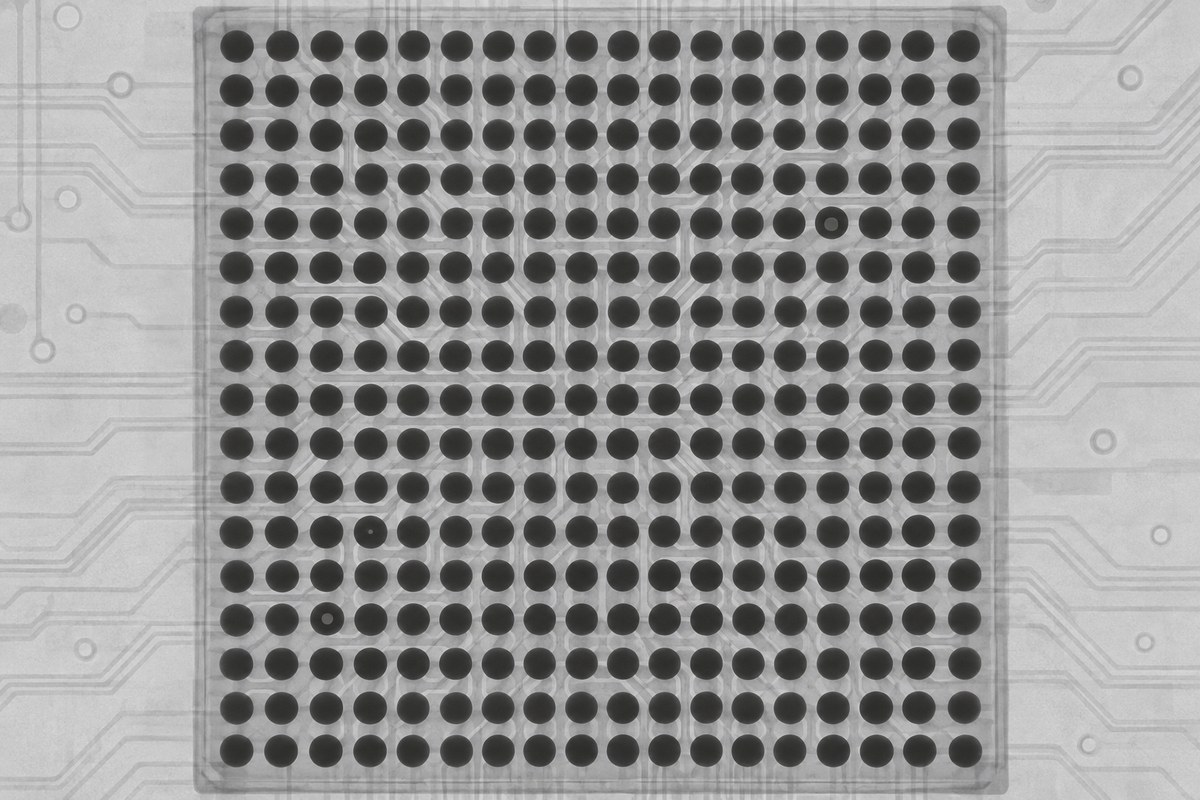
| BGA solder balls | Alignment, bridges, void patterns |
Visible leads and connector pins. Optical inspection can show a displaced lead or a bridge between exposed pins. On a through-hole connector, the solder fillet at the board surface shows wetting there. The amount of solder inside the barrel needs separate evaluation if it cannot be seen from that view.
Hidden BGA joints. X-ray can reveal a bridge beneath the package. A functional test can show whether the processor boots and communicates under the specified conditions. Where both are required, we agree on the packages to inspect, X-ray acceptance criteria, sampling and the records to retain for each lot or serial number.
What Determines IPC Class 3 PCB Assembly Lead Time?
Our general turnkey PCBA planning reference is 10–12 business days from confirmed files and purchase order. For a Class 3 order, the ship date also depends on when the complete kit, first article and required tests are ready.
- Parts availability. PCB fabrication and sourcing can run in parallel. If the processor arrives after the bare boards, its arrival sets the earliest SMT start. A missing through-hole connector can still hold up shipment after SMT is complete.
- First-article approval. When the customer needs to review the first assembled board before the rest of the lot runs, that review belongs in the production schedule.
- Test readiness. A fixture can be prepared during fabrication. If the fixture or released firmware arrives late, assembled boards may still have to wait for functional testing.
For a repeat order, an unchanged board revision and test procedure may allow the existing setup to be reused. A quote should distinguish the first-article ship date from the tested production-lot ship date.
What Drives IPC Class 3 PCB Assembly Costs?
The price depends on what the factory sets up once and what it must do for every board. That distinction is especially useful when comparing a prototype quote with a production quote.
- Setup and tooling. A stencil or dedicated fixture can serve more than one batch if the design remains compatible. Spread the same fixture charge across 200 boards instead of 20, and its cost per board falls to one tenth.
- Components and assembly. Every unit needs its own parts and assembly time. A board with through-hole power connectors requires a soldering operation after the surface-mount stage when that sequence is specified.
- Inspection and records. Reviewing one BGA per board and retaining a serial-linked image takes more time than reviewing a sample from the lot. Two quotes for the same BOM can therefore cover different amounts of inspection.
Case Study: IPC Class 3 Requirements for a Portable Diagnostic Device
A Mexico-based medical device manufacturer asked EBest Circuit to assemble a 12-layer HDI board for a portable diagnostic device. Its design combined 01005 components and BGAs. The order called for IPC-A-610 Class 3 workmanship and set a separate BGA void target of 3% or less for this project.
- 01005 placement. With so little pad area available, control of the printed solder-paste deposit mattered before the components reached reflow.
- BGA inspection. After reflow, we used 3D X-ray to examine voiding beneath the packages against the customer’s target.
- Unit traceability. We captured process records in the manufacturing execution system so the customer’s quality team could trace an individual board’s production history.
This gave the customer two things to use in a later review: an inspection method for the hidden joints and a way to identify the assembly involved.
Get an IPC Class 3 PCB Assembly Quote
Email sales@bestpcbs.com with these details so we can price the build and identify what controls its ship date.
- Board and assembly files. Gerber or ODB++, BOM with manufacturer part numbers, placement data and the released assembly drawing.
- Acceptance and testing. Applicable standards, revisions and class. Identify critical BGAs by reference designator and include any X-ray, firmware or functional test requirements.
- Order scope. Prototype and repeat quantities, customer-supplied parts and target dates for first articles and completed lots.
We can then separate reusable tooling from the unit price and show which materials or tests affect delivery.
FAQs About IPC Class 3 PCB Assembly
Does a Class 3 bare PCB automatically qualify the assembled board as Class 3?
Bare-board acceptance covers the unpopulated PCB. Once components are fitted, their placement, solder connections and finished workmanship require a separate assembly specification. Identify both requirements when purchasing a turnkey build.
Which revision applies if an older drawing is still in production?
Use the revision invoked by the controlling order and drawing. If they disagree, resolve the discrepancy before production. Moving a legacy design to a newer revision requires agreement on the change.
Can prototypes and production boards use different acceptance classes?
They can when the project documents specify different requirements for each build. A prototype accepted to Class 2 can support firmware development, for example. Production qualification to Class 3 requires evidence from a build evaluated to those criteria.
Does an inspector’s IPC training certificate cover my shipment?
The certificate identifies the person’s training or qualification within its stated scope. Evidence for a shipment must relate to the assemblies supplied, their revision and the acceptance requirements on that order.
Can we approve an alternate component after the first article?
An alternate may change the termination geometry, moisture handling or reflow limits even when its electrical function is equivalent. The engineering review determines which assembly settings, inspection programs or first-article checks need updating before the alternate enters production.
We support prototypes and small batches so your team can validate the design before committing to a production run. For eligible builds with parts and test requirements ready, we offer a 1.5-week PCBA turnaround. Our digital shop floor can retrieve recorded material and product batch details within five seconds, helping your quality team trace affected units if a component lot needs review. For your IPC Class 3 PCB assembly, email sales@bestpcbs.com with your first-article quantity and target date. We’ll quote the inspection coverage and confirm the earliest feasible ship date.
You may also like


Tags: BGA X-Ray Inspection, ipc class 3 pcb assembly, IPC-A-610 Class 3