





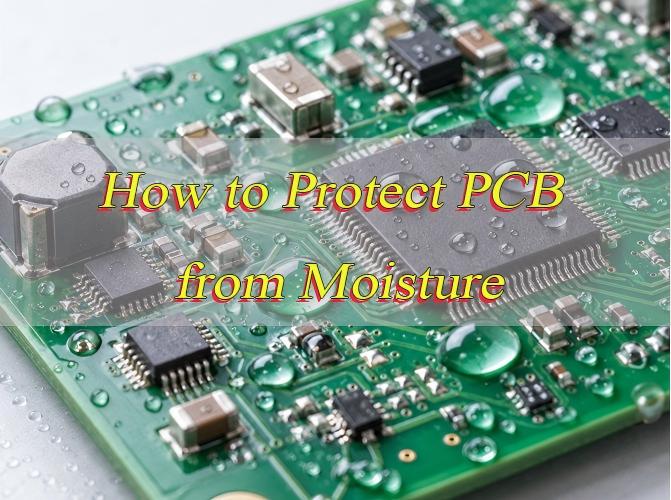
Knowing how to protect PCB from moisture is important even when a product never comes into direct contact with liquid water. High humidity, condensation, ionic contamination, and repeated temperature changes can lower insulation resistance, accelerate corrosion, and create intermittent electrical faults. These failures are especially relevant in outdoor electronics, vehicles, industrial controls, marine equipment, and products that move repeatedly between warm and cold environments.
Effective moisture protection starts by identifying how moisture reaches the PCB and what conditions turn that moisture into an electrical or corrosion risk. If you are evaluating how to protect PCB from moisture, the answer usually involves PCB layout, surface cleanliness, conformal coating, enclosure design, storage, and environmental validation working together rather than relying on one protective material.
Why Does Moisture Damage a PCB?
Moisture becomes dangerous when it forms a conductive film on the PCB surface or interacts with contamination already present on the assembly. When electrical bias is also present, dissolved ionic residues can increase leakage current and support electrochemical reactions between conductors. A PCB may therefore become unstable long before there is enough water to produce a visible short circuit.
The most common moisture-related failures include:
- Corrosion: Moisture can attack exposed copper, component leads, solder joints, connector contacts, and other metal surfaces.
- Surface leakage: Water combined with ionic residues can create unwanted current paths between conductors.
- Electrochemical migration: Metal ions can move across a damp PCB surface and form conductive dendrites under electrical bias.
- Reduced insulation resistance: Humidity and contamination can lower resistance between conductors and affect circuit stability.
- Intermittent faults: A board may work correctly when dry but behave differently as humidity rises.
- Connector degradation: Corrosion can increase contact resistance and gradually reduce connection reliability.
The main point is simple: a PCB does not have to look wet before moisture becomes a reliability problem. Thin moisture films are particularly troublesome around fine-pitch conductors, high-impedance nodes, contaminated surfaces, and circuits that remain continuously powered.
Where Does Moisture on a PCB Come From?
Moisture usually reaches the PCB through humid air, condensation, water ingress, process-related moisture, or poor storage. Before deciding how to protect PCB from moisture, identify which of these sources actually applies to the product. Otherwise, it is easy to specify an expensive coating while leaving the real moisture path unchanged.
Common sources include:
- High ambient humidity: Prolonged exposure allows moisture to accumulate on surfaces and enter moisture-absorbing materials.
- Condensation: Water forms when a PCB or component surface falls below the dew point of the surrounding air.
- Temperature cycling: Heating and cooling can move humid air through an enclosure and create repeated condensation.
- Water ingress: Moisture can enter through cable glands, connectors, switches, vents, enclosure seams, or damaged seals.
- Incomplete drying: Water may remain beneath low-clearance components or in areas that dry slowly after cleaning.
- Storage exposure: Bare PCBs and assembled boards can absorb moisture or collect contamination when stored in uncontrolled environments.
A sealed enclosure is not automatically free from moisture. If humid air is trapped inside and a PCB surface becomes sufficiently cold, condensation can occur without any external leak.
How to Protect PCB from Moisture?
The most reliable answer to how to protect PCB from moisture is to control both the source of moisture and the conditions that allow it to create electrical or chemical damage. Coating is useful, but it is only one part of the protection strategy.
A practical approach combines the following controls:
- Improve PCB layout: Reduce unnecessary exposed conductors, review creepage, and protect moisture-sensitive nodes.
- Control contamination: Keep ionic residues from remaining on surfaces where humidity can create leakage paths.
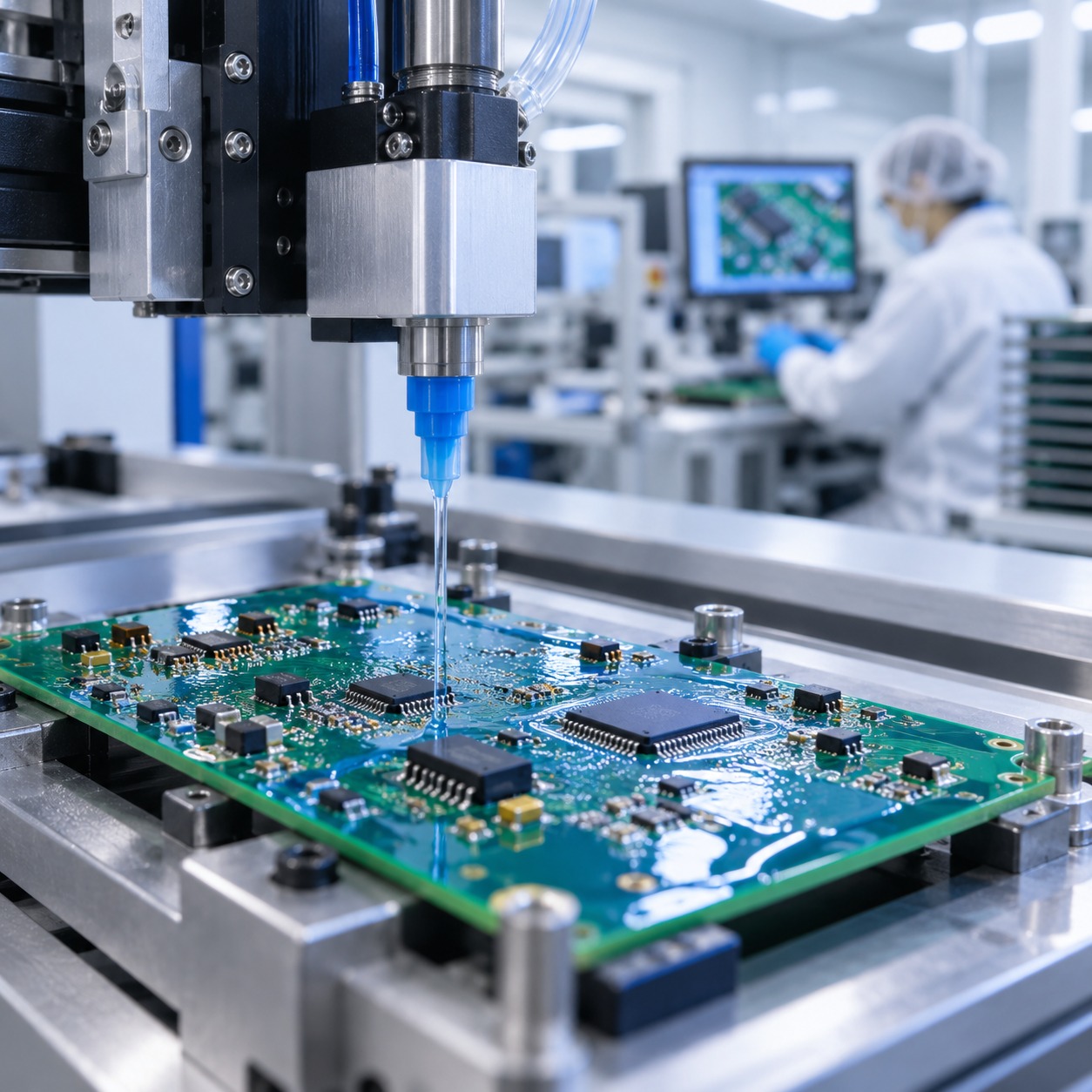
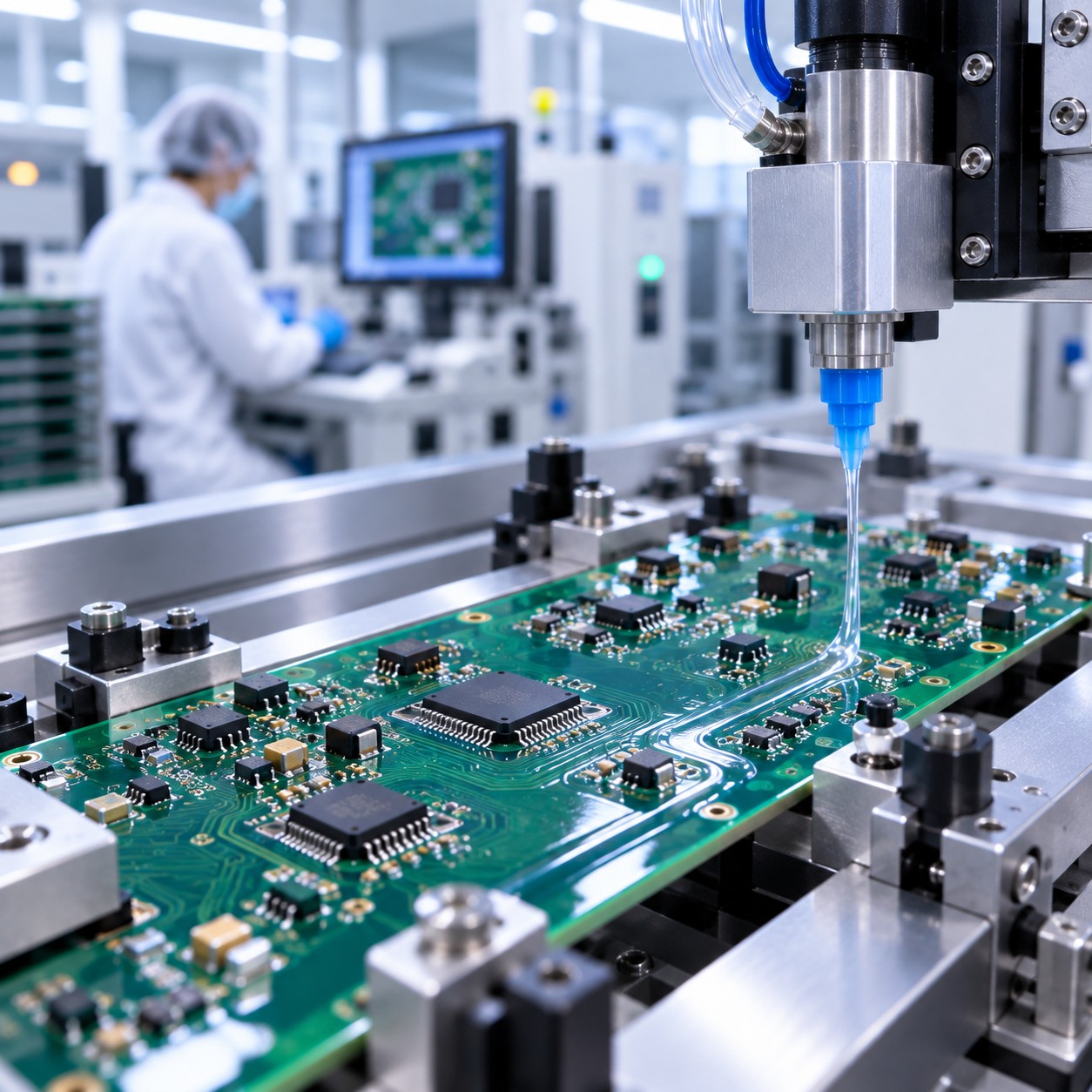
- Apply suitable conformal coating: Use a coating matched to humidity, condensation, temperature, chemicals, and repair requirements.
- Improve enclosure protection: Review seals, connectors, cable entries, pressure changes, vents, and drainage.
- Control condensation: Consider dew point, temperature cycling, thermal gradients, and trapped internal humidity.
- Use encapsulation or potting when justified: Severe liquid exposure may require a more substantial environmental barrier.
- Control storage conditions: Protect boards and moisture-sensitive components before assembly and final use.
- Validate the finished product: Test the assembly under realistic humidity and temperature conditions.
In other words, protecting PCB from moisture is a system-level reliability task, not a single process performed after assembly.
How Can PCB Design Reduce Moisture-Related Failure?
PCB layout can reduce moisture risk before coating or enclosure protection is added. This is particularly important for high-impedance circuits, high-voltage sections, exposed conductors, connectors, and areas likely to experience temperature differences.
Several design decisions deserve attention:
- Maintain suitable creepage distance: Surface spacing becomes more critical when moisture and contamination can reduce insulation performance.
- Limit exposed copper: Avoid unnecessary solder mask openings and exposed conductors.
- Protect high-impedance nodes: Sensor inputs, precision analog circuits, and feedback networks can be affected by very small leakage currents.
- Avoid moisture traps: Low-clearance components and dense areas can retain moisture and slow drying.
- Review connector placement: Keep connectors away from likely moisture entry points where possible.
- Consider board orientation: PCB position affects where condensation collects and whether water can drain away.
- Reduce local cold spots: Strong thermal gradients can create surfaces where condensation appears first.
- Define coating keep-outs early: Connectors, switches, sensors, contact pads, and some test points may require masking.
For engineers researching how to protect PCB from moisture, these layout decisions should be made before the protective coating is specified. Correcting a moisture-sensitive layout later is usually more difficult than designing around the risk from the beginning.
Why Does PCB Cleanliness Matter in Humid Environments?
PCB cleanliness matters because moisture becomes far more conductive when it dissolves ionic contamination. Flux residues, salts, fingerprints, process chemicals, and some types of dust can absorb water from humid air. The resulting surface film may reduce insulation resistance and increase the probability of corrosion or electrochemical migration.
The main contamination risks are:
- Flux residue: Some residues can affect surface insulation performance under prolonged humidity.
- Salt contamination: Even small amounts of salt can become highly conductive after absorbing water.
- Fingerprints: Handling can leave oils and ionic material on exposed surfaces.
- Process residue: Incomplete cleaning or rinsing can leave conductive contamination behind.
- Dust: Dust can hold moisture against the PCB and introduce additional contaminants.
This is why conformal coating should only be applied over a surface that meets the required cleanliness condition. Coating a contaminated PCB may trap the contamination underneath instead of removing the cause of leakage or corrosion.
How to Protect PCB from Corrosion in Humid Environments?
For anyone asking both how to protect PCB from moisture and how to prevent corrosion, the first priority is to reduce prolonged contact between moisture, contaminants, and exposed metal. Corrosion protection works best when surface cleanliness, finishes, coating, and enclosure design support each other.
The most practical controls include:
- Start with a clean PCB: Control flux residues and other contamination before coating or encapsulation.
- Protect exposed metal: Use appropriate surface finishes and avoid unnecessary exposed copper.
- Reduce repeated condensation: Repeated wet and dry cycles can accelerate corrosion in contaminated environments.
- Select a compatible coating: Consider humidity, temperature, chemicals, flexibility, and repair requirements.
- Inspect coating coverage: Pinholes, bubbles, missed areas, poor adhesion, and exposed edges can leave local corrosion paths.
- Protect connectors separately: Electrical contacts often require their own environmental protection strategy.
- Control enclosure ingress: Seals, vents, cable glands, and connectors should not create a direct moisture path to the PCB.
The strongest corrosion control is therefore a combination of cleanliness, metal protection, coating quality, and enclosure management rather than a single material choice.
Which Coating Is Best for Protecting a PCB from Moisture?
Choosing a coating is one of the most common questions when deciding how to protect PCB from moisture, but no coating chemistry is best for every application. Selection should be based on humidity, condensation, operating temperature, chemical exposure, flexibility, rework, and expected service life.
| Coating | Suitable Use | Main Limitation |
|---|---|---|
| Acrylic | Humidity and light condensation | Limited resistance to some chemicals |
| Silicone | Temperature cycling and humid environments | More difficult to remove and rework |
| Polyurethane | Moisture and chemical exposure | Rework can be difficult |
| Parylene | Thin, uniform environmental protection | Higher process complexity |
Acrylic coating is often suitable where humidity protection and relatively easy rework are both important. Silicone coating is commonly used where the assembly experiences wide temperature changes or repeated condensation. Polyurethane can provide stronger resistance in some chemical environments, while parylene provides thin, uniform coverage around complex component geometry.
For repeated liquid exposure, prolonged immersion, or aggressive environments, potting or encapsulation may be more appropriate than conformal coating alone. The decision should follow the real exposure conditions rather than assuming that a thicker barrier is always better.
How to Protect a Circuit Board from Humidity and Condensation?
Humidity and condensation are related, but they create different risks. High relative humidity can gradually increase surface conductivity, while condensation produces an actual moisture film when the PCB falls below the local dew point. A complete answer to how to protect PCB from moisture therefore has to address both conditions.
Useful controls include:
- Control internal humidity: Limit humid air entering or remaining trapped inside the enclosure.
- Reduce rapid temperature changes: Fast cooling can push PCB surfaces below the dew point.
- Review enclosure ventilation: A sealed enclosure can still trap humid air.
- Consider pressure equalization: Suitable vents may reduce pressure cycling while maintaining environmental protection.
- Keep sensitive circuits away from cold surfaces: Enclosure walls and thermal interfaces may create condensation zones.
- Use conformal coating where appropriate: Coating reduces direct contact between condensed moisture and conductive surfaces.
- Use desiccant selectively: Desiccant has limited capacity and should not replace good enclosure design.
- Provide drainage where required: Products exposed to unavoidable condensation should not trap water around the PCB.
For example, an outdoor controller may remain completely dry during warm daytime operation but develop condensation after a rapid nighttime temperature drop. In that situation, an enclosure rating alone does not address trapped humidity, thermal gradients, connector sealing, coating coverage, and condensation behavior.
How Should You Store PCBs to Prevent Moisture Damage?
Storage is another part of how to protect PCB from moisture, especially when bare boards, assembled PCBAs, or moisture-sensitive components remain in inventory for extended periods. Poor storage can introduce moisture and contamination before the product is ever powered.
Appropriate controls include:
- Use moisture barrier packaging: Sealed packaging reduces exposure during transport and long-term storage.
- Add desiccant where required: Desiccant helps keep humidity lower inside a properly sealed package.
- Use humidity indicator cards: These provide a visible indication of humidity exposure inside the package.
- Control opened material: Do not leave boards and moisture-sensitive components exposed unnecessarily.
- Avoid contaminated storage areas: Dust, salts, chemicals, and process vapors can create later reliability problems.
- Follow component moisture requirements: Some packages have defined floor-life and handling requirements.
- Bake only when technically justified: Excessive heating can create material or solderability concerns.
Storage controls do not replace protection during operation, but they prevent avoidable moisture exposure before assembly, testing, or field use.
How Do You Test PCB Moisture Protection?
Testing confirms whether the chosen approach to how to protect PCB from moisture actually works under realistic conditions. Visual inspection alone cannot show whether humidity, condensation, or contamination will create electrical leakage after weeks or months of operation.
Common verification methods include:
- Humidity testing: Evaluates performance during sustained high relative humidity.
- Temperature-humidity cycling: Repeated environmental changes help reveal condensation and moisture ingress problems.
- Surface insulation resistance testing: Measures whether contamination and moisture are creating unwanted conductive paths.
- Electrochemical migration testing: Evaluates susceptibility to dendrite formation under moisture and electrical bias.
- Condensation testing: Exposes the assembly to conditions where water forms directly on the surface.
- Coating inspection: Checks coverage, masking, cure condition, bubbles, missed areas, and edges.
- Electrical testing: Confirms whether exposure causes intermittent or permanent circuit faults.
- Corrosion inspection: Looks for deterioration on conductors, connectors, leads, and solder joints.
IPC-TM-650 includes test methods related to moisture, insulation resistance, surface cleanliness, electrochemical migration, and conformal coating performance. The test method should match the expected failure mechanism and actual operating environment, rather than relying on one generic humidity test for every PCB.
Which PCB Moisture Protection Method Fits Different Environments?
The final decision on how to protect PCB from moisture should be based on the actual environment. An indoor controller, an automotive module, an outdoor sensor, and marine electronics may all require different combinations of design control, coating, enclosure protection, and environmental testing.
| Environment | Main Risk | Typical Protection |
|---|---|---|
| Dry indoor | Occasional humidity | Clean PCB and suitable enclosure |
| Humid indoor | Long-term humidity | Cleanliness control and conformal coating |
| Condensation-prone | Thermal cycling | Coating and condensation control |
| Outdoor | Humidity and water ingress | Coating and sealed enclosure |
| Automotive | Humidity and temperature cycling | Coating and environmental validation |
| Marine | Salt and corrosion | Corrosion protection and sealed enclosure |
| Washdown | Repeated liquid exposure | Sealed enclosure and board-level barrier |
| Harsh industrial | Moisture and chemicals | Compatible coating or encapsulation |
Before selecting the protection method, define operating humidity, temperature range, condensation frequency, water exposure, chemical contamination, service life, thermal requirements, and repairability. These conditions determine whether a clean PCB and enclosure are enough or whether conformal coating, encapsulation, potting, or several protection layers should be combined.
The best solution is the one that controls the actual moisture risk without adding unnecessary cost, weight, thermal resistance, or repair difficulty.
Why Choose EBest Circuit for Moisture-Resistant PCB and PCBA Projects?
When a product will operate in humidity, condensation, or other moisture-prone conditions, PCB fabrication and assembly requirements should be reviewed together. EBest Circuit supports PCB fabrication and PCBA from prototypes through volume production, allowing environmental requirements to be considered before they become production or field-reliability problems.
Project support can include:
- PCB fabrication and PCBA: Keep board manufacturing and assembly within one supply chain.
- DFM review: Review layout, assembly, coating, and environmental requirements before production.
- Cleanliness control: Reduce residues that can contribute to humidity-related leakage and corrosion.
- Conformal coating requirements: Support defined coating areas, masking zones, and inspection criteria.
- Prototype-to-production support: Evaluate moisture protection during early builds before volume production.
- Quality systems: Support projects under ISO 9001, ISO 13485, IATF 16949, and AS9100D where applicable.
- Long-term traceability: Manufacturing and project records can support traceability requirements for long-life products.
If your project requires guidance on how to protect PCB from moisture, provide your Gerber files, BOM, operating temperature, humidity range, condensation risk, coating requirements, environmental test requirements, and expected quantity. Contact sales@bestpcbs.com for technical review and quotation.
FAQs About Protecting PCB from Moisture
Q1: Does solder mask protect a PCB from moisture?
A1: Solder mask protects much of the copper surface and reduces direct environmental exposure, but it is not a complete moisture barrier. Pads, vias, PCB edges, connector areas, component leads, and intentional mask openings can remain exposed. Products used in persistent humidity or condensation may still require cleanliness control, conformal coating, enclosure protection, or another board-level barrier.
Q2: Can FR-4 absorb moisture?
A2: Yes. FR-4 can absorb a limited amount of moisture depending on resin chemistry, laminate construction, exposure time, and environmental conditions. Moisture absorption is different from visible surface condensation, but both can matter in applications involving high voltage, high humidity, long storage periods, or electrical characteristics that are sensitive to material changes.
Q3: Can moisture cause a PCB short circuit?
A3: Yes. Moisture combined with ionic contamination can reduce surface insulation resistance and create leakage paths. Under electrical bias, electrochemical migration may form conductive dendrites between nearby conductors, eventually producing a low-resistance path or short circuit. Fine-pitch layouts and contaminated surfaces are more vulnerable when exposed to sustained humidity.
Q4: Can humidity damage electronics without visible water?
A4: Yes. A PCB can appear dry while a very thin moisture layer is present on its surface. When that layer interacts with ionic residues, leakage current, corrosion, and insulation resistance loss can occur without visible droplets. High-impedance circuits and continuously powered assemblies are particularly sensitive to this type of humidity-related failure.
Q5: Can a PCB corrode when it is powered off?
A5: Yes. Moisture, oxygen, salts, and reactive contamination can cause chemical corrosion even without electrical power. Electrical bias accelerates some mechanisms, particularly electrochemical migration, but ordinary corrosion does not require the PCB to be powered. Storage conditions and cleanliness therefore matter for spare boards and unpowered assemblies as well.
Q6: Does silicone protect a circuit board from moisture?
A6: Silicone conformal coating can provide effective protection against humidity, condensation, and repeated temperature cycling. Its flexibility is useful where the assembly experiences thermal expansion and contraction. However, cleanliness, coating coverage, cure quality, thickness, and material compatibility still determine the result, and silicone is not automatically the best coating for every chemical or rework environment.
Q7: Can condensation form inside a sealed enclosure?
A7: Yes. Humid air can become trapped inside during assembly or enter during temperature and pressure changes. If an internal surface later falls below the dew point, condensation can form even when the enclosure has no visible leak. Enclosure volume, thermal gradients, vents, seals, and humidity at the time of sealing all influence this risk.
Q8: Is an IP67 enclosure enough to protect a PCB from moisture?
A8: Not always. IP67 addresses enclosure protection under defined dust and water ingress conditions, but it does not automatically eliminate trapped humidity or internal condensation. Temperature cycling, connector interfaces, cable entries, and moisture introduced during assembly can still affect the PCB, so some products also require board-level protection.
Q9: How does moisture affect high-voltage PCBs?
A9: Moisture and contamination can reduce insulation performance along the PCB surface and increase leakage between high-voltage conductors. Creepage distance, cleanliness, pollution conditions, laminate selection, and environmental protection become especially important. Conformal coating may improve environmental resistance, but it should not replace the spacing and insulation requirements applicable to the design.
Q10: Can you waterproof a PCB without conformal coating?
A10: Yes, depending on the required exposure. Sealed enclosures, gaskets, protected connectors, potting, and encapsulation can protect electronics without conventional conformal coating. However, humidity, condensation, splash, washdown, and immersion are different conditions, so the protection method should be selected against a defined environment rather than the general term “waterproof.”
Q11: Should a wet PCB simply be dried and reused?
A11: Not necessarily. Drying removes water but does not remove salts, chemicals, or conductive residues left behind after the liquid evaporates. A PCB exposed to contaminated water should be cleaned and inspected before reuse, followed by electrical testing where appropriate to identify leakage, corrosion, damaged connectors, or affected components.
Q12: Can desiccant protect electronics from moisture during operation?
A12: Desiccant can reduce humidity inside a suitably sealed enclosure, but its moisture capacity is limited and it eventually becomes saturated. It is most effective as part of a defined enclosure and maintenance strategy, not as a permanent substitute for sealing, cleanliness, condensation control, or conformal coating in continuously humid environments.
Understanding how to protect PCB from moisture starts with defining the actual exposure rather than choosing a coating first. Humidity, condensation, contamination, temperature cycling, water ingress, and chemical exposure should be evaluated separately, then controlled through PCB design, cleanliness, environmental barriers, storage, and appropriate testing.
For reliable OEM manufacturing, ODM production, prototype development, volume production, or custom moisture-resistant PCB and PCBA solutions, contact the EBest Circuit at sales@bestpcbs.com for technical support and quotation.
You may also like


Tags: How to Protect PCB from Moisture, PCB Protect Moisture, Protect PCB from Moisture