





A PCB engineering change order provides a controlled way to move an approved board change into production without mixing old and new manufacturing data. A layout update may appear straightforward, but it can also affect the Gerber or ODB++ data, fabrication drawing, BOM, centroid file, assembly drawing, test instructions, and inventory already in the supply chain. If those records do not change together, a technically correct modification can still produce the wrong PCB or PCBA.
For customers, effective change control means fewer revision-related delays, less risk of unusable inventory, and clearer evidence of what was built in each production lot. EBest Circuit supports customer-approved changes through manufacturing-data review, DFM, PCB fabrication, component sourcing, assembly, inspection, and agreed testing. Product-design approval and the final decision to release a change remain with the customer.

What Is a PCB Engineering Change Order?
A PCB engineering change order, commonly called an ECO, is the authorized record used to implement a change to a released PCB or PCBA. It identifies what must change, which product or board revision is affected, when the change becomes effective, and how existing material or work in progress should be handled.
The ECO is more than a marked-up drawing. It connects the approved engineering decision with the files and production actions needed to build the correct revision. Depending on the change, it may control:
- PCB layout or circuit changes;
- stackup, copper weight, material, surface finish, or controlled-impedance requirements;
- component, footprint, package, or approved-alternative changes;
- fabrication, assembly, inspection, programming, or test instructions;
- board revision markings and product traceability;
- the disposition of open purchase orders, bare PCBs, components, and assembled boards.
The term ECO is also used in PCB design software for transferring differences between a schematic and a layout. That CAD function can be one step in making a design change, but it does not replace the broader approval, document control, effectivity, and production-disposition process discussed here.
How Do an Engineering Change Request, Engineering Change Order, and Engineering Change Notice Differ?
An engineering change request proposes and evaluates a possible change. An engineering change order authorizes the detailed implementation after the technical and business impacts have been reviewed. An engineering change notice communicates the approved change to the people and suppliers who must act on it.
| Record | Primary purpose | Typical status |
|---|---|---|
| ECR | Describe a problem or proposed improvement and evaluate its impact | Under review |
| ECO | Define and authorize the files, revision, effectivity, and actions required | Approved for implementation |
| ECN | Notify affected teams or suppliers that the approved change must be applied | Released for communication |
Terminology varies among companies and quality systems. Some organizations combine ECO and ECN into one controlled record, while others use ECN as the main approval document. The abbreviation matters less than a clear workflow: the manufacturer must know which change is approved, which data set is valid, and which production units are affected.
Which Files Belong in the PCB Engineering Change Order Process?
The PCB engineering change order process should include every released record whose content or revision is affected by the change. Updating only the layout file is not enough if purchasing, assembly, inspection, or testing still uses older instructions.
The controlled package commonly includes:
- native design data when it forms part of the agreed handoff;
- Gerber or ODB++ files, NC drill data, and IPC-356 netlist data;
- the fabrication drawing and stackup specification;
- the BOM with manufacturer part numbers and approved alternatives;
- the centroid, pick-and-place, or CPL file;
- the assembly drawing, polarity information, and special process notes;
- stencil requirements where pad or package changes affect solder-paste printing;
- programming files, test procedures, fixtures, and acceptance limits when applicable;
- mechanical drawings or enclosure interfaces affected by board dimensions, holes, connectors, or component height;
- revision history, approval record, effectivity, and disposition instructions.
Not every ECO changes every file. A silkscreen correction may affect only a few records, while a footprint or component change may affect the BOM, land pattern, centroid data, stencil, assembly drawing, inspection criteria, and test coverage. The affected-file list should follow the actual technical impact instead of a fixed document count.
How Does an ECO Keep Gerber, BOM, CPL, and Drawings on the Same Revision?
An ECO keeps manufacturing records aligned by releasing them as one identified revision package rather than as unrelated replacement files. The package should make the relationship between the board revision, document revisions, and effective production point unambiguous.
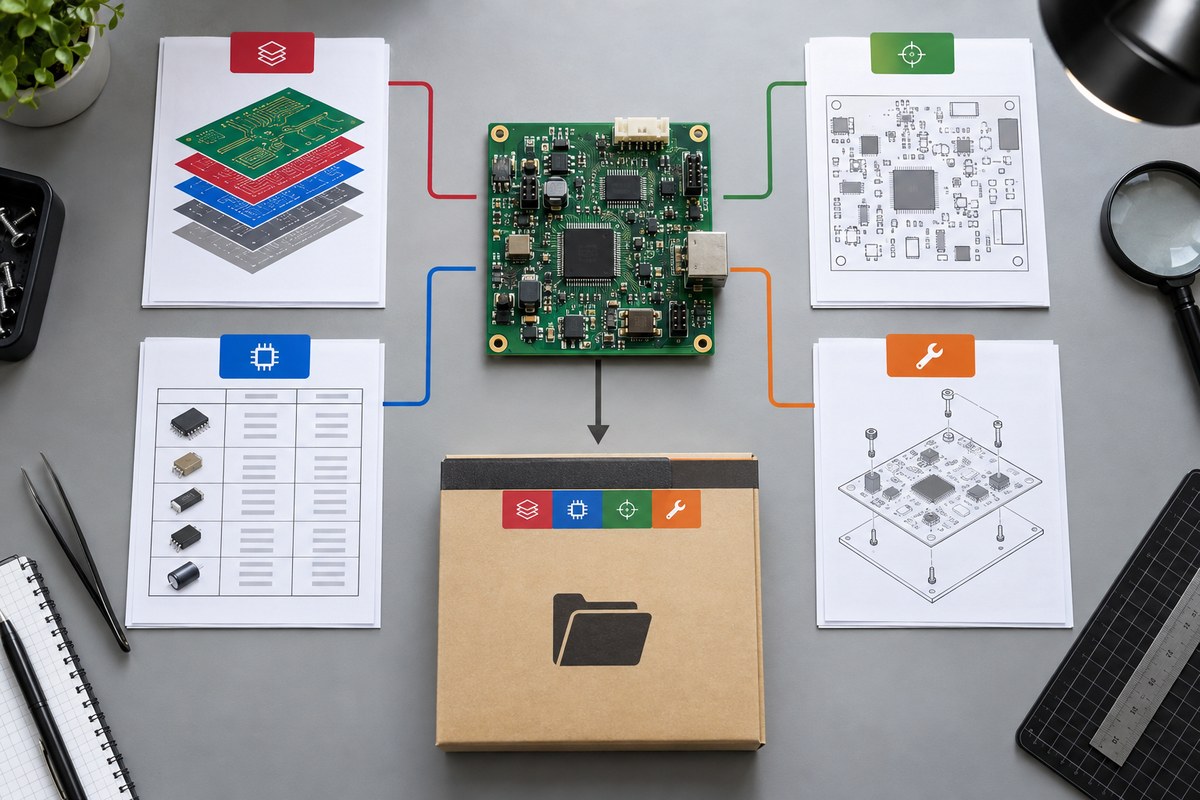
Several controls prevent mixed-revision builds:
- one approved package or controlled download location for the released files;
- consistent revision identifiers across the ECO and affected documents;
- a change summary that identifies superseded and replacement files;
- confirmation that the BOM references footprints actually present in the released PCB data;
- confirmation that CPL coordinates, rotations, and reference designators match the new assembly data;
- removal or quarantine of obsolete files from active production folders;
- a documented release date, lot, serial number, purchase order, or other effectivity point.
File names alone are weak revision control. A folder containing names such as “final,” “latest,” and “updated-final” does not tell fabrication, purchasing, and assembly teams which combination was approved. A defined revision package reduces clarification cycles and helps ensure that the quoted, fabricated, assembled, and inspected product refers to the same design state.
How Does Engineering Change Effectivity Control Work in Progress and Existing Inventory?
Engineering change effectivity defines when the approved change begins and which units must use it. This prevents a new revision from being applied casually to some orders while older material continues through production without an agreed decision.

The correct treatment depends on the reason for the change and the condition of existing material:
- Immediate implementation: Stop affected production and apply the change before more units are built. This is appropriate when the old revision presents an unacceptable functional, safety, compliance, or assembly risk.
- Rework: Modify eligible bare boards or assemblies when the rework method is approved, technically reliable, traceable, and economically justified.
- Use as is: Complete or ship existing units when the previous revision remains acceptable for their intended application and the customer authorizes that disposition.
- Run out existing inventory: Consume approved old-revision material before switching at a defined lot, date, or order.
- Scrap or segregate: Prevent obsolete or nonconforming material from entering later production when it cannot be used or reworked safely.
This decision may affect open component orders, bare PCB stock, stencils, fixtures, work instructions, partially assembled panels, finished goods, and replacement-service inventory. Recording the disposition in the ECO lets customers understand the cost and schedule impact before the production switch is made.
When Does a PCB Change Need a New Revision or Part Number?
A PCB change normally needs a new revision when the updated board must remain distinguishable from the previously released version but still represents the same basic product. A new part number is more appropriate when the change creates a different item that must be separately ordered, stocked, serviced, qualified, or used only in specific configurations.
Revision changes often cover controlled updates such as routing corrections, approved footprint changes, documentation corrections that affect manufacturing, or component changes that preserve the product identity. A new part number may be justified when interchangeability is lost, connector pinout or mechanical fit changes, electrical function changes substantially, regulatory or customer qualification must be separated, or both versions must remain active at the same time.
There is no universal rule based only on the size of a layout edit. The customer’s configuration-management system should define the decision. From the manufacturing side, the identifier must let purchasing, production, inspection, inventory, and field support distinguish the permitted versions without relying on memory or visual guesswork.
Board markings also need deliberate treatment. If the fabrication data changes but the visible revision marking does not, the new and old bare boards may become difficult to separate. If a marking changes, the fabrication drawing and released artwork must agree on its content and location.
How Does an Approved ECO Move Into PCB and PCBA Production?
An approved ECO moves into production by converting the customer’s released change package into controlled fabrication, sourcing, assembly, inspection, and test instructions. The manufacturer should not reinterpret an unapproved concept or decide which product behavior is acceptable; its role is to implement the authorized revision consistently and identify manufacturability conflicts before material is committed.
The production transition normally follows a practical sequence:
- The new package is compared with the previous released data to identify affected PCB, BOM, placement, drawing, and test records.
- DFM and assembly reviews determine whether the change introduces new stackup, impedance, spacing, tooling, stencil, component, or inspection requirements.
- Questions and manufacturing exceptions are resolved before release. Any manufacturer-proposed adjustment returns to the customer for approval when it changes the authorized design intent.
- Effectivity and material disposition are applied to quotations, purchase orders, inventory, work in progress, and production travelers.
- The correct revision is fabricated and assembled under controlled instructions.
- Inspection and agreed testing verify the features affected by the change, with lot and revision records retained for traceability.
The amount of validation should match the change risk. A documentation-only correction may need a focused record review, whereas a new BGA footprint, stackup, high-current path, controlled-impedance route, or critical component may justify first-article inspection, X-ray, dimensional verification, impedance testing, electrical testing, or customer-defined functional testing. This risk-based approach avoids repeating unrelated tests while still checking what the ECO actually changed.
EBest Circuit can fabricate and assemble customer-designed PCBs and PCBAs under an approved ECO, from prototypes to repeat production. If you have a revised Gerber package, BOM, drawings, and change record, send them to sales@bestpcbs.com for DFM review and quotation. A clearly released package helps us identify affected processes early, protect the approved revision during production, and reduce preventable delays caused by mixed manufacturing data.
FAQs About PCB Engineering Change Order
Can an email replace a formal PCB ECO?
An email can communicate a request, but it may not provide adequate approval, revision, effectivity, affected-file, and disposition control. For repeatable production, the final decision should be captured in the customer’s authorized change-control record or another formally approved release method.
Does every BOM substitution require a PCB engineering change order?
Not necessarily. A previously approved alternate may be used under the customer’s existing BOM and sourcing controls. An ECO may be required when a substitute changes the footprint, ratings, function, qualification status, assembly process, inspection criteria, test result, or another released requirement. The customer’s change-control rules determine the approval path.
Can an ECO be applied after PCB fabrication has started?
Yes, but the available options become narrower and may add cost or delay. The affected work can be stopped, reworked where technically acceptable, used as is with authorization, or scrapped. The decision should consider the fabrication stage, change risk, traceability, delivery requirement, and customer approval.
Is a PCB design-tool ECO the same as a manufacturing ECO?
No. A design-tool ECO synchronizes differences between design databases, such as a schematic and PCB layout. A manufacturing ECO controls the authorized revision, affected production data, effectivity, material disposition, implementation, and verification. The CAD update may support the change, but it does not provide the complete production-control record.
What should be sent to a PCB and PCBA manufacturer after an ECO is approved?
Send the complete released manufacturing package, the approved change record or clear change summary, revision and effectivity information, material-disposition instructions, and any updated inspection or test requirements. Providing one coherent package is safer than sending individual replacement files across separate email threads.
How can customers confirm that the correct ECO revision was built?
Use board revision markings where appropriate and connect the production lot to the released data, traveler, inspection results, and agreed test records. The required evidence depends on the product and quality system, but it should allow the customer and manufacturer to identify which approved revision was used without reconstructing the history from informal messages.
A well-controlled PCB engineering change order turns an approved technical decision into a traceable production update. By aligning affected files, effectivity, inventory disposition, manufacturing instructions, and verification, customers can introduce necessary changes without losing control of which PCB or PCBA revision reaches the next build. For support implementing an approved change in prototype or repeat production, contact EBest Circuit at sales@bestpcbs.com.
You may also like



Tags: Engineering Change Notice, PCB Engineering Change Order, PCB Revision Control