





Rapid prototyping circuit boards help engineers verify a PCB layout before moving into pilot production or larger-volume manufacturing. A useful prototype PCB should be built from complete files, reviewed for manufacturability, checked against the required material and finish, and delivered with the documents needed for the next step.
EBest Circuit (Best Technology) supports rapid prototyping circuit boards with DFM review, PCB fabrication, panelization support, PCBA assembly, component sourcing, testing, and shipment documentation. If you are preparing a prototype build and want the files checked before production, pls feel free to send Gerber files, BOM, quantity, panelization notes, and testing requirements to sales@bestpcbs.com for an engineering review.
What Are Rapid Prototyping Circuit Boards?
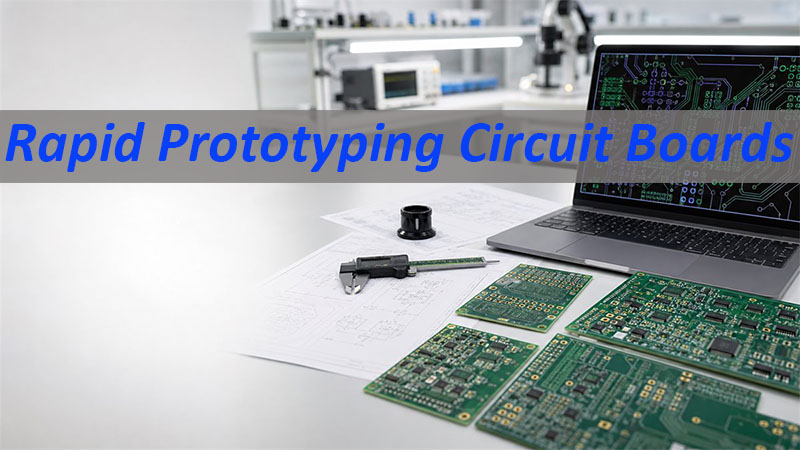
Rapid prototyping circuit boards are early-stage printed circuit boards produced quickly so engineers can test a PCB layout before moving into higher-volume production. They are usually ordered in small quantities and are used for layout validation, functional testing, assembly preparation, mechanical fit checks, firmware bring-up, and design revision.
Unlike a breadboard or simple experimental board, a rapid prototype PCB is manufactured from production-type files such as Gerber files, drill files, stack-up notes, BOM, pick-and-place data, and assembly drawings. This makes the prototype more useful because it reflects the real board structure, copper thickness, solder mask, surface finish, and assembly conditions that may later be used in production.
Rapid prototyping circuit boards are commonly used for:
- New product development
- R&D samples
- Function testing
- PCB layout validation
- Mechanical enclosure checks
- Component placement review
- Signal and power verification
- Assembly process preparation
- Small-batch customer demos
- Pilot build planning
The purpose is not only to get boards quickly. The purpose is to get usable boards that help the engineering team find problems early, make the next revision more accurate, and prepare for the next build stage with fewer unknowns.
Why Printed Circuit Board Rapid Prototyping Matters in Product Development
Printed circuit board rapid prototyping matters because many issues are easier and cheaper to fix before production. A PCB layout can pass software checks but still create problems in fabrication, assembly, or product testing. A prototype build gives engineers physical feedback before the project becomes more expensive to change.
- Early layout validation: A prototype PCB helps confirm whether the layout works as intended. Engineers can check power rails, signal behavior, connector placement, component fit, thermal behavior, and board-level function. If a problem appears, the layout can still be revised before larger production commitments.
- Manufacturability review: Rapid prototyping is also a chance to test whether the board can be fabricated and assembled smoothly. DFM review can identify problems such as insufficient spacing, drill-to-copper risk, small solder mask openings, thin annular rings, tight routing, unclear tolerances, or missing fabrication notes.
- Assembly preparation: For projects that will move into PCBA, the prototype stage can also confirm BOM availability, component polarity, package matching, panelization, stencil support, and assembly drawings. This is especially important when the customer wants prototype boards delivered in panel format for the next assembly step.
- Schedule control: Fast prototypes help engineering teams avoid long waiting periods between layout release and testing. However, the fastest quote is not always the best choice. A supplier that reviews files before production may prevent delays caused by avoidable questions, missing documents, or unclear requirements.
How Circuit Board Rapid Prototyping Works from Files to Finished Boards
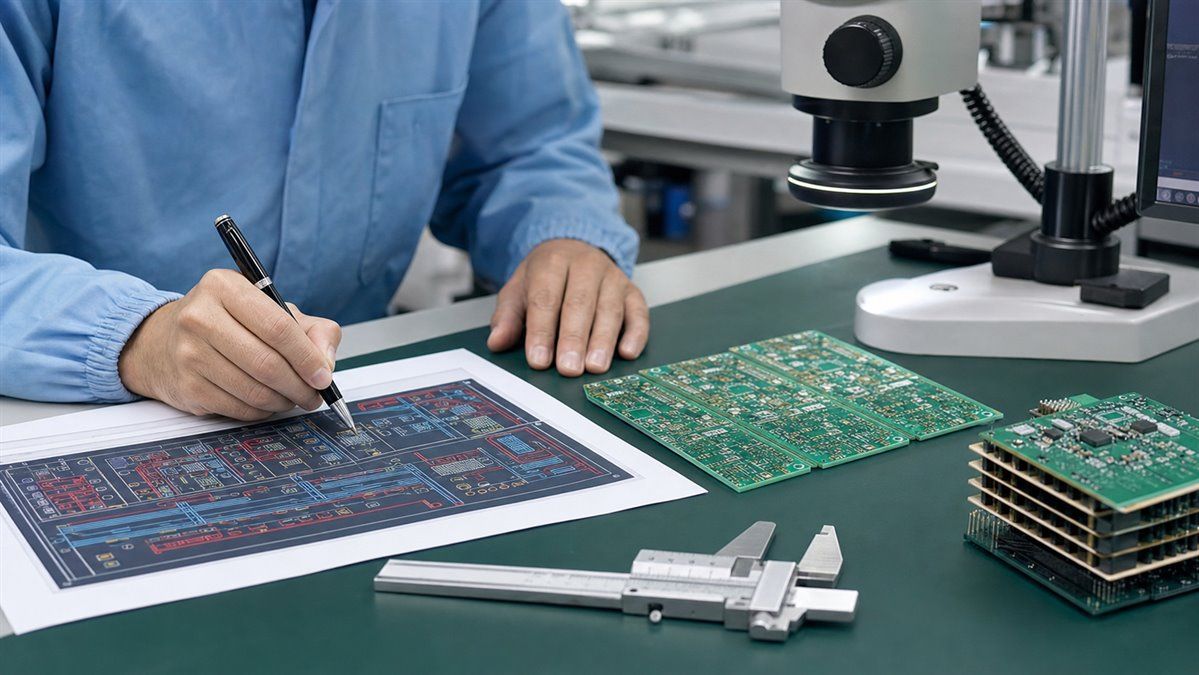
Circuit board rapid prototyping follows a clear production flow. The exact process depends on board complexity, material, layer count, surface finish, panelization, and assembly requirements, but most projects move through the same basic stages.
1. File submission
- The customer sends the manufacturing files and project requirements. For bare PCB prototypes, this usually includes Gerber files, drill files, board thickness, copper thickness, material, surface finish, solder mask color, silkscreen color, panelization notes, and quantity. For PCBA prototypes, the customer also sends BOM, pick-and-place files, assembly drawings, and testing requirements.
2. Engineering and DFM review
- The manufacturer checks whether the files can be fabricated and assembled according to the requested process. This is where DFM support becomes valuable. Questions about drill sizes, spacing, copper weight, panel format, surface finish, or stencil support should be clarified before production starts.
3. Quotation and confirmation
- After the files are checked, the supplier confirms price, lead time, technical notes, delivery format, and documentation requirements. If the customer needs reports such as a shipment report, dimension report, or COC, these should be confirmed at this stage.
4. PCB fabrication
- The board moves through material preparation, imaging, etching, drilling, plating, solder mask, silkscreen, surface finish, routing, and inspection. For fast turn PCB prototypes, clear files and quick engineering confirmation help reduce waiting time.
5. Inspection and documentation
- Prototype PCBs may require visual inspection, electrical testing, dimension checks, and document preparation. For some projects, the shipment package may also include COC, dimension report, test report, stencil support, or other customer-required documents.
6. Delivery and next-step review
- After delivery, the customer can test the board, prepare assembly, review mechanical fit, and decide whether the PCB layout is ready for revision, assembly, pilot build, or production.
Rapid Prototype Circuit Boards vs Production PCBs: Key Differences
Rapid prototype circuit boards and production PCBs may look similar, but they serve different purposes. Understanding the difference helps buyers choose the right manufacturing approach and avoid unrealistic expectations during the prototype stage.
- Prototype PCBs are used for validation: Prototype boards help engineers confirm whether the PCB layout, component placement, material choice, and functional performance are acceptable. The quantity is usually small, and the priority is fast learning.
- Production PCBs are used for repeatable manufacturing: Production boards focus on consistency, yield, cost control, packaging, process stability, and repeatable delivery. Once the layout is fixed, the manufacturer can optimize panel utilization, test coverage, material planning, and production scheduling.
- Prototype orders often require more engineering discussion: A prototype may include unfinished details, urgent changes, small quantities, special notes, or uncertain assembly requirements. This is why DFM support and communication are important. A manufacturer should not simply produce what is uploaded if the files contain obvious risks.
- Production orders require more process control: When a product moves into volume manufacturing, the supplier needs stable material sourcing, inspection standards, batch traceability, production documentation, and quality control. A good prototype supplier should help customers prepare for this transition instead of treating prototype and production as two disconnected steps.
Benefits of Rapid Prototyping Printed Circuit Boards for Engineering Teams
Rapid prototyping printed circuit boards provide practical benefits for engineering teams because they create a physical checkpoint between PCB layout release and production.
- Faster layout feedback: Engineers can test the board earlier and decide whether the layout needs changes. This helps avoid waiting until the production stage to find routing, fit, or functionality problems.
- Lower revision cost: Changing a PCB layout during the prototype stage is usually less costly than making changes after assembly tooling, component planning, or production scheduling has already started.
- Better manufacturability: A DFM-reviewed prototype can reveal fabrication and assembly risks before they affect a larger build. Examples include spacing issues, drill limitations, panel design problems, solder mask concerns, or unclear documentation.
- Improved assembly readiness: Prototype boards help confirm whether the BOM, placement files, stencil support, polarity markings, and assembly notes are ready for PCBA. This is especially helpful when the customer plans to move quickly from bare boards to assembled boards.
- Stronger production planning: When the prototype build is documented properly, the next build can be planned with better information. The team can reuse confirmed material choices, surface finish, panel format, inspection requirements, and assembly notes.
What Files Are Needed for Rapid Prototyping Circuit Boards?
Complete files are one of the easiest ways to reduce delays in rapid prototyping circuit boards. Missing or unclear documents can cause engineering questions, quotation delays, production holds, or wrong delivery formats.
For bare PCB prototypes, prepare:
- Gerber files
- Drill files
- Board outline
- Layer count
- Material requirement
- Finished board thickness
- Copper thickness
- Solder mask color
- Silkscreen color
- Surface finish
- Quantity
- Panelization requirement
- Tolerance notes
- Special inspection or document requirements
For prototype PCB assembly, also prepare:
- BOM
- Pick-and-place file
- Assembly drawing
- Component polarity notes
- Stencil requirement
- Test method or test notes
- Packaging requirements
- Approved component alternates if available
For fast quotation and DFM review, it is helpful to explain the project stage as well. For example, tell the supplier whether the order is for layout validation, customer demo, assembly trial, reliability testing, or pilot production preparation. This gives the engineering team better context when reviewing files.
Key Engineering Checks Before Circuit Board Rapid Prototyping
Before circuit board rapid prototyping starts, the supplier should check more than the file format. The important question is whether the board can be fabricated, inspected, delivered, and prepared for assembly according to the customer’s real project needs.
- DFM review: DFM review checks whether the PCB layout can be manufactured reliably. It may include line width, spacing, annular ring, drill size, copper-to-edge clearance, solder mask openings, silkscreen clearance, slot design, and routing requirements.
- Material and thickness check: The material and board thickness should match the electrical, mechanical, and cost requirements. For common prototypes, FR4 Tg130 may be enough. For high-speed, high-temperature, high-reliability, or thermal applications, the material choice may need further review.
- Copper thickness and surface finish: Copper thickness affects current carrying capability, etching control, and cost. Surface finish affects solderability and assembly readiness. Common prototype finishes include lead-free HASL, ENIG, OSP, immersion tin, and immersion silver, depending on the project.
- Panelization and delivery format: Some customers need single-board delivery, while others need panel delivery for assembly. Panelization should be confirmed before production, especially when the customer also needs stencil support.
- Documentation requirements: If the customer needs a shipment report, dimension report, COC, test report, or impedance report, these documents should be confirmed before production. Waiting until shipment day to ask for documentation can create avoidable delays.
- Assembly preparation: For prototype PCB assembly, BOM risk, component sourcing, placement file accuracy, stencil support, and test notes should be reviewed together. This helps prevent the bare PCB order from becoming disconnected from the assembly step.
Case Study: Rapid Prototyping Circuit Boards for a 2L FR4 Project
This case shows how EBest Circuit supports rapid prototyping circuit boards for an overseas industrial electronics customer that needed prototype boards for assembly preparation, not only bare PCB fabrication.
Project background
- Customer country/region: Europe
- Application: industrial control equipment
- Project stage: prototype PCB validation before assembly preparation
- Required lead time: 5 working days for PCB fabrication after file confirmation
Project requirement
The customer needed a fast prototype build for a 2-layer FR4 control board used in an industrial electronics project. The board itself was not structurally complex, but the order required correct panel delivery, stencil support, and complete shipment documents for the customer’s next assembly step.
- Board type: 2L PCB
- Material: FR4 Tg130
- Board thickness: 1.6 mm +/-10%
- Copper thickness: 1 oz
- Solder mask and silkscreen: green solder mask with white silkscreen
- Surface finish: lead-free HASL
- Panelization: free panelization
- Delivery format: panel delivery
- Stencil support: stencil information/support requested for assembly preparation
- Shipment documents: shipment report, dimension report, and COC required
Customer challenge
The customer was working against a prototype validation schedule and needed the boards ready for assembly preparation soon after delivery. The main risk was not the 2L FR4 structure itself, but the handoff details: panel format, board dimensions, lead-free HASL finish, stencil support, and shipment documents all had to be correct. If any of these items were missed, the customer could receive usable PCBs but still lose time before assembly.
EBest Circuit solution
EBest Circuit reviewed the customer’s Gerber files, FR4 Tg130 requirement, 1.6 mm +/-10% board thickness, 1 oz copper, green solder mask, white silkscreen, lead-free HASL finish, and panel delivery requirement before production. The engineering team confirmed the free panelization arrangement, checked whether the panel format matched assembly preparation, and coordinated stencil support according to the customer’s next-step needs.
During fabrication, EBest Circuit controlled the key production steps for the 2L FR4 PCB, including material preparation, drilling, copper process, solder mask, silkscreen, lead-free HASL, routing, panel inspection, and final check. The boards were completed within the agreed 5-working-day PCB fabrication schedule after file confirmation. Before shipment, the team prepared the requested shipment report, dimension report, and COC.
Result
The European customer received the 2L FR4 rapid prototyping circuit boards in panel format, together with stencil support and the required shipment documents. This helped the customer move from prototype PCB fabrication to assembly preparation without waiting for extra documentation after delivery.
The case also shows why DFM support matters in rapid prototyping. The board itself was not highly complex, but the project still required correct panelization, delivery format, stencil preparation, and documentation. These details can affect the next build stage as much as the PCB fabrication process itself.
Why Choose EBest Circuit (Best Technology) for Rapid Prototyping Circuit Boards?
EBest Circuit (Best Technology) is suitable for rapid prototyping circuit boards when customers need engineering review, PCB fabrication, PCBA assembly, component sourcing, testing, and delivery support from one coordinated team. The company was founded in 2006 and supports customized PCB and PCBA solutions for global buyers.
The main reasons buyers choose EBest Circuit for rapid prototyping projects include:
- Engineering-led support: one sales contact works with three engineers to support DFM review, BOM optimization, process questions, and production follow-up.
- DFM pre-review before production: Gerber files, stack-up notes, material, panelization, surface finish, assembly preparation, and document requirements can be reviewed before the order enters production.
- One-stop PCB and PCBA service: PCB fabrication, component sourcing, PCBA assembly, testing, and delivery follow-up can stay in one workflow.
- Prototype and small-batch support: EBest Circuit supports samples and small batches, which is useful for R&D validation, assembly trials, and pilot build preparation.
- Certified quality system: ISO 9001, ISO 13485, IATF 16949, AS9100D, REACH, RoHS, and UL-related quality support help customers meet industry and project requirements.
- Traceable production: digital workshop tracking helps follow materials, product batches, production cycle, and production progress.
- Fast PCBA delivery for suitable builds: for suitable PCBA projects, delivery can be about 1.5 weeks, depending on PCB complexity, component readiness, assembly difficulty, testing needs, and quantity.
For customers who need rapid prototyping circuit boards with DFM support, the value is not only fast board fabrication. The value is fewer open questions before production, clearer assembly preparation, and better documentation for the next build stage.
Send Gerber files, BOM, quantity, panelization notes, and testing requirements to sales@bestpcbs.com for an engineering review.
FAQs about Rapid Prototyping Circuit Boards
What are rapid prototyping circuit boards?
Rapid prototyping circuit boards are early-stage PCB builds used to test and validate a PCB layout before pilot production or volume manufacturing. They help engineers check function, fit, manufacturability, assembly readiness, and documentation.
Why is DFM support important for rapid PCB prototypes?
DFM support helps identify manufacturing risks before production starts. It can catch spacing problems, drill issues, solder mask risks, panelization questions, missing notes, and assembly preparation problems that may delay the prototype build.
What files should I send for rapid prototyping circuit boards?
For PCB fabrication, send Gerber files, drill files, board thickness, copper thickness, material, surface finish, solder mask color, silkscreen color, quantity, and panelization requirements. For PCBA, also send BOM, pick-and-place files, assembly drawings, and test notes.
Can rapid prototyping circuit boards be delivered in panel format with stencil support?
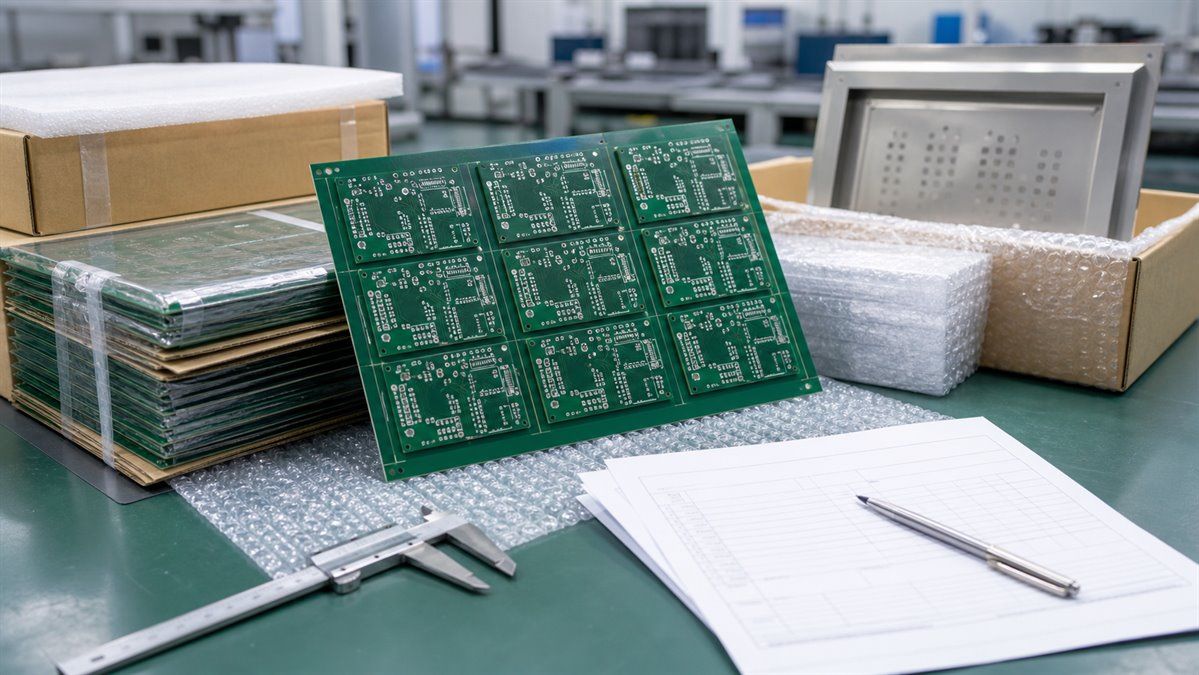
Yes. Prototype PCBs can be delivered as individual boards or panels. If the boards will move into assembly, panel delivery and stencil support should be confirmed before production.
What documents can be provided with prototype PCB shipment?
Depending on the customer’s requirement, EBest Circuit can provide documents such as shipment report, dimension report, COC, test report, or other agreed production records.
Overall, rapid prototyping circuit boards are useful because they give engineers physical boards for layout validation, assembly preparation, and manufacturing review before a project moves into the next build stage.
For buyers who need DFM support, panelization, stencil support, shipment documentation, quick turn PCB boards fabrication, PCBA assembly, and traceable production follow-up, EBest Circuit (Best Technology) can review the files before production and help reduce avoidable questions during the prototype build. Pls feel free to send your Gerber files, BOM, quantity, and testing requirements to sales@bestpcbs.com for an engineering review.
You may also like

Tags: circuit board rapid prototyping, printed circuit board rapid prototyping, rapid prototyping circuit boards