What is the IPC 6011 standard, and why has it become the most trusted reference for PCB quality around the world? For anyone working in design, manufacturing, or sourcing, knowing how to apply the IPC 6011 standard correctly can save time, reduce failures, and keep your products aligned with global industry expectations. In this article, we break down what the standard actually covers, how it differs from IPC-6012, and how to use its performance classes for real-world production.
What is the IPC 6011 Standard?
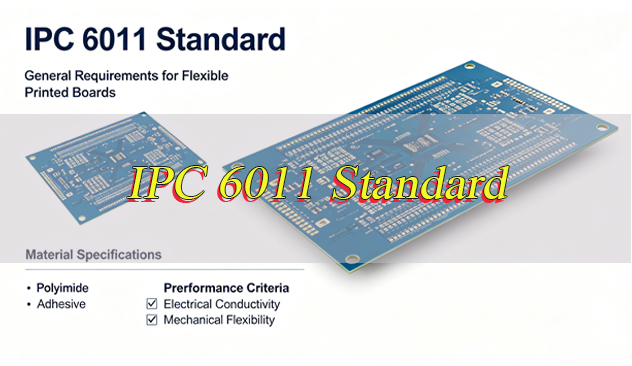
The IPC 6011 standard is the generic performance specification that applies to all types of printed boards. First issued in 1996 and updated to IPC-6011A in February 2025, it sets the basic ground rules for quality, performance levels, and procurement expectations across the industry.
At its core, the IPC 6011 standard focuses on three practical areas:
1. General guidelines for PCB materials, design, and manufacturing.
2. Three defined performance classes that match real-world application needs.
3. Quality inspection, testing, and documentation practices.
Unlike standards that only apply to one board type,the IPC 6011 standard acts as a parent document for rigid, flexible, and rigid-flex PCBs alike. It works alongside more specific standards such as IPC-6012 and IPC-6013, creating a consistent quality language for manufacturers and customers worldwide.
What is the IPC-6012 Standard?
IPC-6012 is the qualification and performance standard built exclusively for rigid printed boards. It takes the general framework from IPC-6011 and adds detailed, hands-on requirements that only apply to rigid PCB construction.
This standard dives into practical details engineers and inspectors use daily:
– Acceptance rules for plating, solder mask, and surface finishes
– Tighter dimensional tolerances specific to rigid boards
– Testing and inspection methods unique to rigid PCB production
When a project calls out IPC-6012, it automatically includes all requirements from the IPC 6011 standard. In practice, IPC-6011 provides the foundation, while IPC-6012 delivers the application-specific details.
What is the Difference between IPC 6011 and 6012?
The IPC 6011 standard and IPC-6012 serve different roles in production and quality control. The table below shows their real-world differences clearly.
| Feature | IPC 6011 Standard | IPC-6012 Standard |
|---|---|---|
| Scope | Applies to all PCB types: rigid, flex, rigid-flex | Only applies to rigid printed boards |
| Level of Detail | Broad, foundational rules and performance classes | Specific, actionable criteria for rigid PCB manufacturing |
| Purpose | Establishes universal quality structure for all PCBs | Defines inspection and compliance rules for rigid boards |
| Application | Used in procurement, design reviews, and quality planning | Used in production, incoming inspection, and compliance testing |
| Relationship | Parent standard that supports the entire 6010 series | Specialized standard that extends IPC-6011 for rigid boards |
Simply put, the IPC 6011 standard sets the global quality baseline for every printed board, while IPC-6012 adds the specifics needed to build and inspect rigid PCBs properly.
What Are the Requirements in IPC 6011 Standard?
The IPC 6011 standard lays out practical, industry-wide requirements that keep PCB quality consistent. These requirements cover six key areas used in daily engineering and sourcing.
1. Scope and Application
The IPC 6011 standard defines the general quality and reliability rules for printed boards, giving manufacturers and buyers flexibility while maintaining a common baseline.
2. Performance Class Definitions
The standard establishes three performance levels that directly reflect how and where the PCB will be used. These classes drive everything from material selection to inspection intensity.
3. Dimensions and Tolerances
It sets standard units and general tolerance practices so measurements remain consistent between different suppliers and facilities.
4. Quality and Inspection Rules
The IPC 6011 standard outlines who is responsible for inspection, what testing should be performed, and how lots should be evaluated during production.
5. Documentation and Traceability
It requires clear documentation on purchase orders and quality records, including which performance class is required and any approved exceptions.
6. Materials and Processing
The standard provides general expectations for base materials, laminates, and manufacturing processes to ensure boards meet their intended performance level.
What are the Three Performance Classes in IPC 6011?
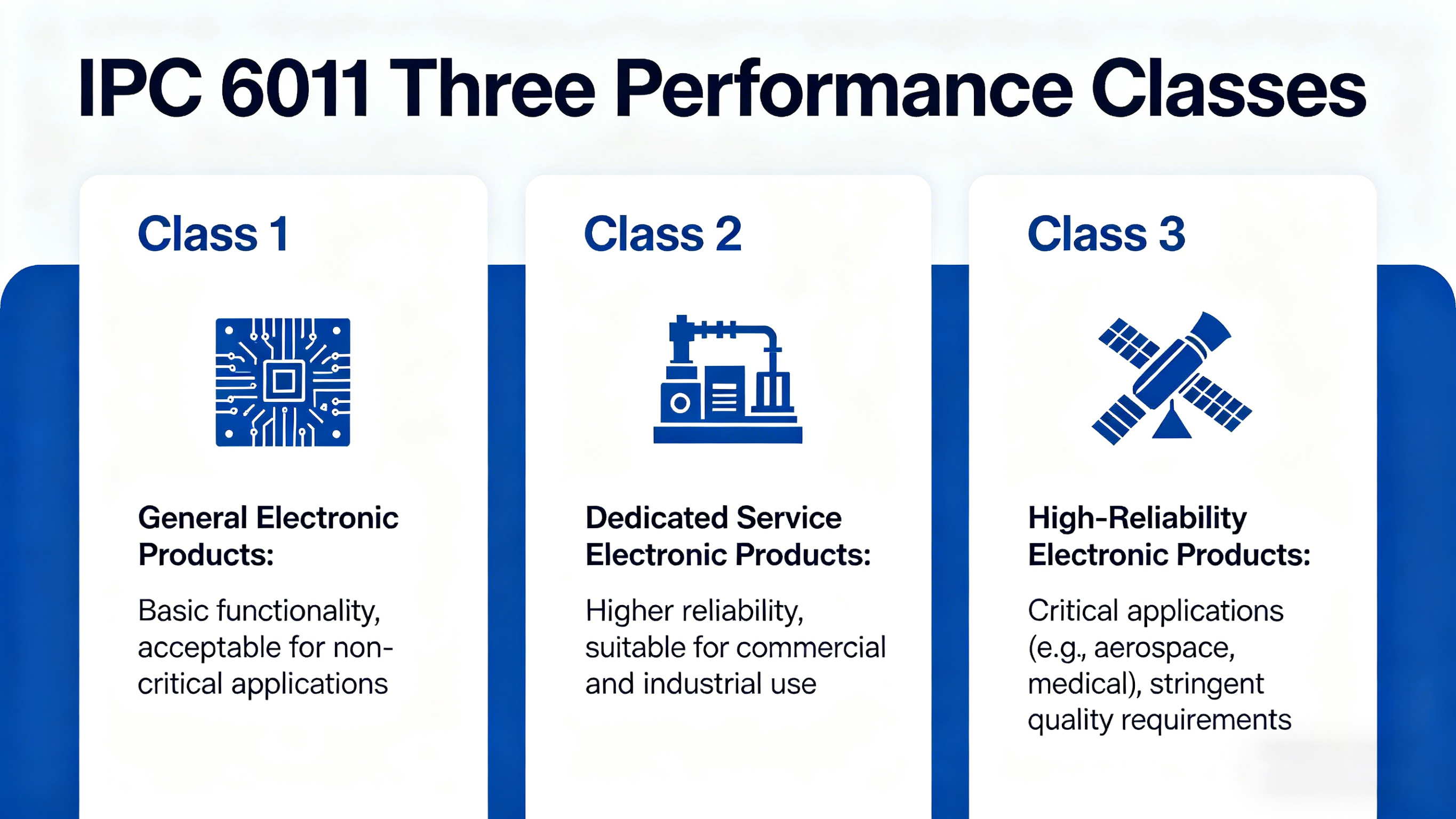
The IPC 6011 standard defines three performance classes based on real-world operating conditions and criticality. These classes are not arbitrary ratings, they directly match the environment and reliability needs of the end product.
Class 1: General Electronic Products
These are boards where basic function is the main priority. Cosmetic flaws are generally acceptable as long as performance is not affected. Typical uses include toys, remote controls, basic household devices, and low-cost peripherals.
Class 2: Dedicated Service Electronic Products
Boards in this category need consistent performance over a longer service life. Interruptions are undesirable but not catastrophic. Common applications include communications gear, industrial controls, business equipment, and standard automotive electronics.
Class 3: High Reliability Electronic Products
Class 3 boards are used where failure is not an option. Continuous operation is required, and downtime can lead to serious safety risks or mission failure. These appear in medical equipment, avionics, aerospace systems, military hardware, and life-support devices.
What Are the Differences Between IPC 6011 Class 2 VS Class 3?
Class 2 and Class 3 are the most commonly specified levels in industrial and high-reliability fields. The table below highlights practical differences engineers and buyers need to know.
| Feature | IPC 6011 Class 2 | IPC 6011 Class 3 |
|---|---|---|
| Core Requirement | Consistent long-term performance; brief downtime acceptable | Continuous, fail-safe performance; no acceptable downtime |
| Defect Allowance | Low defect rates permitted in non-critical areas | Near-zero defects on all functional and structural features |
| Inspection Approach | Sample-based inspection for most features | Full inspection on critical structural and electrical features |
| Operating Temperature | -40°C to 105°C | -55°C to 125°C |
| Common Applications | Industrial controls, automotive, communications | Medical, aerospace, military, life-support systems |
| Production Cost | Moderate, balanced for performance and value | Higher, due to stricter processes and premium materials |
Class 2 works well for most commercial and industrial products. Class 3 is required for any application where safety or mission success depends on uninterrupted PCB performance.
What is the Latest Revision of IPC Standards?
The latest version of the IPC 6011 standard is IPC-6011A, released in February 2025. This update replaces the original 1996 version and brings the standard in line with modern PCB manufacturing practices.
Key changes in IPC-6011A include:
– Clearer scope covering IPC-6012 through IPC-6018
– Updated unit conversion and measurement guidelines
– Aligned references to newer IPC standards
– Improved alignment with modern quality management approaches
For rigid PCBs, the current IPC-6012 revision is IPC-6012F, issued in 2024. When specifying PCBs, always reference the latest revision to ensure compliance with current industry practices.
How to Get IPC 6011 PDF? Where to Download It?
The IPC 6011 standard, specifically IPC-6011A from 2025, is available as a PDF through official and authorized channels only.
1. Official IPC Store
You can purchase the official single-user PDF directly through the IPC website. Pricing typically ranges from $100 to $110, depending on location and membership status. The PDF is secured and watermarked to protect copyright.
2. Authorized Standards Resellers
Trusted resellers such as the ANSI Webstore, Accuris, and other engineering standards platforms also offer legitimate IPC-6011A downloads.
3. Free Preview Resources
Free tables of contents are available from IPC, but full standard text is not distributed for free. Industry articles may summarize key points, but they cannot replace the official document.
Keep in mind that the full IPC 6011 standard is protected by copyright. Always obtain it through legitimate sellers to ensure you have the complete, accurate, and up-to-date version.
FAQs About IPC-6011 Standard
Q1: What is the purpose of the IPC 6011 standard?
A1: The IPC 6011 standard creates a universal set of quality and reliability rules for all printed boards. It defines performance classes, inspection guidelines, and procurement terms so manufacturers and customers speak the same quality language.
Q2: Do I need to reference both IPC 6011 and IPC-6012?
A2: For rigid PCBs, IPC-6012 is the primary standard, but it already incorporates all requirements from IPC-6011. Having both on hand helps teams understand the full quality structure.
Q3: How do I select Class 1, 2, or 3 for my project?
A3: Choose based on the risk level of the application. Class 1 for consumer goods, Class 2 for industrial and commercial products, Class 3 for medical, aerospace, and mission-critical systems.
Q4: Is the IPC 6011 standard used in military and aerospace projects?
A4: Yes,the IPC 6011 standard forms the base for high-reliability military and aerospace PCBs. Most of these projects use IPC-6012 Class 3 with additional ES or space-level supplements.
Q5: What changed between IPC 6011 and IPC-6011A?
A5: IPC-6011A (2025) updates the original 1996 IPC 6011 standard with expanded scope, modern measurement rules, and better alignment with current PCB manufacturing and quality systems.
Q6: Can I use IPC 6011 for flexible printed boards?
A6: Yes, the IPC 6011 standard applies to flexible and rigid-flex PCBs as well as rigid ones. For flex-specific details, pair it with IPC-6013.
Q7: How can I confirm a PCB supplier follows IPC 6011?
A7: Review supplier quality documentation, audit their internal processes, and use third-party inspection from IPC-accredited labs to verify compliance with the IPC 6011 standard.
Conclusion
The IPC 6011 standard remains the backbone of consistent PCB quality across every sector of electronics manufacturing. It establishes the performance classes, quality rules, and industry terminology that keep rigid, flex, and rigid-flex boards reliable and compatible worldwide.
Whether you are building consumer electronics, industrial controls, or high-reliability medical and aerospace devices, understanding the IPC 6011 standard helps you choose the right performance class, reduce field failures, and communicate clearly with manufacturers. Always specify the latest IPC-6011A revision and pair it with the appropriate type-specific standard such as IPC-6012 for the most robust results.
If you need support applying the IPC 6011 standard to your next PCB project, our team can help with class selection, compliance review, and practical manufacturing guidance tailored to your application.